On This Page
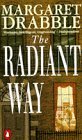
Description
Traces the lives of three Englishwomen, good friends since Cambridge, as they cope with changes in their world and within themselves.Tags
Recommendations


















Member Reviews
"These signs of age, the aging process, she greeted and greets with curiosity, with a resolute welcome. One might as well welcome them, after all: there is not much point in rejecting them. It is all intended, it is all part of the plan. There is a goal to this journey, there will be an arrival, Liz Headland believes."
This book is similar to The Line of Beauty in that it is a novel about life in London during the Thatcher years. It opens on New Year's eve 1979 at a large party at which dozens of characters are introduced, but ultimately the focus is on three friends, former Cambridge classmates who are now in their 40's. Liz is the hostess of the party, and she is a successful psychiatrist married to media mogul Charles (who advises Liz show more at the New Year's party that he is divorcing her). Alix is married to Brian, and both of them have retained their social consciences. They continue to live in genteel poverty. Alix works at various "gigs," including teaching English literature at a woman's prison. The third friend, Esther, is an art historian, dilettante, and she has never married, though she has a serious lover. Sometimes popping in and out of the story is Shirley, Liz's sister who never went to university, married young, and who remains in the northern manufacturing town where she and Liz grew up.
Like The Line of Beauty, the book is a treasure of political and social commentary about the times, while also being a compelling study of the friendship and the lives and loves of these interesting women. It also paints a pretty grim picture of the havoc wreaked by Thatcher's policies over the 1980's on working class and struggling people.
I really loved this book as well, and over the past few years I have been "rediscovering" Margaret Drabble as an excellent and favorite author. I read many of her earlier books when I was in my 20's, then somehow lost track of her. I learned that this is the first of a series involving the lives of Liz, Alix and Esther, and I will be seeking the others to read in the future.
4 stars show less
This book is similar to The Line of Beauty in that it is a novel about life in London during the Thatcher years. It opens on New Year's eve 1979 at a large party at which dozens of characters are introduced, but ultimately the focus is on three friends, former Cambridge classmates who are now in their 40's. Liz is the hostess of the party, and she is a successful psychiatrist married to media mogul Charles (who advises Liz show more at the New Year's party that he is divorcing her). Alix is married to Brian, and both of them have retained their social consciences. They continue to live in genteel poverty. Alix works at various "gigs," including teaching English literature at a woman's prison. The third friend, Esther, is an art historian, dilettante, and she has never married, though she has a serious lover. Sometimes popping in and out of the story is Shirley, Liz's sister who never went to university, married young, and who remains in the northern manufacturing town where she and Liz grew up.
Like The Line of Beauty, the book is a treasure of political and social commentary about the times, while also being a compelling study of the friendship and the lives and loves of these interesting women. It also paints a pretty grim picture of the havoc wreaked by Thatcher's policies over the 1980's on working class and struggling people.
I really loved this book as well, and over the past few years I have been "rediscovering" Margaret Drabble as an excellent and favorite author. I read many of her earlier books when I was in my 20's, then somehow lost track of her. I learned that this is the first of a series involving the lives of Liz, Alix and Esther, and I will be seeking the others to read in the future.
4 stars show less
Three women, who met as they began school at Cambridge, are now approaching their 50th birthdays. It is 1979 in London. And over the next 5 years their lives will be affected by the illnesses and deaths of partners and parents, by divorce and dating, by worry over their children as they begin their own lives, by the cuts of Thatcher's regime. And though they have wended their ways in and out of each others' lives over the past 30 years and will continue to do so, they are always there for each other.
I had never heard of this book when it came up as one of "randomized reads" for a 1001 book list group. I was not sure it sounded any good. And maybe this is the female equivalent of the "grumpy old man reflects" book (Sense of and Ending; show more Gilead), but I loved this. Maybe because I am the same age as these women, and though my kids are on the young age of theirs (similar to Sam and Celia), I get their worries of parents' health, kids' futures, jobs, redundancy, legacy, and loss of worth. Of home, cats, and even plants. Of steep government cuts and privatized prisons. This book feels completely relevant in the US today, 30 years after it was written and published in England. show less
I had never heard of this book when it came up as one of "randomized reads" for a 1001 book list group. I was not sure it sounded any good. And maybe this is the female equivalent of the "grumpy old man reflects" book (Sense of and Ending; show more Gilead), but I loved this. Maybe because I am the same age as these women, and though my kids are on the young age of theirs (similar to Sam and Celia), I get their worries of parents' health, kids' futures, jobs, redundancy, legacy, and loss of worth. Of home, cats, and even plants. Of steep government cuts and privatized prisons. This book feels completely relevant in the US today, 30 years after it was written and published in England. show less
"The Radiant Way" is the story of three women; their marriages and family lives, their careers and social lives, and their friendships with each other. I guess you could call it an intellectual ‘chick-lit’ novel because it mostly covers women’s issues but also delves into psychological problems, mental illness, crime, socialism, the arts and literature.
The novel begins in London on New Year’s Eve of 1979. One of the women is throwing a huge party which sets the stage for the events to come in the 6 years to follow. Flashbacks inform the reader of just how the 3 met in college 20 years prior- and although they weren’t always in continuous contact- they eventually always re-connected… enjoying the intimacy of their long term show more relationships.
One problem I had with "The Radiant Way" is I didn’t particularly like the women. Liz Headleand is described as a bohemian woman… self-centered, opinionated, and patronizing. She is only 45, but comes across as a much older woman. She is convinced after 20 years of marriage that she has a good, happy, solid marriage even thought she mocks her husband, has no respect for him (because he is a conservative business man), does not find him physically attractive, and has not been physically intimate with him for several years. Liz makes a living as a psychotherapist. Maybe that is realistic characterization, but it’s frightening to think that someone that out of touch with their own reality is treating other people for mental problems.
Other than the fact that one of the 3 friends is single- never been married- it is hard to distinguish the women from each other. Their personalities blend, they all talk the same way, dress alike, think the same, and act in a similar manner. They are unconventional in their life-style and they are all free-lance, part-time, social service workers. All three seem a little ‘kookie’ to me, though their one redeeming quality is their superior intellect, though often it seems wasted.
Another problem with "The Radiant Way" is Drabble’s ambitious attempt to create so many threads and sub plots... a serial killer on the loose in London, an international historian who is also a devil worshiper, several disgruntled husbands, an estranged sister and crazy/eccentric mother, and children of various ages who hover in the background but never take a priority in the plot, marital and employment problems, job insecurities, illness of the elderly, child abuse, and menopause. Any one of these topics could have been expounded on to make a powerful and lengthy novel but- having all been cluttered into one book- diluted and minimized the emotional impact.
All in all however, "The Radiant Way" is of interest as an example of English society in the 1980s. Margaret Drabble’s illustration of how women fit into the English structure- economically, socially, and domestically- is enlightening, although I doubt these women were typical British women. Rather, they represented a small avant-garde minority.
I find it interesting that Margaret Drabble’s sister is A. S. Byatt (Susan Duffy)- also a well-respected novelist. Even more interesting is the fact they they have never gotten along with one-another, carrying on a long term rivalry that began during their childhood. Hmmm… perhaps I’ll read a Byatt book now. show less
The novel begins in London on New Year’s Eve of 1979. One of the women is throwing a huge party which sets the stage for the events to come in the 6 years to follow. Flashbacks inform the reader of just how the 3 met in college 20 years prior- and although they weren’t always in continuous contact- they eventually always re-connected… enjoying the intimacy of their long term show more relationships.
One problem I had with "The Radiant Way" is I didn’t particularly like the women. Liz Headleand is described as a bohemian woman… self-centered, opinionated, and patronizing. She is only 45, but comes across as a much older woman. She is convinced after 20 years of marriage that she has a good, happy, solid marriage even thought she mocks her husband, has no respect for him (because he is a conservative business man), does not find him physically attractive, and has not been physically intimate with him for several years. Liz makes a living as a psychotherapist. Maybe that is realistic characterization, but it’s frightening to think that someone that out of touch with their own reality is treating other people for mental problems.
Other than the fact that one of the 3 friends is single- never been married- it is hard to distinguish the women from each other. Their personalities blend, they all talk the same way, dress alike, think the same, and act in a similar manner. They are unconventional in their life-style and they are all free-lance, part-time, social service workers. All three seem a little ‘kookie’ to me, though their one redeeming quality is their superior intellect, though often it seems wasted.
Another problem with "The Radiant Way" is Drabble’s ambitious attempt to create so many threads and sub plots... a serial killer on the loose in London, an international historian who is also a devil worshiper, several disgruntled husbands, an estranged sister and crazy/eccentric mother, and children of various ages who hover in the background but never take a priority in the plot, marital and employment problems, job insecurities, illness of the elderly, child abuse, and menopause. Any one of these topics could have been expounded on to make a powerful and lengthy novel but- having all been cluttered into one book- diluted and minimized the emotional impact.
All in all however, "The Radiant Way" is of interest as an example of English society in the 1980s. Margaret Drabble’s illustration of how women fit into the English structure- economically, socially, and domestically- is enlightening, although I doubt these women were typical British women. Rather, they represented a small avant-garde minority.
I find it interesting that Margaret Drabble’s sister is A. S. Byatt (Susan Duffy)- also a well-respected novelist. Even more interesting is the fact they they have never gotten along with one-another, carrying on a long term rivalry that began during their childhood. Hmmm… perhaps I’ll read a Byatt book now. show less
This book created a fascinating image of a group of English people in an era of major political and social upheaval - the Thatcher era. The characters are all well drawn and most are appealing in some way, even a mass-murderer receives our sympathy. I felt a little detached from these people most (but not all) of the time, and yet this was not the negative response that I usually experience it to be. Drabble did a good job of keeping the reader out of the story and yet engaged with it, in a kind of fly-on-the-wall experience. She even addresses some of the text directly to the reader to emphasize this perspective.
A story set in the early 80s about 3 women, with college, career, family. It is a story of the 80s culture with social commentary. I enjoyed that the women were middle aged, they were all doing reasonably well in their careers; one married, one divorced (just), one never married. It also covers the aspects of right and left politics, miners strike, and serial killer. A lot happens but the emotional components don't really seem to match up so in that regard it doesn't feel quite realistic.
Drabble shows us the lives of three friends who meet regularly and grow into maturity, together, but in their separate ways. When we meet them, it is the end of the 1970s. They had been friends for 25 years and know each other well. When we leave them, five years later, they have all moved on but nothing is clearly resolved in their lives. No dramatic gestures or operatic drama. In the background is life of the early 1980s in England. Riots, labor problems, murders, class stigmatization, and all the other nuances of England under Thatcher.
It was a bit slow in parts, and at times I just wanted to slap one or other of the three. But nonetheless I could relate to each of the women at different times and wanted to know how they got on.
I show more understand this is one of a trilogy. I may seek the others out. show less
It was a bit slow in parts, and at times I just wanted to slap one or other of the three. But nonetheless I could relate to each of the women at different times and wanted to know how they got on.
I show more understand this is one of a trilogy. I may seek the others out. show less
I finished the book a bit confused as to how I felt about it. I wondered how someone who had not lived through the time and place would engage with the narrative - so full of details which resonate with me as I was in London at that time. I loved the dense writing and engaged with the people so perhaps there is no need to speculate on how well the book will translate in time and place,
Members
- Recently Added By
Lists

1001 Books You Must Read Before You Die
1,448 works; 1,133 members

Top Five Books of 2013
1,562 works; 721 members

Recommend the 20 best books you've read in the last five years
2,168 works; 602 members

The Top Ten: Writers Pick Their Favorite Books
240 works; 31 members

Novels Published in 1987
81 works; 19 members

1,001 BYMRBYD Concensus
723 works; 27 members

Books About Older People
50 works; 11 members

My TBR
371 works; 3 members

Books Read in 2025
4,091 works; 97 members

Top Five Books of 2025
954 works; 303 members
Author Information

68+ Works 13,776 Members
Margaret Drabble was born on June 5, 1939 in Sheffield, England. She attended The Mount School in York and Newnham College, Cambridge University. After graduation, she joined the Royal Shakespeare Company at Stratford during which time she understudied for Vanessa Redgrave. She is a novelist, critic, and the editor of the fifth edition of The show more Oxford Companion to English Literature. Her works include A Summer Bird Cage; The Millstone, which won the John Llewelyn Rhys Prize in 1966; Jerusalem the Golden, which won James Tait Black Prize in 1967; and The Witch of Exmoor. She also received the E. M. Forster award and was awarded a Society of Authors Travelling Fellowship in the 1960s and the Commander of the Order of the British Empire in 1980. (Bowker Author Biography) show less
Awards and Honors
Notable Lists
Series

Common Knowledge
- Canonical title*
- La voie radieuse
- Original title
- The Radiant Way
- Original publication date
- 1987
- People/Characters
- Liz Headleand; Alix Bowen; Esther Breuer
- Important places
- London, England, UK
- First words
- New Year's Eve, and the end of a decade.
- Last words
- (Click to show. Warning: May contain spoilers.)The sun stands still.
*Some information comes from Common Knowledge in other languages. Click "Edit" for more information.
Classifications
Statistics
- Members
- 867
- Popularity
- 31,317
- Reviews
- 12
- Rating
- (3.78)
- Languages
- 7 — Dutch, English, Finnish, French, German, Spanish, Swedish
- Media
- Paper, Ebook
- ISBNs
- 21
- ASINs
- 12