
On This Page
Description
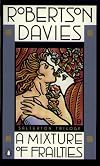
In the small university town of Salterton, Ontario, dreams are quietly taking shape, or falling apart. There's the Salterton Little Theatre Company, in which professional director Valentine Rich is tormented by the amateurish efforts of his actors. The families Vambrace and Bridgetower almost go to war over a fake notice of engagement in the local paper. And a family fortune is lavished on an aspiring singer because there is no male heir to claim it. Tracing the lives and incidents of a show more small community in the middle of the last century, The SaltertonTrilogypeels off the public veneer of geniality and respectability to reveal the private passions simmering beneath. show lessTags
Recommendations























Member Recommendations

Member Reviews
Salterton is a small, provincial Canadian city, proud of its university, two cathedrals, commercial successes, and attempts at culture, and The Salterton Trilogy is Davies's vivid portrayal of its citizens, their hopes, their schemes, their human nature. The first of his trilogies, it doesn't have the scholarly depth or the allegorical complexity of his later works, but it abundantly reveals his story-telling talents, his ability to create wonderful characters, both likeable and unpleasant, his penchant for skewering pretension, and his comedic genius. It also introduces some of the themes he explores further later, including transformation of characters, the arts, and religion. The three novels are linked through some of their show more characters, but tell very different stories.
Tempest-Tost, the first in the trilogy, focuses on The Salterton Little Theater, an amateur group, ruled by Mrs. Forrester, a woman who is used to getting her way. She has persuaded her childhood friend, Valentine Rich, who has achieved success as an actress and director in New York, to direct a performance of The Tempest while she is in Salterton settling the estate of her late father. Davies masterfully assembles the cast of characters for the book, many of whom will form the cast of the play, including the lovely but vapid Griselda, whose rich father owns the property where the play will be performed outdoors, and who is sought after by several of the men; math teacher Hector Mackilwrith whose determination and method of life planning has so far brought him every achievement he has sought and who, after years of putting the Little Theater's books in order, has developed the surprising urge to act in the play; the bombastic and self-satisfied Professor Vambrace, who thinks he alone knows how the play should proceed, and his intimidated daughter Pearl; Solly Bridgewater, an academic himself and the son of another professor, who is brow-beaten by his widowed and controlling mother and demoted from director to assistant director when Valentine Rich appears on the scene; the utterly delightful musician Humphrey Cobbler, and many more. Theatrical and romantic complications ensue, and through them Davies provides a compelling picture of provincial Canadian life.
In Leaven of Malice, someone has maliciously placed a fictitious engagement announcement in the local paper, the Evening Bellman, telling the world of Salterton that Solly Bridgewater and Pearl Vambrace are to be married. As the Bridgewaters and the Vambraces have nursed a grudge for decades, and as Solly is in love with someone else (who does not reciprocate his emotions) and Pearl is insecure and unhappy, this notice causes a mess of trouble for Bellman editor Gloster Ridley, who already has both problems of his own, with aging writer Swithin Shillito and publisher Mr. Warboys, and ambitions for an honorary degree as thanks for his role in establishing a journalism program at the university. Pearl's father Professor Vambrace, believing the ad is a plot to humiliate him, is determined to sue the paper for libel; Solly's mother is equally outraged. As the plot thickens, other people are drawn in, not just Solly and Pearl themselves, but also Ridley's housekeeper, who lives with her sister and brother-in-law and their lodger, the slimy voice instructor Bevill Higgin; elderly, meddling Puss Pottinger, who briefly appeared in the first novel; Dean Knapp of St. Nicholas's Cathedral; and, happily, the delightful Humphrey Cobbler. The story gives Davies the opportunity to depict the world of small-town journalism, and of small-town lawyers, as well as the interactions of various community "leaders" with each other.
In the final novel, A Mixture of Frailties, Mrs. Bridgewater has died and, out of spite for her son Solly, who married against her wishes, she has left her house and all her money to a trust, specifying that it should support a young woman who wants to study the arts outside Canada, and should only come to Solly if and when he and his wife produce a son and name him Solomon Bridgewater after her husband. The trustees have been chosen apparently for their difficulty in getting along with each other. Eventually, they select a young woman proposed by Humphrey Cobbler, who sings on a local religious radio program. Despite coming from a working-class family which belongs to a religious cult and looks down on anyone who tries to get ahead, Monica truly loves music and has ambitions of her own, although quite buried. The bulk of the novel involves Monica's studies in England, the people of all sorts she encounters there, her transformation into a poised, professional singer, and her changing feelings about love and loyalty. Here Davies extends his scope to the world of music and music criticism and illustrates class differences and the snobbishness of some of the English people towards Canadians; I did feel my interest lagging a little bit for parts of this section. Nonetheless, I enjoyed this novel almost as much as the first two. Also, in this novel Davies begins to show some of the depth that appears in the later trilogies. show less
Tempest-Tost, the first in the trilogy, focuses on The Salterton Little Theater, an amateur group, ruled by Mrs. Forrester, a woman who is used to getting her way. She has persuaded her childhood friend, Valentine Rich, who has achieved success as an actress and director in New York, to direct a performance of The Tempest while she is in Salterton settling the estate of her late father. Davies masterfully assembles the cast of characters for the book, many of whom will form the cast of the play, including the lovely but vapid Griselda, whose rich father owns the property where the play will be performed outdoors, and who is sought after by several of the men; math teacher Hector Mackilwrith whose determination and method of life planning has so far brought him every achievement he has sought and who, after years of putting the Little Theater's books in order, has developed the surprising urge to act in the play; the bombastic and self-satisfied Professor Vambrace, who thinks he alone knows how the play should proceed, and his intimidated daughter Pearl; Solly Bridgewater, an academic himself and the son of another professor, who is brow-beaten by his widowed and controlling mother and demoted from director to assistant director when Valentine Rich appears on the scene; the utterly delightful musician Humphrey Cobbler, and many more. Theatrical and romantic complications ensue, and through them Davies provides a compelling picture of provincial Canadian life.
In Leaven of Malice, someone has maliciously placed a fictitious engagement announcement in the local paper, the Evening Bellman, telling the world of Salterton that Solly Bridgewater and Pearl Vambrace are to be married. As the Bridgewaters and the Vambraces have nursed a grudge for decades, and as Solly is in love with someone else (who does not reciprocate his emotions) and Pearl is insecure and unhappy, this notice causes a mess of trouble for Bellman editor Gloster Ridley, who already has both problems of his own, with aging writer Swithin Shillito and publisher Mr. Warboys, and ambitions for an honorary degree as thanks for his role in establishing a journalism program at the university. Pearl's father Professor Vambrace, believing the ad is a plot to humiliate him, is determined to sue the paper for libel; Solly's mother is equally outraged. As the plot thickens, other people are drawn in, not just Solly and Pearl themselves, but also Ridley's housekeeper, who lives with her sister and brother-in-law and their lodger, the slimy voice instructor Bevill Higgin; elderly, meddling Puss Pottinger, who briefly appeared in the first novel; Dean Knapp of St. Nicholas's Cathedral; and, happily, the delightful Humphrey Cobbler. The story gives Davies the opportunity to depict the world of small-town journalism, and of small-town lawyers, as well as the interactions of various community "leaders" with each other.
In the final novel, A Mixture of Frailties, Mrs. Bridgewater has died and, out of spite for her son Solly, who married against her wishes, she has left her house and all her money to a trust, specifying that it should support a young woman who wants to study the arts outside Canada, and should only come to Solly if and when he and his wife produce a son and name him Solomon Bridgewater after her husband. The trustees have been chosen apparently for their difficulty in getting along with each other. Eventually, they select a young woman proposed by Humphrey Cobbler, who sings on a local religious radio program. Despite coming from a working-class family which belongs to a religious cult and looks down on anyone who tries to get ahead, Monica truly loves music and has ambitions of her own, although quite buried. The bulk of the novel involves Monica's studies in England, the people of all sorts she encounters there, her transformation into a poised, professional singer, and her changing feelings about love and loyalty. Here Davies extends his scope to the world of music and music criticism and illustrates class differences and the snobbishness of some of the English people towards Canadians; I did feel my interest lagging a little bit for parts of this section. Nonetheless, I enjoyed this novel almost as much as the first two. Also, in this novel Davies begins to show some of the depth that appears in the later trilogies. show less
The three books were published in the 1950's. [Tempest-Tost] 1951, [Leaven of Malice] 1954 and [A Mixture of Frailties] 1958 and as one of the main themes of the trilogy is Canada and being Canadian; one must bear in mind that Canada was still very much connected to Great Britain. In 1951 when the first novel was published, independence from the UK was still over thirty years in the future. If the provincialism of the first novel sounds similar to England in the 1950's then this is no accident. Another thing to say about reading the three books one after the other is that the first two books are quite different from the final novel. Tempest-Tost and Leaven of Malice which are set wholly in the imaginary town of Salterton are rich in show more humour and satire, as Davies unpicks the lives of characters in a small town. In contrast although the third novel continues and develops the lives of some of the characters of the first two novels, the humour has largely disappeared and the novel is concerned with the artistic development of a young Canadian lady on a scholarship in London. Its themes of love, tragedy and the bildungsroman of Monica Gall add a depth to the writing that is largely absent from the first two novels.
In Tempest-Tost an amateur theatre group plan to put on a performance of Shakespeare's The Tempest. An American Valentine Price will direct the play and her assistant will be a local academic Solly Bridgewater. Hector Mackilworth a 40 year old teacher of mathematics and bachelor who has pulled himself up by his own efforts into the middle classes, takes it into his head to have a go at acting, especially when the beautiful young Griselda will be involved. Hector is a virgin and his pursuit of Griselda along with the ego's of other participants in the play leads to some hilarious situations well worked by Davies: provincial life among the middle classes in the raw. Humphrey Cobbler an eccentric musician who revels in his family life from the poorer part of the town provides some relief. There are some genuinely funny moments, but I became aware of some casual racism and a feeling that the author was 'looking down' on his characters a little too derisively.
In Leaven of Malice someone has placed an add in the Bellman (local paper) announcing the engagement of Solly Bridgewater with Pearl Vambrace. Pearl's father professor Vambrace becomes incensed with the thought that anyone would think that his daughter would marry someone of whom he disapproves and storms into the offices of the editor to demand an apology. The editor is not immediately forthcoming with an apology and so the professor ramps up the anti. and instructs his solicitor to sue the newspaper. There has been some trouble between the Vambrance and Bridgewater families in the past and Mrs Bridgwater is determined to counter sue. There is a fight amongst the lawyers, and some of the character from the previous novel get involved; Dean Knapp of the Cathedral, Humphrey Cobbler and meddling Puss Pottinger. It becomes a battle of ego's again and Pearl and Solly attempt to rise above it. Again there are some well worked comic moments and I was pleased to see the casual racist remarks had disappeared and that Davies had warmed more to his characters. It is a good story where provincial oneupmanship is given its full chance to create mayhem.
The final novel A Mixture of Frailties is a longer more meaty affair. Solly and Pearl have married and Mrs Bridgewater has recently died, her will acts like a dead hand on the newly married couple. Solly cannot inherit his mothers considerable wealth until he has a son, he has been left the large house which he will struggle to maintain; meanwhile the interest from the money has been put in a trust fund which must be spent to provide an education for a local artist, who must be selected within the year by the board of three trustees; Solly, Mrs Pottinger and Dean Knapp. The trustees eventually decide on a talented young singer Monica Gall recommended by Humphrey Cobbler. Monica and her family are all enthusiastic members of a small religious church known as the thirteenth apostle and Monica is plucked from this environment and sent to London under the tutorship of Sir Benedict Domdaniel. In London Monica meets the real class system of the English at first hand, as well as the snobbishness against people like her from the dominians. The major themes of this story are the struggles of talented musicians to make a name in the world of classical music and young Monica's own development into a talented woman able to hold her own in the music business, all within a hectic three year period. There is love, there is opera, there is tragedy, there is scandal and much writing about what it means to be an artist and what one has to do to be successful.
The final novel sits a little uneasily with the previous two. The humour has disappeared and while the legal system had been satirised in Leaven of Malice, the classical music business is treated much more seriously and in much more depth in [A Mixture of Frailties]. There is real drama in the final novel not the more frivolous actions that take place in the first two. Davies views of the roles of women in these novels are commensurate with the 1950's, especially in the first two, they are stronger in [A mixture of Frailties] but when Monica is presented with a choice of marrying the older wealthy successful Sir Benedict or to make her own way in the music business then I am glad that her decision is not revealed. 4 stars. show less
In Tempest-Tost an amateur theatre group plan to put on a performance of Shakespeare's The Tempest. An American Valentine Price will direct the play and her assistant will be a local academic Solly Bridgewater. Hector Mackilworth a 40 year old teacher of mathematics and bachelor who has pulled himself up by his own efforts into the middle classes, takes it into his head to have a go at acting, especially when the beautiful young Griselda will be involved. Hector is a virgin and his pursuit of Griselda along with the ego's of other participants in the play leads to some hilarious situations well worked by Davies: provincial life among the middle classes in the raw. Humphrey Cobbler an eccentric musician who revels in his family life from the poorer part of the town provides some relief. There are some genuinely funny moments, but I became aware of some casual racism and a feeling that the author was 'looking down' on his characters a little too derisively.
In Leaven of Malice someone has placed an add in the Bellman (local paper) announcing the engagement of Solly Bridgewater with Pearl Vambrace. Pearl's father professor Vambrace becomes incensed with the thought that anyone would think that his daughter would marry someone of whom he disapproves and storms into the offices of the editor to demand an apology. The editor is not immediately forthcoming with an apology and so the professor ramps up the anti. and instructs his solicitor to sue the newspaper. There has been some trouble between the Vambrance and Bridgewater families in the past and Mrs Bridgwater is determined to counter sue. There is a fight amongst the lawyers, and some of the character from the previous novel get involved; Dean Knapp of the Cathedral, Humphrey Cobbler and meddling Puss Pottinger. It becomes a battle of ego's again and Pearl and Solly attempt to rise above it. Again there are some well worked comic moments and I was pleased to see the casual racist remarks had disappeared and that Davies had warmed more to his characters. It is a good story where provincial oneupmanship is given its full chance to create mayhem.
The final novel A Mixture of Frailties is a longer more meaty affair. Solly and Pearl have married and Mrs Bridgewater has recently died, her will acts like a dead hand on the newly married couple. Solly cannot inherit his mothers considerable wealth until he has a son, he has been left the large house which he will struggle to maintain; meanwhile the interest from the money has been put in a trust fund which must be spent to provide an education for a local artist, who must be selected within the year by the board of three trustees; Solly, Mrs Pottinger and Dean Knapp. The trustees eventually decide on a talented young singer Monica Gall recommended by Humphrey Cobbler. Monica and her family are all enthusiastic members of a small religious church known as the thirteenth apostle and Monica is plucked from this environment and sent to London under the tutorship of Sir Benedict Domdaniel. In London Monica meets the real class system of the English at first hand, as well as the snobbishness against people like her from the dominians. The major themes of this story are the struggles of talented musicians to make a name in the world of classical music and young Monica's own development into a talented woman able to hold her own in the music business, all within a hectic three year period. There is love, there is opera, there is tragedy, there is scandal and much writing about what it means to be an artist and what one has to do to be successful.
The final novel sits a little uneasily with the previous two. The humour has disappeared and while the legal system had been satirised in Leaven of Malice, the classical music business is treated much more seriously and in much more depth in [A Mixture of Frailties]. There is real drama in the final novel not the more frivolous actions that take place in the first two. Davies views of the roles of women in these novels are commensurate with the 1950's, especially in the first two, they are stronger in [A mixture of Frailties] but when Monica is presented with a choice of marrying the older wealthy successful Sir Benedict or to make her own way in the music business then I am glad that her decision is not revealed. 4 stars. show less
Salterton is a small Canadian village that receives attention in this fine trilogy from Robertson Davies; at least some of the people in the village receive his attention and for readers that is a good thing. While I did not enjoy this quite as much as some of his later novels, there was sufficient humor and wit to keep me entertained. In the final novel of the trilogy, Leaven of Malice, the central character Monica Gall is also the most likable character and as such kept me interested in the book when I tired of some of the other characters for whom the titular "malice" was more their style. The plot borders on the melodramatic, but perhaps the thespian in Davies is to blame for that. The central role that music plays in this novel is show more another signature of the Robertson Davies' style (see The Lyre of Orpheus for another example). The combination of interesting, if not likable, characters and the wit of the master storyteller made this a good read. For greatness visit The Cornish Trilogy. show less
I surprised myself guffawing while I read this. I did not expect Davies to be so incredibly funny.
Re-reading for the fourth or fifth time. In some ways this is my favourite of the Davies trilogies (or what a reader at my sister's library used to call "triliologies". Davies was involved in both newspapers and academia, so the second in the series, Leaven of Malice, has some interesting points to make about both.
The story of the last book, Mixture of Frailties, is the best Robertson Davies story, I feel - as a plot - but the emotional realism of the heroine and the anti-hero leave something to be desired. But even so, I wouldn't be re-reading these books if I didn't feel that the author was a good story-teller, and one who knows a lot about a wide variety of subjects.
The story of the last book, Mixture of Frailties, is the best Robertson Davies story, I feel - as a plot - but the emotional realism of the heroine and the anti-hero leave something to be desired. But even so, I wouldn't be re-reading these books if I didn't feel that the author was a good story-teller, and one who knows a lot about a wide variety of subjects.
Tempest-Tost (read September 2007)
A tale of unrequited love among the members of an amateur theatre group, as they prepare to put on "The Tempest". It started off well but I could have done with more about Freddie and Tom, who almost disappeared from the story after the first few chapters.
I thought as I began reading that I had read it before, but later I decided that I had heard the first part of it dramatised on the radio instead.
Leaven of Malice (read September 2007)
When a notice announcing the engagement of Solly Bridgetower and Pearl Vambrace appears in the Evening Bellman, most of the newspaper's readers don’t realise that anything is amiss. But it says that the wedding will take place on November 31st, and in actual fact Solly show more and Pearl aren’t engaged, and haven’t had much to do with each other since acting in an amateur performance of the Tempest together four years ago. The fall-out from this practical joke affects many of Salterton's residents is immense, with the flames being stoked by Pearl's father Professor Vambrace, who it sure that that it was expressly aimed at humiliating him, and is determined to sue the newspaper since the editor is unable to tell who it was that paid for the engagement notice.
A very funny tale, with a host of wonderful characters ranging from the deranged Professor Vambrace and the scheming Mrs Bridgetower, both of whom are opposed to a potential marriage between their children, to the harried editor of the Evening Bellman Gloster Ridley and the eccentric musician and cathedral organist Humphrey Cobbler, who is known to be fond of playing jokes.
A Mixture of Frailties (read October 2007)
This book begins with the death of Mrs Bridgetower, a year after the marriage of her son Solly to Veronica (formerly known as Pearl) Vambrace. Mrs Bridgetower's will reflects her devious and controlling nature, and Solly finds himself one of the trustees of a fund to pay for a young woman with artistic talents to further her education in Europe. After the rejection of many unsuitable candidates, Humphrey Cobbler suggests that they should look at young singer named Monica Gall, who sang at Mrs Bridgetower's funeral. Monica's family belong to an evangelical sect known as the Thirteeners, and as well as working in a factory office she also sings with a church group on the radio. The trustees are finally able to agree on a candidate, and Monica sets off for England just before Christmas. Most of the rest of the story follows Monica on her journey to becoming a professional singer, as Solly and Veronica struggle to fulfill the conditions that will allow them to get their hands on some of old Mrs Bridgetower's money.
The year after her arrival in England, Monica goes to a Welsh country house for Christmas, and an American student who is also staying there keeps comparing the Christmassy atmosphere to Washington Irving. I assume he is referring to "The Keeping of Christmas at Bracebridge Hall" which happens to be on my TBR shelf - I'll have to make sure that I read it in this December.
Another very enjoyable book. I much preferred the The Salterton Trilogy to the Cornish Trilogy, but The Deptford Trilogy is still my favourite. show less
A tale of unrequited love among the members of an amateur theatre group, as they prepare to put on "The Tempest". It started off well but I could have done with more about Freddie and Tom, who almost disappeared from the story after the first few chapters.
I thought as I began reading that I had read it before, but later I decided that I had heard the first part of it dramatised on the radio instead.
Leaven of Malice (read September 2007)
When a notice announcing the engagement of Solly Bridgetower and Pearl Vambrace appears in the Evening Bellman, most of the newspaper's readers don’t realise that anything is amiss. But it says that the wedding will take place on November 31st, and in actual fact Solly show more and Pearl aren’t engaged, and haven’t had much to do with each other since acting in an amateur performance of the Tempest together four years ago. The fall-out from this practical joke affects many of Salterton's residents is immense, with the flames being stoked by Pearl's father Professor Vambrace, who it sure that that it was expressly aimed at humiliating him, and is determined to sue the newspaper since the editor is unable to tell who it was that paid for the engagement notice.
A very funny tale, with a host of wonderful characters ranging from the deranged Professor Vambrace and the scheming Mrs Bridgetower, both of whom are opposed to a potential marriage between their children, to the harried editor of the Evening Bellman Gloster Ridley and the eccentric musician and cathedral organist Humphrey Cobbler, who is known to be fond of playing jokes.
A Mixture of Frailties (read October 2007)
This book begins with the death of Mrs Bridgetower, a year after the marriage of her son Solly to Veronica (formerly known as Pearl) Vambrace. Mrs Bridgetower's will reflects her devious and controlling nature, and Solly finds himself one of the trustees of a fund to pay for a young woman with artistic talents to further her education in Europe. After the rejection of many unsuitable candidates, Humphrey Cobbler suggests that they should look at young singer named Monica Gall, who sang at Mrs Bridgetower's funeral. Monica's family belong to an evangelical sect known as the Thirteeners, and as well as working in a factory office she also sings with a church group on the radio. The trustees are finally able to agree on a candidate, and Monica sets off for England just before Christmas. Most of the rest of the story follows Monica on her journey to becoming a professional singer, as Solly and Veronica struggle to fulfill the conditions that will allow them to get their hands on some of old Mrs Bridgetower's money.
The year after her arrival in England, Monica goes to a Welsh country house for Christmas, and an American student who is also staying there keeps comparing the Christmassy atmosphere to Washington Irving. I assume he is referring to "The Keeping of Christmas at Bracebridge Hall" which happens to be on my TBR shelf - I'll have to make sure that I read it in this December.
Another very enjoyable book. I much preferred the The Salterton Trilogy to the Cornish Trilogy, but The Deptford Trilogy is still my favourite. show less
Includes 3 novels: Tempest Tost, Leaven of Malice, A Mixture of Frailties. "People who don't know Salterton call it dreamy and old-world. They say it is a place where Anglican clergymen go when they die. The real Saltertonians, however, know that there is nothing quaint about the place at all. With its two cathedrals, its one university, and its native sons and daughters busily scheming for their dreams, Salterton is very much in the real world." (from the jacket notes.) Very funny, satirical and witty, with fascinating eccentric characters with very human weaknesses. I especially enjoyed the satire on amateur Shakespeare productions in Tempest Tost, and the satire on students and teachers of classical music in A Mixture of Frailties.
Members
- Recently Added By
Lists

The Best of Canadian Literature
235 works; 33 members

Fiction With Familiar Settings
280 works; 93 members
Talk Discussions
Past Discussions
Davies - The Salterton Trilogy in Literary Centennials (December 2012)
Author Information

89+ Works 24,736 Members
William Robertson Davies was born in Thamesville, Ontario in 1913. He taught English at the University of Toronto and was an actor, journalist, and newspaper editor before winning acclaim as a novelist with Tempest-Tost, the first of his Salterton trilogy. His most famous trilogy, The Deptford Trilogy--Fifth Business, The Manticore, and World of show more Wonders--develops the earlier Salterton novels. The locale is a fictitious Ontario city that prizes its English tradition, including the Anglican Church and the genealogy of the old families. Robertson's novels have been translated into approximately 20 languages. His masterful story-telling encompasses such issues as evil, love, fear, tradition, and magic as he brings his characters to life with wisdom and humor. Robertson Davies died in 1995. (Bowker Author Biography) Robertson Davies (1913-1995) had three successive careers during the time he became an internationally acclaimed author: first as an actor with the Old Vic Company in England; then as publisher of "The Peterborough Ontario Examiner"; & finally as professor & first master of Massey College at the University of Toronto. With twelve novels & several volumes of essays & plays to his credit, Davies was the first Canadian to be inducted to the American Academy & Institute of Arts & Letters. His last novel, "The Cunning Man" (Viking 1995), was a national bestseller. (Publisher Provided) show less
Some Editions
Series

Work Relationships
Common Knowledge
- Canonical title
- The Salterton Trilogy
- Original title
- Leaven of Malice; Tempest-Tost; A Mixture of Frailties
- Original publication date
- 1986
- People/Characters
- Hector Mackilwraith; Griselda Webster; Pearl Vambrace; Fredegonde Webster
- Important places
- Ontario, Canada; Salterton, Canada
- First words
- "It's going to be a great nuisance for both of us", said Freddy.
- Quotations
- Freddy recognized the truth of what he said. She herself was a victim of that lust for books which rages in the breast like a demon, and which cannot be stilled save by the frequent and plentiful acquisition of books. This pa... (show all)ssion is more common, and more powerful, than most people suppose. Book lovers are thought by unbookish people to be gentle and unworldly, and perhaps a few of them are so. But there are others who will lie and scheme and steal to get books as wildly and unconscionably as the dope-taker in pursuit of his drug. They may not want the books to read immediately, or at all; they want them to possess, to range on their shelves, to have at command. They want books as a Turk is thought to want concubines—not to be hastily deflowered, but to be kept at their master’s call, and enjoyed more often in thought than in reality. Solly was in a measure a victim of this unscrupulous passion, but Freddy was wholly in the grip of it.
Still, she had her pride. She would not beg Valentine to regard her as a member of the clergy for a day; she would not even hang about the house in a hinting manner. She would just drop in, and if the conversation happened to turn upon books, as some scholarly rural dean fingered a rare volume, she would let it be known, subtly, that she was deeply interested in them, and then—well, and then she would see what happened.
With this plan in view she was at the residence of the late Dr. Adam Savage at five minutes to ten on the following morning, dismayed to find that an astounding total of two hundred and seventeen clergymen were there before her, waiting impatiently on the lawn. They ranged from canons of the cathedral, in shovel hats and the grey flannels which the more worldly Anglicans affect in summer, through Presbyterians and ministers of the United Church in black coats and Roman collars, to the popes and miracle workers of back-street sects, dressed in everything under the sun. There was a young priest, a little aloof from the others, who had been instructed by his bishop to bespeak a copy of The Catholic Encyclopaedia which was known to be in the house, for a school library. There were two rabbis, one with a beard and one without, chatting with the uneasy geniality of men who expect shortly to compete in a race for a shelf of books on the Pentateuch. There were High Anglicans with crosses on their watch chains, and low Anglicans with moustaches. There were sixteen Divinity students, not yet ordained, but trying to looksanctified in dark suits.
English is not a language of quantities, like Latin, but a language of strong and weak stresses. A faulty stress destroys the meaning and flavour of a word, and distorts the quality of a line of verse. Without a just apprecia... (show all)tion of the stresses in a line of verse, you cannot sing it - for singing is first, last and all the time a form of human eloquence, speech raised to the highest degree. - Last words
- (Click to show. Warning: May contain spoilers.)Before the party she must go to the cable office to send Benedict his answer.
Classifications
Statistics
- Members
- 1,162
- Popularity
- 21,572
- Reviews
- 14
- Rating
- (4.24)
- Languages
- English
- Media
- Paper, Ebook
- ISBNs
- 6
- ASINs
- 6