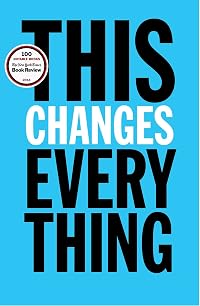
This Changes Everything: Capitalism vs. the Climate
by Naomi Klein
On This Page
Description
The most important book yet from the author of the international bestseller The Shock Doctrine, a brilliant explanation of why the climate crisis challenges us to abandon the core "free market" ideology of our time, restructure the global economy, and remake our political systems. In short, either we embrace radical change ourselves or radical changes will be visited upon our physical world. The status quo is no longer an option. In This Changes Everything Naomi Klein argues that climate show more change isn't just another issue to be neatly filed between taxes and health care. It's an alarm that calls us to fix an economic system that is already failing us in many ways. Klein meticulously builds the case for how massively reducing our greenhouse emissions is our best chance to simultaneously reduce gaping inequalities, re-imagine our broken democracies, and rebuild our gutted local economies. She exposes the ideological desperation of the climate-change deniers, the messianic delusions of the would-be geo-engineers, and the tragic defeatism of too many mainstream green initiatives. And she demonstrates precisely why the market has not-and cannot-fix the climate crisis but will instead make things worse, with ever more extreme and ecologically damaging extraction methods, accompanied by rampant disaster capitalism. Klein argues that the changes to our relationship with nature and one another that are required to respond to the climate crisis humanely should not be viewed as grim penance, but rather as a kind of gift-a catalyst to transform broken economic and cultural priorities and to heal long-festering historical wounds. And she documents the inspiring movements that have already begun this process: communities that are not just refusing to be sites of further fossil fuel extraction but are building the next, regeneration-based economies right now. Can we pull off these changes in time? Nothing is certain. Nothing except that climate change changes everything. And for a very brief time, the nature of that change is still up to us. show lessTags
Recommendations











Member Recommendations
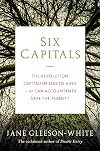
Six Capitals, or Can Accountants Save the Planet?: Rethinking Capitalism for the Twenty-First Century by Jane Gleeson-White
dajashby Gleeson-White has the same concerns, but believes it is not too late to save ourselves by reforming corporate accounting.


Member Reviews
This book is a conversation starter. It’s the kind of information that should be common knowledge, and common conversation, but isn’t. It’s inconclusive, because its scope spans multiple paradigms.
For years I’ve been frustrated by the global warming conversation. What about Jevon’s paradox [that gains in efficiency lead to increased resource consumption]? What about our growth-based money system? What about social justice? What about friendship, community, and human maturation? What about permaculture and regenerative business?
For me, the global warming conversation has been based in a rational framework that fails to understand the complexity of natural systems. Global warming is a symptom, and its root causes are show more disparate.
As you might have guessed by now, only on the surface could you say this book is about global warming. It’s a history of the past fifty year of environmentalism. It’s a portrait of all kinds of resistance movements. It’s unblinking witness to the deep violence of civilization.
Global warming and its implication are so profound that none of us have a clue about how the next century will shake out. But just because we don’t have a detailed strategic plan is no reason not to start wading into this river right now. There are millions of first steps ready for the taking, and once we depart on this journey, our path will gain increasing clarity. It doesn’t all add up?
Examples of the things that should be common context but aren’t:
- Did you know that the Nature Conservancy killed off an endangered bird by drilling for oil?
- Did you know that Nigera’s slaughter hundreds of indigenous people in 1998 because they were asking for their treaties surrounding oil rights to be honored?
Klein ends the book with a personal story about her own struggles with fertility, and her shift to a holistic approach. show less
For years I’ve been frustrated by the global warming conversation. What about Jevon’s paradox [that gains in efficiency lead to increased resource consumption]? What about our growth-based money system? What about social justice? What about friendship, community, and human maturation? What about permaculture and regenerative business?
For me, the global warming conversation has been based in a rational framework that fails to understand the complexity of natural systems. Global warming is a symptom, and its root causes are show more disparate.
As you might have guessed by now, only on the surface could you say this book is about global warming. It’s a history of the past fifty year of environmentalism. It’s a portrait of all kinds of resistance movements. It’s unblinking witness to the deep violence of civilization.
Global warming and its implication are so profound that none of us have a clue about how the next century will shake out. But just because we don’t have a detailed strategic plan is no reason not to start wading into this river right now. There are millions of first steps ready for the taking, and once we depart on this journey, our path will gain increasing clarity. It doesn’t all add up?
Examples of the things that should be common context but aren’t:
- Did you know that the Nature Conservancy killed off an endangered bird by drilling for oil?
- Did you know that Nigera’s slaughter hundreds of indigenous people in 1998 because they were asking for their treaties surrounding oil rights to be honored?
Klein ends the book with a personal story about her own struggles with fertility, and her shift to a holistic approach. show less
Klein drops brutal facts and undeniably calls us to act. At the same time, she assures us that the path to climate salvation lies not through nebulous future innovation, but a recommitment to existing social movements: only socialism can save the species.
I buy it: the profit motive's profligate ignorance of the actual cost of doing business is a gross, deliberate oversight. Wherever we build ourselves up at the expense of the commons — without regenerative compensation — we steal and murder. Klein's argument demonstrates how free-market capitalism is both immoral, and unsustainable. If we do not subdue it, and replace it we will die badly, and with our neighbors' blood on our hands.
I'm currently a full-blown capitalist capitulator, show more deriving my disproportionate security from the lucre of exploitative consumerism. This book provides me with inspiration to look not for a more lucrative position, but a more equitable one — or else I'll deserve every ounce of social retribution with which I meet.
We need everyone behind these efforts to dismantle patriarchal, hierarchical machines of destruction. show less
I buy it: the profit motive's profligate ignorance of the actual cost of doing business is a gross, deliberate oversight. Wherever we build ourselves up at the expense of the commons — without regenerative compensation — we steal and murder. Klein's argument demonstrates how free-market capitalism is both immoral, and unsustainable. If we do not subdue it, and replace it we will die badly, and with our neighbors' blood on our hands.
I'm currently a full-blown capitalist capitulator, show more deriving my disproportionate security from the lucre of exploitative consumerism. This book provides me with inspiration to look not for a more lucrative position, but a more equitable one — or else I'll deserve every ounce of social retribution with which I meet.
We need everyone behind these efforts to dismantle patriarchal, hierarchical machines of destruction. show less
This is an incredible book—not just the best book on climate change I've read, but one of the most important works of nonfiction, period.
If you're a person in this world and care about the welfare of other human beings and/or are planning on being alive for the next 30 years, you need to read this book. If you want the Cliff Notes, read some Bill McKibben first, but then you should probably still read this book.
I haven't read Klein before and was seriously impressed by the meticulousness of her research and clarity of her writing. She synthesizes an impressive amount of information about the science and politics of climate change. Whether or not you subscribe to her flavor of social justice-informed politics, she tells a very clear show more and powerful story of the mess we are in and the smokescreens that are obscuring the possible solutions. I feel much better equipped to think critically about the spectrum of arguments out there about the politics and logistics of climate change.
I'm afraid I'm pretty pessimistic about our ability to mitigate this disaster, although I am optimistic about the power of communities to weather the storm as best they can. It's possible that out of disaster will spring a climate justice revolution, as Klein predicts in her powerful conclusion, but I worry it will be as incomplete as the social revolutions that preceded it.
Still, I was rereading the first volume of The Lord of the Rings while I tackled this book, and if there was ever a narrative to inform our predicament, there it is (for all its valuation of war and kingship). And journeying into Mordor, against the wishes of powerful interests who tell us the system can save us, is in turn a bit like walking away from Omelas. It may be a fool's errand but it's the only ethical choice we've got.
In other words, if I happen to get arrested at an environmental protest in the next few years, you can blame Tolkien. :) show less
If you're a person in this world and care about the welfare of other human beings and/or are planning on being alive for the next 30 years, you need to read this book. If you want the Cliff Notes, read some Bill McKibben first, but then you should probably still read this book.
I haven't read Klein before and was seriously impressed by the meticulousness of her research and clarity of her writing. She synthesizes an impressive amount of information about the science and politics of climate change. Whether or not you subscribe to her flavor of social justice-informed politics, she tells a very clear show more and powerful story of the mess we are in and the smokescreens that are obscuring the possible solutions. I feel much better equipped to think critically about the spectrum of arguments out there about the politics and logistics of climate change.
I'm afraid I'm pretty pessimistic about our ability to mitigate this disaster, although I am optimistic about the power of communities to weather the storm as best they can. It's possible that out of disaster will spring a climate justice revolution, as Klein predicts in her powerful conclusion, but I worry it will be as incomplete as the social revolutions that preceded it.
Still, I was rereading the first volume of The Lord of the Rings while I tackled this book, and if there was ever a narrative to inform our predicament, there it is (for all its valuation of war and kingship). And journeying into Mordor, against the wishes of powerful interests who tell us the system can save us, is in turn a bit like walking away from Omelas. It may be a fool's errand but it's the only ethical choice we've got.
In other words, if I happen to get arrested at an environmental protest in the next few years, you can blame Tolkien. :) show less
Before I read it, a friend referred to this book as "life-changing" - and it is, at least I hope it is for all who read it. It's also a very unsettling, daunting but ultimately inspiring read - like all the best manifestoes and calls for action. I regard myself as well-informed about the climate crisis facing us all, but most importantly, Naomi Klein reveals the extreme complexity and inter-relatedness of the forces, political, economic and pseudo-scientific - behind climate change denialism, and points to the disasters, already gathering force, if the climate-deniers are not kicked out of their positions of political and economic power. The global power of free-market capitalism is clearly the main block to achieving a just and show more equitable solution to this immense challenge, and this message will seem just too daunting or depressing to many . However, in drawing the many threads of her argument together in the last chapter, Naomi Klein points to huge social and political transformations that resulted from mass-mobilizations in the past - from the defeat of slavery, to universal suffrage, post-colonial independence, economic and social rights regulation arising from the depression and world war two, feminism and many others. It can happen again - and must. show less
It's a great, six-syllable haiku of a title, with valences for days: This book will change everything, buy it (canny marketing from the consumer theorist of No Logo)! Climate change is a sociopolitical, historic, indeed geological event so massive that it must definitively shift our agenda as progressives (the political shock par excellence from the writer of The Shock Doctrine)! But deeper still, beneath the consumer capitalism and the neoliberal, crisis capitalism that she's already taken apart, this book marks Klein's decisive, performative repudiation of capitalism per se, the retreat to the Earth--our first home, our last redoubt--and the message page after page that our economic system as such, not merely in its more exotic and show more virulent tendencies, has been waging a war now revealed as not merely against the poor, or indigenous peoples, or the decent society, but against life itself.
Capitalism already changed everything, in other words--it's the first and only source of the "this" of the title, the warming climate, the existential threat to us all. But naming capitalism (I get 18,200 google hits for "Capitalocene," by the way) and not humanity as the enemy, Klein affirms, can change everything again: give us a platform to rally and make the fundamental socioeconomic shift that most people either gave up on long ago when they put away impractical childish things (in what other realm do people hold as dogma the decisions they made when they were fifteen, or nineteen, or twenty-six, except "socialism works in theory but not in the real world"--and how can they not reevaluate when what passes for hard-headed pragmatism in the "real world" is literally destroying the planet???) or kept glowing in heart while slowly coming to terms with the thought that we'd never see it in practice (one of the things I've struggled with especially since the birth of my son is that an activist life, working to make a difference, may have been a lot more possible than I understood it to be as a younger man, and even if it might still be possible--?--I've made it more difficult with my life choices).
That is to say, just as the climate crisis is playing out in ways so totally imbricated with capitalism's sins of the past and present--colonialism (and the hard road of sorting out who gets to emit and who pays in the present), indigenous genocide (and the potential for still-not-forgotten indigenous earthways and not-totally-extinguished land title to serve as a base from which to organize and fight back--Earth as redoubt again), precarity (and people's distraction by the hard work of survival and the insidious colonization of their brains from what they could have been, the majesty that still lies dormant within), extractivism (need I say more)--the unprecedented nature of this threat and the changes we need to make to face it make it potentially a chance to fix everything. Every social injustice. If you accept that it's our economic system that's causing the damage, then how can you not see this potential?
I'd like next to read the "Leap Manifesto" issued by Klein and others up here in Canada, and intended to push things forward: I've seen a lot of debate on the level of stereotype--"small is beautiful" little-earthers versus geoengineering crackpots (Klein disposes of these influential weirdos, similar in so many of their assumptions to Friedmanite economists, very effectively)--but from what I can see, Klein at least here is proposing something a lot more nuanced, as well as advanced/complex--a stewardship that doesn't lapse into environmental Luddism, takes full advantage of the fruits of our science, but also doesn't propose, you know, blocking out the sun. Seems reasonable. I'd like to read the LM first because it's a document for practical action, as this is not; second because although the constellation of concepts Klein nudges into alignment here is a unified, streamlined, accessible theory, there's not really a lot new about it, and even sadly failed idealists like oneself won't need to spend much time going over the basics of "the world is warming," "the tar sands are fucked," etc.; and third because given that old-ground feeling to much of this, it remains an unnecessarily big lump and hard to digest--it took me a year and a half to read, which is pretty much unprecedented (I like to get through things), and that's partly down to content (chapters that had a strong, specific central idea, like the one on indigenous resistance or the geoengineering one aforementioned, read like well-put-together features in Harper's; others, like the (several) ones on how "people have the power," meander and fizzle) and partly to Klein's writing style (octopus sentences cramming in every kind of irrelevant allusion and adjective, overstuffing one sentence to avoid two, doing it in the name of travelling light and achieving just the opposite. Ugly like my writing but also without its whimsy, which I hope helps? No?). So that-all enervates this necessarily populist project quite a lot. And so I guess I'm now looking to the Leap Manifesto to provide the slim, focused statement of values and absolutely concrete plan for action that is not, in any usable way, present here. show less
Capitalism already changed everything, in other words--it's the first and only source of the "this" of the title, the warming climate, the existential threat to us all. But naming capitalism (I get 18,200 google hits for "Capitalocene," by the way) and not humanity as the enemy, Klein affirms, can change everything again: give us a platform to rally and make the fundamental socioeconomic shift that most people either gave up on long ago when they put away impractical childish things (in what other realm do people hold as dogma the decisions they made when they were fifteen, or nineteen, or twenty-six, except "socialism works in theory but not in the real world"--and how can they not reevaluate when what passes for hard-headed pragmatism in the "real world" is literally destroying the planet???) or kept glowing in heart while slowly coming to terms with the thought that we'd never see it in practice (one of the things I've struggled with especially since the birth of my son is that an activist life, working to make a difference, may have been a lot more possible than I understood it to be as a younger man, and even if it might still be possible--?--I've made it more difficult with my life choices).
That is to say, just as the climate crisis is playing out in ways so totally imbricated with capitalism's sins of the past and present--colonialism (and the hard road of sorting out who gets to emit and who pays in the present), indigenous genocide (and the potential for still-not-forgotten indigenous earthways and not-totally-extinguished land title to serve as a base from which to organize and fight back--Earth as redoubt again), precarity (and people's distraction by the hard work of survival and the insidious colonization of their brains from what they could have been, the majesty that still lies dormant within), extractivism (need I say more)--the unprecedented nature of this threat and the changes we need to make to face it make it potentially a chance to fix everything. Every social injustice. If you accept that it's our economic system that's causing the damage, then how can you not see this potential?
I'd like next to read the "Leap Manifesto" issued by Klein and others up here in Canada, and intended to push things forward: I've seen a lot of debate on the level of stereotype--"small is beautiful" little-earthers versus geoengineering crackpots (Klein disposes of these influential weirdos, similar in so many of their assumptions to Friedmanite economists, very effectively)--but from what I can see, Klein at least here is proposing something a lot more nuanced, as well as advanced/complex--a stewardship that doesn't lapse into environmental Luddism, takes full advantage of the fruits of our science, but also doesn't propose, you know, blocking out the sun. Seems reasonable. I'd like to read the LM first because it's a document for practical action, as this is not; second because although the constellation of concepts Klein nudges into alignment here is a unified, streamlined, accessible theory, there's not really a lot new about it, and even sadly failed idealists like oneself won't need to spend much time going over the basics of "the world is warming," "the tar sands are fucked," etc.; and third because given that old-ground feeling to much of this, it remains an unnecessarily big lump and hard to digest--it took me a year and a half to read, which is pretty much unprecedented (I like to get through things), and that's partly down to content (chapters that had a strong, specific central idea, like the one on indigenous resistance or the geoengineering one aforementioned, read like well-put-together features in Harper's; others, like the (several) ones on how "people have the power," meander and fizzle) and partly to Klein's writing style (octopus sentences cramming in every kind of irrelevant allusion and adjective, overstuffing one sentence to avoid two, doing it in the name of travelling light and achieving just the opposite. Ugly like my writing but also without its whimsy, which I hope helps? No?). So that-all enervates this necessarily populist project quite a lot. And so I guess I'm now looking to the Leap Manifesto to provide the slim, focused statement of values and absolutely concrete plan for action that is not, in any usable way, present here. show less
“We are left with a stark choice: allow climate disruption to change everything about our world, or change pretty much everything about our economy to avoid that fate. But we need to be very clear: because of our decades of collective denial, no gradual, incremental options are left to us.”
In Naomi Klein’s new book This Changes Everything, she draws a very clear and unsettling picture of where we are headed if we continue to do nothing about climate change. She looks at many of the simplistic solutions put forward and why they fail including individual choices that ignore or deny the socioeconomic conditions that make these untenable for much of the third world. She also shows the hypocrisy of many of the arguments against action: show more that to do anything would be too expensive; that it’s pointless for the west to do anything if China and India aren’t on side; and the worst hypocrisy of all, it’s too late so what’s the point although this may become a self-fulfilling argument if we don’t change our fossil-fueled addicted ways ASAP.
She looks at past and present environmental movements: how many of the older movements were co-opted and what the new movements need to do. And she shows the importance of the Indigenous communities who are leading the climate justice movement and what we can learn from them:
"The movements against extreme energy extraction are becoming more than just battles against specific oil, gas, and coal companies and more, even than pro-democracy movements. They are opening up spaces for a historical reconciliation between Indigenous peoples and non-natives, who are finally understanding that, at a time when elected officials have open disdain for basic democratic principles, Indigenous rights are not a threat, but a tremendous gift.”
Her book is both unsettling and important. She has a clear, concise way of writing that makes the science and economics easy to understand. But she not only explains the problems, she gives solutions albeit very hard ones. She admits that, while doing researching for the book, the evidence of the devastation doing nothing will cause changed her. She came to the realization that we have left it too long for ‘centrist’ solutions:
“the things we must do to avoid catastrophic warming are no longer just in conflict with the particular strain of deregulated capitalism that triumphed in the 1980s. They are now in conflict with the fundamental imperative at the heart of our economic model: grow or die.”
This book may not change everything. There will, no doubt, be plenty of people saying she’s gone too far, that her solutions are too ‘radical’. There will still be lots of people that continue to deny the very fact of climate change including commentators on TV trying to prove its non-existence with a glass of water and an ice cube. That’s not likely to change. But, if the recent climate marches around the world are evidence of anything, it’s that there are hundreds of thousands of people who believe in the science of climate change and what it means to our futures and are no longer asking but demanding change. As Klein points out, climate change is a “civilizational wake-up call. A powerful message – spoken in the language of fires, floods, droughts, and extinctions – telling us that we need an entirely new economic model and a new way of sharing this planet”. And this book makes it clear that we had better wake up soon show less
In Naomi Klein’s new book This Changes Everything, she draws a very clear and unsettling picture of where we are headed if we continue to do nothing about climate change. She looks at many of the simplistic solutions put forward and why they fail including individual choices that ignore or deny the socioeconomic conditions that make these untenable for much of the third world. She also shows the hypocrisy of many of the arguments against action: show more that to do anything would be too expensive; that it’s pointless for the west to do anything if China and India aren’t on side; and the worst hypocrisy of all, it’s too late so what’s the point although this may become a self-fulfilling argument if we don’t change our fossil-fueled addicted ways ASAP.
She looks at past and present environmental movements: how many of the older movements were co-opted and what the new movements need to do. And she shows the importance of the Indigenous communities who are leading the climate justice movement and what we can learn from them:
"The movements against extreme energy extraction are becoming more than just battles against specific oil, gas, and coal companies and more, even than pro-democracy movements. They are opening up spaces for a historical reconciliation between Indigenous peoples and non-natives, who are finally understanding that, at a time when elected officials have open disdain for basic democratic principles, Indigenous rights are not a threat, but a tremendous gift.”
Her book is both unsettling and important. She has a clear, concise way of writing that makes the science and economics easy to understand. But she not only explains the problems, she gives solutions albeit very hard ones. She admits that, while doing researching for the book, the evidence of the devastation doing nothing will cause changed her. She came to the realization that we have left it too long for ‘centrist’ solutions:
“the things we must do to avoid catastrophic warming are no longer just in conflict with the particular strain of deregulated capitalism that triumphed in the 1980s. They are now in conflict with the fundamental imperative at the heart of our economic model: grow or die.”
This book may not change everything. There will, no doubt, be plenty of people saying she’s gone too far, that her solutions are too ‘radical’. There will still be lots of people that continue to deny the very fact of climate change including commentators on TV trying to prove its non-existence with a glass of water and an ice cube. That’s not likely to change. But, if the recent climate marches around the world are evidence of anything, it’s that there are hundreds of thousands of people who believe in the science of climate change and what it means to our futures and are no longer asking but demanding change. As Klein points out, climate change is a “civilizational wake-up call. A powerful message – spoken in the language of fires, floods, droughts, and extinctions – telling us that we need an entirely new economic model and a new way of sharing this planet”. And this book makes it clear that we had better wake up soon show less
Naomi's political lens is so focused that it's blinding. This is less a book about climate change than it is about why climate change is now the perfect excuse to do everything she's always wanted to do anyway (eg. scrap globalization, redistribute wealth), which is fine, but she ignores any contrary evidence. For example, she has a brief section on the brief flourishing and untimely death of Ontario's green energy economy, which she blames 100% on the WTO's decision on domestic content. The waffling and delays of government regulators on applications, the constant changes in direction, and the dead-set-contrarian politics of the mostly rural ridings where wind energy projects were to be sited were completely overlooked, but as anyone show more who actually went through the process can tell you, the domestic content reg change was the least of any developer's worries, and came after years and years of frustrations brought about by the public sector.
She spends a great deal of time criticizing anyone else whose political perspectives change how they perceive climate science and solutions, but is much, much worse herself in this book. No information penetrates unless it conforms with her pre-existing beliefs. But the global carbon cycle is not sentient. It doesn't care how carbon emissions are reduced; it doesn't even care if they are reduced at all. It does not vote and has no political preferences. WE do; and so it's up to us to make some decisions about if and how we're going to turn things around, but the important thing is that emissions go down. It should be a mark of deep shame to any thinking citizen in a democratic society that authoritarian China is pulling so far ahead in the transition to a renewable economy.
This is a terrible book on climate change. You'd be better off reading almost anything else on the subject. show less
She spends a great deal of time criticizing anyone else whose political perspectives change how they perceive climate science and solutions, but is much, much worse herself in this book. No information penetrates unless it conforms with her pre-existing beliefs. But the global carbon cycle is not sentient. It doesn't care how carbon emissions are reduced; it doesn't even care if they are reduced at all. It does not vote and has no political preferences. WE do; and so it's up to us to make some decisions about if and how we're going to turn things around, but the important thing is that emissions go down. It should be a mark of deep shame to any thinking citizen in a democratic society that authoritarian China is pulling so far ahead in the transition to a renewable economy.
This is a terrible book on climate change. You'd be better off reading almost anything else on the subject. show less
Members
- Recently Added By
Lists

Non-Fiction Worth Reading
1,016 works; 262 members

CBC's 100 True Stories
100 works; 6 members

Climate Change
39 works; 2 members

Top Five Books of 2014
1,064 works; 398 members

Climate Change
87 works; 7 members

Climate Change
50 works; 1 member

Top Five Books of 2019
387 works; 107 members

Refuse, Resist, Rebel
38 works; 3 members

Review 2
36 works; 1 member

Books Read in 2016
4,666 works; 199 members

Books Mentioned in the A+ Autostraddle Pop Up Discords Nov 2022 & Dec 2022
223 works; 3 members

Books recommended by Calgary Public Library staff
1,588 works; 4 members

Evergreen Award™ Winners and Nominees 2005–2024
200 works; 3 members

Science: Earth
109 works; 1 member

Economics
16 works; 1 member
Author Information

22+ Works 20,442 Members
Naomi Klein was born in Montreal, Canada on May 8, 1970. She attended the University of Toronto and began writing there for the student newspaper, The Varsity. Klein was offered a series of editorial jobs in newspapers and magazines and this prevented her from getting a final degree from the university. She worked for The Toronto Globe and Mail show more and This Magazine. She is an author and social activist, who is known for her political analyses and criticism of corporate globalization. Her books include No Logo: Taking Aim at the Brand Bullies, Fences and Windows: Dispatches from the Front Lines of the Globalization Debate, and The Shock Doctrine: The Rise of Disaster Capitalism. She received the 2014 Hilary Weston Writers' Trust Prize for Nonfiction for This Changes Everything: Capitalism vs. the Climate. (Bowker Author Biography) show less
All Editions
Some Editions
Awards and Honors
Awards
Common Knowledge
- Canonical title
- This Changes Everything: Capitalism vs. the Climate
- Original title
- This Changes Everything: Capitalism vs. the Climate
- Original publication date
- 2014-09-16
- Important places
- Earth
- Important events
- climate crisis
- Epigraph
- "We need to remember that the work of our time is bigger than climate change. We need to be setting our sights higher and deeper. What we're really talking about, if we're honest with ourselves, is transforming everything abo... (show all)ut the way we live on this planet."
-- Rebecca Tarbotton, Executive Director of the Rainforest Action Network, 1973-2012
"In my books I've imagined people salting the Gulf Stream, damming the glaciers sliding off the Greenland ice cap, pumping ocean water into dry basins of the Sahara and Asia to create salt seas, pumping melted ice from Antarctica north to provide freshwater, genetically engineering bacteria to sequester more carbon in the roots of trees, raising Florida 30 feet to get it back above water, and (hardest of all) comprehensively changing capitalism."
-- Science fiction writer Kim Stanley Robinson, 2012 - Dedication
- For Toma
- First words
- A voice came over the intercom: would the passengers of Flight 3935, scheduled to depart Washington, D.C., for Charleston, South Carolina, kindly collect their carry-on luggage and get off the plane. (Introduction)
- Quotations
- ... The [climate change] deniers, and the ideological movement from which they sprang, won the battle over which values should govern our society. Their vision – that greed should guide us – has dramatically remade our wo... (show all)rld over the last four decades ...
... the real reason we are failing to rise to the climate moment is because the actions required directly challenge our reigning economic paradigm (deregulated capitalism combined with public austerity) - Last words
- (Click to show. Warning: May contain spoilers.)That's a good question, for all of us.
- Original language
- English
- Canonical DDC/MDS
- 363.73874
- Canonical LCC
- HC79.E5
Classifications
- Genres
- Economics, Science & Nature, General Nonfiction, Nonfiction, Politics and Government
- DDC/MDS
- 363.73874 — Society, government, & culture Social problems and social services Public Safety - Police, Crime Investigation Environmental Issues - Pollution, Recycling, Global Warming Pollution Pollutants by source Fumes, gases, smoke Greenhouse gases
- LCC
- HC79 .E5 — Social sciences Economic history and conditions Economic history and conditions Special topics
- BISAC
Statistics
- Members
- 2,751
- Popularity
- 6,697
- Reviews
- 53
- Rating
- (4.15)
- Languages
- 13 — Catalan, Danish, Dutch, English, Finnish, French, German, Italian, Polish, Portuguese, Spanish, Swedish, Turkish
- Media
- Paper, Audiobook, Ebook
- ISBNs
- 54
- ASINs
- 16