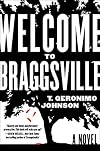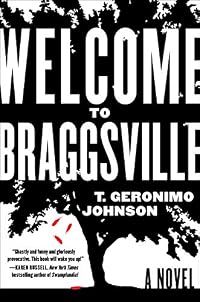
Welcome to Braggsville
by T. Geronimo Johnson
On This Page
Description
LONGLISTED FOR THE 2015 NATIONAL BOOK AWARDNAMED ONE OF THE BEST BOOKS OF 2015 BY THE WASHINGTON POST, TIME, MEN'S JOURNAL, CHICAGO TRIBUNE, KANSAS CITY STAR, BROOKLYN MAGAZINE, NPR, HUFFINGTON POST, THE DAILY BEAST, AND BUZZFEED
WINNER OF THE 2015 ERNEST J. GAINES AWARD FOR LITERARY EXCELLENCE
LONGLISTED FOR THE 2016 ANDREW CARNEGIE MEDAL FOR EXCELLENCE IN FICTION
NATIONAL BESTSELLER
From the PEN/Faulkner finalist and critically acclaimed author of Hold It 'Til It Hurts comes a dark and show more socially provocative Southern-fried comedy about four UC Berkeley students who stage a dramatic protest during a Civil War reenactment—a fierce, funny, tragic work from a bold new writer.
Welcome to Braggsville. The City that Love Built in the Heart of Georgia. Population 712
Born and raised in the heart of old Dixie, D'aron Davenport finds himself in unfamiliar territory his freshman year at UC Berkeley. Two thousand miles and a world away from his childhood, he is a small-town fish floundering in the depths of a large, hyper-liberal pond. Caught between the prosaic values of his rural hometown and the intellectualized multicultural cosmopolitanism of Berzerkeley, the nineteen-year-old white kid is uncertain about his place until one disastrous party brings him three idiosyncratic best friends: Louis, a "kung-fu comedian" from California; Candice, an earnest do-gooder claiming Native roots from Iowa; and Charlie, an introspective inner-city black teen from Chicago. They dub themselves the "4 Little Indians."
But everything changes in the group's alternative history class, when D'aron lets slip that his hometown hosts an annual Civil War reenactment, recently rebranded "Patriot Days." His announcement is met with righteous indignation, and inspires Candice to suggest a "performative intervention" to protest the reenactment. Armed with youthful self-importance, makeshift slave costumes, righteous zeal, and their own misguided ideas about the South, the 4 Little Indians descend on Braggsville. Their journey through backwoods churches, backroom politics, Waffle Houses, and drunken family barbecues is uproarious to start, but will have devastating consequences.
With the keen wit of Billy Lynn's Long Halftime Walk and the deft argot of The Brief Wondrous Life of Oscar Wao, T. Geronimo Johnson has written an astonishing, razor-sharp satire. Using a panoply of styles and tones, from tragicomic to Southern Gothic, he skewers issues of class, race, intellectual and political chauvinism, Obamaism, social media, and much more.
A literary coming-of-age novel for a new generation, written with tremendous social insight and a unique, generous heart, Welcome to Braggsville reminds us of the promise and perils of youthful exuberance, while painting an indelible portrait of contemporary America.
. show less
Tags
Recommendations

Member Recommendations
Member Reviews
Although born and raised in New Orleans there is more Ferlinghetti than Faulkner in T. Geronimo Johnson’s satirical novel, Welcome to Braggsville. Warning, this is not a book for readers who are used to being spoon-fed content and answers. There is plenty of content to be had but you will need to find the answers on your own.
The pace and style of the story changes almost by the minute, frenetic as a beat poet one page, measured and reflective the next. Much of it is reminiscent of all-night conversations I had in college, wandering and disjointed in places but oh-so relevant and self-assured. But that stands to reason, seeing as the main characters are students at UC Berkeley. You don’t get any more relevant and self-assured than a show more Cal student. Trust me on this.
Here’s the story: Four Cal students from various walks of life decide that, for a history class project, they will stage a reenactment. These self-titled ‘four little Indians’ would go to Braggsville, Georgia, a town that annually hosts a Civil War reenactment, and stage their own reenactment of a lynching. Needless to say, things don’t go as expected and their plans go awry faster than you can say ‘media shitstorm’.
To me, this is less a story than a set-up for a discussion in my daughter’s multi-cultural psychology class. Every action by every participant is questioned. Did you think this was a good idea? Do you think it was funny? Are you trying to make us look bad? More than anything, the book is a mirror that reflects the absurdity in all of us. Left-leaning liberal college students fare no better than the white Braggsville residents or the black residents in The Gully.
There is more that I want to say about this book but I think it will best be offered in the context of a discussion. Every reader will form his or her own conclusions and I look forward to finding out if mine sound as whacky to others as they do to me.
FYI: On a 5-point scale I assign stars based on my assessment of what the book needs in the way of improvements:
• 5 Stars – Nothing at all. If it ain’t broke, don’t fix it.
• 4 Stars – It could stand for a few tweaks here and there but it’s pretty good as it is.
• 3 Stars – A solid C grade. Some serious rewriting would be needed in order for this book to be considered great or memorable.
• 2 Stars – This book needs a lot of work. A good start would be to change the plot, the character development, the writing style and the ending.
• 1 Star - The only thing that would improve this book is a good bonfire. show less
The pace and style of the story changes almost by the minute, frenetic as a beat poet one page, measured and reflective the next. Much of it is reminiscent of all-night conversations I had in college, wandering and disjointed in places but oh-so relevant and self-assured. But that stands to reason, seeing as the main characters are students at UC Berkeley. You don’t get any more relevant and self-assured than a show more Cal student. Trust me on this.
Here’s the story: Four Cal students from various walks of life decide that, for a history class project, they will stage a reenactment. These self-titled ‘four little Indians’ would go to Braggsville, Georgia, a town that annually hosts a Civil War reenactment, and stage their own reenactment of a lynching. Needless to say, things don’t go as expected and their plans go awry faster than you can say ‘media shitstorm’.
To me, this is less a story than a set-up for a discussion in my daughter’s multi-cultural psychology class. Every action by every participant is questioned. Did you think this was a good idea? Do you think it was funny? Are you trying to make us look bad? More than anything, the book is a mirror that reflects the absurdity in all of us. Left-leaning liberal college students fare no better than the white Braggsville residents or the black residents in The Gully.
There is more that I want to say about this book but I think it will best be offered in the context of a discussion. Every reader will form his or her own conclusions and I look forward to finding out if mine sound as whacky to others as they do to me.
FYI: On a 5-point scale I assign stars based on my assessment of what the book needs in the way of improvements:
• 5 Stars – Nothing at all. If it ain’t broke, don’t fix it.
• 4 Stars – It could stand for a few tweaks here and there but it’s pretty good as it is.
• 3 Stars – A solid C grade. Some serious rewriting would be needed in order for this book to be considered great or memorable.
• 2 Stars – This book needs a lot of work. A good start would be to change the plot, the character development, the writing style and the ending.
• 1 Star - The only thing that would improve this book is a good bonfire. show less
A kid from the Deep South goes off to attend Berkeley, where he happens to mention to some of his friends the annual Civil War re-enactment that takes place in his home town. The friends are appalled, and one of them comes up with the idea of showing up at the event and staging a "performative intervention": a re-enactment of the lynching of an escaped slave, intended as a form of protest. This... does not go well.
This is a book I find myself with hard-to-pin-down mixed feelings about. At various points during the novel, I found myself thinking that the social commentary was a little too obvious, or a little too hard to interpret clearly, or nicely nuanced in a way that provides a lot to chew on but very few pat answers. (I suppose it's show more entirely possible that it is, in fact, all three.) I also thought the was writing sometimes clever and evocative, but sometimes too clever, too obscure, too overdone. In the end, I don't know if I enjoyed reading it (in whatever sense "enjoyed" is even the appropriate word for a story like this), or that I was entirely satisfied with it. But I do feel glad to have read it, I think. show less
This is a book I find myself with hard-to-pin-down mixed feelings about. At various points during the novel, I found myself thinking that the social commentary was a little too obvious, or a little too hard to interpret clearly, or nicely nuanced in a way that provides a lot to chew on but very few pat answers. (I suppose it's show more entirely possible that it is, in fact, all three.) I also thought the was writing sometimes clever and evocative, but sometimes too clever, too obscure, too overdone. In the end, I don't know if I enjoyed reading it (in whatever sense "enjoyed" is even the appropriate word for a story like this), or that I was entirely satisfied with it. But I do feel glad to have read it, I think. show less
Welcome to Braggsville by T. Geronimo Johnson is not an easy book to read. No book that seeks to take an honest look at racism in America is easy to read. There is always so much hurt and pain, even when it is packaged with as much satire and humor as The Confederacy of Dunces. For me, though, the real difficulty was with the prose. I set it aside four times, struggling with the prose. I began to wonder if I was too old for the book. The prose is like jazz, scatting wildly through stream of consciousness narratives to academic goo-goo and all over the place. I lost myself in the text and lost my place time and again. And yet…
The prose is beautiful and Johnson has so much to say that is important and worthy. So, even if it is a show more struggle, it is worth it. And perhaps my struggle is caused as much by my head cold that makes my eyes ache and tear as it is by the wildness of the prose. After all, sometimes the words and the ideas just take my breath away.
This is the story of D’Aron or Daron Davenport of Braggsville, GA, pop. 712. He is not at home in Braggsville and escapes to Berzerkley, Oakland because, as he wrote in his application essay, “I like UC Berkeley because the only way I could get farther from home is to learn how to swim.” At Berkeley he forms a tight-knit bond with three other students, Luis Chang who hopes to be the Malaysian Lenny Bruce Lee, Candice who clings to her rumored Native American ancestry to overcome her IA whiteness, and Charlie, a black should-be athlete from Chicago. They get each other and their bonds grow ever tighter as they move through their freshman into their sophomore year.
The trouble began when D’aron’s American History X, Y, Z class takes up the subject of reenactments and he mentions that his hometown does one every year. Candice suggests they do a reenactment, too, one that would rebut the honoring our heritage mask of white supremacy. They decide to go there for Spring Break and in a “performative intervention” play the role of slaves complete with reenacting a lynching. Things go horribly wrong and a national scandal erupts complete with protesters and counter-protesters and national media camped out in front of the Davenport home.
See the rest of the review here
https://tonstantweaderreviews.wordpress.com/2016/02/12/welcome-to-braggsville-by... show less
The prose is beautiful and Johnson has so much to say that is important and worthy. So, even if it is a show more struggle, it is worth it. And perhaps my struggle is caused as much by my head cold that makes my eyes ache and tear as it is by the wildness of the prose. After all, sometimes the words and the ideas just take my breath away.
This is the story of D’Aron or Daron Davenport of Braggsville, GA, pop. 712. He is not at home in Braggsville and escapes to Berzerkley, Oakland because, as he wrote in his application essay, “I like UC Berkeley because the only way I could get farther from home is to learn how to swim.” At Berkeley he forms a tight-knit bond with three other students, Luis Chang who hopes to be the Malaysian Lenny Bruce Lee, Candice who clings to her rumored Native American ancestry to overcome her IA whiteness, and Charlie, a black should-be athlete from Chicago. They get each other and their bonds grow ever tighter as they move through their freshman into their sophomore year.
The trouble began when D’aron’s American History X, Y, Z class takes up the subject of reenactments and he mentions that his hometown does one every year. Candice suggests they do a reenactment, too, one that would rebut the honoring our heritage mask of white supremacy. They decide to go there for Spring Break and in a “performative intervention” play the role of slaves complete with reenacting a lynching. Things go horribly wrong and a national scandal erupts complete with protesters and counter-protesters and national media camped out in front of the Davenport home.
See the rest of the review here
https://tonstantweaderreviews.wordpress.com/2016/02/12/welcome-to-braggsville-by... show less
This one didn't land for me. Maybe my expectations were set too high by its award nominee pedigree.
The overwrought earnestness and cringey leftist self policing on expressions of race and identity felt performative, and yet we're asked to believe that they would inspire an even bigger performance. When the protagonist goes home to rural Georgia and is surprised by the reaction to his staged lynching, the book completely lost me.
If this was meant as satire, it's missing the humor. If it's melodrama, it's missing the pathos. Instead, it's somewhere in between, and while that may be true to life, sometimes life doesn't make great art.
The overwrought earnestness and cringey leftist self policing on expressions of race and identity felt performative, and yet we're asked to believe that they would inspire an even bigger performance. When the protagonist goes home to rural Georgia and is surprised by the reaction to his staged lynching, the book completely lost me.
If this was meant as satire, it's missing the humor. If it's melodrama, it's missing the pathos. Instead, it's somewhere in between, and while that may be true to life, sometimes life doesn't make great art.
Shortly after I moved from North Carolina to the San Francisco Bay Area, I saw a promo for a TV documentary that described the Bay Area as "the epicenter of the 1960's Civil Rights Movement." It was my first inkling that the Bay Area thinks of itself as the center of a pre-Copernican universe, the celestial body around which all of the rest of humanity revolves.
A year or so later, my spouse and I were having dinner with a couple who introduced us to James Fowler's six (or seven, counting Stage 0) Stages of Faith. Over bok choy and warm water with lemon, they told us with all seriousness that most parts of the world, especially the American South, are at Stage 2 ("Mythic-Literal") while the Bay Area is at Stage 5 or Stage 6 (Stage 6 show more being "enlightenment"). (This couple also lived in a Spanish-speaking neighborhood because of the lower home prices and then hired a full-time Colombian nanny so they could send their daughter to private school and she would still learn Spanish.)
So, the weather is awesome, but the culture is a little full of itself. ("Why would you live anywhere else?")
As such, I was tickled when T. Geronimo Johnson imported a bit of Bay Area intellectual hubris to small-town Georgia. One has a legitimate complaint if one takes issue with the surface friendliness of the South, but one must also admit to the shallow-judgmentalism-masquerading-as-cultural-sensitivity that pervades the (incredibly segregated) San Francisco Bay Area.
Welcome to Braggsville elicited a response in me similar to the one I get reading Faulkner. On one level, this is the "What the hell is this?" reaction I had to the first several pages of both this book and The Sound and the Fury. It took me a while to get used to Johnson's style, and the absence of quotation marks still tripped me up on occasion to the end of the book. I say I like fiction that requires a little work on my part, but that doesn't mean I don't whine a bit when I first realize I can't just sail through a novel.
On another level, there's the subtle and not-so-subtle confrontation of race issues in the high humidity and rampant greenery of the South. I have much less doubt about Johnson's personal opinion on racism than I do about Faulkner's, but I appreciate the way that Johnson addressed the nuance and conflict within people who didn't make the system but perpetuate it by being born into it, whether that system is in California or in Georgia.
And then there's the thing where dead people have a voice. That's pretty Faulkner, too.
In the middle of all of this is the angst of being a young adult trying to find one's way, which is probably why I found myself considering not picking this back up even though I felt a strong pull towards reading more. At nearly forty, it seems I've still not come to terms with all of the stupid things I did and said during undergrad, and it's a little challenging for me to read such a realistic portrayal of the simultaneous doubt and over-confidence, the clumsy exploration of one's power and freedom (intellectual, sexual, etc.) and the limits thereof.
I wasn't a fan of the inquest scene (courtroom scenes rarely hold my interest) and some of the after-dark stuff that happens in Braggsville is still confusing to me, but overall I enjoyed riding along with Johnson on this tour of the U.S. of A.
In this book are so many issues of intimacy and relationships, both individual and institutional, and the influence we have both locally and more broadly whether we intend to have influence or not. But the idea I think I'll chew on the longest is the notion that sometimes the effects of an action take a long time to ripple out, and that sometimes a thing's worth doing even if it hurts. show less
A year or so later, my spouse and I were having dinner with a couple who introduced us to James Fowler's six (or seven, counting Stage 0) Stages of Faith. Over bok choy and warm water with lemon, they told us with all seriousness that most parts of the world, especially the American South, are at Stage 2 ("Mythic-Literal") while the Bay Area is at Stage 5 or Stage 6 (Stage 6 show more being "enlightenment"). (This couple also lived in a Spanish-speaking neighborhood because of the lower home prices and then hired a full-time Colombian nanny so they could send their daughter to private school and she would still learn Spanish.)
So, the weather is awesome, but the culture is a little full of itself. ("Why would you live anywhere else?")
As such, I was tickled when T. Geronimo Johnson imported a bit of Bay Area intellectual hubris to small-town Georgia. One has a legitimate complaint if one takes issue with the surface friendliness of the South, but one must also admit to the shallow-judgmentalism-masquerading-as-cultural-sensitivity that pervades the (incredibly segregated) San Francisco Bay Area.
Welcome to Braggsville elicited a response in me similar to the one I get reading Faulkner. On one level, this is the "What the hell is this?" reaction I had to the first several pages of both this book and The Sound and the Fury. It took me a while to get used to Johnson's style, and the absence of quotation marks still tripped me up on occasion to the end of the book. I say I like fiction that requires a little work on my part, but that doesn't mean I don't whine a bit when I first realize I can't just sail through a novel.
On another level, there's the subtle and not-so-subtle confrontation of race issues in the high humidity and rampant greenery of the South. I have much less doubt about Johnson's personal opinion on racism than I do about Faulkner's, but I appreciate the way that Johnson addressed the nuance and conflict within people who didn't make the system but perpetuate it by being born into it, whether that system is in California or in Georgia.
And then there's the thing where dead people have a voice. That's pretty Faulkner, too.
In the middle of all of this is the angst of being a young adult trying to find one's way, which is probably why I found myself considering not picking this back up even though I felt a strong pull towards reading more. At nearly forty, it seems I've still not come to terms with all of the stupid things I did and said during undergrad, and it's a little challenging for me to read such a realistic portrayal of the simultaneous doubt and over-confidence, the clumsy exploration of one's power and freedom (intellectual, sexual, etc.) and the limits thereof.
I wasn't a fan of the inquest scene (courtroom scenes rarely hold my interest) and some of the after-dark stuff that happens in Braggsville is still confusing to me, but overall I enjoyed riding along with Johnson on this tour of the U.S. of A.
In this book are so many issues of intimacy and relationships, both individual and institutional, and the influence we have both locally and more broadly whether we intend to have influence or not. But the idea I think I'll chew on the longest is the notion that sometimes the effects of an action take a long time to ripple out, and that sometimes a thing's worth doing even if it hurts. show less
Review of: Welcome to Braggsville, by T. Geronimo Johnson
by Stan Prager (12-12-15)
Rarely do we encounter a work of fiction so unique and thought-provocative that it seems to cut its very own groove in twenty-first century American literature, but such is the case in my opinion with Welcome to Braggsville, the brilliant and delightfully satirical second novel by T. Geronimo Johnson. The last time I was struck so favorably by an idiosyncratic work such as this was upon reading Junot Diaz’s 2008 Pulitzer Prize winner, The Brief Wondrous Life of Oscar Wao, and indeed both novels share an authenticity of voice that not only add credibility to the fictional narratives but actually define these in some sense as their very own sub-genres. show more
The central protagonist of Welcome to Braggsville is D’aron Davenport, a white rural native of the tiny hamlet of Braggsville, Georgia, population 712, who parlays academic excellence and a clever application letter laden with sarcasm into acceptance at the University of California, Berkeley. An outsider trying to gnaw his way inside what he fondly characterizes as “Berzerkeley,” D’aron finally succeeds in bonding with Candice, a principled and attractive white chick from Iowa desperate to assert her one-eighth Native American heritage; Charlie, an athletic black dude from the Chicago hood of questionable sexual orientation; and Louis, a comedic Malaysian character from San Francisco. When D’aron let’s drop that hometown Braggsville hosts an annual Civil War reenactment, he and his new friends – who have collectively dubbed themselves the “4 Little Indians” – uneasily conspire to stage a “performative intervention” protest, which, as events are to prove, decidedly does not go well.
It would not be giving away too much to reveal that Braggsville is a metaphor for the post-racial America that all of us – except perhaps for the snarky pundits on Fox News – have to acknowledge is anything but post-racial, and the “4 Little Indian” millennials represent a slice of its disparate denizens. Johnson, an African-American visiting professor at the Iowa Writer’s Workshop, has managed through this superb and highly-original satire to write about race in America in a manner that somehow defies cliché and turns out to be both gut-wrenching and funny and ultimately tragic. I detected elements of William Faulkner’s Snopes novels, bits and pieces of Kurt Vonnegut’s Cat Cradle phase, John Irving’s Hotel New Hampshire era, and even echoes of Allan Gurganus in Oldest Living Confederate Widow Tells All, but Welcome to Braggsville is most definitely not derivative. In contrast, Johnson’s innovative style seduces the reader with a multilayered narrative that in the end effectively distills both the awkwardness and the perfidy of entrenched racism that not only still characterizes America in 2015 but ultimately defines it.
Midway through the novel, D’aron’s father, in ridiculing a Berkeley class syllabus, indicts both racism and political-correctness, and thereby points to an uncomfortable truth that cannot help but make all of us squirm just a little bit: “I don’t need to go to college for this stuff. I woulda told you this, son: People generally aren’t too fond of people who are different. No one can warm to everybody. That ain’t never gonna change. Only thing’ll change is what counts as different, from time to time. So, try to take ‘em as individuals. Know you can’t fix the world. Get rid of niggers, you get coloreds. Get rid of coloreds, you got blacks. Get rid of blacks, you got African-Americans. It’s all the same if you don’t like ‘em. See, ‘cause if you don’t like ‘em, you’ll make some new shit that’s too clever for them to know all fuck what’s happening. Like Ed down in purchasing, he calls ‘em Mondays. You think that changes what’s in the man’s heart? … No. Why Mondays? … Nobody likes Mondays.” [p239-40]
Every paragraph is not as profound or stylized as that one, and like even the finest literature there are identifiable flaws here and there, but the overall package is nothing short of magnificent. If you want to read a novel that transcends the ordinary and serves up a salient chunk of a quintessential disorder that plagues contemporary America, then I highly recommend that you read Welcome to Braggsville. If you do, I can promise that it will stay with you – not unlike race in America – long after you thought you were done with it.
http://regarp.com/2015/12/12/review-of-welcome-to-braggsville-by-t-geronimo-john... show less
by Stan Prager (12-12-15)
Rarely do we encounter a work of fiction so unique and thought-provocative that it seems to cut its very own groove in twenty-first century American literature, but such is the case in my opinion with Welcome to Braggsville, the brilliant and delightfully satirical second novel by T. Geronimo Johnson. The last time I was struck so favorably by an idiosyncratic work such as this was upon reading Junot Diaz’s 2008 Pulitzer Prize winner, The Brief Wondrous Life of Oscar Wao, and indeed both novels share an authenticity of voice that not only add credibility to the fictional narratives but actually define these in some sense as their very own sub-genres. show more
The central protagonist of Welcome to Braggsville is D’aron Davenport, a white rural native of the tiny hamlet of Braggsville, Georgia, population 712, who parlays academic excellence and a clever application letter laden with sarcasm into acceptance at the University of California, Berkeley. An outsider trying to gnaw his way inside what he fondly characterizes as “Berzerkeley,” D’aron finally succeeds in bonding with Candice, a principled and attractive white chick from Iowa desperate to assert her one-eighth Native American heritage; Charlie, an athletic black dude from the Chicago hood of questionable sexual orientation; and Louis, a comedic Malaysian character from San Francisco. When D’aron let’s drop that hometown Braggsville hosts an annual Civil War reenactment, he and his new friends – who have collectively dubbed themselves the “4 Little Indians” – uneasily conspire to stage a “performative intervention” protest, which, as events are to prove, decidedly does not go well.
It would not be giving away too much to reveal that Braggsville is a metaphor for the post-racial America that all of us – except perhaps for the snarky pundits on Fox News – have to acknowledge is anything but post-racial, and the “4 Little Indian” millennials represent a slice of its disparate denizens. Johnson, an African-American visiting professor at the Iowa Writer’s Workshop, has managed through this superb and highly-original satire to write about race in America in a manner that somehow defies cliché and turns out to be both gut-wrenching and funny and ultimately tragic. I detected elements of William Faulkner’s Snopes novels, bits and pieces of Kurt Vonnegut’s Cat Cradle phase, John Irving’s Hotel New Hampshire era, and even echoes of Allan Gurganus in Oldest Living Confederate Widow Tells All, but Welcome to Braggsville is most definitely not derivative. In contrast, Johnson’s innovative style seduces the reader with a multilayered narrative that in the end effectively distills both the awkwardness and the perfidy of entrenched racism that not only still characterizes America in 2015 but ultimately defines it.
Midway through the novel, D’aron’s father, in ridiculing a Berkeley class syllabus, indicts both racism and political-correctness, and thereby points to an uncomfortable truth that cannot help but make all of us squirm just a little bit: “I don’t need to go to college for this stuff. I woulda told you this, son: People generally aren’t too fond of people who are different. No one can warm to everybody. That ain’t never gonna change. Only thing’ll change is what counts as different, from time to time. So, try to take ‘em as individuals. Know you can’t fix the world. Get rid of niggers, you get coloreds. Get rid of coloreds, you got blacks. Get rid of blacks, you got African-Americans. It’s all the same if you don’t like ‘em. See, ‘cause if you don’t like ‘em, you’ll make some new shit that’s too clever for them to know all fuck what’s happening. Like Ed down in purchasing, he calls ‘em Mondays. You think that changes what’s in the man’s heart? … No. Why Mondays? … Nobody likes Mondays.” [p239-40]
Every paragraph is not as profound or stylized as that one, and like even the finest literature there are identifiable flaws here and there, but the overall package is nothing short of magnificent. If you want to read a novel that transcends the ordinary and serves up a salient chunk of a quintessential disorder that plagues contemporary America, then I highly recommend that you read Welcome to Braggsville. If you do, I can promise that it will stay with you – not unlike race in America – long after you thought you were done with it.
http://regarp.com/2015/12/12/review-of-welcome-to-braggsville-by-t-geronimo-john... show less
The writing is uniformly arresting and the story is wrenching and perfect until the end of ch. 16. After this high dramatic point, the novel remains very, very good. Only, I felt Johnson let go of the reins a little. For my taste he let style and introspection take precedence over story. I wanted more events to happen than did in the last half of the novel. I wanted there to be more consequences for what happened in the first half. I wanted to have the marvelous clash of cultures and ideologies that Johnson set up in the first half to be fulfilled by an equally dramatic climax in the second. I wanted this book to be the Bonfire of the Vanities of the 21st century. Instead, the story retreated into something thoughtful, something show more nuanced, something personal; nothing like the big novel of social commentary I expected, and nothing like what I thought Johnson seemed to be gearing up for in the first half. It was a great read until the end, though--even if it wasn't exactly the read I wanted it to be. show less
Members
- Recently Added By
Lists

Books Read in 2015
3,298 works; 129 members
Books Read in 2016
4,666 works; 197 members

2015 National Book Award for Fiction
10 works; 3 members

Book of the Month Selections 2016 to Present
130 works; 5 members
Author Information

4 Works 507 Members
Awards and Honors
Awards
Distinctions
Common Knowledge
- Canonical title
- Welcome to Braggsville
- Original publication date
- 2015
- Important places
- Georgia, USA; Berkeley, California, USA
- Epigraph
- To be likened? The moon'll tell. Might not a listen, might not a like it, but it'll tell if you can. Give yourself in a jar. Cleave a tomato. Pick the seeds clean. With your mouth, now. Leave it sit for three days behind that... (show all) rank of elfinwood yon. A palm of milk and enough honey to feel right and rub it back up in there real good. Sleep on your left side. The moon'll tell you, in sooth, but you might not like it, even if you be likened. You can bathe at a river, can't you? But dam it? Tell me, now, what good be a pond with no fish? You seen Bragg. Recollect. - Nanny Tag
- Dedication
- For all the Louis Changs,
from my parents - Last words
- (Click to show. Warning: May contain spoilers.)And we never die--in peace or otherwise!
- Blurbers
- Russell, Karen; Brockmeier, Kevin; Katrovas, Richard; duBois, Jennifer; Taylor, Tess; Hemley, Robin (show all 12); Lam, Andrew; Sims, Bennett; Conrad, C.A.; Rash, Ron; Gordon, Jaimy; Cash, Wiley
Classifications
Statistics
- Members
- 443
- Popularity
- 68,783
- Reviews
- 23
- Rating
- (3.33)
- Languages
- English
- Media
- Paper, Audiobook, Ebook
- ISBNs
- 15
- ASINs
- 3