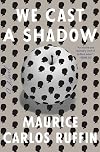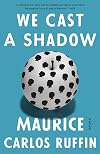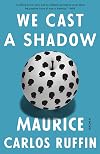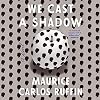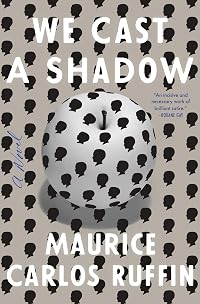
We Cast a Shadow: A Novel
by Maurice Carlos Ruffin
On This Page
Description
"In a near-future Southern city, everyone is talking about a new experimental medical procedure that boasts unprecedented success rates. In a society plagued by racism, segregation, and private prisons, this operation saves lives with a controversial method--by turning people white. Like any father, our unnamed narrator just wants the best for his son Nigel, a biracial boy whose black birthmark is getting bigger by the day. But in order to afford Nigel's whiteness operation, our narrator show more must make partner as one of the few black associates at his law firm, jumping through a series of increasingly absurd hoops--from diversity committees to plantation tours to equality activist groups--in a tragicomic quest to protect his son. This electrifying, suspenseful novel is, at once, a razor-sharp satire of surviving racism in America and a profoundly moving family story. In the tradition of Ralph Ellison's Invisible Man, We Cast a Shadow fearlessly shines a light on the violence we inherit, and on the desperate things we do for the ones we love"-- show lessTags
Recommendations

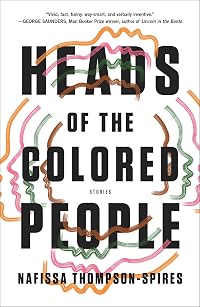
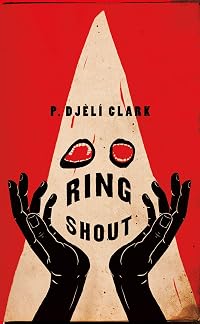
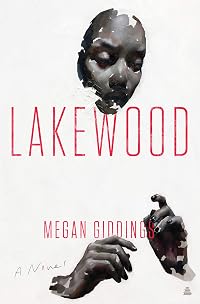
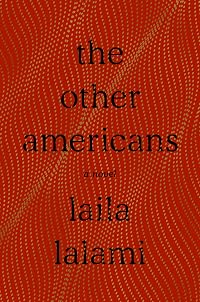









Member Recommendations

Member Reviews
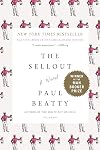
Having not received my LibraryThing early reviewer's copy, I was able to find and check this book out of the library. We Cast a Shadow is somewhat reminiscent of Paul Beatty's novel The Sellout. It's set in a disturbing near-future society, all the more horrific because the pervasive, blatant racism doesn't really seem that implausible. This alt-society has mood enhancing pills, terrorist attacks, and clinics dedicated to making black people look more white through cosmetic surgery and skin lightening treatments. A "Deadlock Ordinance" allows police to cut the hair of someone under arrest if they deem them 'unsanitary'. Surveillance abounds.
The main character is a black lawyer who loves his wife (who is white) and his 11-year-old son show more very much. The son was born with dark birthmark patches and the lawyer is dedicated to making enough money for his son to undergo an expensive 'de-melanization' treatment. However, his wife and eventually his son do not feel the same. This is a harrowing and heartfelt book - what one man sacrifices and loses in his efforts to make an easier path for his son. show less
The main character is a black lawyer who loves his wife (who is white) and his 11-year-old son show more very much. The son was born with dark birthmark patches and the lawyer is dedicated to making enough money for his son to undergo an expensive 'de-melanization' treatment. However, his wife and eventually his son do not feel the same. This is a harrowing and heartfelt book - what one man sacrifices and loses in his efforts to make an easier path for his son. show less
 This review was written for LibraryThing Early Reviewers.
A Necessary Read!
A brilliantly unsettling tale set in the not-so-distance future southern state, a Black father seeks to ensure that his biracial son lives his life to his fullest potential, which means not to be identified as a Black man.
A well-thought out plot skillfully executed as every action and character shines on the reality that society fully endorses oppression of Blacks through containment, violence, and poverty.
I was compulsively turning the pages as I felt the this near-future creeping into reality and deeply eliciting uncomfortable feeling.
I enjoyed how the author effectively blended the use of dark humor, mystery, and love of family in this vibrant and rich tale.
The cover, the title, and the use of an unnamed narrator show more are fine touches that adds to the ambience of this timely and though-provoking novel.
Definitely will be one of my top reads for 2019! show less
A brilliantly unsettling tale set in the not-so-distance future southern state, a Black father seeks to ensure that his biracial son lives his life to his fullest potential, which means not to be identified as a Black man.
A well-thought out plot skillfully executed as every action and character shines on the reality that society fully endorses oppression of Blacks through containment, violence, and poverty.
I was compulsively turning the pages as I felt the this near-future creeping into reality and deeply eliciting uncomfortable feeling.
I enjoyed how the author effectively blended the use of dark humor, mystery, and love of family in this vibrant and rich tale.
The cover, the title, and the use of an unnamed narrator show more are fine touches that adds to the ambience of this timely and though-provoking novel.
Definitely will be one of my top reads for 2019! show less
A black lawyer, living in the city in a near future United States, has worked his entire life to assimilate properly, obeying every rule. Now he's up for a big promotion, one that will give him the financial resources to give his son the one thing that will save his life and allow him to succeed. He wants to buy his son a medical procedure that will make him white.
This is a hard book to characterize. It's certainly satire, and dystopian fiction. It's a book about racism that at first feels like hyperbole, but as I read, the world that Maurice Carlos Ruffin built felt less and less exaggerated, being so based in how society works today. And it feels warmer than satire usually does. The narrator may be compromised. He may be show more rationalizing his own complicity as well as being eager to attribute the actions of the state to flaws in the morals of the people crushed by it, but he is so motivated by a fierce love for his son that it's impossible not to feel for him, even as he consistently hurts those around him, even the ones he cares for the most.
I'll be thinking about this one for some time. show less
This is a hard book to characterize. It's certainly satire, and dystopian fiction. It's a book about racism that at first feels like hyperbole, but as I read, the world that Maurice Carlos Ruffin built felt less and less exaggerated, being so based in how society works today. And it feels warmer than satire usually does. The narrator may be compromised. He may be show more rationalizing his own complicity as well as being eager to attribute the actions of the state to flaws in the morals of the people crushed by it, but he is so motivated by a fierce love for his son that it's impossible not to feel for him, even as he consistently hurts those around him, even the ones he cares for the most.
I'll be thinking about this one for some time. show less
I don't know if it's fair to compare anything at all to Invisible Man but I can't think of another novel that includes the same mix of high satire and terrifying truth as does this debut from Maurice Carlos Ruffin.
Ellison is clearly on Ruffin's mind here. Ruffin's opening sentences pay homage to the first lines of Invisible Man--only, Ruffin's opening is far more cynical and without hope about the health of black identity within a white-majority culture.
Here is Ellison:
I am an invisible man. No, I am not a spook like those who haunted Edgar Allan Poe; nor am I one of your Hollywood-movie ectoplasms...I am invisible, understand, simply because people refuse to see me.
and Ruffin:
My name doesn't matter. All you need to know is that I'm show more a phantom, a figment...
Ellison's unnamed protagonist knows he is a man and not a ghost--he is asserting his personhood even though white people consistently try to erase him. Ruffin's unnamed protagonist, in contrast, insists he is a ghost--he has accepted and embraced his lack of personhood and has bought into these racist ideas of the white culture he lives in.
What follows is satire so close to the truth that it hurts to laugh. The satirical jabs here cause pain even when they are extraordinarily funny. And at first they are funny, the way only the most true satire can be. But then at some point the novel stops being funny. Maybe it's right around the time when the unnamed narrator daubs his son with skin bleach that burns like battery acid while telling his son that it's for his own good. You discover that you've been led through a landscape that you only mistook for satire, and what you're reading now is an unrelenting indictment of the caustic affects of racism on a black man's selfhood and dignity.
Some works tackle the subject of racism in a way that allows white people to feel really good about themselves in the end. Others don't leave space for white readers to reasonably separate themselves from the racism depicted in their pages, or to come away with "I'm one of the good guys" feelings, because in real life there are no white-people exceptions to systemic racism. This novel is the second kind of achievement. It may sell fewer books because of it, but it's a braver book because of it.
We Cast a Shadow is not as tightly perfect as Invisible Man but for me it had more human heartbreak in it. show less
Ellison is clearly on Ruffin's mind here. Ruffin's opening sentences pay homage to the first lines of Invisible Man--only, Ruffin's opening is far more cynical and without hope about the health of black identity within a white-majority culture.
Here is Ellison:
I am an invisible man. No, I am not a spook like those who haunted Edgar Allan Poe; nor am I one of your Hollywood-movie ectoplasms...I am invisible, understand, simply because people refuse to see me.
and Ruffin:
My name doesn't matter. All you need to know is that I'm show more a phantom, a figment...
Ellison's unnamed protagonist knows he is a man and not a ghost--he is asserting his personhood even though white people consistently try to erase him. Ruffin's unnamed protagonist, in contrast, insists he is a ghost--he has accepted and embraced his lack of personhood and has bought into these racist ideas of the white culture he lives in.
What follows is satire so close to the truth that it hurts to laugh. The satirical jabs here cause pain even when they are extraordinarily funny. And at first they are funny, the way only the most true satire can be. But then at some point the novel stops being funny. Maybe it's right around the time when the unnamed narrator daubs his son with skin bleach that burns like battery acid while telling his son that it's for his own good. You discover that you've been led through a landscape that you only mistook for satire, and what you're reading now is an unrelenting indictment of the caustic affects of racism on a black man's selfhood and dignity.
Some works tackle the subject of racism in a way that allows white people to feel really good about themselves in the end. Others don't leave space for white readers to reasonably separate themselves from the racism depicted in their pages, or to come away with "I'm one of the good guys" feelings, because in real life there are no white-people exceptions to systemic racism. This novel is the second kind of achievement. It may sell fewer books because of it, but it's a braver book because of it.
We Cast a Shadow is not as tightly perfect as Invisible Man but for me it had more human heartbreak in it. show less
Racism vs. Human Dignity
For a nation founded on the principle of all men created equal, the U.S. has gone a long way to degrading the dignity of a large portion of its population, African Americans. It began with slavery before the Constitution codified the value of African Americans as three-fifths of whites in Article 1, Sec. 2. It took a war to abolish slavery and modify the Constitution. But then followed all manner of degradation revolving around Jim Crow laws, depravation of property rights, zealous imprisonment, forced prison labor, outright murder, all the way up to the 1960s. If that were not sufficient, we’re at it again with mass incarceration of African Americans and attempts at taking voting rights away from large show more portions of the U.S. population. Would you be surprised that people subjected to this over hundreds of years, remembered in stories passed along from parents to children, reported in histories, portrayed in literature, would not be effected? When Kurtz screams, “The horror! The horror!,” this is part of what he has in mind.
Which is to say that at its heart, the destruction of human dignity by relentless codified racism to the point were a person’s skin color becomes the object of self-derision and something to be changed to white. This very thing, to change to white to escape the constant punishment for being born black, motivates the unnamed narrator of Maurice Carlos Ruffin’s novel. The narrator tries mightily throughout the novel, against the wishes of his wife and the resistance of his son, Nigel, to have the boy “demelaninized” through a risky procedure with unknown future health consequences. Readers with any sensitivity to human self-worth will quickly figure out whether the narrator will succeed or fail. Key here, what is more important than where the novel ends up, are the moral questions of a society that literally forces everybody into the same pigmentation mold, and whether a father has the moral obligation to make his son fit in to avoid ghettoization or even death. In other words, it’s a novel designed to leave readers debating the morality of the narrator’s action and the greater immorality of a society that foists this Hobson’s choice upon him.
Ruffin dresses this up nicely in a black (!) comedy set in a southern American city at a time when racism has become the law of the land (similar to today, with ghettos and extreme, unfettered police harassment and murder). The African American narrator works for a major law firm. When the novel opens, he and two other African American associates are in competition for a chance to become a shareholder (partner) of the firm. As the tokens they are, the firm obligates them to demean themselves for the one available spot. The narrator will gladly do so, because winning means getting the funds to pay for young teen Nigel’s “demelaninized,” his ticket to acceptance and survival. The irony here is that Nigel is for all practical purposes white, except for a brown birthmark on his eye. But that is sufficient to regulate him to the ghetto of American life. Penny, the narrator’s white wife and mother to Nigel, is more sensitive to the issue of degrading oneself. She opposes the narrator’s every attempt at amateur “demelaninized.” And what of Nigel’s feelings? Will these rule over the wishes of his father? The answer is at the end of all the shenanigans that propel this novel about racism and moral choices. show less
For a nation founded on the principle of all men created equal, the U.S. has gone a long way to degrading the dignity of a large portion of its population, African Americans. It began with slavery before the Constitution codified the value of African Americans as three-fifths of whites in Article 1, Sec. 2. It took a war to abolish slavery and modify the Constitution. But then followed all manner of degradation revolving around Jim Crow laws, depravation of property rights, zealous imprisonment, forced prison labor, outright murder, all the way up to the 1960s. If that were not sufficient, we’re at it again with mass incarceration of African Americans and attempts at taking voting rights away from large show more portions of the U.S. population. Would you be surprised that people subjected to this over hundreds of years, remembered in stories passed along from parents to children, reported in histories, portrayed in literature, would not be effected? When Kurtz screams, “The horror! The horror!,” this is part of what he has in mind.
Which is to say that at its heart, the destruction of human dignity by relentless codified racism to the point were a person’s skin color becomes the object of self-derision and something to be changed to white. This very thing, to change to white to escape the constant punishment for being born black, motivates the unnamed narrator of Maurice Carlos Ruffin’s novel. The narrator tries mightily throughout the novel, against the wishes of his wife and the resistance of his son, Nigel, to have the boy “demelaninized” through a risky procedure with unknown future health consequences. Readers with any sensitivity to human self-worth will quickly figure out whether the narrator will succeed or fail. Key here, what is more important than where the novel ends up, are the moral questions of a society that literally forces everybody into the same pigmentation mold, and whether a father has the moral obligation to make his son fit in to avoid ghettoization or even death. In other words, it’s a novel designed to leave readers debating the morality of the narrator’s action and the greater immorality of a society that foists this Hobson’s choice upon him.
Ruffin dresses this up nicely in a black (!) comedy set in a southern American city at a time when racism has become the law of the land (similar to today, with ghettos and extreme, unfettered police harassment and murder). The African American narrator works for a major law firm. When the novel opens, he and two other African American associates are in competition for a chance to become a shareholder (partner) of the firm. As the tokens they are, the firm obligates them to demean themselves for the one available spot. The narrator will gladly do so, because winning means getting the funds to pay for young teen Nigel’s “demelaninized,” his ticket to acceptance and survival. The irony here is that Nigel is for all practical purposes white, except for a brown birthmark on his eye. But that is sufficient to regulate him to the ghetto of American life. Penny, the narrator’s white wife and mother to Nigel, is more sensitive to the issue of degrading oneself. She opposes the narrator’s every attempt at amateur “demelaninized.” And what of Nigel’s feelings? Will these rule over the wishes of his father? The answer is at the end of all the shenanigans that propel this novel about racism and moral choices. show less
Racism vs. Human Dignity
For a nation founded on the principle of all men created equal, the U.S. has gone a long way to degrading the dignity of a large portion of its population, African Americans. It began with slavery before the Constitution codified the value of African Americans as three-fifths of whites in Article 1, Sec. 2. It took a war to abolish slavery and modify the Constitution. But then followed all manner of degradation revolving around Jim Crow laws, depravation of property rights, zealous imprisonment, forced prison labor, outright murder, all the way up to the 1960s. If that were not sufficient, we’re at it again with mass incarceration of African Americans and attempts at taking voting rights away from large show more portions of the U.S. population. Would you be surprised that people subjected to this over hundreds of years, remembered in stories passed along from parents to children, reported in histories, portrayed in literature, would not be effected? When Kurtz screams, “The horror! The horror!,” this is part of what he has in mind.
Which is to say that at its heart, the destruction of human dignity by relentless codified racism to the point were a person’s skin color becomes the object of self-derision and something to be changed to white. This very thing, to change to white to escape the constant punishment for being born black, motivates the unnamed narrator of Maurice Carlos Ruffin’s novel. The narrator tries mightily throughout the novel, against the wishes of his wife and the resistance of his son, Nigel, to have the boy “demelaninized” through a risky procedure with unknown future health consequences. Readers with any sensitivity to human self-worth will quickly figure out whether the narrator will succeed or fail. Key here, what is more important than where the novel ends up, are the moral questions of a society that literally forces everybody into the same pigmentation mold, and whether a father has the moral obligation to make his son fit in to avoid ghettoization or even death. In other words, it’s a novel designed to leave readers debating the morality of the narrator’s action and the greater immorality of a society that foists this Hobson’s choice upon him.
Ruffin dresses this up nicely in a black (!) comedy set in a southern American city at a time when racism has become the law of the land (similar to today, with ghettos and extreme, unfettered police harassment and murder). The African American narrator works for a major law firm. When the novel opens, he and two other African American associates are in competition for a chance to become a shareholder (partner) of the firm. As the tokens they are, the firm obligates them to demean themselves for the one available spot. The narrator will gladly do so, because winning means getting the funds to pay for young teen Nigel’s “demelaninized,” his ticket to acceptance and survival. The irony here is that Nigel is for all practical purposes white, except for a brown birthmark on his eye. But that is sufficient to regulate him to the ghetto of American life. Penny, the narrator’s white wife and mother to Nigel, is more sensitive to the issue of degrading oneself. She opposes the narrator’s every attempt at amateur “demelaninized.” And what of Nigel’s feelings? Will these rule over the wishes of his father? The answer is at the end of all the shenanigans that propel this novel about racism and moral choices. show less
For a nation founded on the principle of all men created equal, the U.S. has gone a long way to degrading the dignity of a large portion of its population, African Americans. It began with slavery before the Constitution codified the value of African Americans as three-fifths of whites in Article 1, Sec. 2. It took a war to abolish slavery and modify the Constitution. But then followed all manner of degradation revolving around Jim Crow laws, depravation of property rights, zealous imprisonment, forced prison labor, outright murder, all the way up to the 1960s. If that were not sufficient, we’re at it again with mass incarceration of African Americans and attempts at taking voting rights away from large show more portions of the U.S. population. Would you be surprised that people subjected to this over hundreds of years, remembered in stories passed along from parents to children, reported in histories, portrayed in literature, would not be effected? When Kurtz screams, “The horror! The horror!,” this is part of what he has in mind.
Which is to say that at its heart, the destruction of human dignity by relentless codified racism to the point were a person’s skin color becomes the object of self-derision and something to be changed to white. This very thing, to change to white to escape the constant punishment for being born black, motivates the unnamed narrator of Maurice Carlos Ruffin’s novel. The narrator tries mightily throughout the novel, against the wishes of his wife and the resistance of his son, Nigel, to have the boy “demelaninized” through a risky procedure with unknown future health consequences. Readers with any sensitivity to human self-worth will quickly figure out whether the narrator will succeed or fail. Key here, what is more important than where the novel ends up, are the moral questions of a society that literally forces everybody into the same pigmentation mold, and whether a father has the moral obligation to make his son fit in to avoid ghettoization or even death. In other words, it’s a novel designed to leave readers debating the morality of the narrator’s action and the greater immorality of a society that foists this Hobson’s choice upon him.
Ruffin dresses this up nicely in a black (!) comedy set in a southern American city at a time when racism has become the law of the land (similar to today, with ghettos and extreme, unfettered police harassment and murder). The African American narrator works for a major law firm. When the novel opens, he and two other African American associates are in competition for a chance to become a shareholder (partner) of the firm. As the tokens they are, the firm obligates them to demean themselves for the one available spot. The narrator will gladly do so, because winning means getting the funds to pay for young teen Nigel’s “demelaninized,” his ticket to acceptance and survival. The irony here is that Nigel is for all practical purposes white, except for a brown birthmark on his eye. But that is sufficient to regulate him to the ghetto of American life. Penny, the narrator’s white wife and mother to Nigel, is more sensitive to the issue of degrading oneself. She opposes the narrator’s every attempt at amateur “demelaninized.” And what of Nigel’s feelings? Will these rule over the wishes of his father? The answer is at the end of all the shenanigans that propel this novel about racism and moral choices. show less
This is described as taking place in a "dystopian near future," but that doesn't do justice to the setting. A better comparison would be that this is the funhouse mirror image of our own world: almost everything in it is real and recognizable, but distorted or exaggerated from how we see it. In this world, we've reversed our gains in diversity and equality. The ghettoes are walled in; black people are effectively kept from voting because felons and their children cannot vote; most black people are unemployed; and police violence is rampant. In this setting, the few people of color who make it out try to make their assimilation literal: they undergo "demelanization" procedures to look white.
In this world, the unnamed narrator has pulled show more his way up. He is a lawyer, with a white wife and mixed race son. All he desires for his son, Nigel, is the security of privilege, and he will do anything to get it. He will scrape and bow and suffer the humiliations of his superiors, as long as it means the money he needs for procedures for his son. And while he is too aware of the realities of his world, he's blind to the experiences of those around him, even those he claims to love and cherish.
There is a plot, but the plot is secondary to the novel. The core is the recording of the narrator's experience of blackness and his, and the other characters', relationships to each other, to race, and to their world. It's been compared to Ralph Ellison's Invisible Man, and I felt some flashes of that book in the style. It's deliberately formal but not overdone; the narrator's personality dominates every description.
While described as satirical, I'm not sure that's the best description. It's certainly not satirical in the sense of funny, though there are flashes of dark humor. It's satirical in that sense of a mirror. But the thing it mirrors is too real and urgent. show less
In this world, the unnamed narrator has pulled show more his way up. He is a lawyer, with a white wife and mixed race son. All he desires for his son, Nigel, is the security of privilege, and he will do anything to get it. He will scrape and bow and suffer the humiliations of his superiors, as long as it means the money he needs for procedures for his son. And while he is too aware of the realities of his world, he's blind to the experiences of those around him, even those he claims to love and cherish.
There is a plot, but the plot is secondary to the novel. The core is the recording of the narrator's experience of blackness and his, and the other characters', relationships to each other, to race, and to their world. It's been compared to Ralph Ellison's Invisible Man, and I felt some flashes of that book in the style. It's deliberately formal but not overdone; the narrator's personality dominates every description.
While described as satirical, I'm not sure that's the best description. It's certainly not satirical in the sense of funny, though there are flashes of dark humor. It's satirical in that sense of a mirror. But the thing it mirrors is too real and urgent. show less
Members
- Recently Added By
Lists

2020 Tournament of Books
18 works; 18 members

Black Authors
384 works; 32 members

Bitter Southerner Summer Reading Roundup
198 works; 8 members

Diverse Horror
262 works; 6 members
Author Information

4+ Works 681 Members
Some Editions
Awards and Honors
Awards
Distinctions
Notable Lists
Common Knowledge
- Original publication date
- 2019
- Canonical DDC/MDS
- 813.6
- Canonical LCC
- PS3618.U4338
Classifications
Statistics
- Members
- 389
- Popularity
- 80,486
- Reviews
- 22
- Rating
- (3.66)
- Languages
- English
- Media
- Paper, Audiobook, Ebook
- ISBNs
- 7
- ASINs
- 3