
On This Page
Description
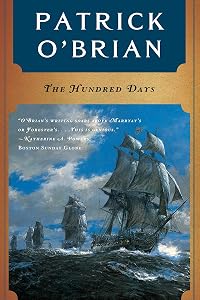
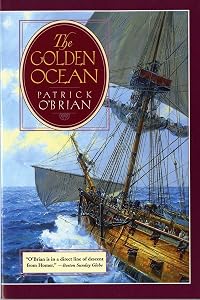
Jack Aubrey and Stephen Maturin are ordered home by dispatch vessel to bring the news of their latest victory to the government. But Maturin is a marked man for the havoc he has wrought in the French intelligence network in the New World, and the attention of two privateers soon becomes menacing. The chase that follows through the fogs and shallows of the Grand Banks is as tense, and as unexpected in its culmination, as anything Patrick O'Brian has written.Tags
Recommendations
































Member Recommendations

Member Reviews
Continuing my travels with Captain Jack Aubrey and Stephen Maturin, I have now reached the seventh chapter in this ongoing novel. The Surgeon’s Mate seemed a bit rambling even by O’Brian’s standards (although I suppose one might see the opening – Jack returning to the sea and the command of a ship – and the ending episodes – Jack fleeing a French prison – as variations on the theme of escape, thus placing a kind of parenthesis around the novel, a structure O’Brian seems fond of) and that is probably the reason why I liked it slightly (very, very slightly) less than the two preceding volumes.
There is no lack of things happening in this volume, however – the book begins where the last one left off, in Halifax, then moves show more to London, from there to Scandinavia and finally to Paris. There are no naval battles (but another exciting chase) and no discovery of exotic flora or fauna (but more spy work by Stephen); indeed the various intelligence machinations during the Napoleonic Wars are very much in the foreground here, turning this at time almost into an 18th century version of a John le Carré novel. O’Brian never quite reaches (or indeed aims for) the dizzy heights of moral ambiguity where Le Carré places his novels, but something he shares with that author is the way he can even the most mundane everyday activities endlessly fascinating (placing both in sharp contrast to Neal Stephenson who can make them endlessly boring). After seven volumes, this is turning out more and more to be the second mark of greatness for the Aubrey-Maturin series, together with the characterisation and friendship of its protagonists: the incredibly vivid sense of detail Patrick O’Brian brings to bear on the world he describes.
The freshness of his colours, the fullness of his sounds, the immediacy of his smells, the intensity of his tastes and sensations would already be remarkable in a novelist who transmuted a world into language that was spreading out right in front of him, but to achieve this sensory and sensual richness of description for history, for a world gone and disappeared is nothing short of – and I do not use this word lightly – genius. Even with something I consider a slightly (very, very slightly) weaker installment of this monumental novel of naval history, of friendship and adventure, of warfare and discovery, I am becoming steadily more impressed with the series as a whole the more of it I read. I can feel a shiver of excitement run down my spine at the thought that there are thirteen more volumes of this waiting for me on the shelf, and a tiny stab of sadness in my heart that there are only thirteen more volumes left. Who knows, by the end of it I might even agree with the Times as quoted on the cover of my edition that Patrick O’Brian was “the greatest historical novelist of all time.” (Okay, not very likely, as I’m inherently suspicious of any statements that feature “of all time”, all the more so if “greatest” is also a part of it. But I can at least feel some degree of sympathy for such a claim, pointless hyperbole that it is.) show less
There is no lack of things happening in this volume, however – the book begins where the last one left off, in Halifax, then moves show more to London, from there to Scandinavia and finally to Paris. There are no naval battles (but another exciting chase) and no discovery of exotic flora or fauna (but more spy work by Stephen); indeed the various intelligence machinations during the Napoleonic Wars are very much in the foreground here, turning this at time almost into an 18th century version of a John le Carré novel. O’Brian never quite reaches (or indeed aims for) the dizzy heights of moral ambiguity where Le Carré places his novels, but something he shares with that author is the way he can even the most mundane everyday activities endlessly fascinating (placing both in sharp contrast to Neal Stephenson who can make them endlessly boring). After seven volumes, this is turning out more and more to be the second mark of greatness for the Aubrey-Maturin series, together with the characterisation and friendship of its protagonists: the incredibly vivid sense of detail Patrick O’Brian brings to bear on the world he describes.
The freshness of his colours, the fullness of his sounds, the immediacy of his smells, the intensity of his tastes and sensations would already be remarkable in a novelist who transmuted a world into language that was spreading out right in front of him, but to achieve this sensory and sensual richness of description for history, for a world gone and disappeared is nothing short of – and I do not use this word lightly – genius. Even with something I consider a slightly (very, very slightly) weaker installment of this monumental novel of naval history, of friendship and adventure, of warfare and discovery, I am becoming steadily more impressed with the series as a whole the more of it I read. I can feel a shiver of excitement run down my spine at the thought that there are thirteen more volumes of this waiting for me on the shelf, and a tiny stab of sadness in my heart that there are only thirteen more volumes left. Who knows, by the end of it I might even agree with the Times as quoted on the cover of my edition that Patrick O’Brian was “the greatest historical novelist of all time.” (Okay, not very likely, as I’m inherently suspicious of any statements that feature “of all time”, all the more so if “greatest” is also a part of it. But I can at least feel some degree of sympathy for such a claim, pointless hyperbole that it is.) show less
The Aubrey/Maturin series continues to delight me. Unfortunately, in this one Stephen got few chances to observe rare wildlife and alarm sailors by brings bees, sloths, or penguins onboard. Nonetheless, 'The Surgeon’s Mate' included plenty of the usual wonderful character humour that O’Brian writes so well. No other writer can set characters at conversational cross purposes so perfectly.
Naturally, this episode also features exciting sea battles, frustrating bureaucracy, alarming storms, untrustworthy Frenchmen, and many cases of indigestion. My favourite moments would have to be, firstly, Jack’s consternation and fuss upon discovering that Stephen has somehow climbed up into the rigging during fog. Secondly, the argument about show more whether the phrase is ‘cry wolf’ or ‘cry wool’. Despite Jack commenting that there is no terror in wool nor any threat to crying it, the wonderfully named Mr Pellworm remains convinced of his idiosyncratic interpretation. Thirdly, and vaguely to avoid spoilers, the progress of the jailbreak.
Following his usual pattern, O’Brian ends this novel at an apparently arbitrary point. The series reads to me like a serial; now I must hunt down 'The Ionian Mission' to see where Jack and Stephen voyage next. Hopefully it'll be easier to find in a library than this one was. The county possessed just one copy, hidden in the large print section of an obscure branch library with a most peculiar smell. show less
Naturally, this episode also features exciting sea battles, frustrating bureaucracy, alarming storms, untrustworthy Frenchmen, and many cases of indigestion. My favourite moments would have to be, firstly, Jack’s consternation and fuss upon discovering that Stephen has somehow climbed up into the rigging during fog. Secondly, the argument about show more whether the phrase is ‘cry wolf’ or ‘cry wool’. Despite Jack commenting that there is no terror in wool nor any threat to crying it, the wonderfully named Mr Pellworm remains convinced of his idiosyncratic interpretation. Thirdly, and vaguely to avoid spoilers, the progress of the jailbreak.
Following his usual pattern, O’Brian ends this novel at an apparently arbitrary point. The series reads to me like a serial; now I must hunt down 'The Ionian Mission' to see where Jack and Stephen voyage next. Hopefully it'll be easier to find in a library than this one was. The county possessed just one copy, hidden in the large print section of an obscure branch library with a most peculiar smell. show less
The Surgeon’s Mate, Patrick O’Brian’s seventh book in his Aubrey-Maturin series, sees Captain Jack Aubrey and Dr. Stephen Maturin sheltering in Halifax, Nova Scotia after their escape as prisoners of war in Boston at the end of the previous novel. Both eagerly await a return to England, Stephen worried about Diana Villiers’ legal troubles following her connection to the American, Mr. Johnson, and Jack troubled about the running of his estate back home, where a confidence man swindled Aubrey into investing in a lead smelting operation with promises of a fortune. After returning to England, Maturin enlists Jack to aid him in a mission to turn Catalan forces defending Grimsholm Island in the Baltic against their French allegiance show more and to the American side. Though they succeed, Aubrey’s ship, the Ariel, runs aground on French soil in the Channel, leading to their capture. From there, Maturin must work to protect his status as an intelligence agent and secure their quick escape back to England.
Like his previous novels, O’Brian perfectly recreates the world of the Napoleonic War in 1812, using Maturin’s intelligence connections to discuss much of the land war, such as Napoleon’s victory at Luetzen after his defeat in Moscow (pg. 100). The title, Surgeon’s Mate, serves as a triple entendre, referring to the ship’s surgeon’s mate, Maturin’s intelligence work (as in checkmate), and his relationship and eventual marriage to Diana Villiers, his mate. Similar to the second novel, Post Captain, this novel largely focuses on Maturin’s espionage work with he serving as the primary protagonist of the pair. This Folio Society edition reprints the original text with insets containing historical portraits and sketches to illustrate some of the scenes. A great contribution to the Aubrey-Maturin series and the first of twelve to focus on what O’Brian described as an extended 1812, with these dozen books taking place between the beginning of June 1813 and November 1813. show less
Like his previous novels, O’Brian perfectly recreates the world of the Napoleonic War in 1812, using Maturin’s intelligence connections to discuss much of the land war, such as Napoleon’s victory at Luetzen after his defeat in Moscow (pg. 100). The title, Surgeon’s Mate, serves as a triple entendre, referring to the ship’s surgeon’s mate, Maturin’s intelligence work (as in checkmate), and his relationship and eventual marriage to Diana Villiers, his mate. Similar to the second novel, Post Captain, this novel largely focuses on Maturin’s espionage work with he serving as the primary protagonist of the pair. This Folio Society edition reprints the original text with insets containing historical portraits and sketches to illustrate some of the scenes. A great contribution to the Aubrey-Maturin series and the first of twelve to focus on what O’Brian described as an extended 1812, with these dozen books taking place between the beginning of June 1813 and November 1813. show less
Jack is deeply dismayed when a ill-judged fling in Nova Scotia threatens to come back to England and reveal his perfidy. He's thrilled to be ordered back to sea, this time to transport his friend Stephen to co-opt a Catalan base to England's side. Meanwhile, Stephen has just returned from a trip to Paris, where he presented a scholarly paper (very badly, though it was well received) and found a place for Diana to stay for her confinement. The mission is a success, the base is taken--and then on the way home, flush with success, they are captured by the French. They suspect Stephen is a spy, and so while Jack scrapes away at their prison walls searching for escape, Stephen spends day after day trying to seem as innocent as possible to show more his captors, all the while keeping a capsule of poison precariously held in his cheek.
This book contains a number of subversions of a reader's expectations. Jack is scared of a woman coming back to England with his bastard--and insteadshe marries another and he seems to have gotten away with it . Stephen and Diana battle over her pregnancy--only for it to end apparently naturally, thus making it unnecessary for him to blame her for getting an abortion, or for either of them to raise the child fathered by their enemy, the vicious Johnson . Jack scrapes away at his French prison walls, and much of the book is given over to the complications of shifting the stone--and the very same moment he finally breaks through, French spies (who want to get Stephen out of the country) unlock the prison door and help them escape, so that all Jack's work is unnecessary, though appreciated.
This is also the book where finally, FINALLY, after six books of tension and torment,Diana consents to marry Stephen. Their coming together at last is a little odd, for me, because Stephen is only just coming to love her again (after realizing he'd fallen out of love with her because she'd grown too "coarse" in the previous book) and because Stephen is so very willing to control and deceive her. I don't like that he seems to think he needs to manage her. She's a grown-ass woman, she's dealt with spies and maharajahs and love affairs before--she doesn't need Stephen pretending that she was the reason he got free. It felt patronizing--almost as patronizing as his disturbing refusal to let her make her own medical decisions:
Stephen's reluctance is pretty rich coming from a man who talked dispassionately about gunning down or knifing a cadre of Frenchmen just pages ago. Ah well, even he cannot be perfect. And in fact, I find I like Maturin least when he's silently martyring himself, as he has a tendency to do, and like him most when he's squabbling with Aubrey over silly things like bad jokes and seaman slang. When I think O'Brian thinks Maturin is being particularly impressive, I actually dislike him.
Overall, another fantastic installment of a great series. I can't wait to read the next! show less
This book contains a number of subversions of a reader's expectations. Jack is scared of a woman coming back to England with his bastard--and instead
This is also the book where finally, FINALLY, after six books of tension and torment,
"'That is why I have come to you, the only friend I can rely on. You understand these things. You are a physician. Stephen, I couldn't bear to have that man's child. It would be a monster. I know that in India women used to take a root called holi--'
'There my dear, there is certain proof that your judgment is astray, otherwise you would never have thought of such a course, nor would you have ever said such a thing to me. My whole function is to preserve life, not to take it away. The oath I have sworn, and all my convictions--'
'Stephen, I beg of you not to fail me.' She sat twisting her fingers together, and in a low pleading voice she murmured, 'Stephen, Stephen.'
'Diana, you must marry me.'
She shook her head. Each knew that the other was immovable, and they sat in a miserable silence until the door burst open."
Stephen's reluctance is pretty rich coming from a man who talked dispassionately about gunning down or knifing a cadre of Frenchmen just pages ago. Ah well, even he cannot be perfect. And in fact, I find I like Maturin least when he's silently martyring himself, as he has a tendency to do, and like him most when he's squabbling with Aubrey over silly things like bad jokes and seaman slang. When I think O'Brian thinks Maturin is being particularly impressive, I actually dislike him.
Overall, another fantastic installment of a great series. I can't wait to read the next! show less
Having escaped from the Americans, Jack, Stephen, and Diana make for Halifax, where Jack entangles himself in a liaison with Amanda Smith, who will later (more or less) blackmail Jack claiming to be pregnant when he gets back to England. (By the end of the book she's married off to another captain.) They take the packet from Halifax to England but are pursued by two very tenacious sloops that appear to have been paid handsomely by Diana's former lover Johnson to capture her (and Stephen, and his diamond necklace) and bring them back to Boston. Some interesting situations arise on the packet since it's privately owned, and Jack, not being the caption, is consulted about how to fight the ship should it come to blows. However, the chase show more ends when one of the ships strikes an iceberg, and so, back to England.
Back in domestic bliss, Jack meets his sone for the first time and I loved how the girls, being raised in part by sailors, roar out in the courtyard and leave the air tinged with blue behind them.
This book introduces a number of new recurring characters and we get to visit with some old friends: Jagiello, the young, handsome Lithuanian; Ramon d’Ullastret, the leader in the Catalan garrison at Grimholm and Maturin's god-father; Admiral Saumarez; ; a number of famous scientists of the day at the French Institut, where Stephen gives a rather bad presentation; Sir Joseph Blaine, of course, whom Stephen give Johnson's personal papers in an intelligence coup; and many more besides.
Ultimately, Jack's sloop Ariel ends up in a huge blow and crashes on the coast of France, fortunately saving all lives, but becoming prisoners. Jack, Stephen, and Jagiello are sent to Verdun by coach with the French spy Monsieur Duhamel, who ultimately becomes an ally of Stephen and aids in his escape. The imprisonment is very well described, and their way out also quite intriguing.
Ultimately Stephen and Diana are married in a ship captained by none other than Babbington on their way back to England, where Stephen has been empowered to negotiate a peace between England and France via his new intelligence contacts in France. In a final twist of humor, Aubrey is chased above decks while Stephen and Diana vigorously celebrate their nuptials in the cabin below.
O'Brian's humor is on great display throughout this read, and it really is a great adventure story, with a lot of varied action and many diverse characters. This is a favorite of favorites for me. show less
Back in domestic bliss, Jack meets his sone for the first time and I loved how the girls, being raised in part by sailors, roar out in the courtyard and leave the air tinged with blue behind them.
This book introduces a number of new recurring characters and we get to visit with some old friends: Jagiello, the young, handsome Lithuanian; Ramon d’Ullastret, the leader in the Catalan garrison at Grimholm and Maturin's god-father; Admiral Saumarez; ; a number of famous scientists of the day at the French Institut, where Stephen gives a rather bad presentation; Sir Joseph Blaine, of course, whom Stephen give Johnson's personal papers in an intelligence coup; and many more besides.
Ultimately, Jack's sloop Ariel ends up in a huge blow and crashes on the coast of France, fortunately saving all lives, but becoming prisoners. Jack, Stephen, and Jagiello are sent to Verdun by coach with the French spy Monsieur Duhamel, who ultimately becomes an ally of Stephen and aids in his escape. The imprisonment is very well described, and their way out also quite intriguing.
Ultimately Stephen and Diana are married in a ship captained by none other than Babbington on their way back to England, where Stephen has been empowered to negotiate a peace between England and France via his new intelligence contacts in France. In a final twist of humor, Aubrey is chased above decks while Stephen and Diana vigorously celebrate their nuptials in the cabin below.
O'Brian's humor is on great display throughout this read, and it really is a great adventure story, with a lot of varied action and many diverse characters. This is a favorite of favorites for me. show less
Book seven in Patrick O'Brian's Aubrey-Maturin series features some complications in the personal lives of its characters on land and a delicate mission for them to carry out by sea.
I really enjoyed this one. Like many of them, it maybe gets a bit slow in the middle, but even during long passages about doing things with sails, I never stopped thinking happily about how much I like these characters. And the ending is fantastic, full of engaging and unexpected developments. I swear, there was one moment when I actually exclaimed out loud as I was reading.
I really enjoyed this one. Like many of them, it maybe gets a bit slow in the middle, but even during long passages about doing things with sails, I never stopped thinking happily about how much I like these characters. And the ending is fantastic, full of engaging and unexpected developments. I swear, there was one moment when I actually exclaimed out loud as I was reading.
Best book in Aubrey/Maturin series yet. More masterfully sailing and navigation (as one would expect) – but with a more detailed emphasis on the intelligence mission in this volume.
[Spoiler Alert] Sweeping storyline spread across five nations touching the North Atlantic includes: infidelity, intrigue, imprisonment and (gasp) matrimony at sea. Highly recommended.
[Spoiler Alert] Sweeping storyline spread across five nations touching the North Atlantic includes: infidelity, intrigue, imprisonment and (gasp) matrimony at sea. Highly recommended.
Members
- Recently Added By
Lists

Top Five Books of 2013
1,562 works; 721 members

Folio Society
831 works; 53 members

Books Read in 2016
4,666 works; 199 members

Huxley's reading log 2017
45 works; 1 member

Books Read in 2018
4,360 works; 110 members

1980 great books
63 works; 1 member
Author Information

154+ Works 76,960 Members
Patrick O'Brian is the author of twenty volumes in the highly respected Aubrey/Maturin series of novels. (Publisher Provided) Patrick O'Brien was born in Ireland in 1914. His education included the Sorbonne. O'Brian has produced a variety of works, including biographies of Picasso and Sir Joseph Banks and translations of the novels and memoirs of show more Simone de Beauvoir, but he is best known for the creation of an unlikely pair of Napoleonic War-era heroes in the Aubrey-Maturin Series. British naval officer Jack Aubrey and Irish scholar and physician Stephen Maturin have been featured in more than a novels published in Great Britain (five of which have also appeared in America). He died on January 2, 2000. (Bowker Author Biography) show less
Some Editions
Series

Work Relationships
Common Knowledge
- Canonical title*
- El ayudante del cirujano
- Original title
- The Surgeon's Mate
- Original publication date
- 1980
- People/Characters
- Jack Aubrey; Stephen Maturin; Sophie Aubrey; Diana Villiers; Gedymin Jagiello; Amanda Smith (show all 8); Ramon d'Ullastret i Casademon; Sir Joseph Blaine
- Important places
- Halifax, Nova Scotia, Canada; Grimsholm, Baltic Sea; Paris, France; Ashgrove Cottage, Hampshire, England, UK
- Dedication
- Mariae sacrum.
- First words
- The long harbour of Halifax in Nova Scotia on a long, long summer's day, and two frigates gliding in on the tide of flood under their topsails alone: the first, since she had belonged to the United States navy until a few day... (show all)s before, wore the Stars and Stripes under a white ensign; the second showed no more than her own shabby colours, for she was HMS Shannon, the winner in that short and bloody action with the Chesapeake.
- Last words
- (Click to show. Warning: May contain spoilers.)'I now pronounce you man and wife,' said Babbington, closing the book; and still with the same gravity, but with great happiness showing through it, 'Mrs Maturin, dear Doctor, I wish you all the joy in the world.'
- Publisher's editor
- Lawrence, Starling
*Some information comes from Common Knowledge in other languages. Click "Edit" for more information.
Classifications
Statistics
- Members
- 3,203
- Popularity
- 5,400
- Reviews
- 48
- Rating
- (4.20)
- Languages
- 9 — Czech, Dutch, English, French, German, Italian, Norwegian (Bokmål), Spanish, Swedish
- Media
- Paper, Audiobook, Ebook
- ISBNs
- 58
- UPCs
- 1
- ASINs
- 31