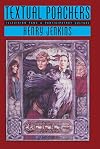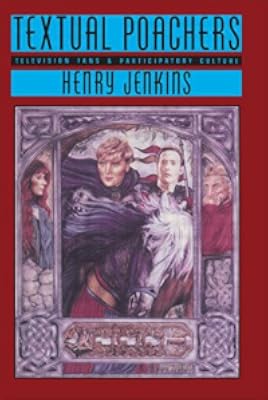
Textual Poachers: Television Fans and Participatory Culture
by Henry Jenkins
On This Page
Description
The twentieth anniversary edition of Henry Jenkins's Textual Poachers brings this now-canonical text to a new generation of students interested in the intersections of fandom, participatory culture, popular consumption and media theory. Supplementing the original, classic text is an interview between Henry Jenkins and Suzanne Scott in which Jenkins reflects upon changes in the field since the original release of Textual Poachers. A study guide by Louisa Stein helps provides instructors with show more suggestions for the way Textual Poachers can be used in the contemporary classroom, and study questions encourage students to consider fan cultures in relation to consumer capitalism, genre, gender, sexuality, and more. show lessTags
Recommendations









Member Reviews
A media studies exploration of television fandom from the early nineties. One of the best studies on the subject, at least partly because Jenkins considers himself a fan of the type he's discussing (too many critical discussions of fandom treat fans as weird or strange and their work suffers for it--there is, for instance, a section on slash fan fiction in Fags, Hags and Queer Sisters: Gender Dissent and Heterosocial Bonds in Gay Culture which, in its contempt for or misunderstanding of the subject, contains errors in its literary analysis which no undergrad English student would stand for). Jenkins spends a lot of time discussing who television fans are, what they do, and how their participation in fannish activities affect them. show more Overall, it's a positive study which provides a lot of insight, even if (or maybe especially if) you're a fan yourself. The missing last half-star reflects the fact that parts of the study read as very dated--being published in 1992, it predates the explosion of fan-related activity on the internet and (obviously) doesn't discuss many of the staples of recent fan-focus (Harry Potter, Jackson's Lord of the Rings, the second Star Wars trilogy, the new Doctor Who, nearly half of the installments in the Star Trek franchise). show less
The first real book on the subject of fan fiction and I loved it.
Reread: I loved coming across a line about 'on the wall of my office hangs a print by fan artist Jean Kluge' only to realize that on my bedroom wall hangs a print by fan artist Jean Kluge'. I love connections to things I read. As a fan fiction reader, I found fandom in 1995 and became a beta reader for a very prolific writer plus a few others over time. I collected stories, I traded tapes, I went to cons, I joined egroups and I exchanged emails with hordes of women. Texual Poachers was the very first book I ever read about fandom that took it seriously and covered a lot of the ground I had explored myself. It was written in 1992 before the internet as it became for me even show more existed. My first fandom was totally online and never did get into zine production. The next two fandoms were among the oldest and had a huge paper circuit library and zines from as far back as 1978. As the book noted, as a fan who followed the characters, I found myself following the actor's careers which took me out of my comfort zone of interest into strange avenues of movies and television shows that I would never have seen otherwise and into the books from which some of those movies were adapted and then books about fandom itself. As I reread this one, I am underlining even more..using a different colour pen this time to distinguish today from the last time I read the book. show less
Reread: I loved coming across a line about 'on the wall of my office hangs a print by fan artist Jean Kluge' only to realize that on my bedroom wall hangs a print by fan artist Jean Kluge'. I love connections to things I read. As a fan fiction reader, I found fandom in 1995 and became a beta reader for a very prolific writer plus a few others over time. I collected stories, I traded tapes, I went to cons, I joined egroups and I exchanged emails with hordes of women. Texual Poachers was the very first book I ever read about fandom that took it seriously and covered a lot of the ground I had explored myself. It was written in 1992 before the internet as it became for me even show more existed. My first fandom was totally online and never did get into zine production. The next two fandoms were among the oldest and had a huge paper circuit library and zines from as far back as 1978. As the book noted, as a fan who followed the characters, I found myself following the actor's careers which took me out of my comfort zone of interest into strange avenues of movies and television shows that I would never have seen otherwise and into the books from which some of those movies were adapted and then books about fandom itself. As I reread this one, I am underlining even more..using a different colour pen this time to distinguish today from the last time I read the book. show less
This is an excellent book. Intelligent, thoughtful, well-written, by someone who knows his stuff. Yes it's dated; I would absolutely love to see an update for the YouTube world.
I have only recently entered the world of fandom; I've always known about Trekkies and the like but only recently begun to share and understand their actual experience. This book provides insight into that world; who these people are, what they do, what inspires them, what they're committed to. I felt like I was meeting my community. It's amazing and fascinating to know what's out there. It's especially fascinating to see what people accomplished before the Internet made communication so fast and easy, before DVDs and software put editing capabilities in show more everyone's home. You had to be committed to be a fan creator back in the day.
In all, a fascinating read, particularly as person who identifies as a fan, but I think also useful for anyone who wants to understand fandom and what makes these people tick. I think non-fan readers will be surprised and impressed. show less
I have only recently entered the world of fandom; I've always known about Trekkies and the like but only recently begun to share and understand their actual experience. This book provides insight into that world; who these people are, what they do, what inspires them, what they're committed to. I felt like I was meeting my community. It's amazing and fascinating to know what's out there. It's especially fascinating to see what people accomplished before the Internet made communication so fast and easy, before DVDs and software put editing capabilities in show more everyone's home. You had to be committed to be a fan creator back in the day.
In all, a fascinating read, particularly as person who identifies as a fan, but I think also useful for anyone who wants to understand fandom and what makes these people tick. I think non-fan readers will be surprised and impressed. show less
The basic information in this book is excellent. The problem is the thesis. Jenkins portrays fans as poachers on the intellectual property of others, and gives the impression that in order to have fan activity, you must have commercial popular media. However, it is clear from any reading of the Western canon, that "poaching" on the stories of the culture is the basis for most of our art. Chaucer and Shakespeare were constantly using other sources and refining the stories to make them better. Only the introduction of copyright laws and near universal literacy in the last two centuries makes fan activity any different from previous literary activity. Until popular culture studies gets away from the notion that the commercial text has more show more legitimacy than derivative works, a real understanding of fan activity is nearly impossible. show less
An important book for cultural studies and fan culture, Textual Poachers provides an excellent primer and introduction to looking at fandom and its general practices.
While the book is now rather dated in both its examples (shows mentioned are all from the 1980s and very early 90s) and some of its subjects (filk music), the book is highly engaging and accessible, even for non-media scholars are just interested in the subject, or want to learn more about their hobby.
While the book is now rather dated in both its examples (shows mentioned are all from the 1980s and very early 90s) and some of its subjects (filk music), the book is highly engaging and accessible, even for non-media scholars are just interested in the subject, or want to learn more about their hobby.
For the first time in my admittedly long life I RENTED an e-book because the price of this books was out of the galaxy. I had the original which was a great book and wanted to see what changes the update had so I took it for a test drive before spending an exorbitant amount of money to purchase it. IT IS A RIP OFF. They have added to the original book - a conversation/interview twenty years later about the book, lots and lots of sales references to other authors who have since written about fan fiction etc in the academic world and out. At the end of the original there is a set up for the teaching of the book..with questions for students and more bibliography..none of which were ones I wanted to buy or could even access. I think the show more original Textual has become a school book and if the price reflects what students are charged for their books then AMAZON IS A CROOK BOTH NORTH AND SOUTH OF THE BORDER. show less
Incredible. Read this as a part of... my 1st or 2nd degree? Dunno! But it made me look at my fan friends rather differently.
Members
- Recently Added By
Author Information

31+ Works 2,216 Members
Henry Jenkins is the Peter de Florez Professor of Humanities and the Founder/Director of the Comparative Media Studies Program at MIT.
Series
Belongs to Publisher Series
Work Relationships
Common Knowledge
- Canonical title
- Textual Poachers: Television Fans and Participatory Culture
- Original publication date
- 2012-12
- First words
- INTRODUCTION:
Textual Poachers offers an ethnographic account of a particular group of media fans, its social institutions and cultural practices, and its troubled relationship to the mass media and consumer capit... (show all)alism.
CHAPTER ONE:
"Get a Life!": Fans, Poachers, Nomads
When Star Trek star William Shatner (Captain James T. Kirk) appeared as a guest host of Saturday Night Live, the program chose this opportunity to satirize the fans of his 1960s television series. - Last words
- (Click to show. Warning: May contain spoilers.)Fandom does not prove that all audiences are active; it does, however, prove that not all audiences are passive.
Classifications
- Genres
- Nonfiction, General Nonfiction, Literature Studies and Criticism
- DDC/MDS
- 306.1 — Society, government, & culture Social sciences, sociology & anthropology Social Behavior - Dating, Marriage, Divorce Subcultures
- LCC
- HM291 .J42 — Social sciences Sociology (General) Sociology These are obsolete numbers no longer used
- BISAC
Statistics
- Members
- 340
- Popularity
- 93,218
- Reviews
- 8
- Rating
- (4.14)
- Languages
- English, Spanish
- Media
- Paper, Ebook
- ISBNs
- 14
- ASINs
- 3