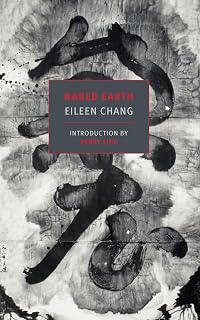
Naked Earth
by Eileen Chang
On This Page
Description
"An NYRB Classics Original After leaving the Mainland for Hong Kong in 1952, Eileen Chang was commissioned by the United States Information Service to write two books, one of which was her magnificent novel Naked Earth. Far from being a simplistic exercise in anti-Communist propaganda (two previous novels Chang wrote were pro-Communist), Naked Earth is a powerfully moving, Balzacian tale that follows two young students, Liu Ch'uen and Su Nan, who fall in love at a time when, as Chang writes, show more "the whole country lay stretched out like an open palm, ready to close around any one person at any minute." Mao's land reform movement is in full force, and Liu and Su Nan are sent to a farm to help the peasants take over the fields. The work is hard, the nights long, and slowly it becomes clear that spies abound. Both Liu and Su Nan harbor festering secrets that are pulling them apart and Liu is eventually imprisoned by his enemies and sent to fight on the Korean front. A romance, a thrilling drama, a tragedy, Naked Earth is a stunning work of twentieth-century fiction by one of China's most revered modern novelists"-- show lessTags
Recommendations










Member Reviews
Readers of scar literature will immediately recognize some of its characteristics in Naked Earth. There are the youths sent down from the city as part of an enormous political campaign, suffering and despair. There is the evolution of distinct new classes. There are the struggle sessions leading to fear and eventually a self preserving sense of paranoia.
However, there is something setting Zhang's novel apart. Scar literature emerged after the death of Mao and the end of the Great Proletarian Cultural Revolution. [Naked Earth] was written way back in 1954. The campaign she writes about is not the Cultural Revolution, but rather two of the earliest ones following the establishment of the People's Republic of China in 1949: the Land Reform show more campaign which started in 1950, and the Three Antis Campaign of 1951, which sought to weed out corruption among the cadres.
As the novel opens, a group of university students from Beijing is being trucked across the great Central Plain of northern China. They were newly minted low level cadres, going out to the countryside to educate the peasants about land reform. Among the students were Liu Ch'uan and Su Nan. They embodied the naiveté and hope of youth. This hope wasn't restricted to the young though in that time and place. This was the beginning of a new age in a country steeped in rigid codes of social and economic behaviour. The students were not the only ones who believed in the new dawn. Others, previously oppressed, hoped to make their way.
The first step was Land Reform, designed initially to "Level both ends without touching the middle". Official designations like Landlord, Rich Farmer, Middling Farmer, Poor Farmer, and Destitute Farmer were to be used to label the villagers and reassign land and goods. The difficulty was that this particular district had no big oppressive landlords. Tenants were unwilling to speak out against those whose land they had worked. Chang Li, the party member in charge of the students and the land redistribution was having difficulty mobilizing the masses.
Zhang's work is an extraordinary study of these two campaigns, seen from both sides. As there were no big landlords, the criteria for each class were lowered, to enable the selection of victims for struggle meetings and executions. Middling Farmers, once safe, now qualified as Landlords. The Distribution of Floating Riches that followed the executions, and the gratuitous public torture and execution that followed the official ones, soon opened Liu's eyes to what was really happening.
However, immediately after these events, he received word that he was being transferred to Shanghai, along with Chang, to work for the Resist-America Aid-Korea Association in the new war. Perhaps these events in this rural province had been an aberration, he hoped. Shanghai would prove to be both a valuable education and a total disillusion.
Zhang writes with an amazing mastery of rhetoric. When Chang attempted to justify the final outrageous execution to the villagers, he quoted Mao saying
Zhang then adds "It was such a fine speech that there was a moment of silence after she had finished."
This use of rhetoric is deliberate. Zhang wrote this novel in Chinese for the United States Information Service. It was published in Hong Kong in 1954. It was not translated for an English speaking audience until 1965, so the target audience was definitely Chinese speakers. Zhang had grown up in Shanghai in a wealthy family. Rural China and the world of peasants was unknown to her. She was a consummate survivor though, marrying a Japanese sympathizer in occupied Shanghai, moving to Hong Kong after the People's Republic was established, and then marrying an American and moving to the US. There is still some of the lyricism of her famous works from the 1940s here, especially in interior scenes. However, writing for her new audience seems more difficult. The ending especially is strained, but at least allows Liu some degree of choice.
Even with all these caveats, Zhang is always a writer worth reading. The edition was published in 2015 and is Zhang's own 1965 translation from the Chinese. show less
However, there is something setting Zhang's novel apart. Scar literature emerged after the death of Mao and the end of the Great Proletarian Cultural Revolution. [Naked Earth] was written way back in 1954. The campaign she writes about is not the Cultural Revolution, but rather two of the earliest ones following the establishment of the People's Republic of China in 1949: the Land Reform show more campaign which started in 1950, and the Three Antis Campaign of 1951, which sought to weed out corruption among the cadres.
As the novel opens, a group of university students from Beijing is being trucked across the great Central Plain of northern China. They were newly minted low level cadres, going out to the countryside to educate the peasants about land reform. Among the students were Liu Ch'uan and Su Nan. They embodied the naiveté and hope of youth. This hope wasn't restricted to the young though in that time and place. This was the beginning of a new age in a country steeped in rigid codes of social and economic behaviour. The students were not the only ones who believed in the new dawn. Others, previously oppressed, hoped to make their way.
The first step was Land Reform, designed initially to "Level both ends without touching the middle". Official designations like Landlord, Rich Farmer, Middling Farmer, Poor Farmer, and Destitute Farmer were to be used to label the villagers and reassign land and goods. The difficulty was that this particular district had no big oppressive landlords. Tenants were unwilling to speak out against those whose land they had worked. Chang Li, the party member in charge of the students and the land redistribution was having difficulty mobilizing the masses.
Zhang's work is an extraordinary study of these two campaigns, seen from both sides. As there were no big landlords, the criteria for each class were lowered, to enable the selection of victims for struggle meetings and executions. Middling Farmers, once safe, now qualified as Landlords. The Distribution of Floating Riches that followed the executions, and the gratuitous public torture and execution that followed the official ones, soon opened Liu's eyes to what was really happening.
However, immediately after these events, he received word that he was being transferred to Shanghai, along with Chang, to work for the Resist-America Aid-Korea Association in the new war. Perhaps these events in this rural province had been an aberration, he hoped. Shanghai would prove to be both a valuable education and a total disillusion.
Zhang writes with an amazing mastery of rhetoric. When Chang attempted to justify the final outrageous execution to the villagers, he quoted Mao saying
' A short reign of terror has to be created in every village in the country. Without this, the activities of anti-revolutionary forces in the country can never be suppressed, and the power of the gentry can never be overthrown.' We should remember another of Chairman Mao's sayings, "To correct a wrong we must go further than what is just; without excesses we can never correct a wrong!'Later in Shanghai, at a three day mass confessional meeting at Liu's office, , part of the Three Antis campaign, a woman confesses to "man-woman relations of the old society" However, her skill with language is such that the crowd accepts her self criticism, merely forcing her to name one of her lovers.
I accept completely the criticism brought forward to me... I have nothing to say in my own defense. I feel very much ashamed that even now -- after so many years spent in the nucleus of the struggle -- even now there still exist in my consciousness certain bad traits of the petit-bourgeois. I have this tendency toward Freedom and Looseness. ...when I fought in the guerillas I got into the Guerilla Style of behaviour. Ever since then I've found it difficult to Regularize my life. ... I'm a Party member and yet instead of setting an example before the Masses, I'm sabotaging the Party's prestige. I deserve to be penalized most severely, but I still hope that all of you will consider giving me a second chance. In that case I will happily wash off the dirt on my body and voluntarily undergo a thorough self-reform.
Zhang then adds "It was such a fine speech that there was a moment of silence after she had finished."
This use of rhetoric is deliberate. Zhang wrote this novel in Chinese for the United States Information Service. It was published in Hong Kong in 1954. It was not translated for an English speaking audience until 1965, so the target audience was definitely Chinese speakers. Zhang had grown up in Shanghai in a wealthy family. Rural China and the world of peasants was unknown to her. She was a consummate survivor though, marrying a Japanese sympathizer in occupied Shanghai, moving to Hong Kong after the People's Republic was established, and then marrying an American and moving to the US. There is still some of the lyricism of her famous works from the 1940s here, especially in interior scenes. However, writing for her new audience seems more difficult. The ending especially is strained, but at least allows Liu some degree of choice.
Even with all these caveats, Zhang is always a writer worth reading. The edition was published in 2015 and is Zhang's own 1965 translation from the Chinese. show less
Sassy Lassy's review (below) is right on. This is an exploration of a slice of history but it's much more. It is an exploration of how we react to each other as a society, as groups, as individuals and lovers. Her insight in each arena of society is remarkable. You recognize the way people interact as ringing true even if the setting of the story is totally foreign. Only the setting is foreign. The characters are each of us. The propaganda aspect of the book is no reason to pass over it.
Really good, but put-downable at places. Then you get to the last chapter and it all becomes devastating. Incredible. This rivals Orwell's 1984 in showing how totalitarianism destroys the soul. Chang was a genius.
Ratings
Members
- Recently Added By
Lists

Literary Witches
86 works; 4 members
Author Information

Some Editions
Awards and Honors
Notable Lists
Series
Belongs to Publisher Series
Common Knowledge
- Canonical title
- Naked Earth
- Original title
- 赤地之戀
- Original publication date
- 1954
- Important events
- Land Reform, Three Antis Campaign
- First words
- The yellow dust rolled on, across what was once called the Central Plain because it was considered the center of the world, surrounded by barbarians.
- Original language
- Chinese
Classifications
- Genres
- Fiction and Literature, General Fiction, Historical Fiction
- DDC/MDS
- 895.13 — Literature & rhetoric Literatures of other languages Literatures of East and Southeast Asia Chinese Chinese fiction
- LCC
- PL2837 .E35 .C35513 — Language and Literature Languages and literatures of Eastern Asia, Africa, Oceania Languages of Eastern Asia, Africa, Oceania Chinese language and literature Chinese literature Individual authors and works
- BISAC
Statistics
- Members
- 164
- Popularity
- 201,975
- Reviews
- 3
- Rating
- (3.92)
- Languages
- Chinese, English
- Media
- Paper, Ebook
- ISBNs
- 4
- ASINs
- 1