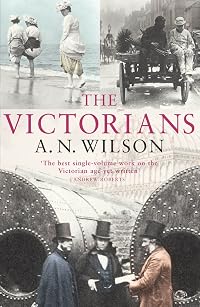
On This Page
Description
"With his flair for dramatic stories and telling detail, A.N. Wilson singles out those writers, statesmen, scientists, philosophers, and soldiers whose lives illuminated the fervor of an age on the cusp of modernity. Here we meet the lofty and famous - Prince Albert, Darwin, Marx, Gladstone, Christina Rossetti, Gordon of Khartoum, Cardinal Newman, George Eliot, Kipling, and Disraeli. But we also meet the poor and the obscure - doctors ministering to cholera victims in the big cities; young show more women working as models for famous painters; the man who got the British hooked on cigarettes; the colonizers and colonized in Ireland, India, and Africa."--Jacket. show lessTags
Recommendations
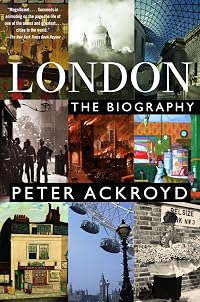


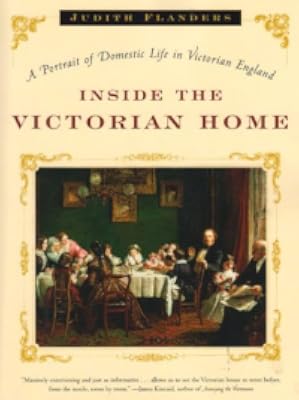
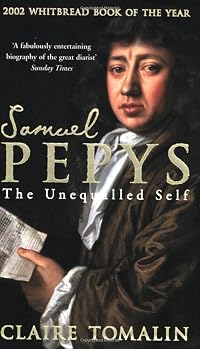
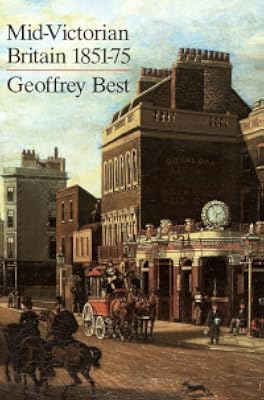



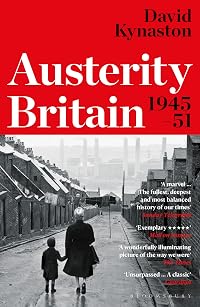
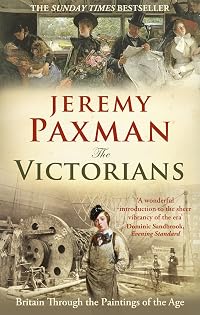
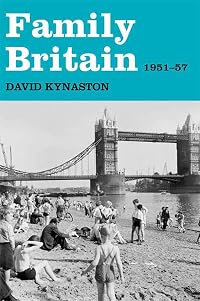





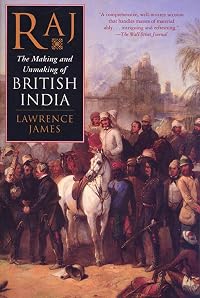
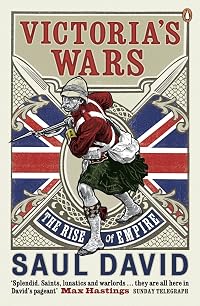
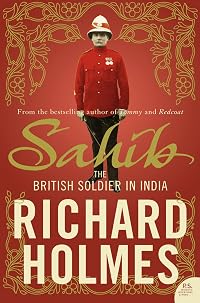

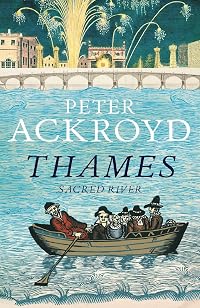

Member Recommendations



Member Reviews
Absorbing, full of fascinating details. The tone and style is musing, as the work tries to interpret the Victorians’ culture and mindset for us: sometimes admiring, sometimes critical, always with empathy. But perhaps the book ranges unevenly over too many things, such that we may miss the wood for the trees. Wilson is deeply well read, but doesn’t always unpack his knowledge and references for the reader. The book is a long read, and at times both format and content go astray in the bulk. Conversely, it’s sometimes hard to make out clearly those trees, as the writing can’t hold back from literary and cultural grand sweeps (fair enough; to the author that’s probably the point of the whole vast work) But to readers now, the show more detail, the sequence of events, will often be new and what captures our interest.
Some of these accounts have soap-opera style intrigues and escapades: D.G. Rossetti re-opening his late wife’s coffin at Highgate Cemetery for one. Other developments bring forth an elegiac tone (Hardy, the decline in religious belief and earnestness). Overall, plenty of the author’s enthusiasm cuts through, sending this reader off to follow up in other refrerenced works. Memorable too, speaking of the author’s enthusiasms, are some of his “crushes” on undervalued figures - Prince Albert, Parnell, Manning, Beardsley, or on the more roguish side, the pioneering journalist and eventual post-Titanic-sinking seance vision W.T. Stead. show less
Some of these accounts have soap-opera style intrigues and escapades: D.G. Rossetti re-opening his late wife’s coffin at Highgate Cemetery for one. Other developments bring forth an elegiac tone (Hardy, the decline in religious belief and earnestness). Overall, plenty of the author’s enthusiasm cuts through, sending this reader off to follow up in other refrerenced works. Memorable too, speaking of the author’s enthusiasms, are some of his “crushes” on undervalued figures - Prince Albert, Parnell, Manning, Beardsley, or on the more roguish side, the pioneering journalist and eventual post-Titanic-sinking seance vision W.T. Stead. show less
An absorbing, thoroughly interesting overview of Britain and Empire during the reign.
An obvious work of devotion and love of his subject. Crammed with interest and with a coherent point of view that is sustained throughout. The evidence for the quality of Wilson's text lies in the massive list of references and huge bibliography.
It is packed with a full to brimming calvacade of historical characters who are testament to the idea that "history is people".
What novels, biography and essays of Mr. Wilson I have read, have consistently impressed me, yet now, after completing "The Victorians", his standing rises further.
I notice that this is Volume 1 of a "Britain Trilogy". The other volumes promise so much.
An obvious work of devotion and love of his subject. Crammed with interest and with a coherent point of view that is sustained throughout. The evidence for the quality of Wilson's text lies in the massive list of references and huge bibliography.
It is packed with a full to brimming calvacade of historical characters who are testament to the idea that "history is people".
What novels, biography and essays of Mr. Wilson I have read, have consistently impressed me, yet now, after completing "The Victorians", his standing rises further.
I notice that this is Volume 1 of a "Britain Trilogy". The other volumes promise so much.
A miracle or mesmerism, empiricism or an existentialist crisis, crushing capitalist Darwinism or moral benevolence; A. N. Wilson takes the reader on a whirlwind tour of the period in which our concept of the modern world was founded.
Beginning in the early years of the period as Victoria takes her throne, we travel through the atrocities of the Irish potato famine and the Chartist uprisings, encounter politicians and policemen of varying temperament and morality, and ponder the opposing contemporary attitudes of survival of the fittest and moral kindness towards humanity. We strive to imagine a world undergoing such intense economic growth in the face of grinding poverty, a period in which to be capitalist very often meant being liberal. show more
Wilson’s tour de force encompasses the popular practice of mesmerism, the religion doubt generated by scientific advancement, the preoccupation with zoos and the interest generated by the Great Exhibition. Always present is the sense of middle class ambition, the desire to advance both socially and economically, to push the boundaries of technological advancement. Yet every progression, every great leap, is underpinned by the colonial expansion of the Empire and the economic benefits of slavery loom large like a cloud of guilt over the age. Scientific theories such as phrenology are submitted as proof to endorse the concept of racial superiority and thus securing belief in the fallacy of imperialism as a positive benefit for native societies.
An age of terrific achievement and advancement underpinned by civil unrest and the atrocities of colonialism and war, the Victorians strove constantly onwards marching towards an idealised version of the progressive society. Sentiments like these cannot always be in accordance with our own view of the world, but they must at times be admired. Wilson’s text perfectly captures this Victorian paradox. show less
Beginning in the early years of the period as Victoria takes her throne, we travel through the atrocities of the Irish potato famine and the Chartist uprisings, encounter politicians and policemen of varying temperament and morality, and ponder the opposing contemporary attitudes of survival of the fittest and moral kindness towards humanity. We strive to imagine a world undergoing such intense economic growth in the face of grinding poverty, a period in which to be capitalist very often meant being liberal. show more
Wilson’s tour de force encompasses the popular practice of mesmerism, the religion doubt generated by scientific advancement, the preoccupation with zoos and the interest generated by the Great Exhibition. Always present is the sense of middle class ambition, the desire to advance both socially and economically, to push the boundaries of technological advancement. Yet every progression, every great leap, is underpinned by the colonial expansion of the Empire and the economic benefits of slavery loom large like a cloud of guilt over the age. Scientific theories such as phrenology are submitted as proof to endorse the concept of racial superiority and thus securing belief in the fallacy of imperialism as a positive benefit for native societies.
An age of terrific achievement and advancement underpinned by civil unrest and the atrocities of colonialism and war, the Victorians strove constantly onwards marching towards an idealised version of the progressive society. Sentiments like these cannot always be in accordance with our own view of the world, but they must at times be admired. Wilson’s text perfectly captures this Victorian paradox. show less
To many of us, "Victorian" connotes boring, prudish, or tradition-bound, but to A. N. Wilson, the word evokes a richness of contrarieties. In The Victorians, this award-winning historian offers a rich narrative of an era that reconstructed itself into the modern age. Moving from the panoramic to the personal, he introduces readers to the deeply felt contradictions of 19th-century British culture and examines how political issues and technological developments caused fissures that rocked the staid empire.
A dramatic, revisionist panorama of an age whose material triumphs and spiritual crises prefigure our own.The nineteenth century saw greater changes than any previous era: in the ways nations and societies were organised, in scientific show more knowledge, and in nonreligious intellectual development. The crucial players in this drama were the British, who invented both capitalism and imperialism and were incomparably the richest, most important investors in the developing world. In this sense, England's position has strong resemblances to America's in the late twentieth century. As one of our most accomplished biographers and novelists, A. N. Wilson has a keen eye for a good story, and in this work he singles out those writers, statesmen, scientists, philosophers, and soldiers whose lives illuminate so revolutionary a history: Darwin, Marx, Gladstone, Christina Rossetti, Gordon, Cardinal Newman, George Eliot, Kipling, Dostoevsky. Wilson's accomplishment in this book is to explain through these signature lives how Victorian England started a revolution that still hasn't ended.
A. N. Wilson is the author of the biographies of Tolstoy, C. S. Lewis, Jesus, and Paul, the history God's Funeral, and several celebrated novels. He lives in London.
The New Yorker: Better known for his prodigious output as a biographer -- his subjects have included Tolstoy, Jesus, and C. S. Lewis -- A. N. Wilson has returned to social history. The Victorians, Wilson's chronicle of nineteenth-century Britain, looks at everything from the era's religious crises (the decline of Christian conviction) to its scientific advances (the emergence of evolutionary theory). One of the major themes is the growing problem of social stratification; the wealthy retreated into gated squares and the poor were left to live in what Wilson memorably describes as "a hard, brick-built, low-lying, gin-soaked world out of whose gaslit music halls and fogbound alleys mythologies developed." show less
A dramatic, revisionist panorama of an age whose material triumphs and spiritual crises prefigure our own.The nineteenth century saw greater changes than any previous era: in the ways nations and societies were organised, in scientific show more knowledge, and in nonreligious intellectual development. The crucial players in this drama were the British, who invented both capitalism and imperialism and were incomparably the richest, most important investors in the developing world. In this sense, England's position has strong resemblances to America's in the late twentieth century. As one of our most accomplished biographers and novelists, A. N. Wilson has a keen eye for a good story, and in this work he singles out those writers, statesmen, scientists, philosophers, and soldiers whose lives illuminate so revolutionary a history: Darwin, Marx, Gladstone, Christina Rossetti, Gordon, Cardinal Newman, George Eliot, Kipling, Dostoevsky. Wilson's accomplishment in this book is to explain through these signature lives how Victorian England started a revolution that still hasn't ended.
A. N. Wilson is the author of the biographies of Tolstoy, C. S. Lewis, Jesus, and Paul, the history God's Funeral, and several celebrated novels. He lives in London.
The New Yorker: Better known for his prodigious output as a biographer -- his subjects have included Tolstoy, Jesus, and C. S. Lewis -- A. N. Wilson has returned to social history. The Victorians, Wilson's chronicle of nineteenth-century Britain, looks at everything from the era's religious crises (the decline of Christian conviction) to its scientific advances (the emergence of evolutionary theory). One of the major themes is the growing problem of social stratification; the wealthy retreated into gated squares and the poor were left to live in what Wilson memorably describes as "a hard, brick-built, low-lying, gin-soaked world out of whose gaslit music halls and fogbound alleys mythologies developed." show less
Andrew Norman Wilson wrote a book Eminent Victorians and so did Lytton Strachey, but in the early 1900s, thereby confirming Strachey as an Eminent Victorian himself. However Wilson’s prose makes for an eminently more readable work, and in this panoramic study of the Victorian period he describes practically every single Victorian and historical event of the period worthy of note. The hundred-odd pages of references and source notes attest to the depth and breadth of his research, and it is obvious in reading the work that the author has spent years studying this period of history and he shows that he clearly knows the Victorian period.
It is his almost seemingly personal knowledge of these Victorian figures of history, invention, show more literature and politics – impossible of course as Wilson was not born until 1950 – that brings the book alive with insights. He brings a very human dimension to events as differing as the Irish Famine and the Zulu War and adds characteristics to the personalities that determined not only the British Victorian experience, but those of the whole Victorian Empire. The author explains how religion or atheism formed and distorted public and political values and how the literature of Dickens, Marx, and Tolstoy and even the fiction of the time eventually moved the poor into the conscience of the politicians and rulers.
Wilson shows how the Victorians were immensely successful in generating wealth and in inventions that removed labour from manufacturing, thereby adding to the working class poor and how, by their trading across the world, they ensured emigration and famine. Marx was always confounded that the riots and starvation of 1840 to 1850 never led to a British revolution while Europe was so deeply engrossed in so many. Wilson’s explanations on both the character of the British Victorians, their recent history and the emergence of valued and respected political leaders and (perhaps tardy) solutions staved off the revolt that many foretold.
This, the book jacket blurb says, was the book that Wilson was born to write. I have however enjoyed others he has written and look forward to adding more to my reading. This is a writer that you can respect, for his invested work on researching his subjects, and for his honesty and wit. This book is enjoyable historical writing in great depth. show less
It is his almost seemingly personal knowledge of these Victorian figures of history, invention, show more literature and politics – impossible of course as Wilson was not born until 1950 – that brings the book alive with insights. He brings a very human dimension to events as differing as the Irish Famine and the Zulu War and adds characteristics to the personalities that determined not only the British Victorian experience, but those of the whole Victorian Empire. The author explains how religion or atheism formed and distorted public and political values and how the literature of Dickens, Marx, and Tolstoy and even the fiction of the time eventually moved the poor into the conscience of the politicians and rulers.
Wilson shows how the Victorians were immensely successful in generating wealth and in inventions that removed labour from manufacturing, thereby adding to the working class poor and how, by their trading across the world, they ensured emigration and famine. Marx was always confounded that the riots and starvation of 1840 to 1850 never led to a British revolution while Europe was so deeply engrossed in so many. Wilson’s explanations on both the character of the British Victorians, their recent history and the emergence of valued and respected political leaders and (perhaps tardy) solutions staved off the revolt that many foretold.
This, the book jacket blurb says, was the book that Wilson was born to write. I have however enjoyed others he has written and look forward to adding more to my reading. This is a writer that you can respect, for his invested work on researching his subjects, and for his honesty and wit. This book is enjoyable historical writing in great depth. show less
An intriguing look at the Victorian era via the eyes of those who shaped that culture. The era is revealed as one that readied us for the modern era through an extensive volume of anecdotes and details.
Although I am not usually a great history reader, this book is easily the best of the genre I have ever read. Not only is it superbly written but it covers a huge range of the aspects of the era. Every important happening and person seems to be included from the arts, politics, science etc., etc. Definitely a masterpiece of the genre.
Members
- Recently Added By
Published Reviews
This high seriousness, though, is worn with a light touch, just as it was by many of the Victorians themselves (Disraeli is another of the book's unofficial heroes). Wilson has a sharp eye for the funny detail - the fact, for instance, that Prince Albert was tiny or that Engels had a broad Lancashire accent when he spoke English.
added by John_Vaughan
Lists

In Our Time books
4,934 works; 2 members
Author Information

80+ Works 10,168 Members
A. N. Wilson grew up in Staffordshire, England, and was educated at the Rugby School and New College, Oxford. A fellow of the Royal Society of Literature, he holds a prominent position in the world of literature and journalism. He is a prolific and award-winning biographer and celebrated novelist. He lives in North London.
Awards and Honors
Series

Common Knowledge
- Canonical title
- The Victorians
- Original publication date
- 2003
- People/Characters
- Benjamin Disraeli, 1st Earl of Beaconsfield; W. S. Gilbert; William Ewart Gladstone; Charles George Gordon; Caroline Norton; Charles Stewart Parnell (show all 17); Arthur Sullivan; Richard Wagner; Victoria, Queen of the United Kingdom; Florence Nightingale; Anthony Trollope; George Eliot; Henry John Temple, 3rd Viscount Palmerston; George Nathaniel Curzon; Robert Gascoyne-Cecil, 3rd Marquess of Salisbury; Harriet Martineau; Albert, Prince Consort
- Important places*
- India; France; Ireland; Russia
- Important events*
- Whitechapel Murders ( [1888, 1891]); Crimean War; The Great Exhibition (1851); Indian Mutiny; Chartism; Free Trade (show all 7); Indian Rebellion of 1857
*Some information comes from Common Knowledge in other languages. Click "Edit" for more information.
Classifications
- Genres
- History, Nonfiction, General Nonfiction, Biography & Memoir
- DDC/MDS
- 941.081 — History & geography History of Europe British Isles Historical periods of British Isles 1837- Period of Victoria and House of Windsor Victoria 1837-1901
- LCC
- DA550 .W745 — History of Europe, Asia, Africa and Oceania Great Britain History of Great Britain England History By period Modern, 1485- Victorian era, 1837-1901
- BISAC
Statistics
- Members
- 1,288
- Popularity
- 19,041
- Reviews
- 15
- Rating
- (3.76)
- Languages
- English, Estonian
- Media
- Paper, Ebook
- ISBNs
- 9
- ASINs
- 9