On This Page
Description
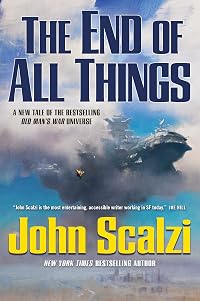
"Humans expanded into space ... only to find a universe populated with multiple alien species bent on their destruction. Thus was the Colonial Union formed, to help protect us from a hostile universe. The Colonial Union used the Earth and its excess population for colonists and soldiers. It was a good arrangement ... for the Colonial Union. Then the Earth said: no more. Now the Colonial Union is living on borrowed time--a couple of decades at most, before the ranks of the Colonial Defense show more Forces are depleted and the struggling human colonies are vulnerable to the alien species who have been waiting for the first sign of weakness to drive humanity to ruin. And there's another problem: a group, lurking in the darkness of space, playing human and alien against each other--and against their own kind--for their own unknown reasons. In this collapsing universe, CDF Lieutenant Harry Wilson and the Colonial Union diplomats he works with race against the clock to discover who is behind attacks on the Union and on alien races, to seek peace with a suspicious, angry Earth, and keep humanity's union intact ... or else risk oblivion, and extinction--and the end of all things"-- show lessTags
Recommendations








Member Reviews
THE END OF ALL THINGS is John Scalzi's second experiment with format in his Old Man's War series. Rather than the serial format of the previous book, this time he uses four novellas to tell his tale. As before, I am not a fan.
In truth, THE END OF ALL THINGS is not my favorite book of the series either, and that has nothing to do with the format of it. My problem is how anticlimactic the ending is. Unlike the first few books, there are no battles and few explosions. No one is in serious mortal peril. All of the action is in the form of negotiation and political machinations, most of which occurs offscreen. Sure, negotiation is always the preferred option when it comes to avoiding bloodshed, but it doesn't make for an interesting story. show more Well, not unless you like that sort of thing.
Plus, there is a sense of inevitability throughout all four novellas that prevents the build-up of any suspense. I already mentioned the lack of mortal peril. This also includes the fact that the outcome of each novella is not a surprise. You can predict how the narrator's story would end within the first few chapters. Despite the inclusion of a few meandering twists, each narrator's story follows a comfortable path that you expect it to follow. You never realize how important tension is to any story until you read something that doesn't have any.
Because I am a sucker for completing a series, and because I really enjoyed the first three books, I will go ahead and read the newest book in the series, released a few months ago. I am curious to see the changes to Mr. Scalzi's writing style over the last ten years. I've enjoyed his recent novels so much that I tend to approach his stories with high expectations. Given my lackluster opinion of THE END OF ALL THINGS, however, I will be cautiously optimistic when I start it. show less
In truth, THE END OF ALL THINGS is not my favorite book of the series either, and that has nothing to do with the format of it. My problem is how anticlimactic the ending is. Unlike the first few books, there are no battles and few explosions. No one is in serious mortal peril. All of the action is in the form of negotiation and political machinations, most of which occurs offscreen. Sure, negotiation is always the preferred option when it comes to avoiding bloodshed, but it doesn't make for an interesting story. show more Well, not unless you like that sort of thing.
Plus, there is a sense of inevitability throughout all four novellas that prevents the build-up of any suspense. I already mentioned the lack of mortal peril. This also includes the fact that the outcome of each novella is not a surprise. You can predict how the narrator's story would end within the first few chapters. Despite the inclusion of a few meandering twists, each narrator's story follows a comfortable path that you expect it to follow. You never realize how important tension is to any story until you read something that doesn't have any.
Because I am a sucker for completing a series, and because I really enjoyed the first three books, I will go ahead and read the newest book in the series, released a few months ago. I am curious to see the changes to Mr. Scalzi's writing style over the last ten years. I've enjoyed his recent novels so much that I tend to approach his stories with high expectations. Given my lackluster opinion of THE END OF ALL THINGS, however, I will be cautiously optimistic when I start it. show less
4.5 stars rounded up to 5.
In the previous entry of this series, The Human Division, the book was a collection of a serialized stories bundled together with an overarching storyline. It didn't work for some people, but it worked for me. This entry gets to the bottom of the matter: Who's trying to sabotage the Colonial Union? The story is told over four novellas which offer varying viewpoints as to what's going on in different places and at different levels of society in Scalzi's Old Man's War universe.
The opening story is "The Life of the Mind" in which we see where all of the missing ships went. It's told from the viewpoint of Rafe Daquin, a computer programmer turned starship pilot who's just looking for work. He signs up for third show more string pilot aboard the Chandler and gets more than he ever bargained for. The ship is captured and he's forced to pilot the ship for Equilibrium, the organization looking to make life hell for the Colonial Union (CU). But despite being at their mercy at the outset, he plots his revenge.
"This Hollow Union" gives us a look inside the political operations of the Enclave, a confederation of 400 species who are united in their opposition to the CU and still smarting from their comeuppance at the conclusion of The Last Colony (Book 3). It's told by Hafte Sorvalh, the de facto number two of the Enclave. The Enclave is torn over what to do about Earth. Readers of the series will know that Earth told the CU to bugger off after they learned what the CU's been doing, not to mention that they believe the CU destroyed their space station. Some want to admit the Earth into the Enclave; others hate this idea as you just can't trust Humans. There's plenty of intrigue, and I admit to being caught off guard by the big reveal at the end.
"Can Long Endure" embeds you with a team of CU Marines as they're sent from one assignment to the next. CU colonies are upset and threatening to declare their independence. The CU can not allow that, and so the Marines are sent in to remind these would-be rebels that that would be a bad idea. Lt. Heather Lee listens to her squad debate matters from the CU's troubles to what's being served for lunch in the mess hall all while trying to stay above the fray and making sure that they focus on the job at hand. It's fairly lighthearted until the last world they're sent to and then Lt. Lee has had enough.
"To Stand or Fall" picks up where "Can Long Endure" leaves off. Lt. Harry Wilson narrates this one after appearing in "This Hollow Union." He's a realist, recognizing that the CU is falling apart but also that it's humanity's best chance for survival. Thanks to some clever interrogations, he's able to figure out the Enclave's grand plan that will tear everyone apart. The hard part is figuring out how to prevent it.
It's trademark Scalzi at the top of his game. He has characters you can root for, wonderful dialogue, and a worldview that I can get behind. While all of the worldbuilding was done at the beginning of the series and the aliens are people in rubber suits, I didn't mind. It works. It's solid entertainment for this reader. show less
In the previous entry of this series, The Human Division, the book was a collection of a serialized stories bundled together with an overarching storyline. It didn't work for some people, but it worked for me. This entry gets to the bottom of the matter: Who's trying to sabotage the Colonial Union? The story is told over four novellas which offer varying viewpoints as to what's going on in different places and at different levels of society in Scalzi's Old Man's War universe.
The opening story is "The Life of the Mind" in which we see where all of the missing ships went. It's told from the viewpoint of Rafe Daquin, a computer programmer turned starship pilot who's just looking for work. He signs up for third show more string pilot aboard the Chandler and gets more than he ever bargained for. The ship is captured and he's forced to pilot the ship for Equilibrium, the organization looking to make life hell for the Colonial Union (CU). But despite being at their mercy at the outset, he plots his revenge.
"This Hollow Union" gives us a look inside the political operations of the Enclave, a confederation of 400 species who are united in their opposition to the CU and still smarting from their comeuppance at the conclusion of The Last Colony (Book 3). It's told by Hafte Sorvalh, the de facto number two of the Enclave. The Enclave is torn over what to do about Earth. Readers of the series will know that Earth told the CU to bugger off after they learned what the CU's been doing, not to mention that they believe the CU destroyed their space station. Some want to admit the Earth into the Enclave; others hate this idea as you just can't trust Humans. There's plenty of intrigue, and I admit to being caught off guard by the big reveal at the end.
"Can Long Endure" embeds you with a team of CU Marines as they're sent from one assignment to the next. CU colonies are upset and threatening to declare their independence. The CU can not allow that, and so the Marines are sent in to remind these would-be rebels that that would be a bad idea. Lt. Heather Lee listens to her squad debate matters from the CU's troubles to what's being served for lunch in the mess hall all while trying to stay above the fray and making sure that they focus on the job at hand. It's fairly lighthearted until the last world they're sent to and then Lt. Lee has had enough.
"To Stand or Fall" picks up where "Can Long Endure" leaves off. Lt. Harry Wilson narrates this one after appearing in "This Hollow Union." He's a realist, recognizing that the CU is falling apart but also that it's humanity's best chance for survival. Thanks to some clever interrogations, he's able to figure out the Enclave's grand plan that will tear everyone apart. The hard part is figuring out how to prevent it.
It's trademark Scalzi at the top of his game. He has characters you can root for, wonderful dialogue, and a worldview that I can get behind. While all of the worldbuilding was done at the beginning of the series and the aliens are people in rubber suits, I didn't mind. It works. It's solid entertainment for this reader. show less
76 points, 4 stars!
Self Blurb:
Humanity is holding on by the tips of its fingers in space. The Colonial Union has made a lot of enemies, and now Earth isn't supplying them with more people to help keep them safe anymore. They're having to rely on themselves, and they don't really have the resources to do it. Humans on colonial planets are now revolting en masse. And there is a shadow group doing as much as it can to pit Humanity against the Conclave, a group of allied alien nations, and wipe the both of them out in one fell swoop.
Quote:
Review:
The End of All Things is the follow up to The show more Human Division. Shit broke itself, and now we gotta fix it. All while some truly heinous, horrifically awesome sci-fi is going on. When I say Old Man's War gets better after Perry and Sagan aren't around anymore, I really mean it. John Scalzi just really knows how to write some good sci-fi.
This book is broken up into four novellas that were each released individually. Where it differs from The Human Division, which was also released in parts individually and collected later into one volume, is that The End of All Things just tells a narrative way better. It feels like a story, not a bunch of little bits and pieces that may or may not be important.
The End of All Things tell- four stories, from four different people, all in chronological order. The goal? To fix everything that goes wrong in The Human Division, and make everyone happy. A lofty, but impossible, goal. There are too many people with too many different, competing, desires. Still a good story.
It is also truly terrifying at times.
The first novella, The Life of the Mind, features a brain in a jar. Really. The....the very idea of being trapped inside your own mind without any input is absolutely horrifying. Scalzi, until this point, has done a very good job in the series at bringing up the horrific without dwelling on it. This novella dwells on it. It feeds on it. It thrives on it. This idea is really weird, creepy, and interesting. He was a person, then he became a brain. They forced him to become a brain that had to follow orders - and he isn't that good at following orders.
The second novella, This Hollow Union, didn't go where I expected it to go. Things are heating up fast. But I love the main character, Hafte Sorvalh. I also really love the leader of the Conclave, General Grau. These two are an amazing pair. I just..didn't expect this novella to end up where it did. I'm scared! I'm really, really scared. The main purpose is to show how absolutely tired the alien Conclave is of humans, but most specifically the Colonial Union, as if we didn't know that already. The secondary purpose was the end of the novella, which holy shit was not where I expected it to go.
The third novella, Can Long Endure, is another one I didn't expect the end of. It just didn't have the holy shit consequences that This Hollow Union had. The purpose is to see just how much the Colonial Union is falling to pieces. They're on the brink of collapse. All because of their own shitty actions. No one wants to play with them anymore. Not the Conclave, not Earth, not their planets. Not even their soldiers. No one. Shit is getting real, and it is getting real quickly.
The last novella, To Stand or Fall, is the end. The real end to the series, not the end like we got in The Last Colony. There is nowhere else to go from here. The novella actually feels quick, because it so smoothly slides into where the end is. There were a few diplomatic hiccoughs, but everything just kind of ended. Quickly. I was actually expecting more flash, more bang. But it was more like a flop.
Overall, I really liked The End of All Things, and I enjoyed reading Old Man's War. It isn't my favourite by any means, but I had a lot of fun reading it. I enjoyed many of the concepts. There were some things I would have liked different, but isn't that true of everyone of every series? As is, it was enjoyable. show less
Self Blurb:
Humanity is holding on by the tips of its fingers in space. The Colonial Union has made a lot of enemies, and now Earth isn't supplying them with more people to help keep them safe anymore. They're having to rely on themselves, and they don't really have the resources to do it. Humans on colonial planets are now revolting en masse. And there is a shadow group doing as much as it can to pit Humanity against the Conclave, a group of allied alien nations, and wipe the both of them out in one fell swoop.
Quote:
"You should be dead!" Aul yelled at the monitor. "You should be dead, your ship should be dead, you should all be dead! You magnificent shit-eater!"
Review:
The End of All Things is the follow up to The show more Human Division. Shit broke itself, and now we gotta fix it. All while some truly heinous, horrifically awesome sci-fi is going on. When I say Old Man's War gets better after Perry and Sagan aren't around anymore, I really mean it. John Scalzi just really knows how to write some good sci-fi.
This book is broken up into four novellas that were each released individually. Where it differs from The Human Division, which was also released in parts individually and collected later into one volume, is that The End of All Things just tells a narrative way better. It feels like a story, not a bunch of little bits and pieces that may or may not be important.
The End of All Things tell- four stories, from four different people, all in chronological order. The goal? To fix everything that goes wrong in The Human Division, and make everyone happy. A lofty, but impossible, goal. There are too many people with too many different, competing, desires. Still a good story.
It is also truly terrifying at times.
The first novella, The Life of the Mind, features a brain in a jar. Really. The....the very idea of being trapped inside your own mind without any input is absolutely horrifying. Scalzi, until this point, has done a very good job in the series at bringing up the horrific without dwelling on it. This novella dwells on it. It feeds on it. It thrives on it. This idea is really weird, creepy, and interesting. He was a person, then he became a brain. They forced him to become a brain that had to follow orders - and he isn't that good at following orders.
The second novella, This Hollow Union, didn't go where I expected it to go. Things are heating up fast. But I love the main character, Hafte Sorvalh. I also really love the leader of the Conclave, General Grau. These two are an amazing pair. I just..didn't expect this novella to end up where it did. I'm scared! I'm really, really scared. The main purpose is to show how absolutely tired the alien Conclave is of humans, but most specifically the Colonial Union, as if we didn't know that already. The secondary purpose was the end of the novella, which holy shit was not where I expected it to go.
The third novella, Can Long Endure, is another one I didn't expect the end of. It just didn't have the holy shit consequences that This Hollow Union had. The purpose is to see just how much the Colonial Union is falling to pieces. They're on the brink of collapse. All because of their own shitty actions. No one wants to play with them anymore. Not the Conclave, not Earth, not their planets. Not even their soldiers. No one. Shit is getting real, and it is getting real quickly.
The last novella, To Stand or Fall, is the end. The real end to the series, not the end like we got in The Last Colony. There is nowhere else to go from here. The novella actually feels quick, because it so smoothly slides into where the end is. There were a few diplomatic hiccoughs, but everything just kind of ended. Quickly. I was actually expecting more flash, more bang. But it was more like a flop.
Overall, I really liked The End of All Things, and I enjoyed reading Old Man's War. It isn't my favourite by any means, but I had a lot of fun reading it. I enjoyed many of the concepts. There were some things I would have liked different, but isn't that true of everyone of every series? As is, it was enjoyable. show less
3.5 Stars - an engaging continuation of the 'Old Man's War' sequence. These four pieces of short fiction kick of shortly after the events of 'The Human Division', with the novella 'The Life of the Minds'a standout 'brain in a jar' story making a fine beginning. Rafe Daquin, a down on his luck pilot makes a fateful choice of employment. A promotion to chief pilot turns out to have unattractive consequences...
Within the stories, Scalzi explores themes of maintenance of empire and control, in a populous and fractious galaxy, where freedom and self-determination may carry a real risk of subjugation or extermination by others.
What are the motivations and choices of the leaders of the Conclave, the Colonial Union and Earth, who are pressed show more from all sides by competing and often irreconcilable demands? ('This Hollow Union')
How do common soldiers cope when their orders to protect the staus quo of empire sees them participating in actions which seem against the interests of those they are tasked to protect? ('can Long Endure').
It is all wrapped up nicely enough in the finale 'To Stand of Fall', which might well be the last we see of this particular series.
Scalzi's light hearted and mildly mocking prose reads and scans well, and the narratives in the individual stories motor along quite satisfactorily. To some extent, the exploits of our heroes are perhaps overly assisted by the stupidity or overconfidence of their enemies, but these faults are minor. Well worth the time to read, especially if you have enjoyed the earlier installments. show less
Within the stories, Scalzi explores themes of maintenance of empire and control, in a populous and fractious galaxy, where freedom and self-determination may carry a real risk of subjugation or extermination by others.
What are the motivations and choices of the leaders of the Conclave, the Colonial Union and Earth, who are pressed show more from all sides by competing and often irreconcilable demands? ('This Hollow Union')
How do common soldiers cope when their orders to protect the staus quo of empire sees them participating in actions which seem against the interests of those they are tasked to protect? ('can Long Endure').
It is all wrapped up nicely enough in the finale 'To Stand of Fall', which might well be the last we see of this particular series.
Scalzi's light hearted and mildly mocking prose reads and scans well, and the narratives in the individual stories motor along quite satisfactorily. To some extent, the exploits of our heroes are perhaps overly assisted by the stupidity or overconfidence of their enemies, but these faults are minor. Well worth the time to read, especially if you have enjoyed the earlier installments. show less
The End.
The Old Man's War series was one hell of a ride, from decanting brains out of old people into nice young military types to decanting brains into spaceships against one's will, from never-ending expansion to civil war between Earth and the Colonies to the possible collapse of all human space against the rest of the aliens we didn't try to get along with.
It's pretty epic.
But you know what I like most about this whole thing?
Scalzi's light-hearted humor.
Sure, there's a lot of great competence porn and even better SF ideas and deeper philosophical statements studded throughout a wild space opera adventure full of down-to-earth characters and politics and great funny moments, but it's the voices of the characters that made it shine. show more They're light and easy reads that always manages to say something important.
This novel is actually four novellas and they all do a bang up job wrapping up the whole shebang. Will humanity survive its follies? We've managed to piss off practically everyone and ourselves, so is there really a hope for us?
No. I guess not. :) But then there's Wilson so I guess we're not that bad. :) show less
The Old Man's War series was one hell of a ride, from decanting brains out of old people into nice young military types to decanting brains into spaceships against one's will, from never-ending expansion to civil war between Earth and the Colonies to the possible collapse of all human space against the rest of the aliens we didn't try to get along with.
It's pretty epic.
But you know what I like most about this whole thing?
Scalzi's light-hearted humor.
Sure, there's a lot of great competence porn and even better SF ideas and deeper philosophical statements studded throughout a wild space opera adventure full of down-to-earth characters and politics and great funny moments, but it's the voices of the characters that made it shine. show more They're light and easy reads that always manages to say something important.
This novel is actually four novellas and they all do a bang up job wrapping up the whole shebang. Will humanity survive its follies? We've managed to piss off practically everyone and ourselves, so is there really a hope for us?
No. I guess not. :) But then there's Wilson so I guess we're not that bad. :) show less
I won’t lie, Old Man’s War is probably one of my favorite books of all time. I’ve always been more of a Fantasy reader, and around the time that book came out, my Science Fiction reading was pretty much limited to Star Wars novels and the occasional Star Trek title thrown in. However, Scalzi’s sense of humor along with the rollicking space action and adventure in these books really helped me along, showing me that there’s a lot more to the genre than just hard science and media tie-ins. I’ve followed the Old Man’s War series ever since, and all the books have brought me no small amount of entertainment.
So it was with great excitement when I heard that a sixth novel will be coming out in 2015, a direct sequel to The Human show more Division. And like The Human Division, the plan was for The End of All Things to again be serialized, except the proportions will be changed. Instead of getting sixteen episodes, this time we’ll only get four, but each part will also be longer, so they’ll be more like novelettes.
If The Human Division taught me anything, is that I don’t mind the serialized format. There’s a certain kind of pleasure to be had, watching a bunch of self-contained little parts come together to form one complete, coherent whole. And if anything, the smaller number of episodes as well as their greater length improved the overall flow of the story in The End of All Things. It was a good book, and a worthy addition to the series. The only real downside is that this would make a poor jumping-on point for new readers. So if you’re fresh to the Old Man’s War universe, you probably wouldn’t want to start here; there’s a lot of history you’ll be missing, and not least because this book deals with a lot of the consequences of events from the last few installments. I recommend starting from the beginning, because you’ll definitely want to know all the details – and because it’s amazing.
Below you’ll get my thoughts on each episode as well as a more detailed analysis.
THE LIFE OF THE MIND
This is the story of how our main protagonist and narrator Rafe Daquin became a brain in a box.
Yep. The Life of the Mind embodies everything I love about the Old Man’s War series. Missing ships. Kidnapped pilots. A mysterious organization conspiring and gathering strength in the shadows. Daquin finds himself entangled in this mess, but even when he is captured by aliens and forced to do their bidding, his first instinct is to fight back and find a way out of his predicament. The fact that he doesn’t have a body anymore and is just a mass of brain tissue hooked up to a ship computer is just a setback. Just another problem to be solved.
The protagonist’s personality and attitude made this one a winner. In the face of overwhelming odds, his optimism was infectious, even if it was sometimes driven by the desire to stick it to the alien Rraey. You know within the first few pages that he makes it out okay, but the conclusion to this section was still oh so satisfying. A really great intro episode to this novel that sets the tone and starts thing off with a bang.
THIS HOLLOW UNION
We switch focus in this one, following Hafte Sorvalh, the Chief Advisor to the head of the Conclave, General Tarsem Gau. She’s probably the second most powerful being in the universe, but as she reminds us, being second isn’t always all that it’s cracked up to be.
I admit to feeling slightly disappointed when I realized this would be a more political story. But after some major twists, I changed my mind. This might not be my favorite episode, but it’s undoubtedly the most important; something huge happens that will throw the entire Conclave into disarray and the ripples will be felt across the galaxy.
CAN LONG ENDURE
Can Long Endure was probably my least favorite episode, but it also showed a very different point of view. In this story, the focus shifts yet again, this time on a group of Colonial Defense Force soldiers who are now busy scrambling from planet to planet, stomping out the sparks of rebellion before they can catch fire and spread. But the will of a huge administrative entity like the Colonial Union is one thing. What about the lives of its soldiers with their boots on the ground, carrying out orders from on high?
This episode lacked the scope of the previous two, perhaps, but it was also the most “human”. It’s a very intimate look into the mind of a CDF officer Heather Lee, just another grunt doing her duty for the good of the CU. But she’s her own person too, and the costs of her government’s decisions are beginning to open her eyes to some ugly truths. And it’s time for Heather to make her own choices.
TO STAND OR FALL
This final episode brings the story to a conclusion. There’s a marked difference in tone from the beginning of the novel, in stark contrast to Rafe Daquin’s snarky attitude and spirited narration. Instead, a certain gravitas surrounds the story, which is fitting I suppose.
In this story, we see the return of several familiar faces here, including a couple beloved personalities. We are also presented the resolution to the problem posed by the shadowy organization calling itself Equilibrium. Given all the build-up, this finale should have been epic and glorious. Unfortunately, we didn’t quite get that. That’s not to say it wasn’t a good ending, because it was. I just couldn’t help feeling it should have been more.
This final episode was not what I expected, but it did its job nonetheless. To Stand or Fall was a punchy and cleverly executed conclusion to The End of All Things, as well as a pretty solid offering as the latest piece of the story to the Old Man’s War saga thus far. show less
So it was with great excitement when I heard that a sixth novel will be coming out in 2015, a direct sequel to The Human show more Division. And like The Human Division, the plan was for The End of All Things to again be serialized, except the proportions will be changed. Instead of getting sixteen episodes, this time we’ll only get four, but each part will also be longer, so they’ll be more like novelettes.
If The Human Division taught me anything, is that I don’t mind the serialized format. There’s a certain kind of pleasure to be had, watching a bunch of self-contained little parts come together to form one complete, coherent whole. And if anything, the smaller number of episodes as well as their greater length improved the overall flow of the story in The End of All Things. It was a good book, and a worthy addition to the series. The only real downside is that this would make a poor jumping-on point for new readers. So if you’re fresh to the Old Man’s War universe, you probably wouldn’t want to start here; there’s a lot of history you’ll be missing, and not least because this book deals with a lot of the consequences of events from the last few installments. I recommend starting from the beginning, because you’ll definitely want to know all the details – and because it’s amazing.
Below you’ll get my thoughts on each episode as well as a more detailed analysis.
THE LIFE OF THE MIND
This is the story of how our main protagonist and narrator Rafe Daquin became a brain in a box.
Yep. The Life of the Mind embodies everything I love about the Old Man’s War series. Missing ships. Kidnapped pilots. A mysterious organization conspiring and gathering strength in the shadows. Daquin finds himself entangled in this mess, but even when he is captured by aliens and forced to do their bidding, his first instinct is to fight back and find a way out of his predicament. The fact that he doesn’t have a body anymore and is just a mass of brain tissue hooked up to a ship computer is just a setback. Just another problem to be solved.
The protagonist’s personality and attitude made this one a winner. In the face of overwhelming odds, his optimism was infectious, even if it was sometimes driven by the desire to stick it to the alien Rraey. You know within the first few pages that he makes it out okay, but the conclusion to this section was still oh so satisfying. A really great intro episode to this novel that sets the tone and starts thing off with a bang.
THIS HOLLOW UNION
We switch focus in this one, following Hafte Sorvalh, the Chief Advisor to the head of the Conclave, General Tarsem Gau. She’s probably the second most powerful being in the universe, but as she reminds us, being second isn’t always all that it’s cracked up to be.
I admit to feeling slightly disappointed when I realized this would be a more political story. But after some major twists, I changed my mind. This might not be my favorite episode, but it’s undoubtedly the most important; something huge happens that will throw the entire Conclave into disarray and the ripples will be felt across the galaxy.
CAN LONG ENDURE
Can Long Endure was probably my least favorite episode, but it also showed a very different point of view. In this story, the focus shifts yet again, this time on a group of Colonial Defense Force soldiers who are now busy scrambling from planet to planet, stomping out the sparks of rebellion before they can catch fire and spread. But the will of a huge administrative entity like the Colonial Union is one thing. What about the lives of its soldiers with their boots on the ground, carrying out orders from on high?
This episode lacked the scope of the previous two, perhaps, but it was also the most “human”. It’s a very intimate look into the mind of a CDF officer Heather Lee, just another grunt doing her duty for the good of the CU. But she’s her own person too, and the costs of her government’s decisions are beginning to open her eyes to some ugly truths. And it’s time for Heather to make her own choices.
TO STAND OR FALL
This final episode brings the story to a conclusion. There’s a marked difference in tone from the beginning of the novel, in stark contrast to Rafe Daquin’s snarky attitude and spirited narration. Instead, a certain gravitas surrounds the story, which is fitting I suppose.
In this story, we see the return of several familiar faces here, including a couple beloved personalities. We are also presented the resolution to the problem posed by the shadowy organization calling itself Equilibrium. Given all the build-up, this finale should have been epic and glorious. Unfortunately, we didn’t quite get that. That’s not to say it wasn’t a good ending, because it was. I just couldn’t help feeling it should have been more.
This final episode was not what I expected, but it did its job nonetheless. To Stand or Fall was a punchy and cleverly executed conclusion to The End of All Things, as well as a pretty solid offering as the latest piece of the story to the Old Man’s War saga thus far. show less
This can be read as a novel, or as what it is: a collection of four connected novellas. It's also a direct sequel to the similarly-constructed The Human Division.
"The Life of the Mind"--Rafe Daquin is a pilot on the Colonial Union freighter Chandler, when it is commandeered for a special mission by the Colonial Union's Assistant Secretary of State Tyson Ocampo. In short order, most of the crew is dead, Rafe is a brain in a box installed in Chandler, and he knows a great deal about a conspiracy aimed at destabilizing both the Colonial Union and the alien Conclave. Scalzi very effectively gives us Rafe's experience of waking up and realizing that he can feel nothing physical. Even his terror fails to produce normal physical effects. Then show more we experience with Rafe his discover of what's going on, who's behind it, and what, exactly, are his opportunities to do something about it.
"The Hollow Union"--Secretary Ocampo's carefully doctored report, as well as Rafe's undoctored version, have both been released and beamed to as many places as possible. It's wreaking political havoc in the Conclave, and Councilor Sorvalh has to help General Gau maneuver through the chaos and keep the Conclave together--if that is even possible. This is a very nice exploration of the twisty, complicated politics of the Conclave, but also a wonderful character study of Sorvalh herself.
"Can Long Endure"--Colonial Defense Forces Lieutenant Heather Lee and her platoon get a series of assignments crushing rebellions and attempts at secession from the Colonial Union by various colony worlds. Mostly, it only takes Lee and her own squad. As the problems get worse, and bigger, and they have to kill CU civilians who aren't part of any big conspiracy, but just frustrated by the admittedly deceptive and duplicitous Colonial Union government, they start to wonder if they're doing more harm than good. Lee in particular has to do some serious soul-searching and make some critical decisions.
"To Stand or Fall"--Our old friend Lieutenant Harry Wilson, who has had smaller roles in the earlier stories in The End of All Things, finds he's in the middle of the mess created by the Ocampo report and the Equilibrium conspiracy, and if he, Schmidt, Abumwe, and the rest of their team don't create a solution, they're facing the possible extinction of the human race. It's not that Sorvalh wants to commit genocide; it's that the maneuvering of the Equilibrium, and the Conclave's internal stresses, may leave her no choice. This is a dandy visit with some of the most familiar characters from The Human Division.
It all hangs together very well, and moves the overall story of the Old Man's War universe forward in useful and interesting ways. Scalzi deals with the moral ambiguity of the Colonial Union, evident even in Old Man's War, with subtlety and clarity.
I think this is best considered as a set of four novellas, rather than a novel, and that's probably how I'll approach it when Hugo nominating season comes around.
Recommended.
I bought this book. show less
"The Life of the Mind"--Rafe Daquin is a pilot on the Colonial Union freighter Chandler, when it is commandeered for a special mission by the Colonial Union's Assistant Secretary of State Tyson Ocampo. In short order, most of the crew is dead, Rafe is a brain in a box installed in Chandler, and he knows a great deal about a conspiracy aimed at destabilizing both the Colonial Union and the alien Conclave. Scalzi very effectively gives us Rafe's experience of waking up and realizing that he can feel nothing physical. Even his terror fails to produce normal physical effects. Then show more we experience with Rafe his discover of what's going on, who's behind it, and what, exactly, are his opportunities to do something about it.
"The Hollow Union"--Secretary Ocampo's carefully doctored report, as well as Rafe's undoctored version, have both been released and beamed to as many places as possible. It's wreaking political havoc in the Conclave, and Councilor Sorvalh has to help General Gau maneuver through the chaos and keep the Conclave together--if that is even possible. This is a very nice exploration of the twisty, complicated politics of the Conclave, but also a wonderful character study of Sorvalh herself.
"Can Long Endure"--Colonial Defense Forces Lieutenant Heather Lee and her platoon get a series of assignments crushing rebellions and attempts at secession from the Colonial Union by various colony worlds. Mostly, it only takes Lee and her own squad. As the problems get worse, and bigger, and they have to kill CU civilians who aren't part of any big conspiracy, but just frustrated by the admittedly deceptive and duplicitous Colonial Union government, they start to wonder if they're doing more harm than good. Lee in particular has to do some serious soul-searching and make some critical decisions.
"To Stand or Fall"--Our old friend Lieutenant Harry Wilson, who has had smaller roles in the earlier stories in The End of All Things, finds he's in the middle of the mess created by the Ocampo report and the Equilibrium conspiracy, and if he, Schmidt, Abumwe, and the rest of their team don't create a solution, they're facing the possible extinction of the human race. It's not that Sorvalh wants to commit genocide; it's that the maneuvering of the Equilibrium, and the Conclave's internal stresses, may leave her no choice. This is a dandy visit with some of the most familiar characters from The Human Division.
It all hangs together very well, and moves the overall story of the Old Man's War universe forward in useful and interesting ways. Scalzi deals with the moral ambiguity of the Colonial Union, evident even in Old Man's War, with subtlety and clarity.
I think this is best considered as a set of four novellas, rather than a novel, and that's probably how I'll approach it when Hugo nominating season comes around.
Recommended.
I bought this book. show less
Members
- Recently Added By
Published Reviews
ThingScore 100
New readers will certainly enjoy the work, but the real payoff comes for longtime fans, who will especially appreciate a powerful moment featuring the alien General Gau. Scalzi knows just how to satisfy his fans, providing tense, thrilling action scenes while turning a critical eye on the interstellar equivalents of the military-industrial complex.
added by jimroberts
Lists

Best Science Fiction Novels
816 works; 426 members

2016 Hugo Eligible Novels
90 works; 32 members

Kirkus Starred Fiction Reviews of Books Published in 2015
310 works; 6 members
Books Read in 2016
4,666 works; 197 members

Books Read in 2023
5,638 works; 147 members

Books Read in 2025
4,128 works; 98 members
Author Information

135+ Works 67,834 Members
John Michael Scalzi was born May 10, 1969 in California. He attended the University of Chicago. During his 1989 -1990 school year he was the editor-in-chief of The Chicago Maroon. After graduating in 1991, Scalzi took a job as the film critic for the Fresno Bee newspaper, eventually also becoming a humor columnist. In 1996 he was hired as the show more in-house writer and editor at America Online. When he was laid off in 1998, he decided to become a full-time freelance writer and author. His first published novel was Old Man's War. His other works include Agent to the Stars, The Ghosts Brigades, The Androids Team, The Sagan Diary, The Last Colony, and Redshirts: A Novel with Three Codas. In 2014 his title, Locked In, made The New York Times Best Seller List. (Bowker Author Biography) show less
Some Editions
Awards and Honors
Series


Belongs to Publisher Series
Work Relationships
Is contained in
Common Knowledge
- Canonical title
- The End of All Things
- Original publication date
- 2015-08-11
- People/Characters
- Rafe Daquin; Harry Wilson; Hart Schmidt; Hafte Sorvalh; Danielle Lowen; Tyson Ocampo (show all 7); Ode Abumwe
- Dedication
- To Jay and Mary Vernau, of Jay and Mary's Book Center of Troy, Ohio;
To Alan Beatts and Jude Feldman of Borderlands Books of San Francisco, California;
To Duane Wilkins and Olivia Ohl of University Bookstore, Un... (show all)iversity of Washington;
And to all the booksellers who have shared my work with the readers in their stores.
You are the best. This one is for you, with thanks. - First words
- So, I'm supposed to tell you how I became a brain in a box.
- Last words
- (Click to show. Warning: May contain spoilers.)He looked at both of us, excited. "So. What's next?"
- Publisher's editor
- Nielsen Hayden, Patrick
- Blurbers
- Grossman, Lev; Hill, Joe
Classifications
Statistics
- Members
- 1,626
- Popularity
- 13,902
- Reviews
- 48
- Rating
- (3.84)
- Languages
- 7 — Czech, English, French, German, Hungarian, Portuguese, Spanish
- Media
- Paper, Audiobook, Ebook
- ISBNs
- 27
- UPCs
- 1
- ASINs
- 9