On This Page
Description
"Oswald de Lacy was never meant to be the Lord of Somerhill Manor. Dispatched to a monastery at the age of seven, sent back at seventeen when his father and two older brothers are killed by the plague, Oswald has no experience of running an estate. He finds the years of pestilence and neglect have changed the old place dramatically, not to mention the attitude of the surviving peasants. Yet some things never change. Oswald's mother remains the powerful matriarch of the family, and his sister show more Clemence simmers in the background, dangerous and unmarried. Before he can do anything, Oswald is confronted by the shocking death of a young woman, Alison Starvecrow. The ambitious village priest claims that Alison was killed by a band of demonic dog-headed men. Oswald is certain this is nonsense, but proving it--by finding the real murderer--is quite a different matter. Every step he takes seems to lead Oswald deeper into a dark maze of political intrigue, family secrets, and violent strife. And then the body of another girl is found."--Front jacket flap. show lessTags
Recommendations










Member Reviews
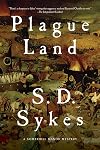
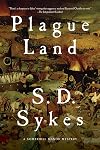
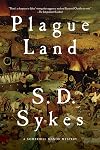
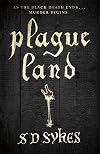
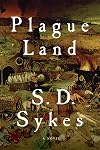
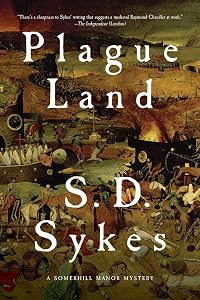
A historical mystery with the word plague in the title and a cover featuring a painting by Bruegel the Elder—who could resist? Plague Land is a great read on multiple levels: a solid mystery, a detailed depiction of life in rural England in the mid-1300s, and also a study of the role of Plague in reshaping the political and social order of the time.
For the first third or so of this novel, I thought I was reading something pretty good, but not necessarily great. Later in my reading, I realized that Plague Land was the first thing I reached for when I unexpectedly awoke at 6 a.m. On a Saturday. It takes a special novel to trump an extra few hours of sleep on the weekend.
The narrator and central character, Oswald de Lacy, a third son show more destined for life as a monk, is called home as lord of the manor after his father and two older brothers are struck down by Plague. Not long after his return home, a murder is uncovered. Oswald, an agnostic who nonetheless was comfortable with his life in the monastery, is already having enough trouble stepping into his unexpected new role. Then the local priest starts stirring up the community claiming the murder is the work of cynocephalae, demon-possessed, dog-headed men.
At first Oswald is something of a cypher. He tells his story, but shares little of his inner life, so while readers are engaged by events, they feel at arm’s distance from him. But slowly Oswald’s actions begin to speak for him, and as readers learn more about his world-view he becomes increasingly interesting.
Though the plot is less complex, this novel reminds me (in a good way) of Eco’s The Name of the Rose. A young postulant who remains innocent of the “ways of the world” is troubled by the new view of humanity he’s gaining. His mentor, in this case the apothecary at the monastery where Oswald’s been living, tries to interpret the world for him, simultaneously protecting and enlightening him.
I bought this book for the cover, and I have no regrets. Sykes’ blend of puzzle, history, and analysis makes for fascinating reading. show less
For the first third or so of this novel, I thought I was reading something pretty good, but not necessarily great. Later in my reading, I realized that Plague Land was the first thing I reached for when I unexpectedly awoke at 6 a.m. On a Saturday. It takes a special novel to trump an extra few hours of sleep on the weekend.
The narrator and central character, Oswald de Lacy, a third son show more destined for life as a monk, is called home as lord of the manor after his father and two older brothers are struck down by Plague. Not long after his return home, a murder is uncovered. Oswald, an agnostic who nonetheless was comfortable with his life in the monastery, is already having enough trouble stepping into his unexpected new role. Then the local priest starts stirring up the community claiming the murder is the work of cynocephalae, demon-possessed, dog-headed men.
At first Oswald is something of a cypher. He tells his story, but shares little of his inner life, so while readers are engaged by events, they feel at arm’s distance from him. But slowly Oswald’s actions begin to speak for him, and as readers learn more about his world-view he becomes increasingly interesting.
Though the plot is less complex, this novel reminds me (in a good way) of Eco’s The Name of the Rose. A young postulant who remains innocent of the “ways of the world” is troubled by the new view of humanity he’s gaining. His mentor, in this case the apothecary at the monastery where Oswald’s been living, tries to interpret the world for him, simultaneously protecting and enlightening him.
I bought this book for the cover, and I have no regrets. Sykes’ blend of puzzle, history, and analysis makes for fascinating reading. show less
This book, set in 1350, is the beginning of a new historical fiction mystery series. Oswald de Lacy, 18, had been working as a novice in the hospital of a remote Benedictine monastery under the guidance of his long-time mentor, Brother Peter. After the death of the Abbot from the Black Plague, Oswald returned home, bringing Brother Peter with him. Since Oswald’s father and two older brothers had also been taken by the plague, Oswald was now to be Lord of the Somershill estate, as well as the town Constable.
Upon his return, Oswald is immediately beset upon by a host of problems: he has more than a thousand acres that need tending, revenues to be raised, and taxes to be collected, but a large proportion of the villagers died from the show more plague. Moreover, a disreputable local priest, John of Cornwall, comes to announce that a young girl has been found dead in the forest, and he is convinced it was at the hands of The Cynocephalus, an alleged dog-headed beast that did the work of the Devil. Cornwall is whipping up the local populace into a frenzy of fear (which conveniently results in their purchasing religious relics from Cornwall to protect them).
Oswald doesn’t believe in any beast and Peter encourages him to find the actual murderer. Oswald tries to abjure superstition as well as religion, and claims to believe in “science.” [The Oxford English Dictionary records the first use of the word science as having occurred in 1350, and Oswald is very unlikely to have been familiar with it. If anything, he would have used the term “natural philosophy.”]
In any event, Oswald, endlessly ordered about by his mother and older sister (in spite of the fact that women at that time had no power whatsoever), suspects one person after another, falls in InstaLove, almost gets killed several times, and finally “solves” the crime after almost getting hit on the head with the answer.
Discussion: I had a number of problems with this book. First of all, there is the “historical” aspect of this book. I thought the author did an excellent job in portraying the different ways in which squalor, ill health, bad food, and vice characterized people’s lives at this time. But she was inconsistent. Women were sometimes utterly powerless, and at other times seemed right out of the 21st Century. Oswald in particular was not only an atheist (not unheard of at this time, certainly), but a believer in “science” which just wasn’t likely at that time, especially with respect to both religion and medicine. In addition, although he and Peter lived at a small obscure monastery, Peter was able to teach him geometry, in spite of Euclid having been available only at large universities. (There was, of course, no printing press until 1450, and no indication Peter had benefitted from a privileged education elsewhere.) Moreover, Oswald had, in his own family library, copies of both Summa Theologica by Thomas Aquinas and Roger Bacon’s Opus Minus. At that time, books were made at great expense by hand and only to be found in the possession of kings, universities, large churches, or large monasteries.
My second problem was with the characterizations. Normally, I don’t like to compare writers, but this book, albeit set in the 14th Century, begs comparison with The Siege Winter by Arianna Franklin and Samantha Norman. In that story, you also have a medieval setting, an evil and abusive member of the clergy, a crime, political machinations, and an exploration of the administration of a medieval estate. Yet the history in that book is much more accurate, the pacing and tension more consistent, and the characters much more richly layered and memorable. One can also compare the Brother Cadfael series by Ellis Peters, another historical mystery series that takes place in the 12th Century. Brother Cadfael, bright and resourceful, looks for natural solutions to illnesses and crimes in a much more century-appropriate manner. In this story, Oswald is wimpy and dumb, the women in his family are execrable, the local politics are tawdry and uninteresting, and there is really no one I would want to hang around with for more than one book.
Evaluation: While some reviewers have lauded this book, I found it historically questionable in parts with not very compelling characters. show less
Upon his return, Oswald is immediately beset upon by a host of problems: he has more than a thousand acres that need tending, revenues to be raised, and taxes to be collected, but a large proportion of the villagers died from the show more plague. Moreover, a disreputable local priest, John of Cornwall, comes to announce that a young girl has been found dead in the forest, and he is convinced it was at the hands of The Cynocephalus, an alleged dog-headed beast that did the work of the Devil. Cornwall is whipping up the local populace into a frenzy of fear (which conveniently results in their purchasing religious relics from Cornwall to protect them).
Oswald doesn’t believe in any beast and Peter encourages him to find the actual murderer. Oswald tries to abjure superstition as well as religion, and claims to believe in “science.” [The Oxford English Dictionary records the first use of the word science as having occurred in 1350, and Oswald is very unlikely to have been familiar with it. If anything, he would have used the term “natural philosophy.”]
In any event, Oswald, endlessly ordered about by his mother and older sister (in spite of the fact that women at that time had no power whatsoever), suspects one person after another, falls in InstaLove, almost gets killed several times, and finally “solves” the crime after almost getting hit on the head with the answer.
Discussion: I had a number of problems with this book. First of all, there is the “historical” aspect of this book. I thought the author did an excellent job in portraying the different ways in which squalor, ill health, bad food, and vice characterized people’s lives at this time. But she was inconsistent. Women were sometimes utterly powerless, and at other times seemed right out of the 21st Century. Oswald in particular was not only an atheist (not unheard of at this time, certainly), but a believer in “science” which just wasn’t likely at that time, especially with respect to both religion and medicine. In addition, although he and Peter lived at a small obscure monastery, Peter was able to teach him geometry, in spite of Euclid having been available only at large universities. (There was, of course, no printing press until 1450, and no indication Peter had benefitted from a privileged education elsewhere.) Moreover, Oswald had, in his own family library, copies of both Summa Theologica by Thomas Aquinas and Roger Bacon’s Opus Minus. At that time, books were made at great expense by hand and only to be found in the possession of kings, universities, large churches, or large monasteries.
My second problem was with the characterizations. Normally, I don’t like to compare writers, but this book, albeit set in the 14th Century, begs comparison with The Siege Winter by Arianna Franklin and Samantha Norman. In that story, you also have a medieval setting, an evil and abusive member of the clergy, a crime, political machinations, and an exploration of the administration of a medieval estate. Yet the history in that book is much more accurate, the pacing and tension more consistent, and the characters much more richly layered and memorable. One can also compare the Brother Cadfael series by Ellis Peters, another historical mystery series that takes place in the 12th Century. Brother Cadfael, bright and resourceful, looks for natural solutions to illnesses and crimes in a much more century-appropriate manner. In this story, Oswald is wimpy and dumb, the women in his family are execrable, the local politics are tawdry and uninteresting, and there is really no one I would want to hang around with for more than one book.
Evaluation: While some reviewers have lauded this book, I found it historically questionable in parts with not very compelling characters. show less
Delightful medieval murder mystery. A younger son, Oswald de Lacy, returns to his family's estate from a monastery with his mentor-tutor after the death of his father and two older brothers to become the heir. Immediately he's faced with a mystery--murder of a young girl. Encouraged by Brother Peter, the mentor-tutor, he begins to investigate. A suspect is clapped into jail. There's another murder, the suspect is freed, and finally the suspicion points to Oswald. I guessed the perpetrator early on, but what intrigued me was the "whydunnit." Red herrings abound. Long-held secrets are revealed. The revelations seemed fantastical to me, but considering the mores of the time....
A fast-paced, well-written story, I couldn't put it down show more although I was dubious at first because this is not my favorite period. I got a feeling for life in a Kentish village of that period with both nobles and peasants. I took as comic relief the incident with Earl Stephen at Oswald's trial, and some of the occurrences involving Oswald's sister and mother. The book began typically for a murder mystery, then became more and more original. Action became faster and faster until the ending was a bit rushed. Highly recommended. show less
A fast-paced, well-written story, I couldn't put it down show more although I was dubious at first because this is not my favorite period. I got a feeling for life in a Kentish village of that period with both nobles and peasants. I took as comic relief the incident with Earl Stephen at Oswald's trial, and some of the occurrences involving Oswald's sister and mother. The book began typically for a murder mystery, then became more and more original. Action became faster and faster until the ending was a bit rushed. Highly recommended. show less
In Plague Land, S.D. Sykes does an excellent job in showing how the Plague has turned everything on its head-- from political alliances to the attitudes of the poor toward their "masters." The Plague may have burned itself out, but everyone is still reeling in the aftermath. Entire families and villages wiped out. Land lying fallow because there's no one left to farm it.
In this time of catastrophic change Sykes places a remarkable cast. Young Oswald has the advantage of his higher learning in the monastery, but his cloistered life also puts him at a disadvantage. He's ill-equipped to get reluctant, superstitious villagers to work the land. He knows extremely little of current alliances with the local gentry. He has a village priest who show more has his eye on more earthly prizes, and his mother and sister are worse than a thick cloud of midges. If not for the help of Brother Peter, chances are that Oswald would run screaming back to the monastery to beg for sanctuary.
Oswald's investigation stumbles and bumbles, much as his management style at Somerhill Manor. But as he awkwardly goes about his business, readers see the rich tapestry of life and relationships in southern England after the scythe of the Plague has swept through. Food, customs, and the usual panoply of human emotions parade right before our eyes. Sykes had me living in the world she created.
If you like historical mysteries that you can sink into and experience, Plague Land is for you. And if you like books with absorbing mysteries and jaw-dropping endings, then Plague Land is most definitely for you. I look forward to S.D. Sykes' next book. show less
In this time of catastrophic change Sykes places a remarkable cast. Young Oswald has the advantage of his higher learning in the monastery, but his cloistered life also puts him at a disadvantage. He's ill-equipped to get reluctant, superstitious villagers to work the land. He knows extremely little of current alliances with the local gentry. He has a village priest who show more has his eye on more earthly prizes, and his mother and sister are worse than a thick cloud of midges. If not for the help of Brother Peter, chances are that Oswald would run screaming back to the monastery to beg for sanctuary.
Oswald's investigation stumbles and bumbles, much as his management style at Somerhill Manor. But as he awkwardly goes about his business, readers see the rich tapestry of life and relationships in southern England after the scythe of the Plague has swept through. Food, customs, and the usual panoply of human emotions parade right before our eyes. Sykes had me living in the world she created.
If you like historical mysteries that you can sink into and experience, Plague Land is for you. And if you like books with absorbing mysteries and jaw-dropping endings, then Plague Land is most definitely for you. I look forward to S.D. Sykes' next book. show less
Delightful medieval murder mystery. A younger son, Oswald de Lacy, returns to his family's estate from a monastery with his mentor-tutor after the death of his father and two older brothers to become the heir. Immediately he's faced with a mystery - the murder of a young girl. Encouraged by Brother Peter, the mentor-tutor, he begins to investigate. A suspect is clapped into jail. There's another murder, the suspect is freed, and finally the suspicion points to Oswald. I guessed the perpetrator early on, but what intrigued me was the "whydunnit." Red herrings abound. Long-held secrets are revealed. This is a well-written, well-paced historical crime novel, with enough plot twists to keep me wanting more. The characters are brilliantly show more drawn – I particularly enjoyed Oswald’s transition from scared uncertain boy to decisive leader. It’s full of fascinating period detail, yet the characters and the situations they find themselves in are recognisable, believable, and easy to relate to. show less
I liked it 👍 The plot was slow to start, but it turned out to be a good mystery. I really appreciated the historical context of the book. Some of the MMC’s thoughts were super icky to me, but it makes sense. He’s a man from the 14th century, what else would I want from a historical fiction, if not accuracy. Spoilers ahead… I feel so bad for Leofwin. He did not deserve what happened to him 😔😭 and whole time I’m thinking Peter is suspicious as heck. Should’ve trusted my gut. and what is with that twist ending 😭 is Oswald Oswald or isn’t he?!?! But, yeah, I liked it.
While I figured out the big "reveal" about three-fourths of the way through the book I still found this story unexpected enjoyable. I was disappointed in the ending as it felt contrived but even with this fault I'm glad I read the story. I have a graduate degree in Medieval Studies and have generally found fictional accounts of this time-period either inaccurate or extremely dry. This account conveys the sense of time and place well and relatively accurately. I enjoyed this book much more than I expected.
Members
- Recently Added By
Lists

Books Read in 2020
4,379 works; 124 members
Author Information

5 Works 484 Members
Some Editions
Awards and Honors
Notable Lists
Series

Common Knowledge
- Canonical title
- Plague Land
- Original title
- Plague Land
- Original publication date
- 2015
- People/Characters
- Oswald de Lacy; Brother Peter; John of Cornwall; Alison Starvecrow; Clemence de Lacy; Lady Somershill (show all 18); Matilda Starvecrow; Joan Bath; Old Ralph; Bishop of Rochester; Mary Cadebridge; Mirabel; Featherby; Walter de Caburn; Mary de Caburn; Leofwin; Earl Stephen; Deaf Ellingham
- Important places
- Somershill, Kent, England, UK; Burrsfield, Kent, England, UK
- Epigraph
- A Disputation betwixt the body and worms
Take heed unto my figure above
And see how sometime I was fresh and gay,
Now turned to worm's meat and corruption
Both foul earth and stinking slime and ... (show all)clay
Medieval poem
Anonymous - Dedication
- For Paul
- First words
- If I preserve but one memory at my own death, it shall be the burning of the dog-headed beast.
- Last words
- (Click to show. Warning: May contain spoilers.)The missing wooden effigy of the Christ child.
- Publisher's editor
- Nick Sayers
- Blurbers
- Hodgson, Antonia; Bailey, Martine; Deaver, Jeffery
- Original language
- English UK
Classifications
Statistics
- Members
- 249
- Popularity
- 131,774
- Reviews
- 19
- Rating
- (3.47)
- Languages
- English
- Media
- Paper, Audiobook, Ebook
- ISBNs
- 13
- ASINs
- 5