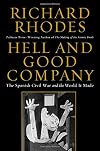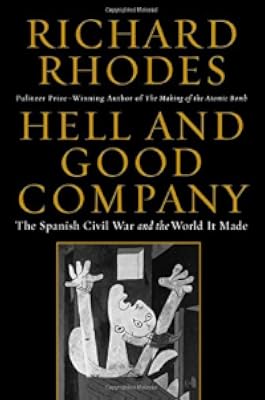
Hell and Good Company: The Spanish Civil War and the World it Made
by Richard Rhodes
On This Page
Description
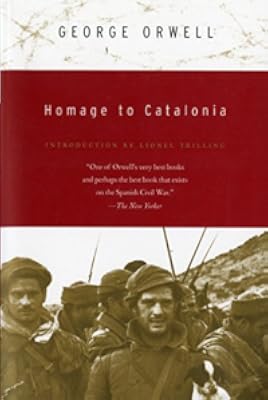
"Pulitzer Prize-winning and bestselling author Richard Rhodes relates the remarkable story of the Spanish Civil War through the eyes of the reporters, writers, artists, doctors, and nurses who witnessed it. The Spanish Civil War (1936-1939) inspired and haunted an extraordinary number of exceptional artists and writers, including Pablo Picasso, Joan Miro, Martha Gellhorn, Ernest Hemingway, George Orwell, and John Dos Passos. The idealism of the cause--defending democracy from fascism at a show more time when Europe was darkening toward another world war--and the brutality of the conflict drew from them some of their best work: Guernica, For Whom the Bell Tolls, Homage to Catalonia, The Spanish Earth. The war spurred breakthroughs in military and medical technology as well. New aircraft, new weapons, new tactics and strategy all emerged in the intense Spanish conflict. Indiscriminate destruction raining from the sky became a dreaded reality for the first time. Progress also arose from the horror: the doctors and nurses who volunteered to serve with the Spanish defenders devised major advances in battlefield surgery and front-line blood transfusion. In those ways, and in many others, the Spanish Civil War served as a test bed for World War II, and for the entire twentieth century" -- show lessTags
Recommendations








Member Reviews
“’War is psychologically like hell, supernatural like it and also, as we have been taught to expect, full of good company’”
-Edward Barsky, American surgeon, volunteer
The Spanish Civil War is often viewed as the real beginning of WWII. It has also become something of a touchstone for many Romantics and Idealists. As author Richard Rhodes says in his Introduction to his book Hell and Good Company, ‘[m]any books have been written about the Spanish Civil War’ but it is ’the human stories that had not been told or had not been told completely’ that he chooses to write about.
In 1931, after centuries of rule by the Church, the Aristocracy, and the army, Spain finally became a Republic. In 1936, General Francisco Franco, with show more the support of Hitler and Mussolini, began a military revolt against this Republic. The war attracted many idealists from elsewhere to aid the new Republic in the struggle. They came from different countries and different walks of life. There were doctors, surgeons, nurses as well as labourers, engineers, writers, artists and WWI vets. Many formed their own brigades including the Abraham Lincoln Brigade from the United States. They represented many different political views but they had one thing in common – they were determined to stop fascism. In that, they failed but much of what they did including the art and the literature still inspire today including Hemingway’s For Whom the Bell Tolls and Picasso’s Guernica. Rhodes recounts their involvement along with other famous and not-so-famous people who were willing to risk it all for idealism, politics and, in more than a few cases, for the adventure.
He also focuses on the medical professionals including Canadian surgeon Norman Bethune whose cobbled together mobile blood units helped reduce the number of casualties in combat and the Catalan doctor Josep Trueta whose method for cleaning, packing and casting wounds saved countless lives and preserved limbs that would have otherwise been amputated. Rhodes describes in fascinating detail the many innovative technologies that these and many other medical professionals developed which are still used today: ‘advances in blood collection, preservation, and storage; in field surgery; in the efficient sorting of casualties’.
InHell and Good Company, Rhodes gives a well-researched, well-written, and fascinating look at the people, both national and international, who fought to preserve the Republic during the Spanish Civil War. He captures the hell of the war, its insanity and its horrors but, most of all he captures the bravery and the idealism of those who volunteered at such great risk to themselves – they were the best of good company. show less
-Edward Barsky, American surgeon, volunteer
The Spanish Civil War is often viewed as the real beginning of WWII. It has also become something of a touchstone for many Romantics and Idealists. As author Richard Rhodes says in his Introduction to his book Hell and Good Company, ‘[m]any books have been written about the Spanish Civil War’ but it is ’the human stories that had not been told or had not been told completely’ that he chooses to write about.
In 1931, after centuries of rule by the Church, the Aristocracy, and the army, Spain finally became a Republic. In 1936, General Francisco Franco, with show more the support of Hitler and Mussolini, began a military revolt against this Republic. The war attracted many idealists from elsewhere to aid the new Republic in the struggle. They came from different countries and different walks of life. There were doctors, surgeons, nurses as well as labourers, engineers, writers, artists and WWI vets. Many formed their own brigades including the Abraham Lincoln Brigade from the United States. They represented many different political views but they had one thing in common – they were determined to stop fascism. In that, they failed but much of what they did including the art and the literature still inspire today including Hemingway’s For Whom the Bell Tolls and Picasso’s Guernica. Rhodes recounts their involvement along with other famous and not-so-famous people who were willing to risk it all for idealism, politics and, in more than a few cases, for the adventure.
He also focuses on the medical professionals including Canadian surgeon Norman Bethune whose cobbled together mobile blood units helped reduce the number of casualties in combat and the Catalan doctor Josep Trueta whose method for cleaning, packing and casting wounds saved countless lives and preserved limbs that would have otherwise been amputated. Rhodes describes in fascinating detail the many innovative technologies that these and many other medical professionals developed which are still used today: ‘advances in blood collection, preservation, and storage; in field surgery; in the efficient sorting of casualties’.
InHell and Good Company, Rhodes gives a well-researched, well-written, and fascinating look at the people, both national and international, who fought to preserve the Republic during the Spanish Civil War. He captures the hell of the war, its insanity and its horrors but, most of all he captures the bravery and the idealism of those who volunteered at such great risk to themselves – they were the best of good company. show less
Hell and Good Company is much more than a history of the Spanish Civil War. Rather, it’s a study of the impact that war had on multiple fields: art, literature, medicine, and war itself. Richard Rhodes offers his usual crisp, engaging prose.
Over the course of this book we meet members of the different international brigades that fought alongside the Republicans. We see significant shifts in medical care, particularly in the storage and transfusion of blood. We follow Picasso’s process composing and painting Guernica. We spend time with George Orwell and Ernest Hemingway.
The Spanish Civil War was, in many ways, a prelude to World War II. The Nationalists received support from Nazi Germany, which both let the Germans experiment with show more new equipment and tactics and provided a distraction from Nazi maneuvering in Eastern Europe.
If you’re looking for a chronological history of the war, this book will disappoint—but that’s not what it’s intended to be. It’s a book that reflects on the impact of war on many efforts of human endeavor, that examines the war’s influence long after it ended. show less
Over the course of this book we meet members of the different international brigades that fought alongside the Republicans. We see significant shifts in medical care, particularly in the storage and transfusion of blood. We follow Picasso’s process composing and painting Guernica. We spend time with George Orwell and Ernest Hemingway.
The Spanish Civil War was, in many ways, a prelude to World War II. The Nationalists received support from Nazi Germany, which both let the Germans experiment with show more new equipment and tactics and provided a distraction from Nazi maneuvering in Eastern Europe.
If you’re looking for a chronological history of the war, this book will disappoint—but that’s not what it’s intended to be. It’s a book that reflects on the impact of war on many efforts of human endeavor, that examines the war’s influence long after it ended. show less
Actually, the Spanish Civil War and its Hell are secondary and a backdrop to the 'famous' people it brought in on the Republican side. So, we have many pages describing the thought process of Picasso and his painting of Guernica. Yes we have a good description of Franco's deliberate terror bombing of that poor town and its people with no military reason other than its and their total elimination. Still Picasso lingers and gains our focus. We have Canadian doctor Norman Bethune running his ambulance to get blood to the troops, Heroic and needed yes but somehow republican Spain and its people and are uneasily in bad taste left behind. The individual stories are of great interest. The author's attempt to give a positive spin to a tragic show more situation is only a partial success.
Quotes: (pages 31-32) “Three waves of bombing organized the conflagration: 2,000-pound bombs in the first wave knocked the buildings down; 220-pound bombs next made rubble; then incendiaries started fires while 22-pound shrapnel bombs kept the fireman at bay.
A journalist for a conservative Paris newspaper, Louis Delapree, a handsome Frenchman with a pencil mustache, reported the attacks in furious prose: [The bombs] explode, thunder,shatter, slaughter. Ambulamce endlessly scout the streets in all directions, renewing their cargo of wounds and suffering once they have unloaded the previous haul at a hospital. But night falls. And the butchery begins, the horror of the Apocalypse; the assassins wheel endlessly around the sky, releasing explosives, incendiary bombs and shrapnel.”
(page 106) 'Trueta realized he could use Orr's method to treat large wounds regardless of whether broken bones were involved: clean up the wound, pack it with gauze, cast it in plaster, and leave it alone to heal. Later, after he escaped Spain ahead of Franco's victory and found his way to England, a refugee stranger in a strange land, Trueta minimized Orr's contribution to hone up his resume (he eventually won appointment as professor of orthopedic surgery at Oxford University). He hardly needed to do so: his innovations were substantial and transformative.
The war tested Tueta's new methods. As chief surgeon of the largest hospital in Barcelona, he applied his casting technique on a large scale, keeping a record of his results.”
(page 166) “Ernet Hemingway and Martha Gellhorn had returned from their expedition into the Guadarramas on 29 April with full notebooks: For Whom the Bell Tolls would be set in the Guadarramas in the month of May 1937. They joined Joris Ivens, director of The Spanish Earth, in the impoverished village of Fuentiduena, where the poorest villagers lived in holes dug out of the hillside looking out on the vast expanse of the local latifundista's fallowed fields. Ivens and his crew finished up filming. Everyone attended a farewell party at the Twelfth Brigade's base hospital north of Madrid, already nostalgic, dancing and drinking into the night before decamping for Paris.”
(page 218) “Behind the lines in Valls, nursing at the Casa de Reposo, Patience Darton fell in love. Robert Aaquist,a German Jewish Brigader from Palestine, was recovering from typhoid when Darton met him---'very oung,' she desribes him in a letter home, 'only 23'(but she was only 25), 'but a natural leader of men.' Everyone loved him, Darton adds. The other Brigaders had elected him their political delegate. Tall, slim, with a high forehead, Aaquitst was earnest and dedicated.They had long talks about political philosophy---he was an ardent communist, she a skeptic---'and became used to depending on one another without realizing it.'
That was in January 1938, By early February Aaquit was smitten, though Darton didn't know it yet.” show less
Quotes: (pages 31-32) “Three waves of bombing organized the conflagration: 2,000-pound bombs in the first wave knocked the buildings down; 220-pound bombs next made rubble; then incendiaries started fires while 22-pound shrapnel bombs kept the fireman at bay.
A journalist for a conservative Paris newspaper, Louis Delapree, a handsome Frenchman with a pencil mustache, reported the attacks in furious prose: [The bombs] explode, thunder,shatter, slaughter. Ambulamce endlessly scout the streets in all directions, renewing their cargo of wounds and suffering once they have unloaded the previous haul at a hospital. But night falls. And the butchery begins, the horror of the Apocalypse; the assassins wheel endlessly around the sky, releasing explosives, incendiary bombs and shrapnel.”
(page 106) 'Trueta realized he could use Orr's method to treat large wounds regardless of whether broken bones were involved: clean up the wound, pack it with gauze, cast it in plaster, and leave it alone to heal. Later, after he escaped Spain ahead of Franco's victory and found his way to England, a refugee stranger in a strange land, Trueta minimized Orr's contribution to hone up his resume (he eventually won appointment as professor of orthopedic surgery at Oxford University). He hardly needed to do so: his innovations were substantial and transformative.
The war tested Tueta's new methods. As chief surgeon of the largest hospital in Barcelona, he applied his casting technique on a large scale, keeping a record of his results.”
(page 166) “Ernet Hemingway and Martha Gellhorn had returned from their expedition into the Guadarramas on 29 April with full notebooks: For Whom the Bell Tolls would be set in the Guadarramas in the month of May 1937. They joined Joris Ivens, director of The Spanish Earth, in the impoverished village of Fuentiduena, where the poorest villagers lived in holes dug out of the hillside looking out on the vast expanse of the local latifundista's fallowed fields. Ivens and his crew finished up filming. Everyone attended a farewell party at the Twelfth Brigade's base hospital north of Madrid, already nostalgic, dancing and drinking into the night before decamping for Paris.”
(page 218) “Behind the lines in Valls, nursing at the Casa de Reposo, Patience Darton fell in love. Robert Aaquist,a German Jewish Brigader from Palestine, was recovering from typhoid when Darton met him---'very oung,' she desribes him in a letter home, 'only 23'(but she was only 25), 'but a natural leader of men.' Everyone loved him, Darton adds. The other Brigaders had elected him their political delegate. Tall, slim, with a high forehead, Aaquitst was earnest and dedicated.They had long talks about political philosophy---he was an ardent communist, she a skeptic---'and became used to depending on one another without realizing it.'
That was in January 1938, By early February Aaquit was smitten, though Darton didn't know it yet.” show less
Seems to be well-researched. Interesting "listen" but it jumped around a bit too much and made the audio book hard to follow - probably a much better "read" than listen. Overall recommend for WWII readers since this is one of the early conflicts either in or before WII (depending on your perspective). I found the personal stories about medical tactics and relationships more interesting than the leaders and their strategies since the pure politics and war positions jumped around a lot; however, the stories about lovers, and the stories about medical innovations were presented in order which made them easy to follow. Given that, I don't think I got a good sense of the order of the war so much as understanding some of the innovations that show more occurred. Overall recommend. show less
I hardly knew anything about the Spanish Civil War, so I read this and now have a fair grasp on the basics. I also understand some of its cultural resonance.
This was a rough read.
I learned this reading French history in WW2, but it’s hammered in here. Defeat the fascist. Then have the conversation with the communist.
The fascist bad.
I learned this reading French history in WW2, but it’s hammered in here. Defeat the fascist. Then have the conversation with the communist.
The fascist bad.
Cartea „Hell and Good Company” de Richard Rhodes explorează istoria materialelor explozive și rolul lor în conflictele umane, de la începuturile invențiilor pirotehnice până la utilizările lor militare complexe.
📖 Despre autor
a) Richard Rhodes – jurnalist și istoric american, laureat Pulitzer, cunoscut pentru cercetările privind istoria științei și tehnologiei.
b) Autor al mai multor volume de referință despre arme, energie nucleară și chimie.
📚 Despre volum
a) Prezintă evoluția explozibililor, de la praful de pușcă la rachetele moderne.
b) Include anecdote istorice și biografii ale oamenilor cheie din dezvoltarea explozibililor.
c) Examinează impactul social, economic și militar al acestor tehnologii de-a show more lungul secolelor.
🔎 Teme principale
a) Istoria inventării și perfecționării explozibililor.
b) Rolul explozibililor în războaie, revoluții și industrii.
c) Interacțiunea dintre știință, inginerie și moralitate în utilizarea armamentului.
⚖️ Semnificație
a) Oferă o perspectivă istorică asupra tehnologiilor care au schimbat conflictele și societățile.
b) Evidențiază dilemele morale și consecințele neașteptate ale progresului tehnologic.
c) Este un studiu esențial pentru pasionații de istorie militară și istoria științei. show less
📖 Despre autor
a) Richard Rhodes – jurnalist și istoric american, laureat Pulitzer, cunoscut pentru cercetările privind istoria științei și tehnologiei.
b) Autor al mai multor volume de referință despre arme, energie nucleară și chimie.
📚 Despre volum
a) Prezintă evoluția explozibililor, de la praful de pușcă la rachetele moderne.
b) Include anecdote istorice și biografii ale oamenilor cheie din dezvoltarea explozibililor.
c) Examinează impactul social, economic și militar al acestor tehnologii de-a show more lungul secolelor.
🔎 Teme principale
a) Istoria inventării și perfecționării explozibililor.
b) Rolul explozibililor în războaie, revoluții și industrii.
c) Interacțiunea dintre știință, inginerie și moralitate în utilizarea armamentului.
⚖️ Semnificație
a) Oferă o perspectivă istorică asupra tehnologiilor care au schimbat conflictele și societățile.
b) Evidențiază dilemele morale și consecințele neașteptate ale progresului tehnologic.
c) Este un studiu esențial pentru pasionații de istorie militară și istoria științei. show less
Sep 19, 2025Romanian
Members
- Recently Added By
Lists

Books about the Spanish Civil War
57 works; 3 members
Author Information

28+ Works 10,127 Members
Richard Rhodes, the award-winning author of twenty-two books, lives and works mi the California coast above Half Moon Bay.
Classifications
- Genres
- History, Nonfiction, General Nonfiction
- DDC/MDS
- 946.081 — History & geography History of Europe Spain & Portugal Spain Second Republic; Dictatorship; Juan Carlos I; Felipe VI 1931- Second Republic; Spanish Civil War
- LCC
- DP269 .R48 — History of Europe, Asia, Africa and Oceania Spain – Portugal History of Spain History By period Modern Spain, 1479/1516- 20th century. 1886- Second Republic, 1931-1939 Civil War, 1936-1939
- BISAC
Statistics
- Members
- 200
- Popularity
- 163,747
- Reviews
- 7
- Rating
- (3.63)
- Languages
- English
- Media
- Paper, Audiobook, Ebook
- ISBNs
- 12
- ASINs
- 3