Death Fugue
by Keyi Sheng
On This Page
Description
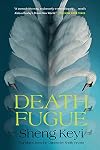
Published for the first time in English by Giramondo, Death Fugue is the bold attempt by a prominent Chinese novelist to confront the legacy of protest and suppression which haunts her generation. Sheng Keyi was born in Hunan province in 1973 and lives in Beijing. Death Fugue is her sixth novel, and the second to be published in English translation, after Northern Girls (2012). It is a brave work of speculative fiction, a cross between Cloud Atlas and 1984, scathing in its irony, ingenious show more in its use of allegory, and acute in its understanding of the power of writing. The imagination that driv show lessTags
Recommendations











Member Reviews
Apparently this book (from 2014) remains banned in China for its "taboo allusions to the Tiananmen Square massacre".
It explores the dangers of a totalitarian state as well as the insidious dangers of a seemingly utopian state which, while seemingly more pleasant on the surface, is as restrictive & controlling as a totalitarian state. The struggle to survive with your art & humanity intact (or sometimes just your life) under either system are central topics, as is the importance of art & future generations using art & protest to continue to bring light to the darkness & danger under such systems. The danger of turning a blind eye or forgetting is all too real. Part of this, to my understanding, is aimed at the generation who were show more children during Tiananmen Square, so not immediately familiar with it but growing up in the shadow of the reverberations from it. (As such, it made me think of The Sound of Things Falling by Juan Gabriel Vásquez which explores the generation growing up in the shadow & violence of the Colombian drug cartels. The two stories are not the same yet both address the generational trauma that youth face.)
This was especially interesting in light of the many pro-democracy demonstrations that have taken place worldwide during 2020 & 2021. It's also eerily prescient with the impact of a plague. As you would imagine, there are some uncomfortable topics & situations in this book. (Trigger warnings for infanticide, among various other -cides too.)
Liked is not the correct word, nor can I say that I fully appreciated the book as I feel like I probably missed many cultural allusions & often felt out-of-synch with the cadence of the storytelling. I felt ambivalent about the beginning, pushed through the long middle section (which seemed to drag, imo), & was later rewarded with the closing 100 or so pages where I felt the book really focused its message & impact. I think there's a storytelling & poetic tradition in China with which I'm not familiar enough to have felt comfortable with the flow of the story (often leaving me wishing it had been heavily edited). It was not an easy read but I found it, ultimately, worthwhile. show less
It explores the dangers of a totalitarian state as well as the insidious dangers of a seemingly utopian state which, while seemingly more pleasant on the surface, is as restrictive & controlling as a totalitarian state. The struggle to survive with your art & humanity intact (or sometimes just your life) under either system are central topics, as is the importance of art & future generations using art & protest to continue to bring light to the darkness & danger under such systems. The danger of turning a blind eye or forgetting is all too real. Part of this, to my understanding, is aimed at the generation who were show more children during Tiananmen Square, so not immediately familiar with it but growing up in the shadow of the reverberations from it. (As such, it made me think of The Sound of Things Falling by Juan Gabriel Vásquez which explores the generation growing up in the shadow & violence of the Colombian drug cartels. The two stories are not the same yet both address the generational trauma that youth face.)
This was especially interesting in light of the many pro-democracy demonstrations that have taken place worldwide during 2020 & 2021. It's also eerily prescient with the impact of a plague. As you would imagine, there are some uncomfortable topics & situations in this book. (Trigger warnings for infanticide, among various other -cides too.)
Liked is not the correct word, nor can I say that I fully appreciated the book as I feel like I probably missed many cultural allusions & often felt out-of-synch with the cadence of the storytelling. I felt ambivalent about the beginning, pushed through the long middle section (which seemed to drag, imo), & was later rewarded with the closing 100 or so pages where I felt the book really focused its message & impact. I think there's a storytelling & poetic tradition in China with which I'm not familiar enough to have felt comfortable with the flow of the story (often leaving me wishing it had been heavily edited). It was not an easy read but I found it, ultimately, worthwhile. show less
Ratings
Members
- Recently Added By
Lists

Speculative Fiction from around the World
610 works; 17 members
Author Information

10+ Works 92 Members
Sheng Keyi is a Chinese author of the book Death Fugue. He with be featured at the Byron Bay Writers' Festival 2015. (Bowker Author Biography)
Common Knowledge
- Original title
- 死亡赋格
- Original publication date
- 2012 (Taiwan) (Taiwan)
Classifications
Statistics
- Members
- 33
- Popularity
- 855,806
- Reviews
- 1
- Rating
- (2.38)
- Languages
- English
- Media
- Paper, Ebook
- ISBNs
- 6
- ASINs
- 2