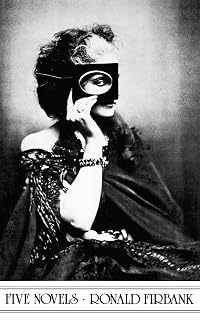
Five Novels
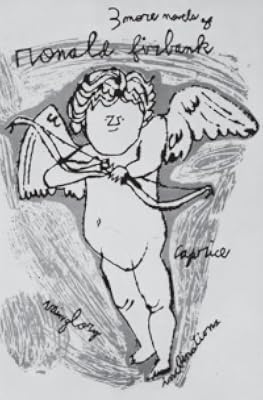
by Ronald Firbank
On This Page
Description
A person who dislikes Ronald Firbank," quipped W. H. Auden, "may, for all I know, possess some admirable quality, but I do not wish ever to see him again." Edmund Wilson pronounced him "one of the finest writers of his period." Part high camp comedy of manners and part fairy tale, Five Novels by Ronald Firbank (1886-1926) is introduced by Osbert Sitwell. Firbank lived a life of exquisite, if lonely, leisure. He composed all his novels on postcards in his countless hotel rooms, always lavish show more with flowers. His moves were impulsive - "Tomorrow I go to Haiti. They say the President is a Perfect Dear!" ran one telegram to a surprised friend. At a dinner party given in his honor, the pathologically shy author refused to consume anything more than a single pea. His no less eccentric creations, Parvula de Panzoust and her guest Eulalia Thoroughfare of Valmouth, dine on "salmis of cocks'-combs saignant with Bechamel sauce." In The Artificial Princess, a queen with a passion for motoring roars about her realm for hours with her crown on. The Flower Beneath the Foot, Prancing Nigger, and Concerning the Eccentricities of Cardinal Pirelli are also included in this volume. "If only," concludes Sitwell, "we might have the joy of reading a new book from his pen, a book that would be so deliciously unlike any others in the world save his own." It is hoped that this collection will bring more readers that extraordinary experience. " show lessTags
Recommendations












Member Reviews
Ronald Firbank’s novels describe a world which is only adjacent to this one, having many of the features of reality, but a reality which is altogether ‘too much’. In Concerning the Eccentricities of Cardinal Pirelli, there is a class structure, a Cardinal harassed by an overwheening aristocrat, presumptious servants, lavish banquets, and so on. But the overwheening aristocrat has recently had her latest adopted dog baptized in full ceremony in the Basilica, the Cardinal has a crush on an altogether too knowing acolyte, and Madame Poco the wardrobe mistress is a Vatican spy. A world of gossip, barely suppressed scandal, Catholicism of the Scarlet-Whore-of-Babylon variety, and a limpid prose style with roots in the Decadent show more movement, have ensured for Firbank a place in the pantheon of gay classics. But Firbank is not just a gay writer. He is also one of the great unsung 20th century masters of English prose, a magnificent stylist of the very first rank.
Firbank’s rhetorical devices range between two characteristic gestures: 1) an entirely modern separation of the signifier from its usual signified, opening a new realm of inconsequential beauty, and 2) an extreme use of metonymy, in which smaller and smaller units of language: the oevre, the novel, the chapter, the sentence, the phrase, stand in isolation for something bigger.
He is the master of the double entendre, that most British of rhetorical devices, (but one that needs a French name): In my little garden, I sometimes work a brother. ‘And your Queens, I presume, are Pitchers?
Another device is the use of silences to punctuate an otherwise respectable discourse to bring out the unspeakable:
‘But is he ripe?’ Mrs Thoroughfare wondered.
‘Ripe?’
‘I mean-’
There was a busy silence.
And in the passing silence the treble voice of Tiny was left talking all alone.
‘…frightened me like Father did, when he kissed me in the dark like a lion’: - a remark that was greeted by an explosion of coughs.
The sense of a reality removed from reality is achieved by the use of imaginary titles: the Duquesa DunEden, The Grand Xaymaca; rococo names of people: Mrs Hurstpierpoint, Lady Parvula de Panzoust; and places: Valmouth and Clemenza. Firbank’s characteristic method is to take a name of place: the more euphonious the better, and to transfer it to a person. He is the master of the adjoinage. Consider the made up name ‘Valmouth’, with its associations of the mundane: Falmouth, a small port town in the south of England; and the risqué: Valmont, the villain of Laclos’s Les Liaison Dangereuses, and vermouth, that sin-inducing drink…Saint Euphraxia of Spain, so similar to the real Saint Euphrasia, and yet off by just one letter…
Felix Feneon, the inventor of the three line novel, wrote sentences which were so carefully crafted as to contain within them a whole world, hermetically sealed from anything around it, and containing within itself whole worlds of imaginative possibility. Firbank’s sentences have the same quality. Their matchless rhythms and sounds create marvels of miniature precision. Each one can be lifted from the text and enjoyed in isolation for the jewel-like quality of its images and euphony:
From the Calle de la Passion, beneath the blue-tiled mirador of the garden wall, came the first brooding sound of a seguidilla.
Here and there, an orchard in silhouette, showed all in black blossom against an extravagant sky.
At the season when the oleanders are in their full perfection, their choicest bloom, it was the Pontiff’s innovation to install his American type-writing apparatus in the long Loggie of the Apostolic Palace that had been in disuse since the demise of Innocent XVI.
Likewise, each of the chapters his (very short) novels are marvels of taught construction, in which every element has its crucial role to play. Just as one can enjoy each sentence lifted from its context, so each chapter can be read and enjoyed separately from the whole story.
Firbank has absolutely no political purpose, no wider or deeper meaning. His is a style and a vision entirely preoccupied with artifice and the aural and visual surfaces of language only.
Underlying all the aesthetics is a waspish humour:
The College of Noble Damosels in the Calle Sante Fe was in a whirl. It was ‘Foundation’ day, an event annually celebrated with considerable fanfaronade and social éclat. Founded during the internecine wars of the Middle Age (sic) the College, according to early records, had suffered rapine on the first day of term.
Fraulein Pappenheim was a little woman already drifting towards the sad far shores of forty…
A writer to read with a grin, a chuckle, an occasional eye rolled heavenward at the silliness of it all, and a sustained sense of toe-curling delight at the sheer loveliness of the prose. show less
Firbank’s rhetorical devices range between two characteristic gestures: 1) an entirely modern separation of the signifier from its usual signified, opening a new realm of inconsequential beauty, and 2) an extreme use of metonymy, in which smaller and smaller units of language: the oevre, the novel, the chapter, the sentence, the phrase, stand in isolation for something bigger.
He is the master of the double entendre, that most British of rhetorical devices, (but one that needs a French name): In my little garden, I sometimes work a brother. ‘And your Queens, I presume, are Pitchers?
Another device is the use of silences to punctuate an otherwise respectable discourse to bring out the unspeakable:
‘But is he ripe?’ Mrs Thoroughfare wondered.
‘Ripe?’
‘I mean-’
There was a busy silence.
And in the passing silence the treble voice of Tiny was left talking all alone.
‘…frightened me like Father did, when he kissed me in the dark like a lion’: - a remark that was greeted by an explosion of coughs.
The sense of a reality removed from reality is achieved by the use of imaginary titles: the Duquesa DunEden, The Grand Xaymaca; rococo names of people: Mrs Hurstpierpoint, Lady Parvula de Panzoust; and places: Valmouth and Clemenza. Firbank’s characteristic method is to take a name of place: the more euphonious the better, and to transfer it to a person. He is the master of the adjoinage. Consider the made up name ‘Valmouth’, with its associations of the mundane: Falmouth, a small port town in the south of England; and the risqué: Valmont, the villain of Laclos’s Les Liaison Dangereuses, and vermouth, that sin-inducing drink…Saint Euphraxia of Spain, so similar to the real Saint Euphrasia, and yet off by just one letter…
Felix Feneon, the inventor of the three line novel, wrote sentences which were so carefully crafted as to contain within them a whole world, hermetically sealed from anything around it, and containing within itself whole worlds of imaginative possibility. Firbank’s sentences have the same quality. Their matchless rhythms and sounds create marvels of miniature precision. Each one can be lifted from the text and enjoyed in isolation for the jewel-like quality of its images and euphony:
From the Calle de la Passion, beneath the blue-tiled mirador of the garden wall, came the first brooding sound of a seguidilla.
Here and there, an orchard in silhouette, showed all in black blossom against an extravagant sky.
At the season when the oleanders are in their full perfection, their choicest bloom, it was the Pontiff’s innovation to install his American type-writing apparatus in the long Loggie of the Apostolic Palace that had been in disuse since the demise of Innocent XVI.
Likewise, each of the chapters his (very short) novels are marvels of taught construction, in which every element has its crucial role to play. Just as one can enjoy each sentence lifted from its context, so each chapter can be read and enjoyed separately from the whole story.
Firbank has absolutely no political purpose, no wider or deeper meaning. His is a style and a vision entirely preoccupied with artifice and the aural and visual surfaces of language only.
Underlying all the aesthetics is a waspish humour:
The College of Noble Damosels in the Calle Sante Fe was in a whirl. It was ‘Foundation’ day, an event annually celebrated with considerable fanfaronade and social éclat. Founded during the internecine wars of the Middle Age (sic) the College, according to early records, had suffered rapine on the first day of term.
Fraulein Pappenheim was a little woman already drifting towards the sad far shores of forty…
A writer to read with a grin, a chuckle, an occasional eye rolled heavenward at the silliness of it all, and a sustained sense of toe-curling delight at the sheer loveliness of the prose. show less
No one truly interested in gay literature (or great 20th century modernist writing, for that matter) should fail to read the marvelous--and hilarious--work of Ronald Firbank. His use of subcultural queer lexicon, his sense of the gay supernatural fantastic, his devastating attacks on racism and British colonial arrogance, and his exuberant embrace of his splendid queer difference make him delightful company. A major gay writer. Enjoy!
Read part of _The Flower Beneath the Foot_ couldn't get interested in the characters.
First published 1949
Ratings
Members
- Recently Added By
Lists

Harold Bloom - The Western Canon: D. The Chaotic Age
833 works; 24 members
Author Information

52+ Works 1,293 Members
Born in London, the son of a wealthy businessman, Ronald Firbank was educated at Uppingham and Cambridge University. In 1909 he converted to Roman Catholicism and left the university without taking a degree. Instead, he embarked on extensive travels in Spain, Italy, the Middle East, and North Africa. By nature he was a rather solitary individual, show more perhaps because of his rather delicate health and his homosexuality. Firbank's first novel, Vainglory (1915), was originally published privately, as were other early works. He wrote his novels on blue postcards. Though slight, these works were innovative and prefigured the works of such writers as Ivy Compton-Burnett and Evelyn Waugh. Elements in the work of Aldous Huxley, Angus Wilson, and Iris Murdoch can also be attributed to Firbank's creativity. Firbank's original and subtle novels have appealed to a small but appreciative audience, and, during the 1950s and early 1960s, he posthumously acquired a band of devoted disciples. Firbank had a fine disdain for plot and a taste for eccentric characters. The world he created was small and creditable. The Complete Ronald Firbank (1961), with a preface by Anthony Powell, is a worthwhile edition of his works. Still a young man, Ronald Firbank died in Rome in 1926. (Bowker Author Biography) show less
Work Relationships
Common Knowledge
- Original publication date
- 1949
Classifications
- Genres
- Fiction and Literature, General Fiction, LGBTQ+
- DDC/MDS
- 823.912 — Literature & rhetoric English & Old English literatures English fiction 1900- 1901-1999 1901-1945
- LCC
- PZ3 .F514 — Language and Literature Fiction and juvenile belles lettres Fiction and juvenile belles lettres Fiction in English
- BISAC
Statistics
- Members
- 244
- Popularity
- 133,484
- Reviews
- 4
- Rating
- (4.06)
- Languages
- English
- Media
- Paper
- ISBNs
- 1
- ASINs
- 13