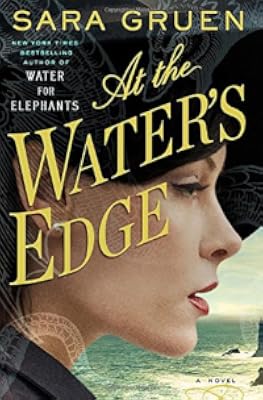
At the Water's Edge
by Sara Gruen
On This Page
Description
NEW YORK TIMES BESTSELLER • In this thrilling new novel from the author of Water for Elephants, Sara Gruen again demonstrates her talent for creating spellbinding period pieces. At the Water’s Edge is a gripping and poignant love story about a privileged young woman’s awakening as she experiences the devastation of World War II in a tiny village in the Scottish Highlands.After disgracing themselves at a high society New Year’s Eve party in Philadelphia in 1944, Madeline Hyde and her show more husband, Ellis, are cut off financially by his father, a former army colonel who is already ashamed of his son’s inability to serve in the war. When Ellis and his best friend, Hank, decide that the only way to regain the Colonel’s favor is to succeed where the Colonel very publicly failed—by hunting down the famous Loch Ness monster—Maddie reluctantly follows them across the Atlantic, leaving her sheltered world behind.
The trio find themselves in a remote village in the Scottish Highlands, where the locals have nothing but contempt for the privileged interlopers. Maddie is left on her own at the isolated inn, where food is rationed, fuel is scarce, and a knock from the postman can bring tragic news. Yet she finds herself falling in love with the stark beauty and subtle magic of the Scottish countryside. Gradually she comes to know the villagers, and the friendships she forms with two young women open her up to a larger world than she knew existed. Maddie begins to see that nothing is as it first appears: the values she holds dear prove unsustainable, and monsters lurk where they are least expected.
As she embraces a fuller sense of who she might be, Maddie becomes aware not only of the dark forces around her, but of life’s beauty and surprising possibilities.
Praise for At the Water’s Edge
“Breathtaking . . . a daring story of adventure, friendship, and love in the shadow of WWII.”—Harper’s Bazaar
“A gripping, compelling story . . . Gruen’s characters are vividly drawn and her scenes are perfectly paced.”—The Boston Globe
“A page-turner of a novel that rollicks along with crisp historical detail.”—Fort Worth Star-Telegram
“Powerfully evocative.”—USA Today
“Gruen is a master at the period piece—and [this] novel is just another stunning example of that craft.”—Glamour. show less
Tags
Recommendations





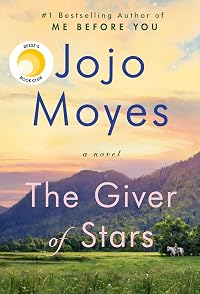
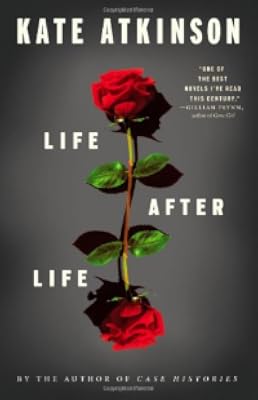
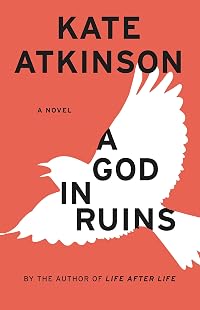


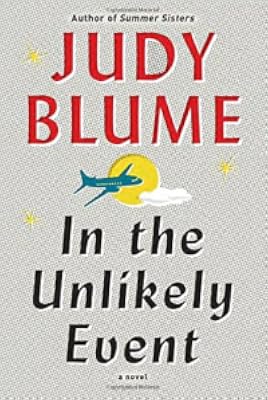

Member Recommendations
by anonymous user
Member Reviews
This gripping story about three young wealthy effete socialites begins in Philadelphia at the end of 1944 at a party celebrating the New Year. Ellis and Maddy have been married for four and a half years, and Hank is the third musketeer of this inseparable group. Neither of the young men have gone to war; Hank is flat-footed (at that time, a flat foot kept you out of the armed serves on the theory - since refuted, that flat feet caused injuries during training and physical activity), and Ellis was rejected for color blindness.
Ellis’ father is contemptuous of his son for not serving, but Ellis claims his father brought his own shame on the family by faking pictures of a Loch Ness Monster. At New Year’s, the three friends drunkenly show more agree to take off for the Scottish Highlands so Ellis can reclaim his honor vis-a-vis his father by capturing “authentic” photos of the monster. Money being no object, the three cross the Atlantic, and settle into a rooming house of considerably less luxury than they were accustomed to expect.
On the ocean voyage, the three had encountered men injured horribly by the war, but only Maddie was affected. Moreover, when Maddie gets to know the hard-working people who run the inn in Scotland, she finds that they have a lot more character than the two men she is with, who not only consider themselves superior to “help,” but spend most of their time goofing off and getting drunk.
As Maddie comes to understand that the monster in the Highlands is the one to whom she is married, it puts her life in peril much more than any antediluvian creature, mythical or otherwise.
Discussion: This is a lovely story, with characters both horrible and wonderful, but none of them caricatures. All of them are hard to forget, especially the courageous people Maddie befriended, and who befriended her, in the Highlands.
An author’s note at the end of the book details which events were changed, and in what ways, for the story.
The dangers to Maddie, as a woman and a wife in the 1940’s, were real enough, and ones today’s women [in America, at least] are fortunate enough not to have to endure.
Evaluation: I really liked this book. It is historical fiction but with a greater emphasis on interpersonal relationships and romance than the war, even though the war forms the scaffolding for the plot. And although two of the protagonists became less and less likable, the other characters become more so as the story progresses. I also loved the setting in, and lore about, the Highlands. show less
Ellis’ father is contemptuous of his son for not serving, but Ellis claims his father brought his own shame on the family by faking pictures of a Loch Ness Monster. At New Year’s, the three friends drunkenly show more agree to take off for the Scottish Highlands so Ellis can reclaim his honor vis-a-vis his father by capturing “authentic” photos of the monster. Money being no object, the three cross the Atlantic, and settle into a rooming house of considerably less luxury than they were accustomed to expect.
On the ocean voyage, the three had encountered men injured horribly by the war, but only Maddie was affected. Moreover, when Maddie gets to know the hard-working people who run the inn in Scotland, she finds that they have a lot more character than the two men she is with, who not only consider themselves superior to “help,” but spend most of their time goofing off and getting drunk.
As Maddie comes to understand that the monster in the Highlands is the one to whom she is married, it puts her life in peril much more than any antediluvian creature, mythical or otherwise.
Discussion: This is a lovely story, with characters both horrible and wonderful, but none of them caricatures. All of them are hard to forget, especially the courageous people Maddie befriended, and who befriended her, in the Highlands.
An author’s note at the end of the book details which events were changed, and in what ways, for the story.
The dangers to Maddie, as a woman and a wife in the 1940’s, were real enough, and ones today’s women [in America, at least] are fortunate enough not to have to endure.
Evaluation: I really liked this book. It is historical fiction but with a greater emphasis on interpersonal relationships and romance than the war, even though the war forms the scaffolding for the plot. And although two of the protagonists became less and less likable, the other characters become more so as the story progresses. I also loved the setting in, and lore about, the Highlands. show less
 This review was written for LibraryThing Early Reviewers.
At the Water’s Edge by author Sara Gruen is the story of three spoiled rich brats who make a scene at a party, are disowned by their fabulously wealthy parents, and decide to go off to Scotland in the middle of WWII to discover the Loch Ness monster.
Okay, so I might be understating things a bit and it probably sounds like I didn’t like the book when I actually enjoyed it a lot. I’ve seen it compared to many things both good and bad and some of them were genius but, to me, it felt like a modern fairy tale. Don’t get me wrong, I’m not talking about those modern romance fairy tales Hollywood constantly makes for us womenfolk, I’m talking more Grimm which, admittedly, are sanitized versions of earlier folk tales. I know, sounds show more like a bit of a stretch but hear me out:
1-after being abandoned by her guardians or inlaws for an infraction outside of her control, an orphan (well, okay father’s alive but uninterested) is captured by two evil witch types ie her rich spoiled husband and his even richer and more spoiled BFF who, having her under a kind of sleeping spell, take her to a far-away and dangerous land (Scotland during WWII) and keep her locked up in a tower or, in this case, a hotel
2-in a very short space of time, she is awakened or to be more accurate is shown the error of her ways by the kind and gentle denizens of this land and she makes everyone around her love her even though she’s a bit of an insipid passive weakling because fairy tale heroines are almost always passive ‘good girls’. Although they cannot openly free her, the denizens take pity on her especially after she offers to help around their cottage or, in this case, said hotel. Some of these good folk must suffer but only because they attempt to abandon their proper place in the story – in this case, fall for a Canadian soldier
3-which brings us to Prince Charming who any Snow White must fall in love with suddenly and without any real explanation of why and who is in disguise as a peasant, farmer, sheepherder or bartender and hotel manager but turns out to be a prince or Lord (because class structure and all) who rescues her from the evil doers who are punished quickly as in two paragraphs quickly and everyone except said evil doers lives happily ever after.
4-there are supernatural elements: magic, giants, or, here, a dragon AKA the Loch Ness monster but they are mostly incidental to the real purpose of the tale
5- which is to give the audience both a morality and cautionary tale meant to warn of the dangers lurking outside the pale whether in the woods or relationships for innocents but promising that, in the end, there will always be a happy ending if the innocent remains or, in this case, becomes pure and good
Anyway, that’s my take-away from this book. As I said, I did like it a lot. It’s very well-written and Gruen has a deft hand with description – her Scotland even in wartime is a magical place. And, if it’s a bit black and white with mostly one-dimensional characters who rarely depart from their role as hero or villain and if it’s implausible in many parts, well, that’s the way of fairy tales. On the other hand, I might just be over-thinking this whole thing and it’s simply a very well-written romance novel. show less
Okay, so I might be understating things a bit and it probably sounds like I didn’t like the book when I actually enjoyed it a lot. I’ve seen it compared to many things both good and bad and some of them were genius but, to me, it felt like a modern fairy tale. Don’t get me wrong, I’m not talking about those modern romance fairy tales Hollywood constantly makes for us womenfolk, I’m talking more Grimm which, admittedly, are sanitized versions of earlier folk tales. I know, sounds show more like a bit of a stretch but hear me out:
1-after being abandoned by her guardians or inlaws for an infraction outside of her control, an orphan (well, okay father’s alive but uninterested) is captured by two evil witch types ie her rich spoiled husband and his even richer and more spoiled BFF who, having her under a kind of sleeping spell, take her to a far-away and dangerous land (Scotland during WWII) and keep her locked up in a tower or, in this case, a hotel
2-in a very short space of time, she is awakened or to be more accurate is shown the error of her ways by the kind and gentle denizens of this land and she makes everyone around her love her even though she’s a bit of an insipid passive weakling because fairy tale heroines are almost always passive ‘good girls’. Although they cannot openly free her, the denizens take pity on her especially after she offers to help around their cottage or, in this case, said hotel. Some of these good folk must suffer but only because they attempt to abandon their proper place in the story – in this case, fall for a Canadian soldier
3-which brings us to Prince Charming who any Snow White must fall in love with suddenly and without any real explanation of why and who is in disguise as a peasant, farmer, sheepherder or bartender and hotel manager but turns out to be a prince or Lord (because class structure and all) who rescues her from the evil doers who are punished quickly as in two paragraphs quickly and everyone except said evil doers lives happily ever after.
4-there are supernatural elements: magic, giants, or, here, a dragon AKA the Loch Ness monster but they are mostly incidental to the real purpose of the tale
5- which is to give the audience both a morality and cautionary tale meant to warn of the dangers lurking outside the pale whether in the woods or relationships for innocents but promising that, in the end, there will always be a happy ending if the innocent remains or, in this case, becomes pure and good
Anyway, that’s my take-away from this book. As I said, I did like it a lot. It’s very well-written and Gruen has a deft hand with description – her Scotland even in wartime is a magical place. And, if it’s a bit black and white with mostly one-dimensional characters who rarely depart from their role as hero or villain and if it’s implausible in many parts, well, that’s the way of fairy tales. On the other hand, I might just be over-thinking this whole thing and it’s simply a very well-written romance novel. show less
I very much enjoyed Water for Elephants by Sara Gruen, so I hoped that At the Water's Edge would be a good read as well. I must say that I was a little leery about the plot line - young, wealthy married couple and his friend go off to Scotland during World War II to find the Loch Ness monster.
At the beginning, I found it stilted with unsympathetic characters who were not at all likable. Where was this going? Told entirely from the perspective of Maddie, the wife, we learned about her difficult childhood, culminating in the suicide of her mother, for which she blamed herself. Now in what seemed like a loveless marriage, off the three of them go to Scotland. But I kept reading and as Maddie got to know the staff at the inn they were show more staying at and developed friendships there, I was drawn in more and more. Ultimately, I got to really like this strange story. With a bit of mystery, some supernatural elements and of course a love story, it became a satisfying read. show less
At the beginning, I found it stilted with unsympathetic characters who were not at all likable. Where was this going? Told entirely from the perspective of Maddie, the wife, we learned about her difficult childhood, culminating in the suicide of her mother, for which she blamed herself. Now in what seemed like a loveless marriage, off the three of them go to Scotland. But I kept reading and as Maddie got to know the staff at the inn they were show more staying at and developed friendships there, I was drawn in more and more. Ultimately, I got to really like this strange story. With a bit of mystery, some supernatural elements and of course a love story, it became a satisfying read. show less
This review was written for LibraryThing Early Reviewers.On a champagne-fueled whim, a trio of wealthy young Americans decide to embark on a search for the Loch Ness Monster, in the waning months of WWII. Totally unprepared for the realities of wartime life in the UK, they blunder about in a classic Ugly American dance until Madeline Hyde begins to discover that something in her spoiled and aimless life is responding to the needs of the people she had initially seen only as servants and innkeeper.
Madeline’s growth into a caring and capable human being is the most successful, and truest, part of the novel. Her husband and his friend never manage to see past their preconceptions and are gradually revealed to be the true monsters of Loch Ness.
There are touches of supernatural here, resting show more uneasily with the realities of village life, and Gruen sidles carefully around the question of just what kind of relationship Ellis and Hank have, with Hank wavering uncomfortably and a bit unbelievably as events rush themselves to a climax.
Gruen then wraps everything up with an almost fairy-tale ending that’s jarringly at odds with the dark and frightening events earlier in the book. It’s an engaging read, but it’s certainly not without flaws. show less
Madeline’s growth into a caring and capable human being is the most successful, and truest, part of the novel. Her husband and his friend never manage to see past their preconceptions and are gradually revealed to be the true monsters of Loch Ness.
There are touches of supernatural here, resting show more uneasily with the realities of village life, and Gruen sidles carefully around the question of just what kind of relationship Ellis and Hank have, with Hank wavering uncomfortably and a bit unbelievably as events rush themselves to a climax.
Gruen then wraps everything up with an almost fairy-tale ending that’s jarringly at odds with the dark and frightening events earlier in the book. It’s an engaging read, but it’s certainly not without flaws. show less
I received an advance review copy of this book from the publisher through Netgalley in exchange for an honest review.
Sara Gruen’s Water For Elephants was a near perfect reading experience for me. Fantastic characters and compelling story line set in an accurate and fascinating historical setting. I also completely fell into the atmosphere of the circus—in fact I was pleasantly surprised when Stephen King’s “Joyland” did the same for the carnival experience. At the Water’s Edge is close, but just not as good.
Don’t get me wrong. I blazed through this book because I really wanted to know how the story would turn out, but it just lacked the historical depth and atmosphere of Water for Elephants. Set in World War 2 in show more Scotland, our protagonist and her husband, along with a close friend, have run away from their self-created rich boy/girl problems in New York in search of a chance at redemption in a village close to Loch Ness. I believe Gruen was shooting for a Fitzgerald like dissoluteness, but I just came away feeling that these displaced Americans were no more than spoiled brats. I also feel that the opportunity to fully explore the horror of World War 2 from the European perspective was just glossed over to the point that it was no more moving and personal than a grainy old news reel. I really didn’t get a strong feel for the history of Scotland and the area either, or even the Nessie myth/creature.
Again, I must say that I enjoyed the story and read it quickly so that I could find out what happened. Gruen is a very good story teller. I gave the book an extra star because it was fun to read. I guess the best way to describe my feeling is to say that Water for Elephants was a historical and literary novel with some romantic elements and At the Water’s Edge was a romance with some historical elements, and I prefer the former rather than the latter. show less
Sara Gruen’s Water For Elephants was a near perfect reading experience for me. Fantastic characters and compelling story line set in an accurate and fascinating historical setting. I also completely fell into the atmosphere of the circus—in fact I was pleasantly surprised when Stephen King’s “Joyland” did the same for the carnival experience. At the Water’s Edge is close, but just not as good.
Don’t get me wrong. I blazed through this book because I really wanted to know how the story would turn out, but it just lacked the historical depth and atmosphere of Water for Elephants. Set in World War 2 in show more Scotland, our protagonist and her husband, along with a close friend, have run away from their self-created rich boy/girl problems in New York in search of a chance at redemption in a village close to Loch Ness. I believe Gruen was shooting for a Fitzgerald like dissoluteness, but I just came away feeling that these displaced Americans were no more than spoiled brats. I also feel that the opportunity to fully explore the horror of World War 2 from the European perspective was just glossed over to the point that it was no more moving and personal than a grainy old news reel. I really didn’t get a strong feel for the history of Scotland and the area either, or even the Nessie myth/creature.
Again, I must say that I enjoyed the story and read it quickly so that I could find out what happened. Gruen is a very good story teller. I gave the book an extra star because it was fun to read. I guess the best way to describe my feeling is to say that Water for Elephants was a historical and literary novel with some romantic elements and At the Water’s Edge was a romance with some historical elements, and I prefer the former rather than the latter. show less
This is a lush, beautifully painful book, using the hunt for the Loch Ness Monster during World War II as a backdrop to the fallout of a father’s deceptions and a son’s lies. Maddie Hyde is officially one of my favorite literary characters – her slow awakening to the realities of her life and her marriage, while painful to behold, are ultimately lovely as she finds her own way and stands on her own two feet. Her character comes a long way from the beginning to the end, making this book an interesting character study. Definitely a book I would recommend and might even read again.
At the Water's Edge by Sara Gruen is a very highly recommended period piece set during WWII.
Maddie Hyde, her husband, Ellis, and their friend, Hank, are part of Philadelphia society. After a drunken New Year's Eve party that results in some disastrous familial/financial repercussions for Maddie and Ellis, the trio decides to go to Scotland and prove the Loch Ness monster really exists. This is something Ellis's father attempted to do years before and his photos were later discredited. The fact that Ellis is color blind and Hank has flat feet, which prevented the two from enlisting, also plays into their decision. They are tired of the insinuations being thrown toward them. Despite the fact that it is during the war and U-boats are show more patrolling the very area of the Atlantic that they will cross, the trio finds transportation and manages to make their way to the village of Drumnadrochit, Scotland, and a small, quaint inn.
Maddie has a hard time with motion sickness while crossing the Atlantic and it is during the crossing that the effects of war also becomes very real to her. Then, once in Scotland, Maddie seems to completely sober up and take a good look at herself, as well as Ellis and Hank, who are insensitive, privileged, inebriated morons, and she realizes that she is associated with them and their entitled, gauche, drunken search for Nessie. Maddie begins to grow as a person and connect with the people in the village while Ellis and Hank become less civilized and more self-obsessed caricatures. But, due to the times, Maddie is also subjugated to Ellis, which creates a difficult dilemma.
I really liked At the Water's Edge and was totally engrossed in the story from start to finish. First, Sara Gruen is an excellent writer so she is able to describe imagery and capture the settings so vividly that it seems effortless and allows the story to flow along smoothly. I appreciated the growth and transformation Maddie experiences as she is presented with some hard truths and realizes the true essence of Ellis's character. She matures while Ellis and Hank are diminished. Including the local myths and signs as harbingers of what could happen provides nice foreshadowing. The totality added up to a great historical fiction novel. I could have done without the love story, but, obviously, it certainly didn't detract from my enjoyment.
Disclosure: My Kindle edition was courtesy of Spiegel & Grau at Random House for review purposes. show less
Maddie Hyde, her husband, Ellis, and their friend, Hank, are part of Philadelphia society. After a drunken New Year's Eve party that results in some disastrous familial/financial repercussions for Maddie and Ellis, the trio decides to go to Scotland and prove the Loch Ness monster really exists. This is something Ellis's father attempted to do years before and his photos were later discredited. The fact that Ellis is color blind and Hank has flat feet, which prevented the two from enlisting, also plays into their decision. They are tired of the insinuations being thrown toward them. Despite the fact that it is during the war and U-boats are show more patrolling the very area of the Atlantic that they will cross, the trio finds transportation and manages to make their way to the village of Drumnadrochit, Scotland, and a small, quaint inn.
Maddie has a hard time with motion sickness while crossing the Atlantic and it is during the crossing that the effects of war also becomes very real to her. Then, once in Scotland, Maddie seems to completely sober up and take a good look at herself, as well as Ellis and Hank, who are insensitive, privileged, inebriated morons, and she realizes that she is associated with them and their entitled, gauche, drunken search for Nessie. Maddie begins to grow as a person and connect with the people in the village while Ellis and Hank become less civilized and more self-obsessed caricatures. But, due to the times, Maddie is also subjugated to Ellis, which creates a difficult dilemma.
I really liked At the Water's Edge and was totally engrossed in the story from start to finish. First, Sara Gruen is an excellent writer so she is able to describe imagery and capture the settings so vividly that it seems effortless and allows the story to flow along smoothly. I appreciated the growth and transformation Maddie experiences as she is presented with some hard truths and realizes the true essence of Ellis's character. She matures while Ellis and Hank are diminished. Including the local myths and signs as harbingers of what could happen provides nice foreshadowing. The totality added up to a great historical fiction novel. I could have done without the love story, but, obviously, it certainly didn't detract from my enjoyment.
Disclosure: My Kindle edition was courtesy of Spiegel & Grau at Random House for review purposes. show less
Members
- Recently Added By
Lists

Female Protagonist
1,056 works; 57 members

Books Read in 2015
3,299 works; 129 members

BingoDOG 2015 Challenge
49 works; 3 members

Reading Group 2016
6 works; 1 member

To Read
617 works; 7 members

Books Read in 2019
4,052 works; 110 members

Books With Water Words in the Title
186 works; 12 members
Author Information

10+ Works 37,464 Members
Sara Gruen was born in Vancouver, Canada in 1969. Before becoming a full-time fiction author, she worked as a technical writer. She has written several novels including At the Water's Edge, Ape House, Riding Lessons, and Flying Changes. Her novel, Water for Elephants, appeared on the New York Times Bestseller List for more than 4 years and was show more adapted into a movie starring Reese Witherspoon, Rob Pattinson, and Christoph Waltz in 2011. (Bowker Author Biography) show less
Awards and Honors
Distinctions
Common Knowledge
- Canonical title
- At the Water's Edge
- Original publication date
- 2015-03-31
- People/Characters
- Madeline "Maddie" Pennypacker Hyde; Ellis Hyde; Henry "Hank" Winston Boyd; Edith Stone Hyde; Colonel Whitney Hyde; Captain Angus Duncan Grant (show all 23); Anna McKenzie; Meg; Frederick "Freddie" Stillman; Vivian Pennypacker; Dr. Ernest Pennypacker; Alisdair W. Ross; Rory; Mairi Joan Grant; Violet; Willie the Postie; Mhathair McKenzie; Violet; Hugh Grey; Mrs. Pennypecker; Anna; Franklin D. Roosevelt, Jr.; Rhona
- Important places
- Drumnadrochit, Highland, Scotland, UK; Philadelphia, Pennsylvania, USA; The Fraser Arms, Drumnadrochit, Highland, Scotland, UK; Rittenhouse Square, Philadelphia, Pennsylvania, USA; Africa; Society Hill Hotel, Philadelphia, Pennsylvania, USA (show all 8); Bar Harbor, Maine, USA; Key West, Florida, USA
- Important events
- World War II
- Epigraph
- One Crow for sorrow, Two Crows for mirth, Three Crows for a wedding, Four Crows for a birth, Five Crows for silver, Six Crows for gold, Seven for a secret, never to be told.
- Dedication
- For Bob, 'S tusa gradh mo bheatha
- First words
- Drumnadrochit, February 28, 1942
- Quotations
- But what I had learned over the past year was that monsters abound, usually hiding in plain sight.
- Last words
- (Click to show. Warning: May contain spoilers.)Life. There it was. In all its beautiful tragic fragility, there was still life, and those of us who'd been lucky enough to survive opened our arms wide and embraced it.
- Blurbers
- Picoult, Jodi; Stockett, Kathryn; McLain, Paula; Hannah, Kristin; Jackson, Joshilyn
Classifications
Statistics
- Members
- 2,230
- Popularity
- 9,052
- Reviews
- 198
- Rating
- (3.55)
- Languages
- 8 — Danish, Dutch, English, Estonian, German, Korean, Spanish, Portuguese (Portugal)
- Media
- Paper, Audiobook, Ebook
- ISBNs
- 45
- ASINs
- 6
