
On This Page
Description
Breq and her crew must stand against an old and powerful enemy, the Lord of the Radch, and fight for the right to determine their own destinies in the stunning conclusion to the NYT bestselling Imperial Radch trilogy A must read for fans of Ursula K. Le Guin and James S. A. Corey.For a moment, things seemed to be under control for Breq, the soldier who used to be a warship. Then a search of Athoek Station's slums turns up someone who shouldn't exist, and a messenger from the mysterious show more Presger empire arrives, as does Breq's enemy, the divided and quite possibly insane Anaander Mianaai â?? ruler of an empire at war with itself.
Breq refuses to flee with her ship and crew, because that would leave the people of Athoek in terrible danger. The odds aren't good, but that's never stopped her before.
"There are few who write science fiction like Ann Leckie can. There are few who ever could." â?? John Scalz show less
Tags
Recommendations
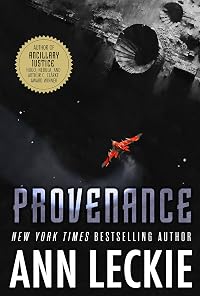







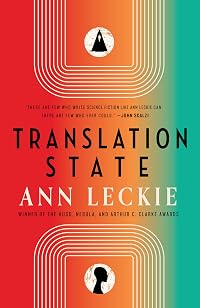




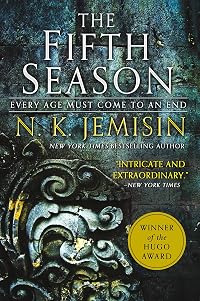
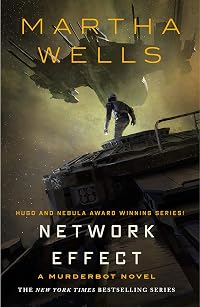




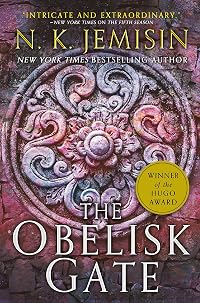


















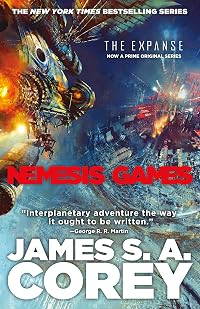







Member Recommendations

souloftherose Both are optimistic space operas that focus on the characters and their relationships.
40
Member Reviews
Not quite perfect, but the kind of finale that retroactively pulls up the first two novels up a notch as well. The Ancillary novels, for all that they mirror the standard trilogy pattern of outsider->complicated->triumph, still fell like one long novel chopped into three volumes for marketing purposes, but I love how much it gets right in the end. Not just that it's fun - and the last volume really ups the "fun" factor - but underneath it there's a lot of interesting ideas. How seriously it takes the question of just what happens when you introduce things like AI and cloned personalities into a story, for instance; the driving force behind the whole thing is Breq killing the evil emperor, but how exactly do you physically kill an show more emperor who has thousands of backup bodies spread out over hundreds of star systems who all depend on her being, basically, God?
Let's be sure that includes ALL of our citizens, shall we, Governor?
Ann Leckie has come under fire from a lot of, shall we say, somewhat less than progressive parts of SF fandom for outrageous things like only using female pronouns for all characters, etc. This, as many have pointed out, is of course profoundly silly; what, we're fine with hive minds and AIs and transhumans and aliens and FTL spaceflight, but gender ambiguity is outrageous? Yes, there are times when the dialogue between her characters almost sounds like the comments section at The Mary Sue, but she uses that. Ideas matter in SF, always have, and what Leckie does is to introduce the classic space opera to the question: Just what do all these various words, "person", "citizen", "people", "human", "individual", etc actually mean when you look beneath them, at the unspoken (or spoken so long we've accepted them) assumptions? She's not nearly the first to do so, but literature is an ongoing discussion and she makes an argument well worth listening to, even if - or especially as - it leans toward the optimistic. Hell, the whole thing is basically kicked off by the fact that even the evil emperor has a conscience. And just look at the titles of the books, and how they're ordered.
Also, fun. How does an all-powerful alien ambassador eat oysters? However she damn pleases.
Of course, underneath all that discussion is another discussion lurking, just how much our current view of rights and justice plays against a very Western idea of self-realisation and individualism. But that's for another day. In the end, this is what clever SF does, it opens gates between systems and lets them clash for a bit, and does so in a way that you can't stop reading. show less
Let's be sure that includes ALL of our citizens, shall we, Governor?
Ann Leckie has come under fire from a lot of, shall we say, somewhat less than progressive parts of SF fandom for outrageous things like only using female pronouns for all characters, etc. This, as many have pointed out, is of course profoundly silly; what, we're fine with hive minds and AIs and transhumans and aliens and FTL spaceflight, but gender ambiguity is outrageous? Yes, there are times when the dialogue between her characters almost sounds like the comments section at The Mary Sue, but she uses that. Ideas matter in SF, always have, and what Leckie does is to introduce the classic space opera to the question: Just what do all these various words, "person", "citizen", "people", "human", "individual", etc actually mean when you look beneath them, at the unspoken (or spoken so long we've accepted them) assumptions? She's not nearly the first to do so, but literature is an ongoing discussion and she makes an argument well worth listening to, even if - or especially as - it leans toward the optimistic. Hell, the whole thing is basically kicked off by the fact that even the evil emperor has a conscience. And just look at the titles of the books, and how they're ordered.
Also, fun. How does an all-powerful alien ambassador eat oysters? However she damn pleases.
Of course, underneath all that discussion is another discussion lurking, just how much our current view of rights and justice plays against a very Western idea of self-realisation and individualism. But that's for another day. In the end, this is what clever SF does, it opens gates between systems and lets them clash for a bit, and does so in a way that you can't stop reading. show less
Ancillary Mercy is the third and final book in Ann Leckie's Imperial Radch series featuring Breq as a former star ship A.I. who has been reduced to a single body, made a citizen of the Radch by one faction of the divided emperor Anaander Mianaai, and promoted to fleet captain in command of her own star ship, which comes complete with its own A.I. As a conclusion to the series, Ancillary Mercy is masterful, offering the reader a satisfying conclusion to many of the threads that were started in Ancillary Justice, including the long-awaited confrontation between Breq and the "other" Mianaai, as well as highlighting issues that in retrospect were present all along, but likely hidden by one's assumptions. But the book also leaves several show more points open, giving the Leckie's fictional universe a more expansive feel, and leaving room for other stories to inhabit its reaches.
The book opens with tea, in a scene that is about as domestic as the series gets, setting the tone for what is "normal" in the world of the Radch. But normal doesn't last long in Breq's world, and the book turns almost immediately to one of the central questions posed: What, exactly, is Mercy of Kalr, and by extension, what is Breq? Obviously Mercy of Kalr is a star ship A.I., but the deeper question is is she a what, or is she a who. After all, almost everyone who meets Breq treats her as a person (although some switch to seeing her as a thing when they find out she used to be Justice of Toren), but if Breq is a person, why isn't Kalr a person? Why does Kalr need a captain to be in charge of her? And these are exactly the questions Breq discusses with Kalr, highlighted in the opening chapter of the book, and which reverberate through the rest of the story.
In broad outlines, the plot of the novel is fairly straightforward: As the news of the split between the two factions of Anaander Mianaai becomes more widely known, those who support the Mianaai who doesn't like Breq discover that she was formerly an ancillary and take steps against her, most notably Eminence Ifian the head priest of Amaat, who takes all of his priesthood on strike, disrupting the lives of almost every individual on Athoek Station. This very Radchai form of attack is met with a very Radhcai response as the citizens of the station form a protest line outside the Amaat Temple. While this would normally be an acceptable way to engage in a dispute, many in the line are members of the disfavored ethnic groups Ychana and Valskaayans, and the authorities make moves to crack down on them, rather than merely letting the line be as would be proper. In this sequence, Leckie shows how Radch society operates under normal conditions when conflicts arise, but also illustrates quite clearly that despite their pretensions to the contrary, Radch society is an inherently unequal society, in which the disfavored are oppressed despite the fact that they are technically equal under the law. Further, by having Breq work to uphold the rights of the downtrodden - in effect making the Radch live up to their claimed ideals - despite the potential personal cost, Leckie once again develops Breq into a more fully realized character.
One of the interesting elements about Ancillary Mercy is how Leckie is constantly building her world and her story in both large and small ways. Alongside the larger story of the protest line and the response from some of the Radch authorities on Athoek Station, the relationship between Lieutenant Seivardan and freshly promoted Lieutentant Ekalu also shows how Radch society has always been rotten at its core. Seivarden is a character out of place in time, having been in cryosleep for an extended period of time, and is actually from the period of Radch history prior to the intervention of the alien Presger apparently sparked the split in Mianaai's personality. While Seivarden has expressed disgust with the class-based attitudes of some of the modern Radhcai, she still manages to insult Ekalu with backhanded compliments that essentially say Ekalu is better than others from her social class and background. When Ekalu justifiably takes offense at these "compliments", Seivarden is befuddled, as it does not even occur to her that what she has said could be construed as an insult. The point is quite clear: The inequality of a society is not only perpetuated by conscious actions to keep it unequal, but by the unconscious attitudes of those who don't even see that inequality is the water they are swimming in.
The connection with the Radch Empire's past is made even more explicit when an ancillary from the long-lost ship Sphene shows up, unraveling at least part of the mystery of what is beyond the ghost gate. Accompanying their arrival is a new mystery relating to a freshly uncovered cache of A.I. cores that someone had hidden on Athoek Station. The immediate presumption is that the Anaander Mianaai who dislikes Breq is responsible for placing them there, but this is merely an assumption. More interestingly, Sphene is an exile who hid after her side lost in the conflict that resulted in Anaander Mianaai taking control of the Radch to begin with, and as a result has even older ideas about society than Seivarden. Sphene, for example, finds it almost offensive that anyone from outside of the ancestral Dyson Sphere that is home to the original Radchai would have the temerity to call themselves Radchai. The self-exiled ship also serves as a reminder of what Breq herself was, complete with mind-wiped ancillaries who exist only as equipment who are extensions of the ship's A.I. It was as the result of Sphene's efforts that the stockpile of bodies in cryosleep Breq found in Ancillary Sword was created - Sphene needs new ancillaries, and those bodies were to provide the raw material. The fact that the bodies were technically those belonging to citizens of the Radch is of no concern to Sphene, as she doesn't actually regard them as being truly Radchai. It is in this lack of caring that one sees the progressive dehumanization possible in the system. Whether one is a person, and therefore protected from being treated as little more than raw materials, is merely a question of definition, and those definition can change based upon almost arbitrary and capricious factors.
The most interesting character in the volume is the new Presger translator Zeiat, who is almost incomprehensible while at the same time being the most illuminating character in the book. Her most critical scene takes place in her entrance to the story: When she arrives on Athoek Station, the Presger translator announces that they are Dlique, but upon being informed that Dlique is dead, asserts that they are instead Zeiat. This raises the question of why they thought they were Dlique to begin with, posing the intriguing possibility that they were in fact Dlique, but also Zeiat at the same time. This is, perhaps, a subtle inversion, as the reader has become familiar with a single consciousness inhabiting multiple bodies such as Justice of Toren, Sphene, or even Anaander Mianaai herself. So, one must wonder if the Presger translator might possibly be multiple minds in a single body, switching between them as the need arises and only holding out that they are one specific personality as a means of bridging the gap between Presger and Human. If so, this could be an interesting indication as to the nature of the as yet unseen Presger.
Regardless of the answer to this question, what Zeiat adds to the book is an entirely alien perspective on not just Radch society, but human society in all its forms. While Breq is able to question elements of Radch culture due to her status as someone who has been outside of normal society, Zeiat calls into question even basic assumptions made by those around her regarding things as mundane as the proper use of fish sauce. It is also interesting that Sphene, as the other "outsider" in the story, is the only character that seems to be able to establish a rapport with Zeiat, although the two proceed in such an inhuman manner that trying to figure out exactly what they are talking about, or when they begin playing a game, exactly what the rules are. Even Breq, herself formerly a star ship A.I., finds Sphene's interactions with Zeiat to be almost incomprehensible.
All of these characters exist against a backdrop that involves the Anaander Mianaai from Tstur Palace, who holds a grudge against Breq for killing her in Ancillary Justice and siding with the other faction of Anaander Mianaai. In a move that seems almost inevitable, Tstur Anaander brings an expeditionary force into Athoek with the unmistakable intent to kill Breq and gain control over Athoek for Tstur Palace. As she did for much of Ancillary Sword, Breq finds herself working from a position of weakness, because while she has befriended Athoek Station and many of her prominent citizens, and reached an uneasy truce with Sword of Atagaris, Tstur Anaander brings four powerful ships with her, while Breq can only truly count on the loyalty of Mercy of Kalr. Forced to rely upon her wits, Breq discovers, almost by accident, the true power of the Presger weapon she had been carrying since the first book in the series, but more importantly the power of taking the time to understand the wants and needs of those around her. Fundamentally, Breq not only out-thinks her foe, she does so because she is empathetic to the needs of those she is dealing with.
In the final confrontation, the secret that had been hidden in the text from the very first pages of Ancillary Justice is laid bare: The Radch language does have two pronouns, not one. All of the people in the story are referred to as she, but all of the A.I.s and ancillaries are referred to as it. Radch society does recognize the social distinctions between different pronouns, but the differences had been so subtly dealt with throughout the books that it was easy to simply overlook this. As Breq tells Zieat, there is a wholly alien, "significant" species living throughout the Radch Empire that has been relegated by Anaander's laws to the status of property. And the story makes clear that Anaander essentially views everyone but herself as a tool to be used, an attitude reflected by Sphene's view of those born outside the Radch Dyson Sphere, and extended even to people that the "good" Anaander supposedly accords the rights of citizens such as Tisarwat. It is when Breq asserts her right to be regarded as someone and not something that the story crystallizes, showing the reader the true destination that Breq had set out upon after the "bad" Anaander had manipulated her without her knowledge, forcing her to do things she did not want to do, and ultimately destroying most of her.
In the end, the story shows that those who treat those around them merely as tools to be used cannot command loyalty, even through military might, and those who don't pay attention to the flow of information will ultimately pay the price for their neglect. What gives Breq power is her attention to the network of allies around her, an effort that seems almost alien to Anaander, who is used to being a network unto herself. But because she neglects the needs of those who are not her, Anaander finds that necessary information has simply not been offered, because while she was ordering people about, she didn't think to ask for it and those she was in the habit of oppressing didn't feel the need to volunteer it. By contrast, when Breq insists that the Ychana be treated like citizens, or treats Athoek Station like an equal, she commands their loyalty, and in the process shows those who had been treated as either de facto property or de jure property that they should have a voice, and should be respected.
Ancillary Mercy is, at the same time, both an entirely unexpected and seemingly inevitable ending to Breq's story. One of the most beautiful things about the book is that Breq essentially understands her way to victory, and her victory is an egalitarian one that offers better prospects not just for herself, but for those around her as well, and rejects the choices offered to her by the Anaander factions. Breq's story is a story of inverted expectations, of the voiceless being voiced, of tea and songs, of humans acting as equipment, and of equipment finding out that it is not equipment after all. It is also absolutely beautiful and absolutely brilliant.
This review has also been posted to my blog Dreaming About Other Worlds. show less
The book opens with tea, in a scene that is about as domestic as the series gets, setting the tone for what is "normal" in the world of the Radch. But normal doesn't last long in Breq's world, and the book turns almost immediately to one of the central questions posed: What, exactly, is Mercy of Kalr, and by extension, what is Breq? Obviously Mercy of Kalr is a star ship A.I., but the deeper question is is she a what, or is she a who. After all, almost everyone who meets Breq treats her as a person (although some switch to seeing her as a thing when they find out she used to be Justice of Toren), but if Breq is a person, why isn't Kalr a person? Why does Kalr need a captain to be in charge of her? And these are exactly the questions Breq discusses with Kalr, highlighted in the opening chapter of the book, and which reverberate through the rest of the story.
In broad outlines, the plot of the novel is fairly straightforward: As the news of the split between the two factions of Anaander Mianaai becomes more widely known, those who support the Mianaai who doesn't like Breq discover that she was formerly an ancillary and take steps against her, most notably Eminence Ifian the head priest of Amaat, who takes all of his priesthood on strike, disrupting the lives of almost every individual on Athoek Station. This very Radchai form of attack is met with a very Radhcai response as the citizens of the station form a protest line outside the Amaat Temple. While this would normally be an acceptable way to engage in a dispute, many in the line are members of the disfavored ethnic groups Ychana and Valskaayans, and the authorities make moves to crack down on them, rather than merely letting the line be as would be proper. In this sequence, Leckie shows how Radch society operates under normal conditions when conflicts arise, but also illustrates quite clearly that despite their pretensions to the contrary, Radch society is an inherently unequal society, in which the disfavored are oppressed despite the fact that they are technically equal under the law. Further, by having Breq work to uphold the rights of the downtrodden - in effect making the Radch live up to their claimed ideals - despite the potential personal cost, Leckie once again develops Breq into a more fully realized character.
One of the interesting elements about Ancillary Mercy is how Leckie is constantly building her world and her story in both large and small ways. Alongside the larger story of the protest line and the response from some of the Radch authorities on Athoek Station, the relationship between Lieutenant Seivardan and freshly promoted Lieutentant Ekalu also shows how Radch society has always been rotten at its core. Seivarden is a character out of place in time, having been in cryosleep for an extended period of time, and is actually from the period of Radch history prior to the intervention of the alien Presger apparently sparked the split in Mianaai's personality. While Seivarden has expressed disgust with the class-based attitudes of some of the modern Radhcai, she still manages to insult Ekalu with backhanded compliments that essentially say Ekalu is better than others from her social class and background. When Ekalu justifiably takes offense at these "compliments", Seivarden is befuddled, as it does not even occur to her that what she has said could be construed as an insult. The point is quite clear: The inequality of a society is not only perpetuated by conscious actions to keep it unequal, but by the unconscious attitudes of those who don't even see that inequality is the water they are swimming in.
The connection with the Radch Empire's past is made even more explicit when an ancillary from the long-lost ship Sphene shows up, unraveling at least part of the mystery of what is beyond the ghost gate. Accompanying their arrival is a new mystery relating to a freshly uncovered cache of A.I. cores that someone had hidden on Athoek Station. The immediate presumption is that the Anaander Mianaai who dislikes Breq is responsible for placing them there, but this is merely an assumption. More interestingly, Sphene is an exile who hid after her side lost in the conflict that resulted in Anaander Mianaai taking control of the Radch to begin with, and as a result has even older ideas about society than Seivarden. Sphene, for example, finds it almost offensive that anyone from outside of the ancestral Dyson Sphere that is home to the original Radchai would have the temerity to call themselves Radchai. The self-exiled ship also serves as a reminder of what Breq herself was, complete with mind-wiped ancillaries who exist only as equipment who are extensions of the ship's A.I. It was as the result of Sphene's efforts that the stockpile of bodies in cryosleep Breq found in Ancillary Sword was created - Sphene needs new ancillaries, and those bodies were to provide the raw material. The fact that the bodies were technically those belonging to citizens of the Radch is of no concern to Sphene, as she doesn't actually regard them as being truly Radchai. It is in this lack of caring that one sees the progressive dehumanization possible in the system. Whether one is a person, and therefore protected from being treated as little more than raw materials, is merely a question of definition, and those definition can change based upon almost arbitrary and capricious factors.
The most interesting character in the volume is the new Presger translator Zeiat, who is almost incomprehensible while at the same time being the most illuminating character in the book. Her most critical scene takes place in her entrance to the story: When she arrives on Athoek Station, the Presger translator announces that they are Dlique, but upon being informed that Dlique is dead, asserts that they are instead Zeiat. This raises the question of why they thought they were Dlique to begin with, posing the intriguing possibility that they were in fact Dlique, but also Zeiat at the same time. This is, perhaps, a subtle inversion, as the reader has become familiar with a single consciousness inhabiting multiple bodies such as Justice of Toren, Sphene, or even Anaander Mianaai herself. So, one must wonder if the Presger translator might possibly be multiple minds in a single body, switching between them as the need arises and only holding out that they are one specific personality as a means of bridging the gap between Presger and Human. If so, this could be an interesting indication as to the nature of the as yet unseen Presger.
Regardless of the answer to this question, what Zeiat adds to the book is an entirely alien perspective on not just Radch society, but human society in all its forms. While Breq is able to question elements of Radch culture due to her status as someone who has been outside of normal society, Zeiat calls into question even basic assumptions made by those around her regarding things as mundane as the proper use of fish sauce. It is also interesting that Sphene, as the other "outsider" in the story, is the only character that seems to be able to establish a rapport with Zeiat, although the two proceed in such an inhuman manner that trying to figure out exactly what they are talking about, or when they begin playing a game, exactly what the rules are. Even Breq, herself formerly a star ship A.I., finds Sphene's interactions with Zeiat to be almost incomprehensible.
All of these characters exist against a backdrop that involves the Anaander Mianaai from Tstur Palace, who holds a grudge against Breq for killing her in Ancillary Justice and siding with the other faction of Anaander Mianaai. In a move that seems almost inevitable, Tstur Anaander brings an expeditionary force into Athoek with the unmistakable intent to kill Breq and gain control over Athoek for Tstur Palace. As she did for much of Ancillary Sword, Breq finds herself working from a position of weakness, because while she has befriended Athoek Station and many of her prominent citizens, and reached an uneasy truce with Sword of Atagaris, Tstur Anaander brings four powerful ships with her, while Breq can only truly count on the loyalty of Mercy of Kalr. Forced to rely upon her wits, Breq discovers, almost by accident, the true power of the Presger weapon she had been carrying since the first book in the series, but more importantly the power of taking the time to understand the wants and needs of those around her. Fundamentally, Breq not only out-thinks her foe, she does so because she is empathetic to the needs of those she is dealing with.
In the final confrontation, the secret that had been hidden in the text from the very first pages of Ancillary Justice is laid bare: The Radch language does have two pronouns, not one. All of the people in the story are referred to as she, but all of the A.I.s and ancillaries are referred to as it. Radch society does recognize the social distinctions between different pronouns, but the differences had been so subtly dealt with throughout the books that it was easy to simply overlook this. As Breq tells Zieat, there is a wholly alien, "significant" species living throughout the Radch Empire that has been relegated by Anaander's laws to the status of property. And the story makes clear that Anaander essentially views everyone but herself as a tool to be used, an attitude reflected by Sphene's view of those born outside the Radch Dyson Sphere, and extended even to people that the "good" Anaander supposedly accords the rights of citizens such as Tisarwat. It is when Breq asserts her right to be regarded as someone and not something that the story crystallizes, showing the reader the true destination that Breq had set out upon after the "bad" Anaander had manipulated her without her knowledge, forcing her to do things she did not want to do, and ultimately destroying most of her.
In the end, the story shows that those who treat those around them merely as tools to be used cannot command loyalty, even through military might, and those who don't pay attention to the flow of information will ultimately pay the price for their neglect. What gives Breq power is her attention to the network of allies around her, an effort that seems almost alien to Anaander, who is used to being a network unto herself. But because she neglects the needs of those who are not her, Anaander finds that necessary information has simply not been offered, because while she was ordering people about, she didn't think to ask for it and those she was in the habit of oppressing didn't feel the need to volunteer it. By contrast, when Breq insists that the Ychana be treated like citizens, or treats Athoek Station like an equal, she commands their loyalty, and in the process shows those who had been treated as either de facto property or de jure property that they should have a voice, and should be respected.
Ancillary Mercy is, at the same time, both an entirely unexpected and seemingly inevitable ending to Breq's story. One of the most beautiful things about the book is that Breq essentially understands her way to victory, and her victory is an egalitarian one that offers better prospects not just for herself, but for those around her as well, and rejects the choices offered to her by the Anaander factions. Breq's story is a story of inverted expectations, of the voiceless being voiced, of tea and songs, of humans acting as equipment, and of equipment finding out that it is not equipment after all. It is also absolutely beautiful and absolutely brilliant.
This review has also been posted to my blog Dreaming About Other Worlds. show less
Ancillary Mercy is better than Ancillary Sword, but I'm wondering if Ann Leckie was a one-hit wonder-- neither the Ancillary books 2-3 nor Provenance were anywhere near as good as Ancillary Justice. I feel as if after Justice, she just had no idea where to go; that's how it reads, anyway. The stakes in Sword/Mercy (which basically forms one big story) are technically higher than those in Justice; in Justice, Breq was just out for her own satisfaction/vengeance, whereas in Mercy, she's fighting to save a solar system. But in Justice, the stakes felt higher because of Breq's personal need to do this; the climax of that book was one of the most intense reading experiences I can remember having in ages. The big problem of Sword/Mercy is show more that there's no strong personal involvement for Breq. She was sent to this solar system arbitrarily as far as we can; I don't really have a reason to care if it can be protected from Anaannder Mianaai.
Part of the problem in Mercy goes back to Sword. It didn't feel like Breq had to fight for anything in that book, so why should I care if it's taken away from her? In Justice, what she did was hard work. In Sword, she was easily right every time. It would have been nice to see Breq struggle to be a captain, because surely the service-based attitude one needs to be a good ship is different than the leadership-based attitude one needs to be a good captain. But Breq doesn't struggle; she's just a good captain from the word "go." Thankfully, Mercy reverses this somewhat, but it's still annoying. A morally right character who struggles to implement justice is sympathetic. A morally right character who always gets her way is smug and obnoxious.
The shame of it all is that Leckie does great, complex worldbuilding (along with Seth Dickinson, she's very much part of a movement more attentive to the details of colonialism and empire than I remember seeing in older sf) and crafts marvelous sentences. She writes great characters. I really like Seivarden, for example, and the Presger translator Zeiat was delightfully funny and alien; I laughed a lot at her antics.
I can imagine a better book 2-3 than we got-- and the very end of book 3 promises it, whenBreq founds her own polity with citizenship for AI. Imagine if books 2-3 had been condensed down into one book ending where book 3 does right now. Then book 3 could have been about Breq trying to defend her own society from Anaander Mianaai and the Radch, trying to take from her the enclave of justice that she's built . That would have potentially had real emotional stakes in a way that this book does not. After reading Ancillary Justice, Leckie's work became must-buy for me... after reading the rest of it, it has lost that status. She's not a bad writer, but outside of Justice, she's not a great one, either. show less
Part of the problem in Mercy goes back to Sword. It didn't feel like Breq had to fight for anything in that book, so why should I care if it's taken away from her? In Justice, what she did was hard work. In Sword, she was easily right every time. It would have been nice to see Breq struggle to be a captain, because surely the service-based attitude one needs to be a good ship is different than the leadership-based attitude one needs to be a good captain. But Breq doesn't struggle; she's just a good captain from the word "go." Thankfully, Mercy reverses this somewhat, but it's still annoying. A morally right character who struggles to implement justice is sympathetic. A morally right character who always gets her way is smug and obnoxious.
The shame of it all is that Leckie does great, complex worldbuilding (along with Seth Dickinson, she's very much part of a movement more attentive to the details of colonialism and empire than I remember seeing in older sf) and crafts marvelous sentences. She writes great characters. I really like Seivarden, for example, and the Presger translator Zeiat was delightfully funny and alien; I laughed a lot at her antics.
I can imagine a better book 2-3 than we got-- and the very end of book 3 promises it, when
I adored this book. I knew from books 1 and 2 in the trilogy that I would enjoy this, but I did not expect to love it nearly as much as I did. I think this is my favorite book in the trilogy. It pulled together all of the series plot threads that I cared the most about, while still leaving a couple of things unfinished for future short stories or companion novels. We got so much information in this book that answered questions I had about the universe, but it never felt like an info dump. (There are still things I want to know more about, but given the titles of one of the additional books in this universe I think it's a safe bet that I'll get at least some of those answers.)
There's not a lot I can discuss without getting into spoilers, show more either for this book or for the first two books in the trilogy, but I will say that I love the found family that Breq collected around her over the course of the series. Breq herself is a wonderful character, but some of the side characters (most especially Translator Zeiat) were special favorites. I also appreciated that even though there are some occasionally heavy themes in this book, they're treated in a very respectful and hopeful way.
If you're a fan of science fiction, I can't recommend this trilogy highly enough. show less
There's not a lot I can discuss without getting into spoilers, show more either for this book or for the first two books in the trilogy, but I will say that I love the found family that Breq collected around her over the course of the series. Breq herself is a wonderful character, but some of the side characters (most especially Translator Zeiat) were special favorites. I also appreciated that even though there are some occasionally heavy themes in this book, they're treated in a very respectful and hopeful way.
If you're a fan of science fiction, I can't recommend this trilogy highly enough. show less
Not long after the events of Ancillary Sword, Breq and her crew on the Mercy of Kalr are given a new challenge when some of the officials on Athoek Station don't want to go along with her plans for repairing the Undergarden and allowing the Ychana living there to return. As events unfold, she's going to have to use all her ingenuity to keep the station free from the section of Anaander Mianaai that absolutely hates her.
One of the strengths of this series, and one of the aspects that draws me to SFF, is how it makes you think about political systems and issues that are very familiar to us on earth today, but in a new way by incorporating AI and a completely different species' approach to understanding humans. Thought-provoking, complex show more plot and excellent storytelling make this compelling reading. I'm really looking forward to continuing with Provenance. show less
One of the strengths of this series, and one of the aspects that draws me to SFF, is how it makes you think about political systems and issues that are very familiar to us on earth today, but in a new way by incorporating AI and a completely different species' approach to understanding humans. Thought-provoking, complex show more plot and excellent storytelling make this compelling reading. I'm really looking forward to continuing with Provenance. show less
There’s at least two ways to read this series, and your enjoyment will depend on which you choose (choose your own adventure!) Do you:
1. Read quickly, surface-details only, not pausing to question characters and plotting.
2. Read deeply, discussing the details and character motivations.
3. Surprise! You can also do both and discover that it falls apart with scrutiny.
When I read quickly, it’s usually because plotting pulls me along. An unpredictable plot is catnip, and spurs me to invest in the story and pay attention. Interest strengthens if plotting passes a sniff test and there’s emotional drama. So when I first read through Mercy, I thought it a decent finale to the trilogy, particularly after the tea plantation drama of book show more #2. There’s just as much tea but far more action, and number of interesting plot developments. But that speed and interest comes with a cost: ignoring the sustained focus on the crew’s various emotional dramas and Breq’s similarly human emotional landscape.
The first chapter does a decent job of reviewing the events of the prior book, as well as explaining a few ambiguities that had erupted. (If only Leckie had decided to share them in book two!). Nonetheless, I’m sure it’ll be helpful to readers who took time between books. While intrigue is non-stop, endless cups of tea will appear, although only as a indication that Important Conversations Will Follow. It’s too bad, really, that Leckie fixated on the ritual of tea as her indicator for ‘civilization,’ because there was the potential to add more cultural world-building. (Oh, correction–this time we also talk about tea-cakes).
But Leckie’s characterization remains overall weak, with Seivarden and Ekalu’s emotional drama about a microaggression-laden compliment distracting from both planetary and interstellar-level events. I honestly couldn’t think of why it was included, unless it was for Leckie to use it as an awkward and overt ‘teaching point’ for readers who don’t understand the insidiousness.
Breq herself remains a black box, unable to share details on her strategy until post-event. It’s an annoying authorial tick that relies on nothing more than slight-of-hand super-power skills. And don’t get me started on why Breq’s continues her focus on racial politics of the planet and station when she has a galactic empire gunning for her. We do remember, right, that this is the embodiment of an A.I. that participated in numerous racially-motivated wars? There’s not enough character depth to explain how she’s decided that different races of people should have equal rights. Then there’s her own shaky double-standard of certain missing people who are still in ancillary storage. It all adds up to a character that isn’t interesting as much as inscrutable, which leads me to conclude shaky characterization.
All my prior objections of the series remain: missed potential for world-building and shaky underpinnings (spoiler: when did Breq decide to switch to Freedom Fighter?) but intricate plotting with a lot of forward movement. Don’t scrutinize too closely and it’ll be an okay ride. show less
1. Read quickly, surface-details only, not pausing to question characters and plotting.
2. Read deeply, discussing the details and character motivations.
3. Surprise! You can also do both and discover that it falls apart with scrutiny.
When I read quickly, it’s usually because plotting pulls me along. An unpredictable plot is catnip, and spurs me to invest in the story and pay attention. Interest strengthens if plotting passes a sniff test and there’s emotional drama. So when I first read through Mercy, I thought it a decent finale to the trilogy, particularly after the tea plantation drama of book show more #2. There’s just as much tea but far more action, and number of interesting plot developments. But that speed and interest comes with a cost: ignoring the sustained focus on the crew’s various emotional dramas and Breq’s similarly human emotional landscape.
The first chapter does a decent job of reviewing the events of the prior book, as well as explaining a few ambiguities that had erupted. (If only Leckie had decided to share them in book two!). Nonetheless, I’m sure it’ll be helpful to readers who took time between books. While intrigue is non-stop, endless cups of tea will appear, although only as a indication that Important Conversations Will Follow. It’s too bad, really, that Leckie fixated on the ritual of tea as her indicator for ‘civilization,’ because there was the potential to add more cultural world-building. (Oh, correction–this time we also talk about tea-cakes).
But Leckie’s characterization remains overall weak, with Seivarden and Ekalu’s emotional drama about a microaggression-laden compliment distracting from both planetary and interstellar-level events. I honestly couldn’t think of why it was included, unless it was for Leckie to use it as an awkward and overt ‘teaching point’ for readers who don’t understand the insidiousness.
Breq herself remains a black box, unable to share details on her strategy until post-event. It’s an annoying authorial tick that relies on nothing more than slight-of-hand super-power skills. And don’t get me started on why Breq’s continues her focus on racial politics of the planet and station when she has a galactic empire gunning for her. We do remember, right, that this is the embodiment of an A.I. that participated in numerous racially-motivated wars? There’s not enough character depth to explain how she’s decided that different races of people should have equal rights. Then there’s her own shaky double-standard of certain missing people who are still in ancillary storage. It all adds up to a character that isn’t interesting as much as inscrutable, which leads me to conclude shaky characterization.
All my prior objections of the series remain: missed potential for world-building and shaky underpinnings (spoiler: when did Breq decide to switch to Freedom Fighter?) but intricate plotting with a lot of forward movement. Don’t scrutinize too closely and it’ll be an okay ride. show less
It's been some months now since I read "Ancillary Mercy". I held back from reviewing it, not because it wasn't good but because what made it good was so pervasive, so delicate and so intricately linked to the two preceding books, whose meaning it subtly modifies, that I didn't know where to start.
I'm writing this review now so that I can capture how it felt to read, "Ancillary Justice" and finish the Imperial Radch trilogy before I read Ann Leckie's latest book, "Provenance" which set in the same universe but with a very different focus.
Firstly, I was left with a real sense of progression and completeness that I always hope for in a trilogy but rarely get. This completeness comes not from the unravelling of a mystery or from an show more exponential growth of world-building but from somewhere much more interesting, the emotional growth of the main character.
There aren't many science fiction books I can make that kind of statement about, even fewer when the main character is an AI (although Joel Shepherd's last three books in the Cassandra Kresnove series also do this well).
The first book, "Ancillary Justice", Breq, an AI in a human body who was formerly the warship Justice of Toren, was alone, recovering from crippling betrayal and seeking vengeance. Even then, she seemed to me to be a better person than many of the humans she encountered.
In "Ancillary Sword", Breq has a command of a ship, an imperial mission and an opportunity to repay a debt of honour to the family of one Justice of Toren's officers. In that book, Breq has moved beyond simple vengeance to the consideration of just use of power and the nature of personhood. She is building relationships, administering justice and recreating herself into a person with a very different view of life than the one Justice of Toren had lived within.
What I liked most about "Ancillary Mercy" is that Breq not only completes the building of her new identity but, in doing so, she changes many of the people and AIs around her. Breq has replaced a hunger for revenge with something much more important, the need and ability to love and be loved. She wins the love and loyalty of her human crew. She prompts other Ships and Station AIs to consider their own personhood and desires and she brokers a the opportunity for a kind of peace.
I'm aware that this is not necessarily the explosive ending some people were looking for. I've seen the reviews that complain that too much time in this book is spent making tea. Tea, in Breq's world, is an archetype of civilization. It is about thought, courtesy, respect, discipline, hospitality and refusal to have one's will drowned in the torrent of events. It is about making choices and exercising will. Tea is Breq's alternative to weapons of mass destruction and, in my view, shows that she has transformed herself from an intelligent military asset of the Empire into a person seeking freedom for herself and others.
If you don't find those ideas interesting, then this probably isn't the book for you.
There is, of course, more to the book than tea. There is brinkmanship, warfare, encounters with the disturbingly alien and clashes between cultures and classes that are as old as time.
There is perfectly paced storytelling, that holds you in suspense but never tempts you to skip ahead and most of all there are many, many believable characters who make the story rich and credible.
I'm sure the Imperial Radch trilogy will become one of the classics of science fiction. I know I will read all of it again. But not until I've read "Provence" and anything else new that Ann Lecke publishes. show less
I'm writing this review now so that I can capture how it felt to read, "Ancillary Justice" and finish the Imperial Radch trilogy before I read Ann Leckie's latest book, "Provenance" which set in the same universe but with a very different focus.
Firstly, I was left with a real sense of progression and completeness that I always hope for in a trilogy but rarely get. This completeness comes not from the unravelling of a mystery or from an show more exponential growth of world-building but from somewhere much more interesting, the emotional growth of the main character.
There aren't many science fiction books I can make that kind of statement about, even fewer when the main character is an AI (although Joel Shepherd's last three books in the Cassandra Kresnove series also do this well).
The first book, "Ancillary Justice", Breq, an AI in a human body who was formerly the warship Justice of Toren, was alone, recovering from crippling betrayal and seeking vengeance. Even then, she seemed to me to be a better person than many of the humans she encountered.
In "Ancillary Sword", Breq has a command of a ship, an imperial mission and an opportunity to repay a debt of honour to the family of one Justice of Toren's officers. In that book, Breq has moved beyond simple vengeance to the consideration of just use of power and the nature of personhood. She is building relationships, administering justice and recreating herself into a person with a very different view of life than the one Justice of Toren had lived within.
What I liked most about "Ancillary Mercy" is that Breq not only completes the building of her new identity but, in doing so, she changes many of the people and AIs around her. Breq has replaced a hunger for revenge with something much more important, the need and ability to love and be loved. She wins the love and loyalty of her human crew. She prompts other Ships and Station AIs to consider their own personhood and desires and she brokers a the opportunity for a kind of peace.
I'm aware that this is not necessarily the explosive ending some people were looking for. I've seen the reviews that complain that too much time in this book is spent making tea. Tea, in Breq's world, is an archetype of civilization. It is about thought, courtesy, respect, discipline, hospitality and refusal to have one's will drowned in the torrent of events. It is about making choices and exercising will. Tea is Breq's alternative to weapons of mass destruction and, in my view, shows that she has transformed herself from an intelligent military asset of the Empire into a person seeking freedom for herself and others.
If you don't find those ideas interesting, then this probably isn't the book for you.
There is, of course, more to the book than tea. There is brinkmanship, warfare, encounters with the disturbingly alien and clashes between cultures and classes that are as old as time.
There is perfectly paced storytelling, that holds you in suspense but never tempts you to skip ahead and most of all there are many, many believable characters who make the story rich and credible.
I'm sure the Imperial Radch trilogy will become one of the classics of science fiction. I know I will read all of it again. But not until I've read "Provence" and anything else new that Ann Lecke publishes. show less
Members
- Recently Added By
Lists

Best Science Fiction Novels
816 works; 426 members

Favorite Science Fiction by Women Authors
737 works; 196 members

2016 Hugo Eligible Novels
90 works; 30 members

Best Feminist Science Fiction
188 works; 34 members

Locus Award for Best Novel/SF Novel
53 works; 6 members

Top Five Books of 2015
811 works; 241 members

Top Five Books of 2016
795 works; 228 members

Sentient ships
20 works; 3 members
Recommended Speculative Fiction by Women and People of Color
298 works; 45 members

Speculative Fiction to Read
706 works; 32 members
LGBTQ+ Speculative Fiction
820 works; 51 members

Female Author
1,235 works; 67 members

Books Read in 2025
4,091 works; 97 members

Books Read in 2023
5,547 works; 145 members

Books Read in 2020
4,379 works; 123 members

Books Read in 2017
4,249 works; 129 members
Books Read in 2018
4,360 works; 110 members
Female Protagonist
1,056 works; 57 members

Kirkus Starred Fiction Reviews of Books Published in 2015
310 works; 6 members
Books Read in 2016
4,666 works; 199 members

Kirkus Reviews Best Fiction of 2015
98 works; 6 members

Fiction with Prominent Confirmed Asexual Characters
20 works; 3 members
Books Read in 2015
3,299 works; 126 members

naturallogg's 2025 in Books
50 works; 1 member
Author Information

29+ Works 19,785 Members
Ann Leckie was born in Toledo, Ohio on March 2, 1966. She attended Clarion West Writers Workshop and studied under Octavia Butler. Her debut novel Ancillary Justice won several awards, 2014 Hugo Award for Best Novel, Nebula Award, the Arthur C. Clarke Award, and the 2013 BSFA Award. Her next book was Ancillary Sword. It won the 2014 BSFA Award for show more Best Novel and the 2015 Locus Award for Best Science Fiction Novel. Ancillary Mercy is the third book the Imperial Radch trilogy. Her short stories include Hesperia and Glory, Marsh Gods, The God of Au, The Endangered Camp, The Unknown God, Beloved of the Sun, and Maiden, Mother, Crone. (Bowker Author Biography) show less

Ann Leckie is a LibraryThing Author, an author who lists their personal library on LibraryThing.
Some Editions
Awards and Honors
Awards
Distinctions
Notable Lists
Series

Work Relationships
Is contained in
Common Knowledge
- Canonical title
- Ancillary Mercy
- Original title
- Ancillary Mercy
- Original publication date
- 2015-10-06
- People/Characters
- Breq; Anaander Mianaai; Seivarden Vendaai; Lieutenant Tisarwat; Lieutenant Ekalu; Mercy of Kalr (show all 16); Translator Zeiat; Sphene; Kalr Five; Medic; Station Administrator Celar; Governor Giarod; Basnaaid Elming; Uran; Queter; Ifian Wos
- Important places
- Athoek System; Radch Empire
- First words
- One moment asleep.
- Last words
- (Click to show. Warning: May contain spoilers.)In the end it's only ever been one step, and then the next.
- Publisher's editor
- Hinton, Will; Hill, Jenni
- Original language
- English
Classifications
Statistics
- Members
- 3,096
- Popularity
- 5,684
- Reviews
- 157
- Rating
- (4.16)
- Languages
- 9 — Dutch, English, Estonian, French, German, Hungarian, Romanian, Spanish, Turkish
- Media
- Paper, Audiobook, Ebook
- ISBNs
- 26
- ASINs
- 14