On This Page
Description
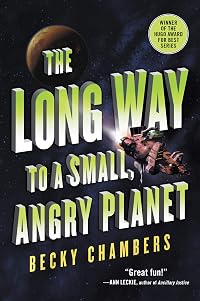
Rosemary Harper doesn't expect much when she joins the crew of the aging Wayfarer. While the patched-up ship has seen better days, it offers her a bed, a chance to explore the far-off corners of the galaxy, and most importantly, some distance from her past. An introspective young woman, she's never met anyone remotely like the ship's diverse crew, including Sissix, the exotic reptilian pilot, chatty engineers Kizzy and Jenks, who keep the ship running, and Ashby, their noble captain. Life show more aboard the Wayfarer is chaotic and crazy-exactly what Rosemary wants. It's also about to get extremely dangerous when the crew is offered the job of a lifetime. Tunneling wormholes through space to a distant planet is definitely lucrative and will keep them comfortable for years. But risking her life wasn't part of the plan. In the far reaches of deep space, the tiny Wayfarer crew will confront a host of unexpected mishaps and thrilling adventures that force them to depend on each other. To survive, Rosemary's got to learn how to rely on this assortment of oddballs-an experience that teaches her about love and trust, and that having a family isn't necessarily the worst thing in the universe. show lessTags
Recommendations












Member Recommendations
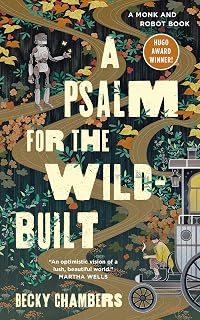
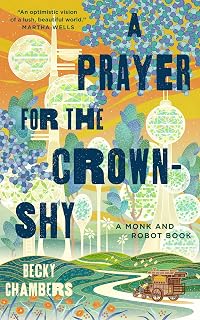
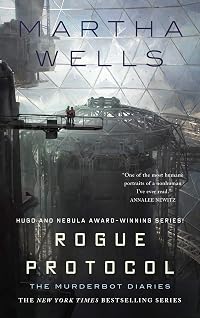
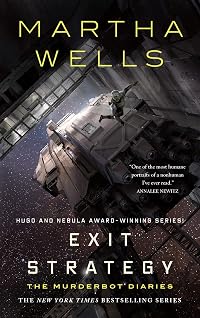
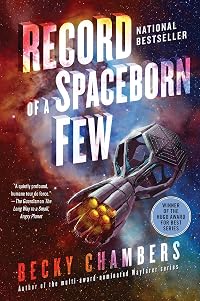
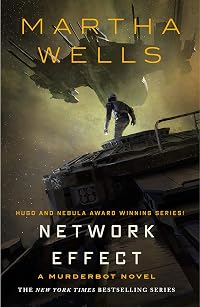
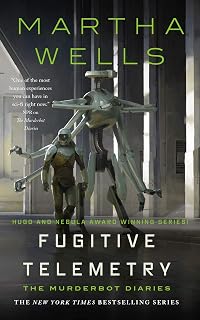
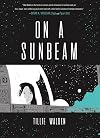
souloftherose Both are optimistic space operas that focus on the characters and their relationships.
102
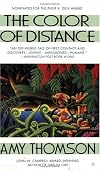
beyondthefourthwall Deeply character-driven sci-fi with particular care allotted to worldbuilding and major cross-species differences in culture, physiology, etc.
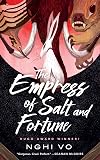
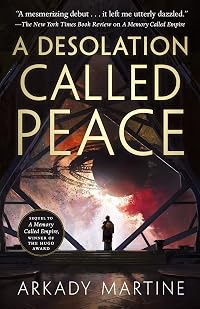
andreas.wpv The book is really different in story and in setting. Empress is high fantasy - but barely visible, and tells a story of a story being collected from the maidservant of an empress.
While the story is so different, the mood and feel of the story, and the telling of the story are similar - a tender loving observation of human beings living their lives together in non-ordinary circumstances. I have not read the next books of the 'empress' - so not sure this holds, but to me, they are so similar.



g33kgrrl Enjoyable people on space voyages. Drama makes a plot happen, but the characters are pretty great too.
12
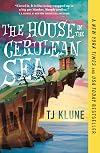
ReshiBec An outsider meets an already established 'found family' made up of diverse characters... but in a fantasy world instead of space. Similar tone.
03
WabbitSeason Both are gentle, optimistic, character-driven space opera's
majkia strong weomen, complex characters, space opera

bookwren A human young woman finds family on a spaceship crewed by various beings from other planets, just as Trouble does.

JessiAdams Both explore themes of the future, other types of societies, and other genders in their stories.
andreas.wpv Angry planet and pale light trigger similar emotions, talking about connections, newbies finding their places on teams, developing friendships, kinship, closeness.
Pale light is more action packed, more tense then how I recall angry planet, but is clearly a more traditional story, with more stereotypical characters and plot, jokes, scenes.

pnppl Another nice, upbeat scifi novel about culture clash

Cloverlimes Space travel, strange characters/sentient AI, and Intrigue surrounding a new path through space.
Lallo's story is more action focused, where Chambers' is more about found family.

Member Reviews
To my own mild puzzlement, I have to say that I had fun spending time with the Wayfarer crew and that I want to visit with them again soon.
Why the puzzlement?
Well, this isn't usually my kind of Science Fiction.
If I had to give this book a tagline, I'd go with Nice People In Space or A Long Way To Discovering The Value Of Diversity And The Power Of Making A Crew Into Your Chosen Family.
My expectations of Space Opera were set by Banks, Corey, Leckie, Powell and Reynolds. I expected big themes, dark plots, violent conflicts, advanced weaponry and ruthless people brokering power. I quickly saw that this book was aiming for something quite different, I just didn't know what.
At first, I thought it was a riff on Star Trek TNG, stripped of its show more thinly-disguised military structure and freed from the need to solve the universe's problems.
When I finally put aside my 'this is like...' mindset and took the book on its own terms, I started to have fun, albeit very wholesome 'Goodnight, John Boy' Waltons' Mountains fun, redecorated with peace stickers and rainbow flags.
If this book had not been so well done, if the cultures had not been so well-imagined, if the characters were not so engaging, If I hadn't ended up holding my breath waiting to find out the fate of the ship's AI, I would have been gently mocking this book. Instead, I'm mocking myself for having cynicism ingrained in my imagination like machine oil in the skin of a mechanics hands.
Yes, I can see that there's strong messaging here about diversity and choice and pacifism and tolerance that ought to be setting off my propaganda alarms like the storyline on a Christian channel show about raising a family with the grace of God, but the thing is that it works so well that I got all wrapped up in it.
I liked the crew. I liked being shown the different backgrounds that they came from and the different ways that they saw the world. I liked that those differences weren't sanded down into a smooth, 'We're all Starfleet, whatever our species' monoculture, but were bolted together, much like the Wayfarer itself, into something with a unique, improbable, not particularly pretty, that worked because it played to everyone's strengths. I liked that none of the crew carried or used weapons. Ever. Even when boarded by pirates or border patrols or surrounded by warships. They just weren't that kind of people. They made wormhole tunnels that allowed people to travel safely and quickly outside normal space. They were passionate about food and drink and tech toys and each other. They were alien to each other (four different organic species and one AI) and they were family to each other. And that was the point.
So, here I am going: 'A long book in which not much happened (at least on a galactic scale) except me getting to know a crew real well and enjoy the credible optimism and shared strength that they gifted to one another.'
I ought to be going 'Walton's in space? No thanks!' Instead. I'm going, 'What was the name of the second book in the series?' (It's 'A Closed A Common Orbit' in case you were wondering)
All of which is a tribute to Becky Chambers' storytelling and to Patricia Rodriguez's excellent narration. Click on the SoundCloud link below to hear a sample
https://soundcloud.com/hodderbooks/the-long-way-to-a-small-angry-planet-by-becky... show less
A lot of readers have made the connection with Firefly; and meeting the first character, Kizzy, as the ship's mech tech, automatically makes one think of Kaylee Frye, lookin' good in grease. And Ashby is an unassuming captain who might be, but isn't a stand-in for Malcolm Reynolds. The fact that the novel is based on an ensemble cast is also an appealing throwback to the TV series. And I'm thinking that Chambers has taken inspiration, but her strengths are her own.
Chambers obviously understands the appeal of character backstory. She does an extraordinarily good job of supplying this across all species. Her world building describes a fascinating diversity of intelligent life, and she is able to start with species' show more history/biology/politics and move on from there to particular personalities. She does this world building without having to resort to info-dumping. The material is exposed in a most natural way, through the interactions of the crew and the occasional newsfeed/letter/document from outside the ship, and always having good reason for such. The only weakness I saw was explaining how the disaster at the end could have happened.We meet only three Ka, and only one has any power, and the New Mother appears to be fully in favor of the Galactic alliance. So I'm scratching my head.
I also liked that this is a workaday ship and that the Galactic Commons is based on cooperation and not war. Ashby does set the tone for his crew, so while he is not the most interesting character, he is certainly critical. The character I'd most like to know personally is Dr. Chef. show less
Chambers obviously understands the appeal of character backstory. She does an extraordinarily good job of supplying this across all species. Her world building describes a fascinating diversity of intelligent life, and she is able to start with species' show more history/biology/politics and move on from there to particular personalities. She does this world building without having to resort to info-dumping. The material is exposed in a most natural way, through the interactions of the crew and the occasional newsfeed/letter/document from outside the ship, and always having good reason for such. The only weakness I saw was explaining how the disaster at the end could have happened.
I also liked that this is a workaday ship and that the Galactic Commons is based on cooperation and not war. Ashby does set the tone for his crew, so while he is not the most interesting character, he is certainly critical. The character I'd most like to know personally is Dr. Chef. show less
When I first read the synopsis my immediate thought was 'This is firefly in book form, I must read it'. So after receiving my copy from the publishers I dived straight into it, eagerly anticipating those Firefly like scenes, but also hoping it managed to distinguish itself as its own piece of work. And oh boy did it do that. While the book does give off some serious Firefly/ Star Trek vibes, Chambers has managed to create something new and original in a genre that can sometimes feel very samey. But more than that, she has written a sci-fi story for the current and 'modern' generations. The story Chambers tells and the characters she uses are full of diversity and progressiveness. She tackles sexuality, gender and race, all the while show more keeping it positive and relevant to the characters and plot itself. Reading this made my heart soar with joy at the positive impressions this book could have on readers, especially those who may feel represented in the characters.
Plot wise the story was amazing too, full of adventures, action, space pirates (!!) and exploration of the galaxy. Towards the end the plot dragged a bit and you became eager to see what was at the end of the journey. However, this is representative of how the crew were getting tired and restless after a long time spent on ship with each other.
Overall, this is one of my new favourite books and I just want everyone to read and experience it. Chambers' debut was just phenomenal. Unfortunately we now just have to wait the long way for the next installment. show less
Plot wise the story was amazing too, full of adventures, action, space pirates (!!) and exploration of the galaxy. Towards the end the plot dragged a bit and you became eager to see what was at the end of the journey. However, this is representative of how the crew were getting tired and restless after a long time spent on ship with each other.
Overall, this is one of my new favourite books and I just want everyone to read and experience it. Chambers' debut was just phenomenal. Unfortunately we now just have to wait the long way for the next installment. show less
This was... yeah, this was brilliant. The characters and their cultures and backgrounds were so intricate and beautiful, I'm a little bit in love with all of them (especially Kizzy, oh man do I love Kizzy). This is very much a character driven plot but everything about the characters was amazing to me and they all fit together so well. Every character matters; every character gets their chance to shine; every character has a history that makes them who they are. And it is very clear that every character on the wayfarer cares about the others. Even the characters that can't stand each other (really just corbin and sissix) come to an eventual understanding. Their dynamic is just... so good. They all have such a feel-good relationship with show more each other and they're all such good people. I really am a little bit in love with all of them.
Not only that, but the entire world was obviously well thought out. There is so much world-building and explanation about different planets and species and technology, but it's all done so well and it never gets boring. I loved hearing about the different planets and aliens and how their cultures vary. Every aspect of the books has such a beautiful flow to it there isn't anything I would change.
This truly was a fun and highly enjoyable read and I'm a little mad it took me so long to read it because it's definitely one of my favorites. show less
Not only that, but the entire world was obviously well thought out. There is so much world-building and explanation about different planets and species and technology, but it's all done so well and it never gets boring. I loved hearing about the different planets and aliens and how their cultures vary. Every aspect of the books has such a beautiful flow to it there isn't anything I would change.
This truly was a fun and highly enjoyable read and I'm a little mad it took me so long to read it because it's definitely one of my favorites. show less
One of the finest sci-fi books of this generation. Set in a universe where humans aren't the Defenders of the Cosmos, but the least important members of a Space Federation. This is less of a sci-fi and more of a human interest story set in space, but that doesn't stop it from being a marvellous study of the human condition - just with aliens. This book focuses on the crew of the mining ship Wayfarers, which gets a government contract to help pave the way for a space superhighway, and how they work with each on a confined space. The book explores love, friendship, family, and cerebral topics like philosophy, politics, and science, in equal measure. The plot and settings are beautifully described, and each character has a distinctive show more voice - from the Martian human who is the audience lens, to the captain (human, born on a spaceship), and the ship's sentient AI whose illegal love with a human crewmember is explored deeply. Oh, yeah, and one of the humans and one of the non-humans get it on. Amazing. The book is well-paced, hilarious, and will make you cry in places; although it stumbles towards the end in trying to tie up the whole story. But don't let that stop you from ravenously reading through a fantastic universe. This is sci-fi as it should be: accessible, smart, and - ironically - human. show less
Set in the far distance future, The Long Way to a Small Angry Planet by Becky Chambers tells the story of spaceship Wayfarer and it’s assorted crew of wormhole builders. They have accepted a contract to travel to a dangerous part of the galaxy and build a wormhole that will make for ease of access to a race of war-like aliens. This is part of a brokered peace exchange with this race that up to now has been hostile to the rest of the confederation.
Since there are no short cuts to this job, most of the book is about the voyage as well as introducing the crew and learning about them. This is very much a character driven book and each crew member is a main character having their own viewpoint and back story. The reader learns about each show more one, from the humans to those of other diverse races. The book is long but so much fun that I never felt it drag for even a moment. I totally fell in love with this ship and it’s crew who meld together to make one fantastic family.
This isn’t a space opera with non-stop action and guns a’blazing, instead The Long Way to a Small Angry Planet is a thoughtful, delightful introduction to what I believe is going to be an extraordinary trilogy. This first book closes by leaving just enough threads to follow into the next episode and I look forward to my next visit with this unique and entertaining crew. show less
Since there are no short cuts to this job, most of the book is about the voyage as well as introducing the crew and learning about them. This is very much a character driven book and each crew member is a main character having their own viewpoint and back story. The reader learns about each show more one, from the humans to those of other diverse races. The book is long but so much fun that I never felt it drag for even a moment. I totally fell in love with this ship and it’s crew who meld together to make one fantastic family.
This isn’t a space opera with non-stop action and guns a’blazing, instead The Long Way to a Small Angry Planet is a thoughtful, delightful introduction to what I believe is going to be an extraordinary trilogy. This first book closes by leaving just enough threads to follow into the next episode and I look forward to my next visit with this unique and entertaining crew. show less
A motley crew in a patchwork spaceship make their living picking up odd jobs creating tunnels through space. Some of them get along better than others, but they're all still family. After hiring a new space-administrator (with a dark past), the captain decides they're finally ready to take on a big, high-profile, high-paying job - tunneling through space to connect galactic society to a new alien species - one with a history of violence.
This is the warmest, loveliest space travel story I've ever read. It's much more about the characters than it is about dramatics, and it was such a joy to spend time with. Although theoretically it shares a lot of DNA with other contemporary space operas like Ancillary Justice and Leviathan Wakes, I show more connected with it much more than I did with either of those books. Aside from a few scenes, most of the drama of the story comes not from thrills but from ethics and empathy - how different species with different mores interact with each other, and how to make decisions in a truly diverse culture. There are a lot of politics involved, but they're the politics of social justice, not who will get elected to what powerful office. Chambers does such a great job of creating character and backstory for alien species and the individuals within them. The Wayfarer crew feels instantly familiar. Highly highly recommended. show less
This is the warmest, loveliest space travel story I've ever read. It's much more about the characters than it is about dramatics, and it was such a joy to spend time with. Although theoretically it shares a lot of DNA with other contemporary space operas like Ancillary Justice and Leviathan Wakes, I show more connected with it much more than I did with either of those books. Aside from a few scenes, most of the drama of the story comes not from thrills but from ethics and empathy - how different species with different mores interact with each other, and how to make decisions in a truly diverse culture. There are a lot of politics involved, but they're the politics of social justice, not who will get elected to what powerful office. Chambers does such a great job of creating character and backstory for alien species and the individuals within them. The Wayfarer crew feels instantly familiar. Highly highly recommended. show less
Members
- Recently Added By
Lists

Best Science Fiction Novels
816 works; 430 members

Favorite Science Fiction by Women Authors
737 works; 202 members

NPR Summer 2021: 50 Favorite Sci-Fi And Fantasy Books Of The Past Decade
50 works; 8 members

Best Lesbian Fiction (And Narrative Non-Fiction)
155 works; 36 members

Best Books About Journeys and Quests
117 works; 30 members

Recommend the 20 best books you've read in the last five years
2,168 works; 601 members

Gays in Space - Novels
43 works; 4 members

Pleasant Surprises: Books That Exceeded Our Expectations
418 works; 143 members
LGBTQ+ Speculative Fiction
821 works; 51 members

Top Five Books of 2020
982 works; 350 members

Science Fiction by female authors
43 works; 4 members

Unbound Worlds 100 Best SF Books
100 works; 8 members

Arthur C. Clarke Award Winners and Shortlisted Books
219 works; 14 members

Female Author
1,234 works; 67 members

Top Five Books of 2022
736 works; 272 members

Top Five Books of 2016
795 works; 229 members

Top Five Books of 2015
811 works; 241 members

Top Five Books of 2019
387 works; 111 members

Top Five Books of 2018
802 works; 265 members

Read-alike - Murderbot Diaries, Martha Wells
22 works; 1 member

Wishlist
50 works; 1 member

Books Set in Outer Space
39 works; 9 members

Speculative Fiction to Read
706 works; 32 members

Character-driven SF
59 works; 1 member

Hugo Award 2019 Reading List
126 works; 4 members

Our Favorite Comfort Reads
334 works; 200 members

Top Five Books of 2024
795 works; 264 members

Best Audiobooks
240 works; 114 members

Books Read in 2025
4,128 works; 98 members

Found Family
32 works; 1 member
Books We Couldn't Put Down
443 works; 197 members

Every Lesbian Book I read
13 works; 1 member

Books We Discovered On LibraryThing
530 works; 130 members

Books Read in 2023
5,638 works; 147 members

Biggest Disappointments
606 works; 168 members

tumblr recommends Sci-Fi
35 works; 1 member
Top Five Books of 2025
954 works; 303 members
naturallogg's 2025 in Books
50 works; 1 member
Favorite Science Fiction
456 works; 218 members
Space opera
8 works; 1 member

Books Read in 2022
5,226 works; 115 members

Books Read in 2024
4,727 works; 128 members
Female Protagonist
1,056 works; 57 members

2016 Baileys Women's Prize for Fiction
18 works; 10 members

Books Read in 2016
4,666 works; 199 members

Books Read in 2017
4,249 works; 129 members
First Novels
373 works; 17 members
Books Read in 2018
4,360 works; 110 members

Books Read in 2019
4,052 works; 110 members
Overdue Podcast
806 works; 9 members

Books Read in 2020
4,379 works; 124 members

Best Cozy Fantasy
46 works; 8 members

2021 Christmas Gifts
66 works; 13 members
Books Read in 2015
3,299 works; 129 members

Books Mentioned in the A+ Autostraddle Pop Up Discords Nov 2022 & Dec 2022
223 works; 3 members
Pride Wishlist
54 works; 1 member

Recommended Science-Fiction Books
40 works; 3 members
Books With the Most Memorable Titles
478 works; 158 members

CIENCIA FICCIÓN Y FANTASÍA ESCRITA POR MUJERES
19 works; 1 member
spaceopera
1 work; 1 member
Talk Discussions
Past Discussions
The Long Way to a Small, Angry Planet by Becky Chambers LE in Folio Society Devotees (August 2024)
Author Information

19+ Works 25,217 Members
Some Editions
Awards and Honors
Awards
Distinctions
Notable Lists
Series

Belongs to Publisher Series
Work Relationships
Common Knowledge
- Canonical title*
- El largo viaje a un pequeño planeta iracundo
- Original title
- The Long Way to a Small, Angry Planet
- Original publication date
- 2014
- People/Characters
- Rosemary Harper; Ashby Santoso; Artis Corbin; Kizzy Shao; Lovelace "Lovey"; Jenks (show all 12); Sissix Seshkethet; Dr. Chef; Ohan; Pepper; Gapei "Pei" Tem Seri; Marcus Corbin (father of Artis Corbin)
- Important places
- Hedra Ka; Port Coriol; Cricket
- Epigraph
- From the ground, we stand;
From our ships, we live;
By the stars, we hope.
- Exodan Proverb - Dedication
- For my family, hatch and feather
- First words
- As she woke up in the pod, she remembered three things.
- Last words
- (Click to show. Warning: May contain spoilers.)She was exactly where she was supposed to be.
- Blurbers
- Leckie, Ann; North, Claire
- Original language
- English
- Canonical DDC/MDS
- 813.6
- Canonical LCC
- PS3603.H347
*Some information comes from Common Knowledge in other languages. Click "Edit" for more information.
Classifications
Statistics
- Members
- 7,938
- Popularity
- 1,420
- Reviews
- 441
- Rating
- (4.04)
- Languages
- 10 — Czech, Dutch, English, French, German, Italian, Polish, Portuguese, Romanian, Spanish
- Media
- Paper, Audiobook, Ebook
- ISBNs
- 37
- ASINs
- 22