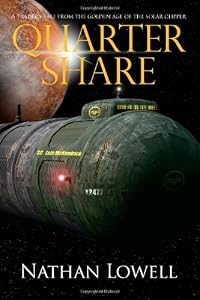
Quarter Share
by Nathan Lowell 
Trader's Tales From The Golden Age Of The Solar Clipper (1), Golden Age of the Solar Clipper (Trader Book 1)
On This Page
Description
What if we sent freighters instead of frigates? In a universe run by corporations, where profit matters more than life, how can an orphan with no skills, no money, and no prospects survive? When Ishmael Wang's mother dies in a senseless accident, he's given a choice: leave the planet on his own, or the company will remove him. To avoid deportation Ishmael finds work as a mess deck attendant on an interstellar freighter. Find out what Ishmael must do to earn his Quarter Share.Tags
Recommendations

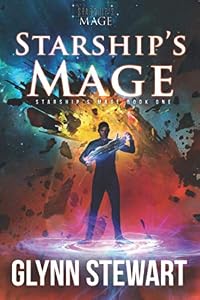


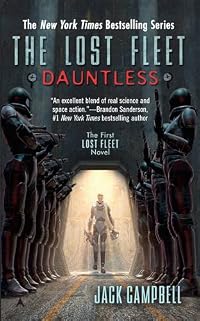

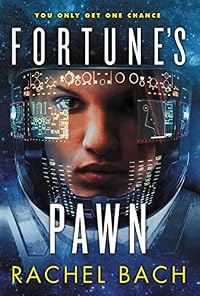


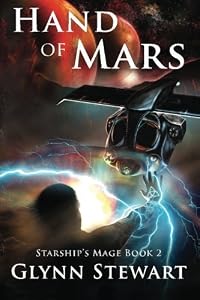



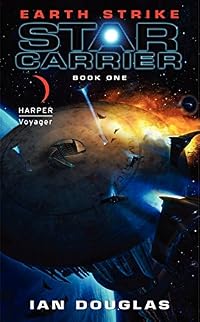

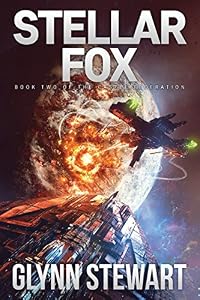
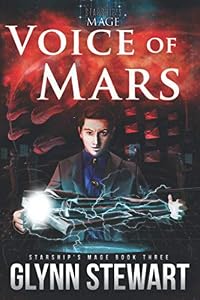
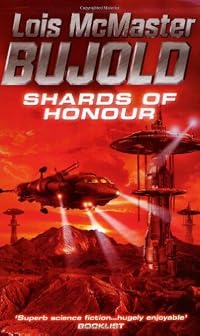


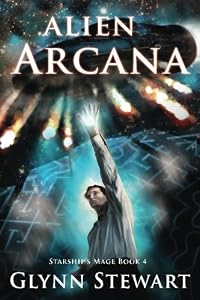
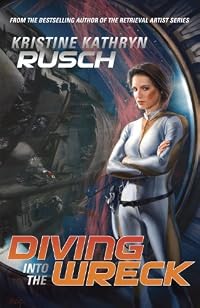
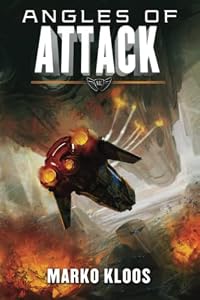
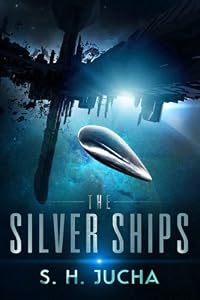

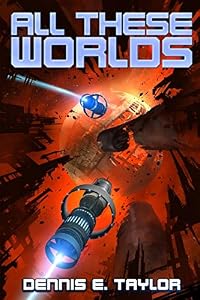


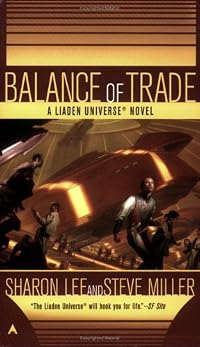
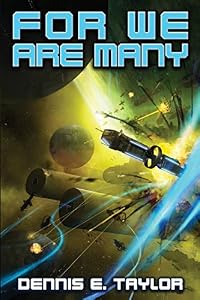
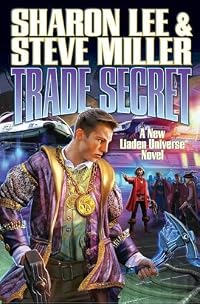

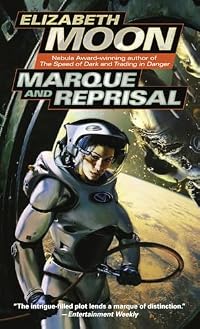


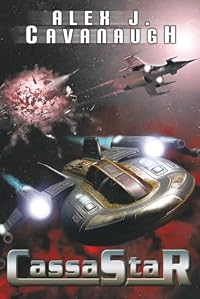




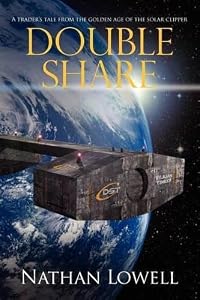

Member Recommendations

WabbitSeason Both are gentle, optimistic, character-driven space opera's
Member Reviews
No exploding spaceships, no rogue AIs. Just people doing their jobs. Good stuff.
Here is a coming of age space story: young Ishmael (yes, he does say ”call me Ishmael” to people) gets a berth on a trading ship after his mother dies in an accident.
Everyone onboard is really nice and helpful. The cook’s nickname is Cookie! Ishmael is very much into learning how to be competent, while his crew mates are busy being competent in various ways. Ishmael loves helping people and making their lives better. Everyone likes Ishmael. If I make everyone sound rather Mary Sue-ish, that’s because they are, and that’s all right.
There is a lot of logistics – ship life, drills, trading, coffee making (yes!)
”Ship board routine settled around us show more like a comfortable old sweater.”
I never imagined that reading about selling stuff at flea markets on space stations could be so nice, interesting and cozy.
”The gray-haired members of our merry band seemed to be having as much fun as the younger ones. The scene felt all the more surreal when I considered that in their real life, when not selling trinkets at a flea market, they sailed a deep space leviathan between the stars. It sounded romantic, but it wasn’t exciting because that was just their job.”
I read this book while having a very tough time. It was healing. show less
Here is a coming of age space story: young Ishmael (yes, he does say ”call me Ishmael” to people) gets a berth on a trading ship after his mother dies in an accident.
Everyone onboard is really nice and helpful. The cook’s nickname is Cookie! Ishmael is very much into learning how to be competent, while his crew mates are busy being competent in various ways. Ishmael loves helping people and making their lives better. Everyone likes Ishmael. If I make everyone sound rather Mary Sue-ish, that’s because they are, and that’s all right.
There is a lot of logistics – ship life, drills, trading, coffee making (yes!)
”Ship board routine settled around us show more like a comfortable old sweater.”
I never imagined that reading about selling stuff at flea markets on space stations could be so nice, interesting and cozy.
”The gray-haired members of our merry band seemed to be having as much fun as the younger ones. The scene felt all the more surreal when I considered that in their real life, when not selling trinkets at a flea market, they sailed a deep space leviathan between the stars. It sounded romantic, but it wasn’t exciting because that was just their job.”
I read this book while having a very tough time. It was healing. show less
NOTHING HAPPENS!!!
Lowell writes well enough in that his prose is clear and descriptive, the dialogue fairly believable, and the details he provides are realistic. But the main problem in this book is what isn't there. There's no technical challenge to be overcome, no character conflicts to be resolved, no crises to avert or endure, no internal angst to work through. The main character, Ishmael, does seize some opportunities to improve his lot and those of his shipmates. But that alone is not enough to carry a book of this (normal) size. Seriously, we are given in-depth descriptions of sandwich making! Furthermore, I was repeatedly struck by the internal question, "so, this is all the progress they've made in 300 years?" I was just show more underwhelmed at the level of technology in this story. I just don't see myself spending time to read any more in this series. show less
Lowell writes well enough in that his prose is clear and descriptive, the dialogue fairly believable, and the details he provides are realistic. But the main problem in this book is what isn't there. There's no technical challenge to be overcome, no character conflicts to be resolved, no crises to avert or endure, no internal angst to work through. The main character, Ishmael, does seize some opportunities to improve his lot and those of his shipmates. But that alone is not enough to carry a book of this (normal) size. Seriously, we are given in-depth descriptions of sandwich making! Furthermore, I was repeatedly struck by the internal question, "so, this is all the progress they've made in 300 years?" I was just show more underwhelmed at the level of technology in this story. I just don't see myself spending time to read any more in this series. show less
Oh, I like. Little or no conflict, no villains at all (even the "scary" characters are quite nice, if you're doing your best!), interesting universe and social structures. There are oddities, of the "discoverer of fire" sort - Ishmael has an awful lot of "new" thoughts that are pretty simple. Though he's not the trading genius, that's Pip - who's been skating along without pushing himself, until Ishmael connects with him and leads him to thinking in different ways. I do wonder if Duchamp or Lois is the odd ship - whether the Marcel Duchamp was a singularly nasty ship or the Lois M. is a particularly supportive and helpful one. I suppose we'll see later in the series. And things like - if they do grow mushrooms, what will they do with show more them? If every ship grows mushrooms, that station isn't going to be very happy with them. Ishmael seems a bit younger than his years in terms of sex - any implication of it leaves him blushing and running. But that's not particularly strange given his upbringing. The story was a lot of fun to read; the characters are great people to hang out with; and the whole thing makes me think and wonder about this universe. Next, please!
Reread - I do like Ish. He has a very logical mind - that looks around corners others don't see. Except when he (and Pip) totally miss the obvious - he's not some magical perfection. Nothing much happens in the entire book - his mother dies, he gets evicted and signs into a trading ship in an entry-level position. He settles in there (mostly making coffee!), tries some minor trading along with his colleague, ends up setting up a system so others on the ship can sell at the flea markets on each station. Aside from Pip getting mugged once, there's no danger and very little action - but the story is very rich in characters and quiet world-building. And of course I will now move on to the next book. show less
Reread - I do like Ish. He has a very logical mind - that looks around corners others don't see. Except when he (and Pip) totally miss the obvious - he's not some magical perfection. Nothing much happens in the entire book - his mother dies, he gets evicted and signs into a trading ship in an entry-level position. He settles in there (mostly making coffee!), tries some minor trading along with his colleague, ends up setting up a system so others on the ship can sell at the flea markets on each station. Aside from Pip getting mugged once, there's no danger and very little action - but the story is very rich in characters and quiet world-building. And of course I will now move on to the next book. show less
It's rare to encounter a book where there's really no tension or conflict. It's more rare when that's enjoyable. I'm going to binge the rest of this series in a bit of a feel-good sci-fi cleanse. Soon it will be back to grey characters and broken dreams. Alas.
My 4th reading is as good as the first. This is not exciting Science Fiction, but it is intriguing as we see a young man coming up with great ideas in rather small things and how he impacts those around him and how they impact him. It seems so true to life and leaves me with hope. Ish isn't heroic, but he has a good heart and that matters even out in the deep dark.
100% sweet. If you liked [b:Legends & Lattes|61242426|Legends & Lattes (Legends & Lattes, #1)|Travis Baldree|https://i.gr-assets.com/images/S/compressed.photo.goodreads.com/books/1654581271l/61242426._SY75_.jpg|94968745], I think I'd recommend this, despite there being absolutely no fantasy elements. There is, however, a lot of coffee. I mean, a lot. Urns and urns of it, as ship's mess attendants Ishmael and Pip (no joking, that's their names) bond, discovering teamwork and responsibility on their intergalactic freighter.
Told in first person, the voice feels congruent, if naïve. Ishmael is straightforward, earnest and smart, and he's a great vehicle to introduce the reader to the ship and crew. At times, he's so straightforward that he show more comes off as a much younger person than his eighteen years, but it could be defended or attributed to his being raised as an only child in a university-centered environment. The writing generally works for that voice, if a little simple. I read that this got its start as a podcast, which makes more sense.
Like Legends, world-building feels genre-standard and doesn't bring much new to the table. A lot of the details focus on the nitty-gritty of ship details, like the galley and the air supply section. I was fine with it. Be warned: I also am the sort of person that is content with 'hyperdrive' as an explanation for long-distance travel. What is surprisingly weak are the cultural changes that surely must have happened over a century or so. Substitute 'sar' for 'sir,' and 'stan' for 'hour' and you're about there. No food shifts. No cultural shifts with entertainment. Standard hierarchal ship structure. You get the idea. Like Legends, you'll have to be okay with 21st century culture for your sci-if.
There isn't much of a plot, just the adjustment to the people and shipboard life, but Lowell makes it entertaining nevertheless. If you are looking for gun battles, complex moral quandaries, or fighting the Earth corporations, look elsewhere. If you want a cup of coffee and an example on how to create a community, start here.
#10 in the deep space reads obsessively discussing warm drinks
I need a new genre name for this group of nice, uneventful books, and if you suggest cozy punk, I'll send you to your room with a thesaurus. show less
Told in first person, the voice feels congruent, if naïve. Ishmael is straightforward, earnest and smart, and he's a great vehicle to introduce the reader to the ship and crew. At times, he's so straightforward that he show more comes off as a much younger person than his eighteen years, but it could be defended or attributed to his being raised as an only child in a university-centered environment. The writing generally works for that voice, if a little simple. I read that this got its start as a podcast, which makes more sense.
Like Legends, world-building feels genre-standard and doesn't bring much new to the table. A lot of the details focus on the nitty-gritty of ship details, like the galley and the air supply section. I was fine with it. Be warned: I also am the sort of person that is content with 'hyperdrive' as an explanation for long-distance travel. What is surprisingly weak are the cultural changes that surely must have happened over a century or so. Substitute 'sar' for 'sir,' and 'stan' for 'hour' and you're about there. No food shifts. No cultural shifts with entertainment. Standard hierarchal ship structure. You get the idea. Like Legends, you'll have to be okay with 21st century culture for your sci-if.
There isn't much of a plot, just the adjustment to the people and shipboard life, but Lowell makes it entertaining nevertheless. If you are looking for gun battles, complex moral quandaries, or fighting the Earth corporations, look elsewhere. If you want a cup of coffee and an example on how to create a community, start here.
#10 in the deep space reads obsessively discussing warm drinks
I need a new genre name for this group of nice, uneventful books, and if you suggest cozy punk, I'll send you to your room with a thesaurus. show less
Unlike most space opera, this novel focuses not on heroes saving planets from galaxy-spanning schemes, but rather on ordinary people using hard work and cunning to overcome the challenges of life in multi-planetary civilisation. However, this is no thinly veiled polemic or economic treaty: the plot is engaging and characters are firmly at the forefront of the narrative.
The story revolves around Ishmael Horatio Wang, a teenager forced to leave his home planet when he is orphaned. Lacking both money and sought-after skills, his only option to avoid crippling debts from passage to another planet is to attempt to find work as an unskilled ship-hand, earning a mere quarter of a share of profits.
Although there is a form of fast interstellar show more travel, this story is very firmly set against a background of plausible physics and its ramifications. The immense cost of moving mass from planet to planet is most obviously highlighted in the strict personal cargo limits for ship-hands, with an increased cargo allowance being possibly a greater benefit of promotion than an actual pay-rise. However, it is also implicit in ground-bound society; the cost of locating habitable planets has made them commercial objects, many owned not by their inhabitants but by corporations.
The thread of plausible explanations continues in the characterisation. Ishmael’s growth from an orphan with little idea of his future to a respected ship-hand is achieved more through his constant attempts to better himself than through luck. This lack of a great destiny immediately makes him more sympathetic to the reader.
Lowell continues the theme of improvement over acceptance in the other characters: Ishmael is paired with Pip, another Quarter Share, as soon as he joins ship; however, Pip’s complacent attitude, whether in his duties or in personal dealings, has left him without either advancement or contingencies.
The risk of status quo thinking is even shown in insignificant events: before Ishmael is challenged to make a good cup of coffee, the crew assume ship’s coffee is always mediocre; afterward they not only expect good coffee, but also discuss their preferred bean.
Overall this theme of personal-exploration-as-a-good-in-itself gives the book a sense of possibility reminiscent of the earliest space opera, without needing the cowboys-in-space plot.
Although Lowell has created an engaging story which flows naturally from a combination of realistic world and solid characters, this is very much a story of normal people facing normal challenges; it might therefore not appeal to readers who come to science-fiction only for space battles and quirky aliens.
I enjoyed this novel immensely. I recommend it to all readers whether or not they usually read science-fiction. show less
The story revolves around Ishmael Horatio Wang, a teenager forced to leave his home planet when he is orphaned. Lacking both money and sought-after skills, his only option to avoid crippling debts from passage to another planet is to attempt to find work as an unskilled ship-hand, earning a mere quarter of a share of profits.
Although there is a form of fast interstellar show more travel, this story is very firmly set against a background of plausible physics and its ramifications. The immense cost of moving mass from planet to planet is most obviously highlighted in the strict personal cargo limits for ship-hands, with an increased cargo allowance being possibly a greater benefit of promotion than an actual pay-rise. However, it is also implicit in ground-bound society; the cost of locating habitable planets has made them commercial objects, many owned not by their inhabitants but by corporations.
The thread of plausible explanations continues in the characterisation. Ishmael’s growth from an orphan with little idea of his future to a respected ship-hand is achieved more through his constant attempts to better himself than through luck. This lack of a great destiny immediately makes him more sympathetic to the reader.
Lowell continues the theme of improvement over acceptance in the other characters: Ishmael is paired with Pip, another Quarter Share, as soon as he joins ship; however, Pip’s complacent attitude, whether in his duties or in personal dealings, has left him without either advancement or contingencies.
The risk of status quo thinking is even shown in insignificant events: before Ishmael is challenged to make a good cup of coffee, the crew assume ship’s coffee is always mediocre; afterward they not only expect good coffee, but also discuss their preferred bean.
Overall this theme of personal-exploration-as-a-good-in-itself gives the book a sense of possibility reminiscent of the earliest space opera, without needing the cowboys-in-space plot.
Although Lowell has created an engaging story which flows naturally from a combination of realistic world and solid characters, this is very much a story of normal people facing normal challenges; it might therefore not appeal to readers who come to science-fiction only for space battles and quirky aliens.
I enjoyed this novel immensely. I recommend it to all readers whether or not they usually read science-fiction. show less
Members
- Recently Added By
Lists

Favorite Series
238 works; 94 members

Books Read in 2023
5,547 works; 145 members

Books Read in 2025
4,091 works; 97 members

Space opera
8 works; 1 member

Books We Want To Read Again For The First Time
384 works; 160 members
Our Favorite Comfort Reads
334 works; 200 members

Books Read in 2026
1,796 works; 63 members
Author Information

31+ Works 3,200 Members
Nathan Lowell is a LibraryThing Author, an author who lists their personal library on LibraryThing.
Some Editions
Series


Work Relationships
Is contained in
Common Knowledge
- Canonical title
- Quarter Share
- Original publication date
- 2007-02
- People/Characters
- Ishmael Horatio Wang; Phillip Carstairs
- Important places
- SC Lois McKendrick
Classifications
Statistics
- Members
- 556
- Popularity
- 53,062
- Reviews
- 33
- Rating
- (3.79)
- Languages
- English
- Media
- Paper, Audiobook, Ebook
- ISBNs
- 3
- ASINs
- 10