On This Page
Description
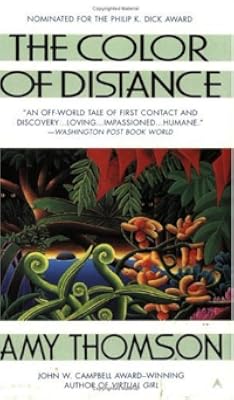
Juna is the sole survivor of a team of surveyors marooned in the dense and isolated Tendu rainforest, an uninhabitable world for humans. Her only hope for survival is total transformation--and terrifying assimilation--into the amphibian Tendu species. Now she speaks as they speak. She fears what they fear. And in surviving as they survive, Juna will come to fathom more about her own human nature than ever before...Tags
Recommendations












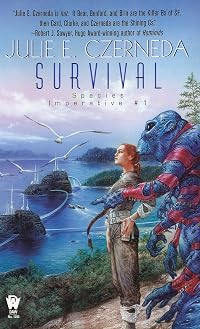






Member Recommendations

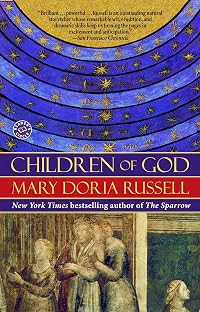
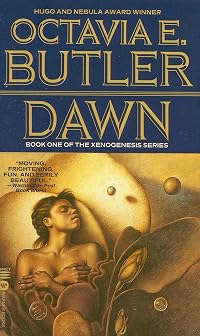
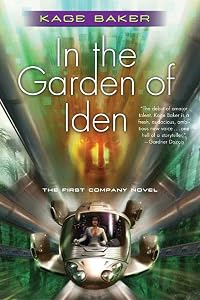
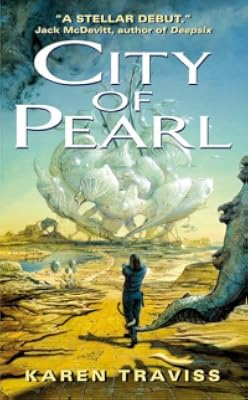
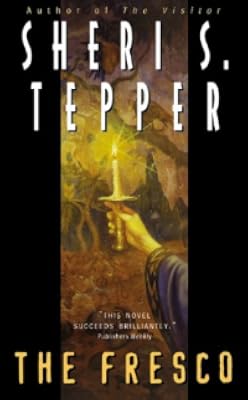
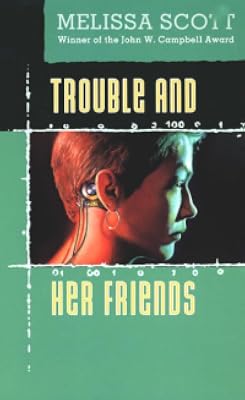
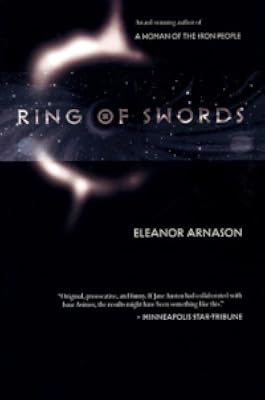
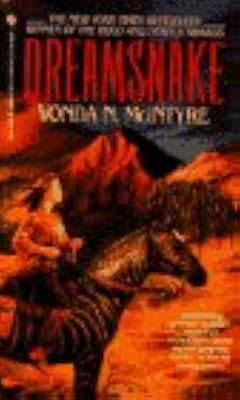
beyondthefourthwall Nuanced, memorable sci-fi with particular attention to ecology and questions of them-versus-us.
beyondthefourthwall Deeply character-driven sci-fi with particular care allotted to worldbuilding and major cross-species differences in culture, physiology, etc.
Member Reviews
The Color of Distance was one of the most compelling first contact stories I’ve come across. At first I was a bit skeptical, sure I would be getting a story that I’d seen a million times before. However, The Color of Distance won me over with it’s focus on characterization and underlying sense of optimism.
Juna is the only survivor of a crash landing of human surveyors on an uninhabitable world. Luckily for her she is found by three aliens who are able to keep her alive. However, she is now adrift and alone in a completely alien place and culture. Ani, one of the aliens who finds her, initially sees Juna as a burden and blames her for her mentor’s death.
The Color of Distance moves back and forth from Ani to Juna’s POV. At first show more this made the book hard to get into since you’re being plunged into an alien world through the perspective of an alien. There’s also quite a number of alien words that take a while to get used to. However, once I got through the first fifty pages, I was completely immersed and very glad that Thomson had chosen to show us both a human and an alien as our protagonists. The Color of Distance is a story about two groups and cultures coming into contact and trying to figure out a path for the future. For that story to work, you really need to see and understand both sides.
Characterization is what drives The Color of Distance. Both Ani (and the other aliens) and Juna change and grow throughout the course of the book. At first, neither really understands the other. Ani thinks of Juna as a “strange creature” and Juna seems to think of the aliens as something to be studied rather than people to relate to. Yet both come to learn more about each other, and it was wonderful to see a friendship grow between them.
There’s also a strong environmental theme to The Color of Distance. The Tendu (the alien species) live in a dense rain forest, and they are very concerned with keeping the natural environment and ecosystems in balance. I was pretty cynical of this at first, since “nature loving aliens” versus the “destructive and out of touch humans” is a story that I’ve seen before (ex. James Cameron’s Avatar). I predicted that when the humans showed up again, they’d start destroying the environment, there’d be a violent conflict, and Juna would have to chose sides! However, The Color of Distance preferred a more optimistic path. Juna and the other humans might not understand much at first, but they have good intentions and do seek to have a peaceful and prosperous relationship with the Tendu.
At first I was also a bit wary of how well the aliens would be pulled off, but I ended up being very impressed. The Tendu are sort of amphibians, similar to frogs, and their culture ties into their biology and life cycle. The most interesting thing is probably how their skin shifts colors according to their emotions. They are also able to produce patterns and symbols on their skin, which is the basis for their language. Thus, the method of communication also provides an obstacle the humans and Tendu most circumvent to understand one another.
I think The Color of Distance is a crucially unappreciated science fiction novel. It is one of the best first contact stories I’ve read, and it really deserves a wider audience. I’d suggest it for you if you like alien cultures, stories of survival and a sense of optimism in your science fiction.
Originally posted on The Illustrated Page. show less
Juna is the only survivor of a crash landing of human surveyors on an uninhabitable world. Luckily for her she is found by three aliens who are able to keep her alive. However, she is now adrift and alone in a completely alien place and culture. Ani, one of the aliens who finds her, initially sees Juna as a burden and blames her for her mentor’s death.
The Color of Distance moves back and forth from Ani to Juna’s POV. At first show more this made the book hard to get into since you’re being plunged into an alien world through the perspective of an alien. There’s also quite a number of alien words that take a while to get used to. However, once I got through the first fifty pages, I was completely immersed and very glad that Thomson had chosen to show us both a human and an alien as our protagonists. The Color of Distance is a story about two groups and cultures coming into contact and trying to figure out a path for the future. For that story to work, you really need to see and understand both sides.
Characterization is what drives The Color of Distance. Both Ani (and the other aliens) and Juna change and grow throughout the course of the book. At first, neither really understands the other. Ani thinks of Juna as a “strange creature” and Juna seems to think of the aliens as something to be studied rather than people to relate to. Yet both come to learn more about each other, and it was wonderful to see a friendship grow between them.
There’s also a strong environmental theme to The Color of Distance. The Tendu (the alien species) live in a dense rain forest, and they are very concerned with keeping the natural environment and ecosystems in balance. I was pretty cynical of this at first, since “nature loving aliens” versus the “destructive and out of touch humans” is a story that I’ve seen before (ex. James Cameron’s Avatar). I predicted that when the humans showed up again, they’d start destroying the environment, there’d be a violent conflict, and Juna would have to chose sides! However, The Color of Distance preferred a more optimistic path. Juna and the other humans might not understand much at first, but they have good intentions and do seek to have a peaceful and prosperous relationship with the Tendu.
At first I was also a bit wary of how well the aliens would be pulled off, but I ended up being very impressed. The Tendu are sort of amphibians, similar to frogs, and their culture ties into their biology and life cycle. The most interesting thing is probably how their skin shifts colors according to their emotions. They are also able to produce patterns and symbols on their skin, which is the basis for their language. Thus, the method of communication also provides an obstacle the humans and Tendu most circumvent to understand one another.
I think The Color of Distance is a crucially unappreciated science fiction novel. It is one of the best first contact stories I’ve read, and it really deserves a wider audience. I’d suggest it for you if you like alien cultures, stories of survival and a sense of optimism in your science fiction.
Originally posted on The Illustrated Page. show less
Juna Saari is a xenobiologist surveying the rain forest on a new planet whose job changes drastically when her flyer crashes and she is rescued by the local sentients, who have been staying out of the way of the human visitors. The native Tendu have an astonishing innate talent for biotechnological manipulation, and helpfully rescue her from a fatal allergic reaction to the planet’s native proteins by adapting her to local life. This begins a five year odyssey for her among the Tendu, whose biology is similar to terrestrial frogs and who communicate through chromatophores in their skin with the adeptness of a cuttlefish. Juna is embroiled in everything from the ecology to the local politics.
Once you suspend disbelief on the magical show more biotech abilities of the Tendu, the tale is a fine work of ecological hard SF, with believably alien creatures and culture and a vivid depiction of the alien rainforest. (In the author’s note at the end, Thomson gives a bibliography of books on the terrestrial rainforests that served as inspiration for her writing.) show less
Once you suspend disbelief on the magical show more biotech abilities of the Tendu, the tale is a fine work of ecological hard SF, with believably alien creatures and culture and a vivid depiction of the alien rainforest. (In the author’s note at the end, Thomson gives a bibliography of books on the terrestrial rainforests that served as inspiration for her writing.) show less
This is a fantastic first contact novel. The alien culture was truly alien--not just some projection of some aspect of current Earth cultures as is the case in almost every book about aliens I've ever read. Amy has truly created a race distinct from humans and based on a realistic interaction with the environment based on sound evolutionary principles. And to top it off, a completely unique and wonderful linguistic system! Additionally, the book was amoral. It did not take sides and mark any practice as "evil" or "good," though it did realistically show how people in each race (human or tendu) may interpret various practices that way. It was very refreshing to see an alien civilization that is not a human- with-a- bumpy- forhead type. show more The many interesting twists on first contact were also appreciated--the human turned alien, the alien tendu turning the tables on the arrogant humans (who assumed they had to protect the tendu from them), the hero's realism (she wasn't a superhero but did manage to persevere), etc. show less
Two points ruined for me what was otherwise a very good book.
The first wasn't a huge deal, but kind of irritated me throughout the novel. It's not really a spoiler to the story because it is mentioned a single time and never mentioned or addressed again, and it has little to do with the plot of the novel. The protagonist recalls the fact that she was gang raped by 5 older children when she was 8 years old. That's a rather huge bomb to drop and then do absolutely nothing with. I get that the author used it as a device to explain why she was scared of linking with the aliens or whatever, but it just felt wholly unnecessary and out of place in the story.
The second point, the thing that kind of ruined the whole book for me happens near the show more very end of the novel, and is a spoiler to how things turn out:She gets turned back into a human in the end. This just bums me out. The reason why this novel is interesting to me is her change, and the option to turn back to fully human is not even brought up a single time until the very end, and then it abruptly happens. She gives up mind/healing superpowers just so she can bang some dude and enjoy sitcoms again. I mean it's just lame. I couldn't even read the last chapter or so, I became so apathetic to the story at that point. Reading her alien friend likening humans having sex to their insane mind melding superpowers was just so freaking trite and annoying. show less
The first wasn't a huge deal, but kind of irritated me throughout the novel. It's not really a spoiler to the story because it is mentioned a single time and never mentioned or addressed again, and it has little to do with the plot of the novel. The protagonist recalls the fact that she was gang raped by 5 older children when she was 8 years old. That's a rather huge bomb to drop and then do absolutely nothing with. I get that the author used it as a device to explain why she was scared of linking with the aliens or whatever, but it just felt wholly unnecessary and out of place in the story.
The second point, the thing that kind of ruined the whole book for me happens near the show more very end of the novel, and is a spoiler to how things turn out:
Survey biologist Juna Saari is left for dead on an alien planet after her team's flyer crashes into the jungle. She is rescued by the previously unknown sentient aliens known as Tendu, but only through their extreme medical intervention. Although she contacts her spaceship through radio, they will not be able to return for her for five years - for the meantime, she's stranded, and must learn to adapt and survive in an alien culture.
Sometimes slow-moving, the book is more concerned with the rich cultural details of the humanoid but frog-like Tendu than with action-adventure scenes. Based on the author's visits to the rainforests of Costa Rica, the arboreal and community-oriented lifestyle of the aliens really comes alive.
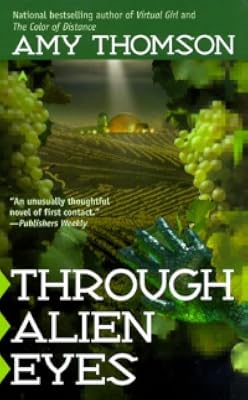
In the sequel, show more Through Alien Eyes, Survey returns for Juna, accompanied by a horde of politically-motivated researchers and experts excited to make contact with this new species. Returning to human civilization with two Tendu ambassadors, Juna must navigate treacherous waters to maintain her suddenly-precarious position as bridge between two cultures. Not just culture shock, but legal battles ensue.
In both books, Thompson uses the contrast between the Tendu and humanity to discuss the importance of ecology, issues of population control, and the importance of harmony and balance. There are a few preachy moments, but overall the 'message' is not too overt. Although humanity is shown to have problems, there is a hopeful outlook - and the Tendu are not perfect either. Rather, both cultures are shown to have things to learn from the other.
Recommended for fans of Sheri Tepper. show less
Sometimes slow-moving, the book is more concerned with the rich cultural details of the humanoid but frog-like Tendu than with action-adventure scenes. Based on the author's visits to the rainforests of Costa Rica, the arboreal and community-oriented lifestyle of the aliens really comes alive.
In the sequel, show more Through Alien Eyes, Survey returns for Juna, accompanied by a horde of politically-motivated researchers and experts excited to make contact with this new species. Returning to human civilization with two Tendu ambassadors, Juna must navigate treacherous waters to maintain her suddenly-precarious position as bridge between two cultures. Not just culture shock, but legal battles ensue.
In both books, Thompson uses the contrast between the Tendu and humanity to discuss the importance of ecology, issues of population control, and the importance of harmony and balance. There are a few preachy moments, but overall the 'message' is not too overt. Although humanity is shown to have problems, there is a hopeful outlook - and the Tendu are not perfect either. Rather, both cultures are shown to have things to learn from the other.
Recommended for fans of Sheri Tepper. show less
i adore this book. the alien culture and biology is well-realized, as is the human tech. i especially love the idea that we are violently allergic to alien biology. (it may be the only time i've seen it in a novel, even though it seemed like an obvious choice after i thought about it.) my big disappointment is that the promised third book doesn't exist.
I first read this book in middle school and have been trying to get my hands on it ever since. Having purchased it online and reread it instantly, I can confirm that this is one of my most favorite books. The world of the Tendu is painted so clearly that I actually smelled the forest, tasted the fruit, felt the allu'a. A lot of concepts in the book (connecting to each other and the world via allu'a, a human partly transforming into an alien body) remind me so much of James Cameron's Avatar that at some points I had the sneaking suspicion that perhaps Cameron used aspects of this book as an inspiration.
Members
- Recently Added By
Lists

Favorite Science Fiction by Women Authors
741 works; 203 members

Best Feminist Science Fiction
188 works; 35 members

Top Five Books of 2021
604 works; 181 members

Favorite Science Fiction
457 works; 221 members
Talk Discussions
Past Discussions
SciFi - A woman is stranded on an alien forest planet... in Name that Book (September 2010)
Author Information
7+ Works 938 Members
Some Editions
Awards and Honors
Awards
Distinctions
Series

Common Knowledge
- People/Characters
- Juna
- Blurbers
- McIntyre, Vonda N.; Gentle, Mary
Classifications
Statistics
- Members
- 411
- Popularity
- 75,765
- Reviews
- 9
- Rating
- (4.13)
- Languages
- English
- Media
- Paper
- ISBNs
- 3
- ASINs
- 1