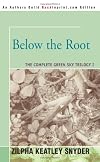
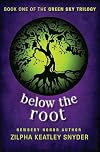
On This Page
Description
Chosen to become one of a group of civil and religious leaders ruling the land of Green-Sky, thirteen-year-old Raamo's experiences make him question their teachings and lead him to uncover age-old deceptions.Tags
Recommendations






















Member Recommendations
beyondthefourthwall Nuanced, memorable sci-fi with particular attention to ecology and questions of them-versus-us.
Member Reviews
Having passed an idyllic childhood in the treetop city or Orbora, the greatest of the seven cities of Green-sky, Raamo considered himself an ordinary Kindar. So it was with astonishment that he learned, at age thirteen, that he had been selected as one of the Chosen—one of only two Kindar children picked each year—destined to become a member of the priestly Ol-zhaan. This surprise was as nothing, however, when he learned from a young Ol-zhaan novitiate named Dol'Neric that all was not well within the order, and within Green-sky in general. For the Spirit skills, long the glory of the Kindar, were waning amongst the people; and the enchanted vine known as Wissenroot, which covered the forest floor far below their arboreal show more civilization, keeping the monstrous underground Pash-shan at bay, was fading. What could Raamo and Neric do about these great evils? Would they be able to discover what role the mysterious Ol-zhaan secret society known as the Geets-kel had to play in all this, and would Genaa, Raamo's fellow Chosen that year, be an ally or an enemy...?
The first of author Zilpha Keatley Snyder's Green Sky Trilogy—subsequent titles are And All Between and Until the Celebration—Below the Root was first published in 1975, and originated in the imaginative play of two characters in her prior non-fantasy children's novel, The Changeling. The "Green Sky" game played by Martha and Ivy, in that earlier book (published in 1970), also concerned an arboreal civilization beset by evil monsters, and was clearly the seed from which the fully fantastic trilogy grew. While there are key differences between the made-up "Green Sky" of The Changeling and the "real" one in the trilogy, and while it is by no means necessary to have read that earlier book to appreciate the trilogy, I find the connections immensely meaningful, as the earlier book is one of my favorites of all time, and is one I read and reread as a girl. How unfortunate that I did not know of this series at that time, or it might also have been a childhood favorite! It's interesting to note that many other readers discovering this series for the first time as adults approach it through the lens of having played the Below the Root video game, which featured an adventure written by Zilpha Keatley Snyder herself, and which is considered part of Green Sky canon.
Leaving all of that aside, this is an immensely engaging and deeply moving work of fantasy/science fiction for young readers. I have read it once before, but recently reread it, for a group read of the series that I am conducting with friends, and it certainly stood the test of time, and the trial of a reread. I love pretty much everything about it, from the world building—the arboreal life of the Kindar is so magical, and the songs and rituals they use to promote peace and joy within themselves and their society, so beautiful—to the vocabulary and the way it is introduced—sometimes Snyder will explain what a word means, but sometimes she will let the reader figure it out—to the emotional depth of the characters—particularly Raamo's self-reflection and Genaa's deeply buried and unexpressed sorrow and rage at the death of her father at the hands of the Pash-shan—to the story itself. The idea of creating a human civilization free of violence is intriguing, as is the sorrow of discovering that utopias are so frequently built using far from utopian means. I have seen this compared to more contemporary works of dystopian fiction, such as The Hunger Games and Divergent, but of course this came far before those works, and was quite groundbreaking in its day. It differs from such stories in this key regard, which only raises my esteem for it: namely, that it understands the central role of religion to all human societies, and it explores the beauty and power of such belief systems for the believer, as well as the all-too-frequent corruption of those who are in charge of such systems.
Although written in the 1970s, and a product of its time in many ways—the peace and joy and love of the Kindar civilization feels like the fulfillment of the hippie dream, in some sense—in other ways it feels oddly current. I was struck, during this reread, by the parallels between the Kindar civilization and social and political progressives in the western world in this present day. The way in which they both structure their beliefs around ideas of care, benevolence, the avoidance of causing harm; and the way both are built on the suppression of those who have expressed disagreement with them, the ways in which those others are demonized and made into monsters. The parallel truly astonished me, as I read how the Pash-shan haunted the dreams of Raamo and his Kindar brethren, and then thought of the many people I have encountered in this day and age, who are so constantly fixated upon those with whom they disagree, those whom they revile and fear.
As if this strength of storytelling—the ideas expressed and explored, the beautiful language of the text itself, the engrossing character studies, the fascinating world-building—weren't enough, this book is also greatly improved by the gorgeous artwork of illustrator Alton Raible. I understand that many paperback and ebook editions of this title are lacking these beautifully intricate pencil drawings, and that is a great shame, for they add to and complement the sense of magic and mystery to be found throughout. Raible worked on eleven of Zilpha Keatley Snyder's books, and his artwork is always worth looking at, poring over, and enjoying. It's a shame that he doesn't seem to have done any other work within the book world, but the drawings he did for Snyder are certainly an impressive body of work! It's well worth seeking out the original edition of this book, for the sake of this artwork.
In any case, to offer such wonderful storytelling, and to have such powerful social and intellectual relevance, almost fifty years after its publication, speaks to this book's staying power, and to its brilliance. I highly recommend it to any young (or older) reader who enjoys fantasy, science fiction, dystopian fiction, or just thoughtful fiction in general. For my part, I cannot wait to reread the next installment of the series. show less
The first of author Zilpha Keatley Snyder's Green Sky Trilogy—subsequent titles are And All Between and Until the Celebration—Below the Root was first published in 1975, and originated in the imaginative play of two characters in her prior non-fantasy children's novel, The Changeling. The "Green Sky" game played by Martha and Ivy, in that earlier book (published in 1970), also concerned an arboreal civilization beset by evil monsters, and was clearly the seed from which the fully fantastic trilogy grew. While there are key differences between the made-up "Green Sky" of The Changeling and the "real" one in the trilogy, and while it is by no means necessary to have read that earlier book to appreciate the trilogy, I find the connections immensely meaningful, as the earlier book is one of my favorites of all time, and is one I read and reread as a girl. How unfortunate that I did not know of this series at that time, or it might also have been a childhood favorite! It's interesting to note that many other readers discovering this series for the first time as adults approach it through the lens of having played the Below the Root video game, which featured an adventure written by Zilpha Keatley Snyder herself, and which is considered part of Green Sky canon.
Leaving all of that aside, this is an immensely engaging and deeply moving work of fantasy/science fiction for young readers. I have read it once before, but recently reread it, for a group read of the series that I am conducting with friends, and it certainly stood the test of time, and the trial of a reread. I love pretty much everything about it, from the world building—the arboreal life of the Kindar is so magical, and the songs and rituals they use to promote peace and joy within themselves and their society, so beautiful—to the vocabulary and the way it is introduced—sometimes Snyder will explain what a word means, but sometimes she will let the reader figure it out—to the emotional depth of the characters—particularly Raamo's self-reflection and Genaa's deeply buried and unexpressed sorrow and rage at the death of her father at the hands of the Pash-shan—to the story itself. The idea of creating a human civilization free of violence is intriguing, as is the sorrow of discovering that utopias are so frequently built using far from utopian means. I have seen this compared to more contemporary works of dystopian fiction, such as The Hunger Games and Divergent, but of course this came far before those works, and was quite groundbreaking in its day. It differs from such stories in this key regard, which only raises my esteem for it: namely, that it understands the central role of religion to all human societies, and it explores the beauty and power of such belief systems for the believer, as well as the all-too-frequent corruption of those who are in charge of such systems.
Although written in the 1970s, and a product of its time in many ways—the peace and joy and love of the Kindar civilization feels like the fulfillment of the hippie dream, in some sense—in other ways it feels oddly current. I was struck, during this reread, by the parallels between the Kindar civilization and social and political progressives in the western world in this present day. The way in which they both structure their beliefs around ideas of care, benevolence, the avoidance of causing harm; and the way both are built on the suppression of those who have expressed disagreement with them, the ways in which those others are demonized and made into monsters. The parallel truly astonished me, as I read how the Pash-shan haunted the dreams of Raamo and his Kindar brethren, and then thought of the many people I have encountered in this day and age, who are so constantly fixated upon those with whom they disagree, those whom they revile and fear.
As if this strength of storytelling—the ideas expressed and explored, the beautiful language of the text itself, the engrossing character studies, the fascinating world-building—weren't enough, this book is also greatly improved by the gorgeous artwork of illustrator Alton Raible. I understand that many paperback and ebook editions of this title are lacking these beautifully intricate pencil drawings, and that is a great shame, for they add to and complement the sense of magic and mystery to be found throughout. Raible worked on eleven of Zilpha Keatley Snyder's books, and his artwork is always worth looking at, poring over, and enjoying. It's a shame that he doesn't seem to have done any other work within the book world, but the drawings he did for Snyder are certainly an impressive body of work! It's well worth seeking out the original edition of this book, for the sake of this artwork.
In any case, to offer such wonderful storytelling, and to have such powerful social and intellectual relevance, almost fifty years after its publication, speaks to this book's staying power, and to its brilliance. I highly recommend it to any young (or older) reader who enjoys fantasy, science fiction, dystopian fiction, or just thoughtful fiction in general. For my part, I cannot wait to reread the next installment of the series. show less
(For the whole trilogy): A utopian future on a planet with lowered gravity, psychic abilities, and naturally abundant food – what could be better? I read these books repeatedly as a kid, and still love them today. Of course, the utopia cracks under the pressure of the secrets it is keeping, and courageous children must save the day. The trilogy is a surprisingly sophisticated analysis of utopian ideals, for books aimed at children. The cultures that evolved on this planet are well-reasoned extensions of their histories, and the overall story is believable, given the premise. Plus, people get to fly and sleep in nests.
Oh, my. I do so love this book. A pastoral society lives in the trees on lovely Green-Sky, a planet with low gravity. This is important, because the inhabitants can, with the help of their winged garments, glide from tree path to tree path.
Raamo, at the time of his coming of age, finds himself named to the Ol-zhaan, the company of wise ones that rule Green-Sky. He does not understand the appointment, because he feels he is nothing very special. But it seems Raamo still has a vestige of the psycho-kenetic powers of his ancestors. This power is badly needed because the enchanted Root that separates the Kindar from the monsters below is starting to wither away.
Snyder weaves a wonderful world on Green-Sky, and we find our way through the show more machinations of the politicians (oh, yes, they are everywhere!) through the wise and naive eyes of a young boy. show less
Raamo, at the time of his coming of age, finds himself named to the Ol-zhaan, the company of wise ones that rule Green-Sky. He does not understand the appointment, because he feels he is nothing very special. But it seems Raamo still has a vestige of the psycho-kenetic powers of his ancestors. This power is badly needed because the enchanted Root that separates the Kindar from the monsters below is starting to wither away.
Snyder weaves a wonderful world on Green-Sky, and we find our way through the show more machinations of the politicians (oh, yes, they are everywhere!) through the wise and naive eyes of a young boy. show less
I dunno. I do like other works by Snyder, but this seemed awkward - like she concentrated on the ideas instead of the writing. The ideas were wonderful, though - what would it be like to live in a society where the curriculum in school (ages 2-12) emphasized course in Peace, in Joy, and in Love? What would it be like to have no books of your own, no lending libraries? To have songs and chants for every occasion, including at least three that are performed every day in every family? To be assigned a career at age 13? Not to mention, to live in the trees, and never touch the ground?
This is first of a trilogy, and as usual the world-building and the introduction of the characters is the focus here. The true adventure starts about 1/2 way show more through. I can guess what the other two books will be about, and since I neither own them nor can I get them from my library system, I will not continue. show less
This is first of a trilogy, and as usual the world-building and the introduction of the characters is the focus here. The true adventure starts about 1/2 way show more through. I can guess what the other two books will be about, and since I neither own them nor can I get them from my library system, I will not continue. show less
"Those suffering from “Hunger Games” withdrawal might find some relief in Green-sky. Snyder creates a futuristic world in which the Kindar live and glide among the trees, never touching the forest floor for fear of the dreaded Pash-shan. Except for th...moreThose suffering from “Hunger Games” withdrawal might find some relief in Green-sky. Snyder creates a futuristic world in which the Kindar live and glide among the trees, never touching the forest floor for fear of the dreaded Pash-shan. Except for this one thing, life is Peaceful and Joyous due to the fact that Earth’s violence has been systematically forgotten over the centuries. But, what are the Pash-shan, really? Is it a good thing to keep everyone in the dark about show more their origin? Is the vine that keeps the Kindar safe from Pash-shan withering? Our hero will have to find out what secrets are being kept from himself and the rest of his people. This is only the first book of the trilogy, but I am completely hooked. show less
The Zilpha Keatly Snyder went up the waterspout.... Just had to get that out of my systemBought Below the Root and And All Between for Madison from the used bookshop in Napanee over Christmas, and reread them both while I was there. Wish they'd had Until the Celebration; the trilogy needs an ending.I can't have been much older than Madison when I read them last. 20 years ago? I remembered them vividly. I was a little surprised to find out that they read very much like my memories of them. Often when I reread childhood favourites I find that my imagination filled in details that I remember as if I'd read them, but can't find within the printed pages. Like, well, I can't find an example, but I know it has happened, books that seem so show more _thin_ on reread.But these were very like. Only my perspectives had changed. An interesting comparison with Pamela Dean's Dubious Hills; both are about societies restructured by some long-ago cabal in an attempt to eliminate the potential for violence. There's an unusual theme.. show less
I read this book as a child and recently reread it. The beauty of the setting had really stayed with me. The people can fly! Well, glide anyway. There was even a little video game made after this book for the Commodore 64 which I played a bit.
If you love reading about alien societies and worlds then this book will be a treat for you. Some reviews I've read complain about the use of exposition in this book but I the explanations. It takes an amazing author to write a gripping and beautiful story without the use of violence.
If you love reading about alien societies and worlds then this book will be a treat for you. Some reviews I've read complain about the use of exposition in this book but I the explanations. It takes an amazing author to write a gripping and beautiful story without the use of violence.
Members
- Recently Added By
Lists

Favorite Childhood Books
1,602 works; 516 members
1001 Children's Books You Must Read Before You Grow Up
774 works; 101 members

Childhood Favorites
427 works; 24 members

Elevenses
316 works; 88 members

Favourite Books
1,817 works; 316 members

Underground/dome to outside - children's/YA science fiction/fantasy
67 works; 7 members

Top Five Books of 2023
767 works; 317 members

Book Worlds We'd Like To Visit
322 works; 158 members

EGBERTINA'S List of childhood books worthy of merit or unspeakable delight
155 works; 6 members

Favorite Kids Books (chapter, middle grade)
168 works; 4 members

Books We Loved As Children
603 works; 252 members
Author Information

51+ Works 14,975 Members
Zilpha Keatley Snyder was born in Lemoore, California on May 11, 1927. She received a B.A. from Whittier College in 1948. While ultimately planning to be a writer, after graduation she decided to teach school temporarily. However, she found teaching to be an extremely rewarding experience and taught in the upper elementary grades for a total of show more nine years. After all of her children were in school, she began to think of writing again. Her first book, Season of Ponies, was published in 1964. She wrote more than 40 books during her lifetime including The Trespassers, Gib Rides Home, Gib and the Gray Ghost, and William's Midsummer Dreams. She has won numerous awards including three Newbery Honor books for The Egypt Game, The Headless Cupid and The Witches of Worm and the 1995 John and Patricia Beatty Award for Cat Running. She died of complications from a stroke on October 08, 2014 at the age of 87. (Bowker Author Biography) show less
Some Editions
Awards and Honors
Awards
Series

Work Relationships
Is contained in
Common Knowledge
- Canonical title
- Below the Root
- Original publication date
- 1975
- People/Characters
- Raamo D'ok; Pomma D'ok; Hearba D'ok; Valdo D'ok; Genaa D'anhk; D'ol Neric (show all 9); D'ol Falla; D'ol Regle; Teera Eld
- Important places
- Green-sky
- Dedication
- To the Kindar
- First words
- Seeking a place to be alone, to think and reason and attend to the strange pounding of his heart, Raamo climbed high, until he could almost touch the fronds of the rooftrees.
- Last words
- (Click to show. Warning: May contain spoilers.)"I dreamed of a promise that has always been, and always will be."
Classifications
- Genres
- Fiction and Literature, Fantasy, Young Adult
- DDC/MDS
- 813.4 — Literature & rhetoric American literature in English American fiction in English Later 19th Century 1861-1900
- LCC
- PZ7 .S68522 .B — Language and Literature Fiction and juvenile belles lettres Fiction and juvenile belles lettres Juvenile belles lettres
- BISAC
Statistics
- Members
- 330
- Popularity
- 95,795
- Reviews
- 10
- Rating
- (4.27)
- Languages
- English
- Media
- Paper, Ebook
- ISBNs
- 6
- ASINs
- 2