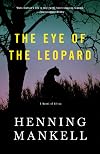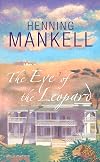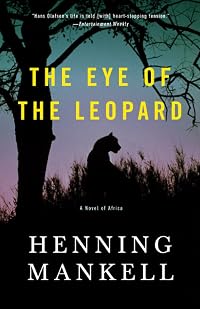
The Eye of the Leopard
by Henning Mankell
On This Page
Description
Arriving in newly independent Zambia in the hopes of fulfilling a friend's missionary dream, Hans Olofson endeavors to make Africa his home while struggling with such past demons as his father's alcoholism and a friend's accident.Tags
Recommendations

























Member Reviews
Jumping between Hans Olofson's Swedish childhood in Norrland and adult life in Mutshatsha, Africa, Eye of the Leopard depresses its reader with hopelessness and failure. Hans tries to escape memories of a father driven to drink out of loneliness and a series of personal tragedies by embarking on the quest that once belonged to a now deceased girlfriend. Janine wanted to see the mission station and grave of a legendary missionary, but as a 25 year old white European, Hans is confronted with grim realities. Janine's dream is not his to obtain. Not only is he sorely out of place due to ignorance, his skin color is monumentally hated. A series of abandonments haunt him: his father left him for the bottle, Janine died, his best friend show more disowned him, and his mother just plain vanished when he was a small child. Sweden was a mediocre existence; an ultimate dead end. Even Africa is not what he envisioned for himself. Despite being ready to leave as soon as he arrives, Olofson takes a job on an egg farm. His own actions confound him. While Africa gives him a clean slate from everyone who deserted him and every failure he experienced in Norrland, he can't imagine calling a place like Africa home.
The title of the novel comes from Olofson's obsessive hallucination of a leopard in the African bush. The leopard comes to be symbolic of everything Olofson can't escape. show less
The title of the novel comes from Olofson's obsessive hallucination of a leopard in the African bush. The leopard comes to be symbolic of everything Olofson can't escape. show less
Un Mankell "fuori serie", nel senso di fuori dalla conosciutissima serie del commissario Wallander, ma fuori serie anche per la bellezza e la profondità del romanzo, che intreccia eventi avvenuti durante l'infanzia del protagonista, figlio di un uomo che combatte i suoi demoni (la rinuncia al mare, l'allontanamento della moglie) mediante una scientifica ubriachezza, con il suo essersi, da adulto, arenato in Africa all'inseguimento di un desiderio altrui e del tentativo di calmare un senso di colpa macroscopico.
Gli serviranno 20 anni di lavoro, malaria, di testimonianza di violenze inaudite, e, soprattutto, dover commettere due omicidi, per rendersi conto che nonostante tutto l'Africa non ha fatto di lui un uomo migliore e che deve show more tornare alla terra a cui appartiene e a desiderare per se stesso qualcosa di suo.
Magnifico.
An 'off-standard' Mankell in the sense of outside the well-known Commissioner Wallander's series, but out of the ordinary also for the beauty and depth of the novel, which interlaces the events that took place during the childhood of the protagonist, son of a man fighting his Demons (the renunciation to the sea, the estrangement of his wife) through a scientific drunkenness, with his being, as grown up, stranded in Africa in pursuit of someone else's desire and the attempt to calm a sense of macroscopic guilt.
He'll need 20 years of work, malaria, to testify to of unprecedented violence, and, above all, having to commit two murders to realize that despite everything Africa has not made him a better man and he has to return to the land to which he belongs and to wish for himself something of his own.
Magnificent. show less
Gli serviranno 20 anni di lavoro, malaria, di testimonianza di violenze inaudite, e, soprattutto, dover commettere due omicidi, per rendersi conto che nonostante tutto l'Africa non ha fatto di lui un uomo migliore e che deve show more tornare alla terra a cui appartiene e a desiderare per se stesso qualcosa di suo.
Magnifico.
An 'off-standard' Mankell in the sense of outside the well-known Commissioner Wallander's series, but out of the ordinary also for the beauty and depth of the novel, which interlaces the events that took place during the childhood of the protagonist, son of a man fighting his Demons (the renunciation to the sea, the estrangement of his wife) through a scientific drunkenness, with his being, as grown up, stranded in Africa in pursuit of someone else's desire and the attempt to calm a sense of macroscopic guilt.
He'll need 20 years of work, malaria, to testify to of unprecedented violence, and, above all, having to commit two murders to realize that despite everything Africa has not made him a better man and he has to return to the land to which he belongs and to wish for himself something of his own.
Magnificent. show less
Seeking a nostalgic look at colonial rule. Forget it.
A young clueless working class Swede becomes middle-aged, somewhat knowledgeable Swedish-African egg farmer (tens of thousands of chickens) struggling (at first) to rule benevolently over hundreds of African workers. Mankell details the workings of a tiered society and how it must fail violently. He focuses on the whites, but a few Africans become recognizable as humans in the mass of local peoples: one westernized, two or three not. Writing is powerful. Story is hopeless, so don't expect to feel uplifted at the end.
A young clueless working class Swede becomes middle-aged, somewhat knowledgeable Swedish-African egg farmer (tens of thousands of chickens) struggling (at first) to rule benevolently over hundreds of African workers. Mankell details the workings of a tiered society and how it must fail violently. He focuses on the whites, but a few Africans become recognizable as humans in the mass of local peoples: one westernized, two or three not. Writing is powerful. Story is hopeless, so don't expect to feel uplifted at the end.
A novel of Africa just after the end of colonialism. Hans Olafson discovers he has spent 20 years in Africa when he never meant to . We learned of his sad and lonely life in Sweden and his move to Zambia where he eventually takes over an egg farm after working for the woman who owns it. Hans tries to understand Africa but soon realizes as a white man he never can. But he does begin to understand the resistance and dignity of Africa’s people “ Africa has been sacrificed on a Western altar, robbed of its future for one or two generations”.
The Eye of the Leopard, by Henning Menkell, Random House.
Detective story enthusiasts will be familiar with Mankell's best known creation, the morose police inspector Kurt Wallander, who catches serial killers in the smaller towns and villages of Sweden. In this book, Menkell wears another hat.
The writer spends much of his time in Africa, specifically in Maputo, Mozambique, where he is involved not only in AIDS charities but also in the theatre.
As in his thrillers, Mankell uses the alternating narrative technique, changing between protagenist Hans Olofson's youth in Sweden, and his adult life in Africa, where he first managed and then owned a successful egg-farm.
Although the story is not autobiographic, the author obviously draws on show more his own experiences as a white European in Africa: Olofson's reactions have an authentic ring to them, and make fascinating reading for Africans of every race.
Set in post-independent Zambia of the 1970s and 1980s, the book is peopled with character types who, unfortunately, are still familiar, even in the 21st Century, and many South Africans will recognise friends, family, or even themselves in these pages.
Scandinavians have the reputation of being a melancholy lot [blame it all on Hamlet] and, like Inspector Kurt Wallander, Hans Olofson is a flawed hero - a good man, but not someone to whom the reader necessarily warms.
A week's pilgrimage in Africa becomes a 20 year residence, but when he leaves, he is as lonely and uncomfortable as when he arrived, and the onl;y understanding he has gained is this:
"The future for Africa depends on the plight of Africa's women... While the men out in the villages sit under the shade of a tree, the women are working in the fields, having children, carrying 50-kilo sacks of maize for miles on their heads... Africa's women carry the continent on their heads... Afeica is a woman pounding maize, he thinks. From this starting point, all ideas for the future of this continent must be derived."
Politics, racism, superstition, corruption and the environment form a large part of the story and yet - in an unconventional way - it is a literary thriller, a convincing portrayal of the fears afflivitng s stranger in a strange land.
Olofson's initial taxi ride from the airport into Lusaka is so unbelievably awful it must be based on fact. He decides in the flea-pit hotel that 'Africa is a place where everything is just about to run out', and is generally shocked by the levels of poverty he observes.
Hans boards a train where he shares a compartment with an ex-South African farmer and his English wife: they take him under their wing and he learns one of the carfinal ruules of post-Colonial Africa.
"If the mzunguz don't help each other, no one will. Do you think that any of the blacks climbing on the roof of this train car would help you?"
In a land ruled by political corruption, racial hatred, superstition, and huge social and economic inequities, Hans tries vainly to make a difference by rewarding hard work, appointing black managers, setting up a school and a clinic, and giving his farm labourers the equipment to build themselves proper houses.
Yet theft increases, less work is done, he feels watched by hostile eyes, and the provisions and equipment he supplied are sold. His attempt at European equity fails and all around him - despite the so-called peace after indepedence - bandits rule.
White farmers live in fortified residences, surrounded by alarms, high walls, guns and guard dogs: Hans barricades the doors of his farm every night and sleeps fully armed. He can trust no-one, certainly not his workers, and the bandits could attack at any time.
Principled and puritanical, Hans has difficulty accepting the truth of the cliché 'Life is Cheap', but his friends both black and white are murdered, and nothing is done about it.
A Swedish aid worker whom he befriends proves corrupt and when Hans confronts him, he is told "I hold an immunity that is more secure than if I had been the swedish ambassador... as long as the Swedish state gives out its millions and as long as I'm responsible for it, I'm invulnerable."
The Eye of the Leopard is a thrilling tragedy, and bleak yet non-judgemental view of the Africa we have all inherited and, at the heart of the story, is the symbolic mother who, though raped and battered, continues to nurture her children with ineffible dignity and strength. show less
Detective story enthusiasts will be familiar with Mankell's best known creation, the morose police inspector Kurt Wallander, who catches serial killers in the smaller towns and villages of Sweden. In this book, Menkell wears another hat.
The writer spends much of his time in Africa, specifically in Maputo, Mozambique, where he is involved not only in AIDS charities but also in the theatre.
As in his thrillers, Mankell uses the alternating narrative technique, changing between protagenist Hans Olofson's youth in Sweden, and his adult life in Africa, where he first managed and then owned a successful egg-farm.
Although the story is not autobiographic, the author obviously draws on show more his own experiences as a white European in Africa: Olofson's reactions have an authentic ring to them, and make fascinating reading for Africans of every race.
Set in post-independent Zambia of the 1970s and 1980s, the book is peopled with character types who, unfortunately, are still familiar, even in the 21st Century, and many South Africans will recognise friends, family, or even themselves in these pages.
Scandinavians have the reputation of being a melancholy lot [blame it all on Hamlet] and, like Inspector Kurt Wallander, Hans Olofson is a flawed hero - a good man, but not someone to whom the reader necessarily warms.
A week's pilgrimage in Africa becomes a 20 year residence, but when he leaves, he is as lonely and uncomfortable as when he arrived, and the onl;y understanding he has gained is this:
"The future for Africa depends on the plight of Africa's women... While the men out in the villages sit under the shade of a tree, the women are working in the fields, having children, carrying 50-kilo sacks of maize for miles on their heads... Africa's women carry the continent on their heads... Afeica is a woman pounding maize, he thinks. From this starting point, all ideas for the future of this continent must be derived."
Politics, racism, superstition, corruption and the environment form a large part of the story and yet - in an unconventional way - it is a literary thriller, a convincing portrayal of the fears afflivitng s stranger in a strange land.
Olofson's initial taxi ride from the airport into Lusaka is so unbelievably awful it must be based on fact. He decides in the flea-pit hotel that 'Africa is a place where everything is just about to run out', and is generally shocked by the levels of poverty he observes.
Hans boards a train where he shares a compartment with an ex-South African farmer and his English wife: they take him under their wing and he learns one of the carfinal ruules of post-Colonial Africa.
"If the mzunguz don't help each other, no one will. Do you think that any of the blacks climbing on the roof of this train car would help you?"
In a land ruled by political corruption, racial hatred, superstition, and huge social and economic inequities, Hans tries vainly to make a difference by rewarding hard work, appointing black managers, setting up a school and a clinic, and giving his farm labourers the equipment to build themselves proper houses.
Yet theft increases, less work is done, he feels watched by hostile eyes, and the provisions and equipment he supplied are sold. His attempt at European equity fails and all around him - despite the so-called peace after indepedence - bandits rule.
White farmers live in fortified residences, surrounded by alarms, high walls, guns and guard dogs: Hans barricades the doors of his farm every night and sleeps fully armed. He can trust no-one, certainly not his workers, and the bandits could attack at any time.
Principled and puritanical, Hans has difficulty accepting the truth of the cliché 'Life is Cheap', but his friends both black and white are murdered, and nothing is done about it.
A Swedish aid worker whom he befriends proves corrupt and when Hans confronts him, he is told "I hold an immunity that is more secure than if I had been the swedish ambassador... as long as the Swedish state gives out its millions and as long as I'm responsible for it, I'm invulnerable."
The Eye of the Leopard is a thrilling tragedy, and bleak yet non-judgemental view of the Africa we have all inherited and, at the heart of the story, is the symbolic mother who, though raped and battered, continues to nurture her children with ineffible dignity and strength. show less
What I thought would be an early Kurt Wallander turned out to be a non-mystery and overall enjoyable until it just fizzled out in the last few chapters. The story was interesting, jumping between Sweden and Zambia, and it was told well but then it seemed to have no place to go.
I'd wanted to read Mankell since seeing a Wallander adaptation of Masterpiece Mystery. Our local library had only one Mankell - "The Eye of the Leopard." Pretty disappointing. It's a Swedish smorgasbord of guilt, high-minded intentions, stasis, racism, loathing of racism, loathing of self, loathing of family, loathing of Sweden (only the late Olof Palme comes out with reputation intact), African stereotypes, rage, and - really - a woman without a nose who plays jazz trombone. I had to force myself to slog through this self-conscious mess to the end, which has no satisfying payoff. Can't recommend this one.
Members
- Recently Added By
Author Information

146+ Works 53,970 Members
Henning Mankell was born in Stockholm, Sweden on February 3, 1948. He left secondary school at the age of 16 and worked as a merchant seaman. While working as a stagehand, he wrote his first play, The Amusement Park. His first novel, The Stone Blaster, was released in 1973. His other works included The Prison Colony that Disappeared, Daisy show more Sisters, The Eye of the Leopard, The Man from Beijing, Secrets in the Fire, The Chronicler of the Wind, Depths, and I Die, But My Memory Lives On. He also wrote the Kurt Wallander series, which have been adapted for film and television, and the Joel Gustafson Stories series. A Bridge to the Stars won the Rabén and Sjögren award for best children's book of the year. He was committed to the fight against AIDS. He helped build a village for orphaned children and devoted much of his spare time to his "memory books" project, where parents dying from AIDS are encouraged to record their life stories in words and pictures. He was also among the activists who were attacked and arrested by Israeli forces as they tried to sail to the Gaza strip with humanitarian supplies in June 2010. He died from cancer on October 5, 2015 at the age of 67. (Bowker Author Biography) show less
Some Editions
Awards and Honors
Notable Lists
Series
Belongs to Publisher Series
Common Knowledge
- Canonical title*
- Leopardens öga
- Original title
- Leopardens öga
- Original publication date
- 1990
- People/Characters
- Hans Olofson; Luka; Joyce Lufuma; Peter Motombwane; Eirik Olofson
- Important places
- Kalulushi, Zambia; Ulvkälla, Jämtland, Sweden
- First words
- Han vaknar i den afrikanska natten och tror plötsligt att hans kropp har rämnat.
- Last words
- (Click to show. Warning: May contain spoilers.)Mutshatsha, farväl ...
- Disambiguation notice
- English translation = The Eyes of the Leopard
*Some information comes from Common Knowledge in other languages. Click "Edit" for more information.
Classifications
- Genres
- Fiction and Literature, General Fiction, Mystery
- DDC/MDS
- 839.7374 — Literature & rhetoric German & related literatures Other Germanic literatures Swedish literature Swedish fiction 1900-1999 1945-1999
- LCC
- PT9876.23 .A49 .L4613 — Language and Literature German, Dutch and Scandinavian literatures Swedish literature Individual authors or works 1961-2000
- BISAC
Statistics
- Members
- 687
- Popularity
- 41,752
- Reviews
- 15
- Rating
- (3.54)
- Languages
- 12 — Catalan, Danish, Dutch, English, Finnish, French, German, Italian, Norwegian (Bokmål), Norwegian, Spanish, Swedish
- Media
- Paper, Audiobook, Ebook
- ISBNs
- 61
- UPCs
- 1
- ASINs
- 9