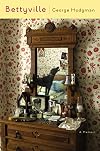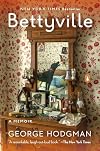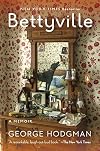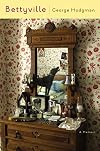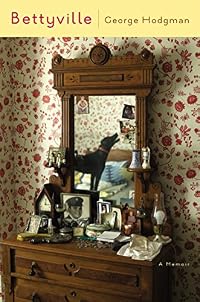
Bettyville: A Memoir
by George Hodgman
On This Page
Description
"A witty, tender memoir of a son's journey home to care for his irascible mother--a tale of secrets, silences, and enduring love. When George Hodgman leaves Manhattan for his hometown of Paris, Missouri, he finds himself--an unlikely caretaker and near-lethal cook--in a head-on collision with his aging mother, Betty, a woman of wit and will. Will George lure her into assisted living? When hell freezes over. He can't bring himself to force her from the home both treasure--the place where his show more father's voice lingers, the scene of shared jokes, skirmishes, and, behind the dusty antiques, a rarely acknowledged conflict: Betty, who speaks her mind but cannot quite reveal her heart, has never really accepted the fact that her son is gay. As these two unforgettable characters try to bring their different worlds together, Hodgman reveals the challenges of Betty's life and his own struggle for self-respect, moving readers from their small town-crumbling but still colorful-to the star-studded corridors of Vanity Fair. Evocative of The End of Your Life Book Club and The Tender Bar, Hodgman's debut is both an indelible portrait of a family and an exquisitely told tale of a prodigal son's return"-- show lessTags
Recommendations































Member Reviews
George Hodgman's memoir, BETTYVILLE (2015), another library sale find, was blurbed by the NYTimes as "A remarkable, laugh-out-loud book." Uh-uh. While it is indeed remarkable, and a beautifully written narrative of a son's love for his ninety year-old mother whose mind is slowly going, I found the overall tone of the book to be overwhelmingly sad. And, while there are frequent lol moments, Hodgman's tale of growing up gay and an only child in small town Missouri just isn't all that funny. He was raised by loving parents, Big George and Betty, but the mores of their time and place did not allow them to ever acknowledge, much less discuss, his emerging sexual identity. So his high school and college years were filled with shame and show more confusion, relieved only partly by his wry sense of humor used to deflect unkind or hateful attitudes. After college, he moved to New York where he found his niche in the publishing industry as a successful, meticulous editor for books and magazines, and also immersed himself in the gay culture of the city. But he kept his professional and personal lives separate, never quite relinquishing the feeling that his sexuality was "bad," and became seriously addicted to drugs. He'd been through rehab, but lost his job when he returned to his hometown (Paris, MO) to care for his widowed mother who was suffering from dementia. There is much here about his happy childhood with his grandmother and other members of a large extended family in the small town that he continued to love despite the difficulties he encountered as he grew older. And although I'll admit to laughing and chuckling here and there, I more often found myself wincing in recognition as he spoke of the heartbreak and sadness of watching his mother's decline into dementia, along with the unhappy visits to prospective nursing homes, and how his mother would withdraw and beg him to just take her home. I could not help but recall my own mother's final months in such a place, and the guilt I felt at her being there. I could relate, so yes, it made me incredibly sad for both of them. But George stayed, and did his best to take care of his mother at home. (She died in 2015.) For that, I admired him tremendously.
This is a damn fine book, about family, growing up in a small town, being gay, finding one's place in the world, and more. But what stands out is the author's love for his mother, despite her failings and imperfections - and for his father too, who loved his son so much, but just couldn't quite accept who he became - who he was. I found Hodgman's book very compelling, but ultimately very sad. He was a wonderful writer and a good son. And I say 'was,' because, sadly, upon Googling him, I learned that Hodgman took his own life in 2019, just a few years after this book was published. RIP, George.
And, having said all that, I give BETTYVILLE my very highest recommendation.
- Tim Bazzett, author of the memoir, BOOKLOVER show less
This is a damn fine book, about family, growing up in a small town, being gay, finding one's place in the world, and more. But what stands out is the author's love for his mother, despite her failings and imperfections - and for his father too, who loved his son so much, but just couldn't quite accept who he became - who he was. I found Hodgman's book very compelling, but ultimately very sad. He was a wonderful writer and a good son. And I say 'was,' because, sadly, upon Googling him, I learned that Hodgman took his own life in 2019, just a few years after this book was published. RIP, George.
And, having said all that, I give BETTYVILLE my very highest recommendation.
- Tim Bazzett, author of the memoir, BOOKLOVER show less
Charming, funny, and starkly honest. George leaves an editing job in New York to come home to Paris, Missouri, a small declining town where he grew up, to care for his mother who is in her 90s and failing mentally and physically. The book is about half and half about Betty, the mother, and George's nearly lifelong struggles with being homosexual. Both he and his mother are by turns funny and charming and then stubborn and difficult. The story feels intimate and yet classy in the way it is told. George doesn't expect to be in Paris long term, but his mother's condition requires someone to be with her and George's father died some years ago.
George is a funny man so there is plenty of humor peppered throughout. There's also plenty that's show more sobering. It's about coming home, family that wouldn't discuss George's being different, and being an only child juggling all this. The story is touching. show less
George is a funny man so there is plenty of humor peppered throughout. There's also plenty that's show more sobering. It's about coming home, family that wouldn't discuss George's being different, and being an only child juggling all this. The story is touching. show less
How I wish I could write as beautifully as the author. This is his story of his commitment to his 91 year old mother. George moves from a life in Manhattan, NY to care for his mother in small town Missouri. This is the tale of adjustment to living with his cantankerous mother who daily presents challenges for patience.
She is a character in every way. She is forward, kind, resilient, overbearing, sneaky, and loving, always loving!
She insists on wearing mismatched clothing while she demands to keep her well-worn sandals on her feet. A beautiful woman when young, like all who grow older, the wrinkles deepen while her spirit remains steadfast.
George calmly deals with her slide into forgetfulness, while admiring her stamina to undergo chemo show more for her cancer.
The town is small, but the beauty is large.
This excellently written, heart-felt homage to a mother who raised and loved her gay son is stunningly, beautifully embraced with crystal sharpness, and each page contains a tear and a smile. They grow together in acceptance of each other that calls forth as the days slip away.
Read this one. I don't think you will be disappointed!
Five Stars show less
She is a character in every way. She is forward, kind, resilient, overbearing, sneaky, and loving, always loving!
She insists on wearing mismatched clothing while she demands to keep her well-worn sandals on her feet. A beautiful woman when young, like all who grow older, the wrinkles deepen while her spirit remains steadfast.
George calmly deals with her slide into forgetfulness, while admiring her stamina to undergo chemo show more for her cancer.
The town is small, but the beauty is large.
This excellently written, heart-felt homage to a mother who raised and loved her gay son is stunningly, beautifully embraced with crystal sharpness, and each page contains a tear and a smile. They grow together in acceptance of each other that calls forth as the days slip away.
Read this one. I don't think you will be disappointed!
Five Stars show less
Book on CD read by Jeff Woodman
Hodgman’s elderly mother was clearly in trouble. He had lost one job and had the time to spend with her back home in Missouri. His work as an editor allowed him to continue “remotely” while he shepherded his mother along a path neither of them wanted to take. In this memoir he relates not only their fractious journey together, but the many incidents in their backgrounds that brought them to this place.
I found this tender and funny, heartbreaking and hopeful. There were times when I wanted to slap him (or Betty) upside the head and force one or both of them to face reality. There were times when I wanted to just wrap them in a blanket and give them little “now, now and there, there” comforting show more pats. I was reminded of the many trips I took to Texas to help my parents as they faced these same demons: of aging, of loss of independence, of loss of control, of loss of identity.
This snippet describes perfectly the relationship I had with my mother during the earlier stages of her disease process: I know she hates me sometimes. how could she not? I am the guard at the prison she will never get out of. Sometimes I am just as pent-up and angry. I loathe her too. Just a typical American family, torn between love and homicide, but united in our way.
Not that you need my opinion, George, but you did the right thing. Always.
The audiobook was masterfully performed by Jeff Woodman. show less
Hodgman’s elderly mother was clearly in trouble. He had lost one job and had the time to spend with her back home in Missouri. His work as an editor allowed him to continue “remotely” while he shepherded his mother along a path neither of them wanted to take. In this memoir he relates not only their fractious journey together, but the many incidents in their backgrounds that brought them to this place.
I found this tender and funny, heartbreaking and hopeful. There were times when I wanted to slap him (or Betty) upside the head and force one or both of them to face reality. There were times when I wanted to just wrap them in a blanket and give them little “now, now and there, there” comforting show more pats. I was reminded of the many trips I took to Texas to help my parents as they faced these same demons: of aging, of loss of independence, of loss of control, of loss of identity.
This snippet describes perfectly the relationship I had with my mother during the earlier stages of her disease process: I know she hates me sometimes. how could she not? I am the guard at the prison she will never get out of. Sometimes I am just as pent-up and angry. I loathe her too. Just a typical American family, torn between love and homicide, but united in our way.
Not that you need my opinion, George, but you did the right thing. Always.
The audiobook was masterfully performed by Jeff Woodman. show less
As people age, they often need more care, especially if they want to continue to live in their own home. Communities and families used to rally around the elderly. Now those homely, caring communities are dying and families are spread all over the country. Options are limited for the aging. There's assisted living, home care, bringing an elderly relative into your own home, or moving in with them. None of the options are easy. For George Hodgman, the right answer for his mother was for her only son to move back from New York City to tiny Paris, Missouri to take care of the once indomitable but now failing Betty.
As he cares for his mother, Hodgman tells of the life she lived, capturing the disappearing way of life in their small town. show more He interweaves his own recollections of the past in with hers, writing honestly of his feeling of being different, his long unacknowledged homosexuality, his drug addiction, and the low self worth he camouflages with humor. The Betty that Hodgman is caring for is very frequently not the Betty he remembers from his childhood. That younger Betty was vibrant and active and a vital part of her community. The Betty of ninety plus years is still colorful and can be a pistol, but she is also sad and stubborn as those things that once defined her become too hard for her anymore. Hodgman captures perfectly the repetitive arguments about seemingly petty things that pepper life with an aged parent and the poignancy of these small battles over things like wanting to wear tatty sandals everyday because that is one area in which the elderly Betty can still exercise some control.
Reflecting on his own life and what he is or is not losing by choosing to stay with Betty, Hodgman has the chance to reflect on his relationship with parents and make an exploration into himself, who he has been, and who he has fought to become. As a gay man growing up in a small town, he knew he was different and he long felt like a disappointment to his parents. Uncomfortable with his sexuality, he was as silent on the subject as they were. He learned to be self-effacing in a funny way as a way to combat his social awkwardness and because he didn't necessarily like who he was. And while it would have been easy to blame his parents for this because of their upbringing and beliefs, he doesn't do that. In fact, this beautiful memoir shows a lot of love, undemonstrative perhaps, but love nonetheless.
The narrative is made up of non-linear remembrances as he returns to different times in Betty's or his own past, weaving them adroitly amongst the present of taking care of Betty. The memoir is very personal in that he opens up his own truest self in it but it is also universal and recognizable for anyone who has cared for an elderly relative, felt different, struggled with meeting people, etc. Hodgman drops some very entertaining and witty bits into the book, which mitigates some of the heartbreaking truths about getting old. The respect he shows his mother even as she drives him round the bend is lovely and moving. His revelations about himself are candid and there's a strong vein of nostalgia, even though he didn't, and still doesn't always, find complete acceptance for who he is in the town or in his extended family. An exquisite tale of family ties, love, and aging, this is a wonderful and personal journey back home, back to the mother he loves and we are lucky to be along for the ride. show less
As he cares for his mother, Hodgman tells of the life she lived, capturing the disappearing way of life in their small town. show more He interweaves his own recollections of the past in with hers, writing honestly of his feeling of being different, his long unacknowledged homosexuality, his drug addiction, and the low self worth he camouflages with humor. The Betty that Hodgman is caring for is very frequently not the Betty he remembers from his childhood. That younger Betty was vibrant and active and a vital part of her community. The Betty of ninety plus years is still colorful and can be a pistol, but she is also sad and stubborn as those things that once defined her become too hard for her anymore. Hodgman captures perfectly the repetitive arguments about seemingly petty things that pepper life with an aged parent and the poignancy of these small battles over things like wanting to wear tatty sandals everyday because that is one area in which the elderly Betty can still exercise some control.
Reflecting on his own life and what he is or is not losing by choosing to stay with Betty, Hodgman has the chance to reflect on his relationship with parents and make an exploration into himself, who he has been, and who he has fought to become. As a gay man growing up in a small town, he knew he was different and he long felt like a disappointment to his parents. Uncomfortable with his sexuality, he was as silent on the subject as they were. He learned to be self-effacing in a funny way as a way to combat his social awkwardness and because he didn't necessarily like who he was. And while it would have been easy to blame his parents for this because of their upbringing and beliefs, he doesn't do that. In fact, this beautiful memoir shows a lot of love, undemonstrative perhaps, but love nonetheless.
The narrative is made up of non-linear remembrances as he returns to different times in Betty's or his own past, weaving them adroitly amongst the present of taking care of Betty. The memoir is very personal in that he opens up his own truest self in it but it is also universal and recognizable for anyone who has cared for an elderly relative, felt different, struggled with meeting people, etc. Hodgman drops some very entertaining and witty bits into the book, which mitigates some of the heartbreaking truths about getting old. The respect he shows his mother even as she drives him round the bend is lovely and moving. His revelations about himself are candid and there's a strong vein of nostalgia, even though he didn't, and still doesn't always, find complete acceptance for who he is in the town or in his extended family. An exquisite tale of family ties, love, and aging, this is a wonderful and personal journey back home, back to the mother he loves and we are lucky to be along for the ride. show less
Mothers and sons have fought and been fraught through all of literature, but rarely as honestly and painfully as this important memoir. George Hodgman, last in a long line of farmer namesakes in Paris, Missouri, returns home after losing his high pressure editing job at a NY publishing house. His intent is to see his mother through to her life's ending. George is gay and has been extremely uncomfortable in his own skin and life since he can recall. Though cherished by his parents, all concerned felt there was something "off" about him that was never discussed. George's widowed mother Betty is losing her health and her mind in her early 90s and George comes home with a hidden agenda: to try to place her into assisted living in Paris show more ("Places like Paris are vanishing"). Their every moment together dredges up memories of Betty's married life, George's unsuccessful attempts to be the puzzle piece that fits into his small town and his ancestry, his father, his grandparents, his teachers, his school days. George and Betty are soldered together in a final dance as they struggle to maintain her routines that can no longer hold. George: "I think people who have always felt okay in the world will never understand those of us who haven't." This amazing narrative will open a brand new unimagined world to the reader and hopefully, in real life, a well deserved sense of accomplishment to George. Highly recommended for both the inner family saga and an outside Midwestern world common in fiction but rare in this most genuine of memoirs. show less
I am a reader of memoirs, and this is one of the most beautiful I've read. George Hodgman, New York writer, returns to the small town of Paris, Missouri, to care for his aging mother, Betty. His hope is to talk her into assisted living, leaving him free to return to his life in New York. But he finds that neither his mother nor he are done with their life in Paris, and they have still have much to learn about each other. Hodgman brings Betty to life on the page, with all her quirks, witticisms, confusion, tenacity, and love for her son. At one point, Betty asks if another man in Paris is gay, and Hodgman replies that he doesn't know about that man, but surely his mother must know by now that George himself is gay. Betty confesses that show more she and George's father never talked about it, never mentioned it once to each other. Hodgman's portrait of his father, a man who obviously loved his son very much, letting him quit football when he saw it was too strenuous for him, taking him to see Barbra Streisand in Funny Girl, is poignant. Hodgman also paints a panorama of the small Midwestern town as it was in his childhood and is now, all but destroyed by Walmarts, meth labs, and the breakup of the family farm, but still peopled with living, loving individuals. This book helped me be more accepting of my situation caring for my own 91-year-old, dementia-troubled mother. Bettyville is a wonderful, truth-filled, warm-hearted experience. show less
Members
- Recently Added By
Published Reviews
ThingScore 100
This superior memoir, written in a witty and episodic style, is at times heartbreaking. It's also, though just under 300 pages, an especially dense one, filled with a lifetime's worth of reflection and story after fascinating story. Starting out rather conventionally as the tale of a son's return home to rural Paris, MO, to take care of his ailing mother, Betty, the narrative slowly begins to show more delve into Hodgman's difficulties with self-acceptance, particularly as a gay man. While his relationship with his mother is a close one, it quickly becomes clear that his sexual orientation is chief among the many things that he and his family don't discuss. Hodgman beautifully details how much rural America has changed in the last 30 years, though not always for the better. VERDICT Readers from many backgrounds will identify with Hodgman, as he essentially presents a plea to accept everybody for who they are, no matter what their story may be, or what kinds of lives they may lead. show less
added by kthomp25
Be not afraid that "Bettyville" is a story about elder care, because Betty Baker Hodgman would never stand for it. Even with dementia and lymphoma, Betty is very much full of life and never tries to be anyone but herself. "'At least I'm out and out with my meanness,'" she tells her son. "'I'm not a sneak. I hate a sneak.'"
Betty isn't really mean, just direct and quick-witted — even if she show more struggles for words. A real tenderness runs through this poignant memoir, and its comedic qualities and sharp insights prevent it from becoming sappy...Hodgman renders Betty fully — and on this journey home, learns that he is strong enough to stay the course with her in Paris. show less
Betty isn't really mean, just direct and quick-witted — even if she show more struggles for words. A real tenderness runs through this poignant memoir, and its comedic qualities and sharp insights prevent it from becoming sappy...Hodgman renders Betty fully — and on this journey home, learns that he is strong enough to stay the course with her in Paris. show less
added by vancouverdeb
So many memoirs about caring for an ailing relative can slip into mawkish territory, but Hodgman steers clear of sentimentality. “Bettyville” is not just a memoir about a son caring for his mother; it is a book that explores the difficult terrain of long-held roles within a family, the changing landscape of a small Southern town with a long memory and the strain of growing up gay under the show more disapproving eye of otherwise loving parents.
Hodgman’s sharp wit carries the book ever forward; his self-deprecating humor (especially about his struggle to stay sober in the face of stress) and jokes about his expanding waistline are added with the comic timing of a seasoned satirist. But he is also honest about how he has used, and still uses, humor to stay afloat...It is this “watcher” trait that makes Hodgman such a successful memoirist: He watches Betty, not always with the eye of a son, but as an observer. And he does the same with himself. show less
Hodgman’s sharp wit carries the book ever forward; his self-deprecating humor (especially about his struggle to stay sober in the face of stress) and jokes about his expanding waistline are added with the comic timing of a seasoned satirist. But he is also honest about how he has used, and still uses, humor to stay afloat...It is this “watcher” trait that makes Hodgman such a successful memoirist: He watches Betty, not always with the eye of a son, but as an observer. And he does the same with himself. show less
added by vancouverdeb
Lists

Books Read in 2021
5,361 works; 113 members
Author Information
2 Works 541 Members
George Hodgman graduated from the University of Missouri in Columbia with a double major in English and magazine journalism in 1981 and received a master's degree from Boston College in 1983. He is a magazine and book editor who has worked at Simon and Schuster, Vanity Fair, and Talk magazine. His writing has appeared in several publications show more including Entertainment Weekly, Interview, W, and Harper's Bazaar. His first book, Bettyville: A Memoir, was published in 2015. It was a finalist for a National Book Critics Circle prize in the autobiography category. George Hodgman passed away on July 20, 2019 in New York City at the age of 60. (Bowker Author Biography) show less
Awards and Honors
Awards
Distinctions
Notable Lists
Common Knowledge
- Original publication date
- 2015
- Important places
- Missouri, USA
- Dedication
- This book is dedicated, first and foremost, to my best friends, my parents: George A. and Betty Baker Hodgman. Every word about them is written with love.
It is also for my grandmothers, Margaret Callison Baker and Virginia Rachel Hodgman; my great-aunt Bess Baker; my aunt June Baker; and Alice Mayhew, always loyal, every generous. Finally, it is for Madison and Paris, where s... (show all)o many I care about have walked. I will always remember you, good people. - First words
- Missouri is a state of golden names, bestowed to bring the world a little closer: Versailles, Rom, Cairo, New London, Athens, Carthage, Alexandria, Lebanon, Cuba, Japan, Santa Fe, Cleveland, Canton, California, Caledonia, New... (show all) Caledonia, Mexico, Louisiana.
- Blurbers
- Walls, Jeanette; Bechdel, Alison; Verghese, Abraham; Flynn, Nick; Schwalbe, Will
Classifications
- Genres
- Biography & Memoir, Nonfiction, LGBTQ+, General Nonfiction
- DDC/MDS
- 306.874 — Society, Government, and Culture Social sciences, sociology & anthropology Social Behavior - Dating, Marriage, Divorce Marriage, partnerships, unions; family Intrafamily relationships Parent-child relationship
- LCC
- HQ1063.6 .H63 — Social sciences The family. Marriage, Women and Sexuality The Family. Marriage. Women The family. Marriage. Home Aged. Gerontology (Social aspects).
- BISAC
Statistics
- Members
- 539
- Popularity
- 54,851
- Reviews
- 29
- Rating
- (3.87)
- Languages
- English, German
- Media
- Paper, Audiobook, Ebook
- ISBNs
- 15
- ASINs
- 9