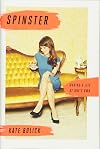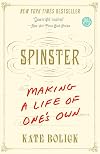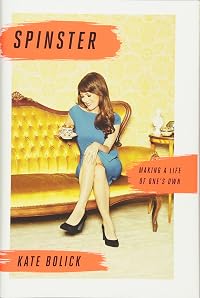
Spinster: Making a Life of One's Own
by Kate Bolick
On This Page
Description
A New York Times Book Review Notable Book“Whom to marry, and when will it happen—these two questions define every woman’s existence.”
So begins Spinster, a revelatory and slyly erudite look at the pleasures and possibilities of remaining single. Using her own experiences as a starting point, journalist and cultural critic Kate Bolick invites us into her carefully considered, passionately lived life, weaving together the past and present to examine why she—along with over 100 show more million American women, whose ranks keep growing—remains unmarried.
This unprecedented demographic shift, Bolick explains, is the logical outcome of hundreds of years of change that has neither been fully understood, nor appreciated. Spinster introduces a cast of pioneering women from the last century whose genius, tenacity, and flair for drama have emboldened Bolick to fashion her life on her own terms: columnist Neith Boyce, essayist Maeve Brennan, social visionary Charlotte Perkins Gilman, poet Edna St. Vincent Millay, and novelist Edith Wharton. By animating their unconventional ideas and choices, Bolick shows us that contemporary debates about settling down, and having it all, are timeless—the crucible upon which all thoughtful women have tried for centuries to forge a good life.
Intellectually substantial and deeply personal, Spinster is both an unreservedly inquisitive memoir and a broader cultural exploration that asks us to acknowledge the opportunities within ourselves to live authentically. Bolick offers us a way back into our own lives—a chance to see those splendid years when we were young and unencumbered, or middle-aged and finally left to our own devices, for what they really are: unbounded and our own to savor.
. show less
Tags
Recommendations


Member Reviews
SPINSTER, Kate Bolick's memoir of her life single and coupled, is a kind of literary chimera. It's in part a story of Kate's dating life, in part a bildungsroman, and (in greatest part) a selective biography of five female writers, some better known than others. Bolick calls them her "awakeners," authors who caught her attention and fostered within her the idea that her life can be of her own making, and that the common narrative of "grow up, get married, have kids" can be challenged. She questions why this must be the female narrative at all.
Bolick's "awakeners" were not really spinsters. Columnist Maeve Brennan married briefly. New Woman Neith Boyce, who wrote about the benefits of single sisterhood and the life of a happy working show more woman, did too (to a repulsive playboy, no less). Flapper poet Edna St. Vincent Millay married (but lived unconventionally in an open marriage. Gilded Age novelist Edith Wharton married. Social reformer Charlotte Perkins Gilman (famously the author of important feminist short story, "The Yellow Wallpaper") married and divorced. Though all found unconventional ways to live with their spouses (or leave them altogether), Bolick's blueprints for singleness were not all happily single. Bolick acknowledges this too, and that is where the selective biography comes in. Bolick creates a narrative of singleness through mental dialogues with these women, through the way she chooses to think about and remember them. They are mental avatars for qualities she desires, or ways of living she likes to think about, but they are incomplete pictures of these women--this is the limitation of biography and the the limitation of idolatry. Throughout the book, as Bolick learns more about these women and their lives, her ideas about them shift, and her own growth as a person can take their positive and negative qualities equally into account.
This is NOT a self-help book. The tone is literary memoir, not chatty step-by-step, a deliberate choice from an author who makes clear throughout her memoir her desire to be a "serious" writer and a poet. The prose is infused with delicate and lyrical turns of phrase that attempt to elevate the book out of the commonplace nature of the genre. Bolick is also very firmly upper-middle class. Raised in a large house in Newburyport, MA amid the WASPy denizens for whom money is a given and whose children can grow up to do what they want to do, Bolick has the privilege, opportunity, and support to pursue a career in writing and academic musing. She moves to Boston and New York, living in nice places (but each with their problems, like no washer/dryer, as Bolick is quick to note), with the safety net of her family home to fall back on, should she fail (which Bolick at least acknowledges). She admits the downside to being unmarried - only one income, no support at home (forcing one to create support networks outside the domestic sphere), but this too is steeped in privilege. Many women in America live in poverty or in the lower middle class. Being single (and musing about it for two decades) is simply unrealistic for these women. Bolick has access to birth control with no judgment (to keep herself from being limited by childbearing), family money to fall back on (allowing her to live alone risk free), and the strong support of the likeminded, urban, moneyed literary elite. Bolick's "awakeners" are likewise privileged in many ways. Not all of them were wealthy, but all were white New Englanders. This is Bolick's memoir. She can only write what she knows, and she acknowledges her privilege. I note this as a caveat on the book's accessibility. Most of us will never realize a life of this amount of privilege, but we can take from her writing what inspiration we may.
Readers who desire a stronger message about decisive singleness will be disappointed. Bolick is a serial dater, a woman who doesn't want marriage but doesn't know how to be single, as she notes. She is somewhat chagrined by this, but the underlying message is one that has long been the feminist creed: feminism and equality mean letting women choose their own path, whatever it is. Bolick wants to be a staunch bastion of singleness, but that's not who she is, and eventually she comes to find a way of life that can accommodate her desire to be single and coupled. Her message is this: "...the question I'd long posed to myself--whether to be married or to be single--is a false binary. The space in which I've always wanted to live--indeed, where I have spend my adulthood--isn't between those two poles, but beyond it. The choice between being married versus being single doesn't even belong here in the twenty-first century." Bolick suggests that we have come so far though the 19th and 20th centuries (as she discovers through her awakeners) that this question is irrelevant, that women are gaining real personhood, the ability to be judged not by their marital state, but by their dreams and accomplishments. It's a hopeful message, but when one looks around at a world still firmly entrenched in married=good, single=bad dichotomy for women, one might wish for a book that more firmly validated the generally unpopular decision to be single and childless, especially one that wants to reclaim the term "spinster" and make it a creed for individualism. show less
Bolick's "awakeners" were not really spinsters. Columnist Maeve Brennan married briefly. New Woman Neith Boyce, who wrote about the benefits of single sisterhood and the life of a happy working show more woman, did too (to a repulsive playboy, no less). Flapper poet Edna St. Vincent Millay married (but lived unconventionally in an open marriage. Gilded Age novelist Edith Wharton married. Social reformer Charlotte Perkins Gilman (famously the author of important feminist short story, "The Yellow Wallpaper") married and divorced. Though all found unconventional ways to live with their spouses (or leave them altogether), Bolick's blueprints for singleness were not all happily single. Bolick acknowledges this too, and that is where the selective biography comes in. Bolick creates a narrative of singleness through mental dialogues with these women, through the way she chooses to think about and remember them. They are mental avatars for qualities she desires, or ways of living she likes to think about, but they are incomplete pictures of these women--this is the limitation of biography and the the limitation of idolatry. Throughout the book, as Bolick learns more about these women and their lives, her ideas about them shift, and her own growth as a person can take their positive and negative qualities equally into account.
This is NOT a self-help book. The tone is literary memoir, not chatty step-by-step, a deliberate choice from an author who makes clear throughout her memoir her desire to be a "serious" writer and a poet. The prose is infused with delicate and lyrical turns of phrase that attempt to elevate the book out of the commonplace nature of the genre. Bolick is also very firmly upper-middle class. Raised in a large house in Newburyport, MA amid the WASPy denizens for whom money is a given and whose children can grow up to do what they want to do, Bolick has the privilege, opportunity, and support to pursue a career in writing and academic musing. She moves to Boston and New York, living in nice places (but each with their problems, like no washer/dryer, as Bolick is quick to note), with the safety net of her family home to fall back on, should she fail (which Bolick at least acknowledges). She admits the downside to being unmarried - only one income, no support at home (forcing one to create support networks outside the domestic sphere), but this too is steeped in privilege. Many women in America live in poverty or in the lower middle class. Being single (and musing about it for two decades) is simply unrealistic for these women. Bolick has access to birth control with no judgment (to keep herself from being limited by childbearing), family money to fall back on (allowing her to live alone risk free), and the strong support of the likeminded, urban, moneyed literary elite. Bolick's "awakeners" are likewise privileged in many ways. Not all of them were wealthy, but all were white New Englanders. This is Bolick's memoir. She can only write what she knows, and she acknowledges her privilege. I note this as a caveat on the book's accessibility. Most of us will never realize a life of this amount of privilege, but we can take from her writing what inspiration we may.
Readers who desire a stronger message about decisive singleness will be disappointed. Bolick is a serial dater, a woman who doesn't want marriage but doesn't know how to be single, as she notes. She is somewhat chagrined by this, but the underlying message is one that has long been the feminist creed: feminism and equality mean letting women choose their own path, whatever it is. Bolick wants to be a staunch bastion of singleness, but that's not who she is, and eventually she comes to find a way of life that can accommodate her desire to be single and coupled. Her message is this: "...the question I'd long posed to myself--whether to be married or to be single--is a false binary. The space in which I've always wanted to live--indeed, where I have spend my adulthood--isn't between those two poles, but beyond it. The choice between being married versus being single doesn't even belong here in the twenty-first century." Bolick suggests that we have come so far though the 19th and 20th centuries (as she discovers through her awakeners) that this question is irrelevant, that women are gaining real personhood, the ability to be judged not by their marital state, but by their dreams and accomplishments. It's a hopeful message, but when one looks around at a world still firmly entrenched in married=good, single=bad dichotomy for women, one might wish for a book that more firmly validated the generally unpopular decision to be single and childless, especially one that wants to reclaim the term "spinster" and make it a creed for individualism. show less
Ugh, I loved this!! I listened to the audiobook in one day at 2x speed. Bolick does a great job of reading her own work. I was looking for books similar to Deborah Levy's Real Estate and recommended Spinster by StoryGraph. They're different in style and format, but they're both about women navigating and enjoying their independence in a society that likes to remind them they should be prioritizing romantic love, relationships, and marriage.
Bolick does this by exploring the lives of five "spinster" writers who awakened a sort of self-understanding for her. I'd only ever heard of Edith Wharton, but I'm excited to check out the others. In memoir, I really appreciate it when the author takes time to educate you about history while also show more entertaining you with stories of their own life. And Bolick does this expertly. She does a deep dive on the five writers and the history of spinsterhood while also taking us through the ups and downs of her 20s and 30s. The story of her mother made me cry, the tales of her dating life in NYC made me laugh, and all of her career/love angst was incredibly relatable.
Her "awakenings" also gave me language for what I've been seeking out lately. I recently asked a librarian to recommend fiction books about competent, confident older women who were dealing with issues unrelated to romance and marriage. She managed it, but said it was "very tricky." There's a dearth of this lit or it doesn't get hyped. But, now I know what to call it: spinster lit. Bolick relied on her five chosen writers, in part because she could no longer turn to her mother for advice after her passing. And now, a year after my father's passing, I can see that I've been doing much the same in seeking out books, both fiction and non-fiction, about people older and a little wiser than me.
Like Bolick says early on in this one, sometimes the right book finds you at the right time. And this was one for me. I borrowed it on whim from the library and I'm excited to purchase a copy for my shelves so I can read it again more closely. show less
Bolick does this by exploring the lives of five "spinster" writers who awakened a sort of self-understanding for her. I'd only ever heard of Edith Wharton, but I'm excited to check out the others. In memoir, I really appreciate it when the author takes time to educate you about history while also show more entertaining you with stories of their own life. And Bolick does this expertly. She does a deep dive on the five writers and the history of spinsterhood while also taking us through the ups and downs of her 20s and 30s. The story of her mother made me cry, the tales of her dating life in NYC made me laugh, and all of her career/love angst was incredibly relatable.
Her "awakenings" also gave me language for what I've been seeking out lately. I recently asked a librarian to recommend fiction books about competent, confident older women who were dealing with issues unrelated to romance and marriage. She managed it, but said it was "very tricky." There's a dearth of this lit or it doesn't get hyped. But, now I know what to call it: spinster lit. Bolick relied on her five chosen writers, in part because she could no longer turn to her mother for advice after her passing. And now, a year after my father's passing, I can see that I've been doing much the same in seeking out books, both fiction and non-fiction, about people older and a little wiser than me.
Like Bolick says early on in this one, sometimes the right book finds you at the right time. And this was one for me. I borrowed it on whim from the library and I'm excited to purchase a copy for my shelves so I can read it again more closely. show less
This was not quite the book I thought it was going to be. That's not to say it isn't good; it's left me with much to think about, but ultimately I was hoping for something slightly different.
Based on the title and summary, I was expecting a book about a woman who made the conscious choice to live her own life, one that embraced the solitude she craved and was the result of her own conscious will and choices.
What I got was a woman who was pretty sure she wanted a life of her own making, but lacked the self-awareness to recognise that pretty much every one of her choices were aimed at making sure she was never alone. By her own admission, in the 10+ years she lived in NYC chasing a solitary life, she was never alone. When she wasn't in show more a relationship, she dated constantly, and filled her nights with nonstop socialising. The few attempts she chronicles here at true solitude never last more than 2 weeks (and those two weeks had several "social" episodes).
What kept me reading was the similarity in life experiences Bolick and I shared - generally speaking. After long term monogamous relationships in our 20's, we discovered independence in our 30's and, I think, shared similar questions concerning a life of one's own and what that meant. To a point. We diverge philosophically, however, in several places.
Now, this is, of course, just my opinion and based on my life experiences, which, it goes without saying, are not everyone's. But having said that, her premise from the beginning is flawed:
"Whom to marry, and when will it happen–these two questions define every woman's existence, regardless of where she was raised or what religion she does or doesn't practice."
No they don't. They've never defined mine, anyway.
"Eventually, whether you choose or are chosen, joyously accept or grudgingly resist, you take the plunge.
You are born, you grow up, you become a wife."
Fatalistic much?
"But what if it wasn't this way?
What if a girl grew up like a boy, with marriage an abstract, someday thought, a thing to think about when she became an adult, a thing she could do, or not do, depending?
What would that look and feel like?"
Uh, it would look like me, and I guess it would feel pretty good? I don't have anything else to compare it to, but I'm happy to have not had the constriction.
I never heard my mother say "when you get married" or "when you have kids". She constantly told me I could be whatever I wanted, making suggestions like artist, or cartoonist (mom goggles), but never once mentioned marriage. The only comment she ever made about children, she only made once "If you're going to have any kids, just have them before I die so I can meet them.". So I definitely grew up "like a boy". (nb: my parents were married over 50 years, setting a stupidly high bar for happiness.)
All of this to say that Bolick's assertions that all women of our generation are locked into this stultifying cultural expectation is false from the get-go. I understand that my mom may not have been the norm, but she wasn't a rarity either; my childhood wasn't special or unique.
Amidst all the navel-gazing, Bolick weaves the lives of 5 female authors that greatly influenced her journey to better self-awareness: Neith Boyce, Maeve Brennan, Charlotte Perkins Gilman, Edna St. Vincent Millay and Edith Wharton. She examines their lives and uses what she learns about them to figure out what it is she's trying to do for herself. Self-analysis by literary analysis. The device works, and I enjoyed learning about these ground-breaking women, although I think she might have romanticised their lives a bit.
Bolick ties all of this, of course, to women's rights and feminism (although she rarely calls it feminism); it would be illogical to do anything else. This book, our lives, would not be possible without these women and others like themselves. But she takes it all a tiny step too far. She argues that this imperative to marry, to have kids, to avoid being alone, dying alone, is the solemn birthright of women. To which I say, that's a load of codswallop.
Of course there's an unarticulated expectation for men to marry (an unmarried woman may be called a spinster, but an unmarried man has his sexuality questioned), and of course they feel this. In most of the relationships around me, it's the men who have wanted to start families first, who are eager to become fathers, while simultaneously worrying that their lives will end if they do. And I don't think anybody wants to die alone or remain unloved, or end up on the streets. These are not gender specific worries, or desires, or fears, and by making them so, she perpetuates the separation that feminists fight so hard against.
Now, after sounding like I'm thoroughly bashing her efforts, I'm going to switch directions and say this is a very well written book. There was more in here to agree with than disagree, once beyond the basic premise itself, and the author is refreshingly honest with both herself and the reader. She spends a lot of time looking in the mirror and she doesn't waste a lot of her or the reader's time rationalising her decisions or her actions. You get the sense at the end that the journey wasn't in vain, and that perhaps she's finally stood still long enough to embrace solitude and really make a life of her own. show less
Based on the title and summary, I was expecting a book about a woman who made the conscious choice to live her own life, one that embraced the solitude she craved and was the result of her own conscious will and choices.
What I got was a woman who was pretty sure she wanted a life of her own making, but lacked the self-awareness to recognise that pretty much every one of her choices were aimed at making sure she was never alone. By her own admission, in the 10+ years she lived in NYC chasing a solitary life, she was never alone. When she wasn't in show more a relationship, she dated constantly, and filled her nights with nonstop socialising. The few attempts she chronicles here at true solitude never last more than 2 weeks (and those two weeks had several "social" episodes).
What kept me reading was the similarity in life experiences Bolick and I shared - generally speaking. After long term monogamous relationships in our 20's, we discovered independence in our 30's and, I think, shared similar questions concerning a life of one's own and what that meant. To a point. We diverge philosophically, however, in several places.
Now, this is, of course, just my opinion and based on my life experiences, which, it goes without saying, are not everyone's. But having said that, her premise from the beginning is flawed:
"Whom to marry, and when will it happen–these two questions define every woman's existence, regardless of where she was raised or what religion she does or doesn't practice."
No they don't. They've never defined mine, anyway.
"Eventually, whether you choose or are chosen, joyously accept or grudgingly resist, you take the plunge.
You are born, you grow up, you become a wife."
Fatalistic much?
"But what if it wasn't this way?
What if a girl grew up like a boy, with marriage an abstract, someday thought, a thing to think about when she became an adult, a thing she could do, or not do, depending?
What would that look and feel like?"
Uh, it would look like me, and I guess it would feel pretty good? I don't have anything else to compare it to, but I'm happy to have not had the constriction.
I never heard my mother say "when you get married" or "when you have kids". She constantly told me I could be whatever I wanted, making suggestions like artist, or cartoonist (mom goggles), but never once mentioned marriage. The only comment she ever made about children, she only made once "If you're going to have any kids, just have them before I die so I can meet them.". So I definitely grew up "like a boy". (nb: my parents were married over 50 years, setting a stupidly high bar for happiness.)
All of this to say that Bolick's assertions that all women of our generation are locked into this stultifying cultural expectation is false from the get-go. I understand that my mom may not have been the norm, but she wasn't a rarity either; my childhood wasn't special or unique.
Amidst all the navel-gazing, Bolick weaves the lives of 5 female authors that greatly influenced her journey to better self-awareness: Neith Boyce, Maeve Brennan, Charlotte Perkins Gilman, Edna St. Vincent Millay and Edith Wharton. She examines their lives and uses what she learns about them to figure out what it is she's trying to do for herself. Self-analysis by literary analysis. The device works, and I enjoyed learning about these ground-breaking women, although I think she might have romanticised their lives a bit.
Bolick ties all of this, of course, to women's rights and feminism (although she rarely calls it feminism); it would be illogical to do anything else. This book, our lives, would not be possible without these women and others like themselves. But she takes it all a tiny step too far. She argues that this imperative to marry, to have kids, to avoid being alone, dying alone, is the solemn birthright of women. To which I say, that's a load of codswallop.
Of course there's an unarticulated expectation for men to marry (an unmarried woman may be called a spinster, but an unmarried man has his sexuality questioned), and of course they feel this. In most of the relationships around me, it's the men who have wanted to start families first, who are eager to become fathers, while simultaneously worrying that their lives will end if they do. And I don't think anybody wants to die alone or remain unloved, or end up on the streets. These are not gender specific worries, or desires, or fears, and by making them so, she perpetuates the separation that feminists fight so hard against.
Now, after sounding like I'm thoroughly bashing her efforts, I'm going to switch directions and say this is a very well written book. There was more in here to agree with than disagree, once beyond the basic premise itself, and the author is refreshingly honest with both herself and the reader. She spends a lot of time looking in the mirror and she doesn't waste a lot of her or the reader's time rationalising her decisions or her actions. You get the sense at the end that the journey wasn't in vain, and that perhaps she's finally stood still long enough to embrace solitude and really make a life of her own. show less
Before I married I often referred to myself as a spinster even though I’d been living with my future husband for years (a total of 7 before marrying). Quite a few people reacted with horror at my use of the word. I thought it was funny. Marriage, and particularly a Wedding, didn’t loom large in my psyche. I didn’t need either to feel validated or loved or whatever else those things do for the average woman who craves them. Truth is, we married for health insurance, something we always considered to be a practical reason. In some ways I still consider myself a spinster. Bolick continually asserts that when a woman marries she puts the man at the center of her life. While that may be true for many, it isn’t true for all. My show more husband and I are a team. If he’s the center of anything, so am I for him. It’s possibly this skewed viewpoint that blunted a lot of her own self-analysis in the book, something I wish she’d gone into more.
Instead we get a look at how spinsters of bygone ages affected and shaped Bolick’s decision to remain single and live alone. It is relatively fascinating although impersonal. For example when I was single and living with my partner, I was continually peppered with “when are you gonna tie the knot” questions. 99% of these came from women and when I said we had no plans and I didn’t have any desire to do so (unless there was a practical, monetary reason) they were perplexed and some were insulted. Bolick doesn’t relate much of this kind of thing in her own life, which I have to think happened with similar frequency (she’s only 4 years younger than me).
Her choice to remain single is an unpopular one, but it’s certainly easier now than it was for the heroines in her life. Those ladies were brave and yes, some succumbed to join the vast majority and become “that useful animal a wife and mother”, but neither decision was an easy one for them. If a man chooses to remain single, it’s a natural state and one slyly applauded by those in his circle who have yoked themselves to a woman. The institution of marriage is seen as a harness, prison, ball-and-chain and every other variation of an unfree state for a man. Not so for women. Marriage for her is correct, desirable and the ultimate expression of her femininity; to be enclosed, cared for and given the opportunity to breed freely. Even now, 100 years on from the general emancipation of women, the stigma of singlehood affects women, but not men. The state is taken as a mark of undesirability, not a personal and well-reasoned choice. At the end of the book, Bolick frustratedly asks ‘are women people yet?’ and it seems, lamentably, we’re not. show less
Instead we get a look at how spinsters of bygone ages affected and shaped Bolick’s decision to remain single and live alone. It is relatively fascinating although impersonal. For example when I was single and living with my partner, I was continually peppered with “when are you gonna tie the knot” questions. 99% of these came from women and when I said we had no plans and I didn’t have any desire to do so (unless there was a practical, monetary reason) they were perplexed and some were insulted. Bolick doesn’t relate much of this kind of thing in her own life, which I have to think happened with similar frequency (she’s only 4 years younger than me).
Her choice to remain single is an unpopular one, but it’s certainly easier now than it was for the heroines in her life. Those ladies were brave and yes, some succumbed to join the vast majority and become “that useful animal a wife and mother”, but neither decision was an easy one for them. If a man chooses to remain single, it’s a natural state and one slyly applauded by those in his circle who have yoked themselves to a woman. The institution of marriage is seen as a harness, prison, ball-and-chain and every other variation of an unfree state for a man. Not so for women. Marriage for her is correct, desirable and the ultimate expression of her femininity; to be enclosed, cared for and given the opportunity to breed freely. Even now, 100 years on from the general emancipation of women, the stigma of singlehood affects women, but not men. The state is taken as a mark of undesirability, not a personal and well-reasoned choice. At the end of the book, Bolick frustratedly asks ‘are women people yet?’ and it seems, lamentably, we’re not. show less
 This review was written for LibraryThing Early Reviewers.
Not what I expected at all when I picked this up by chance at the library. I thought this would be some sort of modern self-help treatise, but I actually found an engaging and absorbing history of (mostly) unmarried literary women living in the early part of the twentieth century, including Edith Wharton and Charlotte Perkins-Gilman. Their lives are filtered through the lens of the author's own life, as this is mostly memoir with some history rather than pure history. What I appreciate about this take on choosing singleness--and why that choice by women can be seen as controversial even still--is that the author acknowledges shades of gray rather than binary choices, and also that life is long and there are many things one can show more experience as part of a full life, including being both coupled and alone. Still, the theme that she never explicitly acknowledges remains clear--that a woman who wants to make art her work must in some sense be freed from the traditional expectations of marriage. Her final question, are women people yet, is one that society, unfortunately, is still trying mightily hard not to answer, at least not in the affirmative. Greatly enjoyed. show less
Maybe it's my age and temperament (26, don't care for marriage and kids) but this book feels like a great friend. Bolick's writing is intimate and personal, bringing the reader close to share some very weighty revelations. The way she intersperses the narratives of the 5 women and her own personal narrative is done beautifully--I wasn't sure how the construct would work when I first read the back cover, and it certainly means that the book defies easy genre categorization beyond cultural critique--but she weaves together these distinct yet similar stories to emphasize that there are myriad ways of living a life, and the only error is to let someone else determine how you will do so.
Being ensconced in this salon of 6 magnificent women show more was inspiring and heartening, validating just about any choice you want by emphasizing time and again that there are as many right choices as there are determined women. show less
Being ensconced in this salon of 6 magnificent women show more was inspiring and heartening, validating just about any choice you want by emphasizing time and again that there are as many right choices as there are determined women. show less
This review was written for LibraryThing Early Reviewers.I enjoyed this book enough to purchase it in hardcover even though I had an advanced reader's copy.
Many readers objected to Kate Bolick interweaving her dating history throughout, but I enjoyed that narrative and felt it made the book more relatable. Additionally, [Spinster] is an excellent companion read to [Selfish, Shallow, and Self-absorbed: Sixteen Writers on the Decision Not to Have Kids], and without conducting a scientific survey of both books, I'd say the #1 reason to forego marriage and children is to have more time to read and write. LOVE THAT. We're of the same tribe in believing the perfect afternoon comprises a nap or two sandwiched between hours of uninterrupted reading.
[Spinster] succeeds for young women seeking show more encouragement, support or permission to go solo, or simply not be guilt-tripped into thinking a woman seeking solitude is an unnatural and wicked creature.
Current culture complicates the question of marital status because there are so many options, but this does not deter Kate one bit. She does not "cheat" the idea of spinsterhood so to speak by living with a man outside of marriage or even having a male "roommate." She dates and has longish relationships, but she does not marry.
The fear of ending up as a bag lady living on the streets in old age does not belong only to single women. Essayist Maeve Brennan met that fate, but it seemed like an inevitability considering her mental challenges later in life. In spite of how Brennan's life ended, Kate chose Maeve as her favorite of the 5 "awakeners" and took Brennan on as a kind of mentor and guide to living the spinster life. At the end of Spinster, Kate goes deeper to find out how such a vibrant and intelligent woman ended up destitute, perhaps to make sure she did not take the same missteps.
Many existing issues could complicate this book, but the author stays within parameters she has established and does a very good job getting her viewpoint across. Also, she crafts many lovely sentences; one reader complained the book was "overwritten." I guess that's like the Emperor saying that Mozart's music had "too many notes." I liked it. show less
Many readers objected to Kate Bolick interweaving her dating history throughout, but I enjoyed that narrative and felt it made the book more relatable. Additionally, [Spinster] is an excellent companion read to [Selfish, Shallow, and Self-absorbed: Sixteen Writers on the Decision Not to Have Kids], and without conducting a scientific survey of both books, I'd say the #1 reason to forego marriage and children is to have more time to read and write. LOVE THAT. We're of the same tribe in believing the perfect afternoon comprises a nap or two sandwiched between hours of uninterrupted reading.
[Spinster] succeeds for young women seeking show more encouragement, support or permission to go solo, or simply not be guilt-tripped into thinking a woman seeking solitude is an unnatural and wicked creature.
Current culture complicates the question of marital status because there are so many options, but this does not deter Kate one bit. She does not "cheat" the idea of spinsterhood so to speak by living with a man outside of marriage or even having a male "roommate." She dates and has longish relationships, but she does not marry.
The fear of ending up as a bag lady living on the streets in old age does not belong only to single women. Essayist Maeve Brennan met that fate, but it seemed like an inevitability considering her mental challenges later in life. In spite of how Brennan's life ended, Kate chose Maeve as her favorite of the 5 "awakeners" and took Brennan on as a kind of mentor and guide to living the spinster life. At the end of Spinster, Kate goes deeper to find out how such a vibrant and intelligent woman ended up destitute, perhaps to make sure she did not take the same missteps.
Many existing issues could complicate this book, but the author stays within parameters she has established and does a very good job getting her viewpoint across. Also, she crafts many lovely sentences; one reader complained the book was "overwritten." I guess that's like the Emperor saying that Mozart's music had "too many notes." I liked it. show less
This review was written for LibraryThing Early Reviewers.Members
- Recently Added By
Lists

Best Feminist Literature
188 works; 26 members

Books Read in 2015
3,299 works; 129 members
Books Read in 2016
4,666 works; 199 members

Penguin Random House
458 works; 4 members

Books Read in 2019
4,052 works; 110 members

Women's History Month: Suggested Reads
63 works; 6 members

Books recommended by Calgary Public Library staff
1,588 works; 4 members
Author Information

4+ Works 825 Members
Awards and Honors
Awards
Common Knowledge
- Canonical title
- Spinster: Making a Life of One's Own
- Original title
- Spinster: Making a Life of One's Own
- Original publication date
- 2015
- People/Characters
- Neith Boyce; Maeve Brennan; Charlotte Perkins Gilman; Edna St. Vincent Millay; Edith Wharton
- Important places
- Newburyport, Massachusetts, USA; New York, New York, USA
- Epigraph
- You have won rooms of your own in the house hitherto exclusively owned by men. You are able, though not without great labour and effort, to pay rent. You are earning your five hundred pounds a year. But this... (show all) freedom is only a beginning; the room is your own, but is still bare. It has to be furnished; it has to be decorated; it has to be shared. How are you going to furnish it, how are you going to decorate it? With whom are you going to share it, and upon what terms? These, I think are questions of the utmost importance and interest. For the first time in history you are able to ask them; for the first time you are able to decide for yourselves what the answers should be. --Virginia Woolf, "Professions for Women," 1931
This is our little while. This is our chance. --Susan Glaspell, The People, 1917 - Dedication
- To my father, my brother, and the memory of my mother
- First words
- Whom to marry, and when will it happen--these two questions define every woman's existence, regardless of where she raised or what religion she does or doesn't practice.
- Last words
- (Click to show. Warning: May contain spoilers.)Tell me, what is it you plan to do with your one wild and precious life?
- Blurbers
- Weller, Sheila; Malcolm, Janet; Gladwell, Malcolm; Cain, Susan; Mead, Rebecca; Batuman, Elif (show all 7); Rakoff, Joanna
- Canonical DDC/MDS
- 306.8153092
- Canonical LCC
- HQ800.2
Classifications
- Genres
- Biography & Memoir, Nonfiction, General Nonfiction, Sexuality and Gender Studies
- DDC/MDS
- 306.8153092 — Society, government, & culture Social sciences, sociology & anthropology Social Behavior - Dating, Marriage, Divorce Marriage, partnerships, unions; family Marriage and marital status Single marital status
- LCC
- HQ800.2 — Social sciences The family. Marriage, Women and Sexuality The Family. Marriage. Women The family. Marriage. Home Single people
- BISAC
Statistics
- Members
- 712
- Popularity
- 39,990
- Reviews
- 86
- Rating
- (3.35)
- Languages
- English, Italian, Portuguese (Portugal), Spanish
- Media
- Paper, Audiobook, Ebook
- ISBNs
- 18
- ASINs
- 11