On This Page
Description
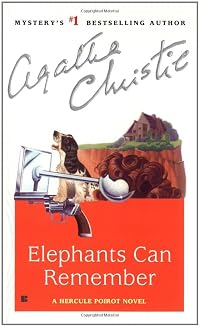
A classic Hercule Poirot investigation, Agatha Christie's Elephants Can Remember has the expert detective delving into an unsolved crime from the past involving the strange death of a husband and wife. Hercule Poirot stood on the clifftop. Here, many years earlier, there had been a fatal accident followed by the grisly discovery of two bodies-a husband and wife who had been shot dead. But who had killed whom? Was it a suicide pact? A crime of passion? Or cold-blooded murder? Poirot delves show more into the past and discovers that "old sins leave long shadows.". show lessTags
Recommendations















Member Reviews
“Elephants can remember, but we are human beings and mercifully human beings can forget.”
My first Christie of 2017. It took me a few attempts to get into the story, not because it was difficult to find a way to engage with the plot but purely because I enjoyed re-reading the opening of the story where Ariadne Oliver, Dame Agatha's alter ego in this series, considers the different ways to wear a hat and which hat is appropriate for which occasion.
I love Ariadne. She's the scatty, sassy, creative, liberal counterpart to Poirot. Not as brilliant in applying logic, but just as brilliant by her exuberance and love of life.
As for the story itself, this was quite different from previous works of Christie. Although there are some show more similarities with A Murder is Announced (one of my favourites), Elephants Can Remember is not a locked room mystery and puts much more emphasis on the different mental states and attitudes of the characters, who all seem to be entities who interact with each other, but who seem to act somewhat isolated from other characters.
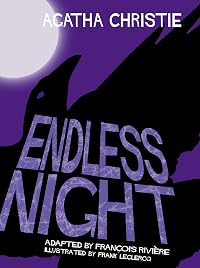
Despite the occasional comic relief through Ariadne's antics, there is little that is cozy or twee about this story and in a way it struck me as if Christie tried her hand at a dark, psychological thriller, rather than at another Poirot mystery. I very much admired the attempt. Many of the Christie novels I love best are quite dark - just look at Endless Night! - even though she is of course best known for mysteries that are more akin to puzzles than gritty crime novels.
Maybe my appreciation for Elephants Can Remember has been influenced by my recent foray into the writing of Patricia Highsmith, whose work was contemporary to Christie's later work (including Elephants), but I did wonder whether Christie was influenced by the change in direction that crime fiction in the 1960s and 1970s seemed to have undergone. show less
My first Christie of 2017. It took me a few attempts to get into the story, not because it was difficult to find a way to engage with the plot but purely because I enjoyed re-reading the opening of the story where Ariadne Oliver, Dame Agatha's alter ego in this series, considers the different ways to wear a hat and which hat is appropriate for which occasion.
I love Ariadne. She's the scatty, sassy, creative, liberal counterpart to Poirot. Not as brilliant in applying logic, but just as brilliant by her exuberance and love of life.
As for the story itself, this was quite different from previous works of Christie. Although there are some show more similarities with A Murder is Announced (one of my favourites), Elephants Can Remember is not a locked room mystery and puts much more emphasis on the different mental states and attitudes of the characters, who all seem to be entities who interact with each other, but who seem to act somewhat isolated from other characters.
Despite the occasional comic relief through Ariadne's antics, there is little that is cozy or twee about this story and in a way it struck me as if Christie tried her hand at a dark, psychological thriller, rather than at another Poirot mystery. I very much admired the attempt. Many of the Christie novels I love best are quite dark - just look at Endless Night! - even though she is of course best known for mysteries that are more akin to puzzles than gritty crime novels.
Maybe my appreciation for Elephants Can Remember has been influenced by my recent foray into the writing of Patricia Highsmith, whose work was contemporary to Christie's later work (including Elephants), but I did wonder whether Christie was influenced by the change in direction that crime fiction in the 1960s and 1970s seemed to have undergone. show less
"Elephants Can Remember" is my first Agatha Christie novel and I rather fear that I may have begun my reading at the nadir of her accomplishments rather than at the apogee.
"Elephants Can Remember" was published in 1972, when Agatha Christie was eighty two. It was the last novel that she wrote featuring either Hercule Poirot, the Belgian Detective, or Adriadne Oliver, who appears to be an avatar of the author.
The theme of the book is memory and how unreliable it and oral histories are. The final line of the book is rather fine, I think:
“Elephants can remember, but we are human beings and mercifully, human beings can forget.”
The plot revolves around an apparent suicide of a respectable married couple some twenty years earlier. Oliver show more and Poirot attempt to discover the truth of the "why" behind this event by interviewing "Elephants", people who had contact with the couple at or before the time of their death, and sifting through their, often conflicting and inaccurate, memories.
There are flashes of brilliance in the this novel. Poirot's dialogue is crisp and distinctive, building a picture of his character while weaving intriguing clues into possible versions of the truth. The idea the plot curls around is ingenious and original. Many of the "Elephants" have strong voices and deliver views of the couple that say as much about the social background and beliefs of the "Elephant" as they do about the couple.
Unfortunately, these flashes appear through a fog of indiscipline that marred my enjoyment of the novel. ironically perhaps, for a book about memory, Agatha Christie seems to have lost her grip on time in this story: the ages of the characters and the timing of events change as the tale is told. Although the novel is set in the late Sixties or early Seventies and two of the characters are under twenty five, this still reads like a period piece set decades earlier. Statements are repeated in a rambling way that seems to serve no purpose.
I found myself torn between thinking that this was a clever attempt to illustrate that time and the memory of time are only distantly related, or that Agatha Christie's editor was too lazy or too intimidated by the author to do their job or that Agatha Christie was suffering from memory problems that prompted her interest in this theme.
Despite the problems with time and the tendency to ramble, this was an enjoyable read, even if the rambling gave me the opportunity to figure out the puzzle a few chapters ahead of the denouement. My enjoyment was enhance by Hugh Fraser's narration, which was flawless.
Now I want to read a Poirot book that shows me what Agatha Christie is capable of at her best. show less
"Elephants Can Remember" was published in 1972, when Agatha Christie was eighty two. It was the last novel that she wrote featuring either Hercule Poirot, the Belgian Detective, or Adriadne Oliver, who appears to be an avatar of the author.
The theme of the book is memory and how unreliable it and oral histories are. The final line of the book is rather fine, I think:
“Elephants can remember, but we are human beings and mercifully, human beings can forget.”
The plot revolves around an apparent suicide of a respectable married couple some twenty years earlier. Oliver show more and Poirot attempt to discover the truth of the "why" behind this event by interviewing "Elephants", people who had contact with the couple at or before the time of their death, and sifting through their, often conflicting and inaccurate, memories.
There are flashes of brilliance in the this novel. Poirot's dialogue is crisp and distinctive, building a picture of his character while weaving intriguing clues into possible versions of the truth. The idea the plot curls around is ingenious and original. Many of the "Elephants" have strong voices and deliver views of the couple that say as much about the social background and beliefs of the "Elephant" as they do about the couple.
Unfortunately, these flashes appear through a fog of indiscipline that marred my enjoyment of the novel. ironically perhaps, for a book about memory, Agatha Christie seems to have lost her grip on time in this story: the ages of the characters and the timing of events change as the tale is told. Although the novel is set in the late Sixties or early Seventies and two of the characters are under twenty five, this still reads like a period piece set decades earlier. Statements are repeated in a rambling way that seems to serve no purpose.
I found myself torn between thinking that this was a clever attempt to illustrate that time and the memory of time are only distantly related, or that Agatha Christie's editor was too lazy or too intimidated by the author to do their job or that Agatha Christie was suffering from memory problems that prompted her interest in this theme.
Despite the problems with time and the tendency to ramble, this was an enjoyable read, even if the rambling gave me the opportunity to figure out the puzzle a few chapters ahead of the denouement. My enjoyment was enhance by Hugh Fraser's narration, which was flawless.
Now I want to read a Poirot book that shows me what Agatha Christie is capable of at her best. show less
Dame Agatha Christie wrote more than eight dozen mysteries in her lengthy lifetime, and Elephants Can Remember is nearly one of the last. But the old girl had lost none of her charm or wit in a novel that came more than 50 years after her first, The Mysterious Affair at Styles.
An interfering busybody monopolizes the mystery author Ariadne Oliver (a delicious sendup Christie created of herself) at a literary luncheon about a 15-year-old tragedy in which an old schoolmate of Mrs. Oliver’s and her husband died in what police presumed was a suicide pact. At the time of the tragedy, Mrs. Oliver had been on a book tour in America, so she had garnered what little information she had second-hand. But the long-ago deaths begin to trouble Mrs. show more Oliver. With the help of her old friend, detective Hercule Poirot, Mrs. Oliver begins to consult “the elephants” — that is, older people who, like elephants, can still remember what happened decades ago.
Elephants Can Remember provides a delightful puzzle for readers to unravel and — better yet — a glimpse into the remarkably romantic “Papa Poirot,” who is so often eager to bring star-crossed lovers together (e.g., Murder on the Links, Sad Cypress, “The Arcadian Deer” and “The Horses of Diomedes” in The Labours of Hercules). Highly recommended. show less
An interfering busybody monopolizes the mystery author Ariadne Oliver (a delicious sendup Christie created of herself) at a literary luncheon about a 15-year-old tragedy in which an old schoolmate of Mrs. Oliver’s and her husband died in what police presumed was a suicide pact. At the time of the tragedy, Mrs. Oliver had been on a book tour in America, so she had garnered what little information she had second-hand. But the long-ago deaths begin to trouble Mrs. show more Oliver. With the help of her old friend, detective Hercule Poirot, Mrs. Oliver begins to consult “the elephants” — that is, older people who, like elephants, can still remember what happened decades ago.
Elephants Can Remember provides a delightful puzzle for readers to unravel and — better yet — a glimpse into the remarkably romantic “Papa Poirot,” who is so often eager to bring star-crossed lovers together (e.g., Murder on the Links, Sad Cypress, “The Arcadian Deer” and “The Horses of Diomedes” in The Labours of Hercules). Highly recommended. show less
Summary: Poirot and crime writer Ariadne Oliver team up at the request of a mother and young couple, to learn the truth about an unexplained double suicide many years earlier.
Celia Ravenscroft and Desmond Burton-Cox want to marry. Desmond's mother by adoption, looking for cause to oppose it, seeks out the help of crime writer Ariadne Oliver, who is Celia's godmother. Celia's parents died years ago in what authorities determined to be a suicide pact. Mrs. Burton-Cox want to know who killed who, and if there is a streak of mental instability that Celia might inherit. Celia and Desmond wish the truth as well.
Oliver enlists her old friend Poirot, and the two of them go in search of "the elephants," those who remember crucial facts that show more might bring to light what truly happened, and incidentally, why Mrs. Burton-Cox is really so bent on discouraging the marriage. Along the way, we learn of Mrs. Ravenscroft's deranged identical twin sister, who died by falling from the same cliffs where the Ravenscrofts took their lives three weeks later. Poirot wonders about the exceptional number of wigs worn by Mrs Ravenscroft, despite a healthy head of hair. What did French au pair know, who was staying at the time of their deaths? Finally, we wonder about the affectionate dog that inexplicably bit.
Reading the story, I was curious how much of Agatha Christie is written into the character of Ariadne Oliver. It was fun to envision Agatha going about with Poirot crime solving. I have to admit that the solution was fairly apparent before the denouement. What I liked about this story was the diverse set of characters Christie offers us: the somewhat eccentric Ariadne Oliver, the strong-willed Celia, the determined Desmond, the unlikable Mrs. Burton-Cox, and the au pair torn by love and the promise to keep a secret. We also encounter an older Poirot, one who sits and thinks even more. We wonder, as does Ariadne at one point, whether he still has his edge. As always, we discover his edge is to listen, to observe, to wait, and to think, drawing on his insights into human nature, until the pieces fall in place.
I didn't think this was Christie at her best. She left too many clues, too few red herrings. Yet I found the story a pleasant diversion, with a great mix of characters and good pacing. This was published less than four years before her death. Some have speculated that she was struggling with the onset of some form of dementia when she wrote Elephants Can Remember. Perhaps the title was a valiant attempt to say "I've still got what it takes!" She was in her early 80's when she wrote this--and still capable of writing circles around younger writers! show less
Celia Ravenscroft and Desmond Burton-Cox want to marry. Desmond's mother by adoption, looking for cause to oppose it, seeks out the help of crime writer Ariadne Oliver, who is Celia's godmother. Celia's parents died years ago in what authorities determined to be a suicide pact. Mrs. Burton-Cox want to know who killed who, and if there is a streak of mental instability that Celia might inherit. Celia and Desmond wish the truth as well.
Oliver enlists her old friend Poirot, and the two of them go in search of "the elephants," those who remember crucial facts that show more might bring to light what truly happened, and incidentally, why Mrs. Burton-Cox is really so bent on discouraging the marriage. Along the way, we learn of Mrs. Ravenscroft's deranged identical twin sister, who died by falling from the same cliffs where the Ravenscrofts took their lives three weeks later. Poirot wonders about the exceptional number of wigs worn by Mrs Ravenscroft, despite a healthy head of hair. What did French au pair know, who was staying at the time of their deaths? Finally, we wonder about the affectionate dog that inexplicably bit.
Reading the story, I was curious how much of Agatha Christie is written into the character of Ariadne Oliver. It was fun to envision Agatha going about with Poirot crime solving. I have to admit that the solution was fairly apparent before the denouement. What I liked about this story was the diverse set of characters Christie offers us: the somewhat eccentric Ariadne Oliver, the strong-willed Celia, the determined Desmond, the unlikable Mrs. Burton-Cox, and the au pair torn by love and the promise to keep a secret. We also encounter an older Poirot, one who sits and thinks even more. We wonder, as does Ariadne at one point, whether he still has his edge. As always, we discover his edge is to listen, to observe, to wait, and to think, drawing on his insights into human nature, until the pieces fall in place.
I didn't think this was Christie at her best. She left too many clues, too few red herrings. Yet I found the story a pleasant diversion, with a great mix of characters and good pacing. This was published less than four years before her death. Some have speculated that she was struggling with the onset of some form of dementia when she wrote Elephants Can Remember. Perhaps the title was a valiant attempt to say "I've still got what it takes!" She was in her early 80's when she wrote this--and still capable of writing circles around younger writers! show less
Elephants Can Remember by Agatha Christie
An interesting tale of resolving what would now be called a cold case. We have an incident that triggers the story, a story of investigation and delving into an old mystery and the secrets that hide the truth.
This book is rich in elephants. There is an abundance of elephants. Solving the mystery would not have been possible without the elephants.
Mrs. Oliver is an interesting character, but Mrs Burton-Cox takes the biscuit. We have all known a Mrs Burton-Cox. Thankfully they are not as common now as they once were, or should I say they are probably more hidden from view by layers of politeness and plausible deniability veiling inuendo and cheap shots.
Agatha Christie’s books are more about humour show more around the nature of characters and their interactions with one another. These books are of an era that is now a distant memory and the books contain many attitudes and behaviours that would be abhorrent in today’s world.
As with most of the golden age crime novels the story takes place amongst privileged people who are quite arrogant and have little empathy with less well off people.
Would I read another book by this author?
Yes. While I find the aristocratic and pompous nature of many of the characters the stories are woven into the literary culture of the English speaking world and can provide some amusement.
Would I recommend this book, and if so, to whom?
It is a book to be read by anyone interested in golden age crime stories. Agatha Christie’s works are a must read for anyone reading in the golden age genre.
Did this book inspire me to do anything?
No.
Was the book engrossing?
The book is 160 pages long. It took me seven days to read this book, so obviously I did not find it that engrossing. I was very busy over those days, but still, seven days to read 160 pages!
Was there anything you found remarkable about this book?
Yes. It clearly demonstrates the fundamental truth that there is always an elephant. show less
An interesting tale of resolving what would now be called a cold case. We have an incident that triggers the story, a story of investigation and delving into an old mystery and the secrets that hide the truth.
This book is rich in elephants. There is an abundance of elephants. Solving the mystery would not have been possible without the elephants.
Mrs. Oliver is an interesting character, but Mrs Burton-Cox takes the biscuit. We have all known a Mrs Burton-Cox. Thankfully they are not as common now as they once were, or should I say they are probably more hidden from view by layers of politeness and plausible deniability veiling inuendo and cheap shots.
Agatha Christie’s books are more about humour show more around the nature of characters and their interactions with one another. These books are of an era that is now a distant memory and the books contain many attitudes and behaviours that would be abhorrent in today’s world.
As with most of the golden age crime novels the story takes place amongst privileged people who are quite arrogant and have little empathy with less well off people.
Would I read another book by this author?
Yes. While I find the aristocratic and pompous nature of many of the characters the stories are woven into the literary culture of the English speaking world and can provide some amusement.
Would I recommend this book, and if so, to whom?
It is a book to be read by anyone interested in golden age crime stories. Agatha Christie’s works are a must read for anyone reading in the golden age genre.
Did this book inspire me to do anything?
No.
Was the book engrossing?
The book is 160 pages long. It took me seven days to read this book, so obviously I did not find it that engrossing. I was very busy over those days, but still, seven days to read 160 pages!
Was there anything you found remarkable about this book?
Yes. It clearly demonstrates the fundamental truth that there is always an elephant. show less
Agatha Christie's second last book, written at the age of 82 and showing some signs of the mental deterioration she appeared to suffer from in her old age. This is a tale about memory, about who remembers, and how well those memories can be trusted. Ariadne Oliver ropes Poirot in after she is asked by a stranger at a literary lunch to find out whether Oliver's god-daughter's mother shot her father or vice versa. Christie's themes of the importance of truth (which can be coped with) over a comfortable lie, of how the past can be investigated, adoption, and how love can lead to unexpected actions are strong in this book, although it is more wooly and meandering than her strongest work. One for fans.
One thing out of many that I admire about the writing of Agatha Christie is the economy with words. In other books. Not this one.
The same questions asked, the same kinds of answers given, the same guesses and conjectures repeated ad nauseum. Long and rambling sentences making up long and rambling conversations. So many words. Actually not that many, the book is less than 250 pages long. It should have been 125.
I looked it up: the word "something" appeared in this book 197 times. Often in vague statements such as: "That's not quite the term she used, but something like that" and "...what was his name - Sir Something Ravenscroft" and "I mean, the people who said there was some scandalous story or something about either her or him and that show more either he'd shot her or she'd shot him, that's all nonsense, I'd say."
Consider the number of words used to express very little in this paragraph:
"'Mrs Rosentelle?' said Mrs Oliver, glancing down at a card. 'I understand she said she could see me if I came here this morning. I don't mean,' she added, 'having anything done to my hair, but I wanted to consult her about something and I believe a telephone call was made and she said if I came at half past eleven she could spare me a short time.'"
I am no editor but "Mrs Rosentelle is expecting me," might have sufficed.
Oh, well. For the record, still not tired of AC. show less
The same questions asked, the same kinds of answers given, the same guesses and conjectures repeated ad nauseum. Long and rambling sentences making up long and rambling conversations. So many words. Actually not that many, the book is less than 250 pages long. It should have been 125.
I looked it up: the word "something" appeared in this book 197 times. Often in vague statements such as: "That's not quite the term she used, but something like that" and "...what was his name - Sir Something Ravenscroft" and "I mean, the people who said there was some scandalous story or something about either her or him and that show more either he'd shot her or she'd shot him, that's all nonsense, I'd say."
Consider the number of words used to express very little in this paragraph:
"'Mrs Rosentelle?' said Mrs Oliver, glancing down at a card. 'I understand she said she could see me if I came here this morning. I don't mean,' she added, 'having anything done to my hair, but I wanted to consult her about something and I believe a telephone call was made and she said if I came at half past eleven she could spare me a short time.'"
I am no editor but "Mrs Rosentelle is expecting me," might have sufficed.
Oh, well. For the record, still not tired of AC. show less
Members
- Recently Added By
Lists

British Mystery
469 works; 14 members

Crime and Mysteries to Read
746 works; 31 members

Agatha Christie Poirot
43 works; 2 members

Books About Murder
313 works; 7 members

Detective Stories
343 works; 5 members

Favorite Books from the 1970s
28 works; 3 members

Animals in the Title
498 works; 11 members

Books Read in 2021
5,361 works; 114 members

TBR
77 works; 1 member

Books Read in 2024
4,623 works; 126 members

Agatha Christie Chronology
93 works; 1 member
Author Information

2,150+ Works 439,796 Members
One of the most successful and beloved writer of mystery stories, Agatha Mary Clarissa Christie was born in 1890 in Torquay, County Devon, England. She wrote her first novel, The Mysterious Affair at Styles, in 1920, launching a literary career that spanned decades. In her lifetime, she authored 79 crime novels and a short story collection, 19 show more plays, and six novels written under the name of Mary Westmacott. Her books have sold over a billion copies in the English language with another billion in 44 foreign languages. Some of her most famous titles include Murder on the Orient Express, Mystery of the Blue Train, And Then There Were None, 13 at Dinner and The Sittaford Mystery. Noted for clever and surprising twists of plot, many of Christie's mysteries feature two unconventional fictional detectives named Hercule Poirot and Miss Jane Marple. Poirot, in particular, plays the hero of many of her works, including the classic, The Murder of Roger Ackroyd (1926), and Curtain (1975), one of her last works in which the famed detective dies. Over the years, her travels took her to the Middle East where she met noted English archaeologist Sir Max Mallowan. They married in 1930. Christie accompanied Mallowan on annual expeditions to Iraq and Syria, which served as material for Murder in Mesopotamia (1930), Death on the Nile (1937), and Appointment with Death (1938). Christie's credits also include the plays, The Mousetrap and Witness for the Prosecution (1953; film 1957). Christie received the New York Drama Critics' Circle Award for 1954-1955 for Witness. She was also named Dame Commander of the Order of the British Empire in 1971. Christie died in 1976. (Bowker Author Biography) show less
Some Editions
Awards and Honors
Distinctions
Series


Belongs to Publisher Series
Work Relationships
Common Knowledge
- Canonical title
- Elephants Can Remember
- Original title
- Elephants Can Remember
- Original publication date
- 1972-11-01
- People/Characters
- Hercule Poirot; Ariadne Oliver; Celia Ravenscroft; Mr. Goby; Desmond Burton-Cox; Mrs Burton-Cox
- Important places
- London, England, UK; Cheltenham, Gloucestershire, England, UK; Lausanne, Vaud, Switzerland; Little Saltern Minor, England, UK; Chipping Bartram, England, UK; Overcliffe, The Downs, England, UK (show all 7); Malaya
- Dedication
- To Molly Myers
in return for many kindnesses - First words
- Mrs. Oliver looked at herself in the glass.
- Last words
- (Click to show. Warning: May contain spoilers.)"Elephants can remember," said Mrs. Oliver, "but we are human beings and mercifully human beings can forget."
- Original language
- English
Classifications
Statistics
- Members
- 4,424
- Popularity
- 3,356
- Reviews
- 77
- Rating
- (3.41)
- Languages
- 26 — Catalan, Czech, Danish, Dutch, English, Estonian, Finnish, French, German, Greek, Hungarian, Indonesian, Italian, Japanese, Norwegian (Bokmål), Norwegian, Polish, Romanian, Serbian, Croatian, Slovenian, Spanish, Swedish, Thai, Turkish, Portuguese (Portugal)
- Media
- Paper, Audiobook, Ebook
- ISBNs
- 150
- UPCs
- 1
- ASINs
- 78