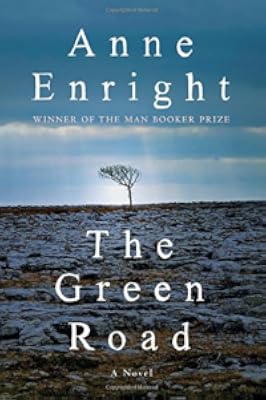
The Green Road
by Anne Enright
On This Page
Description
"Ardeevin, County Clare, Ireland. 1980. When her oldest brother Dan announces he will enter the priesthood, young Hanna watches her mother howl in agony and retreat to her room. In the years that follow, the Madigan children leave one by one: Dan for the frenzy of New York under the shadow of AIDS; Constance for a hospital in Limerick, where petty antics follow simple tragedy; Emmet for the backlands of Mali, where he learns the fragility of love and order; and Hanna for modern-day Dublin show more and the trials of her own motherhood. When Christmas Day reunites the children under one roof, each confronts the terrible weight of family ties and the journey that brought them home" -- show lessTags
Recommendations

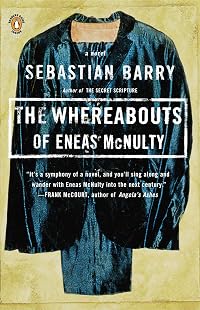
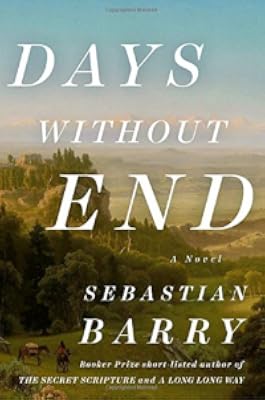
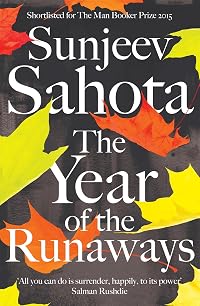
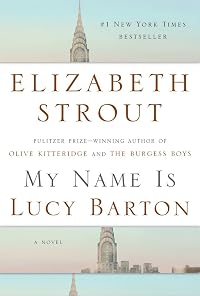

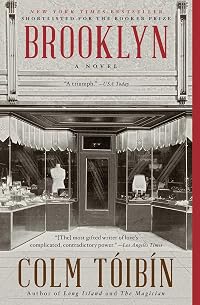
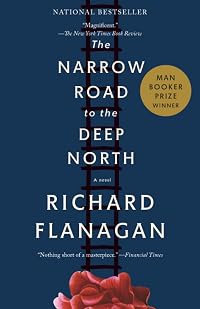
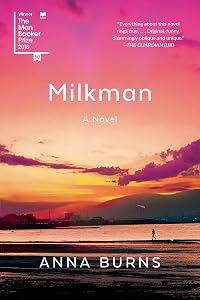
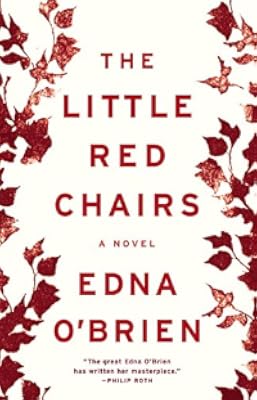
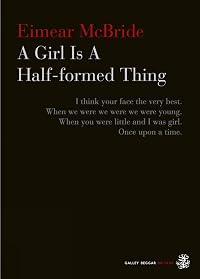
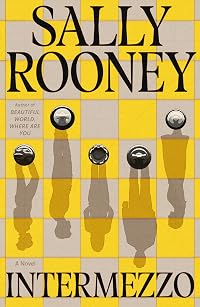

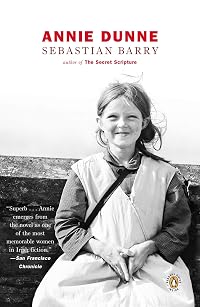

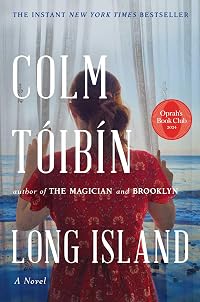


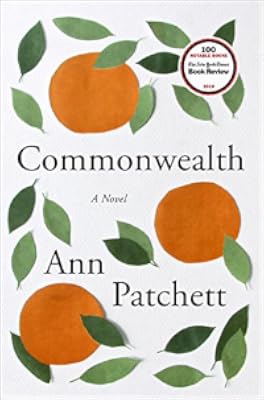
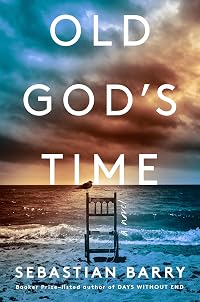
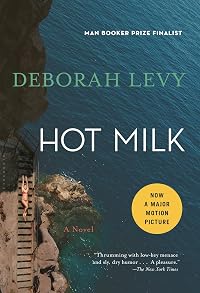
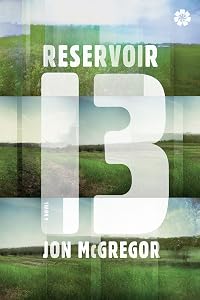


Member Recommendations
tangledthread I kept thinking of Three Junes as I read this book.
Member Reviews
Oh good. A family drama. Just what I (don't) love. But this one manages to just skate past petulance and embrace poignance instead. Set, or, more accurately, anchored in a small town in Ireland, The Green Road starts by introducing four siblings, each of whom has struggled with the legacy of an inconsistent and self-absorbed mother. They have ended up scattered about the globe and we briefly follow the trajectories of their emerging and varyingly chaotic adult identities. Then Rosaleen announces that she plans to sell the sprawling family home and each sibling makes their way home for a last Christmas at Ardeevin. Naturally, being together in this house of their childhood evokes a mélange of memories and jump-starts deeply held habits. show more
"It was a question of texture, Dan thought, a whiff of your former self in a twist of fabric, a loose board. It was the reassuring madness of patterned wallpaper under the daily shift of light. The sun rose at the front and set at the back of Ardeevin, wherever he was in the world, and when he came back, the house made sense in a way that nothing else did."
This is just one example of Enright's stunning writing; passages like this almost sneak past the reader because they are so interwoven throughout.
The novel loses one full star for the first chapter which resonated not one bit. Hannah, the primary character of the first chapter, never really comes into focus in the novel and this start fails to establish either ambience or tone. It loses another half star for the periodic failure of pacing; I don't always completely trust my brief spells of boredom with an otherwise very good novel, but I have to reflect that part of my reading experience in my rating. Still, though it's not quite great, I'm glad I read it. show less
"It was a question of texture, Dan thought, a whiff of your former self in a twist of fabric, a loose board. It was the reassuring madness of patterned wallpaper under the daily shift of light. The sun rose at the front and set at the back of Ardeevin, wherever he was in the world, and when he came back, the house made sense in a way that nothing else did."
This is just one example of Enright's stunning writing; passages like this almost sneak past the reader because they are so interwoven throughout.
The novel loses one full star for the first chapter which resonated not one bit. Hannah, the primary character of the first chapter, never really comes into focus in the novel and this start fails to establish either ambience or tone. It loses another half star for the periodic failure of pacing; I don't always completely trust my brief spells of boredom with an otherwise very good novel, but I have to reflect that part of my reading experience in my rating. Still, though it's not quite great, I'm glad I read it. show less
There's a certain type of movie that gets referred to as Oscar bait—a film that panders to ideas of what a good movie "looks" like, with lavish period costuming or a depressing but unchallenging treatment of some important issue or a beautiful actor who is bold enough to wear a prosthetic or gain 5kg for a role. The Green Road felt like Booker bait.
I went back and looked at some of the mainstream reviews for this book when it was first published. The Irish Times called it "Irish, or rather Irish-novelly, [in] an unashamed fashion", but is so in order to play with technique and sensibility; the Guardian opined that Enright was "playing with our expectations of what an Irish novel should do", that she "[treads] that line of Irish show more literary cliche with delicious knowingness."
Enright might be aware that she's working with clichés, but I have to disagree with those reviewers that she does so well. There's no subversion here, nor even the deftness of touch that could breathe fresh life into the emotionally repressed Irish Catholic family pre- and mid-Celtic Tiger. The main characters all have one defining feature—the Narcissist Mother, the Gay Son, the Self-Righteous Son, the Alcoholic Daughter, the Fat Daughter—and tend to (re)act like Literary Characters, not people. This sits oddly alongside Enright's clear insistence on realism in things like the big Christmas Day fight, where half the dialogue are the kinds of non sequiturs you get when what people are really fighting about is things that have been festering for twenty years that they might not even have articulated to themselves. That disjointedness is apparent elsewhere in the book. When Enright is writing about what she knows, she's capable of passages of startling perceptiveness: her description of the behaviour on Christmas Eve in a rural pub in the boom years was spot on, ditto her account of an Irish supermarket on the same day. But as soon as she's outside of personal experience—the chapter set in the NYC gay community of ca. 1990, the chapter set in Mali in ca. 2005—it's at best stagey and mostly distasteful.
It all felt a bit cynical to me but hey, it won Enright awards, so I guess she knows what she's doing. show less
I went back and looked at some of the mainstream reviews for this book when it was first published. The Irish Times called it "Irish, or rather Irish-novelly, [in] an unashamed fashion", but is so in order to play with technique and sensibility; the Guardian opined that Enright was "playing with our expectations of what an Irish novel should do", that she "[treads] that line of Irish show more literary cliche with delicious knowingness."
Enright might be aware that she's working with clichés, but I have to disagree with those reviewers that she does so well. There's no subversion here, nor even the deftness of touch that could breathe fresh life into the emotionally repressed Irish Catholic family pre- and mid-Celtic Tiger. The main characters all have one defining feature—the Narcissist Mother, the Gay Son, the Self-Righteous Son, the Alcoholic Daughter, the Fat Daughter—and tend to (re)act like Literary Characters, not people. This sits oddly alongside Enright's clear insistence on realism in things like the big Christmas Day fight, where half the dialogue are the kinds of non sequiturs you get when what people are really fighting about is things that have been festering for twenty years that they might not even have articulated to themselves. That disjointedness is apparent elsewhere in the book. When Enright is writing about what she knows, she's capable of passages of startling perceptiveness: her description of the behaviour on Christmas Eve in a rural pub in the boom years was spot on, ditto her account of an Irish supermarket on the same day. But as soon as she's outside of personal experience—the chapter set in the NYC gay community of ca. 1990, the chapter set in Mali in ca. 2005—it's at best stagey and mostly distasteful.
It all felt a bit cynical to me but hey, it won Enright awards, so I guess she knows what she's doing. show less
This is billed as a family-saga, but it often feels more like a linked-short-story sequence, as the viewpoint switches between Rosaleen Madigan and her four children in a series of extended vignettes spread over some twenty-five years. Even when she brings the family together, three-quarters of the way through, they all still seem to be living in their own bubbles, and the book is often more about what people don't tell each other than about how they interact.
But the vignettes are all very finely realised, with lots of telling observation: Enright is clearly up there with Alice Munro when it comes to short stories, and it almost seems like an irritating distraction that we have to map all these disparate people together into a coherent show more novel.
Enjoyable and rewarding. show less
But the vignettes are all very finely realised, with lots of telling observation: Enright is clearly up there with Alice Munro when it comes to short stories, and it almost seems like an irritating distraction that we have to map all these disparate people together into a coherent show more novel.
Enjoyable and rewarding. show less
Oh, the beauty of sinking into seemingly effortless prose.
I am sorry. I cannot invite you home for Christmas because I am Irish and my family is mad.
Our Irish family story starts with young Hanna in County Clare in 1980 and Dan, the eldest, announcing that when he leaves university he will enter the priesthood, which makes his mother take to her bed for days.
We then move with Dan to New York’s gay scene in 1991, with death from incurable AIDS stalking the pages, evoked in a few spare scenes.
We return to Ireland and Constance, the older sister, going for a breast cancer check up in 1997 in County Limerick, all her close friends having moved away, but she is happily married with three children.
Then we catch up with Emmet, the younger show more brother, a foreign aid worker, loving and losing in Mali in 2002. He had returned home and nursed his dying father ten years earlier.
Back in County Clare in 2005, their mother, Rosaleen, is getting old and decides to sell the family home and the smallholding inherited from her husband. This is the catalyst for the Madigan’s Christmas family reunion.
The return to the family home by each sibling is carefully described, and then there is the surprise of Christmas Day. This is a brilliant set piece, which is followed by an open ending of sorts, with you wanting to know more of the lives of the Madigans, but leaving that to your imagination. show less
I am sorry. I cannot invite you home for Christmas because I am Irish and my family is mad.
Our Irish family story starts with young Hanna in County Clare in 1980 and Dan, the eldest, announcing that when he leaves university he will enter the priesthood, which makes his mother take to her bed for days.
We then move with Dan to New York’s gay scene in 1991, with death from incurable AIDS stalking the pages, evoked in a few spare scenes.
We return to Ireland and Constance, the older sister, going for a breast cancer check up in 1997 in County Limerick, all her close friends having moved away, but she is happily married with three children.
Then we catch up with Emmet, the younger show more brother, a foreign aid worker, loving and losing in Mali in 2002. He had returned home and nursed his dying father ten years earlier.
Back in County Clare in 2005, their mother, Rosaleen, is getting old and decides to sell the family home and the smallholding inherited from her husband. This is the catalyst for the Madigan’s Christmas family reunion.
The return to the family home by each sibling is carefully described, and then there is the surprise of Christmas Day. This is a brilliant set piece, which is followed by an open ending of sorts, with you wanting to know more of the lives of the Madigans, but leaving that to your imagination. show less
Several days after completing this intense novel about the mostly unhappy members of the Madigan family--matriarch Rosaleen; her sons, Dan and Emmet; and daughters, Constance and Hanna--I find myself puzzling over them. Except for Constance, who has married well, and is clearly loved by husband and children, they are all so sad and disconnected. I find myself wondering what famed pediatrician and psychoanalyst D.W. Winnicott would have made of the beautiful but brittle Rosaleen Considine, who married beneath her and whose great relationship in life appears to have been with her reflection in the mirror.
According to Robert Ades, who writes on Winnicott: "Once the infant knows the mother can reliably provide during the baby’s early show more state of complete dependence, it is through the bust-ups and bungles of being good-enough rather than perfect that the infant finds out about his own developing needs. The child discovers he is not within the suffocating realm of parental omniscience . . . " But what if there are no bust-ups and bungles, or none that are admitted to? Against Ades's words, Rosaleen is not a "good-enough" mother; she is a too-much mother, who demands perfection of herself and apparently of her children. Not surprisingly, she is endlessly dissatisfied. Impeccably groomed, quietly tyrannical, incapable of spontaneity, easily offended, her own childhood is said to be inaccessible to her until she reaches her sixties. When her adult children ask her to describe her own mother, she can only supply details of dress.
The first half of Enright's book provides each of the main characters with a long chapter to reveal his or her circumstances and dilemmas. Hanna's chapter, set when all of the children are still at home, focuses on a family meal at which Dan, the eldest son, announces plans to train for the priesthood. The priesthood is apparently code for being gay, and Dan's news sends his mother to bed for days on end. Constance's section focuses on her experiences as a patient being assessed in the mammography department of a city hospital. It reveals her intense sympathy for the marks of pain on others' bodies, and provides her reflections on the friends of her youth, who, unlike her, all pursued more exciting lives elsewhere. Both Dan's and Emmet's sections suggest that as adult men they have great difficulty connecting. Dan's chapter highlights a time in early adulthood when he is coming to terms with his sexual identity, still attached to his beautiful Irish girlfriend, Isabel, but frequently engaging in risky encounters with men. (A.I.D.S. has come to New York, and the members of the artsy crowd that Dan hangs out with are dropping like flies.) Apparently attracted to suffering, Emmet is doing humanitarian work in Africa. He is cynical and unreachable. The section that concerns him, his girlfriend Alice, and Mitch, the poor, stray dog she takes in, are heartbreaking--almost more than I could take at times. (I find it hard to view or read about the mute suffering of animals, and this section tested me.)
In the second half of Enright's book, set in 2005, the Madigans reunite for Christmas, as Rosaleen has been threatening to sell the family home. This is a tense affair that nevertheless allows the adult children to experience and respond to the vulnerability of their difficult mother--perhaps for the first time. As fractured as the family is, as broken as its members may be, they are still capable of acts of love.
Enright's novel is beautiful and intense. The characters are not always likeable, but Enright makes sure that the reader feels for them in their struggles. I will admit, however, that I occasionally wished for respite from the sadness. I think a sense of humour goes a long way (and provides psychological protection) in difficult families. show less
According to Robert Ades, who writes on Winnicott: "Once the infant knows the mother can reliably provide during the baby’s early show more state of complete dependence, it is through the bust-ups and bungles of being good-enough rather than perfect that the infant finds out about his own developing needs. The child discovers he is not within the suffocating realm of parental omniscience . . . " But what if there are no bust-ups and bungles, or none that are admitted to? Against Ades's words, Rosaleen is not a "good-enough" mother; she is a too-much mother, who demands perfection of herself and apparently of her children. Not surprisingly, she is endlessly dissatisfied. Impeccably groomed, quietly tyrannical, incapable of spontaneity, easily offended, her own childhood is said to be inaccessible to her until she reaches her sixties. When her adult children ask her to describe her own mother, she can only supply details of dress.
The first half of Enright's book provides each of the main characters with a long chapter to reveal his or her circumstances and dilemmas. Hanna's chapter, set when all of the children are still at home, focuses on a family meal at which Dan, the eldest son, announces plans to train for the priesthood. The priesthood is apparently code for being gay, and Dan's news sends his mother to bed for days on end. Constance's section focuses on her experiences as a patient being assessed in the mammography department of a city hospital. It reveals her intense sympathy for the marks of pain on others' bodies, and provides her reflections on the friends of her youth, who, unlike her, all pursued more exciting lives elsewhere. Both Dan's and Emmet's sections suggest that as adult men they have great difficulty connecting. Dan's chapter highlights a time in early adulthood when he is coming to terms with his sexual identity, still attached to his beautiful Irish girlfriend, Isabel, but frequently engaging in risky encounters with men. (A.I.D.S. has come to New York, and the members of the artsy crowd that Dan hangs out with are dropping like flies.) Apparently attracted to suffering, Emmet is doing humanitarian work in Africa. He is cynical and unreachable. The section that concerns him, his girlfriend Alice, and Mitch, the poor, stray dog she takes in, are heartbreaking--almost more than I could take at times. (I find it hard to view or read about the mute suffering of animals, and this section tested me.)
In the second half of Enright's book, set in 2005, the Madigans reunite for Christmas, as Rosaleen has been threatening to sell the family home. This is a tense affair that nevertheless allows the adult children to experience and respond to the vulnerability of their difficult mother--perhaps for the first time. As fractured as the family is, as broken as its members may be, they are still capable of acts of love.
Enright's novel is beautiful and intense. The characters are not always likeable, but Enright makes sure that the reader feels for them in their struggles. I will admit, however, that I occasionally wished for respite from the sadness. I think a sense of humour goes a long way (and provides psychological protection) in difficult families. show less
The Green Road was sheer poetry, some of the best writing I've enjoyed in a long time. Anne Enright is the kind of writer who makes me want to toss my pen, she is so good and her work appears effortless: "Rome was 1962, an audience with the Pope, a man on a little Vespa, so handsome he would cut you, with a fat brown baby on his knee. Oh and Roma, Roma! The unexpected piazzas, the sprays of orange blossom, an old codger on the tram who stank of garlic so badly -- Rosaleen should have realised that morning sickness was setting in. Dan was conceived in Rome. And Dan loved garlic! There was no end to the mysteries of Dan.". The story of a family told through the lives of each of the grown children and their mother in Ireland, it ends with show more a family Christmas which is a stunning chapter on the trauma and tragedy faced by many on the enforced holidays slated to be joyful, and the priceless litany of groceries brought in by the striving-to-please daughter Constance as she unloads almost 500 Euros of foodstuffs to please all, forgetting the coffee. Poignant, funny, and deeply affecting, the book is a top choice for me this year. Knausgaard is next or maybe Elena Ferrante. show less
Anne Enright’s observant and compassionate depictions of family life have been amply and deservedly recognized with awards and acclaim. The Green Road is another example of her ability to stir up extraordinary drama and tension within a seemingly ordinary Irish household. The focus of this novel, which covers twenty-five years from 1980-2005, is the Madigan clan of Ardeevin, County Clare. Decades ago, Rosaleen Considine married Pat Madigan, who at the time was not regarded as a particularly good catch. Regardless, they endured and raised four children, and Enright’s main story follows the divergent paths chosen by Constance, Dan, Emmet and Hanna. Constance stays close to home, marries into the McGrath clan and raises a family of her show more own. Dan, after a brief flirtation with the priesthood, becomes a fixture in the 1990s New York gay scene, where the AIDS epidemic has left the people and the culture forever altered. Emmet sets out to save the world, working for an NGO as an aid worker in Mali and other impoverished African locales. And the youngest, Hanna, is living in Dublin, married to a television producer and getting occasional but unfulfilling work as an actress. The final section brings the story back to Western Ireland, where Rosaleen, now in her mid-70s—widowed, lonely, fragile—is joined by her offspring for Christmas. Enright’s characters are all grappling with challenging personal issues, facing tough decisions, questioning where life seems to be leading them, all of which exacerbate the tensions and resentments simmering among the family members. Enright excels at ensemble drama, putting people together in a room and shifting the narrative focus seamlessly from one consciousness to the next as characters observe one another, think about what’s been said and done, and consider their response. The book has a distinctly cinematic quality, relating its story from a variety of perspectives that often suggest a camera at work from different angles. Throughout, Enright emphasizes her characters’ flawed humanity, their sometimes selfish or pigheaded behaviour, their exasperation with and tolerance of each other’s failings, their readiness to forgive. It all makes for a heady and volatile mix, one that benefits greatly from its author’s appreciation of a broad range of human experience and remarkable capacity for empathy. show less
Members
- Recently Added By
Published Reviews
ThingScore 100
The novel's form beautifully embodies its theme. Since it is concerned with breakages and splits, it begins by presenting us with one of Rosaleen's quarrelling children at a time, a chapter for each.
added by charl08
Enright withholds closure but doesn’t skimp on pleasure. Barely a page goes by without a striking phrase or insight. She convinces you of her setting, whether it’s west Africa or the East Village. The sons’ stories, unfolding farther afield, are story-driven; the energy in the daughters’ stories comes from the texture of experience (a supermarket run; half-cut on vodka).
added by charl08
The characters are so finely realised that they seem continuous: we feel the pressures on Emmet as coming from the long past, part of the air he breathes; we understand that the absence of all three of Constance’s siblings is an unspoken part of her homemaking; most extraordinary of all, we experience Dan’s gaps and distance as part of his character, his distance from himself. It is not show more much like a novel, but it is a lot like knowing people; an awful lot like being alive. show less
added by charl08
Lists

2016 Baileys Women's Prize for Fiction
18 works; 10 members

The Guardian's 100 best books of the 21st century
100 works; 21 members

Baileys Women's Prize for Fiction Winners and Shortlisted Books
61 works; 11 members

Man Booker Prize Longlist 2015
13 works; 9 members

Irish writers
87 works; 17 members

Top Five Books of 2015
811 works; 240 members

Top Five Books of 2016
795 works; 228 members

Books Read in 2017
4,249 works; 129 members

Good LGBT fiction for LGBT folk and friends
545 works; 54 members

Books Read in 2015
3,299 works; 126 members
International Dublin Literary Award Longlist 2017
147 works; 3 members

Dublin Literary Award Longlist 2017
147 works; 2 members
Kirkus Starred Fiction Reviews of Books Published in 2015
310 works; 6 members

Kirkus Reviews Best Fiction of 2015
98 works; 6 members

Novels set in the Irish Midwest
7 works; 1 member
Author Information

27+ Works 8,708 Members
Anne Teresa Enright (born 11 October 1962) is an Irish author. She received an English and philosophy degree from Trinity College, Dublin. Enright is a Fellow of the Royal Society of Literature; her novel The Gathering won the 2007 Man Booker Prize. She has also won the 1991 Rooney Prize for Irish Literature, the 2001 Encore Award and the 2008 show more Irish Novel of the Year. Enright's writings have appeared in several magazines, including The New Yorker, The Paris Review, Granta, the London Review of Books, The Dublin Review and the Irish Times. In 2015 she made the New Zealand Best Seller List with her title The Green Road. This title also made the Costa Book Award 2015 shortlist in the UK. It also won the Irish Book Award for Novel of the Year. (Bowker Author Biography) show less
Some Editions
Awards and Honors
Awards
Distinctions
Work Relationships
Is abridged in
Common Knowledge
- Canonical title
- The Green Road
- Original title
- The Green Road
- Original publication date
- 2015 (1e édition originale anglaise (1e édition originale anglaise); 2017-03-01 (1e traduction et édition Française, Acres Sud) (1e traduction et édition Française, Acres Sud)
- Important places
- Dublin, Ireland; New York, USA; Mali, Africa
- Dedication
- for Nicky Grene
- First words
- Later, after Hanna made some cheese on toast, her mother came in the kitchen and filled a hot water bottle from the big kettle on the range.
- Last words
- (Click to show. Warning: May contain spoilers.)I should have paid more attention to things.
Classifications
Statistics
- Members
- 1,131
- Popularity
- 22,310
- Reviews
- 67
- Rating
- (3.56)
- Languages
- 10 — Danish, Dutch, English, French, German, Greek, Italian, Norwegian (Bokmål), Portuguese, Swedish
- Media
- Paper, Audiobook, Ebook
- ISBNs
- 45
- ASINs
- 11