On This Page
Description
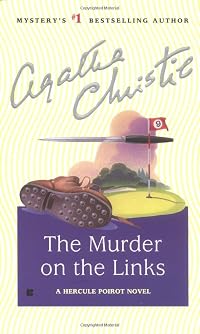
An urgent cry for help brings Poirot to France. But he arrives too late to save his client, whose brutally stabbed body now lies face downwards in a shallow grave on a golf course.But why is the dead man wearing his son's overcoat? And who was the impassioned love-letter in the pocket for? Before Poirot can answer these questions, the case is turned upside down by the discovery of a second, identically murdered corpse . . .
.
Tags
Recommendations











Member Reviews
'The Murder On The Links' was light and clever but rested a little too heavily on coincidence and on hoof beats signalling zebras rather than horses. It was rescued by being delivered at a relatively fast pace and with relatively little time spent on laboured exposition.
I struggled a bit with Hastings at first. He was even more of an idiot in this book than he was in the later ones. When I reached the point where he left a girl, (whose name he did not know and who had told him that she was interested in selling the story of the murder to the newspapers), alone with the body and the murder weapon, I was ready to give up on him. It made me wonder at Poirot's motives for keeping around a young man who has all the appeal of an exceptionally show more stupid Beagle.
Then I realised that I was asking the wrong question. Poirot keeps Hastings around partly so he can have an unchallenging audience and partly out of a sort of misguided paternal instinct. The more interesting question was why Christie not only kept him around but made us see the world only through his eyes.
I think Hastings is a game Christie plays with her readers. A game called 'spot the blind spot'. The most important things in this story are all things that Hastings is blind to. Of course, the main thing Hastings is blind to is women. He seems pathologically incapable of seeing the woman who is standing in front of him. His vision is obscured and distorted by his expectations of the women. When he first meets the girl who calls herself 'Cinderella' for most of the book, he perceives her only dimly, through a fog of disapproval that her use of bad language was evoked. The next girl that he sees, as he enters the village where the action of the novel takes place, he declares to be a goddess and he continues to see her that way, even when Poirot repeatedly refers to her as 'the girl with the anxious eyes'. Hastings is equally but differently blind to the older women. He attributes roles to them as if they were characters in a Greek play - the noble and selfless mother - the untrustworthy seductress but he does not really see them as people.
In a novel where it is the actions of women, not men, that drive the plot, having a woman-blind narrator is a stroke of genius. Those who share his blindness will never notice it and will find themselves constantly surprised and astonished at events. Those who spot his conceptual cataracts and try to squint past them will be amused at his stupidity and or pleased at their own astuteness. Playing an undeclared game of 'spot the blind spot' with your readers is much more fun for everyone involved than having to add barely-credible red herrings.
Christie lubricates her plot with humour, some it at Hasting's expense. I thought that giving the great Hercule Poirot a younger rival from the Sûreté added a lot of fun to the plot. It allowed Poirot to show some passion for a change, albeit in defence of his own ego and it played nicely on the tension between Belgian and French ways of working and between 'modern' detectives and 'old school' ones like Poirot. It also establishes Poirot's method as being baed mostly in psychological insight rather than the erudite interpretation of physical evidence à la Sherlock Holmes.
The final thing that struck me about this novel is how well Christie writes. She gives Hastings as narrator a distinctive voice and yet brings out the characters of others, often through the use of dialogue. She moves the mechanics of the plot along with such a light hand that it's easy to miss the skill that that requires. From time to time she also leaves a little surprise in her prose This time it was an untypically lyrical comment from Poirot to Hastings which I rather liked.
'It is love that has come, not as you imagined it, all cock-a-hoop with fine feathers, but sadly, with bleeding feet.'
I started reading this novel as an ebook. I imagine there must be good ebook copies out there. The one I picked wasn't one of them.
I STRONGLY RECOMMEND THAT YOU DON'T BUY THE Aegitas, Kindle Edition ASIN B07MXLZ25Z.
This image has an empty alt attribute; its file name is 43609357._sy475_.jpg
By the time I was 7% through the book, there had already been three publishing errors. It looks like they are simple OCR failures that have not been found or corrected. Here they are:
‘The letter was written on a foreign type of paper, in a bold characteristic hand: [Unreadable]’
'I do not know. But I have a premonition-a [unreadable].'
‘the body was lying face downwards, in an [unclear].'
When I finally gave up and moved to the audiobook version, l learned that that last quote should have read:
‘the body was lying face downwards, in an open grave.'
That's not the kind of detail you want to have to guess at in a murder mystery.
The good news is that Hugh Fraser has done his usual splendid job as a narrator of the audiobook version. show less
I struggled a bit with Hastings at first. He was even more of an idiot in this book than he was in the later ones. When I reached the point where he left a girl, (whose name he did not know and who had told him that she was interested in selling the story of the murder to the newspapers), alone with the body and the murder weapon, I was ready to give up on him. It made me wonder at Poirot's motives for keeping around a young man who has all the appeal of an exceptionally show more stupid Beagle.
Then I realised that I was asking the wrong question. Poirot keeps Hastings around partly so he can have an unchallenging audience and partly out of a sort of misguided paternal instinct. The more interesting question was why Christie not only kept him around but made us see the world only through his eyes.
I think Hastings is a game Christie plays with her readers. A game called 'spot the blind spot'. The most important things in this story are all things that Hastings is blind to. Of course, the main thing Hastings is blind to is women. He seems pathologically incapable of seeing the woman who is standing in front of him. His vision is obscured and distorted by his expectations of the women. When he first meets the girl who calls herself 'Cinderella' for most of the book, he perceives her only dimly, through a fog of disapproval that her use of bad language was evoked. The next girl that he sees, as he enters the village where the action of the novel takes place, he declares to be a goddess and he continues to see her that way, even when Poirot repeatedly refers to her as 'the girl with the anxious eyes'. Hastings is equally but differently blind to the older women. He attributes roles to them as if they were characters in a Greek play - the noble and selfless mother - the untrustworthy seductress but he does not really see them as people.
In a novel where it is the actions of women, not men, that drive the plot, having a woman-blind narrator is a stroke of genius. Those who share his blindness will never notice it and will find themselves constantly surprised and astonished at events. Those who spot his conceptual cataracts and try to squint past them will be amused at his stupidity and or pleased at their own astuteness. Playing an undeclared game of 'spot the blind spot' with your readers is much more fun for everyone involved than having to add barely-credible red herrings.
Christie lubricates her plot with humour, some it at Hasting's expense. I thought that giving the great Hercule Poirot a younger rival from the Sûreté added a lot of fun to the plot. It allowed Poirot to show some passion for a change, albeit in defence of his own ego and it played nicely on the tension between Belgian and French ways of working and between 'modern' detectives and 'old school' ones like Poirot. It also establishes Poirot's method as being baed mostly in psychological insight rather than the erudite interpretation of physical evidence à la Sherlock Holmes.
The final thing that struck me about this novel is how well Christie writes. She gives Hastings as narrator a distinctive voice and yet brings out the characters of others, often through the use of dialogue. She moves the mechanics of the plot along with such a light hand that it's easy to miss the skill that that requires. From time to time she also leaves a little surprise in her prose This time it was an untypically lyrical comment from Poirot to Hastings which I rather liked.
'It is love that has come, not as you imagined it, all cock-a-hoop with fine feathers, but sadly, with bleeding feet.'
I started reading this novel as an ebook. I imagine there must be good ebook copies out there. The one I picked wasn't one of them.
I STRONGLY RECOMMEND THAT YOU DON'T BUY THE Aegitas, Kindle Edition ASIN B07MXLZ25Z.
This image has an empty alt attribute; its file name is 43609357._sy475_.jpg
By the time I was 7% through the book, there had already been three publishing errors. It looks like they are simple OCR failures that have not been found or corrected. Here they are:
‘The letter was written on a foreign type of paper, in a bold characteristic hand: [Unreadable]’
'I do not know. But I have a premonition-a [unreadable].'
‘the body was lying face downwards, in an [unclear].'
When I finally gave up and moved to the audiobook version, l learned that that last quote should have read:
‘the body was lying face downwards, in an open grave.'
That's not the kind of detail you want to have to guess at in a murder mystery.
The good news is that Hugh Fraser has done his usual splendid job as a narrator of the audiobook version. show less
Perhaps because this was written and released early in Agatha Christie’s Poirot canon — 1923 — it seems more freewheeling than some later Poirot mysteries; and in many ways more charming. All the books with Hastings as narrator have an element of charm, the interactions between Hastings and Poirot giving readers an indelible impression of both men that remains steadfast and comforting all these years later. Murder on the Links in particular abounds with little nuances in their relationship, which intrudes into the mystery when Hastings falls in love, and actually goes against Poirot to protect the object of his affections.
The mystery is as freewheeling and enjoyable as the interaction between Hastings and Poirot. There are show more daggers, a murder, then a second murder, family secrets, a trial from the past which may have bearing on the present crimes, young love, unrequited love, false confessions, confession by silence, and a pompous detective that our favorite Belgian has to outwit to uncover the true murderer; whom few readers will actually guess. At one point, a murder is prevented as Poirot himself shimmies up the side of a house! I can’t recall much physical derring-do by Poirot in other stories; the little grey cells do all the work. It’s grand.
As many have noted, there is a great deal of clue-discovering and clue-explaining, but it’s handled within the charming narration of Hastings. For his part, Hasting observes Poirot mucking about with seemingly insignificant clues while the detective in charge appears to be solving the case quite nicely; all is not as it seems, however — perhaps nothing! Of all the Poirot entries, Murder on the Links feels more firmly set in the 1920s, capturing the romantic charm of a more innocent time — even when it comes to murder. There is some dark doings here, of course, but it’s all so romantic in a fashion that Murder on the Links is the epitome of a murder cozy.
If the reader is willing to go along with a more relaxed and freewheeling story and style of narrative — something you don’t often get in the rigidly defined cozy — they’ll have a great time reading this one, and more often than not find themselves smiling as they root as much for Hastings to find love as they do for Poirot to figure it all out and show up the pompous detective working the case. A wonderful read for fans. show less
The mystery is as freewheeling and enjoyable as the interaction between Hastings and Poirot. There are show more daggers, a murder, then a second murder, family secrets, a trial from the past which may have bearing on the present crimes, young love, unrequited love, false confessions, confession by silence, and a pompous detective that our favorite Belgian has to outwit to uncover the true murderer; whom few readers will actually guess. At one point, a murder is prevented as Poirot himself shimmies up the side of a house! I can’t recall much physical derring-do by Poirot in other stories; the little grey cells do all the work. It’s grand.
As many have noted, there is a great deal of clue-discovering and clue-explaining, but it’s handled within the charming narration of Hastings. For his part, Hasting observes Poirot mucking about with seemingly insignificant clues while the detective in charge appears to be solving the case quite nicely; all is not as it seems, however — perhaps nothing! Of all the Poirot entries, Murder on the Links feels more firmly set in the 1920s, capturing the romantic charm of a more innocent time — even when it comes to murder. There is some dark doings here, of course, but it’s all so romantic in a fashion that Murder on the Links is the epitome of a murder cozy.
If the reader is willing to go along with a more relaxed and freewheeling story and style of narrative — something you don’t often get in the rigidly defined cozy — they’ll have a great time reading this one, and more often than not find themselves smiling as they root as much for Hastings to find love as they do for Poirot to figure it all out and show up the pompous detective working the case. A wonderful read for fans. show less
I've taken a very random approach to my reading of the Hercule Poirot stories so it felt very interesting to read this early novel (the second in his series?) after having read some of the later ones. It was fun to see ways in which Poirot's character and stories evolved over time. The most notable feeling I had was that Christie was still working out the nature of the relationship between Poirot and Hastings. Their interactions in this novel felt closer to a Holmes/Watson pairing than in later books. At the same time, I appreciate the points in which Hastings took a more central role in the plot (even if he did make a mess of it *spoilers*).
As you might expect, the writing is fantastic and the plot is tight. From the initial few show more chapters you are knocked off balance while thrown into the thick of things. Poirot receives a mysterious letter from a man worried for his life.
The day Poirot arrives, the police are there investigating his murder. The French inspector, Giraud, is resentful of Poirot's help and treats him with antagonism and condescension, claiming that Poirot's methods are outdated and useless and that he should leave the job to the professionals and their modern training and methods.
Fortunately, some of the other members of the French law enforcement group are a bit more open to Poirot's involvement but it is still a bit of an uphill battle. The interplay between Poirot and Giraud make for humorous and delightful commentary not only on law enforcement but the way professionals in an occupation often view themselves and their competition. I especially liked that Hastings was so impressed with Giraud that he tried to praise him and defend him to Poirot. Naturally Poirot would not change his opinion and instead he set out to show that his methods, and his little grey cells, would prevail.
In addition to the core mystery, I found it interesting that Christie creates a smaller mystery as a thread to wind throughout the story. Hastings has met a young woman on a train and become infatuated. Even though Poirot chides Hastings for his senseless emotional behavior, there is something mysterious about this girl and so her mystery continues to appear throughout the book. Rather than feeling distracting and disjointed, the working of this second mystery felt like a natural pairing and it was fun to see the two problems proceed to their natural conclusions and watch the interplay of the characters and their involvement in each.
This book does fall into the trap of having a solution that relies on specialized knowledge that the reader doesn't have. In fact, this knowledge is so specific that Poirot has to leave the investigation completely to go and do research elsewhere and return with the answer. There is some dissatisfaction in a mystery that can't be solved by the reader picking up on early clues dropped by the author. Fortunately, there are enough other clues that the reader is able to make deductions in logical directions even without the specific bit of knowledge that's withheld from everyone until Poirot reveals it.
Probably the biggest disconnect for me was the title. While it's true that the murder victim was found on a golf course, there was no other connection or interaction that tied the story to the golf course. I suppose the title could have been a type of red herring to leave readers expecting some sort of intrigue with the golf course owners or groundskeepers or something (if you're anticipating that, I apologize for spoiling the lack of connection). It's an adequate title, just a little misleading. And as my biggest disconnect, that should let you know that this is a solid novel.
I personally found this to be a fun read and an engaging mystery. There were enough questions to keep me second-guessing my assumptions up until the final revelations. I really enjoyed the interplay between the characters, particularly those of Hastings and Poirot. This is classic murder mystery done very well and well worth reading.
****
4 out of 5 stars show less
As you might expect, the writing is fantastic and the plot is tight. From the initial few show more chapters you are knocked off balance while thrown into the thick of things. Poirot receives a mysterious letter from a man worried for his life.
The day Poirot arrives, the police are there investigating his murder. The French inspector, Giraud, is resentful of Poirot's help and treats him with antagonism and condescension, claiming that Poirot's methods are outdated and useless and that he should leave the job to the professionals and their modern training and methods.
Fortunately, some of the other members of the French law enforcement group are a bit more open to Poirot's involvement but it is still a bit of an uphill battle. The interplay between Poirot and Giraud make for humorous and delightful commentary not only on law enforcement but the way professionals in an occupation often view themselves and their competition. I especially liked that Hastings was so impressed with Giraud that he tried to praise him and defend him to Poirot. Naturally Poirot would not change his opinion and instead he set out to show that his methods, and his little grey cells, would prevail.
In addition to the core mystery, I found it interesting that Christie creates a smaller mystery as a thread to wind throughout the story. Hastings has met a young woman on a train and become infatuated. Even though Poirot chides Hastings for his senseless emotional behavior, there is something mysterious about this girl and so her mystery continues to appear throughout the book. Rather than feeling distracting and disjointed, the working of this second mystery felt like a natural pairing and it was fun to see the two problems proceed to their natural conclusions and watch the interplay of the characters and their involvement in each.
This book does fall into the trap of having a solution that relies on specialized knowledge that the reader doesn't have. In fact, this knowledge is so specific that Poirot has to leave the investigation completely to go and do research elsewhere and return with the answer. There is some dissatisfaction in a mystery that can't be solved by the reader picking up on early clues dropped by the author. Fortunately, there are enough other clues that the reader is able to make deductions in logical directions even without the specific bit of knowledge that's withheld from everyone until Poirot reveals it.
Probably the biggest disconnect for me was the title. While it's true that the murder victim was found on a golf course, there was no other connection or interaction that tied the story to the golf course. I suppose the title could have been a type of red herring to leave readers expecting some sort of intrigue with the golf course owners or groundskeepers or something (if you're anticipating that, I apologize for spoiling the lack of connection). It's an adequate title, just a little misleading. And as my biggest disconnect, that should let you know that this is a solid novel.
I personally found this to be a fun read and an engaging mystery. There were enough questions to keep me second-guessing my assumptions up until the final revelations. I really enjoyed the interplay between the characters, particularly those of Hastings and Poirot. This is classic murder mystery done very well and well worth reading.
****
4 out of 5 stars show less
Summary: A man who writes Poirot from the north of France of his life being in danger is found dead by Poirot under circumstances similar to another murder many years earlier that is key to Poirot unraveling the case.
For golfing fans, I hate to disappoint you, but apart from a murder taking place in a grave dug where a bunker for a golf course was to be sited, there is little about golf in this mystery. What you will find here is Agatha Christie at the height of her powers in one of her early Poirots, creating an intricate plot taking us in a succession of turns and suspects before the revelation of the true murderer.
I won't take you on all the plot turns but will lay out enough to hopefully entice you to read one of Christie's best. show more Hercule Poirot is in England with his companion, Arthur Hastings, when he receives a letter from the north of France from millionaire Paul Renaud, speaking of his life in danger, and requesting Poirot's help. Poirot and Hastings immediately depart, only to arrive with the police on scene, investigating the murder of Monsieur Renaud. Madame Renaud had been found tightly bound by two strangers who questioned Monsieur Renaud and then took him out. His body was found in a newly dug grave stabbed in the back with a letter opener given to Madame Renaud by her son Jack, who had been sent to sail to South America.
Part of the fun in this story is the rivalry between Poirot and Giraud, the Sureté detective who crawls around everywhere but dismisses the piece of led pipe near the body, the dismissal of Jack to South America and the chauffeur, leaving only three female servants and an old gardener, a door left open, a piece of paper that was part of check with the name "Duveen." Who was the mysterious visitor in Renaud's study the evening before his death? Why payments of 200,000 francs from him into Madame Daubreuil's account, a neighbor who frequently visited? Why were their footprints matching the gardener's boots in one bed, while the other had none?
While Giraud keeps investigating, Poirot, troubled with similarities to a murder involving a Madame Beroldy, goes to Paris. Meanwhile, a young woman, "Cinderella" who Hastings previously met runs into him, hear's the story of the murder and wants to see the scene. Afterward, the murder weapon goes missing, only to turn up in the back of a second corpse, a tramp dressed in nice clothes that in fact had died long before the weapon was thrust into him.
Then we learn that Jack had actually been in town the night of the murder. Jack was in love with Marthe Daubreuil, Madame Daubreuil's daughter. We also learn that Jack's father had changed his will, cutting Jack out because he insisted in his love affair, even though he had a girl he dumped, the twin sister of "Cinderella," Dulcie Duveen, the woman who had been in Renaud's study the night he was murdered.
As you can see, there are a whole host of suspects. Giraud fixes on Jack Renaud, who all but admits to the crime. Yet Poirot is not so sure. Not all is as it seems, but this plot has more twists and turns before the denouement, including a period where Hastings, for love, works against Poirot. This is one you want to read closely, paying attention to the clues, following the turns, trying to spot the red herrings. This is great, good fun--Christie at her best! show less
For golfing fans, I hate to disappoint you, but apart from a murder taking place in a grave dug where a bunker for a golf course was to be sited, there is little about golf in this mystery. What you will find here is Agatha Christie at the height of her powers in one of her early Poirots, creating an intricate plot taking us in a succession of turns and suspects before the revelation of the true murderer.
I won't take you on all the plot turns but will lay out enough to hopefully entice you to read one of Christie's best. show more Hercule Poirot is in England with his companion, Arthur Hastings, when he receives a letter from the north of France from millionaire Paul Renaud, speaking of his life in danger, and requesting Poirot's help. Poirot and Hastings immediately depart, only to arrive with the police on scene, investigating the murder of Monsieur Renaud. Madame Renaud had been found tightly bound by two strangers who questioned Monsieur Renaud and then took him out. His body was found in a newly dug grave stabbed in the back with a letter opener given to Madame Renaud by her son Jack, who had been sent to sail to South America.
Part of the fun in this story is the rivalry between Poirot and Giraud, the Sureté detective who crawls around everywhere but dismisses the piece of led pipe near the body, the dismissal of Jack to South America and the chauffeur, leaving only three female servants and an old gardener, a door left open, a piece of paper that was part of check with the name "Duveen." Who was the mysterious visitor in Renaud's study the evening before his death? Why payments of 200,000 francs from him into Madame Daubreuil's account, a neighbor who frequently visited? Why were their footprints matching the gardener's boots in one bed, while the other had none?
While Giraud keeps investigating, Poirot, troubled with similarities to a murder involving a Madame Beroldy, goes to Paris. Meanwhile, a young woman, "Cinderella" who Hastings previously met runs into him, hear's the story of the murder and wants to see the scene. Afterward, the murder weapon goes missing, only to turn up in the back of a second corpse, a tramp dressed in nice clothes that in fact had died long before the weapon was thrust into him.
Then we learn that Jack had actually been in town the night of the murder. Jack was in love with Marthe Daubreuil, Madame Daubreuil's daughter. We also learn that Jack's father had changed his will, cutting Jack out because he insisted in his love affair, even though he had a girl he dumped, the twin sister of "Cinderella," Dulcie Duveen, the woman who had been in Renaud's study the night he was murdered.
As you can see, there are a whole host of suspects. Giraud fixes on Jack Renaud, who all but admits to the crime. Yet Poirot is not so sure. Not all is as it seems, but this plot has more twists and turns before the denouement, including a period where Hastings, for love, works against Poirot. This is one you want to read closely, paying attention to the clues, following the turns, trying to spot the red herrings. This is great, good fun--Christie at her best! show less
WARNING: slight spoilers re the nature of the ending
(not the identity of the murderer, but other elements are discussed).
A delightful treat for fans of Hastings and Poirot. One of their earlier adventures, this book sees Poirot being summoned to France by a man who fears that he will be killed. Unfortunately, Poirot is too late to prevent the man's death. Still, he'll investigate the murder, even with the annoying Sûreté detective Giraud mocking his "psychological" methods and calling him old. Hastings recounts the whole story in his usual endearing style. One suspects he tends to puff himself up a little bit or downplay his flaws, especially when he's infatuated with pretty girls and Poirot teases him about it. (His response to one show more such tease, "Don't be an ass, Poirot", is quintessential Hastings.) The ending may get a bit loony for some people's tastes, because the notion of the culprit changes a couple of times in some rather odd twists. But I didn't mind that because with Hastings and Poirot I sort of expect twists piled on at the end. And an added bonus is that I finally learned why Hastings calls his wife "Cinders". It's extremely adorable. show less
(not the identity of the murderer, but other elements are discussed).
A delightful treat for fans of Hastings and Poirot. One of their earlier adventures, this book sees Poirot being summoned to France by a man who fears that he will be killed. Unfortunately, Poirot is too late to prevent the man's death. Still, he'll investigate the murder, even with the annoying Sûreté detective Giraud mocking his "psychological" methods and calling him old. Hastings recounts the whole story in his usual endearing style. One suspects he tends to puff himself up a little bit or downplay his flaws, especially when he's infatuated with pretty girls and Poirot teases him about it. (His response to one show more such tease, "Don't be an ass, Poirot", is quintessential Hastings.) The ending may get a bit loony for some people's tastes, because the notion of the culprit changes a couple of times in some rather odd twists. But I didn't mind that because with Hastings and Poirot I sort of expect twists piled on at the end. And an added bonus is that I finally learned why Hastings calls his wife "Cinders". It's extremely adorable. show less
Murder on the Links (like most Christie) is smart and satisfying! You can tell this is very early Christie but it is still a very enjoyable story. Murder on the Links was as different from its predecessor as that had been from Styles. It is very French; not just in setting but in tone, Agatha admitted that she had written it in a "high-flown, fanciful" manner. She had also based the book too closely upon a real-life French murder case, which gives the story a kind of non-artistic complexity. Ultimately, this story is about the dark secrets of the French aristocracy and how individuals confuse love and money. Poirot is, as usual, a bit pompous and it is fun to see him go up against Monsieur Giraud of the Sûreté (who leads the police show more investigation and resents Poirot's involvement). This gives this serious mystery a little air of humor that is much needed.
It is a quite enjoyable Poirot story. show less
It is a quite enjoyable Poirot story. show less
An early Poirot mystery. Poirot himself is kind of enjoyably jackass-y; the plot is convoluted and contrived, and the psychology/relationships are pure 1920s melodrama.
Members
- Recently Added By
Lists

Crime and Mysteries to Read
746 works; 31 members

British Mystery
469 works; 14 members

Agatha Christie Poirot
43 works; 2 members

Books About Murder
313 works; 7 members

Detective Stories
343 works; 5 members

Read in 2015
50 works; 1 member

Books Read in 2018
4,360 works; 110 members

Books Read in 2020
4,379 works; 124 members

Books Read in 2023
5,638 works; 147 members

Books Read in 2024
4,727 works; 128 members

TBR
77 works; 1 member

Agatha Christie Chronology
93 works; 1 member
Author Information

2,158+ Works 441,041 Members
One of the most successful and beloved writer of mystery stories, Agatha Mary Clarissa Christie was born in 1890 in Torquay, County Devon, England. She wrote her first novel, The Mysterious Affair at Styles, in 1920, launching a literary career that spanned decades. In her lifetime, she authored 79 crime novels and a short story collection, 19 show more plays, and six novels written under the name of Mary Westmacott. Her books have sold over a billion copies in the English language with another billion in 44 foreign languages. Some of her most famous titles include Murder on the Orient Express, Mystery of the Blue Train, And Then There Were None, 13 at Dinner and The Sittaford Mystery. Noted for clever and surprising twists of plot, many of Christie's mysteries feature two unconventional fictional detectives named Hercule Poirot and Miss Jane Marple. Poirot, in particular, plays the hero of many of her works, including the classic, The Murder of Roger Ackroyd (1926), and Curtain (1975), one of her last works in which the famed detective dies. Over the years, her travels took her to the Middle East where she met noted English archaeologist Sir Max Mallowan. They married in 1930. Christie accompanied Mallowan on annual expeditions to Iraq and Syria, which served as material for Murder in Mesopotamia (1930), Death on the Nile (1937), and Appointment with Death (1938). Christie's credits also include the plays, The Mousetrap and Witness for the Prosecution (1953; film 1957). Christie received the New York Drama Critics' Circle Award for 1954-1955 for Witness. She was also named Dame Commander of the Order of the British Empire in 1971. Christie died in 1976. (Bowker Author Biography) show less
Some Editions
Awards and Honors
Awards
Series

Belongs to Publisher Series
Goldmann Krimi (9)
Work Relationships
Is contained in
Agatha Christie Crime Collection: Destination Unknown, The Murder on the Links, A Pocket Full of Rye by Agatha Christie
1920's Agatha Christie, Vol. 1: The Mysterious Affair at Styles / The Secret Adversary / Murder on the Links by Agatha Christie
Hercule Poirot Bundle: The Mysterious Affair at Styles, Murder on the Links, Poirot Investigates by Agatha Christie
The Perils of Poirot: The A.B.C. Murders / Murder on the Links / Peril at End House / Cat Among the Pigeons by Agatha Christie
Poirot: The French Collection: Death in the Clouds / The Mystery of the Blue Train / The Murder on the Links by Agatha Christie
The Mysterious Affair at Styles, The Secret Adversary, The Murder on the Links, The Cornish Mystery, Hercule Poirot's Cases by Agatha Christie
The Murder on the Links / The Murder of Roger Ackroyd / Lord Edgware Dies / The Hollow by Agatha Christie
Poirot Investigates / Problem at Pollensa Bay / Poirot's Early Cases / The Murder on the Links / Evil Under the Sun by Agatha Christie
Maigret's Pipe / The Bronze Door / The Murders in the Rue Morgue / The Murder on the Links by Georges Simenon
Has the adaptation
Common Knowledge
- Canonical title
- The Murder on the Links; Murder on the Links
- Original title
- The Murder on the Links; Murder on the Links
- Alternate titles
- Murder on the Links
- Original publication date
- 1923-03-01
- People/Characters
- Arthur Hastings; Hercule Poirot; Paul Renauld; Eloise Renauld; Jack Renauld; Madame Daubreuil (show all 22); Marthe Daubreuil; Monsieur Giraud; Monsieur Hautet; Lucien Bex; Monsieur Marchaud; Dr Durand; Gabriel Stonor; Bella Duveen; Dulcie Duveen; Françoise Arrichet; Léonie Oulard; Denise Oulard; Auguste; Joseph Aarons; Georges Conneau; Jeanne Beroldy
- Important places
- England, UK; Calais, Pas-de-Calais, Hauts-de-France, France; Merlinville-sur-Mer, Calvados, Normandy, France (Fictional); Deauville, Calvados, Normandy, France
- Related movies*
- Murder on the Links (1996 | IMDb)
- Dedication
- To My Husband
a fellow enthusiast for detective stories and to whom I am
indebted for much helpful advice and criticism - First words
- I believe that a well-known anecdote exists to the effect that a young writer, determined to make the commencement of his story forcible and original enough to catch and rivet the attention of the most blasé of editor... (show all)s, penned the following sentence: '"Hell!" said the Duchess.'
- Last words
- (Click to show. Warning: May contain spoilers.)And I suited the action to the word.
- Original language
- English UK
- Disambiguation notice
- BBC Radio drama ISBNs: 1483043223, 1483043215, 0792756185, 1408482037, 0563510110.
*Some information comes from Common Knowledge in other languages. Click "Edit" for more information.
Classifications
Statistics
- Members
- 5,554
- Popularity
- 2,400
- Reviews
- 147
- Rating
- (3.63)
- Languages
- 27 — Catalan, Chinese, Czech, Danish, Dutch, English, Estonian, Finnish, French, German, Greek, Hungarian, Indonesian, Italian, Korean, Lithuanian, Norwegian (Bokmål), Norwegian, Polish, Portuguese, Romanian, Russian, Serbian, Slovenian, Spanish, Swedish, Turkish
- Media
- Paper, Audiobook, Ebook
- ISBNs
- 273
- UPCs
- 2
- ASINs
- 155