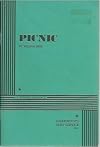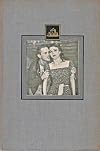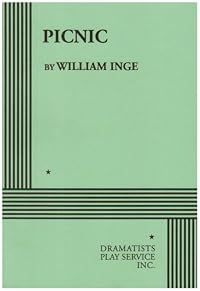
Picnic
by William Inge
On This Page
Description
We are going on a picnic. There's a lot of food to take. Let's see what we've got! The phonemes /x/y/zz/ are featured in this title. Picnic is part of Decodables by Jump!, a comprehensive library of decodable leveled readers that follow a sequenced approach to phonics instruction. Young readers will enjoy colorful, photo-packed nonfiction as they follow a prescribed format supported by the science of reading that encourages reading development.Tags
Recommendations














Member Reviews
i had never heard of this play (or author) before randomly seeing a performance 12 or 13 years ago. i was blown away by it, and am glad i finally got around to reading it. i'm not 100% sure it holds up because it's so full of social commentary, but for the time it is excellent. i don't think i would believe it was written by a man if i didn't know better. (for me, that's a compliment.) it talks so deeply about beauty and identity, and societal expectation. (the beautiful sister isn't thought of as a real person, but as a doll because she's so pretty, and she questions her own vitality because no one seems to see *her* at all. the less pretty sister, because she's not as pretty as madge, and possibly because she's younger, has more show more independence to be herself, but is also constantly being compared to someone she can't match. the teacher boarder who is past her prime but desperately wants to be married. the neighbor who takes care of her invalid mother who took her chance of "freedom" away years ago. and then, how freedom only comes to women by attaching themselves to a man in marriage.) it's quick and intelligent, and says a lot with so few words and pages. it's so sad and so real and just beautifully done.
(and it's somewhat possible that my reading is colored by how much i loved the performance i saw, back in the summer of 2006 or 2007. but i don't think that i remember enough to be attributing aspects of the live play to this one.)
"It doesn't hurt what names I call her! She's pretty, so names don't bother her at all! She's pretty, so nothing else matters."
"I don't care if you're real or not. You're the prettiest girl I ever saw." show less
(and it's somewhat possible that my reading is colored by how much i loved the performance i saw, back in the summer of 2006 or 2007. but i don't think that i remember enough to be attributing aspects of the live play to this one.)
"It doesn't hurt what names I call her! She's pretty, so names don't bother her at all! She's pretty, so nothing else matters."
"I don't care if you're real or not. You're the prettiest girl I ever saw." show less
this didn't resonate quite as loudly with me this time, although i still liked it quite a bit. it's such a short little play but really says so much, which i really appreciate. (he does put quite a bit of what the character is feeling in the stage directions, which maybe helps deepen the characterization a bit for me.) this time around, i thought a little more about hal and what inge might have been saying about him or about young men at that time. honestly he hadn't interested me that much before, as i had been so focused on all of the women and their stories and the messaging around their sad situations.
i know inge has talked about the humor in this play and in summer brave in particular, but i just find this so tragic. how madge is show more reduced to her looks, how millie isn't as pretty as madge and so isn't taken seriously (not that madge is - she is only her outer shell and nothing more), how rosemary is running out of time to get married and is so bitter about it all, how mrs potts had a literal afternoon of freedom and no more, how flo had to raise these girls on her own regretting her attempt at love and freedom. all of them stuck, all of them unable to make real change. and the constant reminder of that train whistle in the background, telling them there's a bigger world and other places to go.
as to hal, he is a sad character, too, but it feels more of his own doing. he's a player and an opportunist, but maybe part of that is not wanting to conform to the standards that this very restrictive society have set up. i'll have to give him more thought.
madge leaves at the end but to me this isn't a bid for freedom. she is following hal, who won't be where he said he would, and she will end up either destitute in tulsa or back at home having wrecked her chance at a better life. it will end very badly for her, in my mind. not that alan would have been a good choice either. he may have been wealthy and secure in the community, but he only saw her as a pretty girl, nothing more. i forgot that rosemary leaves to marry howard; in my memory he doesn't come back to wed her, but it's hard to imagine that's much of a happy ending for her, too. she does get married, but how much both of them are settling is sad.
this is still a powerful little play, and in its time i suspect it was quite the statement to make.
"A pretty girl doesn't have long -- just a few years. Then she's the equal of kings and she can walk out of a shanty like this and live in a palace with a doting husband who'll spend his life making her happy. ... Because once, once she was young and pretty. If she loses her chance then, she might as well throw all her prettiness away."
"It doesn't hurt what names I call her! She's pretty, so names don't bother her at all! She's pretty, so nothing else matters."
"I don't care if you're real or not. You're the prettiest girl I ever saw."
(3.75-4 stars)
from oct 2019:
i had never heard of this play (or author) before randomly seeing a performance 12 or 13 years ago. i was blown away by it, and am glad i finally got around to reading it. i'm not 100% sure it holds up because it's so full of social commentary, but for the time it is excellent. i don't think i would believe it was written by a man if i didn't know better. (for me, that's a compliment.) it talks so deeply about beauty and identity, and societal expectation. (the beautiful sister isn't thought of as a real person, but as a doll because she's so pretty, and she questions her own vitality because no one seems to see *her* at all. the less pretty sister, because she's not as pretty as madge, and possibly because she's younger, has more independence to be herself, but is also constantly being compared to someone she can't match. the teacher boarder who is past her prime but desperately wants to be married. the neighbor who takes care of her invalid mother who took her chance of "freedom" away years ago. and then, how freedom only comes to women by attaching themselves to a man in marriage.) it's quick and intelligent, and says a lot with so few words and pages. it's so sad and so real and just beautifully done.
(and it's somewhat possible that my reading is colored by how much i loved the performance i saw, back in the summer of 2006 or 2007. but i don't think that i remember enough to be attributing aspects of the live play to this one.)
"It doesn't hurt what names I call her! She's pretty, so names don't bother her at all! She's pretty, so nothing else matters."
"I don't care if you're real or not. You're the prettiest girl I ever saw." (4 stars) show less
i know inge has talked about the humor in this play and in summer brave in particular, but i just find this so tragic. how madge is show more reduced to her looks, how millie isn't as pretty as madge and so isn't taken seriously (not that madge is - she is only her outer shell and nothing more), how rosemary is running out of time to get married and is so bitter about it all, how mrs potts had a literal afternoon of freedom and no more, how flo had to raise these girls on her own regretting her attempt at love and freedom. all of them stuck, all of them unable to make real change. and the constant reminder of that train whistle in the background, telling them there's a bigger world and other places to go.
as to hal, he is a sad character, too, but it feels more of his own doing. he's a player and an opportunist, but maybe part of that is not wanting to conform to the standards that this very restrictive society have set up. i'll have to give him more thought.
this is still a powerful little play, and in its time i suspect it was quite the statement to make.
"A pretty girl doesn't have long -- just a few years. Then she's the equal of kings and she can walk out of a shanty like this and live in a palace with a doting husband who'll spend his life making her happy. ... Because once, once she was young and pretty. If she loses her chance then, she might as well throw all her prettiness away."
"It doesn't hurt what names I call her! She's pretty, so names don't bother her at all! She's pretty, so nothing else matters."
"I don't care if you're real or not. You're the prettiest girl I ever saw."
(3.75-4 stars)
from oct 2019:
i had never heard of this play (or author) before randomly seeing a performance 12 or 13 years ago. i was blown away by it, and am glad i finally got around to reading it. i'm not 100% sure it holds up because it's so full of social commentary, but for the time it is excellent. i don't think i would believe it was written by a man if i didn't know better. (for me, that's a compliment.) it talks so deeply about beauty and identity, and societal expectation. (the beautiful sister isn't thought of as a real person, but as a doll because she's so pretty, and she questions her own vitality because no one seems to see *her* at all. the less pretty sister, because she's not as pretty as madge, and possibly because she's younger, has more independence to be herself, but is also constantly being compared to someone she can't match. the teacher boarder who is past her prime but desperately wants to be married. the neighbor who takes care of her invalid mother who took her chance of "freedom" away years ago. and then, how freedom only comes to women by attaching themselves to a man in marriage.) it's quick and intelligent, and says a lot with so few words and pages. it's so sad and so real and just beautifully done.
(and it's somewhat possible that my reading is colored by how much i loved the performance i saw, back in the summer of 2006 or 2007. but i don't think that i remember enough to be attributing aspects of the live play to this one.)
"It doesn't hurt what names I call her! She's pretty, so names don't bother her at all! She's pretty, so nothing else matters."
"I don't care if you're real or not. You're the prettiest girl I ever saw." (4 stars) show less
Ratings
Members
- Recently Added By
Lists

My Play Collection
769 works; 3 members

Next Plays / 2025
352 works; 1 member
Author Information

46+ Works 1,200 Members
Inge was born in Independence, Kansas, attended the University of Kansas and Peabody College in Nashville, Tennessee, and studied theater with Maude Adams at Stephens College in Columbia, Missouri. He taught drama for some years and then served as drama critic for the St. Louis Star Times before becoming a playwright. Come Back, Little Sheba show more (1950), his first success on Broadway, is about an aging couple, the wife clinging to the past, the husband an alcoholic. His next play was Picnic (1953, later revised as Summer Brave), about a virile young drifter and his effect on women in a small town. Bus Stop (1955) involves stranded people---each reveals his or her loneliness, and in the end an aspiring singer accepts the attention of a naive but rough cowboy. The Dark at the Top of the Stairs (1958) portrays a frustrated family in which a stranger's suicide inspires a new understanding between the mother and father and more confidence on the part of the son and daughter. Inge was immensely popular in the 1950s. In most of his plays, the characters live a humdrum existence, usually in the Kansas-Oklahoma region of 50 years ago. Behind the naturalistic dialogue is an inner softness, and the main figures are prone to confession. His works have been called "psycho-dramas involving the solution of personal and social problems by introspection and togetherness" (Eric Mottram). Inge won the Pulitzer Prize for drama and the New York Drama Critics Circle Award for Picnic. The later part of Inge's career as a dramatist was not successful. He took his own life in 1973. (Bowker Author Biography) show less
Awards and Honors
Work Relationships
Is contained in
Has the adaptation
Has as a student's study guide
Common Knowledge
Classifications
Statistics
- Members
- 266
- Popularity
- 121,028
- Reviews
- 2
- Rating
- (3.50)
- Languages
- English
- Media
- Paper, Ebook
- ISBNs
- 5
- UPCs
- 1
- ASINs
- 16