
On This Page
Description
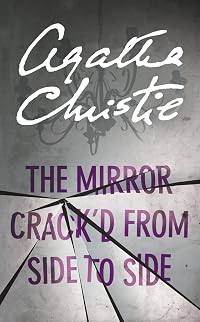
One minute, silly Heather Babcock had been babbling on at her movie idol, the glamorous Marina Gregg. The next, Heather suffered a massive seizure, poisoned by a deadly cocktail. It seems likely that the cocktail was intended for the beautiful actress. But while the police fumble to find clues, Miss Marple begins to ask her own questions, because as she knows-even the most peaceful village can hide dark secrets.Tags
Recommendations















Member Reviews
What I enjoyed the most about 'The Mirror Crack'd From Side To Side' was seeing how Jane Marple coped with having grown old and with being perceived as being frail. Agatha Christie was seventy-two when this book was published, which may be what gave an edge to her observations on aging and the tendency to infantilise the elderly, regardless of how competent and well-respected they once were.
In this story, Jane is starting to recognise some of the limits on her physical abilities but is chaffing under the overbearing treatment she receives from her well-meaning live-in housekeeper/nurse.
I liked that Jane, reflecting on her dislike of how the character of St Mary Mead was being changed by the addtion of a new housing development, show more recognised that her resentment arose not from the character of the new things in St Mary Mead but from her reluctance to let go of the St Mary Mead of her memory. I admired that she then decided to take a walk through the housing development and meet the people there. This is how Jane Marple stays engaged with the world.
I liked that the murder mystery Jane gets involved with also requires her to udate her knowledge of the world. The image of Jane Marple diligently reading movie magazines to understand the context of the crime made me smile. Jane's age shaped the investigation in a couple of ways: her well-established reputation as an astute amateur sleuth meant that police sought to use her as a resource and her reduced stamina meant that she had to do a lot of investigation by proxy. Both of these things gave the novel a cosy but realistic feel.
The murder mystery was a solid one although I felt that I was dragged down one false trail too many before Jane figured it all out. The explanation was a bit of a stretch but I was fascinated by Jane Marple's reaction to what she discovered. Her insight into the killer's thoughts and behaviours made me realise that It's a good job that she's more interested in solving murders than committing them. She has the mind and the nerve to kill with impunity.
I recommend the audiobook version of 'The Mirror Crack'd From Side To Side' narrated by Emilia Fox. Click on the SoundCloud link below to hear a sample.
https://soundcloud.com/harperaudio_us/an-extended-clip-from-the-mirror-crackd-fr... show less
In this story, Jane is starting to recognise some of the limits on her physical abilities but is chaffing under the overbearing treatment she receives from her well-meaning live-in housekeeper/nurse.
I liked that Jane, reflecting on her dislike of how the character of St Mary Mead was being changed by the addtion of a new housing development, show more recognised that her resentment arose not from the character of the new things in St Mary Mead but from her reluctance to let go of the St Mary Mead of her memory. I admired that she then decided to take a walk through the housing development and meet the people there. This is how Jane Marple stays engaged with the world.
I liked that the murder mystery Jane gets involved with also requires her to udate her knowledge of the world. The image of Jane Marple diligently reading movie magazines to understand the context of the crime made me smile. Jane's age shaped the investigation in a couple of ways: her well-established reputation as an astute amateur sleuth meant that police sought to use her as a resource and her reduced stamina meant that she had to do a lot of investigation by proxy. Both of these things gave the novel a cosy but realistic feel.
The murder mystery was a solid one although I felt that I was dragged down one false trail too many before Jane figured it all out. The explanation was a bit of a stretch but I was fascinated by Jane Marple's reaction to what she discovered. Her insight into the killer's thoughts and behaviours made me realise that It's a good job that she's more interested in solving murders than committing them. She has the mind and the nerve to kill with impunity.
I recommend the audiobook version of 'The Mirror Crack'd From Side To Side' narrated by Emilia Fox. Click on the SoundCloud link below to hear a sample.
https://soundcloud.com/harperaudio_us/an-extended-clip-from-the-mirror-crackd-fr... show less
St. Mary Mead is no longer the quiet village of two or three decades ago. A new housing estate has brought in young middle-class couples and families. Miss Marple’s physical condition is declining with age, but her mind is as sharp as ever. Miss Marple’s friend, now-widowed Dolly Bantry, has sold Gossington Hall to an American actress. Tragedy strikes when a woman from the housing estate dies suddenly at a public reception at Gossington Hall. Was Heather Badcock the intended victim, or was the fatal drug meant for actress Marina Gregg? There is no shortage of suspects with potential motives to murder the actress.
This was a reread for me, plus I’ve seen the film adaptation with Elizabeth Taylor. Once you know the motive for the show more murder, it’s nearly impossible to forget. Since I knew the murderer’s identity and motive from the beginning, I was able to pay attention to the red herrings and misdirection Christie used. I still marveled at how credible the alternate theories were. Emilia Fox’s narration made it all the more enjoyable. show less
This was a reread for me, plus I’ve seen the film adaptation with Elizabeth Taylor. Once you know the motive for the show more murder, it’s nearly impossible to forget. Since I knew the murderer’s identity and motive from the beginning, I was able to pay attention to the red herrings and misdirection Christie used. I still marveled at how credible the alternate theories were. Emilia Fox’s narration made it all the more enjoyable. show less
Miss Marple is slightly alarmed by all the changes in her beloved St. Mary Mead with new Development on the edge of the village. She's also irritated with herself for some of the limitations her age has brought into her life. However, her mind remains as sharp as ever and when one of the new residents of the village dies suddenly at a fete hosted by some Hollywood people at the local large estate, Miss Marple can't help but try and determine why the murder happened.
It's delightful to return to St. Mary Mead in this entry in the series, to get a sense that time has passed in Miss Marple's world, and to see a well-drawn depiction of the challenges of an aging body not quite being able to keep up with the keen mind within. As always, the show more mystery is well-drawn and while I picked out bits of the clues that I thought would matter, I didn't quite manage to put the mystery together before Miss Marple's final reveal. Recommended as ever. show less
It's delightful to return to St. Mary Mead in this entry in the series, to get a sense that time has passed in Miss Marple's world, and to see a well-drawn depiction of the challenges of an aging body not quite being able to keep up with the keen mind within. As always, the show more mystery is well-drawn and while I picked out bits of the clues that I thought would matter, I didn't quite manage to put the mystery together before Miss Marple's final reveal. Recommended as ever. show less
The title comes from Alfred, Lord Tennyson:
“Out flew the web and floated wide,
The mirror crack’d from side to side,
‘The curse has come upon me,’ cried
The Lady of Shalott.”
Dolly Bantry thinks of this poem when she sees the utterly frozen, horrified look on the face of film star Marina Gregg… just moments before a fellow party guest drops dead, the victim of an overdose of drugs. Who could have wanted to kill that guest — or was Marina the intended victim? Dolly Bantry thinks Miss Marple should take the case.
This is an intriguing, rather sad story; it is partly based on a true story, although to say whose true story would constitute a spoiler. It contains observations on the Hollywood film life, the process of change in show more English villages, and even the challenges of ageing as Miss Marple wrestles with maintaining her independence versus having live-in help that drives her up the wall. The story is overall well plotted, with a bit of repetition as the reader is privy to conversations that then have to find a creative way of being relayed to Miss Marple.
I’ve watched two adaptations of this book recently: a French adaptation, Le miroir se brisa; and the 1980 movie starring Angela Lansbury as Marple. The interesting thing about both of these adaptations is how they streamline the source material, assigning different revelations and clue-gatherings to different characters and taking out others entirely (in both cases, the victim’s husband is either written out or extremely drastically reduced in role). So while this book is very good, these adaptations can be considered great. I would still recommend reading the book to see how it was put together. show less
“Out flew the web and floated wide,
The mirror crack’d from side to side,
‘The curse has come upon me,’ cried
The Lady of Shalott.”
Dolly Bantry thinks of this poem when she sees the utterly frozen, horrified look on the face of film star Marina Gregg… just moments before a fellow party guest drops dead, the victim of an overdose of drugs. Who could have wanted to kill that guest — or was Marina the intended victim? Dolly Bantry thinks Miss Marple should take the case.
This is an intriguing, rather sad story; it is partly based on a true story, although to say whose true story would constitute a spoiler. It contains observations on the Hollywood film life, the process of change in show more English villages, and even the challenges of ageing as Miss Marple wrestles with maintaining her independence versus having live-in help that drives her up the wall. The story is overall well plotted, with a bit of repetition as the reader is privy to conversations that then have to find a creative way of being relayed to Miss Marple.
I’ve watched two adaptations of this book recently: a French adaptation, Le miroir se brisa; and the 1980 movie starring Angela Lansbury as Marple. The interesting thing about both of these adaptations is how they streamline the source material, assigning different revelations and clue-gatherings to different characters and taking out others entirely (in both cases, the victim’s husband is either written out or extremely drastically reduced in role). So while this book is very good, these adaptations can be considered great. I would still recommend reading the book to see how it was put together. show less
Summary: A harmless busybody dies of a poisoned drink intended for a famous actress, the beginning of further threats, and murders that follow.
Marina Gregg, a celebrated but temperamental actress and her husband, Jason Rudd have re-habilitated a Victorian mansion once owned by a friend of Miss Marple, Dolly Bantry. They host a reception for distinguished guests and neighbors. Heather Badcock, a local do-gooder and busybody, who earlier had rendered assistance when Miss Marple had fallen by her house, eagerly greets the actress and tells the story of how she had met her years earlier, rising from her sickbed to get the actress’s autograph.
Subsequently she is jostled, spills her drink, and Marina Gregg offers hers. Minutes later Heather show more Badcock is dead, poisoned by an overdose of a tranquilizer used by everyone connected with the house, it seems. It dawns on both that the poison was meant for Marina. Subsequently, a cup of coffee intended for Marina is laced with arsenic. Then a secretary dies of an atomizer filled with cyanide as does a dress designer. The question is how the killer who is threatening Marina is gaining access.
And Miss Marple? Out of caution for her age, she has an overly-protective live in attendant, who she has to elude. Her doctor thinks she needs to do some “unraveling.” This case allows her that opportunity as her adopted “nephew,” Chief Inspector Craddock, seeks her perspective. As usual, she pays close attention to details–a stained dress and the “help” who saw the accident, the stories in the celebrity gossip magazines and the look on Marina’s face as she talked to Mrs. Badcock, from which the book takes its title, the look on Lady Shalott’s face when she saw the “mirror crack’d from side to side.” What was this look, and what caused it?
This was a delightful read and as always, it is fun to admire Miss Marple’s “spunk.” The ending surprised me, adding to the satisfaction. Side characters like Dolly Bantry, Dr. Haycock, and even Cherry, the housekeeper add to the pleasure. Agatha even sneaks in some commentary on the new “developments” and their lack of personality. No wonder they called Christie “the Queen of Mystery.” show less
Marina Gregg, a celebrated but temperamental actress and her husband, Jason Rudd have re-habilitated a Victorian mansion once owned by a friend of Miss Marple, Dolly Bantry. They host a reception for distinguished guests and neighbors. Heather Badcock, a local do-gooder and busybody, who earlier had rendered assistance when Miss Marple had fallen by her house, eagerly greets the actress and tells the story of how she had met her years earlier, rising from her sickbed to get the actress’s autograph.
Subsequently she is jostled, spills her drink, and Marina Gregg offers hers. Minutes later Heather show more Badcock is dead, poisoned by an overdose of a tranquilizer used by everyone connected with the house, it seems. It dawns on both that the poison was meant for Marina. Subsequently, a cup of coffee intended for Marina is laced with arsenic. Then a secretary dies of an atomizer filled with cyanide as does a dress designer. The question is how the killer who is threatening Marina is gaining access.
And Miss Marple? Out of caution for her age, she has an overly-protective live in attendant, who she has to elude. Her doctor thinks she needs to do some “unraveling.” This case allows her that opportunity as her adopted “nephew,” Chief Inspector Craddock, seeks her perspective. As usual, she pays close attention to details–a stained dress and the “help” who saw the accident, the stories in the celebrity gossip magazines and the look on Marina’s face as she talked to Mrs. Badcock, from which the book takes its title, the look on Lady Shalott’s face when she saw the “mirror crack’d from side to side.” What was this look, and what caused it?
This was a delightful read and as always, it is fun to admire Miss Marple’s “spunk.” The ending surprised me, adding to the satisfaction. Side characters like Dolly Bantry, Dr. Haycock, and even Cherry, the housekeeper add to the pleasure. Agatha even sneaks in some commentary on the new “developments” and their lack of personality. No wonder they called Christie “the Queen of Mystery.” show less
This book returns to what seems to be a theme for Agatha Christie as it features an actress as a key character. Here actress Marina Gregg has taken up residence at Gossington Hall near St Mary Mead, home of the inquisitive Miss Marple. Gregg and her husband, who is a film director, host a fête for a charitable cause and during the event a select group of people is chosen to meet the movie star. One of these visitors, Heather Badcock, dies soon after meeting Gregg and recounting the story of their previous meeting a dozen or so years earlier when Badcock rose from her sick bed to meet the star and get her autograph. When it is revealed Badcock was poisoned it is assumed that Gregg was the real intended victim and Badcock died by show more accident.
Published in 1962 this is one of Christie’s later novels and does address quite well the social changes that are taking place in rural England at the time. There is a new housing development on the outskirts of St Mary Mead which is changing the place’s character and contributing to Miss Marple’s sense that she’s losing touch with things. Miss Marple is also more elderly than ever. She even has to submit to the indignity of a full-time live-in companion; a very annoying woman who treats Miss Marple like she is a stupid child. I think Christie has done a really terrific job of capturing the frustration experienced by someone who is aging but is in full command of their mental faculties even if their physical abilities aren’t what they used to be.
However the plot here is not one of Christie’s best. The first half of the book labours several points too often, including the actress’ nervous state and the link to the book’s title (it’s a line from a Tennyson poem called the Lady of Shalott which must have been repeated at least a half-dozen times). There is one too many amazing coincidences revealed at the end. One of these is believable (in fact the book is based on something that happened to actress Gene Tierney but don’t google it unless you don’t mind spoilers) but the second is overkill (and totally unnecessary as it adds nothing to the story whatsoever). I also found the depiction of the policeman called in to investigate the crime to be quite unrealistic (although he’s very sweet to Miss Marple).
To be honest I’ve always preferred Hercule Poirot over Miss Marple so my reaction to this book is not that surprising. While Poirot is far too clever to be real and would undoubtedly be an insufferable chap to spend any time with at least he is depicted with faults whereas Jane Marple has always struck me as impossibly perfect. And the Poirot plots are the more puzzling, clue-based ones that fit with my preference for logic whereas those featuring Miss Marple tend to be based more on what seem to me to be rather wild and random assumptions about human nature.
Also, sadly, I did not enjoy Hickson’s narration. She seemed to swallow her words and fade away as if she was turning from the microphone and I read to rewind several times to catch what she was saying and she really didn’t seem to be paying that much attention to what she was saying. So if you are going to track down this book I wouldn’t recommend this particular audio version. show less
Published in 1962 this is one of Christie’s later novels and does address quite well the social changes that are taking place in rural England at the time. There is a new housing development on the outskirts of St Mary Mead which is changing the place’s character and contributing to Miss Marple’s sense that she’s losing touch with things. Miss Marple is also more elderly than ever. She even has to submit to the indignity of a full-time live-in companion; a very annoying woman who treats Miss Marple like she is a stupid child. I think Christie has done a really terrific job of capturing the frustration experienced by someone who is aging but is in full command of their mental faculties even if their physical abilities aren’t what they used to be.
However the plot here is not one of Christie’s best. The first half of the book labours several points too often, including the actress’ nervous state and the link to the book’s title (it’s a line from a Tennyson poem called the Lady of Shalott which must have been repeated at least a half-dozen times). There is one too many amazing coincidences revealed at the end. One of these is believable (in fact the book is based on something that happened to actress Gene Tierney but don’t google it unless you don’t mind spoilers) but the second is overkill (and totally unnecessary as it adds nothing to the story whatsoever). I also found the depiction of the policeman called in to investigate the crime to be quite unrealistic (although he’s very sweet to Miss Marple).
To be honest I’ve always preferred Hercule Poirot over Miss Marple so my reaction to this book is not that surprising. While Poirot is far too clever to be real and would undoubtedly be an insufferable chap to spend any time with at least he is depicted with faults whereas Jane Marple has always struck me as impossibly perfect. And the Poirot plots are the more puzzling, clue-based ones that fit with my preference for logic whereas those featuring Miss Marple tend to be based more on what seem to me to be rather wild and random assumptions about human nature.
Also, sadly, I did not enjoy Hickson’s narration. She seemed to swallow her words and fade away as if she was turning from the microphone and I read to rewind several times to catch what she was saying and she really didn’t seem to be paying that much attention to what she was saying. So if you are going to track down this book I wouldn’t recommend this particular audio version. show less
I'm trying to figure out if the main reason I liked this book was because of how much I like the Lady of Shalott... that's certainly a factor, though I also think the story stands well on its own.
I think this mystery had just the right amount of foreshadowing-- there was one overly coincidental contrivance, but since it was a red herring rather than the solution to the puzzle, I wasn't bothered by it too much. The portrayal of the changes to the little English village of St Mary Meade, and the interactions between Marple and the irritating Miss Knight, were a great backdrop to the story.
I don't mind Emilia Fox's American accents, though I will admit they're bad.
The moral of the book: thank god for vaccines.
I think this mystery had just the right amount of foreshadowing-- there was one overly coincidental contrivance, but since it was a red herring rather than the solution to the puzzle, I wasn't bothered by it too much. The portrayal of the changes to the little English village of St Mary Meade, and the interactions between Marple and the irritating Miss Knight, were a great backdrop to the story.
I don't mind Emilia Fox's American accents, though I will admit they're bad.
The moral of the book: thank god for vaccines.
Members
- Recently Added By
Lists

Crime and Mysteries to Read
746 works; 31 members

Read the book and saw the movie
1,170 works; 192 members

British Mystery
469 works; 14 members

Anthony Boucher's Best Crime Fiction of the Year
115 works; 5 members

Books About Murder
313 works; 7 members

Agatha Christie Miss Marple
12 works; 1 member

Detective Stories
343 works; 5 members

Favorite Books from the 1960s
34 works; 3 members

College Reads (Lit Edition)
75 works; 5 members

Fêtes worse than death? — Village festivals in fiction
37 works; 7 members

Agatha Christie Chronology
93 works; 1 member

Books Read in 2025
4,091 works; 97 members

Books Read in 2023
5,547 works; 145 members

Books You Read For University
184 works; 3 members

Books Read in 2008
335 works; 8 members

Novels featuring Mothers
64 works; 8 members

Literary Works Read in College
316 works; 15 members

1960s, Best books published therein
254 works; 22 members

Books Read in 2021
5,361 works; 114 members

Books With Complete Sentence Titles
374 works; 15 members

Books Read in 2019
4,052 works; 110 members

Books Read in 2010
631 works; 11 members

Books Read in 2026
1,882 works; 66 members
Author Information

2,147+ Works 440,094 Members
One of the most successful and beloved writer of mystery stories, Agatha Mary Clarissa Christie was born in 1890 in Torquay, County Devon, England. She wrote her first novel, The Mysterious Affair at Styles, in 1920, launching a literary career that spanned decades. In her lifetime, she authored 79 crime novels and a short story collection, 19 show more plays, and six novels written under the name of Mary Westmacott. Her books have sold over a billion copies in the English language with another billion in 44 foreign languages. Some of her most famous titles include Murder on the Orient Express, Mystery of the Blue Train, And Then There Were None, 13 at Dinner and The Sittaford Mystery. Noted for clever and surprising twists of plot, many of Christie's mysteries feature two unconventional fictional detectives named Hercule Poirot and Miss Jane Marple. Poirot, in particular, plays the hero of many of her works, including the classic, The Murder of Roger Ackroyd (1926), and Curtain (1975), one of her last works in which the famed detective dies. Over the years, her travels took her to the Middle East where she met noted English archaeologist Sir Max Mallowan. They married in 1930. Christie accompanied Mallowan on annual expeditions to Iraq and Syria, which served as material for Murder in Mesopotamia (1930), Death on the Nile (1937), and Appointment with Death (1938). Christie's credits also include the plays, The Mousetrap and Witness for the Prosecution (1953; film 1957). Christie received the New York Drama Critics' Circle Award for 1954-1955 for Witness. She was also named Dame Commander of the Order of the British Empire in 1971. Christie died in 1976. (Bowker Author Biography) show less
Some Editions
Awards and Honors
Distinctions
Series

Belongs to Publisher Series
Work Relationships
Is contained in
Five Complete Miss Marple Novels: The Body in the Library, A Caribbean Mystery, The Mirror Crack'd, Nemesis, What Mrs. McGillicuddy Saw! by Agatha Christie
Agatha Christie Crime Collection: The A.B.C. Murders, The Mirror Crack'd From Side To Side, They Came To Baghdad by Agatha Christie
The A.B.C. Murders / The Mirror Crack'd From Side to Side / Cat Among the Pigeons / The Clocks by Agatha Christie
Agatha Christie Boxed Set: Includes Murder on the Orient Express, Death on the Nile, the Mirror Cracked, the Murder of Roger Ackroyd by Agatha Christie
The Blue Geranium / The Mirror Crack'd From Side to Side / The Herb of Death / They Do It With Mirrors / The Affair at the Bungalow by Agatha Christie
The Best of Miss Marple Boxed Set (The Body in the Library/Nemesis/Murder with Mirrors/The Mirror Crack'd) by Agatha Christie
Box Set: The Best of Miss Marple - The Mirror Crack'd, Nemesis, Murder With Mirrors, A Caribbean Mystery by Agatha Christie
Has the adaptation
Common Knowledge
- Canonical title
- The Mirror Crack'd
- Original title
- The Mirror Crack'd from Side to Side
- Alternate titles*
- Silenzio: si uccide
- Original publication date
- 1962-11-12
- People/Characters
- Jane Marple; Dermot Craddock (Chief Inspector); Cherry Baker; Arthur Badcock; Miss Knight; Heather Badcock (show all 24); Marina Gregg; Mary Bain; Jason Rudd; Jim Baker; Dolly Bantry; Margot Bence; Lola Brewster; Gladys Dixon; Ardwyck Fenn; Dr. Gilchrist; Giuseppe; Dr. Haydock; Mrs. Jameson; Hailey Preston; Jason Rudd (Marina Gregg's husband); Dr. Sanford; William Tiddler; Ella Zielensky
- Important places
- St. Mary Mead, England, UK; London, England, UK
- Related movies
- The Mirror Crack'd (1980 | IMDb); The Mirror Crack'd (1992 | IMDb); Marple: The Mirror Crack'd from Side to Side (2009 | IMDb)
- Epigraph
- Out flew the web and floated wide;
The mirror crack'd from side to side;
"The curse is come upon me," cried
The Lady of Shalott.
--Alfred Tennyson - Dedication
- To Margaret Rutherford in admiration
- First words
- Miss Jane Marple was sitting by her window.
- Quotations
- Well, Alison always saw her own point of view so clearly that she didn't always see how things might appear to, or affect, other people. (Chapter 2)
"I don't—didn't dislike her. But she's just not my type. Too interfering."
"You mean inquisitive, nosy?"
"No I don't," said Cherry. "I don't mean that at all. She was a very kind woman and she was always doing things ... (show all)for people. And she was always quite sure she knew the best thing to do. What they thought about it wouldn't have mattered." (Chapter 6.i)
"Why? Did she bully him?"
"Oh, no," said Miss Marple, "but I don't think that she—well, she wasn't a considerate woman. Kind, yes. Considerate, no. She would be fond of him, and look after him when he was ill and see to ... (show all)his meals and be a good housekeeper, but I don't think she would ever—well, that she would ever even know what he might be feeling or thinking. That makes rather a lonely life for a man." (Chapter 8.ii)
"Well, frankly," said Mrs. Bantry, "I can't imagine anybody wanting to kill Heather Badcock. I've seen her quite a few times, on local things, you know. Girl Guides and the St. John Ambulance, and various parish things... (show all). I found her a rather trying sort of woman. Very enthusiastic about everything and a bit given to over-statement, and just a bit of a gusher. But you don't want to murder people for that. She was the kind of woman who in the old days if you'd seen her approaching the front door, you'd have hurried out to say to your parlourmaid—which was an institution we had in those days, and very useful too—and told her to say 'not at home' or 'not at home to visitors,' if she had conscientious scruples about the truth."
"You mean one might have taken pains to avoid Mrs. Badcock, but one would have no urge to remove her permanently." (Chapter 8.iii)
"I suppose it couldn't possibly have been the mayor?" said Inspector Cornish wistfully. (Chapter 13.i)
"Heather Badcock meant no harm. She never did mean harm, but there is no doubt that people like Heather Badcock (and my old friend Alison Wilde) are capable of doing a lot of harm because they lack—not kindness, they have k... (show all)indness—but any real consideration for the way their actions may affect other people. She always thought of what an action meant to her, never sparing a thought for what it might mean to somebody else." (Chapter 23.i) - Last words
- (Click to show. Warning: May contain spoilers.)She quoted softly the last lines of the poem:
"He said, 'She has a lovely face;
God in His mercy lend her grace,
The Lady of Shalott." - Original language
- English
*Some information comes from Common Knowledge in other languages. Click "Edit" for more information.
Classifications
Statistics
- Members
- 4,419
- Popularity
- 3,358
- Reviews
- 86
- Rating
- (3.72)
- Languages
- 29 — Arabic, Catalan, Chinese, Czech, Danish, Dutch, English, Estonian, Finnish, French, German, Greek, Hebrew, Hindi, Hungarian, Indonesian, Italian, Lithuanian, Norwegian (Bokmål), Norwegian, Polish, Portuguese, Russian, Serbian, Croatian, Slovenian, Spanish, Swedish, Turkish
- Media
- Paper, Audiobook, Ebook
- ISBNs
- 192
- UPCs
- 1
- ASINs
- 93