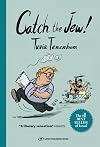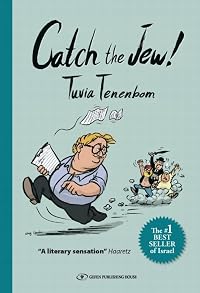
Catch The Jew!
by Tuvia Tenenbom
On This Page
Description
Catch the Jew! recounts the adventures of gonzo journalist Tuvia Tenenbom, who wanders around Israel and the Palestinian Authority for seven months in search of the untold truths in today's Holy Land. With holy chutzpah, Tenenbom boldly goes where no Jew has gone before, at times risking his life as he assumes the identities of Tobi the German and even Abu Ali in order to probe into the many stories in this strange land and poke holes in all of them. From the self-hating leftists in Tel Aviv show more to the self-promoting PLO execs in Ramallah, from the black-clad Haredim of Bet Shemesh to the glowing foreign human rights activists in Beit Hanina, from Jewish settlers and the Christians who come from abroad to toil with them to ardent Jerusalem monks and Bedouins in surprisingly glorious shacks, Tenenbom takes on the people of the land, getting to know them and disarming them as he breaks bread and mingles with anyone and everyone. show lessTags
Recommendations






















Member Reviews
Catch the Jew!”: A Gonzo Journey Through Israel and Palestine
Tuvia Tenenbom’s “Catch the Jew!” is a riveting exploration of the Holy Land, where he ventures into the heart of Israel and the Palestinian Authority. With audacity and wit, Tenenbom assumes various identities—Tobi the German, Abu Ali—and delves into untold stories, challenging prevailing narratives.
The book takes us on a rollercoaster ride, from self-hating leftists in Tel Aviv to self-promoting PLO executives in Ramallah. We encounter black-clad Haredim in Bet Shemesh, glowing foreign human rights activists in Beit Hanina, and ardent Jerusalem monks. Tenenbom breaks bread with people from all walks of life, disarming them as he probes deeper.
His questions are show more provocative: Does Palestinian wife number one hate Jews more than wife number two? Who funds NGOs (Non-governmental Organizations) pushing for a Judenrein Israel? Why are idealistic human rights activists drawn exclusively to Israel? And whose land is it, anyway?
Unlike armchair pundits, Tenenbom spent seven months on the ground, meeting Jews, Druze, Palestinians, and Europeans. His findings are raw, unfiltered, and eye-opening. He visits Israeli cities, Palestinian refugee camps, and isolated Jewish settlements. Along the way, he encounters Israeli politicians, Palestinian officials, prostitutes, and stray cats.
Tenenbom’s conclusions, often reached while playing his dangerous charade, are bone-chilling. His uncensored report challenges the Left’s vision of the region’s future. Left/liberal Israelis, ‘moderate’ Palestinians, and European NGOs all come under scrutiny.
Published in 2015, “Catch the Jew!” remains relevant today. As we grapple with the ongoing Israeli-Palestinian Conflict, Tenenbom’s insights shed light on the complexities. The protests worldwide reflect the urgency of finding a lasting peace agreement.
And what about the International Committee of the Red Cross (ICRC)? Tenenbom’s journey reveals uncomfortable truths. While the ICRC claims neutrality, its actions sometimes belie its intentions. Perhaps it’s time to question whose interests they truly serve.
In summary, “Catch the Jew!” is an engrossing, brutally honest account that defies conventional narratives. Tenenbom’s gonzo journalism pierces through layers of misinformation, leaving readers with a fresh perspective on Israel and Palestine. show less
Tuvia Tenenbom’s “Catch the Jew!” is a riveting exploration of the Holy Land, where he ventures into the heart of Israel and the Palestinian Authority. With audacity and wit, Tenenbom assumes various identities—Tobi the German, Abu Ali—and delves into untold stories, challenging prevailing narratives.
The book takes us on a rollercoaster ride, from self-hating leftists in Tel Aviv to self-promoting PLO executives in Ramallah. We encounter black-clad Haredim in Bet Shemesh, glowing foreign human rights activists in Beit Hanina, and ardent Jerusalem monks. Tenenbom breaks bread with people from all walks of life, disarming them as he probes deeper.
His questions are show more provocative: Does Palestinian wife number one hate Jews more than wife number two? Who funds NGOs (Non-governmental Organizations) pushing for a Judenrein Israel? Why are idealistic human rights activists drawn exclusively to Israel? And whose land is it, anyway?
Unlike armchair pundits, Tenenbom spent seven months on the ground, meeting Jews, Druze, Palestinians, and Europeans. His findings are raw, unfiltered, and eye-opening. He visits Israeli cities, Palestinian refugee camps, and isolated Jewish settlements. Along the way, he encounters Israeli politicians, Palestinian officials, prostitutes, and stray cats.
Tenenbom’s conclusions, often reached while playing his dangerous charade, are bone-chilling. His uncensored report challenges the Left’s vision of the region’s future. Left/liberal Israelis, ‘moderate’ Palestinians, and European NGOs all come under scrutiny.
Published in 2015, “Catch the Jew!” remains relevant today. As we grapple with the ongoing Israeli-Palestinian Conflict, Tenenbom’s insights shed light on the complexities. The protests worldwide reflect the urgency of finding a lasting peace agreement.
And what about the International Committee of the Red Cross (ICRC)? Tenenbom’s journey reveals uncomfortable truths. While the ICRC claims neutrality, its actions sometimes belie its intentions. Perhaps it’s time to question whose interests they truly serve.
In summary, “Catch the Jew!” is an engrossing, brutally honest account that defies conventional narratives. Tenenbom’s gonzo journalism pierces through layers of misinformation, leaving readers with a fresh perspective on Israel and Palestine. show less
 This review was written for LibraryThing Early Reviewers.
I have this horrible habit of judging books by their cover, which is why I requested this book for the LibraryThing Early Reviewers giveaway. With a snappy cover and a catchy title, I was excited to have won a copy, and I was not disappointed by the actual content. Tuvia Tenenbom is a multi-lingual, talented writer who uses humor as well as honesty to educate readers about the political happenings between Israel and Palestine, among other issues. His writing had me hooked from the beginning, and though at times it felt slow and “heavy,” I enjoyed the book overall. I did not necessarily agree with everything he wrote, but Tenenbom did get me to start thinking about issues that are easy to overlook as an American Gentile.
This review was written for LibraryThing Early Reviewers.As a travelogue, Tuvia Tenebaum makes Israel sound like a beautiful place with breathtaking, diverse vistas and wonderful food. As a social commentary, he makes it sound like the last place on earth you’d want to visit. Without Tuvia’s humourous take on events, I think this would be a deeply disturbing book that I would have been sorry I picked up. But Tuvia’s attitude saves the book and while I was still deeply disturbed by his reporting, I appreciated his wry, witty outlook. To maintain his positive, upbeat manner in the face of such emotional devastation is very inspiring.
The situation in Israel seems hopeless, truly monumental. I was horrified by what Tuvia uncovered, the hypocrisy and unabashed racism on both sides. The fact show more he had to hide who he was while there seems unreal to me, that he could have been arrested or worse had it been discovered he was a Jew. Tuvia made it all sound like a lark, using different names depending on the situation but there was true danger there for him.
I found this a fascinating look at a culture to which I’ve had little exposure. Tuvia’s sense of humour engaged me and kept me going to the end. show less
The situation in Israel seems hopeless, truly monumental. I was horrified by what Tuvia uncovered, the hypocrisy and unabashed racism on both sides. The fact show more he had to hide who he was while there seems unreal to me, that he could have been arrested or worse had it been discovered he was a Jew. Tuvia made it all sound like a lark, using different names depending on the situation but there was true danger there for him.
I found this a fascinating look at a culture to which I’ve had little exposure. Tuvia’s sense of humour engaged me and kept me going to the end. show less
This review was written for LibraryThing Early Reviewers.What a book; what an education! Journalist Tuvia Tenenbom, aka “Abu Ali”, “Tobi the German” and the “Master Agent “ (if only I could add “Uncle Tobi”) masterly exposes the tragic Arab-Israeli situation with scarcely a word written from his own perspective or opinion. He allowed all the hate, misunderstanding and purported racism expressed between the two opposing groups to flow directly from the mouths of those he interviewed. Here is an individual who, with his honest humor, can find the truth because he genuinely loves and is fascinated with the Person not the cause. Even the “intellectuals” he suffers with a minimum of malice. I was reminded of my father’s warning to me, “Never argue with a fanatic”. show more Tenenbom recognized intellectuals as one in the same.
I’m afraid the intellectuals who already know the truth will never get past the first few pages. To those smart enough to accept their own ignorance will be greatly rewarded and have a great time in the process. show less
I’m afraid the intellectuals who already know the truth will never get past the first few pages. To those smart enough to accept their own ignorance will be greatly rewarded and have a great time in the process. show less
This review was written for LibraryThing Early Reviewers.Catch the Jew!, written as a chronicle of months of interviews between the author, posing as a German journalist, and "human rights workers" and politicians in Israel, makes for compelling reading.
Like a train wreck makes for compelling viewing.
The author, Tuvia Tenenbom, is a brilliant satirist. He pokes holes in the arguments presented by nearly everyone he meets. He uncovers the deep pockets of Europeans, particularly Germans. Throughout the book, he specifies the very many projects through which European governments and NGOs support Palestinians in Israel. He uncovers and reports on lies and hypocrisy in every corner of the country. And he really appears to loath religious Jews. Throughout the book, he writes scornfully about show more self-hating Jews. The irony of his own hateful attitude toward so many Jews, and toward Judaism and Israel, seems lost on him.
It is Tenenbom's personal story that was the most difficult to read. He was raised as a religious Jew in Israel and he fled both Israel and religious life. He comes to Israel with much baggage, and this lifelong emotional baggage he has with Judaism and with the country of his birth, is in evidence throughout the book. His conclusion, that Israel has no possibility of surviving, is both inaccurate and heartbreaking. As the book concludes, he returns to his life in Germany.
Germany, of all places.
As a former American now living in Israel, I found the book compulsively readable. And unspeakably sad. show less
Like a train wreck makes for compelling viewing.
The author, Tuvia Tenenbom, is a brilliant satirist. He pokes holes in the arguments presented by nearly everyone he meets. He uncovers the deep pockets of Europeans, particularly Germans. Throughout the book, he specifies the very many projects through which European governments and NGOs support Palestinians in Israel. He uncovers and reports on lies and hypocrisy in every corner of the country. And he really appears to loath religious Jews. Throughout the book, he writes scornfully about show more self-hating Jews. The irony of his own hateful attitude toward so many Jews, and toward Judaism and Israel, seems lost on him.
It is Tenenbom's personal story that was the most difficult to read. He was raised as a religious Jew in Israel and he fled both Israel and religious life. He comes to Israel with much baggage, and this lifelong emotional baggage he has with Judaism and with the country of his birth, is in evidence throughout the book. His conclusion, that Israel has no possibility of surviving, is both inaccurate and heartbreaking. As the book concludes, he returns to his life in Germany.
Germany, of all places.
As a former American now living in Israel, I found the book compulsively readable. And unspeakably sad. show less
This review was written for LibraryThing Early Reviewers.As many of the reviews note, this book is a definite "must read" as an antidote to so much BS out there.
Nonetheless there are many valid critiques of this book. First on the Jewish side at least, he spends most of his time interviewing extremists. The vast majority of Israeli Jews are "boring" centrists, and so he doesn't spend as much time reporting about them. Instead, most of the Israelis Jews he talks to and reports about are at the extreme end of the political spectrum and therefore far more interesting. He dismisses centrist as "taking the worst ideas of both extremes" while in fact it's more accurate to say they reject the worst ideas of both extremes. Hence the book doesn't give the reader a more accurate view of Israeli society show more or politics - it just gives a different view. As noted, this view is important to understand because most of what you see in the US & even more in the European press, is a parroting of the views of the extreme Left, who since they are Jews are obviously seen as credible & telling the truth.
Secondly, he claims he reports only what he sees and hears, and yet sometimes the quotes he gives of some of the Israeli Leftists are just so outrageous one has to believe, or at least hope, he is paraphrasing to get across a point, rather than literally quoting them. If these are literal quotes, these people really are disturbed. One example is an old couple where the husband says he prefers to believe in lies and doesn't want to hear the truth - would anyone really say that?
Which leads to the third point - although he criticizes the biases of other journalists, he is hardly a neutral observer. It's not that he has a particular political stance, but he is almost allergic to stupidity & hypocrisy, so he tends to make the worst interpretation of the behavior & motives of the many stupid people he encounters.in many cases it's well deserved, but he often is overly harsh.
On the flip side, he exposes the awful Jewphobia of Palestinians, both their leadership and their man in the street. After spending five minutes with any random Palestinian pretending he's a German, they are sure to declare their love of Hitler. They go on and on about Jewish racism and Israel as an apartheid state, but in fact they are the ones who absolutely hate Jews and would cleanse Jews from the land if they can. They do everything in their power to live in a world of denial about the history of the region & the millennial Jewish connection to the land of Israel. Still, one can say he is a bit overly enthusiastic about how well they live. Most of them are not engaged in NGOs and the struggle to make Israel Palestine once again - but like most people are engaged in the day to day struggles of leading their lives.
For all these reasons, his epilogue is overly pessimistic. Ironically, while he tries to deny his own Israeli-ness throughout the book (both to enhance his reporting & to stress his ex-pat status) he shares the Israeli characteristic he notes at the very end - the fear that Israel is doomed. It actually isn't, it's doing quite well and has a bright future ahead of it. And while most Palestinians wish it would go away, most of them understand one way or another that it won't. As he notes, in many ways the Palestinian state exists de facto. So eventually the saner & less stupid parts on both sides will, reluctantly, find a way to make the de facto become de jure.
One last point - this book once again underlines how absolutely useless the EU is, and how the Germans should stick to making great beer and cars instead of meddling in other people's business! show less
Nonetheless there are many valid critiques of this book. First on the Jewish side at least, he spends most of his time interviewing extremists. The vast majority of Israeli Jews are "boring" centrists, and so he doesn't spend as much time reporting about them. Instead, most of the Israelis Jews he talks to and reports about are at the extreme end of the political spectrum and therefore far more interesting. He dismisses centrist as "taking the worst ideas of both extremes" while in fact it's more accurate to say they reject the worst ideas of both extremes. Hence the book doesn't give the reader a more accurate view of Israeli society show more or politics - it just gives a different view. As noted, this view is important to understand because most of what you see in the US & even more in the European press, is a parroting of the views of the extreme Left, who since they are Jews are obviously seen as credible & telling the truth.
Secondly, he claims he reports only what he sees and hears, and yet sometimes the quotes he gives of some of the Israeli Leftists are just so outrageous one has to believe, or at least hope, he is paraphrasing to get across a point, rather than literally quoting them. If these are literal quotes, these people really are disturbed. One example is an old couple where the husband says he prefers to believe in lies and doesn't want to hear the truth - would anyone really say that?
Which leads to the third point - although he criticizes the biases of other journalists, he is hardly a neutral observer. It's not that he has a particular political stance, but he is almost allergic to stupidity & hypocrisy, so he tends to make the worst interpretation of the behavior & motives of the many stupid people he encounters.in many cases it's well deserved, but he often is overly harsh.
On the flip side, he exposes the awful Jewphobia of Palestinians, both their leadership and their man in the street. After spending five minutes with any random Palestinian pretending he's a German, they are sure to declare their love of Hitler. They go on and on about Jewish racism and Israel as an apartheid state, but in fact they are the ones who absolutely hate Jews and would cleanse Jews from the land if they can. They do everything in their power to live in a world of denial about the history of the region & the millennial Jewish connection to the land of Israel. Still, one can say he is a bit overly enthusiastic about how well they live. Most of them are not engaged in NGOs and the struggle to make Israel Palestine once again - but like most people are engaged in the day to day struggles of leading their lives.
For all these reasons, his epilogue is overly pessimistic. Ironically, while he tries to deny his own Israeli-ness throughout the book (both to enhance his reporting & to stress his ex-pat status) he shares the Israeli characteristic he notes at the very end - the fear that Israel is doomed. It actually isn't, it's doing quite well and has a bright future ahead of it. And while most Palestinians wish it would go away, most of them understand one way or another that it won't. As he notes, in many ways the Palestinian state exists de facto. So eventually the saner & less stupid parts on both sides will, reluctantly, find a way to make the de facto become de jure.
One last point - this book once again underlines how absolutely useless the EU is, and how the Germans should stick to making great beer and cars instead of meddling in other people's business! show less
Catch the Jew is a wonderfully written book. Its up in your face interview style of nobody or anything is too sacred to question is gripping and keeps you glued to every page (even a Kindle page!). You find yourself inside the person looking at the Palestinians or Israelis in a way you’ve not done so before. In all the different roles and or identities the author assumes you find yourself looking at the information discussed in a totally new and different manner. He’s clearly not afraid to attack the lies and truths put forward by all elements within the conflict running thru Israel and the Middle East thru many different guises. He comes at his book from the left, right, middle and directions not thought of before. Mr. Tenenbom show more takes on the people, governments and religious institutions of the Middles East and all its many conflicts of the land, getting to know them and disarming them as he breaks bread and mingles with anyone and everyone. This book helps to question from ones heart what is really going on in the hearts and minds of many of the peoples involved in the land. I found my self laughing, rubbing my head, looking up information, talking to friends and family otherwise everything a successful book is supposed to do. This book helps one to think, not repeat or gloss over but to think. This forever boiling land of Israel and the lands surrounding it need books like Catch the Jew to help us to have real dialogue and not just to accept what’s said on television or in print. As an American Jew I have and will always support the State of Israel and its mission to be a home and land for Jews from anywhere in the world. Please pick up a copy of the wonderfully written book and don’t just read it and put it on the shelf but discuss it and question others around you, f or we will gain so much more than the hardliners would have us learn. show less
This review was written for LibraryThing Early Reviewers.Members
- Recently Added By
Lists

8x8 Challenge 2015
64 works; 1 member
Author Information
10 Works 278 Members
Tuvia Tenenbom, author of three best sellers in Germany and four in Israel, is a journalist and dramatist. He holds advanced degrees in both fine arts and science and is the founder of the Jewish Theater of New York. Tuvia's articles and essays have appeared in leading Western media, including Die Zeit of Germany, Corriere della Sera of Italy, show more Yedioth Ahronoth of Israel, and the Forward of America. His previous books include Catch the Jew!; The Lies They Tell; Hello, Refugees!; and I Sleep in Hitler's Room. show less
Series
Belongs to Publisher Series
suhrkamp taschenbuch (4684)
Common Knowledge
- Canonical title*
- Allein unter Juden : Eine Entdeckungsreise
- Original title
- Catch the Jew!
- Original publication date
- 2015; 2014-07
- Dedication*
- Dieses Buch ist meiner Frau und Partnerin Isi Tenenbom gewidmet, die mich stets furchtlos dorthin begleitete, wohin der Wind mich wehte, ob es dort sicher war oder nicht, und mir dabei ihre klügsten Gedanken und ihr schönst... (show all)es Lächeln schenkte.
- First words*
- Mein Name ist Tuvia. Ich wurde in Israel geboren und wuchs dort in einer ultraorthodoxen, antizionistischen Familie im seinerzeit elitärsten ultraorthodoxen Umfeld auf. Mein Vater war Rabbiner, wie so viele der Väter unsere... (show all)r Nachbarn.
- Last words*
- (Click to show. Warning: May contain spoilers.)Ihr seid jüdische Katzen, bleibt unter euresgleichen. Genießt dieses Land, meine streunenden Katzen, solange es noch existiert. Ich werde euch furchtbar vermissen. Schalom.
*Some information comes from Common Knowledge in other languages. Click "Edit" for more information.
Classifications
- Genres
- Nonfiction, History, General Nonfiction
- DDC/MDS
- 956.94054 — History & geography History of Asia Middle East Asia: Turkey, Iraq, Syria, Lebanon, Israel, Jordan The Levant Israel and Palestine
- LCC
- DS119.76 .T452 — History of Europe, Asia, Africa and Oceania Asia History of Asia Israel (Palestine). The Jews
- BISAC
Statistics
- Members
- 143
- Popularity
- 228,784
- Reviews
- 18
- Rating
- (3.98)
- Languages
- 5 — Czech, Dutch, English, German, Hebrew
- Media
- Paper, Audiobook, Ebook
- ISBNs
- 10
- ASINs
- 5