On This Page
Description
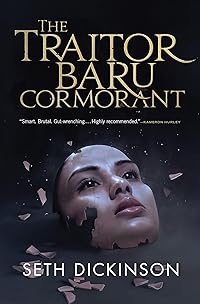
In Seth Dickinson's highly-anticipated debut The Traitor Baru Cormorant, a young woman from a conquered people tries to transform an empire in this richly imagined geopolitical fantasy. Baru Cormorant believes any price is worth paying to liberate her people-even her soul. When the Empire of Masks conquers her island home, overwrites her culture, criminalizes her customs, and murders one of her fathers, Baru vows to swallow her hate, join the Empire's civil service, and claw her way high show more enough to set her people free. Sent as an Imperial agent to distant Aurdwynn, another conquered country, Baru discovers it's on the brink of rebellion. Drawn by the intriguing duchess Tain Hu into a circle of seditious dukes, Baru may be able to use her position to help. As she pursues a precarious balance between the rebels and a shadowy cabal within the Empire, she orchestrates a do-or-die gambit with freedom as the prize. But the cost of winning the long game of saving her people may be far greater than Baru imagines. show lessTags
Recommendations






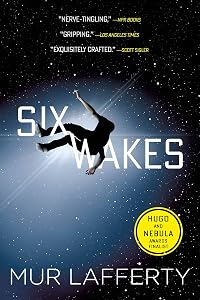
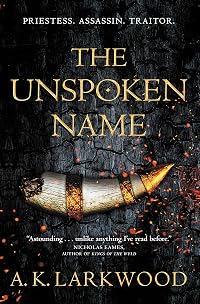
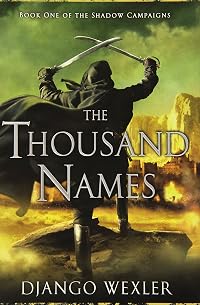
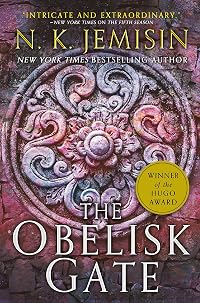




Member Recommendations

Member Reviews
I'm going to have to make a new shelf for the growing number of economi-punk titles that have been coming out. I can't believe how many of them there are, or why I get drawn so hard and fast into these kinds of tales. I can easily list one economist-protagonist for each of my fingers, and no one is more surprised than me that I'm digging it.
I'm digging it hard.
Can we have math geniuses make great heroes? Why yes, of course you can. SF has a very long history of doing just that. But how about Fantasy? Why yes, yes, indeed, it looks like crossovers are happening all over the place, and everyone is heartily enriched by the trend.
Take this novel, which grabbed me from the get go and didn't let go throughout its fantastically dark and show more emotional passage. Our heroine is a savant, hand-picked and groomed to be an elite tool of an empire that has good aspects as well as being quite ruthlessly evil, bringing progress and some of the most repressive social regimes that even a southern baptist hate group might blanche at. And yet, the Masquerade brings schools and medicine and stability, uniting so many disparate cultures, while eventually homogenizing them all at the same time. Baru Cormorant vows to free her home from within the bowels of the beast with the tools of the same empire she wants to escape.
Great set-up. It's obviously a tragedy from go. The growth and setbacks, the challenges and the successes and the failures get tightly woven together until we truly believe we've got the real measure of Baru. I really like her. I like her even through to the end of the novel. I may not approve or condone anything that happens at all. That doesn't really matter. There is evil and there is good in everything and everyone. Even the most atrocious of social norms become background to the overriding immediacy of what everyone is going through at the moment.
I wanted everyone to succeed so badly that I could taste it. I was holding three or four impossible things in my head at the same time, and I rejoiced in the grand tale that it was spinning. Yes. It was a novel about betrayal. But who's betrayal, and how many times will it occur? The question goes so deep and is spread so wide across the plains of the story that I was left in mute wonder.
I LOVE THIS NOVEL. It is so well-crafted. It is disturbing and full of purpose. It is full of meaning.
It remained such a grand and epic tale of love and striving and hope, with perfectly executed waves of storytelling, that I never once wanted to put this book down. The undercurrent was deep and swift and oh so nasty. I felt almost like I was in one of the great Shakespearian tragedies. It held me by the neck and forced me to watch on as so much of humanity was sacrificed for ever-increasing tiers of need and hope.
Just. Wow.
Economics? Try the underpinnings and execution of a revolution, instead, because that was the core action of the novel. The theme, on the other hand, is one that will reverberate long after I've read the pages.
To think this was a debut novel. Amazing.
OF course, there are other very disturbing and important topics I probably should bring up. Homophobia is institutionalized in a rather grotesque fashion, among other vile things, but what I was most impressed about was the author's unflinching courage to lay it bare like he did.
Spoiler alert:Baru Cormorant's deepest secret and hope was all wrapped up in her desire for other women, and this, more than anything else the Masquerade repressed, was the core of her own rebellion. She has to fight for the success of the people who would repress her. This is a very dark, very painful kind of story to tell. Being a traitor is all wrapped up in this idea just as much as breaking free of the empire or creating the honeypot that betrays everything and everyone one last time. The twisting of this knife really killed me.
This book has so many layers, but don't mistake me on this: it is one hell of a fantastic story on the surface, too. It was brilliant. :) show less
I'm digging it hard.
Can we have math geniuses make great heroes? Why yes, of course you can. SF has a very long history of doing just that. But how about Fantasy? Why yes, yes, indeed, it looks like crossovers are happening all over the place, and everyone is heartily enriched by the trend.
Take this novel, which grabbed me from the get go and didn't let go throughout its fantastically dark and show more emotional passage. Our heroine is a savant, hand-picked and groomed to be an elite tool of an empire that has good aspects as well as being quite ruthlessly evil, bringing progress and some of the most repressive social regimes that even a southern baptist hate group might blanche at. And yet, the Masquerade brings schools and medicine and stability, uniting so many disparate cultures, while eventually homogenizing them all at the same time. Baru Cormorant vows to free her home from within the bowels of the beast with the tools of the same empire she wants to escape.
Great set-up. It's obviously a tragedy from go. The growth and setbacks, the challenges and the successes and the failures get tightly woven together until we truly believe we've got the real measure of Baru. I really like her. I like her even through to the end of the novel. I may not approve or condone anything that happens at all. That doesn't really matter. There is evil and there is good in everything and everyone. Even the most atrocious of social norms become background to the overriding immediacy of what everyone is going through at the moment.
I wanted everyone to succeed so badly that I could taste it. I was holding three or four impossible things in my head at the same time, and I rejoiced in the grand tale that it was spinning. Yes. It was a novel about betrayal. But who's betrayal, and how many times will it occur? The question goes so deep and is spread so wide across the plains of the story that I was left in mute wonder.
I LOVE THIS NOVEL. It is so well-crafted. It is disturbing and full of purpose. It is full of meaning.
It remained such a grand and epic tale of love and striving and hope, with perfectly executed waves of storytelling, that I never once wanted to put this book down. The undercurrent was deep and swift and oh so nasty. I felt almost like I was in one of the great Shakespearian tragedies. It held me by the neck and forced me to watch on as so much of humanity was sacrificed for ever-increasing tiers of need and hope.
Just. Wow.
Economics? Try the underpinnings and execution of a revolution, instead, because that was the core action of the novel. The theme, on the other hand, is one that will reverberate long after I've read the pages.
To think this was a debut novel. Amazing.
OF course, there are other very disturbing and important topics I probably should bring up. Homophobia is institutionalized in a rather grotesque fashion, among other vile things, but what I was most impressed about was the author's unflinching courage to lay it bare like he did.
Spoiler alert:
This book has so many layers, but don't mistake me on this: it is one hell of a fantastic story on the surface, too. It was brilliant. :) show less
Rating: 4.5* of five
The Publisher Says: Baru Cormorant will pay any price to liberate her world — even if it makes her a monster.
When the Empire of Masks conquers her island home and murders one of her fathers, Baru makes a vow: I will never be powerless again. She'll swallow her hate, join the Empire’s civil service, and claw her way high enough to set her people free.
Suspicious of her loyalty, the Masquerade exiles her to an accountant's post in distant Aurdwynn, a snakepit of informants and seditious dukes. Targeted for death by the uncomfortably intriguing rebel duchess Tain Hu, Baru fears a more intimate disaster — if her colleagues discover her homosexuality, she’ll be jailed and mutilated.
But Baru is a savant in games of show more power, ruthless enough to make herself sick. Armed with ink, lies, and one dubiously loyal secretary, she arranges a sweeping power play — a win–or–die double–cross gambit with empire as the prize. Survive it, and she'll save her home...but the cost will be appalling. Her dream of liberation might make her a tyrant. And if she's so very clever — why was she fool enough to fall in love?
I RECEIVED A DRC FROM THE PUBLISHER. THANK YOU.
My Review: Part of the olden-days Tor.com book-club giveaways. Author Dickinson pointed the way that the forces of reaction are doing their damnedest to reshape US society into more of a hellscape than they already have...take over the bureaucracy and you harm more people for longer than if you just militarily abuse 'em for a while.
This lesson needs to be heeded.
The lesbian anti-hero of this anti-colonialist fable of destruction is perfectly rendered for her grimdark purpose. She's coldly calculating (accountant joke)...“Your error is fundamental to the human psyche: you have allowed yourself to believe that others are mechanisms, static and solvable, whereas you are an agent”...emotionally reserved due to the damage inflicted by her conquerors, and driven by her hatred of them. One I share, incidentally.
In many ways this unsettling, unpleasant, perfectly realized character reminds me of Stalin. She laser-focuses on legitimate grievances...“I am a part of this, but I do not have to love it. I only have to play my role. Survive long enough to gather power. Gather enough power to make a difference”...and uses them to power her revenge on those who have aggrieved her. This is a perfect way to drive a story, but not so perfect a way to allow the reader to invest in her. In this first-of-series novel, we're investing in The Struggle&8480; not in Baru Cormorant per se. It's all going to change, I assume, as she loses the laser focus on hatred to her new luuuv the Duchess.
The reason I feel safe recommending this story to straight readers is its absence of sex. Seth Dickinson, a man, was wise enough not to go peeping into any women's bedrooms. Same-sex love is unremarkable in this story of the world Baru has lost, but it's also not closely observed. Her drive to restore the lost paradise is, for this old cisqueer gent, deeply compelling reading.
I keep meaning to get to the other books in the series, but y'all know how that goes in a biblioholic's life.... show less
The Publisher Says: Baru Cormorant will pay any price to liberate her world — even if it makes her a monster.
When the Empire of Masks conquers her island home and murders one of her fathers, Baru makes a vow: I will never be powerless again. She'll swallow her hate, join the Empire’s civil service, and claw her way high enough to set her people free.
Suspicious of her loyalty, the Masquerade exiles her to an accountant's post in distant Aurdwynn, a snakepit of informants and seditious dukes. Targeted for death by the uncomfortably intriguing rebel duchess Tain Hu, Baru fears a more intimate disaster — if her colleagues discover her homosexuality, she’ll be jailed and mutilated.
But Baru is a savant in games of show more power, ruthless enough to make herself sick. Armed with ink, lies, and one dubiously loyal secretary, she arranges a sweeping power play — a win–or–die double–cross gambit with empire as the prize. Survive it, and she'll save her home...but the cost will be appalling. Her dream of liberation might make her a tyrant. And if she's so very clever — why was she fool enough to fall in love?
I RECEIVED A DRC FROM THE PUBLISHER. THANK YOU.
My Review: Part of the olden-days Tor.com book-club giveaways. Author Dickinson pointed the way that the forces of reaction are doing their damnedest to reshape US society into more of a hellscape than they already have...take over the bureaucracy and you harm more people for longer than if you just militarily abuse 'em for a while.
This lesson needs to be heeded.
The lesbian anti-hero of this anti-colonialist fable of destruction is perfectly rendered for her grimdark purpose. She's coldly calculating (accountant joke)...“Your error is fundamental to the human psyche: you have allowed yourself to believe that others are mechanisms, static and solvable, whereas you are an agent”...emotionally reserved due to the damage inflicted by her conquerors, and driven by her hatred of them. One I share, incidentally.
In many ways this unsettling, unpleasant, perfectly realized character reminds me of Stalin. She laser-focuses on legitimate grievances...“I am a part of this, but I do not have to love it. I only have to play my role. Survive long enough to gather power. Gather enough power to make a difference”...and uses them to power her revenge on those who have aggrieved her. This is a perfect way to drive a story, but not so perfect a way to allow the reader to invest in her. In this first-of-series novel, we're investing in The Struggle&8480; not in Baru Cormorant per se. It's all going to change, I assume, as she loses the laser focus on hatred to her new luuuv the Duchess.
The reason I feel safe recommending this story to straight readers is its absence of sex. Seth Dickinson, a man, was wise enough not to go peeping into any women's bedrooms. Same-sex love is unremarkable in this story of the world Baru has lost, but it's also not closely observed. Her drive to restore the lost paradise is, for this old cisqueer gent, deeply compelling reading.
I keep meaning to get to the other books in the series, but y'all know how that goes in a biblioholic's life.... show less
Oh my word on the one hand I can't believe I left it so long to read this book and on the other hand HALLELUJAH I finally read this book - and it's an immediate all-time favourite fantasy.
Politics, more politics, petty bureaucracy, racism, homophobia, rebellion, repression, treachery (the clue is in the name folks) and the most gorgeous prose. This is an outrageously good book - an unfairly great debut - and I am going to be raving about it for years.
Full review
Politics, more politics, petty bureaucracy, racism, homophobia, rebellion, repression, treachery (the clue is in the name folks) and the most gorgeous prose. This is an outrageously good book - an unfairly great debut - and I am going to be raving about it for years.
Full review
This is exactly the sort of twisty mind-gamey kind of book I adore. I was so close to giving it five stars... but there's this niggle. Something about it reminds me of the feeling I had as a kid reading John Christopher's Sword of the Spirits trilogy: I loved it so much, and then suddenly I was cringing under an attack of second-hand embarrassment for the protagonist. Perhaps Baru is just *too* good at feigning coldness; but she's certainly veering too much towards "the ends justify the means" for my comfort. I know what she's trying to do (broadly speaking, I mean; it's not clear whether or not she yet know what she's trying to do) but is the cost worth it?
A powerful read in any case.
A powerful read in any case.
I love the world-building: it's Game of Thrones, but it considers colonialism, racism, misogyny and homophobia and particularly how those oppressions are carried out by the state. And I love Baru (for the most part), a character study in Machiavellianism, carried out for originally progressive reasons, but requiring greater and greater compromises and sacrifices. The only stuff that didn't interest me was all the battles, but I can see why they're important to the narrative.
I'm facebook friends with the editor of this book, otherwise it probably would have passed me by. But the more I read, the more obsessed I became, the more I wanted to own it because it deals with a question I am increasingly becoming interested in: to reword Audre Lord, can you use master's tools to tear down master's house? The Traitor Baru Cormorant is about an empire that absorbs other cultures, and what you do when you're one of the absorbed; young Baru Cormorant elects to be the best possible member of the Empire of the Mask she can be, to amass all the power that is possible so that she can use that power to free her people.
I wanted to love this book, and I would say I merely liked it a lot, which is unfair, as it is very good. show more Part of the problem is one of perspective: I feel like there are times where we are told that Baru is a certain way, rather than feel it ourselves, but part of this problem is by design, I think, as Baru does not always have much access to her own feelings. It's an amibitious novel, taking in Baru's early childhood, as her "native" way of life is dismantled through foreign education; her posting as Imperial Accountant to the distant province of Aurdwynn (like her homeland, a nation absorbed into the Masquerade), where she begins to trace a rebellion in the ledgers; and what comes after that, which I'm loathe to give away because part of the joy of this book was that it didn't quite follow the path that I had imagined. Baru is climbing toward power, yes, but not always in the way you might anticipate.
This is a book about the tools of empire: of politics, and economics, and culture. The functioning of the Masquerade is where the book always rang the most true-- the Masquerade is cunning, and it pulls apart the cultures of those it encounters. But it doesn't quite chew them up and spit them out; rather, those cultures adapt to the Masquerade in the ways that they can, some of which the Masquerade approves of, some of which it suppresses, and some of which it tolerates out of necessity. It is evil, but it is not Evil. This is the kind of sophisticated empire that operates in the real world, not the fantasy version of millions of orcs/stormtroopers/demons/clones marching across the landscape. Though it has a military, its tools are more varied than that.
The sense of history is always strong here, too, almost too strong as I sometimes got lost. But these nations aren't monolithic; they're all made up of different cultures and different ethnic groups and different races, and different characters have different attitudes to those histories. All of these things impact the attitudes and events of the present.
I liked the characters a lot, too; these are sharply drawn people in the midst of all this politicking. It would surprise no one who knows me that my favorite from Muire Lo, the assistant to the Imperial Accountant, an efficient, thoughtful, long-suffering informant. But he is one of many who move through this complicated world.
The end-- not to give too much away, I hope-- is painful, as it reshapes much of what you have seen before and it brings Baru's character into a sharper focus. Seriously, it's painful. I'm pretty sure there's a sequel coming, and I really want to read it, but part of me wishes there wasn't because what an ending this would be if there wasn't.
Empire is terrifying. show less
I wanted to love this book, and I would say I merely liked it a lot, which is unfair, as it is very good. show more Part of the problem is one of perspective: I feel like there are times where we are told that Baru is a certain way, rather than feel it ourselves, but part of this problem is by design, I think, as Baru does not always have much access to her own feelings. It's an amibitious novel, taking in Baru's early childhood, as her "native" way of life is dismantled through foreign education; her posting as Imperial Accountant to the distant province of Aurdwynn (like her homeland, a nation absorbed into the Masquerade), where she begins to trace a rebellion in the ledgers; and what comes after that, which I'm loathe to give away because part of the joy of this book was that it didn't quite follow the path that I had imagined. Baru is climbing toward power, yes, but not always in the way you might anticipate.
This is a book about the tools of empire: of politics, and economics, and culture. The functioning of the Masquerade is where the book always rang the most true-- the Masquerade is cunning, and it pulls apart the cultures of those it encounters. But it doesn't quite chew them up and spit them out; rather, those cultures adapt to the Masquerade in the ways that they can, some of which the Masquerade approves of, some of which it suppresses, and some of which it tolerates out of necessity. It is evil, but it is not Evil. This is the kind of sophisticated empire that operates in the real world, not the fantasy version of millions of orcs/stormtroopers/demons/clones marching across the landscape. Though it has a military, its tools are more varied than that.
The sense of history is always strong here, too, almost too strong as I sometimes got lost. But these nations aren't monolithic; they're all made up of different cultures and different ethnic groups and different races, and different characters have different attitudes to those histories. All of these things impact the attitudes and events of the present.
I liked the characters a lot, too; these are sharply drawn people in the midst of all this politicking. It would surprise no one who knows me that my favorite from Muire Lo, the assistant to the Imperial Accountant, an efficient, thoughtful, long-suffering informant. But he is one of many who move through this complicated world.
The end-- not to give too much away, I hope-- is painful, as it reshapes much of what you have seen before and it brings Baru's character into a sharper focus. Seriously, it's painful. I'm pretty sure there's a sequel coming, and I really want to read it, but part of me wishes there wasn't because what an ending this would be if there wasn't.
Empire is terrifying. show less
Wow! That was incredible. Dickinson upends fantasy tropes in this deadly and intricate novel of intrigue, economic warfare, and horrific revenge. Young Baru Cormorant is a child who sees her carefree home captured by invisible threads of paper currency, ill-advised alliances, and well-meaning advisers, an invasion that moves with the unstoppable momentum of a glacier until the imperial power of the Masquerade rules everything, crushing her people's traditions and culture under eugenic science and hygienic advisers. A student in the new Imperial school, Baru formulates a risky plan. She will become the best, use her talents to gain power within the Masquerade, and then destroy it from within.
A prodigy with accounting and finance, Baru show more is dispatched to the strategic province of Aurdwynn, to fill the shoes of two dead men in a viper's pit of feuding dukes, venomous Imperial functionaries, ancient cults, and ambitious peasants. Baru needs to find her allies, and sparks a rebellion in her own name against the Empire, winning a major battle and playing off hard fraught loyalties. She's an amazing protagonist, a tightly wound demon who's deeply internalized anger is all too real.
I refuse to say anything about the end, but again, Wow! This is a book that will spike you through the heart. Best fantasy I've read all year.
***
Updated from 2019: I reread Traitor because I started Monster and the beginning of Monster made no damn sense. On a reread, Traitor is even better. Sure, knowing the end removes the absolute gut punch, but the journey is still incredible, it's easier to keep track of the secondary characters, and I really enjoyed Dickinson's pacing, the way that he sticks through years without missing anything important. show less
A prodigy with accounting and finance, Baru show more is dispatched to the strategic province of Aurdwynn, to fill the shoes of two dead men in a viper's pit of feuding dukes, venomous Imperial functionaries, ancient cults, and ambitious peasants. Baru needs to find her allies, and sparks a rebellion in her own name against the Empire, winning a major battle and playing off hard fraught loyalties. She's an amazing protagonist, a tightly wound demon who's deeply internalized anger is all too real.
I refuse to say anything about the end, but again, Wow! This is a book that will spike you through the heart. Best fantasy I've read all year.
***
Updated from 2019: I reread Traitor because I started Monster and the beginning of Monster made no damn sense. On a reread, Traitor is even better. Sure, knowing the end removes the absolute gut punch, but the journey is still incredible, it's easier to keep track of the secondary characters, and I really enjoyed Dickinson's pacing, the way that he sticks through years without missing anything important. show less
Members
- Recently Added By
Lists

2016 Hugo Eligible Novels
90 works; 32 members

Female Protagonist
1,056 works; 57 members

NPR Summer 2021: 50 Favorite Sci-Fi And Fantasy Books Of The Past Decade
50 works; 8 members

LGBTQ+ Speculative Fiction
821 works; 51 members

BbBooBooks
28 works; 2 members

Civil Service Spec Fic
36 works; 4 members

Top Five Books of 2018
802 works; 265 members

Speculative Fiction to Read
706 works; 32 members

5 Stars in '18
9 works; 1 member

Good LGBT fiction for LGBT folk and friends
551 works; 55 members

SomethingAwful TBB BOTM
66 works; 2 members
Books Read in 2018
4,360 works; 110 members

infjsarah's wishlist
408 works; 2 members

Books Read in 2016
4,666 works; 199 members

Evan's Reading List 2020
12 works; 1 member

Books Read in 2024
4,623 works; 126 members

Reading Glasses Podcast
410 works; 3 members
Author Information

14+ Works 3,470 Members
Awards and Honors
Awards
Distinctions
Notable Lists
Series

Work Relationships
Common Knowledge
- Canonical title
- The Traitor Baru Cormorant
- Alternate titles
- The Traitor
- Original publication date
- 2015-09-15
- People/Characters
- Baru Cormorant; Tain Hu, Duchess Vultjag; Xate Yawa; Muire Lo; Xate Olake, Duke Lachta; Purity Cartone (show all 13); Duke Lyxaxu; Duke Unuxekome; Duke Oathsfire; Governor Cattlson; Apparitor; Cairdine Farrier (Itinerant); Aminata
- Important places
- Aurdwynn; Taranoke
- Epigraph
- A Promise
This is the truth. You will know because it hurts. - Dedication
- For Gillian
- First words
- Trade season came around again.
- Last words
- (Click to show. Warning: May contain spoilers.)I'll see you in Falcrest.
- Blurbers
- Hurley, Kameron; de Bodard, Aliette; Chu, John; McCormack, Una; Gladstone, Max; Johnson, Kij (show all 11); Buckell, Tobias S.; Moraine, Sunny; Wendig, Chuck; Swirsky, Rachel; Kushner, Ellen
- Original language
- English
Classifications
Statistics
- Members
- 1,846
- Popularity
- 11,758
- Reviews
- 98
- Rating
- (3.96)
- Languages
- English, German
- Media
- Paper, Audiobook, Ebook
- ISBNs
- 14
- ASINs
- 4