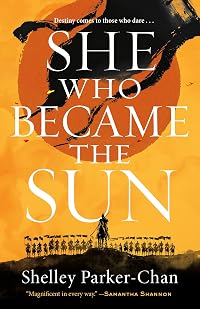
On This Page
Description
To possess the Mandate of Heaven, the monk Zhu will do anything "I refuse to be nothing..." In a famine-stricken village on a dusty yellow plain, two children are given two fates. A boy, greatness. A girl, nothingness... In 1345, China lies under harsh Mongol rule. For the starving peasants of the Central Plains, greatness is something found only in stories. When the Zhu family's eighth-born son, Zhu Chongba, is given a fate of greatness, everyone is mystified as to how it will come to pass. show more The fate of nothingness received by the family's clever and capable second daughter, on the other hand, is only as expected. When a bandit attack orphans the two children, though, it is Zhu Chongba who succumbs to despair and dies. Desperate to escape her own fated death, the girl uses her brother's identity to enter a monastery as a young male novice. There, propelled by her burning desire to survive, Zhu learns she is capable of doing whatever it takes, no matter how callous, to stay hidden from her fate. After her sanctuary is destroyed for supporting the rebellion against Mongol rule, Zhu takes the chance to claim another future altogether -- her brother's abandoned greatness. show lessTags
Recommendations
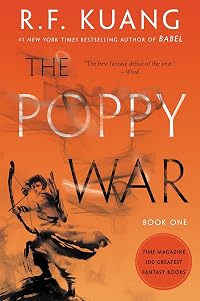
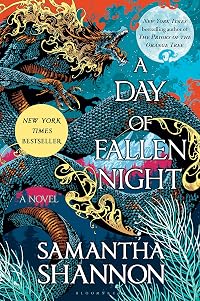
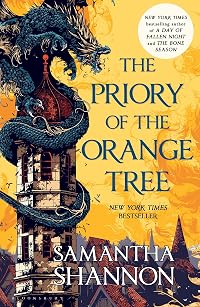
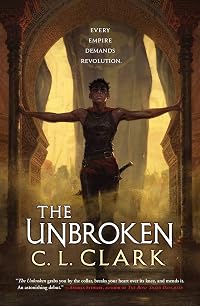


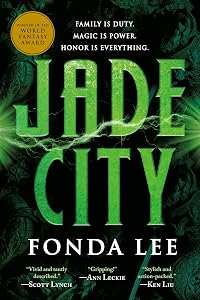
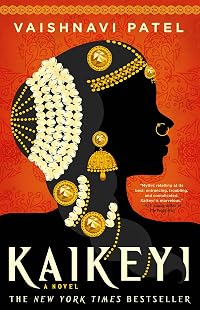
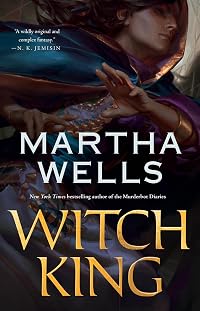
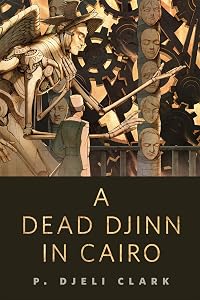



Member Recommendations
Member Reviews
4.5 Stars
CW:suicide, sexual content, misogyny that is a product of the time period this novel is set in, misgendering
Well I absolutely loved the writing and the characters in this amazing novel!
Rather than accept the fate that was thrown to her as a girl, Zhu decides to claw her way to a destiny of her own choosing. She casts aside the restrictive and limiting life of a female, impersonates her brother, and starts training to become a monk. Fate seems to deal her a blow as war destroys the peaceful existence she has carved out for herself, but soon we see just how far she will go to possess the mandate of Heaven. She is vicious in her pursuit of greatness and it made for some gripping reading. I also thoroughly enjoyed the voice of show more Ouyang, the eunuch general, and the conflict he faces internally and externally as a result of his castration. The scene is set incredibly well for book two and I will be first in line to read it. I thoroughly recommend this Rainbow overhaul of the rise of the founding emperor of the Ming Dynasty. Loved it! show less
CW:
Well I absolutely loved the writing and the characters in this amazing novel!
Rather than accept the fate that was thrown to her as a girl, Zhu decides to claw her way to a destiny of her own choosing. She casts aside the restrictive and limiting life of a female, impersonates her brother, and starts training to become a monk. Fate seems to deal her a blow as war destroys the peaceful existence she has carved out for herself, but soon we see just how far she will go to possess the mandate of Heaven. She is vicious in her pursuit of greatness and it made for some gripping reading. I also thoroughly enjoyed the voice of show more Ouyang, the eunuch general, and the conflict he faces internally and externally as a result of his castration. The scene is set incredibly well for book two and I will be first in line to read it. I thoroughly recommend this Rainbow overhaul of the rise of the founding emperor of the Ming Dynasty. Loved it! show less
An absolute blast of a novel. Best for those who enjoy court intrigue, moral grey areas, and suffering. Every character is fascinating and has strong motivations, and their relationships with one another are wonderfully twisted, especially on the Mongol side. The novel takes place at the end of the Yuan dynasty, and I appreciate how historically grounded it is. I also like how its language gets some flavor from translated Chinese idioms. The plot is gripping. At times, I couldn't put the novel down.
Many threads of the story revolve around the question of how human beings grapple with fate. The book approaches the topic from many different angles, including politics, spirituality, revenge, (trans)gender identity, and the "chosen one" show more narrative. The book's thematic unity really helps to create cohesion in a story with a lot of moving parts and highlight the ways various characters serve as foils to one another. For all the pain and cruelty it presents, it's ultimately quite the celebration of the power of the individual to change the world and greatness as a motivating force in history. I'm curious to see if the sequel will problematize that narrative or strengthen it even more. Whatever the case, quite an interesting read! show less
Many threads of the story revolve around the question of how human beings grapple with fate. The book approaches the topic from many different angles, including politics, spirituality, revenge, (trans)gender identity, and the "chosen one" show more narrative. The book's thematic unity really helps to create cohesion in a story with a lot of moving parts and highlight the ways various characters serve as foils to one another. For all the pain and cruelty it presents, it's ultimately quite the celebration of the power of the individual to change the world and greatness as a motivating force in history. I'm curious to see if the sequel will problematize that narrative or strengthen it even more. Whatever the case, quite an interesting read! show less
While working in South-East Asia, Shelley Parker-Chan fell under the spell of Chinese TV Historical Dramas. They were epic melodramatic female-gaze historicals that gave a romanticised, mythologised vision of imperial China took her own cultural values as a member of the Chinese diaspora as its default. When she looked for books providing similar escapist fantasies in English and found none, she decided to write her own. Her goal was to produce a book that would be:
'commercial, fun, use both Eastern and Western genre tropes, and—unlike nearly all Chinese-made TV dramas—be very, very queer.' Shelley Parker-Chan’s Tiptree Award Fellowship Report
I think she achieved all of that and more and you don't have to be a member of the show more Chinese diaspora to join in the fun.
As an epic historical drama, this was an exciting read. It had me turning the pages eagerly to find out what would happen next, especially as the main character, who is apparently destined for greatness, kept getting herself into situations that it seemed to be impossible to escape from but which you knew she would somehow survive and probably turn to her advantage. The sense of 'Oh no! How will she get out of this?' was as much fun as the 'Hah! I didn't see that coming' moments that followed.
Grounding the story in the final years of Mongol rule in China opened up a whole world that I had no knowledge of but which Shelley Parker-Chan brought to life and let me immerse myself in.
'She Who Became The Sun' delivers more than Saturday Matinee excitement and spectacular costume drama.
Our heroine in no Mulan, pulling on her father's armour and sword to defend her family's honour and serve her emperor. She is a starving peasant girl, brought up to think of herself as valueless and faced with a choice of accepting her fate, giving herself up to starvation and becoming nothing, or taking on her recently deceased brother's identity and pursuing the hard-to-believe fate of greatness foretold for him by the local seer. Shelley Parker-Chan doesn't sugar-coat any of this. The threat of starvation is real. Her heroine isn't a dreamer chasing rainbows, she's a desperate girl determined to do whatever is necessary not to die. In a kinder, gentler version of this story, one could imagine her achieving security, placing the threat of starvation behind her and looking for her own 'hoary ever after'. This isn't that kind of story. Her successes feed her hunger for more success. She remains ruthless, willing to do whatever is necessary to achieve the greatness she hungers for.
The other character that drives the plot, set in opposition to our heroine, is also not standard historical drama material. When we meet him, he is a fierce General in the Mongol army. The right-hand to a Mongol Prince. He's also a eunuch. A status inflicted on him as a boy by the Mongol ruler. It was the seen-as-shameful price he paid to survive when all the male members of his family were exterminated as a punishment for treason. He is a complicated man: damaged but powerful, deeply attached to the Prince whom he has known since childhood, yet plagued by an absolute need for violent revenge.
The book describes how the fates of these two strong-willed, ruthless, excluded people bring them into conflict and drive them to acts of extreme violence.
'She Who Became The Sun' isn't exactly what I'd expect of a Western historical drama. It takes for granted the reality of reincarnation, the presence of ghosts and the physical manifestation of the Mandate Of Heaven in a ruler's power to summon a divine flame and it treats fate as if it had the same inescapable power as gravity.
I liked that our female heroine wasn't some beautiful young woman in boys' clothes who, when the time was right, would emerge to be honoured as much for her femininity as her military prowess. Physically, she remains the thin, not very attractive, thin and small starved-in-his-youth young man that she is supposed to be. Mentally, she tries as hard as she can to leave her old valueless self behind so that she can fool Heaven into granting her her dead brother's fate. She's not someone who, at the pinnacle of her success is going to say, 'Look. I was a girl all along', because she wasn't, in her own mind, a girl. She was her own creation. An artefact shaped by her strong will, her refusal to die and her hunger to become great.
'She Who Became The Sun' works as a standalone novel but left me keen for the promised sequel to be published so that I can get another chance to immerse myself in this epic tale.
I listened to the audiobook version of 'She Who Became The Sun' which, despite being fourteen and a half hours long, sped by in no time. Click on the SoundCloud link below to hear a sample. show less
She Who Became the Sun made me loose my entire mind. I don’t remember the last time I got SO into the book I kept thinking about it every second I wasn’t reading it.
How to even describe it? I mean, you can read the summary, but will it prepare you for the sweeping and tumultuous river of emotions this book will hit you with? No, probably not. Naked ambition, self-destructive desire for revenge, yearning for love – all of this is a melting pot of character motivations you’re thrown into from the get-go. I’m also a sucker for a good heart-shattering betrayal, and here you’ll have several of magnificent force.
It also made me feel a whole lot of Complicated and Uncomfortable Gender Feelings™ I’m not going to even touch show more upon here for fear of completely unraveling. Rest assured I’ve been losing sleep thinking about how a strict societal gender divide has poisoned lives of countless people, mine included…
Anyway, I think this is my number one pick for the best book of 2021 right here. I’m not sure anything will be able to topple it. show less
How to even describe it? I mean, you can read the summary, but will it prepare you for the sweeping and tumultuous river of emotions this book will hit you with? No, probably not. Naked ambition, self-destructive desire for revenge, yearning for love – all of this is a melting pot of character motivations you’re thrown into from the get-go. I’m also a sucker for a good heart-shattering betrayal, and here you’ll have several of magnificent force.
It also made me feel a whole lot of Complicated and Uncomfortable Gender Feelings™ I’m not going to even touch show more upon here for fear of completely unraveling. Rest assured I’ve been losing sleep thinking about how a strict societal gender divide has poisoned lives of countless people, mine included…
Anyway, I think this is my number one pick for the best book of 2021 right here. I’m not sure anything will be able to topple it. show less
Absolutely gorgeous literary fantasy. The setting was perfectly evoked, and the language beautifully immersive. (Spoiler-free example: Parker-Chan won't tell you how much starvation hurts, she'll write you beautiful passages about how delicious crickets and lizards and mud are starting to look.)
The crucial winner for me is the characters. Two main pairs stand out - Ouyang and Esen on the "empire" side, and Zhu (the female MC who pretends to be a male monk for most of the book) and Ma (Zhu's wife, friend, and lover). All four characters are vivid, multi-faceted, nuanced, and flawed in different ways. Huge shifting intersections between privilege, hardship, trauma, love, and grief all tangle together, spilling out to the wider storyline show more and ultimately having knock-on effects across the whole nation. By the end, I loved all of the characters, even if I was no longer sure who was heroic and who wasn't. PErhaps nobody was and everybody was.
Zhu's character is intricate beyond my capacity to explain in a short review (without writing a long and involved essay, I mean) but if I had to pick JUST one aspect to focus on, it's her un-Buddhist sense of desire: she struggles with wanting things beyond the life given to her, and whether that is okay. Repeatedly, that issue comes up - she wants, she desires, should she desire, doesn't desire have a cost - but notably, it's not something the male characters seem to struggle with. Because ambition, power, and greatness are seen as natural things for men to want, a kind of ingrained privilege of what it's okay to expect or hope for in life. Zhu, as both a woman and someone born to the peasant class, has to fight for the right to even want those things, let alone have them.
Every character pays a cost, and by the end I think most readers will be weighing up whether anything they gained was worth the sacrifice. Zhu is capable of goodness and love, but I am not sure that she herself is a good person, by the novel's end. That grey tangled mess does make her exactly the kind of character I really enjoy, however. show less
The crucial winner for me is the characters. Two main pairs stand out - Ouyang and Esen on the "empire" side, and Zhu (the female MC who pretends to be a male monk for most of the book) and Ma (Zhu's wife, friend, and lover). All four characters are vivid, multi-faceted, nuanced, and flawed in different ways. Huge shifting intersections between privilege, hardship, trauma, love, and grief all tangle together, spilling out to the wider storyline show more and ultimately having knock-on effects across the whole nation. By the end, I loved all of the characters, even if I was no longer sure who was heroic and who wasn't. PErhaps nobody was and everybody was.
Zhu's character is intricate beyond my capacity to explain in a short review (without writing a long and involved essay, I mean) but if I had to pick JUST one aspect to focus on, it's her un-Buddhist sense of desire: she struggles with wanting things beyond the life given to her, and whether that is okay. Repeatedly, that issue comes up - she wants, she desires, should she desire, doesn't desire have a cost - but notably, it's not something the male characters seem to struggle with. Because ambition, power, and greatness are seen as natural things for men to want, a kind of ingrained privilege of what it's okay to expect or hope for in life. Zhu, as both a woman and someone born to the peasant class, has to fight for the right to even want those things, let alone have them.
Every character pays a cost, and by the end I think most readers will be weighing up whether anything they gained was worth the sacrifice. Zhu is capable of goodness and love, but I am not sure that she herself is a good person, by the novel's end. That grey tangled mess does make her exactly the kind of character I really enjoy, however. show less
To say that this was one of my most anticipated books of this year is an understatement. Since an year ago when I first got to know about and added it to my TBR, this book comped as Mulan meets The Song of Achilles has been making me excited, which only increased as my fascination with Chinese costume dramas grew during the pandemic. So, when it was ultimately time for me to start reading (or listening in this case), I had such high expectations that it took even me by surprise, but I was also confident that it would live up to everything. And wow how it did.
I have no words to describe how I feel after finishing this book. The author’s prose is exquisite and lyrical and how they managed to tell such a ruthless and expansive story in show more such a poetic manner will always keep me wondering. The pace is also relentless, not just because we are covering more than a decade’s worth of story, but also because the circumstances are always dangerous and every chapter feels like the characters are on a precipice and any decision they make will alter their path in significant ways. The audiobook by Natalie Naudus is also perfectly narrated, evoking the right feelings in me at the apt moments.
The major strength of this book though, comes from the characters. Zhu Chongba starts off as a starving peasant who loses her family to bandits and famine, but if there’s one thing she isn’t lacking, it’s the will to survive and defy the fate that’s written for her. Her determination to want and desire and then act to get what she wants, unfolds beautifully across these pages, but at no point does this tale of ambition and power put us off from rooting for her success.
Ouyang on the other hand is the eunuch general for the empire which decimated his entire family and mutilated his body, and his conflict between wanting to get revenge for his ancestors while trying to stay loyal to the man who has been his master and best friend and commander is utterly heartbreaking. He is no less ruthless in achieving his goals but the yearning and angst the author infuses in his internal monologues makes him someone we feel very sympathetic towards.
There are also a whole host of side characters, some whose POVs we do get to read, and we see how the powerplays of Zhu and Ouyang are affecting the lives of the ones closest to them. Xu Da starts off as an irreverent playboy monk but his undying loyalty to Zhu is endearing, while at the same time, seeing the empathetic and compassionate Ma Xiuying navigate the grief of losing one person after another whom she cares about to the incessant betrayals of her own people, makes us want to cry alongwith her and give her a hug. There are many others who leave an indelible impression on us while reading but getting attached to anyone is such a scary prospect because we never know who will die at the sword point of whose schemes.
While the characters are the flesh and blood of this book, it’s the themes the author explores that form it’s backbone. As this is a reimagining of the founding of the Ming dynasty, it is interesting to retell this story from the perspective of a character who is not born a man and eschews any female characteristics in her lived experience, deciding to topple the very patriarchal empire of her time. I loved how the author shows us Zhu’s relationship with her gender - she takes up the life and fate of her brother but slowly comes to realize that she can’t be him completely but nor can she ever be a woman. The fear that she feels about the exposure of her truth felt so real that I was petrified during some of the scenes, and I can only wait with bated breath to see how any revelations will affect her plans in the future books.
Ouyang on the other hand is full of self hatred because while born a man, he is treated as less than because of what was done to his body, and he hates himself for having made that impossible choice. He also hates women with a passion because he is frequently treated like them. This contempt that he feels for his body as well as those men who he considers whole, while also envying them for their ability to have desires and families, is a duality that the author perfectly captures. And it’s the idea of these characters who are outside of the gender binary existing and fighting and winning in a sexist patriarchal empire is what makes this book special.
I also loved how the author depicts ambition in the story. When characters become hungry for power and grow ruthless in their ambitions, it’s easy to hate them but I admire how the author deftly navigated these themes without ever making us feel like the characters were wholly wrong in their choices. Yes, they are ambitious and they are relentless and heartless in the pursuit of their goals, but they are also doing it for honor and family and survival, and how can we judge that. And the whole idea of a person’s fate being defined and the possibility of humans either defying their fate or succumbing to it forms the core of this story and I can only wait and see what fate awaits these characters.
In conclusion, this book was everything that I thought it would be and more. An unrelenting tale of survival and aspiration of characters who otherwise would have no power in this world, this book is evocative and bold and ambitious and will leave you breathless with anticipation at the end of most chapters, and especially towards the end. It’s also beautifully Asian and queer and if you enjoy genderbent and queer retellings of historical events, you cannot miss this book. It is totally shooting towards the top of my favorite books of 2021 list and joining the other two of the sapphic trifecta. While everything is going horribly in the real world, I feel I’ve gotten to read some of the best books ever this year and I’m glad for authors like Shelley who are keeping me and many readers like me sane during bad times. All I can do now is wait for the next book in The Radiant Emperor series and maybe listen to the spectacular audiobook again and again in the meantime. show less
I have no words to describe how I feel after finishing this book. The author’s prose is exquisite and lyrical and how they managed to tell such a ruthless and expansive story in show more such a poetic manner will always keep me wondering. The pace is also relentless, not just because we are covering more than a decade’s worth of story, but also because the circumstances are always dangerous and every chapter feels like the characters are on a precipice and any decision they make will alter their path in significant ways. The audiobook by Natalie Naudus is also perfectly narrated, evoking the right feelings in me at the apt moments.
The major strength of this book though, comes from the characters. Zhu Chongba starts off as a starving peasant who loses her family to bandits and famine, but if there’s one thing she isn’t lacking, it’s the will to survive and defy the fate that’s written for her. Her determination to want and desire and then act to get what she wants, unfolds beautifully across these pages, but at no point does this tale of ambition and power put us off from rooting for her success.
Ouyang on the other hand is the eunuch general for the empire which decimated his entire family and mutilated his body, and his conflict between wanting to get revenge for his ancestors while trying to stay loyal to the man who has been his master and best friend and commander is utterly heartbreaking. He is no less ruthless in achieving his goals but the yearning and angst the author infuses in his internal monologues makes him someone we feel very sympathetic towards.
There are also a whole host of side characters, some whose POVs we do get to read, and we see how the powerplays of Zhu and Ouyang are affecting the lives of the ones closest to them. Xu Da starts off as an irreverent playboy monk but his undying loyalty to Zhu is endearing, while at the same time, seeing the empathetic and compassionate Ma Xiuying navigate the grief of losing one person after another whom she cares about to the incessant betrayals of her own people, makes us want to cry alongwith her and give her a hug. There are many others who leave an indelible impression on us while reading but getting attached to anyone is such a scary prospect because we never know who will die at the sword point of whose schemes.
While the characters are the flesh and blood of this book, it’s the themes the author explores that form it’s backbone. As this is a reimagining of the founding of the Ming dynasty, it is interesting to retell this story from the perspective of a character who is not born a man and eschews any female characteristics in her lived experience, deciding to topple the very patriarchal empire of her time. I loved how the author shows us Zhu’s relationship with her gender - she takes up the life and fate of her brother but slowly comes to realize that she can’t be him completely but nor can she ever be a woman. The fear that she feels about the exposure of her truth felt so real that I was petrified during some of the scenes, and I can only wait with bated breath to see how any revelations will affect her plans in the future books.
Ouyang on the other hand is full of self hatred because while born a man, he is treated as less than because of what was done to his body, and he hates himself for having made that impossible choice. He also hates women with a passion because he is frequently treated like them. This contempt that he feels for his body as well as those men who he considers whole, while also envying them for their ability to have desires and families, is a duality that the author perfectly captures. And it’s the idea of these characters who are outside of the gender binary existing and fighting and winning in a sexist patriarchal empire is what makes this book special.
I also loved how the author depicts ambition in the story. When characters become hungry for power and grow ruthless in their ambitions, it’s easy to hate them but I admire how the author deftly navigated these themes without ever making us feel like the characters were wholly wrong in their choices. Yes, they are ambitious and they are relentless and heartless in the pursuit of their goals, but they are also doing it for honor and family and survival, and how can we judge that. And the whole idea of a person’s fate being defined and the possibility of humans either defying their fate or succumbing to it forms the core of this story and I can only wait and see what fate awaits these characters.
In conclusion, this book was everything that I thought it would be and more. An unrelenting tale of survival and aspiration of characters who otherwise would have no power in this world, this book is evocative and bold and ambitious and will leave you breathless with anticipation at the end of most chapters, and especially towards the end. It’s also beautifully Asian and queer and if you enjoy genderbent and queer retellings of historical events, you cannot miss this book. It is totally shooting towards the top of my favorite books of 2021 list and joining the other two of the sapphic trifecta. While everything is going horribly in the real world, I feel I’ve gotten to read some of the best books ever this year and I’m glad for authors like Shelley who are keeping me and many readers like me sane during bad times. All I can do now is wait for the next book in The Radiant Emperor series and maybe listen to the spectacular audiobook again and again in the meantime. show less
I started this book ready for it to put me in a slump because until the last part, I didn’t find it particularly invigorating. But my god was this worth the read. The betrayal I knew was coming hurt just as much as it would’ve if it had been a surprise. I wanted so bad to dislike the characters but I couldn’t do it, I could sympathize with every single one of them and feel their pain. The writing is exquisite and the story itself is beautiful. Read it, it’ll break you in all the right ways.
Members
- Recently Added By
Published Reviews
ThingScore 100
"Though Parker-Chan’s unrelentingly grim view of humanity bogs down the middle of the novel, her nuanced exploration of gender identity and striking meditation on bodily autonomy set this fantasy apart."
added by jagraham684
This book is a beautiful journey through the depths of identity, fate, and the price of ambition. Parker-Chan’s language is commanding and evocative and transports the reader to the buildings of ancient China filled with both people and deity. Naudus’ narration couples the book with a deeper, emotional appeal, making this a must-read novel for readers of historical fiction and fantasy show more alike.... show less
added by Almatar
Lists

Favorite Fairy Tale Retellings
210 works; 62 members

Best Alternate History
111 works; 60 members

Best 21st Century Books (So Far)
670 works; 86 members

Favourite Fantasy Books of the 21st Century
51 works; 6 members

Best Lesbian Fiction (And Narrative Non-Fiction)
155 works; 36 members

Top Five Books of 2022
736 works; 272 members

Top Five Books of 2021
604 works; 181 members

Diversity in Fantasy and Science Fiction
219 works; 33 members

2022 Hugo Awards -- Eligible Works -- Novels
43 works; 10 members

Fiction Featuring Real People
81 works; 17 members

LGBTQ+ Speculative Fiction
821 works; 51 members

Anticipated SFF 2021
86 works; 3 members

Books Read in 2023
5,547 works; 145 members

Stories set in China
10 works; 2 members

Books Read in 2022
5,166 works; 112 members

Favorite Books from the 2020s
32 works; 4 members

Fate vs. Free Will
63 works; 8 members

Good LGBT fiction for LGBT folk and friends
546 works; 54 members

Library Historical Fiction
159 works; 1 member

Vlogbrothers Book Recommendations
307 works; 4 members

Read in 2022
31 works; 1 member

Sapph-Lit
78 works; 4 members

Survey suggestions
16 works; 2 members

Fiction: Asia
85 works; 2 members

Em's (Adult) List of Read Books in 2024
24 works; 1 member

2023 Update: The Best Twenty Books You've Read in the Past Five Years
40 works; 3 members

Top Five Books of 2024
795 works; 264 members

hypatian_kat to-read
429 works; 3 members

Fantasy by Women Who Broke Away from Europe
144 works; 12 members

Your favorite 20 fiction books PUBLISHED in the last five years
20 works; 1 member

Global Reads: Books Set in East Asia
139 works; 12 members

Books Read in 2021
5,361 works; 114 members

infjsarah's wishlist
408 works; 2 members

Books With the Most Memorable Titles
478 works; 158 members

Female Author
1,235 works; 67 members
Author Information

7 Works 3,753 Members
Some Editions
Awards and Honors
Awards
Distinctions
Notable Lists
Series

Work Relationships
Is contained in
Common Knowledge
- Canonical title
- She Who Became the Sun
- Original title
- She Who Became the Sun
- Original publication date
- 2021-07-20
- People/Characters
- Zhu Yuanzhang; Empress Xiaocigao; Xu Da; Chang Yuchun; Liu Futong; Guo Zixing (show all 7); Guo Tianxu
- Important places
- Shanxi Province, China; Henan Province, China; Yangzhou, China; Kaifeng City, Henan province, China; Nanjing, China
- Important events
- Red Turban Rebellion; Yuan Dynasty; Ming Dynasty
- Epigraph
- All things, O priests, are on fire . . . And with what are they on fire? With the fire of passion, say I, with the fire of hatred, with the fire of infatuation: with birth, old age, death, sorrow, lamentation, misery, grief, ... (show all)and despair are they on fire.
ADITTAPARIYAYA SUTTA; The Fire Sermon - First words
- Zhongli village lay flattened under the sun.
- Last words
- (Click to show. Warning: May contain spoilers.)She said joyously, "Rise."
- Publisher's editor
- Gill, Diana
- Blurbers
- Shannon, Samantha; Roanhorse, Rebecca; Chakraborty, S. A.; Harrow, Alix E.; Cho, Zen; Pacat, C. S. (show all 14); Larkwood, A. K.; Gratton, Tessa; de Bodard, Aliette; Lo, Malinda; Miller, Rowenna; Stephens, Anna; Suri, Tasha; Hawke, Sam
- Original language
- English
- Canonical DDC/MDS
- 823.92
- Canonical LCC
- PR9619.4.P369
Classifications
- Genres
- LGBTQ+, Fantasy, Historical Fiction, Fiction and Literature, General Fiction
- DDC/MDS
- 823.92 — Literature & rhetoric English & Old English literatures English fiction 1900- 2000-
- LCC
- PR9619.4 .P369 — Language and Literature English English Literature English literature: Provincial, local, etc.
- BISAC
Statistics
- Members
- 3,020
- Popularity
- 5,951
- Reviews
- 84
- Rating
- (3.86)
- Languages
- 9 — Czech, English, French, German, Italian, Polish, Portuguese, Spanish, Turkish
- Media
- Paper, Audiobook, Ebook
- ISBNs
- 29
- ASINs
- 13