On This Page
Description
Fantasy. Fiction. Historical Fiction. HTML:Praise for Gillian Bradshaw:"A welcome new light on the horizon of popular Arthurian legend." ? Book list
Vows broken. . .
Friendships betrayed. . .
The fate of heroes finally revealed. . .
As powerful enemies attack the throne from inside the kingdom, Arthur, his queen, and his greatest warrior Gwalchmai will be put to the ultimate test. Never faltering in her loyalty to the king, Gwynhwyfar has stood at Arthur's side through rebellion and war. show more But one desperate decision could cost her all they've built. With the kingdom crumbling around them, following the Queen's heart could be the greatest threat of all. ..
Praise for Bradshaw's Hawk of May series
"Compelling ... splendid ... vibrant ... exhilarating ...a novel that seduces us into accepting sorcery and sanctity in King Arthur's England." ? New York Times Book Review
"Will appeal to those who have enjoyed Tolkien's works." ? Library Journal
What readers are saying:
"One of the most emotionally compelling novel retellings of this classic story."
"If you like this legend-this is a must read. This collection will never leave my bookshelf!"
"The author has a gift for creating ... beautiful, heart-stirring prose.". show less
Tags
Recommendations


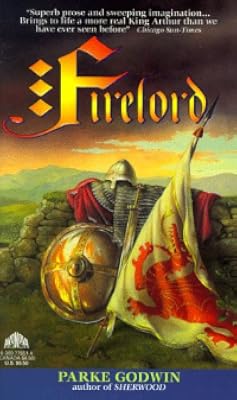

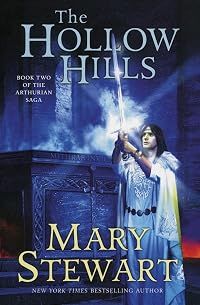

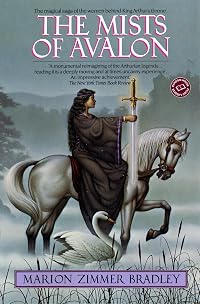
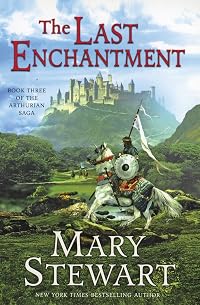


















Member Recommendations
Member Reviews
Rating: 4* of five
The Book Report: The last days of Camelot as narrated by Guinevere. Arthur lost in battle, Gawain and Mordred at daggers drawn over the death of Gawain's beloved son, death comes for all in the epic Battle of Camelot...Guinevere dies to the world by becoming a nun, and later the abbess of her nunnery. In this book, Guinevere's rupture with Arthur comes because she dishonorably attempts to rid the kingdom of horrible Mordred, not because she dallies with Lancelot. Frankly, I like this version a whole lot better because it makes internal sense to me, being the way I would expect Guinevere to have behaved based on her established character. Guinevere then reflects on the crash-and-burn of her hopes and Arthur's to save show more some small corner of the world for Roman knowledge and enlightenment. She sees, at the very end of her life, the Irish monastic ark that preserves a tiny fragment of Classical culture for the ungrateful future, and rests herself easy at last.
My Review: This is a reissue of the 1981 YA title that formed part of Bradshaw's first major commercial success. I got the book as part of the Goodreads First Reads program.
Bradshaw uses the Britonized spellings of the well-known characters' names: Gwynhwyfar, Medraut, Gwalchmai, none of which I felt comfortable with until about halfway through the book. She has a real gift for the characterization of these people, unlike some Arthurian follow-ons. She makes each of the people who come forward in the narrative into a very real presence. It's a lot of work to make a character consistent internally, but she does it, and despite the fact that she didn't have to because the characters are already so well-known.
This is book three of a trilogy. Frankly, it shouldn't matter much if you read them in order because I assume you're at least passingly familiar with the legend on which the books are based. Still, in order, the books are Hawk of May as narrated by the eponymous Gwalchmai or Gawain, being the story of his rebellion against his terrible mom Morgan le Fay/Morgawse, and service to her detested bastard half-brother Arthur; Kingdom of Summer, the tale of Gawain's penance for seducing the daughter of a king he was on Arthur's embassy to, and the death of his rotten mother at the hands of his big bully brother; finally this book. show less
The Book Report: The last days of Camelot as narrated by Guinevere. Arthur lost in battle, Gawain and Mordred at daggers drawn over the death of Gawain's beloved son, death comes for all in the epic Battle of Camelot...Guinevere dies to the world by becoming a nun, and later the abbess of her nunnery. In this book, Guinevere's rupture with Arthur comes because she dishonorably attempts to rid the kingdom of horrible Mordred, not because she dallies with Lancelot. Frankly, I like this version a whole lot better because it makes internal sense to me, being the way I would expect Guinevere to have behaved based on her established character. Guinevere then reflects on the crash-and-burn of her hopes and Arthur's to save show more some small corner of the world for Roman knowledge and enlightenment. She sees, at the very end of her life, the Irish monastic ark that preserves a tiny fragment of Classical culture for the ungrateful future, and rests herself easy at last.
My Review: This is a reissue of the 1981 YA title that formed part of Bradshaw's first major commercial success. I got the book as part of the Goodreads First Reads program.
Bradshaw uses the Britonized spellings of the well-known characters' names: Gwynhwyfar, Medraut, Gwalchmai, none of which I felt comfortable with until about halfway through the book. She has a real gift for the characterization of these people, unlike some Arthurian follow-ons. She makes each of the people who come forward in the narrative into a very real presence. It's a lot of work to make a character consistent internally, but she does it, and despite the fact that she didn't have to because the characters are already so well-known.
This is book three of a trilogy. Frankly, it shouldn't matter much if you read them in order because I assume you're at least passingly familiar with the legend on which the books are based. Still, in order, the books are Hawk of May as narrated by the eponymous Gwalchmai or Gawain, being the story of his rebellion against his terrible mom Morgan le Fay/Morgawse, and service to her detested bastard half-brother Arthur; Kingdom of Summer, the tale of Gawain's penance for seducing the daughter of a king he was on Arthur's embassy to, and the death of his rotten mother at the hands of his big bully brother; finally this book. show less
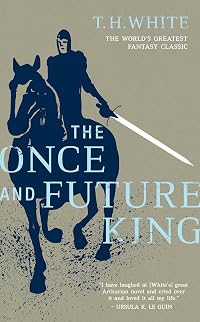
I liked this book quite a bit more than the first two volumes of Bradshaw's Arthurian trilogy. I said in the reviews of the other two books that I not only didn't feel those first two books were standouts among Arthurian-themed books I had read, but that I preferred Bradshaw's straight historical fiction. And I do, even though I am a lover of fantasy--even high fantasy. Nevertheless part of the reason I liked this so much more is that this novel does read much more like historical fiction than fantasy. There are no tales of spending time in Faerie. No sorcery. No glowing swords that heal or witch's curses. Just the tale of a woman, Gwynhwyfar, who as a little girl found coins and broken glass of the departed Roman Empire and dreamed show more with Arthur of forming a storm break that could prevent the flickering candle of law and learning from guttering out. Bradshaw's historical works often dealt with Roman civilization, and I think the way she deals with the theme here resonates more than it does with most Arthurian stories. I also think that this is told by Gwynfwyfar also helps. Gwalchmai (Gawain) of the first book Hawk of May and Rhys of Kingdom of Summer didn't quite grip me the way she did as a character. Doesn't get five stars because I still can't help comparing this to beloved favorites such as Mary Stuart's Merlin Trilogy or T.H. White's The Once and Future King. But definitely a strong finish and a good read those interested in Arthurian legends--or the historical Dark Ages--would enjoy. I think it could even stand alone, although I think reading the first two books--which are enjoyable in their own right--would help. show less
Wow. This is a powerful book.
Bradshow's prose is as good as ever, and this book manages to retell the familiar Arthurian story with a few surprising elements.
Despite the tragedies, it ends on a lovely and hopeful note.
Bradshow's prose is as good as ever, and this book manages to retell the familiar Arthurian story with a few surprising elements.
Despite the tragedies, it ends on a lovely and hopeful note.
Another in the "Hawk of May" trilogy, a pretty good version of "Historical Arthur" with Gwalchmai/Gawaine as the POV character. The characterization is pretty sharp, and the action moves along pretty well.
This book is really well-written and engaging, but I could only manage the 1st half. When things really started to go bad I couldn't bear it and had to stop.
This is the final book in my favourite trilogy and my all time favourite version of the Arthurian legend.
In Winter's Shadow is told in the first person, from the point of view of the Lady Gwynhywyfar. If you like fantasy or you are fascinated by tales of Arthurian Britain, this trilogy is two good to miss!
In Winter's Shadow is told in the first person, from the point of view of the Lady Gwynhywyfar. If you like fantasy or you are fascinated by tales of Arthurian Britain, this trilogy is two good to miss!
This was a nice take on the Welsh version of the Arthurian legends.
Members
- Recently Added By
Author Information

32+ Works 4,410 Members
Some Editions
Series

Belongs to Publisher Series
Science Fiction Book Club (1866)
Work Relationships
Is contained in
Common Knowledge
- Canonical title
- In Winter's Shadow
- Original title
- In Winter´s Shadow
- Original publication date
- 1983-07
- People/Characters
- Gwalchmai; King Arthur; Gwenhwyfar; Medraut
- Important places
- Britain; Camlann, Dumnonia
- First words
- To Gwynhwyfar, daughter of Ogyrfan, Augusta, Empress of Britain [the letter began], from Menw, son of Cynan, lord of the noble clan of the sons of Maxentius: many greetings.
- Last words
- (Click to show. Warning: May contain spoilers.)The tree, stripped barren in last autumn's storm, stands green-gold with new leaves, and by some special miracle, some unexpected magic, life returns from the dead.
- Original language
- English
- Canonical DDC/MDS
- 813.087661
Classifications
- Genres
- Fiction and Literature, Fantasy, General Fiction, Historical Fiction
- DDC/MDS
- 813.087661 — Literature & rhetoric American literature in English American fiction in English By type Genre fiction Adventure fiction Speculative fiction Fantasy High fantasy
- LCC
- PS3552 .R235 .I5 — Language and Literature American literature American literature Individual authors 1961-
- BISAC
Statistics
- Members
- 438
- Popularity
- 70,444
- Reviews
- 9
- Rating
- (3.69)
- Languages
- Danish, English, German
- Media
- Paper, Ebook
- ISBNs
- 17
- ASINs
- 11