On This Page
Description
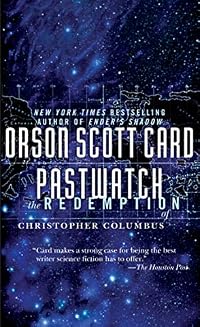
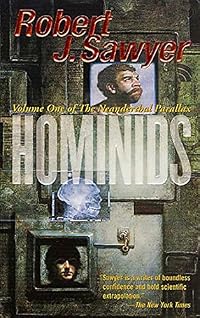
In a not-too-distant future that is not quite ours, there has been a major scientific breakthrough, a way to open windows into the past, permitting historical researchers to view but not participate in the events of the past.Tags
Recommendations
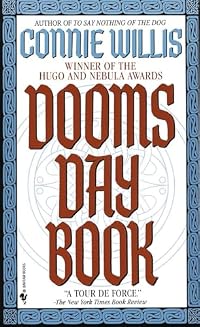





Member Recommendations


mexicangerry Historical time travel

Member Reviews
If you knew there was a bomb in a building, would you feel obliged to yell as loudly as possible to warn other people? The bomb explodes and the injuries are high and the death toll unimaginable. But then you have an opportunity to go back in time and prevent the bomb from ever being planted in the first place. Take things one step further...let's say that you stop the bomber before he even places his bomb...what else might change? Now you're dealing with what's known as 'the butterfly effect' - if a butterfly flaps it's wings in China, can it change the weather on the other side of the world?
"Pastwatch" takes that concept one step further by asking if you can change the course of one man's life, can you change the course of the entire show more world? That one man happens to be Christopher Columbus.
"Pastwatch" is about discovery, exploration and redemption. Columbus is believably passionate as we gain glimpses of his upbringing in Genoa, his early years in Portugal, and his ultimate journey to Spain where, for years, he lobbied King Ferdinand and Queen Isabela to support his adventures westward.
Pastwatch is a fictional organization tasked with utilizing cutting edge technology that allows people to view events in the past. Card's Pastwatch technology evolved over time, initially only allowing viewers to see events at a very macro level (historical world weather patterns initially), but developed eventually to see into actual human interactions. The most modern versions of Pastwatch technology allow viewers to watch humans interacting in full 3D.
Card moves the story swiftly by jumping through 15th century Europe and the future. With each jump, Card effectively evokes emotion and understanding from each characterization. Columbus is but one axis upon which the story revolves. The other characters are instrumental in the analysis and discovery of the ability to change the past. Tagiri focuses her Pastwatch career around the study of slavery. Kemal made one of Pastwatch's early and most fundamental discoveries when he found an individual who very plausibly was the basis upon which Noah, Gilgamesh and other world flood myths stand. Diko and Hunahpu are at the center of a new generation of pastwatchers.
Card has an uncanny ability to explore deep and influential topics while unraveling his narrative in an interesting and attainable way. Once the idea of time travel emerges, the characters debate its risks and rewards, but not for a moment did it feel bogged down in pseudo scientific mumbo jumbo. Likewise, there's much debate over slavery, European-based religion, and new world religion, and the speculation of alternative futures for Earth, but they blend seamlessly with the plot and merge well with the jumps into Columbus' inevitable journey across the Atlantic.
Card approaches his plot-lines very intelligently, but I found a few gaps in the characters' rationale that ultimately leads to the time travel adventures into the 15th Century.
The saga of "Pastwatch" is a remarkable book. I'm such a fan of exploration-era historical novels AND science fiction, that I'm ashamed to have never come across it until recently. It's truly a terrific read and I highly recommend it.
One note: the pastwatch concept originates from Card's short story called "Atlantis" which delves deeply into Kemal's identification and discovery of the "original" Noah. It's a very good standalone and rewarding work, and while it's not a necessity to read before "Pastwatch", it adds to the aura and myth that surrounds Kemal. show less
"Pastwatch" takes that concept one step further by asking if you can change the course of one man's life, can you change the course of the entire show more world? That one man happens to be Christopher Columbus.
"Pastwatch" is about discovery, exploration and redemption. Columbus is believably passionate as we gain glimpses of his upbringing in Genoa, his early years in Portugal, and his ultimate journey to Spain where, for years, he lobbied King Ferdinand and Queen Isabela to support his adventures westward.
Pastwatch is a fictional organization tasked with utilizing cutting edge technology that allows people to view events in the past. Card's Pastwatch technology evolved over time, initially only allowing viewers to see events at a very macro level (historical world weather patterns initially), but developed eventually to see into actual human interactions. The most modern versions of Pastwatch technology allow viewers to watch humans interacting in full 3D.
Card moves the story swiftly by jumping through 15th century Europe and the future. With each jump, Card effectively evokes emotion and understanding from each characterization. Columbus is but one axis upon which the story revolves. The other characters are instrumental in the analysis and discovery of the ability to change the past. Tagiri focuses her Pastwatch career around the study of slavery. Kemal made one of Pastwatch's early and most fundamental discoveries when he found an individual who very plausibly was the basis upon which Noah, Gilgamesh and other world flood myths stand. Diko and Hunahpu are at the center of a new generation of pastwatchers.
Card has an uncanny ability to explore deep and influential topics while unraveling his narrative in an interesting and attainable way. Once the idea of time travel emerges, the characters debate its risks and rewards, but not for a moment did it feel bogged down in pseudo scientific mumbo jumbo. Likewise, there's much debate over slavery, European-based religion, and new world religion, and the speculation of alternative futures for Earth, but they blend seamlessly with the plot and merge well with the jumps into Columbus' inevitable journey across the Atlantic.
Card approaches his plot-lines very intelligently, but I found a few gaps in the characters' rationale that ultimately leads to the time travel adventures into the 15th Century.
The saga of "Pastwatch" is a remarkable book. I'm such a fan of exploration-era historical novels AND science fiction, that I'm ashamed to have never come across it until recently. It's truly a terrific read and I highly recommend it.
One note: the pastwatch concept originates from Card's short story called "Atlantis" which delves deeply into Kemal's identification and discovery of the "original" Noah. It's a very good standalone and rewarding work, and while it's not a necessity to read before "Pastwatch", it adds to the aura and myth that surrounds Kemal. show less
In fourteen hundred ninety-two Columbus sailed the ocean blue...only Orson Scott Card's Pastwatch is wholly unlike any other Columbus story you've ever heard. This one's fiction of course. Though calling it historical fiction would be incomplete. It's more like a sci-fi historical adventure thriller. But Card is no pulp novelist. When he's on his game his stories contain a layer of non-pompous intellectual authenticity, an ability no doubt derived from decades of accumulated curiosity. Card has a gift for combining the expansive ranges of history, religions, politics, military intrigue and theoretical futures all into realistic scenarios that play out the rise and fall of empires over time.
Pastwatch, in the context of this story, is a show more technological marvel. Scientists of the near future created it to study the visual record of Earth's past. In the beginning, the machines only allowed for periodic study on the scale of decades or centuries—useful for following weather patterns and geological movements—but then as the tools were refined the researchers could now look more closely at the lives of people and start to learn about cultures from long ago. Meanwhile, the Earth of this near future in the time of Pastwatch is undergoing a resource drought of planetary proportions. In other words, the human population is in decline. This is the state of things until one day an intrepid Pastwatch member discovers a secret so unbelievable that it may yet give humanity another chance at survival. Though it's a chance that would come at great cost.
After reading Ender's Game, I didn't expect Orson Scott Card to achieve anywhere near that level of page-turning brilliance ever again. Pastwatch comes oh-so close. show less
Pastwatch, in the context of this story, is a show more technological marvel. Scientists of the near future created it to study the visual record of Earth's past. In the beginning, the machines only allowed for periodic study on the scale of decades or centuries—useful for following weather patterns and geological movements—but then as the tools were refined the researchers could now look more closely at the lives of people and start to learn about cultures from long ago. Meanwhile, the Earth of this near future in the time of Pastwatch is undergoing a resource drought of planetary proportions. In other words, the human population is in decline. This is the state of things until one day an intrepid Pastwatch member discovers a secret so unbelievable that it may yet give humanity another chance at survival. Though it's a chance that would come at great cost.
After reading Ender's Game, I didn't expect Orson Scott Card to achieve anywhere near that level of page-turning brilliance ever again. Pastwatch comes oh-so close. show less
It constantly amazes me the gulf there is between Card's obnoxious and forcefully expressed social opinions and the humanitarian voice that speaks through many of his novels, but never more so than in this instance.
In the not-so-far future, the earth seems to be recovering from the onslaught of the 20th and 21st centuries. The human population has stabilized at a smallish fraction of the current level. Employees of the organization called Pastwatch spend their time scanning history using a device that can passively observe the past . . . and, they begin to suspect, perhaps not entirely passively, because it seems the occasional sensitive can detect the "presence" of the observers. One research project is to pinpoint those moments in show more history whose consequences led to the devastation of the planet and the human species's current sorry shape. The crucial moment appears to be Christopher Columbus's decision, in the wake of his near-miraculous survival after a shipwreck, to sail westward across the Atlantic in search of new lands to exploit and new souls to save for Christ. The Pastwatchers are appalled when they witness the instant of his making that decision: he received a visitation from two human figures and a dove -- Father, Son and Holy Ghost, in the iconography of the time -- who told him the westward voyage should be his holy duty. The Pastwatchers recognize these figures must be time travellers from an alternate future, a future so bad that its denizens have resorted to altering the past in order to erase it and of course, in the process, themselves.
[Why should that be an inevitable consequence? In the physics of time expressed in this book, there are no alternative realities: always only the one. This is because the quanta of time -- "moments" -- are quite discrete from each other. "When the machine was introduced into our history, from that point forward a new infinite set of moments completely replaced the old infinite set of moments. There were no spare leftover moment-locations for the old moments to hang around in." (p194) And the fact that the time device was created in a future that, the instant it used the device, ceased ever to have existed is no paradox because, while it seems to us that causality is timelike, in fact causality is independent of time and its functionings unamenable to rational analysis (rather like the Jungian concept of synchronicity): in particular, "Causality can be recursive but time cannot." (p193).]
So some event in the other history happened that would have been forestalled by Columbus sailing the ocean blue, as he did in our own past. What could it have been? A young Pastwatcher builds a near-watertight case that it was the discovery, not of the New World by the Old, but of the Old World by the New -- the conquest of Europe by the Tlaxcalans, who brought with them the hideous practice of mass human torture-sacrifice that was rife among all the South American cultures of the era.
Around this time in our future, time travel is developed, and the Pastwatchers are obviously highly interested by this field of technology so close to the one they're using. Also, it occurs to them that, just like their counterparts, they could perhaps alter history to lead to a happier outcome. This notion is spurred by the discovery that the earth is not in fact recovering, as people had thought: any recovery will be centuries or millennia in the future, by which time the human species will be long gone. Again they focus on Columbus. If they could, by scuttling his ships, make it impossible for him immediately to return to Europe after his New World landfall, and if they could play upon the Christian sensibilities of the man such as to deflect his mind off gold and slavery toward converting the local civilizations to good liberal values . . . So they send back three volunteers to the 15th century, thereby erasing everyone else after Columbus's time (us included) from reality. Can those three pull off the task?
This book is extraordinarily slow to get itself off the ground -- about two-thirds of the text is occupied by the setting-up (alternating between the 15th century and the Pastwatchers' present) preparatory to the actual time travel -- and the characterization of some of the major movers and shakers manages to achieve the feat of seeming both laboured and perfunctory at the same time. Much of that setting-up is in itself fascinating (there's a really neat Atlantis/Noah hypothesis!), and it was only a few times that a sense of "oh, for gawd's sake get on with it" swept over me. The writing is up to Card's usual high and elegant standard (although near the end there are some signs of apparent haste). Overall, I'd recommend this to friends as worth their time. show less
In the not-so-far future, the earth seems to be recovering from the onslaught of the 20th and 21st centuries. The human population has stabilized at a smallish fraction of the current level. Employees of the organization called Pastwatch spend their time scanning history using a device that can passively observe the past . . . and, they begin to suspect, perhaps not entirely passively, because it seems the occasional sensitive can detect the "presence" of the observers. One research project is to pinpoint those moments in show more history whose consequences led to the devastation of the planet and the human species's current sorry shape. The crucial moment appears to be Christopher Columbus's decision, in the wake of his near-miraculous survival after a shipwreck, to sail westward across the Atlantic in search of new lands to exploit and new souls to save for Christ. The Pastwatchers are appalled when they witness the instant of his making that decision: he received a visitation from two human figures and a dove -- Father, Son and Holy Ghost, in the iconography of the time -- who told him the westward voyage should be his holy duty. The Pastwatchers recognize these figures must be time travellers from an alternate future, a future so bad that its denizens have resorted to altering the past in order to erase it and of course, in the process, themselves.
[Why should that be an inevitable consequence? In the physics of time expressed in this book, there are no alternative realities: always only the one. This is because the quanta of time -- "moments" -- are quite discrete from each other. "When the machine was introduced into our history, from that point forward a new infinite set of moments completely replaced the old infinite set of moments. There were no spare leftover moment-locations for the old moments to hang around in." (p194) And the fact that the time device was created in a future that, the instant it used the device, ceased ever to have existed is no paradox because, while it seems to us that causality is timelike, in fact causality is independent of time and its functionings unamenable to rational analysis (rather like the Jungian concept of synchronicity): in particular, "Causality can be recursive but time cannot." (p193).]
So some event in the other history happened that would have been forestalled by Columbus sailing the ocean blue, as he did in our own past. What could it have been? A young Pastwatcher builds a near-watertight case that it was the discovery, not of the New World by the Old, but of the Old World by the New -- the conquest of Europe by the Tlaxcalans, who brought with them the hideous practice of mass human torture-sacrifice that was rife among all the South American cultures of the era.
Around this time in our future, time travel is developed, and the Pastwatchers are obviously highly interested by this field of technology so close to the one they're using. Also, it occurs to them that, just like their counterparts, they could perhaps alter history to lead to a happier outcome. This notion is spurred by the discovery that the earth is not in fact recovering, as people had thought: any recovery will be centuries or millennia in the future, by which time the human species will be long gone. Again they focus on Columbus. If they could, by scuttling his ships, make it impossible for him immediately to return to Europe after his New World landfall, and if they could play upon the Christian sensibilities of the man such as to deflect his mind off gold and slavery toward converting the local civilizations to good liberal values . . . So they send back three volunteers to the 15th century, thereby erasing everyone else after Columbus's time (us included) from reality. Can those three pull off the task?
This book is extraordinarily slow to get itself off the ground -- about two-thirds of the text is occupied by the setting-up (alternating between the 15th century and the Pastwatchers' present) preparatory to the actual time travel -- and the characterization of some of the major movers and shakers manages to achieve the feat of seeming both laboured and perfunctory at the same time. Much of that setting-up is in itself fascinating (there's a really neat Atlantis/Noah hypothesis!), and it was only a few times that a sense of "oh, for gawd's sake get on with it" swept over me. The writing is up to Card's usual high and elegant standard (although near the end there are some signs of apparent haste). Overall, I'd recommend this to friends as worth their time. show less
“Pastwatch” is an interesting concept, but it has one of Card’s most boring beginnings. It’s only my appreciation for Card’s general talent that kept me reading to see where he’s going with such a dull story line. After a hundred pages or so I began to see that Card was giving me a reasonably accurate, and entertaining, short history of Christopher Columbus’ life and times. I can’t say that it was worth the time and effort on my part, but I did enjoy the history lesson. And then the story took fire as the protagonists managed to change history…only to discover that they produced the same horrendous results as the “people” who changed their original history before them. That epiphany initiated the real story, show more wherein the ultimate project became one of undoing the worst of mankind by setting up a mechanical trajectory that would cause humans to act sanely for a thousand years or so. The challenge of pulling this task off gave the story enough tension and action to make the rest of the book worth reading.
Giving all that, it still seems more pie-in-the-sky than his other explorations into how to create a reasonably empathic and united world culture.
Series: Ender’s Game & Ender’s Shadow—1985-2012
Series: Pastwatch (Christopher Columbus)—1996
Series: Empire & Hidden Empire—2006-2009
It wasn’t until I read Hidden Empire that I realized Card was exploring different possible scenarios that might produce an Earth with a united peoples living reasonably cooperatively with each other. Pastwatch is the least convincing alternative…especially since it’s founded on Christianity, while ignoring the other major religions and China. show less
Giving all that, it still seems more pie-in-the-sky than his other explorations into how to create a reasonably empathic and united world culture.
Series: Ender’s Game & Ender’s Shadow—1985-2012
Series: Pastwatch (Christopher Columbus)—1996
Series: Empire & Hidden Empire—2006-2009
It wasn’t until I read Hidden Empire that I realized Card was exploring different possible scenarios that might produce an Earth with a united peoples living reasonably cooperatively with each other. Pastwatch is the least convincing alternative…especially since it’s founded on Christianity, while ignoring the other major religions and China. show less
The most interesting thing about this story is the way in which things that looked like divine intervention from one aspect, looked completely different from the other. As a believer, it gave me some idea of how God might look at us - how He watches and knows us, how He sometimes intervenes and other times must not interfere. This is fiction, not theology, and I'm sure that was not the intention of the author, but nevertheless, some definite food for thought. And the idea that the conquest of the new world could have gone a different way - that was speculation at its best.
Now this Card opus gets my superlatives -- it's a terrific story about how the invention of a viewer that allows scientists to look back in time ends up transforming the past, and the future. Brimming with cleverness, humanity and mindfulness (not to mention tight plotting), if they gave a Theodore Sturgeon Memorial Award, this book would deserve two years' worth.
I have either one word or three to say about this book: Excellent, excellent, excellent! I was put off by the title at first: redeeming Christopher Columbus doesn't sound very fun or very worth while, but the book is truly fantastic. The premise is that researchers on the Pastwatch project use machines to view the past, until they realize that some people in the past are aware of their watching them. In a world that is dying from the sins of the previous generations, the researchers make the decision to attempt to change the past to create a better future. They decide that Columbus' discovery of the Americas is the point at which they can effect the greatest change. Soon, however, they discover that similar researchers in a previous show more future has also changed their past, resulting in the world that they now live in. They must make the decisions to create a better future than either of the previous ones, facing difficult choices and personally reshaping the fate of the world.
The book is very well written, even though you never get personally close to any of the characters. The entire thing is written on the level of the socio-political, ideological, and economic forces involved. It's an intriguing look at the forces that shape the world, while also being a fun and exciting sci-fi tale. One of the most engaging books I've read so far this year. Highly recommended. show less
The book is very well written, even though you never get personally close to any of the characters. The entire thing is written on the level of the socio-political, ideological, and economic forces involved. It's an intriguing look at the forces that shape the world, while also being a fun and exciting sci-fi tale. One of the most engaging books I've read so far this year. Highly recommended. show less
Members
- Recently Added By
Lists

Best Time Travel Novels
165 works; 124 members

Best Alternate History
111 works; 60 members

Best-selling Books by Latter-day Saints
58 works; 2 members

KayStJ's to-read list
1,616 works; 11 members
Author Information

575+ Works 213,244 Members
Orson Scott Byron Walley Card, was born in 1951 and studied theater at Brigham Young University. He received his B.A. in 1975 and his M.A. in English in 1981. He wrote plays during that time, including Stone Tables (1973) and the musical, Father, Mother, Mother and Mom (1974). A Mormon, Scott served a two-year mission in Brazil before starting show more work as a journalist in Utah. He also designed games at Lucas Film Games, 1989-92. He is best known for his science fiction novels, including the popular Ender series. Well known titles include A Planet Called Treason (1979), Treasure Box (1996), and Heartfire (1998). He has also written the guide called How to Write Science Fiction and Fantasy (1990). His novel Ender's Game and its sequel Speaker for the Dead, both won Hugo and Nebula awards, making Card the only author to win both prizes in consecutive years. His titles Shadows in Flight, Ruins and Ender's Game made The New York Times Best Seller List. He is also the author of The First Formic War Series, which includes the titles Earth Unaware, Earth Afire, and Earth Awakens. (Bowker Author Biography) show less
Some Editions
Awards and Honors
Awards
Distinctions
Series

Common Knowledge
- Canonical title
- Pastwatch: The Redemption of Christopher Columbus
- Alternate titles
- Pastwatch
- Original publication date
- 1996-02
- People/Characters
- Christopher Columbus; Tagiri; Hassan; Diko; Kemal; Hunahpu Matamoros (show all 23); Manjam; Luis Santangel; Acho; Putukam; Baiku; Domenico Columbus; Nicolo Spinola; Noah; Father Antonio; Father Perez; Felipa Columbus; Diego Columbus; Ferdinand II of Aragon; Isabella I, Queen of Castile and León; Cardinal Mendoza; Father Talavera; Quintanilla
- Important places
- Atlantis; Juba, Jubek State, South Sudan; Atlantis; Red Sea; Ankuash; Madeira, Portugal (show all 7); Las Palmas, Canary Islands, Spain
- Dedication
- For Tom Doherty, The publisher from the planet Krypton: His heart is gold, His word is steel, And he knows the territory.
- First words
- Some people call it "the time of undoing"; some, wishing to be more positive, spoke of it as "the replanting" or "the restoring" or even "the resurrection" of the Earth. (Prologue)
There was only one time when Columbus despaired of making his voyage. (Chapter One) - Last words
- (Click to show. Warning: May contain spoilers.)Then they left to tell the palace staff that the great discoverer was dead. (Chapter Thirteen)
(Click to show. Warning: May contain spoilers.)All that was left to build was the third tomb there on the Hatian shore, lay the skull within it, and inscribe on the outside the name Kemal, a date of birth that would not come for centuries, and the date of death, 1492. (Epilogue) - Blurbers
- Wolfe, Gary K.
- Original language
- English
Classifications
Statistics
- Members
- 2,767
- Popularity
- 6,587
- Reviews
- 53
- Rating
- (3.89)
- Languages
- 6 — Czech, English, French, Hungarian, Polish, Spanish
- Media
- Paper, Audiobook, Ebook
- ISBNs
- 23
- ASINs
- 8