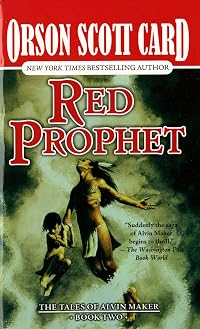
On This Page
Description
In the first tale of Alvin Maker, Seventh Son, Orson Scott Card introduced his readers to a very familiar—but just slightly different—pioneer America where magic works. Hex signs are powerful, good and evil presences roam the land, and many people have special talents. In this thrilling sequel, Alvin Maker is awakening to many mysteries: his own strange powers, the magic of the American frontier, and the special virtues of its chosen people, the Native Americans.Young Alvin Maker, the show more seventh son of a seventh son, has extraordinary talents for a white boy—he can cause stone to split smoothly under his hands, his knots never untie, he can knit bones, and he can call small animals to do his bidding. Stranger still his talents are imperceptible to the Indians, who usually hear the fire-setting of the sparks and the water-finding of the dowsers as an interruption in their music but who cannot hear Alvin at all.
Lolla-Wossiky is an Indian whose fate is closely linked with Alvin's. He's been an undignified drunk since he was eleven, when he watched white men murder his father. The black noise in his head since the death shot rang out has drowned out the green music he needs to live well, and his life is a constant search for the right balance of alcohol to still the black noise without silencing the green music—until he meets Alvin.
Soon Alvin must summon all his powers to prevent a tragic war between Native Americans and the white settlers of North America.
. show less
Tags
Recommendations





Member Recommendations
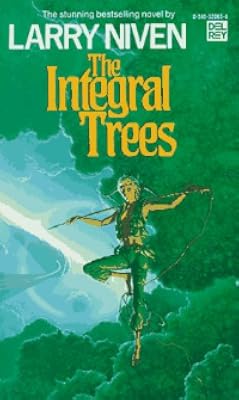
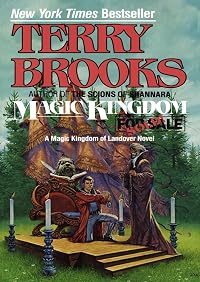
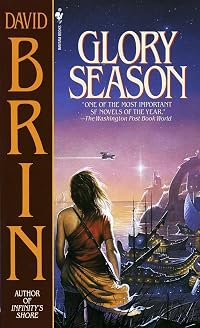
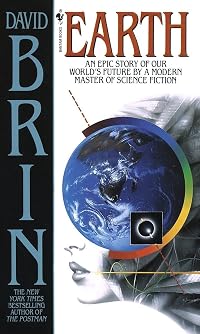
aulsmith Another "Frontier Fantasy" with Native Americans.
Member Reviews
This the second book in the Tales of Alvin Maker, although I think enough background is given, some even repeated from a different point of view, it could stand alone. It's a fantasy set in an alternate history America--which is a lot of what made it so fun. Things seem to have split off from our Timeline at least by the time of the English Civil War. There's a Lord Protector and Crown Colonies in 1800--but also a United States. Benjamin Franklin was reputed a wizard, George Washington was beheaded for treason and Thomas Jefferson a guerrilla fighter. Oh, and there's magic. One with a definite American folk magic feel. It's a world oh so different than the usual faux Medieval European fantasies that you so commonly find. (And made me show more wonder at times how Card's Mormon beliefs might have played a role in shaping the story.) And this read I noted how natural Card's dialogue is--it doesn't use elisions or strange spellings, but syntax and word choice to give a flavor of how people spoke.
And here we have Alvin the Maker--Seventh Son of a Seventh Son. The first book opened with his birth and followed him until he was ten years old. This book isn't as tightly focused on him. If it's focused on anyone, I'd say its Ta-Kumsaw--known in our history as Tecumseh--and his brother Tenskwa-Tawa (Tenskatawa). Card's portrait of both is admiring and sympathetic. William Henry Harrison, in our history a United States President, is presented as a villain. This definitely left me wanting to find out what happens next in this world. Booklist called this second book "harsher, bleaker and more mystical" than the first, and I'd agree. Made me want both to move to the next book, and want to learn more about the history Card used in the book. show less
And here we have Alvin the Maker--Seventh Son of a Seventh Son. The first book opened with his birth and followed him until he was ten years old. This book isn't as tightly focused on him. If it's focused on anyone, I'd say its Ta-Kumsaw--known in our history as Tecumseh--and his brother Tenskwa-Tawa (Tenskatawa). Card's portrait of both is admiring and sympathetic. William Henry Harrison, in our history a United States President, is presented as a villain. This definitely left me wanting to find out what happens next in this world. Booklist called this second book "harsher, bleaker and more mystical" than the first, and I'd agree. Made me want both to move to the next book, and want to learn more about the history Card used in the book. show less
This book was a great read - and as usual, Card is inventive and unorthodox. What appears to be an anti-religious tirade settles into a more considered point of view. Meanwhile there are some interesting diversions into things that actually make a society strong and meaningful, and into issues surrounding native Americans, whilst all the time taking the overall story of a seventh son of a seventh son forward.
Not Card's best work, but certainly not his worst either - and well worth reading.
Not Card's best work, but certainly not his worst either - and well worth reading.
Take a little Magical Native American, a little Noble Savage, and a little White Man's Burden and you get a pretty good idea of what Red Prophet is like.
So far as I'm concerned, Red Prophet is pretty much a laundry list of don'ts when it comes to writing about Native Americans. They have a preternatural understanding of the natural, unique to them that fall away if they become too 'white' (using weapons/tools of European make / drinking alcohol). On top of that, they all seem drawn to extremes, either far better or far worse than the generally more nuanced 'white' characters of the book.
Worldbuilding-wise, there are still some very interesting moments. The Eight-Face Mound in particular was interesting--you see something completely show more different, depending on how you climb it. On the other hand we still don't really get a good reason why magic only seems to work in the New World, although there are hints that might not be as true as it was thought in the first book (given the character of Napoleon). And Alvin Jr. is becoming far too powerful far too quickly for my tastes. He seems able to do just about anything with little cost to himself.
Plotwise, the first half of the book overlaps with the latter part of Seventh Son, following the story of Lalawasike / The Prophet as he learns about Alvin Jr., is healed, and decides to change the world. As much as Seventh Son felt incomplete, I feel like it would have been a lot better had these sections been included there. At least this time around we get a solid climax that actually makes Red Prophet feel like it can stand alone, while at the same time sowing the seeds of the next in the series.
Overall, it's still an interesting read and not quite to the point where I want to give up the series. We shall see where it goes from here. show less
So far as I'm concerned, Red Prophet is pretty much a laundry list of don'ts when it comes to writing about Native Americans. They have a preternatural understanding of the natural, unique to them that fall away if they become too 'white' (using weapons/tools of European make / drinking alcohol). On top of that, they all seem drawn to extremes, either far better or far worse than the generally more nuanced 'white' characters of the book.
Worldbuilding-wise, there are still some very interesting moments. The Eight-Face Mound in particular was interesting--you see something completely show more different, depending on how you climb it. On the other hand we still don't really get a good reason why magic only seems to work in the New World, although there are hints that might not be as true as it was thought in the first book (given the character of Napoleon). And Alvin Jr. is becoming far too powerful far too quickly for my tastes. He seems able to do just about anything with little cost to himself.
Plotwise, the first half of the book overlaps with the latter part of Seventh Son, following the story of Lalawasike / The Prophet as he learns about Alvin Jr., is healed, and decides to change the world. As much as Seventh Son felt incomplete, I feel like it would have been a lot better had these sections been included there. At least this time around we get a solid climax that actually makes Red Prophet feel like it can stand alone, while at the same time sowing the seeds of the next in the series.
Overall, it's still an interesting read and not quite to the point where I want to give up the series. We shall see where it goes from here. show less
In the second volume of the series, Alvin sets off for the town of Hatrack River to become an apprentice smith, but he and his brother Measure are kidnapped along the way by Indians. The Indians are in the pay of William Henry Harrison, who plans to use the incident as a means to consolidate power in the Wobbish territory. Alvin and Measure are rescued by the Indian warrior Ta-Kumsaw and his prophet brother Tenskwa-Tawa, who shows Alvin a vision of the Crystal City that he is destined to build and a vision of how the remaining Indians of North America can retain their independence.
The alternate history that Card has created is very interesting, but I did not find the book itself very involving. It has a very slow pace for much of the show more book. Most annoying though, was the portrayal of the races. Indians are the typical "noble savages" who have a mystical connection to the land and leave no mark on it, while white people literally kill the land by just living on it. It leaves me wondering how native cultures like the Aztec and Incas with their huge cities had maintained this connection to the land. Also odd is that at the end of Seventh Son, Reverend Thrower and Armor-Of-God had made a pact to destroy Alvin. In this book, Thrower has vanished without explanation and Armor-Of-God seems to have no paticular animosity towards Alvin. Overall, I just did not find the book rising above the average. show less
The alternate history that Card has created is very interesting, but I did not find the book itself very involving. It has a very slow pace for much of the show more book. Most annoying though, was the portrayal of the races. Indians are the typical "noble savages" who have a mystical connection to the land and leave no mark on it, while white people literally kill the land by just living on it. It leaves me wondering how native cultures like the Aztec and Incas with their huge cities had maintained this connection to the land. Also odd is that at the end of Seventh Son, Reverend Thrower and Armor-Of-God had made a pact to destroy Alvin. In this book, Thrower has vanished without explanation and Armor-Of-God seems to have no paticular animosity towards Alvin. Overall, I just did not find the book rising above the average. show less
The second in the Alvin Maker series.
Similar to what Card did in the 'Ender' series, this book starts off covering a lot of the same time period and events as the previous book, but taken from a different character's perspective. It also ventures further into 'alternate history' territory (and boy is it alternate!)
It's about the well-known Native American leader Tecumseh, and his brother Tenskwatawa, who was known as a prophet. (all true).
I have to say that I think the book would have worked better as a pure fantasy story rather than alternate history. As it stands, it doesn't just venture into; it is ALL ABOUT the stereotypes of Native American culture. It's a very allegorical story, but if you want to have a culture be part of an show more allegory, it works better if it's a made-up culture, not peoples' real lives and history.
For example, an critical point in the story is the famous battle at Tippecanoe. In reality, this was a bloody but equally joined battle between Tecumseh's forces and those of to-be-President Harrison (who, in the book is more-evil-than-evil). In reality, Harrison did win, but there were an about-even number of casualties (less than 100) on each side.
In the book, "Tippy-Canoe" is a massacre: In revenge for the supposed killing of two white boys, white gunmen slaughter NINE THOUSAND Natives who, sworn to peace and non-violence, peacefully line up, unarmed, to be slaughtered.
Now, if Card wants to make a point about martyrdom, that's all well and good, but I have issues with completely rewriting reality like that. And I know I'm not the only one who gets tired of seeing Native Americans portrayed as mystically close to nature, blah, blah, blah. show less
Similar to what Card did in the 'Ender' series, this book starts off covering a lot of the same time period and events as the previous book, but taken from a different character's perspective. It also ventures further into 'alternate history' territory (and boy is it alternate!)
It's about the well-known Native American leader Tecumseh, and his brother Tenskwatawa, who was known as a prophet. (all true).
I have to say that I think the book would have worked better as a pure fantasy story rather than alternate history. As it stands, it doesn't just venture into; it is ALL ABOUT the stereotypes of Native American culture. It's a very allegorical story, but if you want to have a culture be part of an show more allegory, it works better if it's a made-up culture, not peoples' real lives and history.
For example, an critical point in the story is the famous battle at Tippecanoe. In reality, this was a bloody but equally joined battle between Tecumseh's forces and those of to-be-President Harrison (who, in the book is more-evil-than-evil). In reality, Harrison did win, but there were an about-even number of casualties (less than 100) on each side.
In the book, "Tippy-Canoe" is a massacre: In revenge for the supposed killing of two white boys, white gunmen slaughter NINE THOUSAND Natives who, sworn to peace and non-violence, peacefully line up, unarmed, to be slaughtered.
Now, if Card wants to make a point about martyrdom, that's all well and good, but I have issues with completely rewriting reality like that. And I know I'm not the only one who gets tired of seeing Native Americans portrayed as mystically close to nature, blah, blah, blah. show less
Originally posted at FanLit:
http://www.fantasyliterature.com/reviews/red-prophet/
Red Prophet is the second book in Orson Scott Cardƒ??s THE TALES OF ALVIN MAKER, an alternate history set in a frontier America in which folk magic is real. In the first book, Seventh Son, we were introduced to the main protagonist of the series, Alvin Miller who, because heÂ??s the seventh son of a seventh son, is a gifted healer. We meet Alvin as a baby and follow him into boyhood. At the end of the story he has a vision of a shining man who gives him moral guidance.
In Red Prophet we learn that the shining man is Lolla-Wossiky, an alternate version of Tenskwatawa, spiritual leader of the Native American Shawnee tribe. His brother Tecumseh is their show more chief. While Card focused on the religious implications of a magical American frontier in the first book, the focus here is on the interaction between the �?Whites� and the �?Reds� and culminates with The Battle of Tippecanoe.
At the beginning of the story, William Henry Harrison, governor of Carthage City, is dealing with the Native Americans his own way �? with poison. He purchases huge quantities of whiskey and sells it to the �?Whiskey Reds.� Because they have a low tolerance for alcohol (it�?s genetic), they become alcoholics and many die. Andrew Jackson is disgusted with Harrison�?s sneaky tactics; he wants to do the more honorable thing and just shoot them all.
Tecumseh, who realizes that alcohol is killing his people and knows of JacksonÂ??s plans, decides to lead his people against the Whites. He allies with the French in Canada, led by the effete Marquis de Lafayette and Napoleon Bonaparte (yes, NapoleonÂ??s in America). Lafayette, however, has his own agenda. He secretly loves the idea of democracy and he admires the American spirit. He wants to use Bonaparte to bring democracy to France. (This storyline is amusing, especially when read by the narrators I listened to in Blackstone AudioÂ??s version.)
Alvin Maker, who is on his way to his apprenticeship, meets Tecumseh and becomes involved with the war. Not only is he instrumental in affecting the outcome of The Battle of Tippecanoe but, with the help of Lolla-Wossiky, the Red Prophet, he sees visions of possible futures and learns more about his powers.
Orson Scott Card is a great storyteller and he�?s got a big imagination. This alternate history is exciting, entertaining, thoughtful, and occasionally humorous. I thought Card�?s depiction of the Native Americans�? magical connection with the land was beautiful and makes for a lovely American mythology. Many �?Whites� who read Red Prophet will feel ashamed at how the Native Americans were treated by our ancestors. Some readers have accused Card of being racist (anti-European), but I didn�?t feel this way and I noted that Card gives us many Caucasians to admire and shows us that not all �?Red-White� interactions where destructive.
Orson Scott Card is particularly good at voice, dialogue, and character nuance. His heroes are capable of doing evil and his villains can have good motives. Characters donÂ??t always do what we expect them to and there are times when we might even change our minds about how we feel about them. I look forward to seeing these characters grow throughout the series.
IÂ??m listening to Blackstone AudioÂ??s productions of THE TALES OF ALVIN MAKER which is performed, in alternating chapters, by Stefan Rudnicki, Scott Brick, and Stephen Hoye. All three of them are excellent readers. IÂ??ve already purchased book three, Prentice Alvin, and book four, Alvin Journeyman, on audio.
Red Prophet, first published in 1988, was nominated for a Nebula and Hugo award. It won the Locus Award for Best Fantasy Novel. show less
http://www.fantasyliterature.com/reviews/red-prophet/
Red Prophet is the second book in Orson Scott Cardƒ??s THE TALES OF ALVIN MAKER, an alternate history set in a frontier America in which folk magic is real. In the first book, Seventh Son, we were introduced to the main protagonist of the series, Alvin Miller who, because heÂ??s the seventh son of a seventh son, is a gifted healer. We meet Alvin as a baby and follow him into boyhood. At the end of the story he has a vision of a shining man who gives him moral guidance.
In Red Prophet we learn that the shining man is Lolla-Wossiky, an alternate version of Tenskwatawa, spiritual leader of the Native American Shawnee tribe. His brother Tecumseh is their show more chief. While Card focused on the religious implications of a magical American frontier in the first book, the focus here is on the interaction between the �?Whites� and the �?Reds� and culminates with The Battle of Tippecanoe.
At the beginning of the story, William Henry Harrison, governor of Carthage City, is dealing with the Native Americans his own way �? with poison. He purchases huge quantities of whiskey and sells it to the �?Whiskey Reds.� Because they have a low tolerance for alcohol (it�?s genetic), they become alcoholics and many die. Andrew Jackson is disgusted with Harrison�?s sneaky tactics; he wants to do the more honorable thing and just shoot them all.
Tecumseh, who realizes that alcohol is killing his people and knows of JacksonÂ??s plans, decides to lead his people against the Whites. He allies with the French in Canada, led by the effete Marquis de Lafayette and Napoleon Bonaparte (yes, NapoleonÂ??s in America). Lafayette, however, has his own agenda. He secretly loves the idea of democracy and he admires the American spirit. He wants to use Bonaparte to bring democracy to France. (This storyline is amusing, especially when read by the narrators I listened to in Blackstone AudioÂ??s version.)
Alvin Maker, who is on his way to his apprenticeship, meets Tecumseh and becomes involved with the war. Not only is he instrumental in affecting the outcome of The Battle of Tippecanoe but, with the help of Lolla-Wossiky, the Red Prophet, he sees visions of possible futures and learns more about his powers.
Orson Scott Card is a great storyteller and he�?s got a big imagination. This alternate history is exciting, entertaining, thoughtful, and occasionally humorous. I thought Card�?s depiction of the Native Americans�? magical connection with the land was beautiful and makes for a lovely American mythology. Many �?Whites� who read Red Prophet will feel ashamed at how the Native Americans were treated by our ancestors. Some readers have accused Card of being racist (anti-European), but I didn�?t feel this way and I noted that Card gives us many Caucasians to admire and shows us that not all �?Red-White� interactions where destructive.
Orson Scott Card is particularly good at voice, dialogue, and character nuance. His heroes are capable of doing evil and his villains can have good motives. Characters donÂ??t always do what we expect them to and there are times when we might even change our minds about how we feel about them. I look forward to seeing these characters grow throughout the series.
IÂ??m listening to Blackstone AudioÂ??s productions of THE TALES OF ALVIN MAKER which is performed, in alternating chapters, by Stefan Rudnicki, Scott Brick, and Stephen Hoye. All three of them are excellent readers. IÂ??ve already purchased book three, Prentice Alvin, and book four, Alvin Journeyman, on audio.
Red Prophet, first published in 1988, was nominated for a Nebula and Hugo award. It won the Locus Award for Best Fantasy Novel. show less
This really should have been a good book. It's the second in the Alvin Maker series and it's about Tecumseh's brother, the Prophet. The author, in a forward, said that the story of Alvin Maker goes on and on and on for nine or ten episodes. That's what really makes it drag on and on. If the story were snappy and to the point, with some magic pizazz, it would be better. I really enjoy the historical details that went into this work--but they occur only after the book drags on and on. Get it? I probably missed Card's point by looking for something to happen in the slowness of this alternate history. I give up--I can read something more enjoyable than Alvin Maker #3.
Members
- Recently Added By
Lists

Best-selling Books by Latter-day Saints
58 works; 2 members

A Rainbow of Books: Colors in the Title
570 works; 24 members

Books Read in 2020
4,379 works; 124 members

Books Read in 2021
5,361 works; 114 members
Author Information

598+ Works 214,828 Members
Orson Scott Byron Walley Card, was born in 1951 and studied theater at Brigham Young University. He received his B.A. in 1975 and his M.A. in English in 1981. He wrote plays during that time, including Stone Tables (1973) and the musical, Father, Mother, Mother and Mom (1974). A Mormon, Scott served a two-year mission in Brazil before starting show more work as a journalist in Utah. He also designed games at Lucas Film Games, 1989-92. He is best known for his science fiction novels, including the popular Ender series. Well known titles include A Planet Called Treason (1979), Treasure Box (1996), and Heartfire (1998). He has also written the guide called How to Write Science Fiction and Fantasy (1990). His novel Ender's Game and its sequel Speaker for the Dead, both won Hugo and Nebula awards, making Card the only author to win both prizes in consecutive years. His titles Shadows in Flight, Ruins and Ender's Game made The New York Times Best Seller List. He is also the author of The First Formic War Series, which includes the titles Earth Unaware, Earth Afire, and Earth Awakens. (Bowker Author Biography) show less
Some Editions
Awards and Honors
Awards
Series


Belongs to Publisher Series
Work Relationships
Is contained in
Common Knowledge
- Canonical title
- Red Prophet
- Original title
- Red Prophet
- Original publication date
- 1988-01
- People/Characters
- Alvin Miller; Lolla-Wossiky; Tenskwa-Tawa (Tenskwatawa); Ta-Kumsaw (Tecumseh); Measure Miller; William Henry Harrison (in fiction) (show all 10); Napoleon Bonaparte (in fiction); Gilbert du Motier; Alvin Miller, Jr.; Tecumseh (in fiction)
- Important places
- Hatrack River
- Dedication
- In memory of my grandfather, Orson Rega Card
(1891-1984), whose life was saved by Indians of the Blood
tribe when he was a child on the Canadian frontier. - First words
- Not many flatboats were getting down the Hio these days, not with pioneers aboard, anyway, not with families and tools and furniture and seed and a few shoats to start a pig herd.
- Last words
- (Click to show. Warning: May contain spoilers.)That's all I want right now, thought Alvin. The present moment, which is good enough.
- Original language
- English
Classifications
Statistics
- Members
- 3,496
- Popularity
- 4,780
- Reviews
- 37
- Rating
- (3.74)
- Languages
- 12 — Czech, Dutch, English, Finnish, French, German, Hungarian, Italian, Polish, Spanish, Swedish, Turkish
- Media
- Paper, Audiobook, Ebook
- ISBNs
- 55
- UPCs
- 1
- ASINs
- 24