On This Page
Description
Using the lore and the folk magic of the men and women who settled a continent, and the beliefs of the tribes who were here before them, Card has created an alternate frontier America; a world where a particular kind of magic really works and where that magic has colored the entire history of the colonies. Charms and beseechings, hexes and potions, all have a place in the lives of the people of this world. "Knacks" abound: dowsers find water, sparks set fires, blacksmiths speak to their show more iron, the second sight warns of dangers to come, and a torch can read the heart-fire of anyone within reach. It is into this world, in a roadhouse on the track westward, amid the deep wood where the Red man still holds sway, that a very special child is born.Young Alvin is the seventh son of a seventh son, born while his six brothers all still lived. Such a birth is a powerful magic; such a boy is destined to become something great—perhaps even a Maker. But no Maker has been born for many a century, and there is no lore to tell how the Maker's knack works. At the age of six Alvin doesn't seem to have any special talent at all, unless it's the knack he has of working with stone and wood, crafting tools and ornaments; unless it's his ability to paint a hex just right; unless it's the way he has with animals...
Yes, Alvin is something special; and even in the loving safety of his home, dark forces reach out to destroy him. Something will do anything to keep Alvin from growing up.
. show less
Tags
Recommendations

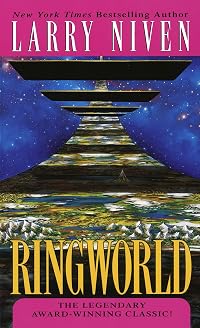
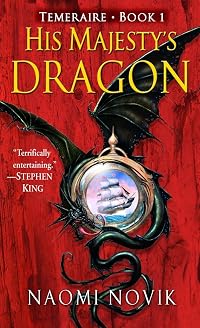
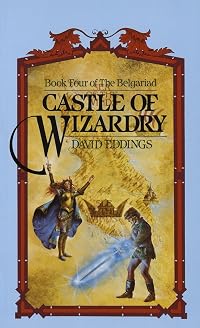
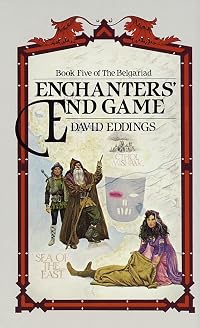

Member Recommendations
Member Reviews
I'm a huge fan of Ender's Game, and everything Ender related. Its very likely you are as well, if you're reading OSC unless you picked this book up by accident. I'm even a fan of quite a bit of OSC's short fiction. Despite some of the deeply ingrained cultural ideas of Mormonism, I think there's a lot of thought and complexity going on in a lot of what he's written, reflecting some real internal strife.
Seventh Son is...none of that. The general idea of old american (and apparently in later books, other cultural traditions') folklore and folk-magic by and large being real is a great conceit to start from. There's a lot to explore, including the clash of more organized religion and the folk traditions. The non-white traditions and peoples show more aren't handled to well in this initial book, though I'm told that improves somewhat over the course of the series. I would even have settled for a more fantastic and straightforward treatment of Mormon beliefs as magic.
Unfortunately, what we mostly end up with is a relatively shallow good vs. evil (couched as 'maker' vs. 'unmaker') story, where the both the good and bad guys are relatively one-dimensional, lacking the ethical and moral grey areas OSC handles so well in Ender. It also ends up really heavily skewed towards christian beliefs and mythos, with even the maker and unmaker ideas being very thinly veiled christ/antichrist or divine/satan metaphors. It feels a little like religious propaganda as it stands. Making it focus on a child hero, like Ender, was also an odd choice, given that that there is none of the same sort of ethical struggle surrounding using a child as a savior regardless of the personal costs.
Unless it was going to be more anthology series, with each book touching on different tales of folk traditions in the americas (or elsewhere) being real, I think this might have also been better off wrapped up in one, longer novel rather than the extended series.
Its a pretty light/rapid read, but probably not worth seeking out. show less
Seventh Son is...none of that. The general idea of old american (and apparently in later books, other cultural traditions') folklore and folk-magic by and large being real is a great conceit to start from. There's a lot to explore, including the clash of more organized religion and the folk traditions. The non-white traditions and peoples show more aren't handled to well in this initial book, though I'm told that improves somewhat over the course of the series. I would even have settled for a more fantastic and straightforward treatment of Mormon beliefs as magic.
Unfortunately, what we mostly end up with is a relatively shallow good vs. evil (couched as 'maker' vs. 'unmaker') story, where the both the good and bad guys are relatively one-dimensional, lacking the ethical and moral grey areas OSC handles so well in Ender. It also ends up really heavily skewed towards christian beliefs and mythos, with even the maker and unmaker ideas being very thinly veiled christ/antichrist or divine/satan metaphors. It feels a little like religious propaganda as it stands. Making it focus on a child hero, like Ender, was also an odd choice, given that that there is none of the same sort of ethical struggle surrounding using a child as a savior regardless of the personal costs.
Unless it was going to be more anthology series, with each book touching on different tales of folk traditions in the americas (or elsewhere) being real, I think this might have also been better off wrapped up in one, longer novel rather than the extended series.
Its a pretty light/rapid read, but probably not worth seeking out. show less
Originally posted at FanLit.
"When you’re surrounded by light, how do you know whether it’s the glory of God, or the flames of Hell?"
Set in an alternate American frontier, Seventh Son is the first in Orson Scott Card’s THE TALES OF ALVIN MAKER. Alvin Miller is the seventh son of a seventh son which makes him special and potentially a very powerful healer, or “maker” — at least that’s what many who practice folk magic, believe. They know that many folk have “knacks” and they’ve seen the effects of curses and charms. It’s obvious that there’s a supernatural war going on around Alvin Miller. He’s almost been killed many times (usually by water), but it’s clear that some other force is protecting him. While his show more family expects greatness from Alvin, some of his neighbors think he may be “devil spawn.”
Reverend Thrower, the new Christian pastor who has just come over from Europe, finds all this folk magic to be rather creepy. He’s trying to dispel these superstitious notions while teaching his parish that any magic they think they see can be explained by scientific investigation. After interacting with Alvin’s family, he may be forced to reconsider his position. Is this folk magic superstitious nonsense, evil witchery, or a gift from God?
Seventh Son begins with an emotionally gripping scene as one child dies and another is born to the Miller family. These first few scenes make up the Hugo and Nebula nominated novella Hatrack River. The emotion doesn’t let up, the world-building and characterization are admirably complex, and there’s a nice touch of folksy humor — especially in the episodes of sibling rivalry.
I’ve heard it said that Seventh Son is loosely based on the life of Latter Day Saints prophet Joseph Smith, though I don’t know enough about Smith to notice the parallels. Orson Scott Card is known to be religious and conservative (and a member of the LDS church), but you wouldn’t know it from reading Seventh Son. Though religion is the dominant theme, Card’s religious characters are, at least on the surface, hard to sympathize with. For example, though Reverend Thrower’s intentions are good, his deeds are more evil than the deeds of the “immoral” people he opposes. It’s easy to see this from our perspective, but we can also see why Thrower thinks he’s doing the right thing. It’s a good parallel to some of the religious conflicts we see in our society today.
I’m intrigued by Card’s alternate America where familiar politics and personalities are slightly different from historical facts. This played an insignificant background role in Seventh Son, but will surely become more prominent in future volumes of THE TALES OF ALVIN MAKER. I look forward to that.
I listened to Blackstone Audio’s version of Seventh Son which was narrated by a full cast including Scott Brick, Gabrielle de Cuir, Stephen Hoye and Stefan Rudnicki. This is a superb cast who did a great job individually. The parts were split up by chapter rather than by role, so on a couple of occasions I was initially confused at the different accents used for the same character by different narrators. Included in the audiobook version is an afterword by Orson Scott Card which explains the origin of Hatrack River and Seventh Son.
Published in 1987, Seventh Son was nominated for the Hugo and World Fantasy Awards and won a Locus Award. It’s a beautifully written emotional story set in an original fantasy world. show less
"When you’re surrounded by light, how do you know whether it’s the glory of God, or the flames of Hell?"
Set in an alternate American frontier, Seventh Son is the first in Orson Scott Card’s THE TALES OF ALVIN MAKER. Alvin Miller is the seventh son of a seventh son which makes him special and potentially a very powerful healer, or “maker” — at least that’s what many who practice folk magic, believe. They know that many folk have “knacks” and they’ve seen the effects of curses and charms. It’s obvious that there’s a supernatural war going on around Alvin Miller. He’s almost been killed many times (usually by water), but it’s clear that some other force is protecting him. While his show more family expects greatness from Alvin, some of his neighbors think he may be “devil spawn.”
Reverend Thrower, the new Christian pastor who has just come over from Europe, finds all this folk magic to be rather creepy. He’s trying to dispel these superstitious notions while teaching his parish that any magic they think they see can be explained by scientific investigation. After interacting with Alvin’s family, he may be forced to reconsider his position. Is this folk magic superstitious nonsense, evil witchery, or a gift from God?
Seventh Son begins with an emotionally gripping scene as one child dies and another is born to the Miller family. These first few scenes make up the Hugo and Nebula nominated novella Hatrack River. The emotion doesn’t let up, the world-building and characterization are admirably complex, and there’s a nice touch of folksy humor — especially in the episodes of sibling rivalry.
I’ve heard it said that Seventh Son is loosely based on the life of Latter Day Saints prophet Joseph Smith, though I don’t know enough about Smith to notice the parallels. Orson Scott Card is known to be religious and conservative (and a member of the LDS church), but you wouldn’t know it from reading Seventh Son. Though religion is the dominant theme, Card’s religious characters are, at least on the surface, hard to sympathize with. For example, though Reverend Thrower’s intentions are good, his deeds are more evil than the deeds of the “immoral” people he opposes. It’s easy to see this from our perspective, but we can also see why Thrower thinks he’s doing the right thing. It’s a good parallel to some of the religious conflicts we see in our society today.
I’m intrigued by Card’s alternate America where familiar politics and personalities are slightly different from historical facts. This played an insignificant background role in Seventh Son, but will surely become more prominent in future volumes of THE TALES OF ALVIN MAKER. I look forward to that.
I listened to Blackstone Audio’s version of Seventh Son which was narrated by a full cast including Scott Brick, Gabrielle de Cuir, Stephen Hoye and Stefan Rudnicki. This is a superb cast who did a great job individually. The parts were split up by chapter rather than by role, so on a couple of occasions I was initially confused at the different accents used for the same character by different narrators. Included in the audiobook version is an afterword by Orson Scott Card which explains the origin of Hatrack River and Seventh Son.
Published in 1987, Seventh Son was nominated for the Hugo and World Fantasy Awards and won a Locus Award. It’s a beautifully written emotional story set in an original fantasy world. show less
This is story of young Alvin Miller, the powerful seventh son of a seventh son, who lives in an alternate-history version of early America where folk magic and religion exist, often uneasily, side by side. There's not really a great deal to the plot, and this is clearly only the opening chapter in Alvin's story, so there's not a neatly satisfying ending. But for all that, I enjoyed it. The magic and history of this world were interesting enough in themselves to keep me reading, and the characters and their lives are grounded in enough detail to feel real. It's also quite well written, with a touch of rustic dialect that's handled deftly enough to create just the right atmosphere, but never laid on thickly enough to become annoying. Like show more some of Card's other works, this one is clearly influenced by his religious background -- there are prophets and angels, apparently, and perhaps some theological points to be made -- but those elements fit the fantasy world of the book well, and various religious attitudes are handled in a fairly thoughtful and nuanced way. It's certainly a far cry from Card's dire and tedious Mormons in Space books (or, as he calls it, the Homecoming series).
I think I'm probably going to have to seek out the rest of these. show less
I think I'm probably going to have to seek out the rest of these. show less
The world if Seventh Son is fairly fascinating. It's set in early 1800s somewhere around what would have been Indiana or Ohio in our world, except in this world magic is real. It seems to be based on any number of folk magics turned real and powerful--but apparently only in the New World. Possibly because of that, American history hasn't gone quite as we remember it. The Iroquois nation became a state. Washing was executed as a traitor. Things aren't named quite as we know them, which at times gets annoying.
As the seventh son of a seventh son, Alvin Maker Jr is destined to be a Maker, a particularly powerful user of the story's magic. As such, he's apparently been hunted by a powerful evil being--the Unmaker--his entire life. He show more already has hints of that power, although he doesn't seem to completely realize it at first. Towards the end, he manages to heal what should have been a deadly injury.
On the downside, this is very obviously the first book of a series. Honestly, it looks like Card may have just cu the book in parts, since Seventh Son by itself doesn't really come to a climax, it just sort of ends at what would have been a section break in many other books. Such books generally annoy me, especially when they're the first of the series. This is no exception.
Overall, the world building sounds like it has a lot of potential, but the story itself was lacking. I'm curious enough to see how the next book is though, so there's that? show less
As the seventh son of a seventh son, Alvin Maker Jr is destined to be a Maker, a particularly powerful user of the story's magic. As such, he's apparently been hunted by a powerful evil being--the Unmaker--his entire life. He show more already has hints of that power, although he doesn't seem to completely realize it at first. Towards the end, he manages to heal what should have been a deadly injury.
On the downside, this is very obviously the first book of a series. Honestly, it looks like Card may have just cu the book in parts, since Seventh Son by itself doesn't really come to a climax, it just sort of ends at what would have been a section break in many other books. Such books generally annoy me, especially when they're the first of the series. This is no exception.
Overall, the world building sounds like it has a lot of potential, but the story itself was lacking. I'm curious enough to see how the next book is though, so there's that? show less
Card's historical America-that-could-have-been is well thought out and beautifully described. Each character adds to the story in such a way that also helps to make the country grow, just as what would happen in a new place with new ideas, only as readers we get to experience it intimately. When you read you feel as if you know the characters, their families and situations just as if you had stopped in for dinner on a long journey to somewhere new. Descriptions are written as they would have been thought up in the time, adding to the natural feel of the story.
The culture created around this alternate America was clearly well thought out. You have the magical aspect that is rooted in superstition and tradition pushing against the show more Christian ideas that are introduced as the country grows and churches are built where there was once only open country and a few houses. Neither one is right or wrong over the other, they simply both exist and although there are some families that clearly pick one over the other, it is also good to see homes like Alvin's where tradition and the church have found a way to survive together as an accepted way of life. Could the magical way have been real at one point in time and we simply lost that ability to recognize it? Reading Seventh Son certainly can make you believe it would all have been possible.
I have both the book and the audio version (read by Nana Visitor) and though I know the story well, I find myself regularly turning on the audio or picking up the book to experience everything over again. The audio is so beautifully delivered that when reading the actual book, my mind hears the audio as I read, making both experiences even more magical as they are joined together. This is a story that does not get old, a reader can easily relive it with fondness and wonder again and again. show less
The culture created around this alternate America was clearly well thought out. You have the magical aspect that is rooted in superstition and tradition pushing against the show more Christian ideas that are introduced as the country grows and churches are built where there was once only open country and a few houses. Neither one is right or wrong over the other, they simply both exist and although there are some families that clearly pick one over the other, it is also good to see homes like Alvin's where tradition and the church have found a way to survive together as an accepted way of life. Could the magical way have been real at one point in time and we simply lost that ability to recognize it? Reading Seventh Son certainly can make you believe it would all have been possible.
I have both the book and the audio version (read by Nana Visitor) and though I know the story well, I find myself regularly turning on the audio or picking up the book to experience everything over again. The audio is so beautifully delivered that when reading the actual book, my mind hears the audio as I read, making both experiences even more magical as they are joined together. This is a story that does not get old, a reader can easily relive it with fondness and wonder again and again. show less
This is a fantasy set in an alternate history America--which is part of what makes it so fun. OK, a lot of what makes it so fun. Things seem to have split off from our Timeline at the time of the English Civil War. There's a Lord Protector and Crown Colonies in 1800--but also an American Compact. Benjamin Franklin was reputed a wizard, George Washington was beheaded for treason and Thomas Jefferson a guerrilla fighter, and in American territories Native Americans are full citizens. Oh, and there's magic. One with a definite American folk magic feel. It's a world oh so different than the usual faux Medieval European fantasies that you so commonly find.
And here we have Alvin the Maker--Seventh Son of a Seventh Son. The book opens with show more his birth and the novel follows him until he's ten years old. Alvin is magical. At one point he makes an oath to use his magic only for others--which so annoyed I was ready to drop the book. What's so wrong with doing for yourself, or so good about doing for others? Doesn't it matter more whether what you do to yourself or others causes harm? But that oath has consequences. And I was particularly charmed by the character of Tailswapper--an alternate universe William Blake, the famous poet and engraver. It's never stated outright, but it's a nice touch. This definitely left me wanting to find out what happens next in this world. show less
And here we have Alvin the Maker--Seventh Son of a Seventh Son. The book opens with show more his birth and the novel follows him until he's ten years old. Alvin is magical. At one point he makes an oath to use his magic only for others--which so annoyed I was ready to drop the book. What's so wrong with doing for yourself, or so good about doing for others? Doesn't it matter more whether what you do to yourself or others causes harm? But that oath has consequences. And I was particularly charmed by the character of Tailswapper--an alternate universe William Blake, the famous poet and engraver. It's never stated outright, but it's a nice touch. This definitely left me wanting to find out what happens next in this world. show less
I'm not sure what I was really expecting from this book. All I knew about it was that it had something to do with early America, and magic.
I ended up really liking it. It was more religious than books I normally read, but not in a preachy way. I really liked the way every character or force in the book could be, by the end of the story, categorized into good or bad, maker or unmaker. I felt the maker vs. unmaker (order vs. chaos) dichotomy was much deeper and more interesting than good vs. evil.
I'm not sure I agree with the book's ideas on fire vs. water, however. While water can certainly be destructive, it is often necessary for making as well. And I'm not sure I can think of any way in which fire makes things. Maybe this will show more develop in later books. show less
I ended up really liking it. It was more religious than books I normally read, but not in a preachy way. I really liked the way every character or force in the book could be, by the end of the story, categorized into good or bad, maker or unmaker. I felt the maker vs. unmaker (order vs. chaos) dichotomy was much deeper and more interesting than good vs. evil.
I'm not sure I agree with the book's ideas on fire vs. water, however. While water can certainly be destructive, it is often necessary for making as well. And I'm not sure I can think of any way in which fire makes things. Maybe this will show more develop in later books. show less
Members
- Recently Added By
Lists

Best Alternate History
111 works; 60 members

Best Fantasy Novels
821 works; 361 members

Best-selling Books by Latter-day Saints
58 works; 2 members

Books Read in 2013
1,630 works; 51 members

Literature which inspired Pop songs
85 works; 9 members

al.vick-series
381 works; 2 members

Books Read in 2020
4,379 works; 124 members

Books Read in 2021
5,361 works; 113 members

At the Library
217 works; 1 member
Talk Discussions
Past Discussions
Seventh Son, Orson Scott Card in World Reading Circle (August 2013)
Author Information

575+ Works 213,896 Members
Orson Scott Byron Walley Card, was born in 1951 and studied theater at Brigham Young University. He received his B.A. in 1975 and his M.A. in English in 1981. He wrote plays during that time, including Stone Tables (1973) and the musical, Father, Mother, Mother and Mom (1974). A Mormon, Scott served a two-year mission in Brazil before starting show more work as a journalist in Utah. He also designed games at Lucas Film Games, 1989-92. He is best known for his science fiction novels, including the popular Ender series. Well known titles include A Planet Called Treason (1979), Treasure Box (1996), and Heartfire (1998). He has also written the guide called How to Write Science Fiction and Fantasy (1990). His novel Ender's Game and its sequel Speaker for the Dead, both won Hugo and Nebula awards, making Card the only author to win both prizes in consecutive years. His titles Shadows in Flight, Ruins and Ender's Game made The New York Times Best Seller List. He is also the author of The First Formic War Series, which includes the titles Earth Unaware, Earth Afire, and Earth Awakens. (Bowker Author Biography) show less
Some Editions
Awards and Honors
Awards
Distinctions
Series

Belongs to Publisher Series
Work Relationships
Is contained in
Was inspired by
Common Knowledge
- Canonical title
- Seventh Son
- Original title
- Seventh Son
- Original publication date
- 1987
- People/Characters
- Alvin Miller (Alvin Maker); Peggy Guester; Taleswapper (William Blake); Philadelphia Thrower; Measure Miller; Alvin Miller, Jr. (show all 12); Wastenot Miller; Wantnot Miller; The Unmaker; Mrs. Miller; Vigor Miller; William Blake
- Important places
- Hatrack River
- Dedication
- To Emily Jan,
who knows all the magic
that she'll ever need. - First words
- Little Peggy was very careful with the eggs.
- Last words
- (Click to show. Warning: May contain spoilers.)That only added to the sweetness of the moment, which would soon become a memory, would soon become a dream.
- Blurbers
- McCaffrey, Anne; Sapkowski, Andrzej
- Original language
- English
Classifications
Statistics
- Members
- 4,935
- Popularity
- 2,842
- Reviews
- 78
- Rating
- (3.80)
- Languages
- 13 — Czech, Dutch, English, Finnish, French, German, Hungarian, Italian, Japanese, Polish, Spanish, Swedish, Turkish
- Media
- Paper, Audiobook, Ebook
- ISBNs
- 56
- ASINs
- 24