Exquisite Corpse
by Robert Irwin
On This Page
Description
Set in London, Paris, and Munich in the 1940s and 1950s, "Exquisite Corpse" is, like Irwin's cult classic, "The Arabian Nightmare," a novel about the strange and ever-morphing powers of the imagination. At once a love story, a mystery, and an investigation into the ideas of absurdist art, "Irwin's novel about English surrealism is funny and profound and hugely satisfying" (A. S. Byatt, "Sunday Times,"Tags
Recommendations






























Member Recommendations

paradoxosalpha Surrealist intrigue.
Member Reviews
In Exquisite Corpse, Irwin's novel takes the form of an "anti-memoir," in the context of a London Surrealist cabal during the interwar period and the later dispersion of its members. The painter Caspar gives an account of his love for Caroline, his loss of her, and his subsequent efforts to find her, including the writing of the story itself. "What you hold in your hands is not literature, but a magical trap. Its sole purpose is to seek out Caroline" (10).
The result is a sort of Hypnerotomachia--not one in which the dreamer sleeps, but one where he adventures in "hypnogogia," the Surrealist term of art for what a ceremonial magician would call the spirit-vision or "astral." Nor is the dream one of nostalgia for classical knowledge and show more beauty. "At the dark heart of Surrealism is ugliness and terror" (49). Irwin captures the inchoate compulsiveness of left-esotericism in the first half of the 20th century.
The tale is littered with famous figures as bit players: Salvador Dali, Aleister Crowley, George Orwell, and others. They, along with the events of the war, help to anchor and orient the "marvellous" derangements of Caspar-Poliphilo, which finally arrive at the ambiguous consummation of his quest. show less
The result is a sort of Hypnerotomachia--not one in which the dreamer sleeps, but one where he adventures in "hypnogogia," the Surrealist term of art for what a ceremonial magician would call the spirit-vision or "astral." Nor is the dream one of nostalgia for classical knowledge and show more beauty. "At the dark heart of Surrealism is ugliness and terror" (49). Irwin captures the inchoate compulsiveness of left-esotericism in the first half of the 20th century.
The tale is littered with famous figures as bit players: Salvador Dali, Aleister Crowley, George Orwell, and others. They, along with the events of the war, help to anchor and orient the "marvellous" derangements of Caspar-Poliphilo, which finally arrive at the ambiguous consummation of his quest. show less
This book is not really about me at all. Not only is this book not about me, it is also not written for you - unless your name is Caroline. What you hold in your hands is not literature, but a magical trap. Its sole purpose is to seek out Caroline. I have to publish the book of course and I imagine so many copies of Exquisite Corpse floating in so many stoppered bottles on strange and distant seas. The paradox is that publication on as wide a scale as possible is essential to my purpose, but really the book that is published is a private thing and destined for one reader only.
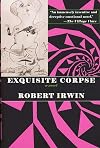
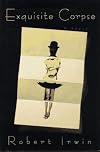
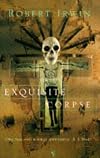
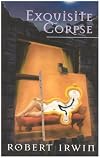
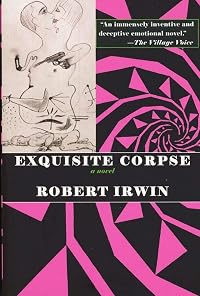
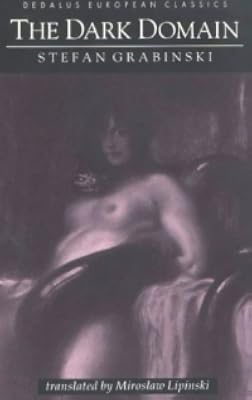
The publishers, Dedalus, provided lots of copies of this novel for the 2005 UK Bookcrossing Unconvention and this one ended up in my goody-bag. The extremely show more unpleasant cover picture put me off reading it for a long time, but when I finally gave it a go, I was surprised to find an enjoyable story inside.
Caspar, a mentally unstable painter and member of the surrealist Serapion Brotherhood in mid-1930s London, falls obsessively in love with a secretary called Caroline, much to the disapproval of his bohemian friends. He finds Caroline surprisingly elusive and fifteen years after her disappearance he writes a book that he refers to as an anti-memoir, in an attempt to lure her back to him. show less
The publishers, Dedalus, provided lots of copies of this novel for the 2005 UK Bookcrossing Unconvention and this one ended up in my goody-bag. The extremely show more unpleasant cover picture put me off reading it for a long time, but when I finally gave it a go, I was surprised to find an enjoyable story inside.
Caspar, a mentally unstable painter and member of the surrealist Serapion Brotherhood in mid-1930s London, falls obsessively in love with a secretary called Caroline, much to the disapproval of his bohemian friends. He finds Caroline surprisingly elusive and fifteen years after her disappearance he writes a book that he refers to as an anti-memoir, in an attempt to lure her back to him. show less
The story is unconventional but interesting. The narrator, Caspar, is a painter in the Surrealist movement in London in the 1930's. He is part of a group of artists called the Serapion Brotherhood. One day, as an exercise in enhancing one sense by losing another, he is being led around London blindfolded by his friend Mackellar. In a pub Mackellar abandons him but leaves a note with a young woman asking her to help Caspar. This woman, Caroline, becomes the love of Caspar's life. However, they never become lovers even though they travel together to London and share a bed. Caspar becomes convinced that he must mesmerize Caroline in order to get her to bed so he starts training himself in hypnotism techniques. Sadly, this drives Caroline show more further away and she almost never agrees to meet with him. In fact she talks to him about another man she has met. Finally she comes around to his studio and tells him she thinks she might be pregnant (obviously not by him). Caspar does not know how to react and she leaves. Caspar then goes to Germany for two months and returns with a plan to recapture Caroline even if it means accepting her other lover. However, Caroline has disappeared. In this pre-war period, Surrealism is faltering. The final blow to the movement is when the head of the Serapion Brotherhood kills himself. So Caspar has lost his love and most of his best friends. During the war Caspar works as a war artist and sees many horrifying things including the concentration camp at Belsen. His dreams and even his days are haunted by what he has seen. He believes that if he could just meet Caroline again his life would improve. I don't want to reveal the ending but, suffice it to say, it is surreal. show less
Ratings
Members
- Recently Added By
Lists

Fiction Featuring Real People
81 works; 17 members
Author Information

37+ Works 2,695 Members
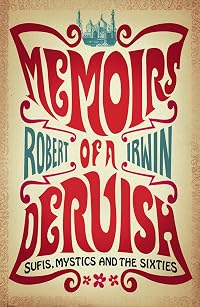
Robert Irwin is senior research associate at the School of Oriental and African Studies in London. His many books include Dangerous Knowledge: Orientalism and Its Discontents and Memoirs of a Dervish: Sufis, Mystics, and the Sixties. He is a Fellow of the Royal Society of Literature.
Common Knowledge
- Original publication date
- 1995
- People/Characters
- Orson Welles; Salvador Dalí; Andre Breton; Aleister Crowley; Dylan Thomas
- Dedication
- For Oliver Sorge, who taught me all I know about writing
- First words
- I rarely dream of Caroline.
- Quotations
- What you hold in your hands is not literature, but a magical trap.
At the dark heart of Surrealism is ugliness and terror. - Blurbers
- Byatt, A. S.; Porter, Peter
Classifications
Statistics
- Members
- 170
- Popularity
- 192,793
- Reviews
- 3
- Rating
- (3.70)
- Languages
- Dutch, English, Finnish, German
- Media
- Paper, Ebook
- ISBNs
- 14
- ASINs
- 4