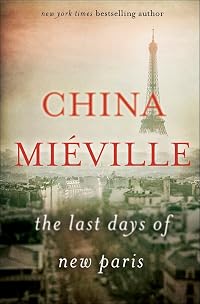
The Last Days of New Paris
by China Miéville
On This Page
Description
"A thriller of war that never was--of survival in an impossible city--of surreal cataclysm. In The Last Days of New Paris, China Mieville entwines true historical events and people with his daring, uniquely imaginative brand of fiction, reconfiguring history and art into something new. "Beauty will be convulsive." 1941. In the chaos of wartime Marseille, American engineer--and occult disciple--Jack Parsons stumbles onto a clandestine anti-Nazi group, including Surrealist theorist Andre show more Breton. In the strange games of the dissident diplomats, exiled revolutionaries, and avant-garde artists, Parsons finds and channels hope. But what he unwittingly unleashes is the power of dreams and nightmares, changing the war and the world forever. 1950. A lone Surrealist fighter, Thibaut, walks a new, hallucinogenic Paris, where Nazis and the Resistance are trapped in unending conflict, and the streets are stalked by living images and texts--and by the forces of Hell. To escape the city, he must join forces with Sam, an American photographer intent on recording the ruins, and make common cause with a powerful, enigmatic figure of chance and rebellion: the exquisite corpse. But Sam is being hunted. And new secrets will emerge that will test all their loyalties--to each other, to Paris old and new, and to reality itself. Praise for China Mieville "[Mieville's] wit dazzles, his humour is lively, and the pure vitality of his imagination is astonishing."--Ursula K. Le Guin, The Guardian, on Three Moments of an Explosion "Dark and thought-provoking."--The San Diego Union-Tribune, on The City & The City "Richly conceived."--The New York Times Book Review, on Embassytown "Mieville more than delivers."--San Francisco Chronicle, on Kraken "Compulsively readable."--The Washington Post Book World, on Perdido Street Station"-- "From the bestselling and award-winning master of sci fi, fantasy, and speculative fiction: a Surrealist bomb transfigures war-torn Paris into a phantasmagoric dreamscape, unleashing a race of nightmarish creatures"-- show lessTags
Recommendations

Member Recommendations
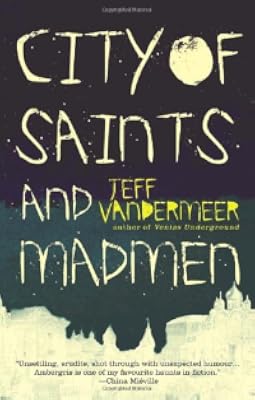
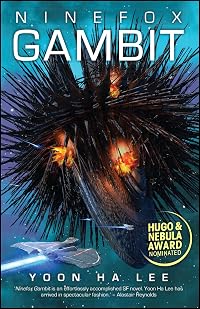
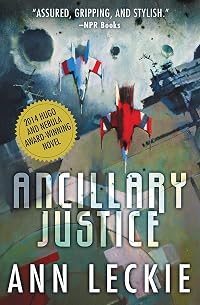
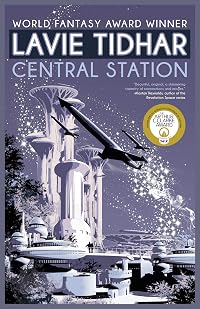
Soukesian These make coincidental companion pieces on art and (alternative) history.
paradoxosalpha Intrigue among Surrealists.
Member Reviews
This is an epic idea, but as a novel, it's an epic mess. It’s a shame, because it would make an excellent film, a good graphic novel, and a challenging project for humanities undergrads to untangle.
I’ve loved some of Mieville’s works and had high hopes of this, but I quickly felt “the soft decay of actualized dreams”.
By far the best bit was the “afterword”, which is an origin story of this book.
(My enjoyment was 2.5*, but I've rounded up for its educational value - though I had to do all that myself.)
Plot and setting
It’s mostly set in an alternative 1950 when New Paris is still occupied by the Nazis, but is sealed off, because of rampant manifestations of Surrealist artworks.
“What had been the world’s prettiest city show more was now populated by its own unpretty imaginings.”
The other thread is Marseilles in 1941.
It features many Surrealist pieces, with a dollop of Les Miserables, and maybe Dan Brown, creating an effect like Pride and Prejudice and Zombies, all squeezed into 168 pages (plus 30 pages of notes). But Mieville tells and never shows the artworks.
Plotwise (if that’s not overstating the word), it’s more of a wartime political action thriller than anything to do with art. It’s crammed with spies, Surrealists, magical nightwear, guerillas, cryptic messages, fighting, Nazis, playing cards, Free French, Main à plume, devils, double agents, escapes, occultists, a rocket scientist, a rogue bishop, and plundering black marketeers.
If Mieveille was trying to make the plot as bewildering as Surrealist art, he succeeded, though that may be me more than him.
The last four pages are good
“A little blank-faced nonentity bringing peace and prettiness.”
I finally glimpsed what might have been. Not a pristine Paris, unchanged by war, or recovering from it, but a novel of provocative but intelligible ideas.
Consider these two artworks that feature in the story. Ignore the fact one is Surrealist and the other not, and try not to compare the artists’ skill.
1. Do they provoke different emotions, and do you therefore assume different things about the artists?
2. Could your response to either work be changed by knowing more about their creator?
Details of the one on the left HERE.
And the one on the right HERE, though the answer is a very slight plot spoiler - if there was much plot to spoil.
3. If you clicked, do you feel differently about either of them now?
Before reading this novel
You need to decide how/when/if to read around it. I did a mix of the three below, which was probably the worst approach; pick one and stick to it.
1. Come to it “blind”. Just immerse yourself in its weirdness. When you finish, you can read the notes in the book, look at Surrealist art, read up on related subjects, and maybe reread the book itself.
2. Read the notes as you go, but you need a bit of prep. Keep a marker in the notes section, as there aren’t any endnote indicators in the text itself, and there are five works mentioned on page 11 alone. But the notes are just words, so I suggest you have Nicky Martin’s Graphic Annotations beside you, but if you can manage not to notice details of the very last one before reading, that might be good.
3. Read all around it before you open a page, especially the Surrealist movement and Paris during Nazi occupation. Also, have Nicky Martin’s Graphic Annotations to hand.
Some images from the story: Left to right: “I am an Amateur of Velocipedes” by Leonora Carrington, “Celebes” by Max Ernst, “Eine Kleine Nachtmusik” By Dorothea Tanning, “Stone Woman” by Meret Oppenheim, and “Loup Table” by Victor Brauner. (Sources: all in Nicky Martin’s Graphic Annotations - and Google.)
Relevant background before, during, or after reading includes:
• The Nazi occupation of Paris during WW2.
• French Surrealism in general, but especially André Breton.
• The Surrealist Manifesto, written by André Breton and others.
• “Surrealist stay-behinds, soldiers of the unconscious. Main à plume”. It was a publication by Surrealists, including André Breton, during the Nazi occupation, La Main à plume.
• Josef Mengele’s experiments on people.
• Collaborator Bishop/Abbé Alesch.
• A game of visual consequences, called Exquisite Corpse, where each person draws part of a figure, folds the paper over, and passes to another person to draw the next bit (as below).
Image: Exquisite Corpses: on the left by André Breton, Man Ray, Max Morise, Yves Tanguy , and on the right by Andre Breton, Yves Tangu, Jacqueline Lamba.
(Source and Source.)
Only after reading the book:
• In the story, “Fall Rot” is a mysterious message, and what it’s revealed to be is slightly different in the real WW2 version.
• The main character in the 1941 thread is American rocket engineer and occultist Jack Parsons.
Despite the copious notes about many artworks, there are some detailed descriptions that I assume are based on real pieces, but which are not identified.
“Tables and chairs, all heaving up and suspended as if about to fly away, then spasming back to their positions… The tables are dancing on their stiff legs. They somersault endlessly at the point of an explosion.”
How do you become a Surrealist?
Firstly, do you know what’s the simplest act of Surrealism?
“The simplest Surrealist act consists of dashing down the street, pistol in hand, and firing blindly, as fast as you can pull the trigger, into the crowd. Anyone who, at least once in his life, has not dreamed of thus putting an end to the petty system of debasement and cretinization in effect has a well-defined place in that crowd with his belly at barrel-level.” André Breton, Manifestoes of Surrealism.
Thibaut knew that one, so the test continues:
“They pointed at certain objects from the junk that filled their cellar, asking him if they were surreal or just trash… When one of the questioners took off his shoe to rub his toe… Thibaut took it… picked up a candlestick he had previously dismissed as a mere object and placed it inside the old leather. ‘Now it’s surreal.’”
Quotes
Image: Object-Phantom by Toyen (Source.)
“‘They live on looking… You can catch them and make them fat by showing them bright colors. Then we roast them.’ The meat was greasy with everything they’d seen.” (a feathered sphere - above)
• “Those who are asleep… are workers and collaborators in what goes on in the world.” (from a Surrealist pamphlet)
• “The altered landscapes… smoothed alpine topographies like sagging drapes, houses of frozen rooms full of clocks, places where the geography echoed itself.”
• “The wind explores the buildings.”
• “Play is insurrection in the rubble of objective chance.”
• “Broken glass that twitches and snaps back into the panes then out again, repeatedly, an oscillating instant of combustion.”
• “The man in the long coat was pouring off light… a tracework of glow, his veins lit under his skin. His hands glimmered… He crooned and icicles formed on the ends of his fingers. Scum tapping power… He drips shadows from his eyes.”
• “The soft decay of actualized dreams fouls his fingers.” show less
I’ve loved some of Mieville’s works and had high hopes of this, but I quickly felt “the soft decay of actualized dreams”.
By far the best bit was the “afterword”, which is an origin story of this book.
(My enjoyment was 2.5*, but I've rounded up for its educational value - though I had to do all that myself.)
Plot and setting
It’s mostly set in an alternative 1950 when New Paris is still occupied by the Nazis, but is sealed off, because of rampant manifestations of Surrealist artworks.
“What had been the world’s prettiest city show more was now populated by its own unpretty imaginings.”
The other thread is Marseilles in 1941.
It features many Surrealist pieces, with a dollop of Les Miserables, and maybe Dan Brown, creating an effect like Pride and Prejudice and Zombies, all squeezed into 168 pages (plus 30 pages of notes). But Mieville tells and never shows the artworks.
Plotwise (if that’s not overstating the word), it’s more of a wartime political action thriller than anything to do with art. It’s crammed with spies, Surrealists, magical nightwear, guerillas, cryptic messages, fighting, Nazis, playing cards, Free French, Main à plume, devils, double agents, escapes, occultists, a rocket scientist, a rogue bishop, and plundering black marketeers.
If Mieveille was trying to make the plot as bewildering as Surrealist art, he succeeded, though that may be me more than him.
The last four pages are good
“A little blank-faced nonentity bringing peace and prettiness.”
I finally glimpsed what might have been. Not a pristine Paris, unchanged by war, or recovering from it, but a novel of provocative but intelligible ideas.
Consider these two artworks that feature in the story. Ignore the fact one is Surrealist and the other not, and try not to compare the artists’ skill.
1. Do they provoke different emotions, and do you therefore assume different things about the artists?
2. Could your response to either work be changed by knowing more about their creator?
Details of the one on the left HERE.
And the one on the right HERE, though the answer is a very slight plot spoiler - if there was much plot to spoil.
3. If you clicked, do you feel differently about either of them now?
Before reading this novel
You need to decide how/when/if to read around it. I did a mix of the three below, which was probably the worst approach; pick one and stick to it.
1. Come to it “blind”. Just immerse yourself in its weirdness. When you finish, you can read the notes in the book, look at Surrealist art, read up on related subjects, and maybe reread the book itself.
2. Read the notes as you go, but you need a bit of prep. Keep a marker in the notes section, as there aren’t any endnote indicators in the text itself, and there are five works mentioned on page 11 alone. But the notes are just words, so I suggest you have Nicky Martin’s Graphic Annotations beside you, but if you can manage not to notice details of the very last one before reading, that might be good.
3. Read all around it before you open a page, especially the Surrealist movement and Paris during Nazi occupation. Also, have Nicky Martin’s Graphic Annotations to hand.
Some images from the story: Left to right: “I am an Amateur of Velocipedes” by Leonora Carrington, “Celebes” by Max Ernst, “Eine Kleine Nachtmusik” By Dorothea Tanning, “Stone Woman” by Meret Oppenheim, and “Loup Table” by Victor Brauner. (Sources: all in Nicky Martin’s Graphic Annotations - and Google.)
Relevant background before, during, or after reading includes:
• The Nazi occupation of Paris during WW2.
• French Surrealism in general, but especially André Breton.
• The Surrealist Manifesto, written by André Breton and others.
• “Surrealist stay-behinds, soldiers of the unconscious. Main à plume”. It was a publication by Surrealists, including André Breton, during the Nazi occupation, La Main à plume.
• Josef Mengele’s experiments on people.
• Collaborator Bishop/Abbé Alesch.
• A game of visual consequences, called Exquisite Corpse, where each person draws part of a figure, folds the paper over, and passes to another person to draw the next bit (as below).
Image: Exquisite Corpses: on the left by André Breton, Man Ray, Max Morise, Yves Tanguy , and on the right by Andre Breton, Yves Tangu, Jacqueline Lamba.
(Source and Source.)
Only after reading the book:
• In the story, “Fall Rot” is a mysterious message, and what it’s revealed to be is slightly different in the real WW2 version.
• The main character in the 1941 thread is American rocket engineer and occultist Jack Parsons.
Despite the copious notes about many artworks, there are some detailed descriptions that I assume are based on real pieces, but which are not identified.
“Tables and chairs, all heaving up and suspended as if about to fly away, then spasming back to their positions… The tables are dancing on their stiff legs. They somersault endlessly at the point of an explosion.”
How do you become a Surrealist?
Firstly, do you know what’s the simplest act of Surrealism?
“The simplest Surrealist act consists of dashing down the street, pistol in hand, and firing blindly, as fast as you can pull the trigger, into the crowd. Anyone who, at least once in his life, has not dreamed of thus putting an end to the petty system of debasement and cretinization in effect has a well-defined place in that crowd with his belly at barrel-level.” André Breton, Manifestoes of Surrealism.
Thibaut knew that one, so the test continues:
“They pointed at certain objects from the junk that filled their cellar, asking him if they were surreal or just trash… When one of the questioners took off his shoe to rub his toe… Thibaut took it… picked up a candlestick he had previously dismissed as a mere object and placed it inside the old leather. ‘Now it’s surreal.’”
Quotes
Image: Object-Phantom by Toyen (Source.)
“‘They live on looking… You can catch them and make them fat by showing them bright colors. Then we roast them.’ The meat was greasy with everything they’d seen.” (a feathered sphere - above)
• “Those who are asleep… are workers and collaborators in what goes on in the world.” (from a Surrealist pamphlet)
• “The altered landscapes… smoothed alpine topographies like sagging drapes, houses of frozen rooms full of clocks, places where the geography echoed itself.”
• “The wind explores the buildings.”
• “Play is insurrection in the rubble of objective chance.”
• “Broken glass that twitches and snaps back into the panes then out again, repeatedly, an oscillating instant of combustion.”
• “The man in the long coat was pouring off light… a tracework of glow, his veins lit under his skin. His hands glimmered… He crooned and icicles formed on the ends of his fingers. Scum tapping power… He drips shadows from his eyes.”
• “The soft decay of actualized dreams fouls his fingers.” show less
This was a perfect book for 2016-2021, and again for 2024-2029. Miéville's surrealist story in which works of surreal art literally wage war with Nazis is no more strange and surreal than the USA under Trump's thumb. If you have any interest in surrealism, read this book. I thought I knew a bit about this art movement, but I learned how much I didn't know. The list of references to art objects, artists, and leaders of the movement could be an art history syllabus.
Against this strange background, Miéville tells a great story, as always. Sometimes, the challenge is to keep up with the plot and not get lost in the detail of the environs. Still, it's worth the effort. Who couldn't love the wild fox table with its bared fangs, bold orange show more strokes, and graphic maleness? show less
Against this strange background, Miéville tells a great story, as always. Sometimes, the challenge is to keep up with the plot and not get lost in the detail of the environs. Still, it's worth the effort. Who couldn't love the wild fox table with its bared fangs, bold orange show more strokes, and graphic maleness? show less
Somehow in the past few weeks I’ve ended up reading two novels about surrealists destabilising Parisian reality. I prefer this one, which is essentially a mashup of [b:The Dream Years|929708|The Dream Years|Lisa Goldstein|https://images.gr-assets.com/books/1329423060s/929708.jpg|358335] (the other one) and [b:The Tain|493072|The Tain|China Miéville|https://images.gr-assets.com/books/1202747448s/493072.jpg|66385] (my favourite piece of writing by China Mieville). In the latter, reality is also destabilised by the incursion of invading fantastical creatures in an urban milieu, however there is more inexplicable arbitrariness about it. ‘The Last Days of New Paris’, by contrast, seeks to describe, explain, and categorise its show more weirdness. I can appreciate both approaches, but I think [b:The Tain|493072|The Tain|China Miéville|https://images.gr-assets.com/books/1202747448s/493072.jpg|66385] had more visceral impact because it left space for your own imagination to inspire dread. ‘The Last Days of New Paris’ is fascinating, though, as it allows you to tour a Paris in which surrealism has warped the urban fabric. Mieville has always been good at monsters (the slake moths in [b:Perdido Street Station|68494|Perdido Street Station (Bas-Lag, #1)|China Miéville|https://images.gr-assets.com/books/1393537963s/68494.jpg|3221410] are absolutely terrifying) so of course the ‘manifestations’ are many and magnificent. There’s even an index at the end matching each to its surrealist parentage. I was also pleased by the pun of naming the monsters ‘manifestations’ or ‘manifs’ - French for protest march.
The plot is understandably quite thin in a novella of 168 pages (plus an afterword that I frankly didn’t see the need for). This is fiction as psychogeography in a way, as it seemed to focus on the warped fabric of Paris much more than surrealism as a movement, in contrast to [b:The Dream Years|929708|The Dream Years|Lisa Goldstein|https://images.gr-assets.com/books/1329423060s/929708.jpg|358335]. Since I love it when the city is the main character and Mieville is adept at this, cf [b:The City & the City|4703581|The City & the City|China Miéville|https://images.gr-assets.com/books/1320475957s/4703581.jpg|4767909], I really enjoyed the tour. Moreover, there were some plot twists that I really liked.Specifically, that Sam turned out to be a secret agent for Hell, that the demons thought our reality was terrible and were desperate to leave, and that there was no romance whatsoever. Although this isn’t Mieville’s best work, that sounds much more like damning by faint praise than it should. He’s a fantastic, very distinctive writer and I had a lot of fun reading this novella. It contains some extremely arresting imagery and reminded me both of dreams I’ve had and fiction I’ve tried to write in the past. That’s always a good sign. Finally, if you like this you’ll also enjoy [b:Dream London|17571913|Dream London|Tony Ballantyne|https://images.gr-assets.com/books/1376474374s/17571913.jpg|24286314] and [b:Dream Paris|23492561|Dream Paris|Tony Ballantyne|https://images.gr-assets.com/books/1418103846s/23492561.jpg|43082774]. Although I do wish writers of urban-reality-warping-uncanny-incursion fiction would look beyond capital cities. Much as I love Paris, why should it get to have all the fun? show less
The plot is understandably quite thin in a novella of 168 pages (plus an afterword that I frankly didn’t see the need for). This is fiction as psychogeography in a way, as it seemed to focus on the warped fabric of Paris much more than surrealism as a movement, in contrast to [b:The Dream Years|929708|The Dream Years|Lisa Goldstein|https://images.gr-assets.com/books/1329423060s/929708.jpg|358335]. Since I love it when the city is the main character and Mieville is adept at this, cf [b:The City & the City|4703581|The City & the City|China Miéville|https://images.gr-assets.com/books/1320475957s/4703581.jpg|4767909], I really enjoyed the tour. Moreover, there were some plot twists that I really liked.
this is just lovely, if you surrender to it. Paris in and after the Second World War, as alternate universes are created, and collapse, in a street war between Nazi and resistance forces using art against the enemy. culture as a no man's land, where art and cultural ideas have the power to wound. i had to go away and reread a lot of surrealist manifestos and look at a whole lot of art afterwards, but how can that be a bad thing?
I hate this book.
(It should always be remembered that I am a nobody who knows nothing who believes enjoying things is better than hating on them, so if you like this, I love that for you, and this is all just some random gal's opinion.)
After Reading References:
(This is a fantastic article with images and links: https://medium.com/@Nicky_Martin/graphic-annotations-of-china-mi%C3%A9villes-the...
I'm frankly exhausted and almost too tired to hold the elation I have for never having to touch this book again after I return it to the library tomorrow, but I am finally completely finished!
I've gone beyond apoplexy into critical parent disappointment because Miéville shows how dedicated their research into Surrealist works and alludes to show more interesting ideas they left out of the book.
After Reading Author's Note:
I genuinely thought reading the author's note would make me feel guilty for how much I hated this book and display Miéville's adoration and dedication to Surrealism, but this was not the case.
There's an aside about him being interested, but not an expert in Surrealism, and then a very bizarre anecdote that I will not share because I think it is technically a spoiler, but I will say that I don't believe it for a second, at least the vast majority of it, which may very well be the point. It is by far the best piece of writing in the book and has the most feeling a surreality too.
It also feels like a poor excuse for why this book sucks so very much and only made me more angry and disappointed with the decisions made in the writing of this book. If any of the note is real and he believes what he claims, it only makes how bad this book is so much worse and even more disrespectful.
It's entirely unfair of me, but I actually feel annoyed at Miéville for not humanising themself or making me feel bad about my utter abhorrence of this book.
Intial Reaction:
[I am writing this initial review before reading the author's note and references and plan to follow up once I have read them]
I am too tired and lost in nihilistic rage to give this the proper rant review it deserves and I need for catharsis, but I think I can safely say that, while I have read and abandoned many other books that were actually problematic and harmful, to me, personally, this is the most offensive thing I have read this year and my frustration and confusion are only exceeded by my anger and despair.
Imho this is just a crap fantasy story I would expect from a 90s game tie-in, like the early Magic: The Gathering, D&D, or Warhammer with surrealist, Paris, and Nazi aesthetics. I wouldn't enjoy this if it was set in Pyrexia, Sigil, Zharr-Naggrund, or Commorragh (like Miéville, I can flex references, as a treat), so why should I care when it is a toothless portrayal of the Nazis in Paris with the veneer and refernces to surrealism seemingly without any actual engagement or understanding of the motivations and aspirations of the movement.
I cannot fathom a conscious point beyond the surface level and this doesn't seem to be an exercise in unconscious expression in the Surrealist tradition, so I'm utterly perplexed.
Everything I know about Miéville and their other books, and the deep knowledge and reverence on display here only leave me more baffled as to why this book is as seemingly vacuous as it is.
No offence to Miéville and no disrespect to anyone who likes this book, but fucking hate it and it is by far my least favourite read of 2023. show less
(It should always be remembered that I am a nobody who knows nothing who believes enjoying things is better than hating on them, so if you like this, I love that for you, and this is all just some random gal's opinion.)
After Reading References:
(This is a fantastic article with images and links: https://medium.com/@Nicky_Martin/graphic-annotations-of-china-mi%C3%A9villes-the...
I'm frankly exhausted and almost too tired to hold the elation I have for never having to touch this book again after I return it to the library tomorrow, but I am finally completely finished!
I've gone beyond apoplexy into critical parent disappointment because Miéville shows how dedicated their research into Surrealist works and alludes to show more interesting ideas they left out of the book.
After Reading Author's Note:
I genuinely thought reading the author's note would make me feel guilty for how much I hated this book and display Miéville's adoration and dedication to Surrealism, but this was not the case.
There's an aside about him being interested, but not an expert in Surrealism, and then a very bizarre anecdote that I will not share because I think it is technically a spoiler, but I will say that I don't believe it for a second, at least the vast majority of it, which may very well be the point. It is by far the best piece of writing in the book and has the most feeling a surreality too.
It also feels like a poor excuse for why this book sucks so very much and only made me more angry and disappointed with the decisions made in the writing of this book. If any of the note is real and he believes what he claims, it only makes how bad this book is so much worse and even more disrespectful.
It's entirely unfair of me, but I actually feel annoyed at Miéville for not humanising themself or making me feel bad about my utter abhorrence of this book.
Intial Reaction:
[I am writing this initial review before reading the author's note and references and plan to follow up once I have read them]
I am too tired and lost in nihilistic rage to give this the proper rant review it deserves and I need for catharsis, but I think I can safely say that, while I have read and abandoned many other books that were actually problematic and harmful, to me, personally, this is the most offensive thing I have read this year and my frustration and confusion are only exceeded by my anger and despair.
Imho this is just a crap fantasy story I would expect from a 90s game tie-in, like the early Magic: The Gathering, D&D, or Warhammer with surrealist, Paris, and Nazi aesthetics. I wouldn't enjoy this if it was set in Pyrexia, Sigil, Zharr-Naggrund, or Commorragh (like Miéville, I can flex references, as a treat), so why should I care when it is a toothless portrayal of the Nazis in Paris with the veneer and refernces to surrealism seemingly without any actual engagement or understanding of the motivations and aspirations of the movement.
I cannot fathom a conscious point beyond the surface level and this doesn't seem to be an exercise in unconscious expression in the Surrealist tradition, so I'm utterly perplexed.
Everything I know about Miéville and their other books, and the deep knowledge and reverence on display here only leave me more baffled as to why this book is as seemingly vacuous as it is.
No offence to Miéville and no disrespect to anyone who likes this book, but fucking hate it and it is by far my least favourite read of 2023. show less
this is just lovely, if you surrender to it. Paris in and after the Second World War, as alternate universes are created, and collapse, in a street war between Nazi and resistance forces using art against the enemy. culture as a no man's land, where art and cultural ideas have the power to wound. i had to go away and reread a lot of surrealist manifestos and look at a whole lot of art afterwards, but how can that be a bad thing?
Probably a little closer to a 4.5, but whatever. Like the Surrealist works it focuses on, this manages to balance being charming and somewhat unnerving. I'd been worried about Miéville after some relatively weaker outings from him recently but he's still got it after all.
Members
- Recently Added By
Lists

2017 Hugo Eligible Novels
145 works; 14 members

Strange Cities
30 works; 7 members

2020
21 works; 1 member

Books Read in 2016
4,666 works; 197 members

Books With Place Names in the Title
215 works; 10 members

Paris, City of Lights
103 works; 17 members

Books Read in 2019
4,052 works; 110 members

Historical Figures in Fiction
51 works; 5 members

Books With Time Words in the Title
160 works; 4 members

New Weird Fiction
69 works; 12 members

Traveling the world in books
24 works; 1 member

Books Read in 2024
4,623 works; 126 members
Author Information

115+ Works 50,948 Members
China Miéville was born in Norwich, England on September 6, 1972. He received a B.A. in social anthropology from the University of Cambridge in 1994, and a Masters' degree with distinction and Ph.D in international relations from the London School of Economics, the latter in 2001. He has also held a Frank Knox fellowship at Harvard University. show more His first novel, King Rat, was nominated for both an International Horror Guild and a Bram Stoker award. His other works include Perdido Street Station, The Scar, Iron Council, Un Lun Dun, The City and the City, Embassytown, and Three Moments of an Explosion: Stories. He has won numerous awards for his works including three Arthur C. Clarke Awards, two British Fantasy Awards, the British Science Fiction Award, and the 2008 Locus Award for Best Young Adult Book. He also published a book on Marxism and international law called Between Equal Rights: A Marxist Theory of International Law. He teaches creative writing at Warwick University. (Bowker Author Biography) show less
Some Editions
Awards and Honors
Work Relationships
Has as a commentary on the text
Common Knowledge
- Canonical title
- The Last Days of New Paris
- Original title
- The Last Days of New Paris
- Original publication date
- 2016-08-09
- People/Characters
- Thibaut; Jack Parsons; André Breton; “Exquisite Corpse”
- Important places
- Paris, France; Marseille, Bouches-du-Rhône, Provence-Alpes-Côte d'Azur, France; France
- Important events
- World War II; Occupation of Paris (1940 | 1944)
- Epigraph*
- « L'art surréaliste suscite toutes sortes de réactions, mais la plus pathétique entre toutes est celle qui consiste à demander ce qu'on est censé voir ou éprouver devant l'œuvre – autrement dit "Papa veut qu'on ress... (show all)ente quoi face à ça ?". »
Grace Pailthorpe, On the Importance of Fantasy Life - Dedication
- To Rupa
- First words
- 1950
A street in lamplight. Beyond a wall of ripped-up city, the Nazis were shooting. - Last words
- (Click to show. Warning: May contain spoilers.)Then, bruised and tired, triumphant and unsure, Thibaut takes a deep breath and steps over the boundary , back into New Paris, the old city.
- Original language
- English
*Some information comes from Common Knowledge in other languages. Click "Edit" for more information.
Classifications
Statistics
- Members
- 1,057
- Popularity
- 24,340
- Reviews
- 47
- Rating
- (3.43)
- Languages
- 7 — English, French, German, Italian, Polish, Spanish, Turkish
- Media
- Paper, Audiobook, Ebook
- ISBNs
- 23
- ASINs
- 6