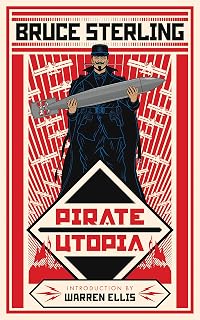
Pirate Utopia
by Bruce Sterling
On This Page
Description
Original introduction by Warren Ellis, author of Transmetropolitan and Gun Machine Who are these bold rebels pillaging their European neighbors in the name of revolution? The Futurists! Utopian pirate warriors of the diminutive Regency of Carnaro, scourge of the Adriatic Sea. Mortal enemies of communists, capitalists, and even fascists (to whom they are not entirely unsympathetic). The ambitious Soldier-Citizens of Carnaro are led by a brilliant and passionate coterie of the perhaps insane. show more Lorenzo Secondari, World War I veteran, engineering genius, and leader of Croatian raiders. Frau Piffer, Syndicalist manufacturer of torpedos at a factory run by and for women. The Ace of Hearts, a dashing Milanese aristocrat, spymaster, and tactical savant. And the Prophet, a seductive warrior-poet who leads via free love and military ruthlessness. Fresh off of a worldwide demonstration of their might, can the Futurists engage the aid of sinister American traitors and establish global domination? show lessTags
Recommendations

















Member Recommendations
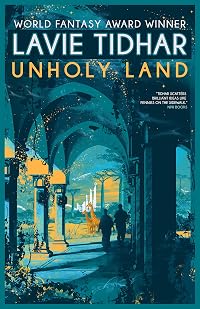
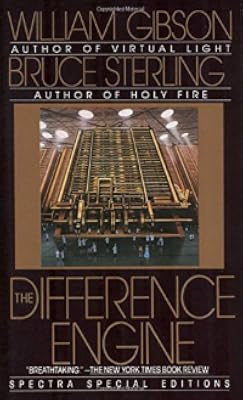
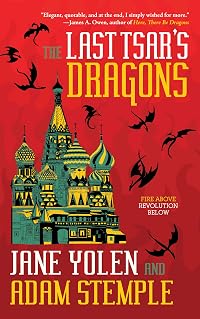
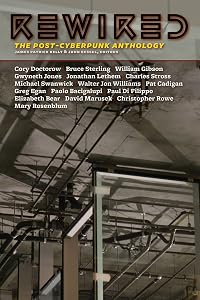
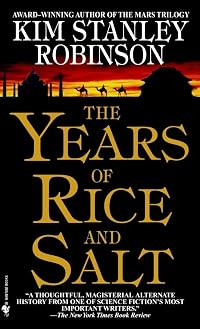
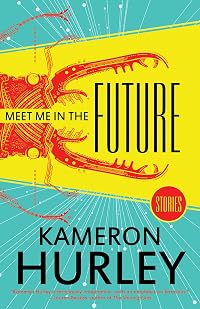
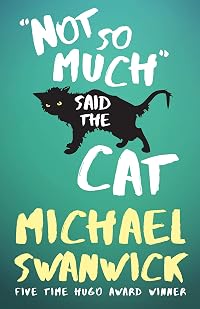
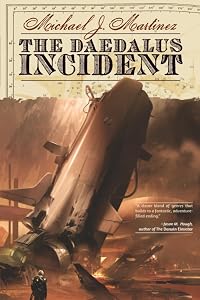
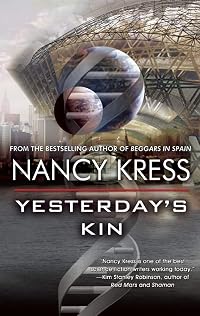
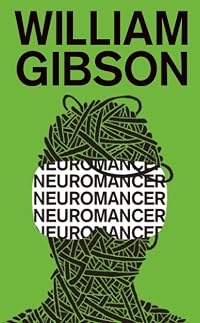
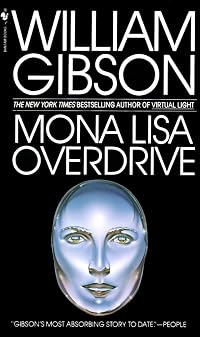
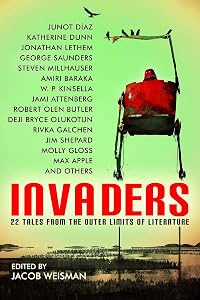
Soukesian These make coincidental companion pieces on art and (alternative) history.
Member Reviews
On the Adriatic coast after the Great War, a pirate utopia arises, full of poets and writers and one engineer, determined to power their way into the future in a hail of radio controlled torpedoes and huge biplanes, stealing everything in sight. A grand, romantic, fascistic vision of a technological world to come. An alternative history based on a real fledgling pirate state about politics and government increasingly unmoored from reality, driven by visionaries and raving madmen. This is obviously will be of no relevance to the present.
Don't expect a traditional novel. Hell, don't expect a traditional Bruce Sterling story. This is transmission from a parallel Earth by the Italian Futurist and Fantasist Bruno Argento, about a brief moment where Futurists broke all the conventions, seized a city, made the future.
Secondari is the Pirate Engineer, a veteran of the Alpine Front (imagine the Western Front, but up a mountain, on a glacier, with scanty trenches carved out of living rock, and even more bloody minded idiots in charge. They fought 12 Battles of the Isonzo, and General Cadorna instituted literal decimation for units that retreated). Now, after the war, Secondari runs an anarchist-syndicalist torpedo factory that turns out cheap weapons for anyone who needs them, show more makes motor-boat raids on unguarded surplus armament stockpiles, and dreams of a radio controlled aerial torpedo firing fatal F-rays (nuclear cruise missile, for those of you weak in anachronism).
The story wanders through the travails of Secondari and his fellow Pirates, the Prophet and the Ace of Hearts. Futurism was a strange protofascist ideology, based on speed and violence and machines and finding Nietzschean powers within yourself. The alternative history speeds up towards the end, with the introduction of Mussolini and Adolf from Linz, along with the American master spy Harry Houdini and his loyal assistants Howard Lovecraft and Edgar Burroughs. But just as the story is about to get supremely weird, a full fledged alternate history, it ends, violently and abruptly.
Part of me wishes it'd continued, that we got a full novel instead of Act I, but from any sort of pragmatic sense Futurism is totally indefensible. You can't eat speed or glory. It's a shabby ideology based on favors and a cult of personality. It's hurting people because you're stronger than them, and the romance wears thin.
Still, for its flaws, a fascinating and strange novel. show less
Secondari is the Pirate Engineer, a veteran of the Alpine Front (imagine the Western Front, but up a mountain, on a glacier, with scanty trenches carved out of living rock, and even more bloody minded idiots in charge. They fought 12 Battles of the Isonzo, and General Cadorna instituted literal decimation for units that retreated). Now, after the war, Secondari runs an anarchist-syndicalist torpedo factory that turns out cheap weapons for anyone who needs them, show more makes motor-boat raids on unguarded surplus armament stockpiles, and dreams of a radio controlled aerial torpedo firing fatal F-rays (nuclear cruise missile, for those of you weak in anachronism).
The story wanders through the travails of Secondari and his fellow Pirates, the Prophet and the Ace of Hearts. Futurism was a strange protofascist ideology, based on speed and violence and machines and finding Nietzschean powers within yourself. The alternative history speeds up towards the end, with the introduction of Mussolini and Adolf from Linz, along with the American master spy Harry Houdini and his loyal assistants Howard Lovecraft and Edgar Burroughs. But just as the story is about to get supremely weird, a full fledged alternate history, it ends, violently and abruptly.
Part of me wishes it'd continued, that we got a full novel instead of Act I, but from any sort of pragmatic sense Futurism is totally indefensible. You can't eat speed or glory. It's a shabby ideology based on favors and a cult of personality. It's hurting people because you're stronger than them, and the romance wears thin.
Still, for its flaws, a fascinating and strange novel. show less
Thanks to Netgalley for the ARC!
Italy! 1920's. A little town called Fiume that later becomes known as the modern Rijeka had had it's world turned upside down when a bunch of rag-tag ill-provisioned warriors took it over and declared themselves an Anarcho-Syndicalist Union, full of free love, art, poetry, high-ideals, and most of all, Rebellion. They even called themselves Pirates!
Now what if the whole thing hadn't imploded after 15 months, and instead had gone on to arm themselves successfully and innovate as they had dreamed, to become a real haven for free thinkers and equality of the sexes, ignoring the cries of the rich and the powerful as they gleefully took over all the manufacturing plants in a communist-like frenzy, but stopping show more there only to kick out all the actual communists?
They live by theft and live by their strength, fascists in fact, but not in spirit, for everyone is truly equal here.
Wow. As an SF novel, it's really quite gorgeous. I've been getting tired of all those overdone WWII alternate histories. This one is a beautiful strike in another direction, and it's humorous and it's scary and it pushes all the right buttons for me.
And it's also pulp in all the grand ways, too. :) Mussilini got his dick shot off while working as an editor, Hitler got shot and killed taking a bullet for a friend. There's even Houdini, the Spy, Lovecraft his employee, and also Robert E Howard working alongside them. I was hoping to see Clarke Ashton Smith among them, but alas, no. :)
I haven't been so delighted by such a strange book just tickling my sense of wonder in such a way as this. Bruce Sterling has gotten really interesting.
He's been living in Europe for the last decade, learning so much about these places, and also as an American Cyberpunk author now writing Dieselpunk, I have to say that he's pushing the envelope again. :) In a really awesome way. :)
Bravo! show less
Italy! 1920's. A little town called Fiume that later becomes known as the modern Rijeka had had it's world turned upside down when a bunch of rag-tag ill-provisioned warriors took it over and declared themselves an Anarcho-Syndicalist Union, full of free love, art, poetry, high-ideals, and most of all, Rebellion. They even called themselves Pirates!
Now what if the whole thing hadn't imploded after 15 months, and instead had gone on to arm themselves successfully and innovate as they had dreamed, to become a real haven for free thinkers and equality of the sexes, ignoring the cries of the rich and the powerful as they gleefully took over all the manufacturing plants in a communist-like frenzy, but stopping show more there only to kick out all the actual communists?
They live by theft and live by their strength, fascists in fact, but not in spirit, for everyone is truly equal here.
Wow. As an SF novel, it's really quite gorgeous. I've been getting tired of all those overdone WWII alternate histories. This one is a beautiful strike in another direction, and it's humorous and it's scary and it pushes all the right buttons for me.
And it's also pulp in all the grand ways, too. :) Mussilini got his dick shot off while working as an editor, Hitler got shot and killed taking a bullet for a friend. There's even Houdini, the Spy, Lovecraft his employee, and also Robert E Howard working alongside them. I was hoping to see Clarke Ashton Smith among them, but alas, no. :)
I haven't been so delighted by such a strange book just tickling my sense of wonder in such a way as this. Bruce Sterling has gotten really interesting.
He's been living in Europe for the last decade, learning so much about these places, and also as an American Cyberpunk author now writing Dieselpunk, I have to say that he's pushing the envelope again. :) In a really awesome way. :)
Bravo! show less
I've been thinking of reading this novella for awhile as, back in the heyday of cyber-punk, something new by Sterling was always something of an event for me. This novella, however, is not an event. Oh, I found it interesting in a high-concept kind of way, as Sterling uses gonzo alternate history to comment on our own times. It says a lot when a SF writer who was on the cutting edge of his field can conclude: "Our politics have lost touch with conventional reality." However, as a piece of literature, this is basically a fragment of a longer work that Sterling, for various reasons, chose not to write; so there is no resolution, just a void where the main character is left wondering about an offer he really can't refuse. This is not to show more mention that it really helps if you have a good enough handle on the history to get the point. show less
A lot of people probably don’t know about this as it seems someone fucked up the Nielsen data entry so badly that Amazon lists the book as by John Coulthart, Rick Klaw and Warren Ellis, and doesn’t mention Bruce Sterling anywhere. But now you know about it, and being a fan of Sterling’s work… Apparently, after World War I, the city of Fiume, now Rijeka, was claimed by both Italy and the recently-formed Kingdom of the Serbs, Croats and Slovenes. But a group of anarchists, led by the Italian poet Gabriele d’Annunzio, seized power and declared the independent Regency of Carnaro. The city became something of a social experiment, but the fascists seized control after a couple of years and Fiume was annexed by Italy. Sterling’s show more short novel makes much of the birth of Futurism – indeed, the major character dreams of building “air torpedoes” and such, the sort of technology displayed in Lang’s Metropolis. But Pirate Utopia is also about the birth of fascism in Italy, and how it gained traction among the establishment. Of course, we’re seeing that happen on a daily basis here in the UK and the US. Pirate Utopia is a fascinating piece of history, but… as a piece of writing it felt a little lacking. Sterling was never much of a stylist, but I remember novels such as Distraction and Holy Fire being well-written novels. Pirate Utopia, on the other hand, seems to be written entirely in simple declarative sentences, which makes all feel a bit dumbed-down. I get that there’s a lot going on in the book, but it does feel a little Like Sterling didn’t trust his readers and so kept it simple. I suspect this is one for fans. show less
On September 12, 1919, acclaimed Italian war hero and poet Gabriele D’Annunzio stormed the city of Fiume, in what is now with Croatia, with 2,600 veterans of the Italian Army. He was angry that the Treaty of Versailles did not acknowledge Italian claims to the city. Thus the pirate utopia of scavenging weapons depots, more traditional piracy, extortion, free love, syndicalism, women’s suffrage, and casual drug use was born. To say nothing of the daily poetry readings D’Annunzio gave from a balcony, nightly fireworks, and uniforms that inspired many a European political extremist to come. It was a country where music was declared the fundamental principle of the state.
In our world, the fun ended on December 24, 1920 when the show more Italian navy bombarded D’Annunzio’s palace and declared the existence of the Republic of Fiume, an event known in fascist circles as the “Christmas of Blood”.
Sterling’s book is an alternate history of a sort and a work of “dieselpunk”. The departure from our timeline is the poisoning of Woodrow Wilson at the Paris Peace Conference. And, while it doesn’t really play into the onstage drama, Hitler fatally catches a bullet during a “beer-hall brawl”.
The trouble is, it’s not really a very plausible alternate history. H. P. Lovecraft and Robert E. Howard are strangely working with the U.S. Secret Service, with Harry Houdini as their boss no less. Yes, Sterling certainly knows his Lovecraft and what an Anglophile he was, and his slangy talk here is certainly something that Lovecraft could do on occasion with his friends. And Lovecraft did have a business relationship with Houdini, but it started in 1923. And Lovecraft was an admirer of fascism and Mussolini though D’Annunzio’s ideas, specifically his love of Futurism, don’t seem very fascistic.
This is more of an emotional alternate history than you would get from Howard Waldrop, and it’s just as detailed. As you would expect from Sterling, he loves the hardware of the Italian armored cars (that would be “a standard Lancia-Ansaldo IZM”) and guns and fashions.
And it’s not very successful fiction. Sterling’s pirate utopia is populated by several historical figures and taps into the zeitgeist of pseudoscience, spiritualism, parapsychology, occultism, and rapidly advancing technology that makes the 1920s so interesting. The pirate utopia draws plenty of anarchists and revolutionaries and smugglers and money launderers. Oh yes, there’s plenty of color here.
Most of the story is told from the point of view of Lorenzo Secondari, a former artilleryman and engineer who dreams of the Pirate Utopia manufacturing flying torpedoes. Secondari shares D’Annunzio’s dream of a Futurist world run by supermen like themselves, men of destiny who will sweep aside the bourgeois who stand in their way of creating “a world fit for heroes”. Fiume is to build weapons to terrify the world.
I suppose the Futurism is there to partially amuse in its naiveté and obscureness and, in the light of the history of the twentieth century, irony. But artists spouting manifestos as to how their art will change the world (rather like the younger Sterling in his manifestos proclaiming how cyberpunk would save science fiction) don’t interest me or convince me. Art can change the world, but it seldom does so when trying.
Mostly, I just found the Futurist stuff to be crank ranting. Not that I mind crank ranting. I just have read enough not to find it novel.
But the larger problem is that the element of occult and mysticism undercuts Sterling’s realistic narrative even more than his improbable alternate history. That mythic feel is quite deliberate with most of the characters referred to, in the opening cast of characters, as things like “The Prophet” (D’Annunzio) and the Pirate Engineer (Secondari).
And Sterling hacks off the end of his story just when things get interesting. Mussolini seems to perhaps be out of commission for good, and the U.S., in the persons of Houdini, Howard, and Lovecraft, comes up with an intriguing proposition.
In fact, the whole thing has a bit of the air of a modernist poem, say T. S. Eliot’s “The Waste Land”, sans footnotes. (Yes, I know Eliot’s poem didn’t originally have footnotes, but the fact that an editor thought it needed them does not speak in its favor.) Conclusions and allusions are not obvious in Sterling’s story (perhaps he was depending on Wikipedia erudition supplied by the readers).
Now, these problems are all solved in the Tachyon package which supplements Sterling's story. In effect, it supplies meaning and context for Sterling’s truncated story.
For instance, in an included interview with Rick Klaw, Sterling provides the story’s theme: “… the brotherly feeling between certain kinds of political ecstatic cult politics and the ‘sense of wonder’ of reality-bending science fiction”.
Christopher Brown’s concluding essay, “To the Fiume Station”, puts the Republic of Carnaro in the context of “Sterling’s recent observations about the ways network culture liberates the timeline of our minds from the constraints of historiographically sanctioned narratives”. In particular, he mentions Sterling’s thematically similar Islands in the Net. However, the older Sterling seems wiser and more restrained in the possibilities of these semi-utopian schemes and about the wisdom of technological engineers managing our political affairs. Though, to judge by the attention we pay Zuckerberg, Gates, and Musk and have brought engineering terms like “hack” into politics, evidently we are a long way from shunning the technocratic state by and for technocrats.
Graphic novelist Warren Ellis’s introduction sets things up with a good introduction about “old gunsmoke, exterminating art and war dreams within which” Sterling presents his story.
Illustrator John Coulthart provides some quite nice illustrations throughout the book inspired by Futurism and D’Annunzio’s symbols. show less
In our world, the fun ended on December 24, 1920 when the show more Italian navy bombarded D’Annunzio’s palace and declared the existence of the Republic of Fiume, an event known in fascist circles as the “Christmas of Blood”.
Sterling’s book is an alternate history of a sort and a work of “dieselpunk”. The departure from our timeline is the poisoning of Woodrow Wilson at the Paris Peace Conference. And, while it doesn’t really play into the onstage drama, Hitler fatally catches a bullet during a “beer-hall brawl”.
The trouble is, it’s not really a very plausible alternate history. H. P. Lovecraft and Robert E. Howard are strangely working with the U.S. Secret Service, with Harry Houdini as their boss no less. Yes, Sterling certainly knows his Lovecraft and what an Anglophile he was, and his slangy talk here is certainly something that Lovecraft could do on occasion with his friends. And Lovecraft did have a business relationship with Houdini, but it started in 1923. And Lovecraft was an admirer of fascism and Mussolini though D’Annunzio’s ideas, specifically his love of Futurism, don’t seem very fascistic.
This is more of an emotional alternate history than you would get from Howard Waldrop, and it’s just as detailed. As you would expect from Sterling, he loves the hardware of the Italian armored cars (that would be “a standard Lancia-Ansaldo IZM”) and guns and fashions.
And it’s not very successful fiction. Sterling’s pirate utopia is populated by several historical figures and taps into the zeitgeist of pseudoscience, spiritualism, parapsychology, occultism, and rapidly advancing technology that makes the 1920s so interesting. The pirate utopia draws plenty of anarchists and revolutionaries and smugglers and money launderers. Oh yes, there’s plenty of color here.
Most of the story is told from the point of view of Lorenzo Secondari, a former artilleryman and engineer who dreams of the Pirate Utopia manufacturing flying torpedoes. Secondari shares D’Annunzio’s dream of a Futurist world run by supermen like themselves, men of destiny who will sweep aside the bourgeois who stand in their way of creating “a world fit for heroes”. Fiume is to build weapons to terrify the world.
I suppose the Futurism is there to partially amuse in its naiveté and obscureness and, in the light of the history of the twentieth century, irony. But artists spouting manifestos as to how their art will change the world (rather like the younger Sterling in his manifestos proclaiming how cyberpunk would save science fiction) don’t interest me or convince me. Art can change the world, but it seldom does so when trying.
Mostly, I just found the Futurist stuff to be crank ranting. Not that I mind crank ranting. I just have read enough not to find it novel.
But the larger problem is that the element of occult and mysticism undercuts Sterling’s realistic narrative even more than his improbable alternate history. That mythic feel is quite deliberate with most of the characters referred to, in the opening cast of characters, as things like “The Prophet” (D’Annunzio) and the Pirate Engineer (Secondari).
And Sterling hacks off the end of his story just when things get interesting. Mussolini seems to perhaps be out of commission for good, and the U.S., in the persons of Houdini, Howard, and Lovecraft, comes up with an intriguing proposition.
In fact, the whole thing has a bit of the air of a modernist poem, say T. S. Eliot’s “The Waste Land”, sans footnotes. (Yes, I know Eliot’s poem didn’t originally have footnotes, but the fact that an editor thought it needed them does not speak in its favor.) Conclusions and allusions are not obvious in Sterling’s story (perhaps he was depending on Wikipedia erudition supplied by the readers).
Now, these problems are all solved in the Tachyon package which supplements Sterling's story. In effect, it supplies meaning and context for Sterling’s truncated story.
For instance, in an included interview with Rick Klaw, Sterling provides the story’s theme: “… the brotherly feeling between certain kinds of political ecstatic cult politics and the ‘sense of wonder’ of reality-bending science fiction”.
Christopher Brown’s concluding essay, “To the Fiume Station”, puts the Republic of Carnaro in the context of “Sterling’s recent observations about the ways network culture liberates the timeline of our minds from the constraints of historiographically sanctioned narratives”. In particular, he mentions Sterling’s thematically similar Islands in the Net. However, the older Sterling seems wiser and more restrained in the possibilities of these semi-utopian schemes and about the wisdom of technological engineers managing our political affairs. Though, to judge by the attention we pay Zuckerberg, Gates, and Musk and have brought engineering terms like “hack” into politics, evidently we are a long way from shunning the technocratic state by and for technocrats.
Graphic novelist Warren Ellis’s introduction sets things up with a good introduction about “old gunsmoke, exterminating art and war dreams within which” Sterling presents his story.
Illustrator John Coulthart provides some quite nice illustrations throughout the book inspired by Futurism and D’Annunzio’s symbols. show less
Premetto che non sono una grande appassionata della scrittura di Sterling, che trovo spesso semplicistica fino al punto da sembrare frettolosa. L'idea alla base di questo romanzo ucronico è molto buona: raccontare i 16 mesi della ribellione di Fiume guidata da Gabriele d'Annunzio, e la specie di esperimento sociale che avvenne in quei mesi. Impresa lodevole, dato che molti avvenimenti della nostra storia più o meno recente sono stati troppo facilmente dimenticati, ma davvero la prosa di Sterling non aiuta, riducendo il tutto a una serie di macchiette, nelle quali le parole futurismo, corporativismo, più altri ismi assortiti, vengono usate a mo di viatico per tenere insieme la narrazione. Ho comunque trovato divertente e dissacrante show more la castrazione di Mussolini a opera di una ex moglie che decide di sparargli negli zebedei, e doverosa l'autoimmolazione di Adolf Hitler per salvare un compagno comunista.
Ringrazio Tachyon Publications Netgalley per avermi fornito una copia gratuita in cambio di una recensione onesta.
I start by saying that I am not a huge fan of Sterling's writing, that I find often simplistic up to seem hasty. The idea behind this ucronic novel is very good: to tell the 16 months of the rebellion of Fiume town led by Gabriele d'Annunzio, and the kind of social experiment that happened in those months. Praiseworthy initiative, since many events of our more or less recent history have been too easily forgotten, but the prose of Sterling really doesn't help, reducing everything to a series of sketches, in which the words Futurism, corporatism, plus other assorted isms, are used by way of trusted servant to hold together the narrative. I still found it funny and irreverent the castration of Mussolini at the hands of an ex-wife who decides to shoot him in the balls, and due the self-immolation of Adolf Hitler to save a communist comrade.
Thank Tachyon Publications and Netgalley for giving me a free copy in exchange for an honest review. show less
Ringrazio Tachyon Publications Netgalley per avermi fornito una copia gratuita in cambio di una recensione onesta.
I start by saying that I am not a huge fan of Sterling's writing, that I find often simplistic up to seem hasty. The idea behind this ucronic novel is very good: to tell the 16 months of the rebellion of Fiume town led by Gabriele d'Annunzio, and the kind of social experiment that happened in those months. Praiseworthy initiative, since many events of our more or less recent history have been too easily forgotten, but the prose of Sterling really doesn't help, reducing everything to a series of sketches, in which the words Futurism, corporatism, plus other assorted isms, are used by way of trusted servant to hold together the narrative. I still found it funny and irreverent the castration of Mussolini at the hands of an ex-wife who decides to shoot him in the balls, and due the self-immolation of Adolf Hitler to save a communist comrade.
Thank Tachyon Publications and Netgalley for giving me a free copy in exchange for an honest review. show less
Members
- Recently Added By
Lists

2017 Hugo Eligible Novellas
25 works; 4 members

Books Read in 2017
4,249 works; 130 members
Author Information

Bruce Sterling is a recent winner of the Nebula Award and the author of the nonfiction book "The Hacker Crackdown" as well as novels and short story collections. He co-authored, with William Gibson, the critically acclaimed novel "The Difference Engine." He lives in Austin, Texas, with his wife and daughter. (Publisher Provided)
All Editions
Some Editions
Awards and Honors
Awards
Work Relationships
Has as a commentary on the text
Common Knowledge
- Original publication date
- 2016-11-15
- People/Characters
- Gabriele D'Annunzio; Harry Houdini; H. P. Lovecraft; Robert E. Howard; Lorenzo Secondari
- Important places
- Fiume, Italy
- Important events
- World War I
Classifications
Statistics
- Members
- 218
- Popularity
- 150,090
- Reviews
- 15
- Rating
- (3.38)
- Languages
- English
- Media
- Paper, Ebook
- ISBNs
- 4
- ASINs
- 2