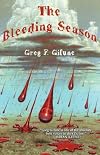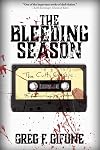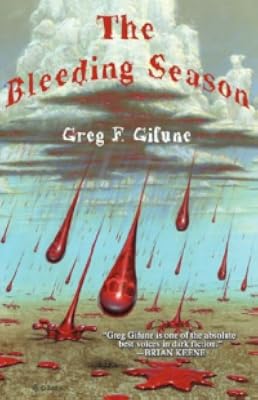
The Bleeding Season
by Greg F. Gifune
On This Page
Description
Evil is state of mind.Alan, Tommy, Rick, Donald and Bernard were inseparable best friends living in the small coastal Massachusetts town of Potter's Cove. A circle of five, their world was simple and happy until the day Tommy was struck by a car and killed. Nothing was ever the same. They were never the same. Years later, as the four survivors--all unhappy, unsuccessful and marking time--approach their fortieth birthdays, Bernard suddenly commits suicide. Within weeks of Bernard's death, one show more by one, the mutilated bodies of murder victims are found in town, and as the three remaining friends attempt to solve the riddle of Bernard's suicide, they come to realize that he may not have been who or what they thought he was. His entire life may have been a lie, and rather than the sad, lonely and harmless person they believed him to be, he very well may have been a savage ritual killer, a bleeder of young women who conjured evil to fulfill his own demented dreams. To find the truth, not only about Bernard, but themselves, they must delve into the darkness and those who inhabit it, a darkness that cradles an unspeakable evil so terrifying it could forever trap them in the shadows of the damned and shatter the very concept of their existence.Greg F. Gifune's THE BLEEDING SEASON, originally published in 2003, has been hailed as a classic in the horror genre and is considered to be one of the best horror/thriller novels of the decade. show lessTags
Recommendations

















Member Recommendations
by DChurch71
Member Reviews
Certain writers have muscle. Chandler. Hammett. Count Greg F. Gifune among them. Tough guys in old movies always carried rye in hip flasks, and they never seemed able to take a sip without killing the bottle. THE BLEEDING SEASON is like that. One slug and the reader takes this wild ride straight till the end.
The detective fiction reference is germane. THE BLEEDING SEASON may be a horror novel, but – like all of Gifune’s fiction – it remains pervasively soulful, sporting an authentically gritty quality uncommon to the genre …while also being scary as hell. Never for a moment anything other than realistic, this is the landscape of film noir, virtually subterranean. No light penetrates. There are few comforts. Sex can be cold and show more miserable. Marriage empty. Even friendship can inspire dread.
It's not for the fainthearted.
Even before the horror elements take hold, these characters lead sad lives. Buddies since high school, they’ve endured all the hard knocks life can throw at them. (A good thing really: think of it as preparation.) It doesn't take much to inspire people in a world with so little warmth. One act of kindness, a single show of loyalty. Of such frail elements are lifelong bonds forged.
And sometimes such links bind beyond the grave.
One of the friends dies in an accident that emotionally cripples them all. Or was it an accident? Years later, their lives are littered with abandoned dreams, failed relationships, ruined careers. Then one of them hangs himself in a basement. (Or does he?) In most novels, suicide would be the end of the story. The unseen presence of the dead has already isolated these friends, both from the world and from each other. And this latest blow seems like the worst thing that could happen. Then the note arrives.
The chapter where the surviving friends gather to listen to the tape-recorded suicide note proves as harrowing as anything in contemporary dark literature. This message, apparently recorded in that dank basement, addresses each of them in turn. This is no litany of sorrows and excuses. There are no accusations here. Instead, the deceased offers a cold assessment of each man’s character, a catalogue of lifelong failures. It’s a gauntlet thrown down. Lies hurt. But truths can be inconceivably terrifying. It starts them asking questions. And they discover things they'd rather not know. Was their friend really a ritual killer? Did he strike a bargain with forces beyond their comprehension? Is he back? Was he never gone? Guilt by association may be more than a merely abstract concept. And madness doesn't strike like a bolt of lightning … but creeps like fog, insidiously, inexorably. And the possibility of redemption, however remote, offers only the cruelest hope.
Intelligence is an underrated quality, often in short supply within the genre. Not so with Gifune’s work. Most thrillers make the mistake of slamming the reader with big cinematic scenes, but Gifune traffics in more adult fare. Deadly words twine through this mature novel like cigarette smoke, the erotic charge sometimes just as palpable. So often the antecedents of modern horror lie too obviously in the quaintly decorous supernatural romances of another time and place. This bleak vision remains quintessentially American, tough, merciless, and as original as sin. show less
The detective fiction reference is germane. THE BLEEDING SEASON may be a horror novel, but – like all of Gifune’s fiction – it remains pervasively soulful, sporting an authentically gritty quality uncommon to the genre …while also being scary as hell. Never for a moment anything other than realistic, this is the landscape of film noir, virtually subterranean. No light penetrates. There are few comforts. Sex can be cold and show more miserable. Marriage empty. Even friendship can inspire dread.
It's not for the fainthearted.
Even before the horror elements take hold, these characters lead sad lives. Buddies since high school, they’ve endured all the hard knocks life can throw at them. (A good thing really: think of it as preparation.) It doesn't take much to inspire people in a world with so little warmth. One act of kindness, a single show of loyalty. Of such frail elements are lifelong bonds forged.
And sometimes such links bind beyond the grave.
One of the friends dies in an accident that emotionally cripples them all. Or was it an accident? Years later, their lives are littered with abandoned dreams, failed relationships, ruined careers. Then one of them hangs himself in a basement. (Or does he?) In most novels, suicide would be the end of the story. The unseen presence of the dead has already isolated these friends, both from the world and from each other. And this latest blow seems like the worst thing that could happen. Then the note arrives.
The chapter where the surviving friends gather to listen to the tape-recorded suicide note proves as harrowing as anything in contemporary dark literature. This message, apparently recorded in that dank basement, addresses each of them in turn. This is no litany of sorrows and excuses. There are no accusations here. Instead, the deceased offers a cold assessment of each man’s character, a catalogue of lifelong failures. It’s a gauntlet thrown down. Lies hurt. But truths can be inconceivably terrifying. It starts them asking questions. And they discover things they'd rather not know. Was their friend really a ritual killer? Did he strike a bargain with forces beyond their comprehension? Is he back? Was he never gone? Guilt by association may be more than a merely abstract concept. And madness doesn't strike like a bolt of lightning … but creeps like fog, insidiously, inexorably. And the possibility of redemption, however remote, offers only the cruelest hope.
Intelligence is an underrated quality, often in short supply within the genre. Not so with Gifune’s work. Most thrillers make the mistake of slamming the reader with big cinematic scenes, but Gifune traffics in more adult fare. Deadly words twine through this mature novel like cigarette smoke, the erotic charge sometimes just as palpable. So often the antecedents of modern horror lie too obviously in the quaintly decorous supernatural romances of another time and place. This bleak vision remains quintessentially American, tough, merciless, and as original as sin. show less
An unqualified five star horror. What if you find out your best friend, one you've known since childhood, was a serial killer? His death, and life, haunts you. How would you exorcise this demon?
Gifune writes so well on top of it all.
As much a psychological horror as a supernatural one, maybe more so. We really get inside Alan Chance as his life slowly unravels after his friend commits suicide. He learns more and more about his friend's real past versus what he thought was his past. In the process we begin, like him, to wonder what is real and what is not? We ultimately have to face the evil inside us all and how we respond to it.
Not overly gorey, but there are some gut wrenching scenes. There is also some explicit sex.
Gifune writes so well on top of it all.
As much a psychological horror as a supernatural one, maybe more so. We really get inside Alan Chance as his life slowly unravels after his friend commits suicide. He learns more and more about his friend's real past versus what he thought was his past. In the process we begin, like him, to wonder what is real and what is not? We ultimately have to face the evil inside us all and how we respond to it.
Not overly gorey, but there are some gut wrenching scenes. There is also some explicit sex.
Greg F. Gifune is one of those prolific, award-winning authors that I’ve never read and, I’m ashamed to admit, I’d never heard of before giving THE BLEEDING SEASON a try. He’s been writing for more than a decade, but initially, it seems, most of his work was published by small presses in limited editions. There’s no more excuse not to know about this guy: his work has now (all?) been made widely available in new print and electronic editions by DarkFuse. Though THE BLEEDING SEASON was originally published in 2003, DarkFuse brought it back in 2010, and I’m very glad they did.
This is the story of the three survivors of a group of five boyhood friends who are now adults struggling to make sense of their experiences as they show more realize they didn’t know one of their best friends as well as they thought they did. Boyhood and the lives of boys are rich sources for novelists to explore, and horror novelists have been very successful at plumbing these depths: Stephen King has done this to great effect several times – “The Body” and It come to mind – as has Robert McCammon in Boy’s Life. I’m happy to report that Gifune has also deftly continued this tradition of examining the effects of boyhood on manhood.
Some plot spoilers follow.
Five boys – Tommy, the outgoing leader; Alan, the writer; Rick, the tough guy; Donald, the sensitive kid; and Bernard, the outcast and weirdo – growing up in working-class Potter’s Cove, a small town in coastal Massachusetts, become an unlikely set of best friends. Life never goes as anyone plans, and Tommy’s untimely death at age fifteen shakes the boys; their lives are never the same after that. After high school, the survivors pursue separate paths, but they remain close. Now in their late 30s and unhappy with their own life choices, Alan, Donald, and Rick have to come to terms with Bernard’s recent suicide and the revelations about their friend that surface after his death. Bernard, as it turns out, seems to have been far more than he appeared. He wasn’t just an awkward loser who wore a toupee and sold cars. He had a dark side to him. Possibly a very, very dark side indeed. How deep that darkness went is what they have to discover. Was Bernard really the rapist, torturer, serial killer, and Satanist that some evidence suggests? Could they really have been this wrong about a guy they thought was a close friend for all these years? That’s what Alan, Rick, and Donald have to find out as their own lives unravel and the mutilated bodies of women start appearing.
The story is told in first-person by Alan Chance, the would-be intellectual and writer. Like the rest of the boys, Alan once thought he was destined for greatness. Instead, he’s now a washed-up writer who never published any of his work, but has instead been working as a security guard for most of his adult life in the same small town he grew up in. He thought he was marrying his one true love, but now even that relationship is damaged, perhaps beyond repair. His boyhood friends aren’t in much better shape: Rick is an ex-con with a bad temper who works as a bouncer, despite the fact that he’s entering middle age; Donald, never having come to terms with his sexual identity, has a dead-end office job and an alcohol problem; and Bernard is, well, dead by his own hand at the start of the novel.
There are elements of the supernatural – or at least things that seem supernatural – in THE BLEEDING SEASON, but Gifune treats them with subtlety and grace, leaving the reader uncertain as to the reality of the situation. That’s very much as it should be. There’s nothing heavy-handed about Gifune’s approach here. I should emphasize that this is a work of dark fiction – the protagonists are deeply flawed human beings, not to mention the troubled and seedy secondary characters they encounter – that descends into the depths of human depravity. But it’s also not the kind of horror novel you read if you’re looking for an action-packed thriller. It’s a slow burn, with reveals and twists that reward readers with patience. You have to be willing to let Gifune take you on the journey as he explores these characters and their pasts at his own pace. You won’t regret the trip, you just have to be willing to let the first half of the book unfold. It’s a fun ride.
The negatives of THE BLEEDING SEASON are few: I don’t care for the title (blood doesn’t play an especially resonant role in the novel and Gifune doesn’t do enough with the season theme to warrant using it in the title) and probably just a little too much of the backstory is revealed in “data dumps” from the women Alan ends up querying during his investigation. But ultimately those are small complaints. This is a darn good book. Really, genuinely good. It’s the kind of book I haven’t encountered in a while, and it’s certainly strong enough that I plan to seek out more of Greg Gifune’s work on the strength of this one alone. Highly recommended.
Review copyright © 2013 J. Andrew Byers show less
This is the story of the three survivors of a group of five boyhood friends who are now adults struggling to make sense of their experiences as they show more realize they didn’t know one of their best friends as well as they thought they did. Boyhood and the lives of boys are rich sources for novelists to explore, and horror novelists have been very successful at plumbing these depths: Stephen King has done this to great effect several times – “The Body” and It come to mind – as has Robert McCammon in Boy’s Life. I’m happy to report that Gifune has also deftly continued this tradition of examining the effects of boyhood on manhood.
Some plot spoilers follow.
Five boys – Tommy, the outgoing leader; Alan, the writer; Rick, the tough guy; Donald, the sensitive kid; and Bernard, the outcast and weirdo – growing up in working-class Potter’s Cove, a small town in coastal Massachusetts, become an unlikely set of best friends. Life never goes as anyone plans, and Tommy’s untimely death at age fifteen shakes the boys; their lives are never the same after that. After high school, the survivors pursue separate paths, but they remain close. Now in their late 30s and unhappy with their own life choices, Alan, Donald, and Rick have to come to terms with Bernard’s recent suicide and the revelations about their friend that surface after his death. Bernard, as it turns out, seems to have been far more than he appeared. He wasn’t just an awkward loser who wore a toupee and sold cars. He had a dark side to him. Possibly a very, very dark side indeed. How deep that darkness went is what they have to discover. Was Bernard really the rapist, torturer, serial killer, and Satanist that some evidence suggests? Could they really have been this wrong about a guy they thought was a close friend for all these years? That’s what Alan, Rick, and Donald have to find out as their own lives unravel and the mutilated bodies of women start appearing.
The story is told in first-person by Alan Chance, the would-be intellectual and writer. Like the rest of the boys, Alan once thought he was destined for greatness. Instead, he’s now a washed-up writer who never published any of his work, but has instead been working as a security guard for most of his adult life in the same small town he grew up in. He thought he was marrying his one true love, but now even that relationship is damaged, perhaps beyond repair. His boyhood friends aren’t in much better shape: Rick is an ex-con with a bad temper who works as a bouncer, despite the fact that he’s entering middle age; Donald, never having come to terms with his sexual identity, has a dead-end office job and an alcohol problem; and Bernard is, well, dead by his own hand at the start of the novel.
There are elements of the supernatural – or at least things that seem supernatural – in THE BLEEDING SEASON, but Gifune treats them with subtlety and grace, leaving the reader uncertain as to the reality of the situation. That’s very much as it should be. There’s nothing heavy-handed about Gifune’s approach here. I should emphasize that this is a work of dark fiction – the protagonists are deeply flawed human beings, not to mention the troubled and seedy secondary characters they encounter – that descends into the depths of human depravity. But it’s also not the kind of horror novel you read if you’re looking for an action-packed thriller. It’s a slow burn, with reveals and twists that reward readers with patience. You have to be willing to let Gifune take you on the journey as he explores these characters and their pasts at his own pace. You won’t regret the trip, you just have to be willing to let the first half of the book unfold. It’s a fun ride.
The negatives of THE BLEEDING SEASON are few: I don’t care for the title (blood doesn’t play an especially resonant role in the novel and Gifune doesn’t do enough with the season theme to warrant using it in the title) and probably just a little too much of the backstory is revealed in “data dumps” from the women Alan ends up querying during his investigation. But ultimately those are small complaints. This is a darn good book. Really, genuinely good. It’s the kind of book I haven’t encountered in a while, and it’s certainly strong enough that I plan to seek out more of Greg Gifune’s work on the strength of this one alone. Highly recommended.
Review copyright © 2013 J. Andrew Byers show less
"After all, Goodness is a state of grace. Evil, is a state of mind".
The above is just one of the quotes from this book that I LOVED. This is my fourth Gifune novel/novella and it will not be my last.
The story is set in a small coastal town in Massachusetts. Alan and his friends are mourning the loss of their friend Bernard who committed suicide by hanging. They are shocked and confused. Then they find the suicide 'note' left by Bernard. And so begins their journey into the dark.
Mr. Gifune tells the story so well, I will leave the rest of the story and plot alone. I will say, the writing in this novel is so good, it's almost lyrical at times. I've read Heretics and The Rain Dancers,(among other things), by this author and in my opinion show more Mr. Gifune writes very well, especially when it is in reference to people who are damaged (and who isn't?).
One of my favorite quotes addresses this:
"We were all the same, it seemed to me, all of us dented and scratched and damaged, held together with pins and duct tape, the walking wounded making one last stand in the dark before giving in to the inevitable".
With a cast of well developed characters and an engaging story, this one is highly recommended! I can't wait to read more by this author because he is quickly becoming a favorite in my book. show less
The above is just one of the quotes from this book that I LOVED. This is my fourth Gifune novel/novella and it will not be my last.
The story is set in a small coastal town in Massachusetts. Alan and his friends are mourning the loss of their friend Bernard who committed suicide by hanging. They are shocked and confused. Then they find the suicide 'note' left by Bernard. And so begins their journey into the dark.
Mr. Gifune tells the story so well, I will leave the rest of the story and plot alone. I will say, the writing in this novel is so good, it's almost lyrical at times. I've read Heretics and The Rain Dancers,(among other things), by this author and in my opinion show more Mr. Gifune writes very well, especially when it is in reference to people who are damaged (and who isn't?).
One of my favorite quotes addresses this:
"We were all the same, it seemed to me, all of us dented and scratched and damaged, held together with pins and duct tape, the walking wounded making one last stand in the dark before giving in to the inevitable".
With a cast of well developed characters and an engaging story, this one is highly recommended! I can't wait to read more by this author because he is quickly becoming a favorite in my book. show less
I think I'm going to be in the minority on this one.
Beautifully written, no doubt about that. The first third of the book was gripping and intriguing, but then the story became mired in lengthy ruminations by the narrator (usually not a good thing in a first-person book) and rambling didactics by secondary characters whose eloquence inexplicably exceeded what it by all rights should have been given their descriptions.
There were several problems I had here, the main one being that the plot:lenth ratio was way off. What could have been an excellent novella is instead padded out into a full-length novel. Words, so many words - pretty words that flow and sparkle, but ultimately add little to the story. The actions of the protoganist show more throughout the story have a deus ex machina feel that I never was able to buy into as real, urgent or even likely, and this reduced the level of suspense to curiousity rather than excitement.
The other issue I had was with the complete seriousness of the proceedings. The ambition of the author to achieve "literary" or "meaningful" fiction status seems to be greater than what the product actually delivers, and the darkness and evil it intends to portray comes off to me about as menacing as a Nine Inch Nails video from the mid-nineties. A little fun never fails to hurt a work of horror in my opinion, and there is little in the way of fun here. Overly earnest writing in horror makes me snicker, sorry.
Several scenes in the book stood out as exceptionally realized in written word, but actual horrors were few and far between. Unfortunately, I found the money shots in this book to be highly reminiscent of things I've seen in many horror films over the years. Excellent chops, few truly original ideas.
I will read more by this author in the future, as I'm sure this book was in sync with the prevailing trends of horror at the time of release. Just not my cup of tea in the story and style department. show less
Beautifully written, no doubt about that. The first third of the book was gripping and intriguing, but then the story became mired in lengthy ruminations by the narrator (usually not a good thing in a first-person book) and rambling didactics by secondary characters whose eloquence inexplicably exceeded what it by all rights should have been given their descriptions.
There were several problems I had here, the main one being that the plot:lenth ratio was way off. What could have been an excellent novella is instead padded out into a full-length novel. Words, so many words - pretty words that flow and sparkle, but ultimately add little to the story. The actions of the protoganist show more throughout the story have a deus ex machina feel that I never was able to buy into as real, urgent or even likely, and this reduced the level of suspense to curiousity rather than excitement.
The other issue I had was with the complete seriousness of the proceedings. The ambition of the author to achieve "literary" or "meaningful" fiction status seems to be greater than what the product actually delivers, and the darkness and evil it intends to portray comes off to me about as menacing as a Nine Inch Nails video from the mid-nineties. A little fun never fails to hurt a work of horror in my opinion, and there is little in the way of fun here. Overly earnest writing in horror makes me snicker, sorry.
Several scenes in the book stood out as exceptionally realized in written word, but actual horrors were few and far between. Unfortunately, I found the money shots in this book to be highly reminiscent of things I've seen in many horror films over the years. Excellent chops, few truly original ideas.
I will read more by this author in the future, as I'm sure this book was in sync with the prevailing trends of horror at the time of release. Just not my cup of tea in the story and style department. show less
Greg Gifune is one of those writers you have to hunt for. His books are published by one of the more elite presses and each release is printed in limited editions. But at the end of the hunt, if you're lucky enough to hold one in your hands, it was worth every effort. His writing style is of the sort which grabs a place in your mind and doesn't let go, taking you up and down the bumpy rocky road of fear and apprehension. His characters are skillfully penned and bring credibility to each page. This is definitely an author worth seeking if you're a fan of horror. If your budget won't allow you the luxury of purchasing one of his novels, check your library or interlibary loan programs, several of his books seem to be circulating there.
One fantastic read. I couldn't put this book down. Just when you think you got it figured out, the plot twists completely leading you down a darker path. This book definitely makes you take a good, long look at evil that exists in this world and in us.
Members
- Recently Added By
Lists

Best Horror Books
281 works; 85 members
Author Information

55+ Works 959 Members
Some Editions
Common Knowledge
- Canonical title
- The Bleeding Season
Classifications
Statistics
- Members
- 147
- Popularity
- 222,828
- Reviews
- 10
- Rating
- (4.18)
- Languages
- English, German
- Media
- Paper, Audiobook, Ebook
- ISBNs
- 6
- ASINs
- 4