On This Page
Description
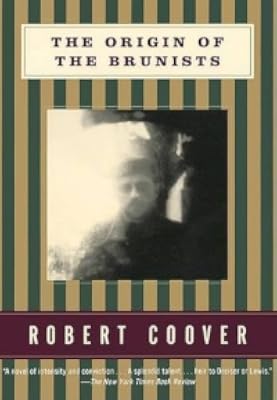
Winner of the William Faulkner Award for best first novel— The Origin of the Brunists tells the tale of the rise of a religious cult in a small coal-mining town.Tags
Recommendations

















Member Recommendations
Member Reviews
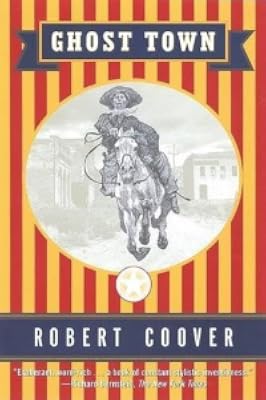
The first book I had read by Coover was Ghost Town, and I thought it was brilliantly funny and surreal. This is different. Although Coover’s humor and sense of farce is certainly right there at the core, it has a much heavier, denser feel to it.
It’s the story of a mining town, with what seem like stereotypical middle American types — the miners, their wives, local heroes, local eccentrics, . . . But Coover goes deep with many of them, and when you go deep, the stereotypes fade. Everyone becomes unique and interesting in their own way.
He throws in some catalysts. A local hero moves back to town to run his own local newspaper. The central action of the story is a deadly mining explosion that kills many of the town’s longtime show more stalwart characters and disrupts the town’s core engine. The economic, social, and even religious life of the community is thrown into uncertainty. All of this seeds the Brunist cult that grows around one of the survivors of the mine explosion.
A clearly damaged, odd-to-begin-with character, Giovanni Bruno, becomes the focal point of the town’s way of dealing with its disrupted life. Doing little more than being enigmatic, Bruno becomes a Christ-like figure, with a growing following hanging on his few words. Bruno is an influence the body of the town has to incorporate or reject somehow.
The returning local hero, Miller, throws gasoline on the fire by infiltrating the cult, exposing its internals to a side of the town only too ready to take up pitchforks and torches against it. It just looks like a disaster from the get-go — a dinner of oatmeal, steak, and tapioca. And, just for kicks, Miller is as motivated by his twin longings for Bruno’s unfortunate sister Marcella and for Happy Bottom, a nurse with way more going on than meets the eye (saying more might spoil the story), as he is by the story of the cult itself.
The story is based on a real mining disaster in West Frankfort, Illinois in 1951. Coover apparently was aware of the explosion at the time that it happened, and he was aware of some characteristic events, including the notable survival of one miner.
If you’re looking for light and airy, keep looking. If you’re looking for a fairly dark, sometimes farcical, and, if you are willing to put in the effort, revealing look at middle America, go for it. The story is full, maybe even over-full, of interesting and detailed characters, all in a fascinating, conflicting stew. show less
It’s the story of a mining town, with what seem like stereotypical middle American types — the miners, their wives, local heroes, local eccentrics, . . . But Coover goes deep with many of them, and when you go deep, the stereotypes fade. Everyone becomes unique and interesting in their own way.
He throws in some catalysts. A local hero moves back to town to run his own local newspaper. The central action of the story is a deadly mining explosion that kills many of the town’s longtime show more stalwart characters and disrupts the town’s core engine. The economic, social, and even religious life of the community is thrown into uncertainty. All of this seeds the Brunist cult that grows around one of the survivors of the mine explosion.
A clearly damaged, odd-to-begin-with character, Giovanni Bruno, becomes the focal point of the town’s way of dealing with its disrupted life. Doing little more than being enigmatic, Bruno becomes a Christ-like figure, with a growing following hanging on his few words. Bruno is an influence the body of the town has to incorporate or reject somehow.
The returning local hero, Miller, throws gasoline on the fire by infiltrating the cult, exposing its internals to a side of the town only too ready to take up pitchforks and torches against it. It just looks like a disaster from the get-go — a dinner of oatmeal, steak, and tapioca. And, just for kicks, Miller is as motivated by his twin longings for Bruno’s unfortunate sister Marcella and for Happy Bottom, a nurse with way more going on than meets the eye (saying more might spoil the story), as he is by the story of the cult itself.
The story is based on a real mining disaster in West Frankfort, Illinois in 1951. Coover apparently was aware of the explosion at the time that it happened, and he was aware of some characteristic events, including the notable survival of one miner.
If you’re looking for light and airy, keep looking. If you’re looking for a fairly dark, sometimes farcical, and, if you are willing to put in the effort, revealing look at middle America, go for it. The story is full, maybe even over-full, of interesting and detailed characters, all in a fascinating, conflicting stew. show less
This novel of American small town life and chiliastic enthusiasm is pretty gripping. The many characters are all vividly drawn with profound humanity, and the plot contains major surprises. Coover sophisticatedly mixes tragedy and comedy, and the narrative voice is elastic, accommodating evangelicals, intellectuals, politicians, profiteers, mystics, and bigots by turns. The Brunists are a new religious movement arising on the heels of a mining disaster, centered on an anomalous survivor. They produce a spiritual identity in the context of conflicts of class, ethnicity, and religion, under the stresses of economic and civic crisis.
I recently picked this book up from a paperback sale rack at the public library, and bumped it up in show more reading priority after hearing the news of the recent Upper Big Branch explosion, an event that turns out to be startlingly similar to the one described in Coover's 1966 novel. Such apparent synchronicity is a staple of the story, as the foremost way that the Brunist believers are gradually affirmed in their end-times worldview.
The most central character (and perhaps protagonist) is newspaper publisher Justin "Tiger" Miller, who doesn't believe in the Brunist revelations, but balances on the line between fascinated admiration for the sincerity of their religious experience, and cyncial exploitation of the public's incomprehension of it. Coover doesn't mock the Brunists, and he leaves the objective truth of their claims unresolved, but ultimately it seems that Miller's perspective reflects Coover's own take on the rewards and perils of religious fervor. show less
I recently picked this book up from a paperback sale rack at the public library, and bumped it up in show more reading priority after hearing the news of the recent Upper Big Branch explosion, an event that turns out to be startlingly similar to the one described in Coover's 1966 novel. Such apparent synchronicity is a staple of the story, as the foremost way that the Brunist believers are gradually affirmed in their end-times worldview.
The most central character (and perhaps protagonist) is newspaper publisher Justin "Tiger" Miller, who doesn't believe in the Brunist revelations, but balances on the line between fascinated admiration for the sincerity of their religious experience, and cyncial exploitation of the public's incomprehension of it. Coover doesn't mock the Brunists, and he leaves the objective truth of their claims unresolved, but ultimately it seems that Miller's perspective reflects Coover's own take on the rewards and perils of religious fervor. show less
Miller perceived existence as a loose concatenation of separate and ultimately inconsequential instants, each colored by the actions that preceded it, but each possessed of a small wanton freedom of its own. Life, then, was a series of adjustments to these actions and, if one kept his sense of humor and produced as many of these actions himself as possible, adjustment was easier.
Coover's work deserves more than ten stars, the awe of all the hardscrabble GR Fallen, and will undoubtely serve as an inestimable strategic advantage over those wiry Barth types and their yachting. How Yar!
Coalmine tragedy breeds New Faith in LBJ Pennsylvania: hijinks readily ensue. The range of characters employed is astonishing as are their hopeful paths to show more redemption. Most of the travellers are misshaped and insect-ridden and yet they hope. There's something human in all that. Coover allows them lusts and gimmicks without a surfeit of information dumps. There is a heady type who can connect the dots but is helpless to extricate himself from his libidinal Road to Damascus. Everything unfolds with a curious precision. Now, I await the arrival of the sequel. show less
Coover's work deserves more than ten stars, the awe of all the hardscrabble GR Fallen, and will undoubtely serve as an inestimable strategic advantage over those wiry Barth types and their yachting. How Yar!
Coalmine tragedy breeds New Faith in LBJ Pennsylvania: hijinks readily ensue. The range of characters employed is astonishing as are their hopeful paths to show more redemption. Most of the travellers are misshaped and insect-ridden and yet they hope. There's something human in all that. Coover allows them lusts and gimmicks without a surfeit of information dumps. There is a heady type who can connect the dots but is helpless to extricate himself from his libidinal Road to Damascus. Everything unfolds with a curious precision. Now, I await the arrival of the sequel. show less
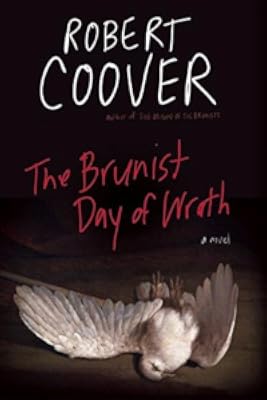
I loved this book. I'm going to read the sequel, The Brunists' Day of Wrath, when it comes out in 2014 from Dzanc books -- I don't want to wait until March, so close on the heels of finishing the original novel, but well, I suppose I don't have much of a choice in the matter. As the book blurb on the back cover notes, The Origin of the Brunists won the William Faulkner Foundation Award for Best First Novel, but imho, it certainly doesn't read like a first novel.
At its heart, the book is an account of the rise of a religious cult and the resulting religious fervor coming on the heels of a terrible mine disaster, but really, that statement is way too simplistic. It begins with a prologue as the people in the cult, known as the Brunists, show more have gathered the day before the second coming on a hill they've named the Mount of Redemption. A terrible event occurs, one that goes on to find its way into the very legends, myths and art of the religion. This part is related by a new convert, who seems slightly confused. The rest of the novel reveals what happened leading up to that event and beyond, beginning with the disaster at the mine, an event which will ultimately leave an entire town and several lives in chaos.
I'm skipping most of the plot elements here, but you can read them in my blog discussion here.
With lots of humor interspersed throughout the book, this is one of the craziest novels I've ever read. Aside from the new religion, which imho isn't the real focus of this book but rather the centerpiece around which the characters react, the author really gets into small-town life and minds, the workings of power and politics, and how seemingly "normal" people can get caught up in their own various forms of madness and mania. I'd say it's a novel about the people of West Condon much more than anything else. The author is a genius when it comes to the characters -- and it's really incredibly tough to believe that this was Mr. Coover's first novel. It does take some time and attention to get through, not because it's difficult to read, but because the author so carefully and slowly develops the frenzy that occurs not just among the Brunists, but the craziness occurring throughout the entire town. It also shows that no matter what sort of community these people find themselves in, even in "A community of good will," everything eventually comes down to matters of self interest -- a very non-idealistic view that makes this book well worth reading. Definitely recommended. show less
At its heart, the book is an account of the rise of a religious cult and the resulting religious fervor coming on the heels of a terrible mine disaster, but really, that statement is way too simplistic. It begins with a prologue as the people in the cult, known as the Brunists, show more have gathered the day before the second coming on a hill they've named the Mount of Redemption. A terrible event occurs, one that goes on to find its way into the very legends, myths and art of the religion. This part is related by a new convert, who seems slightly confused. The rest of the novel reveals what happened leading up to that event and beyond, beginning with the disaster at the mine, an event which will ultimately leave an entire town and several lives in chaos.
I'm skipping most of the plot elements here, but you can read them in my blog discussion here.
With lots of humor interspersed throughout the book, this is one of the craziest novels I've ever read. Aside from the new religion, which imho isn't the real focus of this book but rather the centerpiece around which the characters react, the author really gets into small-town life and minds, the workings of power and politics, and how seemingly "normal" people can get caught up in their own various forms of madness and mania. I'd say it's a novel about the people of West Condon much more than anything else. The author is a genius when it comes to the characters -- and it's really incredibly tough to believe that this was Mr. Coover's first novel. It does take some time and attention to get through, not because it's difficult to read, but because the author so carefully and slowly develops the frenzy that occurs not just among the Brunists, but the craziness occurring throughout the entire town. It also shows that no matter what sort of community these people find themselves in, even in "A community of good will," everything eventually comes down to matters of self interest -- a very non-idealistic view that makes this book well worth reading. Definitely recommended. show less
Robert Coover today "teaches electronic and experimental writing at Brown University". My general impression of Brown University's English Department comes from an alumnus friend of mine, who majored in English, but holds a grudge the size of Coover's forthcoming 'Wrath of the Brunists' against his school. He sums it up with a story about the end of one particularly painful, particularly Brownist English course: the professor (not sure who) asked if anyone had any questions; a well-respected woman stood and asked, quote "Why do you hate literature?"
So I was a little wary of this one, though the rapturous blurbs and plot summary should have tipped me off that this is not electronic or experimental. The prologue is a sludgy pastiche of show more American biblical prose, the first chapter told from an awfully dull omniscient narrator, but from then on it's very, very well done realism, with long sections told from very stable, characteristic, individual points of view.
Coover tries to give everyone equal treatment, but there is a central character, who is more or less a good late liberal dick swinging '60s kind of guy--despises religion, despises ignorance, but calls his predestined lover 'Happy Bottom', and never by her actual name (Happy Bottom, by the way, is a fantastic character, and I hope 'Wrath' is mainly her making fun of everyone). I was glad he got the shit kicked out of him. Anyway, these two find their salvation, "not the void within and ahead, but the immediate living space between two."
There are plenty of historical nudges, as character fulfill the functions of, e.g., John the Baptist, or Paul, or Christ, or Judas. But there's no sustained allegory (probably for the better). There's much well deserved criticism of pretty much everything you might describe as 'The American National Character' (revivalist religion; ultra-rationalism; anti-rationalism; nationalism; commercialization of life; liberal self-righteousness), and not a whole lot of positive ideals set up in their place.
It's too long, but otherwise this is just a really well done satire of ideas, that doesn't really provoke much thought after you put it down. Here's hoping the sequel is a bit like this, and not like Coover's later, 'subversive' re-writings of porn films. show less
So I was a little wary of this one, though the rapturous blurbs and plot summary should have tipped me off that this is not electronic or experimental. The prologue is a sludgy pastiche of show more American biblical prose, the first chapter told from an awfully dull omniscient narrator, but from then on it's very, very well done realism, with long sections told from very stable, characteristic, individual points of view.
Coover tries to give everyone equal treatment, but there is a central character, who is more or less a good late liberal dick swinging '60s kind of guy--despises religion, despises ignorance, but calls his predestined lover 'Happy Bottom', and never by her actual name (Happy Bottom, by the way, is a fantastic character, and I hope 'Wrath' is mainly her making fun of everyone). I was glad he got the shit kicked out of him. Anyway, these two find their salvation, "not the void within and ahead, but the immediate living space between two."
There are plenty of historical nudges, as character fulfill the functions of, e.g., John the Baptist, or Paul, or Christ, or Judas. But there's no sustained allegory (probably for the better). There's much well deserved criticism of pretty much everything you might describe as 'The American National Character' (revivalist religion; ultra-rationalism; anti-rationalism; nationalism; commercialization of life; liberal self-righteousness), and not a whole lot of positive ideals set up in their place.
It's too long, but otherwise this is just a really well done satire of ideas, that doesn't really provoke much thought after you put it down. Here's hoping the sequel is a bit like this, and not like Coover's later, 'subversive' re-writings of porn films. show less
Just under halfway through, but I am enjoying this book quite a lot ... this (potentially) in spite of the fact that it's not a "cozy" read. Anyone who (like me) is troubled by the way religion has been debased in the US will not be reassured by any of the goings-on in this book. Let me hasten to add, though: there is nothing at all "over the top" about the way any of the actions or motivations or events are depicted by Coover here, even though many of the character's actions, motivations, and thought-processes are themselves more-than-occasionally over-the-top themselves. Characters are not caricatures here, and I marvel at how well Coover paints differences in the characters themselves. What a fascinating cast of characters! A lot of show more them, to be sure, but worth getting to know, and worth the work of keeping who's-who in mind. (Ah, the advantages of the ebook ... I just tap on a character's name, do a search, and I can find all of the mentionings of that character in the book.)
[Update] And now, having finished, I find myself somewhat disappointed; the book did not finish as impressively as it began. Writing this, I am still in the process of digesting what has gone down and how it was told ... but provisionally I would at present give Origin of the Brunists just a shade under four stars ... 3.9 if we had a less blunt instrument than whole numbers of stars to use for evaluating books.
For what it's worth, I do intend to read the 1000( )-page sequel, . show less
[Update] And now, having finished, I find myself somewhat disappointed; the book did not finish as impressively as it began. Writing this, I am still in the process of digesting what has gone down and how it was told ... but provisionally I would at present give Origin of the Brunists just a shade under four stars ... 3.9 if we had a less blunt instrument than whole numbers of stars to use for evaluating books.
For what it's worth, I do intend to read the 1000( )-page sequel, . show less
Ratings
Members
- Recently Added By
Lists

Best First Lines
133 works; 8 members
Author Information

72+ Works 5,780 Members
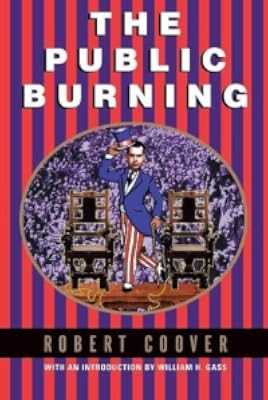
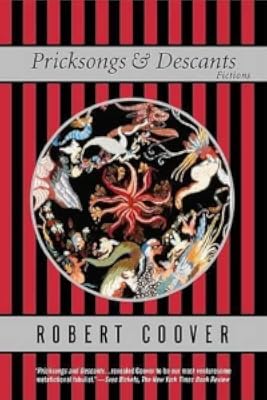
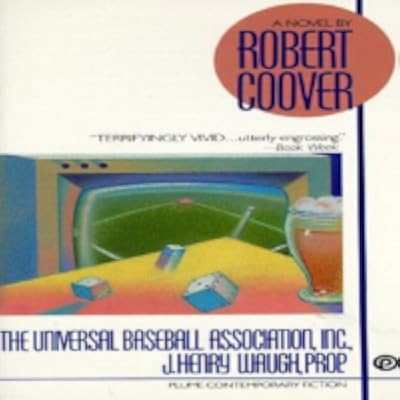
Robert Coover is a midwesterner who has earned a reputation as one of the most innovative of contemporary writers of fiction. Coover likes to experiment with an abundance of differing styles. The Origin of the Brunists (1966), his first novel, is a religious parable heavily loaded with symbolism and mythical parallels. It deals with the rise show more following an Appalachian coal-mine disaster of a sect of worshipers made up of fundamentalists and theosophists whose leader, Giovanni Bruno, is less a preacher than a silent enigma. The principal analogue is apparently meant to be the founding of the Christian religion, but Coover's extensive irony requires that he reverse many of the traditional features of the Christian legend. The Universal Baseball Association (1968), Coover's most accessible novel to date, is also dominated by religious symbolism. Over the years, J. Henry Waugh, a middle-aged bachelor and accountant, has developed an elaborately structured game, which he plays with dice. His game is based on the mathematical probabilities of baseball. Every evening Henry plays his game and maintains his extensive record books. J. Henry Waugh is a surrogate for God, and the participants in his imaginary baseball league seem almost to come to life, raising as they do age-old questions about fate and free will, success and failure, games and religions. Coover's Pricksongs and Descants (1969) is a collection of 20 short pieces and a theoretical "Prologo" in which the author states his belief that contemporary fiction should be based on familiar historical or mythical forms. Most of the stories in this volume, which was well received by critics, are based on biblical episodes or classical fairy tales retold in startling new ways. The Public Burning (1977) is based on the controversial trial of the Rosenbergs. With the exception of a novel, A Night at the Movies (1992), Coover's publications in recent years have consisted mainly of shorter works, written at various stages of his career, published in limited editions to appeal to collectors. Coover is one of the founders of the Electronic Literature Organization. In 1987 he was chosen as the winner of the Rea Award for the Short Story. Coover is indeed one of the foremost short story writers of the postmodern period, as exemplified by the "Seven Exemplary Fictions" contained in his 1969 book Pricksongs and Descants. (Bowker Author Biography) show less
Awards and Honors
Series

Common Knowledge
- Canonical title
- The Origin of the Brunists
- Original publication date
- 1966
- People/Characters
- Justin "Tiger" Miller; Vince Bonali; Giovanni Bruno; Marcella Bruno; Abner Baxter; Clara Collins (show all 10); Nurse "Happy Bottom"; Ted Cavanaugh; Wanda Cravens; Eleanor Norton
- Dedication
- Respectfully for Richard P. McKeon
And see that you make them
after the pattern for them
which has been shown you on the mountain . . . - First words
- Hiram Clegg, together with his wife Emma and four friends of the faith from Randolph Junction, were summoned by the Spirit and Mrs. Clara Collins, widow of the beloved Nazarene preacher Ely Collins, to West Condon on the week... (show all)end of the eighteenth and nineteenth of April, there to await the End of the World.
- Blurbers
- Yurick, Sol
Classifications
Statistics
- Members
- 338
- Popularity
- 94,214
- Reviews
- 6
- Rating
- (3.80)
- Languages
- English, German, Spanish
- Media
- Paper, Ebook
- ISBNs
- 10
- ASINs
- 5