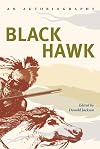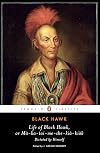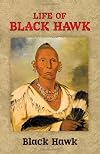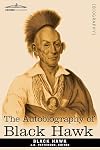
Black Hawk: An Autobiography
by Black Hawk
On This Page
Description
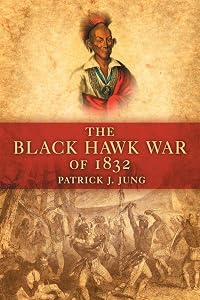
A controversial figure in his day, Black Hawk was the leader of the Sauk American Indian tribe in the early 1800s. The son of the tribe's medicine man, Black Hawk's exploits as a warrior aided his rise to the status of tribal war leader. Here, Black Hawk chronicles his life as well as the story of his tribe, who were forced from their lands in Illinois during a series of skirmishes with American settlers in what came to be known as the Black Hawk War..
Tags
Recommendations










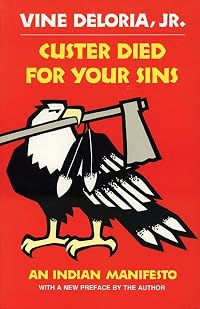
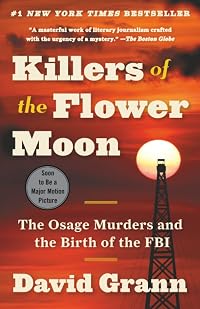







Member Recommendations
Member Reviews
Reading this served as a sort of coda to a history I read of the War of 1812. The resolution of that war began with the British proposing a Native American buffer state between themselves and the burgeoning United States that would have changed the face of the North American map forever. Black Hawk's dictated memoir is a sad portrait of what happened instead. Couched in politeness he outlines the travesties and injustices perpetrated against his people as they were sacrificed to Manifest Destiny.
This memoir was the first widespread perspective shared among whites from the native side and came directly on the heels of Black Hawk's famed tour of many US cities, but appears to have had little influence or at least none that extended to show more the political sphere. The destruction of the 500 Nations continued to be viewed as something inevitable, like a fad passing out of style rather than outright theft, racism and massacre. This memoir is not entirely faultless, ending on a sour note as Black Hawk outlines his opinion of what can be done to control the black slave population. Apparently he didn't see the parallels between another oppressed people and his own. show less
This memoir was the first widespread perspective shared among whites from the native side and came directly on the heels of Black Hawk's famed tour of many US cities, but appears to have had little influence or at least none that extended to show more the political sphere. The destruction of the 500 Nations continued to be viewed as something inevitable, like a fad passing out of style rather than outright theft, racism and massacre. This memoir is not entirely faultless, ending on a sour note as Black Hawk outlines his opinion of what can be done to control the black slave population. Apparently he didn't see the parallels between another oppressed people and his own. show less
On the one hand, a fantastic document; Black Hawk's autobiography (in reality, more an extended interview) from the stories of his grandfather who met the first French colonists in Canada, to his decision to make a stand against the United States after having one too many deals disregarded and his people gunned down under parliamentary flag, to his defeat. As a first-hand account, it's invaluable, and paints a much-needed counternarrative to the traditional view - which, yeah, has become much more commonplace over the last 50 years or so, but this was written and published THEN, making it even clearer that the contemporary view of Native Americans as "savages" was little more than wishful thinking; all the evidence to the contrary was show more easily available if they wanted it. Black Hawk's analysis of the colonial attitude is, occasionally, still frighteningly applicable.
Bad and cruel as our people were treated by the whites, not one of them was hurt or molested by our band. (...) The whites [who were settling on his land] were complaining at the same time that we were intruding upon their rights. They made it appear that they were the injured party, and we the intruders. They called loudly to the great war chief to protect their property.
How smooth must be the language of the whites, when they can make right look like wrong, and wrong like right.
On the other hand, Black Hawk lost more than just land, people, and a war. While his translator and biographer no doubt were sympathetic to him and did their job as fairly as was possible, there's still the feeling that not only do they still play up stereotypes (positive ones rather than negative, but still) and as one commenter has said, use the noble defeated warrior to make white people feel good about themselves. But above all they rob him of his language. After he's filtered through two well-meaning 19th century gentlemen writing for their audience, he comes out speaking like a Dickens character. Couple this with the decision to present his story as one long monologue, unedited and without contextualisation, and this rare authentic story looks curiously inauthentic and inaccessible to a modern reader. I find myself wanting to go back in time and hand the translator a tape recorder, so it'll be possible for someone in a future where people actually want to read Black Hawk's own words to retranslate the book.
The Gutenberg edition helps this somewhat by not only containing Black Hawk's own story but also a number of appendices about the Black Hawk War. It also adds some unfortunate proofreading errors, though, such as the US ordering Black Hawk to "buy the hatchet", which, um... show less
Bad and cruel as our people were treated by the whites, not one of them was hurt or molested by our band. (...) The whites [who were settling on his land] were complaining at the same time that we were intruding upon their rights. They made it appear that they were the injured party, and we the intruders. They called loudly to the great war chief to protect their property.
How smooth must be the language of the whites, when they can make right look like wrong, and wrong like right.
On the other hand, Black Hawk lost more than just land, people, and a war. While his translator and biographer no doubt were sympathetic to him and did their job as fairly as was possible, there's still the feeling that not only do they still play up stereotypes (positive ones rather than negative, but still) and as one commenter has said, use the noble defeated warrior to make white people feel good about themselves. But above all they rob him of his language. After he's filtered through two well-meaning 19th century gentlemen writing for their audience, he comes out speaking like a Dickens character. Couple this with the decision to present his story as one long monologue, unedited and without contextualisation, and this rare authentic story looks curiously inauthentic and inaccessible to a modern reader. I find myself wanting to go back in time and hand the translator a tape recorder, so it'll be possible for someone in a future where people actually want to read Black Hawk's own words to retranslate the book.
The Gutenberg edition helps this somewhat by not only containing Black Hawk's own story but also a number of appendices about the Black Hawk War. It also adds some unfortunate proofreading errors, though, such as the US ordering Black Hawk to "buy the hatchet", which, um... show less
“I explained to them the manner the British and Americans fought. Instead of stealing upon each other, and taking every advantage to kill the enemy and save their own people, as we do, (which, with us, is considered good policy in a war chief,) they marched out, in open daylight, and fight, regardless of the number of warriors they may lose! After the battle is over, they retire to feast, and drink wine, as if nothing had happened; after which, they make a statement in writing, of what they have done – each party claiming the victory! and neither giving an account of half the number that have been killed on their own side. They all fought like braves, but would not do to lead a war party with us. Our maxim is, “to kill the enemy show more and save our own men.” Those chiefs would do to paddle a canoe, but not to steer it.” (page 20)
Firsthand account from Black Hawk. Originally published in 1834.
Shines a light on many weaknesses of that time that still exist today:
Inability to see how actions affect others.
Projecting problems unto others in an unbalanced way.
Making oneself out to be the victim.
Unworthy entitlement to land ownership. show less
Firsthand account from Black Hawk. Originally published in 1834.
Shines a light on many weaknesses of that time that still exist today:
Inability to see how actions affect others.
Projecting problems unto others in an unbalanced way.
Making oneself out to be the victim.
Unworthy entitlement to land ownership. show less
More than anything I've ever read about Native American history, Black Hawk's autobiography gave me a sense of how strange and violent a period the late 18th/early 19th century was in the upper Midwest. What hit me here as revelatory was the utter crowded-ness of this supposed wilderness, where there was an ever-changing confusion of alliances and feuds, and where friends could become enemies overnight, and where English and American and French and Sauk and Cherokee and Osage and Chippewa all met with unexpected frequency, in places far from any familiar sense of community, and where they might be faced at any moment with the choice to either kill one another, or pass on, or something in between.
A fascinating, harrowing window into show more this confused and tragic part of history. show less
A fascinating, harrowing window into show more this confused and tragic part of history. show less
Black Hawk dictated his autobiography through amanuenses Antoine LeClair which was originally published in 1833. He was a Sauk leader and in his own words describes the conflict in 1832 as Americans came into the land east of the Mississippi and took the land away from his people. Black Hawk gives a good description of the Native American Culture as well as the trouble with trying to do business with the US government. Of course the citizens weren't admirable in their behavior either which was probably fear driven. It was interesting to learn about this area of Illinois and Wisconsin.
This short book—the full title of which is Autobiography of Ma-Ka-Tai-Me-She-Kia-Kiak, or Black Hawk, Embracing the Traditions of his Nation, Various Wars In Which He Has Been Engaged, and His Account of the Cause and General History of the Black Hawk War of 1832, His Surrender, and Travels Through the United States. Also Life, Death and Burial of the Old Chief, Together with a History of the Black Hawk War—was the first autobiography of an American Indian leader published in the United States and therefore something of a phenomenon when it appeared in 1833.
Black Hawk was born in 1767 on the Rock River in Illinois, as a member of the Sauk (Sac) tribe, which at that time populated lands east of the Mississippi River, in Illinois and show more Wisconsin. His reminiscences were edited by a local newspaper reporter, J. B. Patterson, and recount Black Hawk’s experiences with the French, the British, the American settlers, and other tribes.
What turned him against the Americans was an 1804 treaty, which an unauthorized group of Sauks signed, that unilaterally gave away their lands, providing American settlers the legal right (as if such niceties mattered) to appropriate them, and forcing the Indians to resettle to the west.
I found by that treaty, that all of the country east of the Mississippi, and south of Jeffreon [the Salt River in northern Missouri, a tributary of the Mississippi] was ceded to the United States for one thousand dollars a year. I will leave it to the people of the United States to say whether our nation was properly represented in this treaty? Or whether we received a fair compensation for the extent of country ceded by these four individuals?
Because of this opposition, Black Hawk fought with the British during the War of 1812. Twenty years later, when he was 65 years old and after a trail of broken promises, he led a band of Sauk warriors against settlers in Illinois and Wisconsin in the 1832 Black Hawk War.
Eventually, he was captured and gave up the warrior life. He traveled extensively in the United States on a government-sponsored tour, marveling at the size of the major cities, the railroads, the roads. In his attempts to negotiate with military leaders, provincial governors, and even the Great Father in Washington, he interacted personally with many of the leading politicians and military men of the day. President Andrew Jackson (a major character in Steve Inskeep’s recent book about another betrayal of the Indians) desired that Black Hawk and other chiefs see these sights, in order to convince them of the might of the United States.
Black Hawk provides his point of view quite clearly and compellingly. To no avail, of course. According to the University of Illinois Press, “Perhaps no Indian ever saw so much of American expansion or fought harder to prevent that expansion from driving his people to exile and death.” His prowess as a warrior chief is now honored by the U.S. military, which has named several ships after him, as well as the Black Hawk helicopter. show less
Black Hawk was born in 1767 on the Rock River in Illinois, as a member of the Sauk (Sac) tribe, which at that time populated lands east of the Mississippi River, in Illinois and show more Wisconsin. His reminiscences were edited by a local newspaper reporter, J. B. Patterson, and recount Black Hawk’s experiences with the French, the British, the American settlers, and other tribes.
What turned him against the Americans was an 1804 treaty, which an unauthorized group of Sauks signed, that unilaterally gave away their lands, providing American settlers the legal right (as if such niceties mattered) to appropriate them, and forcing the Indians to resettle to the west.
I found by that treaty, that all of the country east of the Mississippi, and south of Jeffreon [the Salt River in northern Missouri, a tributary of the Mississippi] was ceded to the United States for one thousand dollars a year. I will leave it to the people of the United States to say whether our nation was properly represented in this treaty? Or whether we received a fair compensation for the extent of country ceded by these four individuals?
Because of this opposition, Black Hawk fought with the British during the War of 1812. Twenty years later, when he was 65 years old and after a trail of broken promises, he led a band of Sauk warriors against settlers in Illinois and Wisconsin in the 1832 Black Hawk War.
Eventually, he was captured and gave up the warrior life. He traveled extensively in the United States on a government-sponsored tour, marveling at the size of the major cities, the railroads, the roads. In his attempts to negotiate with military leaders, provincial governors, and even the Great Father in Washington, he interacted personally with many of the leading politicians and military men of the day. President Andrew Jackson (a major character in Steve Inskeep’s recent book about another betrayal of the Indians) desired that Black Hawk and other chiefs see these sights, in order to convince them of the might of the United States.
Black Hawk provides his point of view quite clearly and compellingly. To no avail, of course. According to the University of Illinois Press, “Perhaps no Indian ever saw so much of American expansion or fought harder to prevent that expansion from driving his people to exile and death.” His prowess as a warrior chief is now honored by the U.S. military, which has named several ships after him, as well as the Black Hawk helicopter. show less
This was interesting to read, especially given that I spent four years on Meskwaki lands, but I definitely need some guidance through it in terms of how to read it (it was accompanied, for this course, with a reading by Mark Rifkin entitled "Documenting Tradition: Territoriality and Textuality in Black Hawk's Narrative," that I found to be a useful guide,) and found it to be fairly confusing at times. I do still think it's a really important read for anyone who lives on those lands, as Black Hawk's experience is so often glossed over or barely talked about. If you're a fan of Chicago hockey, I'd say you doubly need to read this.
Members
- Recently Added By
Author Information

2+ Works 402 Members
Michaela A. Lofaro is professor emeritus of American studies and literature at the University of Tennessee, Knoxville. He is the author or editor of seventeen books. He is also the general editor of the first five volumes of The Works of James Agee and general editor emeritus for the remaining six. Among his recent frontier publications are an show more edition of The Life and Adventures [or Sketches and Eccentricities] of Colonel David Crockett, of West Tennessee (2020) and Boone, Black Hawk, and Crockett in 1833: Unsettling the Mythic West (2019). show less
Some Editions
Series
Belongs to Publisher Series
Work Relationships
Is contained in
Black Hawk's War, 1832: The Campaign against the Sauk & Fox Indians-Autobiography of Ma-Ka-Tai-Me-She-Kia-Kiak, or Black Hawk dictated by Himself & ... the Black Hawk War by Frank Everett Stevens by Blackhawk
Common Knowledge
- Canonical title
- Black Hawk: An Autobiography
- Original publication date
- 1834
- People/Characters
- Black Hawk
- Important places
- Illinois, USA; Wisconsin, USA
- Important events
- Black Hawk War (1832)
Classifications
Statistics
- Members
- 402
- Popularity
- 76,858
- Reviews
- 12
- Rating
- (3.58)
- Languages
- English
- Media
- Paper, Audiobook, Ebook
- ISBNs
- 41
- UPCs
- 1
- ASINs
- 16