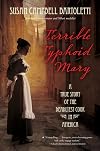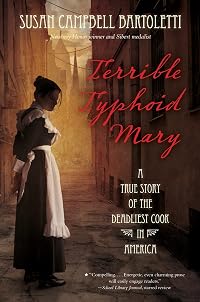
Terrible Typhoid Mary: A True Story of the Deadliest Cook in America
by Susan Campbell Bartoletti
On This Page
Description
"What happens when a person's reputation has been forever damaged? With archival photographs and text among other primary sources, this riveting biography of Mary Mallon by the Sibert medalist and Newbery Honor winner Susan Bartoletti looks beyond the tabloid scandal of Mary's controversial life. How she was treated by medical and legal officials reveals a lesser-known story of human and constitutional rights, entangled with the science of pathology and enduring questions about who Mary show more Mallon really was. How did her name become synonymous with deadly disease? And who is really responsible for the lasting legacy of Typhoid Mary? This thorough exploration includes an author's note, timeline, annotated source notes, and bibliography" -- show lessTags
Recommendations








Member Reviews
Terrible Typhoid Mary is an informative, fascinating and well-written account of Mary Mallon, a cook in who was believed to be the carrier of Typhoid in the 1900's in New York. I was riveted by this compassionate and emphatic telling of Mary Mallon's story; of her life as an immigrant, the impact of class and gender, her quarantine by the state of New York against her will and what this meant about civil rights and the judiciary system, how health and disease were perceived at that time and more. The book is fast paced and Susan Campbell Bartoletti lays out a complex story is accessible and perfectly pitched for middle grade children. Although my sympathy lie with Mary and I felt outraged for the pain and humiliation she suffered, Ms show more Campbell Bartoletti's story-telling is so fine that I came to understand and appreciate the multiple perspectives presented.
Thank you to Edelweiss for allowing me to review this book for an honest opinion show less
Thank you to Edelweiss for allowing me to review this book for an honest opinion show less
I've heard the term Typhoid Mary as far back as I can remember, but I knew nothing about this infamous person. Even though Mary Mellon was responsible for causing innocent people to become severely sickened and even die, I felt sorry for her. This is a thoroughly researched book and one you'll feel compelled to share so others will really know and understand Mary Mellon.
Little is known about Mary Mallon, other than the unkind term, Typhoid Mary. The facts in this biography, was garnered from case studies and wildly sensational newspaper articles, but the author deftly fills in the gaps with illuminating historical context and lively descriptions of events.
At the turn of the twentieth century, typhoid could swiftly kill thousands, and show more the public health department would go to great lengths to stave off an epidemic. Once investigators identified Mallon as a healthy carrier and spreader of the disease, she was quarantined and tested against her will. In other words, Mary was imprisoned which raised questions. Can the health department go too far when protecting the public? Why was Mallon locked up but not scores of other healthy carriers who infected far more people? While addressing these questions, Bartoletti also explains the prejudice that led Mallon—a single, lower-class, immigrant woman—to be treated differently, the extent to which yellow journalism had a hand in Mallon’s infamy, and the generalized suspicion of science and medicine. Bartoletti expertly details historical background and contemporary knowledge about disease and public health. show less
Little is known about Mary Mallon, other than the unkind term, Typhoid Mary. The facts in this biography, was garnered from case studies and wildly sensational newspaper articles, but the author deftly fills in the gaps with illuminating historical context and lively descriptions of events.
At the turn of the twentieth century, typhoid could swiftly kill thousands, and show more the public health department would go to great lengths to stave off an epidemic. Once investigators identified Mallon as a healthy carrier and spreader of the disease, she was quarantined and tested against her will. In other words, Mary was imprisoned which raised questions. Can the health department go too far when protecting the public? Why was Mallon locked up but not scores of other healthy carriers who infected far more people? While addressing these questions, Bartoletti also explains the prejudice that led Mallon—a single, lower-class, immigrant woman—to be treated differently, the extent to which yellow journalism had a hand in Mallon’s infamy, and the generalized suspicion of science and medicine. Bartoletti expertly details historical background and contemporary knowledge about disease and public health. show less
Incredibly researched, this is the story of Irish immigrant Mary Mallon who took a position as a cook in the wealthy area of Oyster Bay, Long Island. August 1906 found Mary at the home of Mrs. Chalres Elliot Warren who found Mary via a employment service.
Mary came with excellent references, the only not so great thing mentioned was that she had quite a temper accompanied by the mouth of a sailor in her ability to swear. Marking a very good living for the position and time in history, there was a lot to admire about Mary. She originally lived with relatives who died, leaving her young, an immigrant in a new land, and alone. Tenaciously driven, she worked her way through the ranks of various positions and was very good at the trade of show more cook.
Mary had a long history of holding positions for a short time, still she never had difficulty supporting herself and finding new jobs.
Mary's specialty was making ice cream, and she made lots of this for the Warren family, using fresh peaches. Soon members of the family, their nine year old daughter, and some servants were diagnosed with typhoid fever. In 1906 one of every five people who contacted the disease died.
When inspectors carefully ruled out the water, toilets and kitchen as containing the germs. Hiring Dr. George Soper, a sanitary engineer working for the Army Sanitary Corps, he was able to discover that one woman, Mary Mallon, was responsible for the outbreak not only in the Warren home, but in many/most of the homes where she cooked.
Mary quit working for the Warrens, thus it became difficult to locate here, and when she was located was asked to provide urine, blood and fecal specimens. The fortitude and strong will of Mary was evident as she refused to cooperate. Priding herself on cleanliness, she would not believe she could be a carrier.
From here on, Soper was on a mission to hound Mary, and also to make a name for himself. Mary was healthy and thus Soper had a difficult time explaining that she could be healthy because she previously had the disease and built and immunity to it. She denied ever having the illness.
At this time in history, Irish immigrants were perceived as dirty, stupid, and drunkards. Mary was anything but those things. Still, using the prevailing thoughts about Irish people, Sopher was able to incarcerate Mary. Obtaining specimens, Mary tested positive.
Newspapers blatantly used Mary's name and ruined her opportunities for well paying jobs. She was jailed twice, told she must have her gall bladder removed -- she declined -- and was given various medications which she promptly threw away.
Stubborn and tenacious, she was branded all her life. The author does a very credible job in telling Mary's story and rendering her a very likable woman. She was intelligent, and, though quiet, she was quite capable of making friends.
Mary demanded a trial, and was refused. Living on North Brother Island, where a man who also tested positive for this disease was freed. Mary had to remain.
Mary died in 1932, and was buried in the Saint Raymond's Cemetery in the Bronx. As one of the chapters in the book notes, a weaker spirit might have been broken. Mary continually advocated for herself, demanded respect and died with savings of $4,800 ($63,100 today) which she gave to charities and friends.
Held illegally, suffering slander, dying with the moniker of Typhoid Mary the author was excellent in portraying the historical time period of Mary's life. show less
Mary came with excellent references, the only not so great thing mentioned was that she had quite a temper accompanied by the mouth of a sailor in her ability to swear. Marking a very good living for the position and time in history, there was a lot to admire about Mary. She originally lived with relatives who died, leaving her young, an immigrant in a new land, and alone. Tenaciously driven, she worked her way through the ranks of various positions and was very good at the trade of show more cook.
Mary had a long history of holding positions for a short time, still she never had difficulty supporting herself and finding new jobs.
Mary's specialty was making ice cream, and she made lots of this for the Warren family, using fresh peaches. Soon members of the family, their nine year old daughter, and some servants were diagnosed with typhoid fever. In 1906 one of every five people who contacted the disease died.
When inspectors carefully ruled out the water, toilets and kitchen as containing the germs. Hiring Dr. George Soper, a sanitary engineer working for the Army Sanitary Corps, he was able to discover that one woman, Mary Mallon, was responsible for the outbreak not only in the Warren home, but in many/most of the homes where she cooked.
Mary quit working for the Warrens, thus it became difficult to locate here, and when she was located was asked to provide urine, blood and fecal specimens. The fortitude and strong will of Mary was evident as she refused to cooperate. Priding herself on cleanliness, she would not believe she could be a carrier.
From here on, Soper was on a mission to hound Mary, and also to make a name for himself. Mary was healthy and thus Soper had a difficult time explaining that she could be healthy because she previously had the disease and built and immunity to it. She denied ever having the illness.
At this time in history, Irish immigrants were perceived as dirty, stupid, and drunkards. Mary was anything but those things. Still, using the prevailing thoughts about Irish people, Sopher was able to incarcerate Mary. Obtaining specimens, Mary tested positive.
Newspapers blatantly used Mary's name and ruined her opportunities for well paying jobs. She was jailed twice, told she must have her gall bladder removed -- she declined -- and was given various medications which she promptly threw away.
Stubborn and tenacious, she was branded all her life. The author does a very credible job in telling Mary's story and rendering her a very likable woman. She was intelligent, and, though quiet, she was quite capable of making friends.
Mary demanded a trial, and was refused. Living on North Brother Island, where a man who also tested positive for this disease was freed. Mary had to remain.
Mary died in 1932, and was buried in the Saint Raymond's Cemetery in the Bronx. As one of the chapters in the book notes, a weaker spirit might have been broken. Mary continually advocated for herself, demanded respect and died with savings of $4,800 ($63,100 today) which she gave to charities and friends.
Held illegally, suffering slander, dying with the moniker of Typhoid Mary the author was excellent in portraying the historical time period of Mary's life. show less
A young adult sort of biography about a woman who ended up as a phrase in our vocabulary meaning someone who spreads diseases without caring about others. This book while discussing why Mary Mallon ended up with the moniker and how her issues may have happened it also talks about the Health Department and just how much they were legally allowed to do things that would cause an uproar these days. It also gives some background on the people who cause Mary to be incarcerated for most of her life. I felt really sorry for her due to what she went through and how fearful she was of doctors and the "experiments" they did on here. Also, how badly her life was curtailed by fear of illness in that era.
Listened to it on my daily commute. It was a fast listen and the narrator did a great job. the book was written for young readers and skipped all the scientific and long winded explanation.
Even for times back then, Mary Mallon was not given due process. I feel she was being made into an example and portrayed as an irrational irish woman. I think if it was explained to her what happened and someone made her understand instead of treating her like a felon and talking down to her, she would have followed what was recommended.
Mary was a very proud and strong person. The treatment toward her would be unthinkable these days.
Even for times back then, Mary Mallon was not given due process. I feel she was being made into an example and portrayed as an irrational irish woman. I think if it was explained to her what happened and someone made her understand instead of treating her like a felon and talking down to her, she would have followed what was recommended.
Mary was a very proud and strong person. The treatment toward her would be unthinkable these days.
My friend, Jenny, sent this to me for my birthday. I flew through it---very interesting story. At first I was a little taken aback by the juvenile writing style for what I thought was an adult book. Then I realized it's written for juveniles and begin to think it was pretty in-depth for kids. Ha! Anyway, I'm going to have my teens read this. I think they'll think it's pretty interesting.
Based on the evidence in this book alone, it's hard to sympathize with Mary. Though she may have honestly been unaware of her condition as a healthy carrier, once she was made aware, she should have taken precautions for the health of society. To continually put herself in situations where she could infect others---especially the maternity hospital AFTER show more being presented with clear evidence of her sickness---was inexcusable.
I would have liked to know more about her later years working with the doctor and details about those last years of her life. Perhaps this information is unavailable. show less
Based on the evidence in this book alone, it's hard to sympathize with Mary. Though she may have honestly been unaware of her condition as a healthy carrier, once she was made aware, she should have taken precautions for the health of society. To continually put herself in situations where she could infect others---especially the maternity hospital AFTER show more being presented with clear evidence of her sickness---was inexcusable.
I would have liked to know more about her later years working with the doctor and details about those last years of her life. Perhaps this information is unavailable. show less
Not a thrilling audiobook, but I learned a bunch listening to the story of the first discovered healthy carrier of typhoid. Mary Malan was a cook whose upper class households had frequent typhoid outbreaks. After tracking her down, health department officials demanded she be tested and removed from her job. This suggestion was not met kindly and there were two times when she tried to stab these doctors with kitchen serving forks.
Ultimately kidnapped and imprisoned in quarantine, Mary's case is a case study in what should be done to protect public health and issues of individual rights.
A quick read (3 hour audiobook) and interesting glimpse into history.
Ultimately kidnapped and imprisoned in quarantine, Mary's case is a case study in what should be done to protect public health and issues of individual rights.
A quick read (3 hour audiobook) and interesting glimpse into history.
Members
- Recently Added By
Lists

Children's Books About Science and Math
461 works; 12 members

Historical Fiction Books
99 works; 5 members

1900s: America
31 works; 2 members

Newbery Adjacent
747 works; 3 members

Books Read in 2022
5,226 works; 115 members
Author Information

25+ Works 8,029 Members
A former 8th-grade English teacher, Susan Campbell Bartoletti writes fiction and nonfiction for all ages. Black Potatoes is the winner of the ALA Sibert Award for Best Information book, the NCTE Orbis Pictus Award for Distinguished Nonfiction, and the SCBWI Golden Kite Nonfiction award. She lives with her family in Moscow, PA.
Awards and Honors
Awards
Distinctions
Notable Lists
Common Knowledge
- People/Characters
- Mary Mallon (Typhoid Mary)
- Important places
- New York, USA
Classifications
- Genres
- Nonfiction, Tween, Kids
- DDC/MDS
- 614.5 — Applied science & technology Medicine & health Epidemics and poisons Incidence of and public measures to prevent specific diseases and kinds of diseases
- LCC
- RA644 .T8 .B37 — Medicine Public aspects of medicine Public aspects of medicine Public health. Hygiene. Preventive medicine Disease (Communicable and noninfectious) and public
- BISAC
Statistics
- Members
- 297
- Popularity
- 108,398
- Reviews
- 28
- Rating
- (3.93)
- Languages
- English
- Media
- Paper, Audiobook, Ebook
- ISBNs
- 12
- UPCs
- 2
- ASINs
- 2