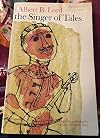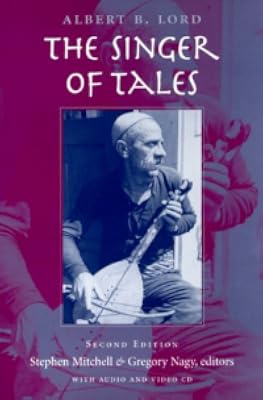
The Singer of Tales
by Albert B. Lord
On This Page
Description
Discusses the oral tradition as a theory of literary composition and its applications to Homeric and medieval epic.Tags
Recommendations






Member Reviews
I haven't looked at this book since a graduate seminar in Homer several decades ago. Parry made an important observation about Homer's use of formulae (amazing nobody saw it before him); Lord elaborated it with devotion and tunnel vision. There is much that is good in Singer of Tales; the chapters on formula and themes are strong. Lord builds a solid case for oral composition both in Serbian traditional poetry and Homer. But then he goes a bit overboard with the dogma. In discussing the transition from oral to written poetry, he really has nothing conclusive to say about Homer and mostly presents his personal opinions with some overconfidence. The chapters on the Odyssey and Iliad try to shoehorn everything into preconceived patterns show more based on Lord's theories. Not everything is a fertility myth or dying god! This is the problem of looking at things through a single lens: you can make some really great observations, but your larger conclusions are likely to be way off.
Lord has a very readable style for a relatively technical book. What might be called an academic conversational style. I have never seen so many exclamation points in an academic book! I don't know any Serbian, but with the translations it is not that difficult to pick out words and formulae (a lot of recognizable IE formations). show less
Lord has a very readable style for a relatively technical book. What might be called an academic conversational style. I have never seen so many exclamation points in an academic book! I don't know any Serbian, but with the translations it is not that difficult to pick out words and formulae (a lot of recognizable IE formations). show less
Fascinating book requiring careful reading. Shows how 'authorship' and composition before blank paper are recent and relative modes of creation whereas for thousands of years ( or more?) some humans have stirred a public much the way jazz musicians may do nowadays. And how the two oral poems we "possess" in written form, named 'Illiad' and 'Odyssee' , came to be put down — no full answer to that.
Edition: // Descr: xv, 309 p. 24 cm. // Series: Harvard Studies in Comparative Literature Volume 24 Call No. { } Contains Appendixes, Notes, and Index. // John E. Rexine Library Donation //
Orig. publ. Cambridge, MA : Harvard University Press, 1960
Ratings
Members
- Recently Added By
Lists

Books Read in 2017
4,249 works; 130 members
Author Information

10+ Works 550 Members
Some Editions
Awards and Honors
Series
Belongs to Publisher Series
Work Relationships
Inspired
Is a study of
The Odyssey by Homer
Common Knowledge
- Original publication date
- 1960
- People/Characters
- Bećiracić Meho; Cecil M. Bowra; Diginis Akritas; Sulejman "Suljo" Fortić; Homer; Sulejman "Suljo" Makić (show all 12); Avdo Meðedović; Milman Parry; Salih Ugljanin; Mumin Vlahovljak; Smailagić Melo; Ðemail "Ðemo" Zogić
- First words
- Foreword -- This book is about Homer. He is our SInger of Tales.
Chapter One: Introduction -- In the early thirties of this century, when Milman Parry began to write the book from which this one takes its name, what was needed most in Homeric scholarship was a more exact knowledge of the w... (show all)ay in which oral epic poets learn and compose their songs.
Classifications
- Genres
- Literature Studies and Criticism, Nonfiction, Fiction and Literature
- DDC/MDS
- 809.132 — Literature & rhetoric Literature, rhetoric & criticism History, description, critical appraisal of more than two literatures Poetry Epic poetry Antiquity (Greek, Roman)
- LCC
- PN1303 .L62 — Language and Literature Literature (General) Literature (General) Poetry Epic poetry
- BISAC
Statistics
- Members
- 419
- Popularity
- 73,610
- Reviews
- 4
- Rating
- (3.85)
- Languages
- English, French, Italian
- Media
- Paper
- ISBNs
- 6
- ASINs
- 9