On This Page
Description
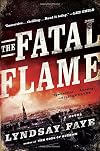
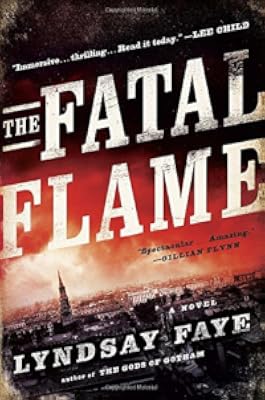
The final installment in Lyndsay Faye’s Timothy Wilde series, which Lee Child called “solid-gold” and Gillian Flynn declared “spectacular.”No one in 1840s New York likes fires, copper star Timothy Wilde least of all. After a blaze killed his parents and another left him with a terrible scar, he has avoided flames of all kinds. So when a seamstress turned arsonist threatens Robert Symmes, a corrupt tycoon high in the Tammany Hall ranks, Timothy isn’t thrilled that Symmes show more consults him. His dismay escalates when his audacious and charismatic older brother, Valentine, himself deeply politically entrenched, decides to run against the incumbent, who they suspect is guilty of assault and far darker crimes. Immediately after his brother’s courageous declaration, Timothy finds himself surrounded by powerful enemies who threaten to harm those he cares about most.
Meanwhile, the love of Timothy’s life, Mercy Underhill, unexpectedly appears on his doorstep and takes under her wing a starving Irish orphan who may be the key to stopping the combustions threatening the city—if only they can make sense of her cryptic accounts. The closer they come to deciphering her wild tales of witches and angels, however, the closer Timothy comes to the fiery and shocking conclusion that forces him to face everything he fears most.
A boisterous and suspenseful book from a master of historical adventure, The Fatal Flame is a tale for the ages. show less
Tags
Recommendations







Member Reviews
This is the concluding volume of three in a historical police detective series that began with The Gods of Gotham and continued with Seven For A Secret. The Fatal Flame picks up two years after the second book, and continues to follow the career of now 30-year-old Timothy Wilde, a member of the recently formed “copper stars,” or New York City policemen.
No one hates fires more than Timothy Wilde. His parents were killed in one when he and his brother, Valentine, were young. His own face was disfigured in a more recent fire. When a corrupt Tammany Hall Politician, Robert Symmes, is threatened by a disgruntled former employee and activist, Timothy is charged with catching the alleged arsonist. What he finds out is that the vendetta show more goes much deeper than the burning down of a building. It has to do with the deplorable conditions the seamstress and her co-workers struggle under and the use of force to keep them in line. To make matters worse, Valentine, himself deeply political, decides to campaign against Symmes. As Tim digs he finds that Symmes is suspected of crimes much darker than he could imagine.
The author, as she has in her two prior mysteries staring Timothy Wilde, addresses some of the horrible injustice suffered by the people of this time and she paints a memorable, authentic portrait of a turbulent, racially divided city slowly growing in confidence but filled with ruthless gangs, corrupt politics, crime, prostitution and the cruelties of slave labor. The characters are distinctive and appealing. As with the earlier books, each chapter is preceded by actual excerpts of writings from that period which are relevant to the action, adding a great deal of insight into what the atmosphere was like at the time.
The Fatal Flame ties together so many of the loose ends that had been left dangling in the first two books. It is a finale but I hope that it's not the end of Timothy Wilde. show less
No one hates fires more than Timothy Wilde. His parents were killed in one when he and his brother, Valentine, were young. His own face was disfigured in a more recent fire. When a corrupt Tammany Hall Politician, Robert Symmes, is threatened by a disgruntled former employee and activist, Timothy is charged with catching the alleged arsonist. What he finds out is that the vendetta show more goes much deeper than the burning down of a building. It has to do with the deplorable conditions the seamstress and her co-workers struggle under and the use of force to keep them in line. To make matters worse, Valentine, himself deeply political, decides to campaign against Symmes. As Tim digs he finds that Symmes is suspected of crimes much darker than he could imagine.
The author, as she has in her two prior mysteries staring Timothy Wilde, addresses some of the horrible injustice suffered by the people of this time and she paints a memorable, authentic portrait of a turbulent, racially divided city slowly growing in confidence but filled with ruthless gangs, corrupt politics, crime, prostitution and the cruelties of slave labor. The characters are distinctive and appealing. As with the earlier books, each chapter is preceded by actual excerpts of writings from that period which are relevant to the action, adding a great deal of insight into what the atmosphere was like at the time.
The Fatal Flame ties together so many of the loose ends that had been left dangling in the first two books. It is a finale but I hope that it's not the end of Timothy Wilde. show less
The final book in Faye's trilogy about New York City detective Timothy Wilde, is an extremely compelling read that once again brings to vivid life a past episode in history--this time the mistreatment of women workers in garment factories--or worse. I won't spoil it, but certain characters from the first book return, and wreak even more havoc on poor Timothy's love life. He also meets some fascinating, and often repellent new ones. Luckily he has his trusty detective colleagues at his side most of the time, as well as the help of his brother Valentine, whose contest against a corrupt alderman drives much of the story. Faye does a masterful job of resolving the various elements and persona of the previous two books and leaves us with a show more satisfying, if inevitably bittersweet conclusion. She is as good as any author I have seen at combining a real history lesson with a compelling plot. Of course, her heroes are not typical 1840s New Yorkers. They have modern attitudes about women's rights, gay rights, and a lot of other things that enable the author to express her own opinions, but they are opinions I share, so it is a pleasure to see Timothy and Valentine overcome their adversaries. The only thing that keeps the book from getting the full five stars is Faye's over-tendency to foreshadow things. It's too much like some sort of gothic romance at times--"If I only knew when I left that place what I know now..." and stuff like that. (That isn't a direct quote.)
This is highly highly recommended--but go back and read the first two volumes before starting this one. It's a shame Faye has moved on to other stories, but I'm sure she is an author with a lot to say, so we should applaud her not writing the same book over and over again as so many do. show less
This is highly highly recommended--but go back and read the first two volumes before starting this one. It's a shame Faye has moved on to other stories, but I'm sure she is an author with a lot to say, so we should applaud her not writing the same book over and over again as so many do. show less
I LOVED this book, grim as it is. It's been several years since I read the first two in the trilogy, but I easily jumped back into 1840s New York. I didn't want to put the book down. Mind you, these books are not for everyone. They are gritty, realistic, and sometimes disturbing, and each book is disturbing in new ways; this one focuses on the start of the fight for women's rights, and the abuses they endure are tragic and infuriating. However, it's also educational.
As a history geek and someone who loves detail, I devoured in every page. Even the dialog is completely immersive in the time period, complete with "flash patter," the street slang of the time.
As a history geek and someone who loves detail, I devoured in every page. Even the dialog is completely immersive in the time period, complete with "flash patter," the street slang of the time.
The third, and last, because this is a trilogy, not an ongoing series, Timothy Wilde mystery. I'm going to miss spending time with these characters. It's now 1848 in a still-young but already grimy and gritty New York City. Tammany Hall's corruption touches everything, and women are expected to fill the roles men allow and nothing more. A police detective before the word "detective" was in use, Tim is assigned the case of an arsonist torching the properties owned by a corrupt alderman, Richard Symmes, the same Richard Symmes Tim's brother Valentine decides to oppose in an upcoming election. Throw in immigrant women forced to work for low or barely any wages as seamstresses and their attempt to gain more rights through a strike, and you show more end up with a powder keg waiting to be set off. Then Tim's personal life gets complicated by the return of Mercy Underhill, the woman who he first adored when they were growing up together as friends. And, fittingly, Tim is forced to face his biggest fear: fire. Because a fire killed his parents when he was young, and a later fire almost claimed him, leaving him scarred.
Faye balances all the story and character elements of this complex plot with skill. Her research seems topnotch, and has inspired me to read up on this time period in New York City. The narrative voice is Tim's as he writes of the events, and of his own heart, from the distance of time. An epilogue puts a satisfying cap on the trilogy. I'm going to miss Tim and his way of looking at his world. show less
Faye balances all the story and character elements of this complex plot with skill. Her research seems topnotch, and has inspired me to read up on this time period in New York City. The narrative voice is Tim's as he writes of the events, and of his own heart, from the distance of time. An epilogue puts a satisfying cap on the trilogy. I'm going to miss Tim and his way of looking at his world. show less
Labour is cheap in New York in 1848, with an influx of Irish immigrants competing against each other to secure permanent employment, and employers without scruples out to profit from desperation. Among this stage of misery and poverty an arsonist targets buildings owned by Alderman Symmes, proprietor of a textile manufactory employing mostly women workers. Through his brother Valentine, Timothy Wilde is drawn into the investigation, and encounters first hand to what lengths desperate people will go to, but also the boundless greed by those in power. Hard on the trail of the incendiary, can Timothy overcome his terror of fire to bring the criminal to justice?
This is the third and final volume in the series featuring Timothy Wilde, a show more copper star of the newly formed New York Police, his dissolute brother Valentine and a few other recurring characters we first encountered in the course of the previous two volumes. As any reader familiar with the plots of The Gods of Gotham and Seven for a Secret will know, Timothy is prone to bouts of soul searching, and in The Fatal Flame he has more cause than usual: the love of his life, Mercy Underhill, has returned from London and thrown his feelings into turmoil, while his brother Valentine has announced his candidacy to run against Alderman Symmes. As always Lindsay Faye's historical research is impeccable, and she uses citations from genuine contemporary sources to great effect, painting a society on the brink of collapse owing to the influx of immigrants, mainly from Ireland, a city that shows its cracks in the stark division between rich and poor, white and coloured, male and female. The descriptions of living conditions in the slums are hard to stomach, and the inherent and often casual chauvinism on display made me shake my head in disbelief repeatedly. With this much going on in the background (add to this the stigma attached to gay and lesbian sexuality, among others), and it's no surprise that the action takes a backseat in the plot. The Timothy Wilde trilogy has always been more character driven and about social commentary than a lot of other historical fiction novels I've read, but I felt this was the case here more than usual; while reading about Timothy, Valentine and Co.'s inner workings and the state of society in 1840s New York made passing the time pleasurable enough, I did think the novel really quite slow for what is supposed to be a fairly fast-paced piece of historical crime fiction, although it does pull together a few loose threads satisfactorily.
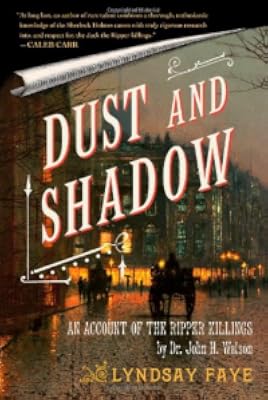
Nonetheless, I'm sad to say goodbye to Timothy Wilde, who has managed to reawaken my interest in the period prior to and during the American Civil War, and I'm curious to see how the author's writing style in this series compares to the Sherlock Holmes pastiche Dust and Shadow: An Account of the Ripper Killings that I've got on my shelf. show less
This is the third and final volume in the series featuring Timothy Wilde, a show more copper star of the newly formed New York Police, his dissolute brother Valentine and a few other recurring characters we first encountered in the course of the previous two volumes. As any reader familiar with the plots of The Gods of Gotham and Seven for a Secret will know, Timothy is prone to bouts of soul searching, and in The Fatal Flame he has more cause than usual: the love of his life, Mercy Underhill, has returned from London and thrown his feelings into turmoil, while his brother Valentine has announced his candidacy to run against Alderman Symmes. As always Lindsay Faye's historical research is impeccable, and she uses citations from genuine contemporary sources to great effect, painting a society on the brink of collapse owing to the influx of immigrants, mainly from Ireland, a city that shows its cracks in the stark division between rich and poor, white and coloured, male and female. The descriptions of living conditions in the slums are hard to stomach, and the inherent and often casual chauvinism on display made me shake my head in disbelief repeatedly. With this much going on in the background (add to this the stigma attached to gay and lesbian sexuality, among others), and it's no surprise that the action takes a backseat in the plot. The Timothy Wilde trilogy has always been more character driven and about social commentary than a lot of other historical fiction novels I've read, but I felt this was the case here more than usual; while reading about Timothy, Valentine and Co.'s inner workings and the state of society in 1840s New York made passing the time pleasurable enough, I did think the novel really quite slow for what is supposed to be a fairly fast-paced piece of historical crime fiction, although it does pull together a few loose threads satisfactorily.
Nonetheless, I'm sad to say goodbye to Timothy Wilde, who has managed to reawaken my interest in the period prior to and during the American Civil War, and I'm curious to see how the author's writing style in this series compares to the Sherlock Holmes pastiche Dust and Shadow: An Account of the Ripper Killings that I've got on my shelf. show less
This is the concluding volume of three in a historical police detective series that began with The Gods of Gotham and continued with Seven For A Secret. The Fatal Flame picks up two years after the second book, and continues to follow the career of now 30-year-old Timothy Wilde, a member of the recently formed “copper stars,” or New York City Policemen.
Timothy received facial burns three years earlier in the Fire of 1845, and moreover, his parents died in a conflagration. Thus he has a rather understandable fear of fire. Nevertheless, he is called upon - in his capacity as detective - to help figure out who is setting fires to slums owned by Alderman Robert Symmes, a man who also owns some garment-making factories. Symmes maintains show more to the police that he has received threats of arson from a garment worker who is also a feminist rabble-rouser, Sally Woods. He believes the threats stem from a desire for revenge because of the strike-breaking tactics employed by Symmes.
But of course, nothing is as it seems in the convoluted political and social networks of mid-19th Century New York, where impoverished immigrants flood the shores looking for work, the populace is torn in two over the slavery issue, jobs and food are in short supply, corrupt Tammany Hall pulls the strings, and the rancor felt by everyone keeps the city on the verge of violent eruption.
As if Timothy doesn’t have enough to worry about, his older brother Val has decided to run against Symmes in the upcoming election, a decision which seems both dangerous and foolish to Timothy. In addition, the powerful proprietress of a prostitution house, Silkie Marsh, knows Tim arranged sanctuary for one of her “star-gazers” or prostitutes, the now 13-year-old Bird Daly. Tim's personal life is complicated as well; his old love Mercy Underhill has returned to New York City and seems a few sandwiches short of a picnic, and Elena Boehm, his landlord and sometime lover, is looking for a commitment.
Discussion: As with previous books, the characters are distinctive and appealing. Tim always tries to play fair, even with one of his pansexual brother’s lovers, James Playfair, a nice guy against whom almost everyone has prejudices.
While Tim is more outwardly heroic, the real hero to me is Val, who is singularly his own man and tortured by guilt, but also courageous, caring, steadfast, and generous, although he tries hard to hide his more positive qualities.
As with the earlier books, each chapter is preceded by actual excerpts of writings from that period which are germane to the action, adding a great deal of insight into what the atmosphere was like at the time.
Evaluation: This historical crime novel is as entertaining a way as any to learn about antebellum American history, particularly in the urban North. The characters are memorable, and it is sad to discover the series won’t continue after this third volume. show less
Timothy received facial burns three years earlier in the Fire of 1845, and moreover, his parents died in a conflagration. Thus he has a rather understandable fear of fire. Nevertheless, he is called upon - in his capacity as detective - to help figure out who is setting fires to slums owned by Alderman Robert Symmes, a man who also owns some garment-making factories. Symmes maintains show more to the police that he has received threats of arson from a garment worker who is also a feminist rabble-rouser, Sally Woods. He believes the threats stem from a desire for revenge because of the strike-breaking tactics employed by Symmes.
But of course, nothing is as it seems in the convoluted political and social networks of mid-19th Century New York, where impoverished immigrants flood the shores looking for work, the populace is torn in two over the slavery issue, jobs and food are in short supply, corrupt Tammany Hall pulls the strings, and the rancor felt by everyone keeps the city on the verge of violent eruption.
As if Timothy doesn’t have enough to worry about, his older brother Val has decided to run against Symmes in the upcoming election, a decision which seems both dangerous and foolish to Timothy. In addition, the powerful proprietress of a prostitution house, Silkie Marsh, knows Tim arranged sanctuary for one of her “star-gazers” or prostitutes, the now 13-year-old Bird Daly. Tim's personal life is complicated as well; his old love Mercy Underhill has returned to New York City and seems a few sandwiches short of a picnic, and Elena Boehm, his landlord and sometime lover, is looking for a commitment.
Discussion: As with previous books, the characters are distinctive and appealing. Tim always tries to play fair, even with one of his pansexual brother’s lovers, James Playfair, a nice guy against whom almost everyone has prejudices.
While Tim is more outwardly heroic, the real hero to me is Val, who is singularly his own man and tortured by guilt, but also courageous, caring, steadfast, and generous, although he tries hard to hide his more positive qualities.
As with the earlier books, each chapter is preceded by actual excerpts of writings from that period which are germane to the action, adding a great deal of insight into what the atmosphere was like at the time.
Evaluation: This historical crime novel is as entertaining a way as any to learn about antebellum American history, particularly in the urban North. The characters are memorable, and it is sad to discover the series won’t continue after this third volume. show less
I was very sad that this wasn't read by Steven Boyer like the other two in the series. I didn't hate Kirby Heyborne's reading as much as a review or two I've seen, but there is an odd rhythm to the narration. It took quite a while for me to pin down what it reminded me of, and finally got it: Stephen Hawking. Not kidding.
These are the kind of book I want to write. Beautiful and brutal, familiar and unpredictable, filled with vibrant settings and vivid people and loves and hatreds and the confusion between the two, causing smiles in the midst of tears and heart pangs in the midst of laughter, and – most of all – laden with the dread of pages running out. I could be happy with an endless stream of Timothy Wilde novels as New York show more grows and matures; coming from Lyndsay Faye I'd be happy with geriatric Wilde brothers cranky bickering away. Fortunately her other work is just as strong, so the blow that this is apparently the end of the Wilde road is softened a bit.
Characterization is marvelous, pulled off with such an apparent ease that "story" goes by the wayside, and "truth" is all there is. I'm not sure that says what I want it to say (why is it so much easier to nail down what's wrong with a book than to discuss what's right?) … What I want to say is that when Lyndsay Faye says something in one of her books, I believe it. I never liked the characters' use of "kinchen" (meaning children) throughout this series, but where in a book I mistrusted I would have been looking things up and trying to disprove them… I believe Lyndsay Faye.
She hasn't failed me yet. show less
These are the kind of book I want to write. Beautiful and brutal, familiar and unpredictable, filled with vibrant settings and vivid people and loves and hatreds and the confusion between the two, causing smiles in the midst of tears and heart pangs in the midst of laughter, and – most of all – laden with the dread of pages running out. I could be happy with an endless stream of Timothy Wilde novels as New York show more grows and matures; coming from Lyndsay Faye I'd be happy with geriatric Wilde brothers cranky bickering away. Fortunately her other work is just as strong, so the blow that this is apparently the end of the Wilde road is softened a bit.
Characterization is marvelous, pulled off with such an apparent ease that "story" goes by the wayside, and "truth" is all there is. I'm not sure that says what I want it to say (why is it so much easier to nail down what's wrong with a book than to discuss what's right?) … What I want to say is that when Lyndsay Faye says something in one of her books, I believe it. I never liked the characters' use of "kinchen" (meaning children) throughout this series, but where in a book I mistrusted I would have been looking things up and trying to disprove them… I believe Lyndsay Faye.
She hasn't failed me yet. show less
Members
- Recently Added By
Lists

Top Five Books of 2015
811 works; 241 members
Author Information

14+ Works 5,345 Members
Series

Common Knowledge
- Original publication date
- 2015-10-08 (UK) (UK)
- People/Characters
- Timothy Wilde 'Tim'; Valentine Wilde 'Val'; Mrs. Elena Boehm; Aibhilin O'Dalaigh 'Bird Daly'; James Playfair; Dunla Duffy (show all 19); Mercy Underhill; Robert Symmes; Sally Woods; Jakob Piest; Selina 'Silkie' Marsh; Abraham Kane; Cornelius Villers; Francis Garvey 'Ninepin'; Ellie Abel; George Washington Matsell; Mr Connell; Ian Kildare; Peter Palsgrave
- Important places
- New York, New York, USA
- Dedication
- For my great-great grandmother Katie, whose true surname was lost after she travelled here from Ireland—and for Grandma Meg Fay, who told me the story.
- First words
- Dunfhlaith o Dufaigh, as she had been called in the green mother country, where the rocks pierced the grasslands the way gaunt collarbones pierced the peaceful slumbering corpses in the streets, recalled what it felt like to ... (show all)be hungry.
- Last words
- (Click to show. Warning: May contain spoilers.)Time is a tyrant, words our last and only weapons.
~ Timothy Wilde, April 16, 1854 - Publisher's editor
- Einhorn, Amy
- Blurbers
- Flynn, Gillian
- Original language
- English US
Classifications
Statistics
- Members
- 259
- Popularity
- 125,465
- Reviews
- 23
- Rating
- (4.15)
- Languages
- Dutch, English, German, Korean
- Media
- Paper, Audiobook, Ebook
- ISBNs
- 14
- ASINs
- 4