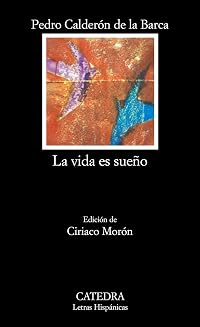
Life Is a Dream
by Pedro Calderón de la Barca
On This Page
Description
Life is a Dream is a play about free will and fate. A king imprisons his son who, it is prophesied, will destroy the kingdom. The people believe the son to be dead, but when he is a grown man the king brings him before the public and asks them to chose his fate.The play was written in 1635 and is the most famous work by Spanish playwright Pedro Calderon de la Barca.
.
Tags
Recommendations
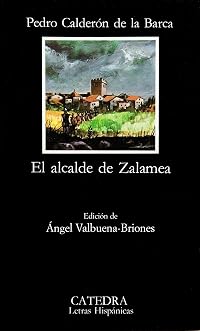

















Member Recommendations
Member Reviews
Segismundo´s father, Basilio, is the king of Poland and a big fan of astrology, studying the stars in order to understand the future. When his son is born, he reads that he is destined to become a cruel ruler, and so he imprisons him in an isolated mountainside fortress, telling his people that his son died in childbirth. Segismundo grows up under the tutelage of Clotaldo, who educates him in his isolated prison. When he is grown, Basilio decides that he wants to perform an experiment, testing whether or not free will can triumph over destiny as read in the stars. He gives Segismundo a drug that puts him to sleep and transports him to the palace, placing him on the throne as king. In this way, he can see whether his son can transcend show more the predictions of the stars and rule justly. He instructs Clotaldo to explain to Segismundo what has happened, and also to warn him that his new position as king may only be a dream, and that he may well wake up back in his prison. Segismundo as king must confront the unjust nature of his prison, and decide how to treat his subjects and his father, who imprisoned him and isolated him from the world. He also must enter into courtly society after living his life as a caged beast. Calderón´s play follows the action as Segismundo tries to understand the cruel existence that he has been forced into and examines whether or not he can be a just ruler despite his star-crossed birth and isolated, savage upbringing.
As I looked at my bookshelf trying to decide which of the handful of recently-purchased plays I wanted to read next, I decided instead to reread La vida es sueño, thinking that of all of my choices, I would enjoy it the most. Before I began reading, I was paging through the critical commentaries on the play that follow the text in my edition. There was a letter from the Russian writer Ivan Turgenev expressing his enjoyment of Calderón´s work, and he compares Segismundo with Shakespeare´s Hamlet. It´s a rather obvious choice, and as I read the play I thought about how similar the two princes are (although I haven´t read Hamlet since high school and only faintly remember it). Segismundo is made to question the world that surrounds him and ponder whether he is dreaming or awake: Hamlet´s most famous line, “To be or not to be,” in Segismundo´s world, becomes more a question of “Am I awake, or is this a dream?” Segismundo has a monologue that reminds me of Hamlet´s soliloquy on existence, and is one of my favorite passages in classic Spanish literature:
Yo sueño que estoy aquí
destas prisiones cargado,
y soñé que en otro estado
más lisonjero me vi.
¿Qué es la vida? Un frenesí.
¿Qué es la vida? Una ilusión,
una sombra, una ficción,
y el mayor bien es pequeño:
que toda la vida es sueño,
y los sueños, sueños son.
These words come at the heels of a day in which Segismundo has awoken in the bed of a king, confronted the reasons behind his lifelong imprisonment, and all the while been constantly reminded that what he is experiencing may only be a dream, and that he may wake up to the shackles and isolation of his prison. His contemplation of the world and whether or not our lives are anything more than dreams was remarkable to me the first time that I read it, because of its direct challenge to reality. I assume that Calderón was familiar with Don Quijote and perhaps Segismundo´s dilemma was inspired by his adventure in the Cave of Montesinos. It´s interesting to see another scenario where a Spaniard is writing about dreams and reality in the first part of the 16th century, because it´s a topic that seems to pertain much more to literature in modern times.
La vida es sueño is written in the baroque style, which means that the language is complicated and there are many different and sometimes confusing techniques that Calderón uses to construct arguments. My edition was thoroughly annotated, and helped bring my attention to some of the aspects of the baroque style that I would have ignored otherwise. Another element that I enjoyed was the somewhat atypical comic foil Clarín, who is unique in that he shows limited allegiance to his initial master, Rosaura, and floats around from master to master. Sometimes it seemed to me that he was the one living in a dream, and his commentaries often hint at his own confusion at the fate that befalls him. There were some parts of the play that didn´t seem as strong, such as the ending, where the different plot strands are conveniently tied up in the most straightforward way possible. In the end, though, Calderon´s depiction of Segismundo´s struggle to understand his life and the world that surrounds him, makes him one of my favorite characters in Siglo de Oro theater and a worthy holder of the title “Spanish Hamlet.”
February 12, 2012
I didn't realize I'd already read and reviewed this book in 2012...I wrote another review, but it doesn't really add much to the previous one so I'll omit it here. One interesting thing I read about this book that I do think is worth mentioning concerns the difference between life and dream: we set these two terms up to be polar opposites, but maybe that's not the right way to look at them when reading a play written in the first half of the seventeenth century. Christopher Soufas is the name of the guy who wrote the article I read, and he opines that the way that humankind ordered knowledge back then was fundamentally different from the way we do now. Where we look for differences between things, people used to look for similarities. I think Foucault wrote about this in his archaeology of knowledge. Anyway, the point is that we tend to consider the idea of doing good in dreams to be rather ridiculous: how can you do good or bad in a dream? But back then it might have been more natural for Segismundo to ponder the consequences of his acts, regardless of whether he was awake or not when he committed them. show less
As I looked at my bookshelf trying to decide which of the handful of recently-purchased plays I wanted to read next, I decided instead to reread La vida es sueño, thinking that of all of my choices, I would enjoy it the most. Before I began reading, I was paging through the critical commentaries on the play that follow the text in my edition. There was a letter from the Russian writer Ivan Turgenev expressing his enjoyment of Calderón´s work, and he compares Segismundo with Shakespeare´s Hamlet. It´s a rather obvious choice, and as I read the play I thought about how similar the two princes are (although I haven´t read Hamlet since high school and only faintly remember it). Segismundo is made to question the world that surrounds him and ponder whether he is dreaming or awake: Hamlet´s most famous line, “To be or not to be,” in Segismundo´s world, becomes more a question of “Am I awake, or is this a dream?” Segismundo has a monologue that reminds me of Hamlet´s soliloquy on existence, and is one of my favorite passages in classic Spanish literature:
Yo sueño que estoy aquí
destas prisiones cargado,
y soñé que en otro estado
más lisonjero me vi.
¿Qué es la vida? Un frenesí.
¿Qué es la vida? Una ilusión,
una sombra, una ficción,
y el mayor bien es pequeño:
que toda la vida es sueño,
y los sueños, sueños son.
These words come at the heels of a day in which Segismundo has awoken in the bed of a king, confronted the reasons behind his lifelong imprisonment, and all the while been constantly reminded that what he is experiencing may only be a dream, and that he may wake up to the shackles and isolation of his prison. His contemplation of the world and whether or not our lives are anything more than dreams was remarkable to me the first time that I read it, because of its direct challenge to reality. I assume that Calderón was familiar with Don Quijote and perhaps Segismundo´s dilemma was inspired by his adventure in the Cave of Montesinos. It´s interesting to see another scenario where a Spaniard is writing about dreams and reality in the first part of the 16th century, because it´s a topic that seems to pertain much more to literature in modern times.
La vida es sueño is written in the baroque style, which means that the language is complicated and there are many different and sometimes confusing techniques that Calderón uses to construct arguments. My edition was thoroughly annotated, and helped bring my attention to some of the aspects of the baroque style that I would have ignored otherwise. Another element that I enjoyed was the somewhat atypical comic foil Clarín, who is unique in that he shows limited allegiance to his initial master, Rosaura, and floats around from master to master. Sometimes it seemed to me that he was the one living in a dream, and his commentaries often hint at his own confusion at the fate that befalls him. There were some parts of the play that didn´t seem as strong, such as the ending, where the different plot strands are conveniently tied up in the most straightforward way possible. In the end, though, Calderon´s depiction of Segismundo´s struggle to understand his life and the world that surrounds him, makes him one of my favorite characters in Siglo de Oro theater and a worthy holder of the title “Spanish Hamlet.”
February 12, 2012
I didn't realize I'd already read and reviewed this book in 2012...I wrote another review, but it doesn't really add much to the previous one so I'll omit it here. One interesting thing I read about this book that I do think is worth mentioning concerns the difference between life and dream: we set these two terms up to be polar opposites, but maybe that's not the right way to look at them when reading a play written in the first half of the seventeenth century. Christopher Soufas is the name of the guy who wrote the article I read, and he opines that the way that humankind ordered knowledge back then was fundamentally different from the way we do now. Where we look for differences between things, people used to look for similarities. I think Foucault wrote about this in his archaeology of knowledge. Anyway, the point is that we tend to consider the idea of doing good in dreams to be rather ridiculous: how can you do good or bad in a dream? But back then it might have been more natural for Segismundo to ponder the consequences of his acts, regardless of whether he was awake or not when he committed them. show less
Hermoso. Sin duda, una de las obras más bellas de la lengua española.
Antes, tenía un fuerte prejuicio hacia este texto, pero se debía a un profundo desconocimiento de Calderón. Después de adentrarme adecuadamente en esta belleza, me sacó lágrimas necesarias e inesperadas.
No puedo decir más. He sido gratamente derrotado.
Antes, tenía un fuerte prejuicio hacia este texto, pero se debía a un profundo desconocimiento de Calderón. Después de adentrarme adecuadamente en esta belleza, me sacó lágrimas necesarias e inesperadas.
No puedo decir más. He sido gratamente derrotado.
Si Calderón es el autor teatral barroco por excelencia, cabe también decir que La vida es sueño es una obra que sustancia los grandes temas de este movimiento. La historia del príncipe Segismundo, que sale de la cueva en la que había sido encerrado por su padre para convertirse en rey por breve tiempo -un tiempo que fue un sueño- antes de ser devuelto de nuevo a ella, da pie a un complejo drama sobre el libre albedrío, la fugacidad de la vida y la falsedad de las apariencias.
The stars are engine and move to grace or folly. Segismundo is pitted against the stars and we indeed can change fate that is the true implication of stars that we can change our end outcomes forever. This book runs parallel to the buddhas story fated to two paths and by interjection finds the one unexpected
Emocionante. Cómo puede ser que sea tan distinto leerlo de chico que de grande.
Ótima edição, comentada por Ciriaco Morón.
O título já atrai, e o livro é fascinante.
“Y teniendo yo más alma
Tengo menos libertad?”
O título já atrai, e o livro é fascinante.
“Y teniendo yo más alma
Tengo menos libertad?”
Neat plays, great translation, refreshing when it came in the middle of Picture and Poetry in Early Modern Europe :)
Members
- Recently Added By
Lists

Plays I Like
230 works; 31 members

100 Books to Read in a Lifetime (That Are Older Than 200 Years)
415 works; 175 members

Les Vases communicants
23 works; 1 member

Best of World Literature
435 works; 52 members

Harold Bloom - The Western Canon: B. The Aristocratic Age
231 works; 13 members

Favourite Books
1,819 works; 316 members

Books Read in 2018
4,360 works; 110 members

Greatest Books, allegedly
484 works; 9 members

Philip Ward's Lifetime Reading Plan
592 works; 22 members

Recommended Reading : 600 Classics Reviewed, Editors of Salem Press, 2015
634 works; 6 members

Next Plays to Watch
50 works; 1 member
Author Information

Pedro Calderón de la Barca was born in Madrid, Spain on January 17, 1600. He was educated at the Jesuit College in Madrid. He was a dramatist, poet and writer of the Spanish Golden Age. He wrote more than 120 plays and over 70 allegorical religious plays with subjects from mythology and the Old and the New Testaments. Calderón's debut as a show more playwright was Amor, Honor y Poder, performed at the Royal Palace. His other plays include La Selva Confusa, Los Macabeos, El Magico Prodigioso, El Alcalde de Zalamea, La Vida Es Sueno, and La Estatua de Prometeo. Calderón gained popularity in the court, and was made a knight of the order of Santiago by Philip IV, who had already commissioned from him a series of plays for the royal theatre in the Buen Retiro palace. Calderón became a tertiary of the order of St Francis in 1650, and then finally joined the priesthood. He was ordained in 1651, and became a priest at San Salvador at Madrid. He was appointed honorary chaplain to Philip IV in 1663, and continued as chaplain to his successor. In his eighty-first year he wrote his last secular play, Hado y Divisa de Leonido y Marfisa, in honor of Charles II's marriage to Maria Luisa of Orléans. He died on May 25, 1681. (Bowker Author Biography) show less
Some Editions
Awards and Honors
Notable Lists
Series
Belongs to Publisher Series
Work Relationships
Is contained in
"Life Is a Dream" and Other Spanish Classics (Eric Bentley's Dramatic Repertoire Volume Two) by Eric Bentley
Three Plays: The Mayor of Zalamea/Life's a Dream/The Great Theatre of the World by Pedro Calderón de la Barca
Calderon Plays: One (Life Is a Dream, The Surgeon of his Honour, Three Judgements in One) by Pedro Calderón de la Barca
Teatro: La vita è un sogno. Il principe Costante.Il mago prodigioso. La dama folletto by Pedro Calderon de la Barca
Is retold in
Has as a student's study guide
Common Knowledge
- Canonical title
- Life Is a Dream
- Original title
- La vida es sueño
- Alternate titles*
- Das Leben ein Traum
- Original publication date
- 1635
- People/Characters
- Basilio, King of Poland; Segismund (Son of Basilio, King of Poland); Astolfo (Nephew of Basilio, King of Poland); Estrella (Niece of Basilio, King of Poland); Coltaldo (General in the service of Basilio, King of Poland); Rosaura (Muscovite Lady) (show all 7); Fife (Rosaura's attendent)
- Important places
- Poland; Warsaw, Poland
- First words
- There, four-footed Fury, blast
Engender'd brute, without the wit
Of brute, or mouth to match the bit
Of man--art satisfied at last? - Last words
- (Click to show. Warning: May contain spoilers.)And, whether wake or dreaming, this I know,
How dream-wise human glories come and go;
Whose momentary tenure not to break,
Walking as one who knows he soon may wake,
So fairly carry the full cup, so well
Disorder'd insolence and passion quell,
That there be nothing after to upbraid
Dreamer or doer in the part he play'd,
Whether To-morrow's dawn shall break the spell,
Or the Last Trumpet of the eternal Day,
When Dreaming with the Night shall pass away. - Original language
- Spanish
*Some information comes from Common Knowledge in other languages. Click "Edit" for more information.
Classifications
Statistics
- Members
- 2,037
- Popularity
- 10,259
- Reviews
- 29
- Rating
- (4.04)
- Languages
- 16 — Catalan, Danish, Dutch, English, Estonian, Finnish, French, German, Italian, Multiple languages, Norwegian (Bokmål), Portuguese, Russian, Spanish, Swedish, Turkish
- Media
- Paper, Audiobook, Ebook
- ISBNs
- 242
- UPCs
- 3
- ASINs
- 35