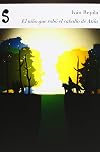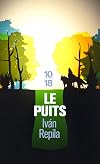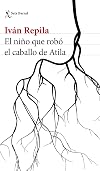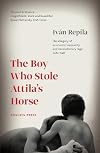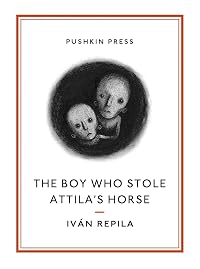
The Boy Who Stole Attila's Horse
by Iván Repila
On This Page
Description
'It looks impossible to get out,' he says. And also: 'But we'll get out.' Two brothers, Big and Small, are trapped at the bottom of a well, stalked by madness and with no means of escape. Struggling for sustenance and clinging to sanity, Big forges a plan to free his little brother. Fast-paced and rich in metaphor, this extraordinary new story poses questions of fight, survival and solidarity when people are faced with devastation. Powerful, disquieting and highly original, Repila's show more unique allegory explores with bravery and emotion the depths of human desperation and, ultimately, our almost unending capacity for hope. show lessTags
Recommendations



























Member Reviews
Recently, I've been incredibly fortuitous (or perhaps adroit in my book buying!) to have read some great books, which I've given the full complement of stars. At a slimline 128 pages, 'The Boy Who Stole Attila's Horse' is both the most recent and shortest to receive 5 stars. It is quite incredible what Iván Repila has managed to encapsulate in so few pages - an allegorical masterpiece, rich with pregnant, figurative prose, incredibly well written and above all a simple, powerful story.
Two young brothers, Big and Small, are trapped inside a well on the edge of a wood. The walls are high, slippery and unassailable yet the brothers are determined to escape. The chapter numbers are the total days they have been down in the well and as time show more goes on, the duress of the situation intensifies the fractiousness of their relationship. Eating bugs from the walls of the well to sustain themselves, Big drafts a plan of escape fraught with danger. Meanwhile, after initial injury from a previous escape attempt, his younger malnourished brother struggles to stay alive. As his lucidity falters he appears to transcend his experience and the well towards something skin to a Jungian collective unconscious; he recounts strange, dreamlike soliloquies of stealing a horse and destroying the world that alienate his brother but beguile the reader.
In many ways, 'The Boy Who Stole Attila's Horse' is faultless. The writing reminded me of 'Grief is a Thing with Feathers' but is also a class apart. I feel I have only scratched the surface of its meaning with one read and will definitely visit it again. The most impressive part - and what I consider is often the most important factor when considering a book to be a 5/5 - is the ending. A great book has to deliver on its early promise and Repila masterfully brought his novella to a significant end, well worthy of the highest accolades and highly recommended. show less
Two young brothers, Big and Small, are trapped inside a well on the edge of a wood. The walls are high, slippery and unassailable yet the brothers are determined to escape. The chapter numbers are the total days they have been down in the well and as time show more goes on, the duress of the situation intensifies the fractiousness of their relationship. Eating bugs from the walls of the well to sustain themselves, Big drafts a plan of escape fraught with danger. Meanwhile, after initial injury from a previous escape attempt, his younger malnourished brother struggles to stay alive. As his lucidity falters he appears to transcend his experience and the well towards something skin to a Jungian collective unconscious; he recounts strange, dreamlike soliloquies of stealing a horse and destroying the world that alienate his brother but beguile the reader.
In many ways, 'The Boy Who Stole Attila's Horse' is faultless. The writing reminded me of 'Grief is a Thing with Feathers' but is also a class apart. I feel I have only scratched the surface of its meaning with one read and will definitely visit it again. The most impressive part - and what I consider is often the most important factor when considering a book to be a 5/5 - is the ending. A great book has to deliver on its early promise and Repila masterfully brought his novella to a significant end, well worthy of the highest accolades and highly recommended. show less
A very short but wholly overwhelming book. The overt story is of two brothers stuck down a well with no explanation, ever resourceful in their attempts to survive both physically and mentally. But, as the opening quotes suggest, the book can be read as an allegory of those suffering oppression, particularly stuck in the cycle of poverty. Despite the boys' claustrophobic situation, somehow the whole inner and outer human world is contained there, with all its physicality, food, disease, art, music, language, hope, love, desperation and ambition. There is an astonishing amount packed into just 100 short pages!
The style touches quite matter of factly, reporting on the story with a hint of the fairy tale and reverie about it. Reading it is show more simultaneously absorbing and unsettling. The English translation is by Sophie Hughes (including the books aphasiac episode which must have been immense fun to write!) and is a testament to how much we owe translators in bringing such great little books to a broader readership. Bravo once again to Pushkin Press, and the author and translator! show less
The style touches quite matter of factly, reporting on the story with a hint of the fairy tale and reverie about it. Reading it is show more simultaneously absorbing and unsettling. The English translation is by Sophie Hughes (including the books aphasiac episode which must have been immense fun to write!) and is a testament to how much we owe translators in bringing such great little books to a broader readership. Bravo once again to Pushkin Press, and the author and translator! show less
Lyrical and heartbreaking, two boys are trapped in a well and we must observe their struggles and disintegration.
I can understand this book get some people raving about it. I also enjoyed it, front to back, yet I guess I perhaps didn't really "get it".
The tale is nice, albeit rather straightforward in itself, but the real magic lies in reading it beyond the metaphor it is. I'm afraid I didn't succeed there, and am sure I must have missed the point [a:Repila|5862584|Iván Repila|https://s.gr-assets.com/assets/nophoto/user/u_50x66-632230dc9882b4352d753eedf9396530.png] was making.
So, in short, three stars after my first reading.
The tale is nice, albeit rather straightforward in itself, but the real magic lies in reading it beyond the metaphor it is. I'm afraid I didn't succeed there, and am sure I must have missed the point [a:Repila|5862584|Iván Repila|https://s.gr-assets.com/assets/nophoto/user/u_50x66-632230dc9882b4352d753eedf9396530.png] was making.
So, in short, three stars after my first reading.
A Spanish author wrote a very metaphorical book about two boys in a hole in the ground, a deep hole. With no way to get out of the hole their situation deteriorates quickly and then the downfall of themselves, physically and mentally, begins. Without any doubt full of allegoric stuff, metaphors, parallels, and other references to the real world. For many reasons a lot of people will see very philosophical stuff in it. Certainly there is a lot of stuff i missed.
But, hey, i don't really care. As from some chapters i lost all connection. It's too bizarre, too weird, too unrealistic. So, yep, i missed probably all the intellectual stuff.
The style of writing is OK, the tension build up is OK till somewhere half of the book, the "numbering" show more of the chapters is original (no, no spoiler), but .... it didn't get a grip on me. Sorry. show less
But, hey, i don't really care. As from some chapters i lost all connection. It's too bizarre, too weird, too unrealistic. So, yep, i missed probably all the intellectual stuff.
The style of writing is OK, the tension build up is OK till somewhere half of the book, the "numbering" show more of the chapters is original (no, no spoiler), but .... it didn't get a grip on me. Sorry. show less
L'auteur espagnol Ivan Repila signe avec Le Puits un premier roman aux accents de conte cruel et fantastique.
Deux frères uniquement dénommés "le Grand" et "le Petit" tombent dans un puits de sept mètres de profondeur sans plus pouvoir en sortir. Bien que la faim commence rapidement à les tenailler cruellement, le Grand interdit formellement au Petit de toucher au sac de provisions destinés à leur mère.
S'ensuit la description d'une lente et longue descente aux enfers pour les deux enfants, menacés à tout moment par les conditions effrayantes de leur captivité, par l'épuisement, la mort, la folie. La description de l'effondrement physique et psychologique des enfants est saisissante.
Expérience également éprouvante pour le show more lecteur en apnée qui suffoque de dégoût à la description de ce qu'ils en arrivent à manger pour survivre.
Conte symbolique et initiatique (la séparation d'avec la mère qui se mue en utérus tellurique dont il faut à tout prix s'extraire), allégorie politique (la question de l'aveuglement des nantis à l'égard de ceux qui ne possèdent rien et qui luttent est assez clairement posée), le livre m'est apparu avant tout comme un texte sur l'amour fraternel, indestructible et inconditionnel dans les conditions extrêmes en présence.
Un court texte à découvrir. show less
Deux frères uniquement dénommés "le Grand" et "le Petit" tombent dans un puits de sept mètres de profondeur sans plus pouvoir en sortir. Bien que la faim commence rapidement à les tenailler cruellement, le Grand interdit formellement au Petit de toucher au sac de provisions destinés à leur mère.
S'ensuit la description d'une lente et longue descente aux enfers pour les deux enfants, menacés à tout moment par les conditions effrayantes de leur captivité, par l'épuisement, la mort, la folie. La description de l'effondrement physique et psychologique des enfants est saisissante.
Expérience également éprouvante pour le show more lecteur en apnée qui suffoque de dégoût à la description de ce qu'ils en arrivent à manger pour survivre.
Conte symbolique et initiatique (la séparation d'avec la mère qui se mue en utérus tellurique dont il faut à tout prix s'extraire), allégorie politique (la question de l'aveuglement des nantis à l'égard de ceux qui ne possèdent rien et qui luttent est assez clairement posée), le livre m'est apparu avant tout comme un texte sur l'amour fraternel, indestructible et inconditionnel dans les conditions extrêmes en présence.
Un court texte à découvrir. show less
Feb 15, 2015French
Se lee de una sentada. Terrible.
" - Agua, solicita.
El Grande le da de beber.
- Tengo frío.
El Grande se recuesta junto a él y lo abraza con todo su cuerpo.
- Tengo calor.
El Grande le abre la camisa, remoja su cuello y su nuca con agua fresca, y después ondea la suya propia para hacer corriente.
- Estoy sucio.
El Grande le baja los pantalones, limpia con tierra húmeda sus nalgas y lo viste de nuevo.
- Tengo miedo.
El Grande lo levanta en sus brazos, igual que haría un recién casado con su esposa, y lo mece. Pesa tan poco que podría sostenerlo con una mano.
- Mátame."
Ahí es nada...
A por el anterior libro de Iván Repila "Una comedia canalla" (siempre y cuando quede en stock, después del cierre de la editorial).
" - Agua, solicita.
El Grande le da de beber.
- Tengo frío.
El Grande se recuesta junto a él y lo abraza con todo su cuerpo.
- Tengo calor.
El Grande le abre la camisa, remoja su cuello y su nuca con agua fresca, y después ondea la suya propia para hacer corriente.
- Estoy sucio.
El Grande le baja los pantalones, limpia con tierra húmeda sus nalgas y lo viste de nuevo.
- Tengo miedo.
El Grande lo levanta en sus brazos, igual que haría un recién casado con su esposa, y lo mece. Pesa tan poco que podría sostenerlo con una mano.
- Mátame."
Ahí es nada...
A por el anterior libro de Iván Repila "Una comedia canalla" (siempre y cuando quede en stock, después del cierre de la editorial).
Feb 3, 2014Spanish
Members
- Recently Added By
Lists

Books Read in 2023
5,547 works; 145 members
Author Information
6 Works 120 Members
Some Editions
Awards and Honors
Awards
Series
Belongs to Publisher Series
Common Knowledge
- Canonical title
- The Boy Who Stole Attila's Horse
- Original title
- El niño que robó el caballo de Atila
- Original publication date
- 2013; 2015 (English translation) (English translation)
- Important places
- Spain
- Original language
- Spanish
Classifications
Statistics
- Members
- 87
- Popularity
- 367,902
- Reviews
- 9
- Rating
- (3.61)
- Languages
- Dutch, English, French, Spanish
- Media
- Paper, Ebook
- ISBNs
- 10
- ASINs
- 3