
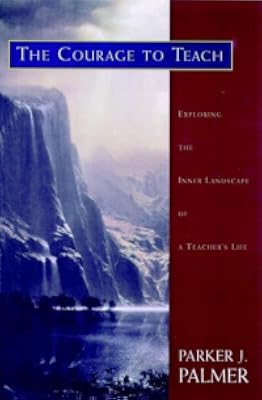
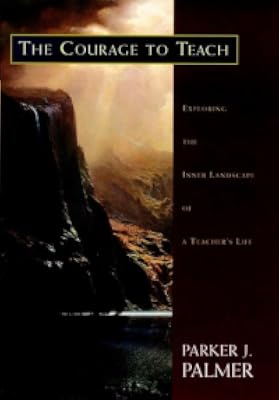
The Courage to Teach: Exploring the Inner Landscape of a Teacher's Life
by Parker J. Palmer
On This Page
Description
This book builds on a simple premise: good teaching cannot be reduced to technique but is rooted in the identity and integrity of the teacher. Good teaching takes myriad forms but good teachers share one trait: they are authentically present in the classroom, in community with their students and their subject. They possess "a capacity for connectedness" and are able to weave a complex web of connections between themselves, their subjects, and their students, helping their students weave a show more world for themselves. Connections made by good teachers are held not in their methods but in their hearts-the place where intellect, emotion, spirit, and will converge in the human self. show lessTags
Recommendations




Member Reviews
This book resonated in my heart more than nearly any book I have ever read, but with a caveat. While the themes Palmer discussed resonated with my heart, I didn't always find the specific example or the writing to be on par with the "truths" explored. The key truths for me were: Teach out of identity and core not technique. Fear and alienation are the enemies of effective teaching. Greater truths are often paradoxes. Trying to resolve paradoxes too quickly short-circuits learning. The tension from paradoxes can leave us open provide we have fuel to endure the tension which requires love and suffering. Finding truth as a community centered around a subject rather than "objective facts" and experts. Teaching from the microcosm. From an show more impact in my life this is a five start. From a completeness of the topic / writing quality, this is a three star. show less
I've heard everyone and their brother say that The Courage to Teach is a must-read for anyone in education, but I just couldn't get into it. I definitely found some gems, but Palmer's thoughts were not terribly well organized and he often repeated points. I didn't hate it, it just felt a lot longer than its 200-something pages. Maybe because classroom teaching is only one part of my job rather than the majority of it, I didn't relate well enough. I don't know. Educators should still read it, even if it's only so you can be a part of the conversation about it.
The courage to Teach builds on a simple premise: good teaching cannot be reduced to technique, but is rooted in the identity and integrity of the teacher. Good teaching takes myriad forms, but good teachers share one trait: they are authentically present in the classroom, deeply connected with their students and their subject. These connections are held in the teacher’s heart— the place where intellect, emotion, and spirit converge in the human self.
I read this book sometime during my second year of university teaching. I couldn't understand the conflicting feelings I had about teaching -- some days I felt like such a "phony" standing in front of these students presuming to teach them anything and other days I felt like a master teacher. Reading Parker J. Palmer's "The Courage to Teach" set my mind at ease. Here was someone who had been teaching much longer than me yet he still had days when he felt he had failed his students. This book is a good reminder of why we choose to teach and a great encouragement to keep teaching.
Parker Palmer has a big vocabulary and makes you pull out the dicionary every now and then, but reading this book is a must for any current or future teacher. Teaching is a calling based around the love of students and subject. Reading Palmer is like mining for gold; a lot of work with rich rewards.
I have read and re-read this wonderful volume--both on my own and in conjunction with educator colleagues from several schools. I have highlighted and re-highlighted many passages. This book really bears re-reading well. To me, that attests to its lasting value.
One of my favorite excerpts, for instance, is this one (which falls on pp. 107 - 108 of Courage to Teach):
"When we are at our best, it is because the grace of great things has evoked from us the virtues that give educational community its finest form:
* We invite diversity into our community not because it is politically correct but because diverse viewpoints are demanded by the manifold mysteries of great things.
* We embrace ambiguity not because we are confused or indecisive but show more because we understand the inadequacy of our own concepts to embrace the vastness of great things.
* We welcome creative conflict not because we are angry or hostile but because conflict is required to correct our biases and prejudices about the nature of great things.
* We practice honesty not only because we owe it to one another but because to lie about what we have seen would be to betray the truth of great things.
* We experience humility not because we have fought and lost but because humility is the only lens through which great things can be seen--and once we have seen them, humility is the only posture possible...." show less
One of my favorite excerpts, for instance, is this one (which falls on pp. 107 - 108 of Courage to Teach):
"When we are at our best, it is because the grace of great things has evoked from us the virtues that give educational community its finest form:
* We invite diversity into our community not because it is politically correct but because diverse viewpoints are demanded by the manifold mysteries of great things.
* We embrace ambiguity not because we are confused or indecisive but show more because we understand the inadequacy of our own concepts to embrace the vastness of great things.
* We welcome creative conflict not because we are angry or hostile but because conflict is required to correct our biases and prejudices about the nature of great things.
* We practice honesty not only because we owe it to one another but because to lie about what we have seen would be to betray the truth of great things.
* We experience humility not because we have fought and lost but because humility is the only lens through which great things can be seen--and once we have seen them, humility is the only posture possible...." show less
A favorite because it reminds me of the heart of teaching. Probably the one Palmer book to read if you're just going to read one. He reminds me about the heart of teaching, the personal or spiritual aspects that often get lost in the rush to assure that teaching is "evidence-based."
Members
- Recently Added By
Lists

Books for Educators
164 works; 6 members
Author Information

40+ Works 7,800 Members
Parker J. Palmer was born in 1939 in Chicago. He attended Carleton College where he studied Philosophy and Sociology and graduated in 1961. He then went on to complete his Phd in Sociology at UC Berkeley. After graduation, he took a teaching position at Georgetown University and became involved with the Religious Society of Friends at Pendle Hill. show more He is the founder and Senior Partner of the Center for Courage and Renewal which operates the "Courage to Teach" program for K-12 educators across the country. He has published over one hundred essays and eight books. He has also been recognized with thirteen honorary degrees, two Distinguished Achievement Awards from the National Educational Press Association, and grants from the Danforth Foundation and the Lilly Endowment. Parker Palmer's title's include: The Promise of Paradox: A Celebration of Contradictions in the Christian Life, To Know As We Are Known: Education as a Spiritual Journey, and On the Brink of Everything: Grace, Gravity, and Getting Old. (Bowker Author Biography) show less
Work Relationships
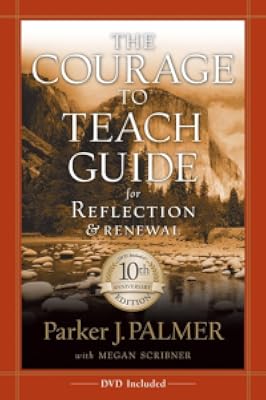
Has as a reference guide/companion
Common Knowledge
- Original publication date
- 1998
Classifications
- Genres
- Nonfiction, Religion & Spirituality
- DDC/MDS
- 371.102 — Society, government, & culture Education Schools and their activities; special education Teachers; Teaching personnel; Professors, masters instructors Personal influence
- LCC
- LB1775 .P25 — Education Theory and practice of education Theory and practice of education Education and training of teachers and Professional aspects of teaching and school
- BISAC
Statistics
- Members
- 1,754
- Popularity
- 12,535
- Reviews
- 15
- Rating
- (4.12)
- Languages
- English, Spanish
- Media
- Paper, Audiobook, Ebook
- ISBNs
- 26
- ASINs
- 12