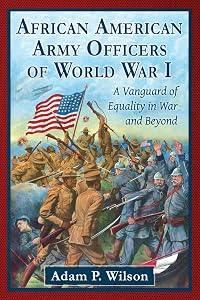
African American Army Officers of World War I: A Vanguard of Equality in War and Beyond
by Adam P. Wilson
On This Page
Description
In April 1917, Congress approved President Woodrow Wilson's request to declare war on the Central Powers, thrusting the United States into World War I with the rallying cry, ""The world must be made safe for democracy."" Two months later 1,250 African American men--college graduates, businessmen, doctors, lawyers, reverends and non-commissioned officers--volunteered to become the first blacks to receive officer training at Fort Des Moines, Iowa. Denied the full privileges and protections of show more democracy at home, they prepared to defend it abroad in hopes that their service would be rewarded with show lessTags
Recommendations

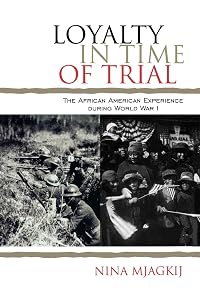

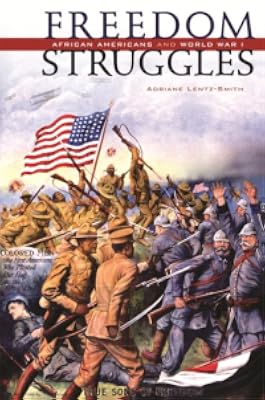

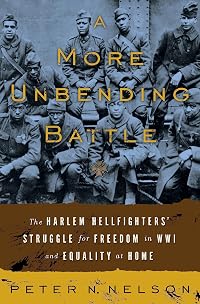









Member Recommendations
Les combattants africains dits Tirailleurs Sénégalais au secours de la France. 1857-1945 by Samuel Mbajum
Artymedon about African troops on the European Theater of war

Member Reviews
In African American Army Officers of World War I: A Vanguard of Equality in War and Beyond, Adam P. Wilson investigates “the postwar contributions of the Fort Des Moines officers toward gaining equality, ending segregation, and combating discrimination” (p. 10). Wilson begins his examination with an overview of the history of black soldiers in America, paying particular attention to contributions during the Civil War and Spanish-American War as these two conflicts were relatively fresh in American’s minds at the outset of World War I. Following this, Wilson details the battle to establish a segregated officer training camp at Fort Des Moines and the African American community’s work to recruit more than the minimum amount of men show more required.
Wilson does not spend much time covering the 92nd and 93rd Infantry Divisions during the war itself, primarily focusing on why men joined in the first place and what they did following their military service. Focusing on these soldiers’ post-war work, Wilson organizes his final chapters by topic: work through the law, work through the press, and work through education. In discussing work through the law, Wilson writes, “Several officers in the 92nd Division returned to America and became an integral part of the NAACP’s litigation team and the organization in general” (p. 113). These men fought and won legal battles that laid the groundwork for Brown v. Board of Education. In work through the press, Wilson argues that the “former officers of Fort Des Moines built a strong foundation through their literature and their activism in the ‘New Negro’ movement for future generations to build upon in the battle for justice and democracy” (p. 162). The black press gave former officers the means to expose segregation and the white press’s attempts at race baiting. In education, Wilson writes, “The officers of Fort Des Moines who returned to serve as educators and coaches mentored future generations of African Americans,” laying the groundwork for the future Civil Rights movement (p. 171). Finally, Wilson concludes his book with the desegregation of the military in 1948, which he links to the African American officers of WWI, writing, “These former officers and those who stayed on active duty in the military continued to fight for equality and integration in the armed forces long after their combat days” (p. 181).
While many historians have focused on the efforts of World War II soldiers in the Civil Rights movement, especially the “Double V for Victory” campaign, there remains a dearth of material about the work of African American soldiers in the First World War. Despite focusing on the men from a military unit, Wilson is not writing military history. For those looking for a military history, I recommend the documentary Men of Bronze: The Black Heroes of World War I or Max Brooks’ fictionalized version of the 369th Infantry Regiment, The Harlem Hellfighters. Rather than write a military history, Wilson seeks to show how African Americans tried to use their military service to combat racism through deeds and, when that failed due to systemic racism, used the values they brought to the military and honed through officer training to lead the charge for civil rights after World War I. In African American Army Officers of World War I, Wilson writes an excellent history of the early Civil Rights Movement. show less
Wilson does not spend much time covering the 92nd and 93rd Infantry Divisions during the war itself, primarily focusing on why men joined in the first place and what they did following their military service. Focusing on these soldiers’ post-war work, Wilson organizes his final chapters by topic: work through the law, work through the press, and work through education. In discussing work through the law, Wilson writes, “Several officers in the 92nd Division returned to America and became an integral part of the NAACP’s litigation team and the organization in general” (p. 113). These men fought and won legal battles that laid the groundwork for Brown v. Board of Education. In work through the press, Wilson argues that the “former officers of Fort Des Moines built a strong foundation through their literature and their activism in the ‘New Negro’ movement for future generations to build upon in the battle for justice and democracy” (p. 162). The black press gave former officers the means to expose segregation and the white press’s attempts at race baiting. In education, Wilson writes, “The officers of Fort Des Moines who returned to serve as educators and coaches mentored future generations of African Americans,” laying the groundwork for the future Civil Rights movement (p. 171). Finally, Wilson concludes his book with the desegregation of the military in 1948, which he links to the African American officers of WWI, writing, “These former officers and those who stayed on active duty in the military continued to fight for equality and integration in the armed forces long after their combat days” (p. 181).
While many historians have focused on the efforts of World War II soldiers in the Civil Rights movement, especially the “Double V for Victory” campaign, there remains a dearth of material about the work of African American soldiers in the First World War. Despite focusing on the men from a military unit, Wilson is not writing military history. For those looking for a military history, I recommend the documentary Men of Bronze: The Black Heroes of World War I or Max Brooks’ fictionalized version of the 369th Infantry Regiment, The Harlem Hellfighters. Rather than write a military history, Wilson seeks to show how African Americans tried to use their military service to combat racism through deeds and, when that failed due to systemic racism, used the values they brought to the military and honed through officer training to lead the charge for civil rights after World War I. In African American Army Officers of World War I, Wilson writes an excellent history of the early Civil Rights Movement. show less
 This review was written for LibraryThing Early Reviewers.
Disclosure: I received this book as part of the LibraryThing Early Reviewers program. Some people think this may bias a reviewer so I am making sure to put this information up front. I don't think it biases my reviews, but I'll let others be the judge of that.
U.S. history can be thought of in two very different ways. On the one hand, there is the version of history that most school children are taught that seems to have inspired such properties as the History Rock portions of Schoolhouse Rock and which dominates the nostalgia-filled speeches of politicians. In this version of history, the U.S. is a shining city on a hill, built by idealists upon the principles of liberty and freedom after throwing off the yoke of British tyranny. In show more this version, the U.S. became a champion of progress and democracy, a nation filled with exceptional people that had an exceptional role in the world. On the other, there is reality, which is a version of history that is far less inspiring, but also far more interesting. African American Army Officers of World War I is about the second, very real version of U.S. history, and is an unflinching examination of some of the the best and worst aspects of U.S. history.
In 1915 and 1916, with the prospect of entering the raging war in Europe dominating many minds in the United States, prominent members of the African-American community began pushing for black candidates be trained as officers in the American army. As early as July 1916, calls were made for a training camp to be established for African-American men to receive training that would prepare them to be officer candidates in the event of American entry into the war. Given the title of this book, it should come as no surprise that after much political maneuvering and effort, the Fort Des Moines Training Camp for Colored Officers was established in 1917 with an initial class of 1,250 candidates drawn from the black community - 250 to come from the ranks of non commissioned officers already serving in the U.S. Army, and the rest to be drawn from the civilian population. This book is the account of the push for the creation of this camp, the controversies that surrounding its formation and operation, and the men who served first in its program and then as officers in the U.S. Army during World War I, and the profound ways in which these men shaped the United States following the war.
African-American soldiers have served in all of the was waged by the United States. The black regiments raised by the Union during the U.S. Civil War, such as the 54th Massachusetts, are well known, as are the unites of black "Buffalo Soldiers" who served on the frontier, but black soldiers also fought in the American Revolution and the War of 1812 (although not all served on the side of the U.S.). Wilson documents this history of black service in the first chapter of African-American Army Officers of World War I to give the context in which the debate over creating a segregated camp to train African-American officers for services in the army took place.
The most critical observation of the period between the U.S. Civil War and the establishment of the training camp at Fort Des Moines is the dichotomy between the aspirational language used in the laws concerning black service in the U.S. armed forces, and the actually under which they were implemented. Formally there was no legal impediment to black candidates entering the service academies at Annapolis and West Point, but in practice the deficiencies in the education afforded to most black citizens and the reluctance of the legislative branch to recommend such candidates meant that very few could even gain admission. Even if a black candidate did gain admission to one of the service academies, the environment was so hostile that very few managed to graduate - between the U.S. Civil War and U.S. entry into World War I, only a handful of black soldiers managed to graduate and secure positions as officers, the most successful of which was Lieutenant Colonel Charles Young whose career seems to have been hampered by the Army's efforts to ensure that he was never placed in a position where he would command white troops, going to far as to have him forced into retirement for medical reasons rather than promote the officer to Brigadier rank.
This official equality and practical discrimination was replicated in the enlisted ranks, most notably in an instance in Brownsville, Texas in which a company of black soldiers assigned to the army installation there aroused such hatred from the local populace that the locals threatened to meet the incoming soldiers with a posse to drive them out. After the soldiers had been stationed there, an incident in which the soldiers were almost certainly merely defending themselves resulted in an inquest after which President Theodore Roosevelt sided with the locals and had all of the black soldiers present dishonorably discharged. This should come as little surprise considering Roosevelt's disparaging remarks concerning the black soldiers who served with him in the Spanish-American War. Time and again, official equality for blacks in the armed services was undermined by a practical application of the rules that was anything but even-handed. Behind even this official facade of equality lurked naked racism: After the Brownsville incident, many in Congress urged that blacks be formally barred from entering the service academies, and that all black non-commissioned officers in the armed forces be stripped of their rank.
It is against this historical backdrop that the call for the creation of a training camp for black officers was made. Many leaders in the black community foresaw American involvement in the conflict in Europe, and argued that blacks should serves, and that the Army should give black citizens the opportunity to train as officers. Prominent voices in the black community such as W.E.B. Du Bois, Kelly Miller, Fred R. Moore, and others called upon young African-American men to step up to volunteer for duty and become both an example of the loyalty and bravery of the African-American citizen, and a new generation of leaders for their community. As Wilson details, this call was not without controversy, both within and without the black community. Many white Americans opposed the idea of training black men as officers, mostly for predictably racist reasons: Black men were said to be fundamentally unfit for leadership, black men were inherently unreliable, black men were not intelligent enough to serve as officers, and so on. Many within the black community opposed such a training camp on far sounder grounds - the first reviving arguments made during the Spanish-American War which asked why black men should be asked to volunteer to defend liberty and democracy abroad when the society they lived in denied them the same at home. This is a quite reasonable question, and when one reads and outline of how African-American soldiers had been treated to that point, the question that comes to mind is not "why should blacks serve", but rather "why have blacks not deserted the nation in droves".
The second objection to the proposed camp from the black community was something of an extension of the first: The proposed camp was to be segregated. Black officer candidates were to train separately from white officer candidates, and given the Army's track record when it came to actually implementing equal treatment for black and white soldiers, having concerns in this area was entirely justified. Further, having a separate segregated training camp was also seen as an ideological affront, a statement from the government that black America was different from white America. While many modern day Americans are familiar with the Jim Crow laws segregating blacks from whites, many also have the somewhat blinkered view that such laws were the exclusive province of Southern states. The story of the creation of, and controversy surrounding, the training camp at Fort Des Moines should put these notions to rest: In the early part of the 20th century, the United States as a whole was remained an almost unapologetically racist society.
Despite these objections, the segregated Seventeenth Provisional Training Regiment was created - those who supported it reasoning that even though a segregated training camp was not an ideal solution, half of something was better than all of nothing. A call went out for volunteers, and around 1,250 men responded, drawn from among the best and brightest that the African-American community of that era had to offer as pleas went out for "doctors, lawyers, teachers, business men, and all those who graduated from high school" to enlist. Roughly a quarter of the men who responded had been educated at Howard University, the remainder from dozens of other institutions of higher learning. As Wilson details, the recruitment of this collection of volunteers was not without hiccups, but in retrospect it seems almost remarkable that so many men would choose to give of themselves to an institution that had proved so hostile to them for so long.
Although many prominent black leaders had hoped that Colonel Young would command the training regiment, but his forced retirement prevented that from happening. Instead, Colonel Charles C. Ballou was given the position, and as Wilson lays out, the work of transforming the volunteers into officers began. Much of the history of this process seems fairly unremarkable, although Wilson does highlight both the triumphs of the cadets, and the to be expected indignities heaped upon them. Des Moines was chosen because, as a northern city, it was believed that it would be more welcoming to the training regiment than a southern locale would be, and to a certain extent this was true. On the other hand, racism ran deep in American society, and there were some incidents that are documented as part of Wilson's narrative. More troubling were the obstacles the U.S. Army put in the way of the cadet's success. For his part, Ballou seems to have done his best to prepare the soldiers under his command for their role as officers, but the U.S. Army seems to have been determined to undermine them in sneaky ways. The officers trained at Fort Des Moines were only given infantry training, and were not to be allowed to enter active duty as artillery or communications officers. Later, when some officers were allowed to try their hand at artillery work, they were given little or no training in the use of the equipment, and then their predictably poor test scores were used as evidence that black officers were unsuited to that branch of the service. When all-black battalions were formed, they were divided and scattered across bases throughout the country so as to assuage fears that too many armed black men in one space would foment rebellion.
Time after time, through both official and unofficial means, overt and covert, the men of the Seventeenth Provisional Training Regiment found obstacles placed in their path due to their race. Even so, the bulk of the cadets completed their training and received commissions as officers. If one were to think that their path from there would be smooth, one would be mistaken. Not content with undermining their efforts during training, the U.S. Army continued to do so after the officers and their men were shipped off to France - turning a blind eye to insubordination by white soldiers, issuing orders limiting the freedom of black soldiers while on leave, making efforts to keep black soldiers out of combat lest they demonstrate that they were actually effective at the job, and even going so far as to try to tell the French army not to be too nice to the black soldiers when they were put under French command. Despite France's own less than sterling record in dealing with black troops recruited from their colonial holdings, the French were far more welcoming to the black American troops than their own white American countrymen had been. Ballou, now the commander of the all-black 92nd Division, lost pretty much any built up good will he had earned during his time commanding the Fort Des Moines training camp by issuing a series of orders that his black officers considered insulting and demeaning. Even when black soldiers were allowed into combat, their performance was denigrated in official reports that seem at odds with the other available evidence.
As Wilson's account demonstrates, the optimism and hope that fueled the push to create the training camp at Fort Des Moines and establish a corps of black officers within the U.S. Army proved to be misguided. Despite overcoming the obstacles placed in their way, the service and loyalty provided by black soldiers in World War I did little to change the attitudes of the society they lived in. On the other hand, what Wilson's account does show is that many of the men of the Seventeenth Provisional Training Regiment went on to become prominent voices in the black community resulting in an array of political leaders, legal scholars, academics, authors, and artists who shaped the course of the push for equality and justice over the decades following the war. Wilson leans perhaps a bit too heavily on the notion that their shared wartime experience was a prime factor in this development - after all the men who joined the the Seventeenth Provisional Training Regiment were already civic-minded enough to volunteer for service in answer to a call that asked them to give of themselves for a greater cause. There is something of a chicken and egg question here: Did the men whose stories are told in this book become leaders of their community because of their service as officers in the U.S. Army, or did they choose service as officers because they were already on their way to becoming leaders. Either way, their contributions cannot be overstated, and their sacrifices should not be forgotten.
Wilson is exceptionally thorough in his reporting, at times perhaps too thorough, as there are a few places where the book gets a bit repetitive. Even so, African American Army Officers of World War I recounts an important chapter in U.S. history - a chapter of the kind that is far too often overlooked, and which should not be. Wilson's account tells the story of men who not only stood up to be counted in their nation's time of need, their actions forced their nation to begin to live up to its ideals. This is the history of the worst aspects of the United States, but at the same time an account of the nobility that has made the country better than it was before. For anyone who has an interest in the full account of the history of the United States, this book is likely to be a fascinating read.
This review has also been posted to my blog Dreaming About Other Worlds. show less
U.S. history can be thought of in two very different ways. On the one hand, there is the version of history that most school children are taught that seems to have inspired such properties as the History Rock portions of Schoolhouse Rock and which dominates the nostalgia-filled speeches of politicians. In this version of history, the U.S. is a shining city on a hill, built by idealists upon the principles of liberty and freedom after throwing off the yoke of British tyranny. In show more this version, the U.S. became a champion of progress and democracy, a nation filled with exceptional people that had an exceptional role in the world. On the other, there is reality, which is a version of history that is far less inspiring, but also far more interesting. African American Army Officers of World War I is about the second, very real version of U.S. history, and is an unflinching examination of some of the the best and worst aspects of U.S. history.
In 1915 and 1916, with the prospect of entering the raging war in Europe dominating many minds in the United States, prominent members of the African-American community began pushing for black candidates be trained as officers in the American army. As early as July 1916, calls were made for a training camp to be established for African-American men to receive training that would prepare them to be officer candidates in the event of American entry into the war. Given the title of this book, it should come as no surprise that after much political maneuvering and effort, the Fort Des Moines Training Camp for Colored Officers was established in 1917 with an initial class of 1,250 candidates drawn from the black community - 250 to come from the ranks of non commissioned officers already serving in the U.S. Army, and the rest to be drawn from the civilian population. This book is the account of the push for the creation of this camp, the controversies that surrounding its formation and operation, and the men who served first in its program and then as officers in the U.S. Army during World War I, and the profound ways in which these men shaped the United States following the war.
African-American soldiers have served in all of the was waged by the United States. The black regiments raised by the Union during the U.S. Civil War, such as the 54th Massachusetts, are well known, as are the unites of black "Buffalo Soldiers" who served on the frontier, but black soldiers also fought in the American Revolution and the War of 1812 (although not all served on the side of the U.S.). Wilson documents this history of black service in the first chapter of African-American Army Officers of World War I to give the context in which the debate over creating a segregated camp to train African-American officers for services in the army took place.
The most critical observation of the period between the U.S. Civil War and the establishment of the training camp at Fort Des Moines is the dichotomy between the aspirational language used in the laws concerning black service in the U.S. armed forces, and the actually under which they were implemented. Formally there was no legal impediment to black candidates entering the service academies at Annapolis and West Point, but in practice the deficiencies in the education afforded to most black citizens and the reluctance of the legislative branch to recommend such candidates meant that very few could even gain admission. Even if a black candidate did gain admission to one of the service academies, the environment was so hostile that very few managed to graduate - between the U.S. Civil War and U.S. entry into World War I, only a handful of black soldiers managed to graduate and secure positions as officers, the most successful of which was Lieutenant Colonel Charles Young whose career seems to have been hampered by the Army's efforts to ensure that he was never placed in a position where he would command white troops, going to far as to have him forced into retirement for medical reasons rather than promote the officer to Brigadier rank.
This official equality and practical discrimination was replicated in the enlisted ranks, most notably in an instance in Brownsville, Texas in which a company of black soldiers assigned to the army installation there aroused such hatred from the local populace that the locals threatened to meet the incoming soldiers with a posse to drive them out. After the soldiers had been stationed there, an incident in which the soldiers were almost certainly merely defending themselves resulted in an inquest after which President Theodore Roosevelt sided with the locals and had all of the black soldiers present dishonorably discharged. This should come as little surprise considering Roosevelt's disparaging remarks concerning the black soldiers who served with him in the Spanish-American War. Time and again, official equality for blacks in the armed services was undermined by a practical application of the rules that was anything but even-handed. Behind even this official facade of equality lurked naked racism: After the Brownsville incident, many in Congress urged that blacks be formally barred from entering the service academies, and that all black non-commissioned officers in the armed forces be stripped of their rank.
It is against this historical backdrop that the call for the creation of a training camp for black officers was made. Many leaders in the black community foresaw American involvement in the conflict in Europe, and argued that blacks should serves, and that the Army should give black citizens the opportunity to train as officers. Prominent voices in the black community such as W.E.B. Du Bois, Kelly Miller, Fred R. Moore, and others called upon young African-American men to step up to volunteer for duty and become both an example of the loyalty and bravery of the African-American citizen, and a new generation of leaders for their community. As Wilson details, this call was not without controversy, both within and without the black community. Many white Americans opposed the idea of training black men as officers, mostly for predictably racist reasons: Black men were said to be fundamentally unfit for leadership, black men were inherently unreliable, black men were not intelligent enough to serve as officers, and so on. Many within the black community opposed such a training camp on far sounder grounds - the first reviving arguments made during the Spanish-American War which asked why black men should be asked to volunteer to defend liberty and democracy abroad when the society they lived in denied them the same at home. This is a quite reasonable question, and when one reads and outline of how African-American soldiers had been treated to that point, the question that comes to mind is not "why should blacks serve", but rather "why have blacks not deserted the nation in droves".
The second objection to the proposed camp from the black community was something of an extension of the first: The proposed camp was to be segregated. Black officer candidates were to train separately from white officer candidates, and given the Army's track record when it came to actually implementing equal treatment for black and white soldiers, having concerns in this area was entirely justified. Further, having a separate segregated training camp was also seen as an ideological affront, a statement from the government that black America was different from white America. While many modern day Americans are familiar with the Jim Crow laws segregating blacks from whites, many also have the somewhat blinkered view that such laws were the exclusive province of Southern states. The story of the creation of, and controversy surrounding, the training camp at Fort Des Moines should put these notions to rest: In the early part of the 20th century, the United States as a whole was remained an almost unapologetically racist society.
Despite these objections, the segregated Seventeenth Provisional Training Regiment was created - those who supported it reasoning that even though a segregated training camp was not an ideal solution, half of something was better than all of nothing. A call went out for volunteers, and around 1,250 men responded, drawn from among the best and brightest that the African-American community of that era had to offer as pleas went out for "doctors, lawyers, teachers, business men, and all those who graduated from high school" to enlist. Roughly a quarter of the men who responded had been educated at Howard University, the remainder from dozens of other institutions of higher learning. As Wilson details, the recruitment of this collection of volunteers was not without hiccups, but in retrospect it seems almost remarkable that so many men would choose to give of themselves to an institution that had proved so hostile to them for so long.
Although many prominent black leaders had hoped that Colonel Young would command the training regiment, but his forced retirement prevented that from happening. Instead, Colonel Charles C. Ballou was given the position, and as Wilson lays out, the work of transforming the volunteers into officers began. Much of the history of this process seems fairly unremarkable, although Wilson does highlight both the triumphs of the cadets, and the to be expected indignities heaped upon them. Des Moines was chosen because, as a northern city, it was believed that it would be more welcoming to the training regiment than a southern locale would be, and to a certain extent this was true. On the other hand, racism ran deep in American society, and there were some incidents that are documented as part of Wilson's narrative. More troubling were the obstacles the U.S. Army put in the way of the cadet's success. For his part, Ballou seems to have done his best to prepare the soldiers under his command for their role as officers, but the U.S. Army seems to have been determined to undermine them in sneaky ways. The officers trained at Fort Des Moines were only given infantry training, and were not to be allowed to enter active duty as artillery or communications officers. Later, when some officers were allowed to try their hand at artillery work, they were given little or no training in the use of the equipment, and then their predictably poor test scores were used as evidence that black officers were unsuited to that branch of the service. When all-black battalions were formed, they were divided and scattered across bases throughout the country so as to assuage fears that too many armed black men in one space would foment rebellion.
Time after time, through both official and unofficial means, overt and covert, the men of the Seventeenth Provisional Training Regiment found obstacles placed in their path due to their race. Even so, the bulk of the cadets completed their training and received commissions as officers. If one were to think that their path from there would be smooth, one would be mistaken. Not content with undermining their efforts during training, the U.S. Army continued to do so after the officers and their men were shipped off to France - turning a blind eye to insubordination by white soldiers, issuing orders limiting the freedom of black soldiers while on leave, making efforts to keep black soldiers out of combat lest they demonstrate that they were actually effective at the job, and even going so far as to try to tell the French army not to be too nice to the black soldiers when they were put under French command. Despite France's own less than sterling record in dealing with black troops recruited from their colonial holdings, the French were far more welcoming to the black American troops than their own white American countrymen had been. Ballou, now the commander of the all-black 92nd Division, lost pretty much any built up good will he had earned during his time commanding the Fort Des Moines training camp by issuing a series of orders that his black officers considered insulting and demeaning. Even when black soldiers were allowed into combat, their performance was denigrated in official reports that seem at odds with the other available evidence.
As Wilson's account demonstrates, the optimism and hope that fueled the push to create the training camp at Fort Des Moines and establish a corps of black officers within the U.S. Army proved to be misguided. Despite overcoming the obstacles placed in their way, the service and loyalty provided by black soldiers in World War I did little to change the attitudes of the society they lived in. On the other hand, what Wilson's account does show is that many of the men of the Seventeenth Provisional Training Regiment went on to become prominent voices in the black community resulting in an array of political leaders, legal scholars, academics, authors, and artists who shaped the course of the push for equality and justice over the decades following the war. Wilson leans perhaps a bit too heavily on the notion that their shared wartime experience was a prime factor in this development - after all the men who joined the the Seventeenth Provisional Training Regiment were already civic-minded enough to volunteer for service in answer to a call that asked them to give of themselves for a greater cause. There is something of a chicken and egg question here: Did the men whose stories are told in this book become leaders of their community because of their service as officers in the U.S. Army, or did they choose service as officers because they were already on their way to becoming leaders. Either way, their contributions cannot be overstated, and their sacrifices should not be forgotten.
Wilson is exceptionally thorough in his reporting, at times perhaps too thorough, as there are a few places where the book gets a bit repetitive. Even so, African American Army Officers of World War I recounts an important chapter in U.S. history - a chapter of the kind that is far too often overlooked, and which should not be. Wilson's account tells the story of men who not only stood up to be counted in their nation's time of need, their actions forced their nation to begin to live up to its ideals. This is the history of the worst aspects of the United States, but at the same time an account of the nobility that has made the country better than it was before. For anyone who has an interest in the full account of the history of the United States, this book is likely to be a fascinating read.
This review has also been posted to my blog Dreaming About Other Worlds. show less
This review was written for LibraryThing Early Reviewers.How poor was the American debate in the years 1900 over race.
Pundits were agonizing over the question of knowing if a black Officer could command in a war situation, white soldiers. A solution was found by the military: a segregated training camp that would train the black non-commissioned officers and other educated candidates into becoming the future leaders of black troops. After much internal debate, black leaders accepted this solution.
Adam P. Wilson describes the racial biases and conflicts the mere presence of armed black soldiers created on American soil. Then segregation is turned upside down when the same soldiers are shipped to France around January 1918 and discover a different society not exempt from prejudice but more show more tolerant and somewhat familiar through the "Tirailleurs Senegalais" to the concept of black soldiers. The author quotes some of the soldiers having interracial relationships in France while knowing that back home they would risk being lynched in certain parts of the United States for the same reasons. Funny how some words have echoes up into to the current U.S. presidential debate when minorities are accused of being rapists. History strangely repeats itself in its poor choice of words and these black soldiers were confronted to the same unfounded accusations. However it was comfortable to society that black troops be led by white officers. I found that the French Army had only one captain of the black race during world war I according to an author from Mali KAMIAN Bakari. Some more research on this point would have been interesting to complete the comparison between the two army systems.
I wondered how Mr. Wilson would have commented over how blacks - those who from Haiti/Saint Domingue - who ironically would be called "Americans" by the French during the 1789 revolution, could rise, like the father of Alexandre Dumas, to the rank of General in the French Army and then would have had to wait more than 128 years, had they emigrated to the USA, to only make it to the rank of Lieutenant in the US Army. I would have liked to know if the fact that Haitian Blacks had had themselves brilliant generals during their war of independence, had then been raised by the commentators of the US debate over the idea of black Officers in the 1900s or if it fell into what Michel Rolph Trouillot called "Silencing the Past".
The photos of some of the 100,000.00 black soldiers including a jazz band that toured Europe and belonged to the 93rd infantry division are precious souvenirs the publisher provides in this book. General Pershing unfortunately does not escape the biases of his time concerning the segregation of Black troops even when General Petain was clamoring for their integration with French Units for combat tasks and not continue misusing them as laborers. Much is said about modern warfare and how some sources deemed black troop would be frightened by it to be proven wrong once they were in combat. Poignantly, the horrors of massive scale slaughter on the Western front would be supported with resilience by all races until new technology enabled to move out of the trench. Mr. Wilson successfully reminds us that in the mind of Word War I commanders, black soldiers were also seen as a last resort in view of the armies' attrition rate and were too often seen as cannon fodder used to fill the human gaps created by modern warfare. The daily micro inequities experienced by these Officers continued until the very end of the war and Adam P. Wilson unearthed very well the fact that many decorated with the highest French military honors for bravery in combat were not invited to the final victory parade in Paris.
But those who will think of finding a description of the engagements of these Officers will have to look in the book bibliography. Rapidly upon returning to the USA from France, they will confront the "Separate, but equal" Supreme Court doctrine and will do a different kind of fight to modify it. I found the Author's Chapter 5 titled "Legal Battles Against Segregation" well constructed.
I also again find striking that the immigration debate introduced in XXIth Century U.S.A. Presidential campaign has created a similar type of battleground against Amendment 13th, 14th and 15th of the Consitution then spearheaded by the Supreme Court decisions of 1873 and 1896 quoted by Mr. Wilson.
I do feel a world view would have added to this chapter another dimension; historical years have significance and to follow the thread between the Officers and France, it could have been reflected upon that at the same time Plessy Ferguson (1896) "struck down African Americans' right to equality", December 1894 had seen the beginning of the Dreyfus affair in France whose trials continued until 1899. At the same time Jim Crow laws legalized disfranchisement of black voters, the publications of Drumont in Europe were calling for exclusions of Jews in Europe. The last two chapters describe the cognitive dissonance experienced by these veterans going back home whose perceived victory on the battlefield without a victory in obtaining rights equal to those of the white majority, left them with a feeling of emptiness. Many resolved this conflict by joining the legal profession, journalism, advocacy or literature and then becoming the mentors of new generations. show less
Pundits were agonizing over the question of knowing if a black Officer could command in a war situation, white soldiers. A solution was found by the military: a segregated training camp that would train the black non-commissioned officers and other educated candidates into becoming the future leaders of black troops. After much internal debate, black leaders accepted this solution.
Adam P. Wilson describes the racial biases and conflicts the mere presence of armed black soldiers created on American soil. Then segregation is turned upside down when the same soldiers are shipped to France around January 1918 and discover a different society not exempt from prejudice but more show more tolerant and somewhat familiar through the "Tirailleurs Senegalais" to the concept of black soldiers. The author quotes some of the soldiers having interracial relationships in France while knowing that back home they would risk being lynched in certain parts of the United States for the same reasons. Funny how some words have echoes up into to the current U.S. presidential debate when minorities are accused of being rapists. History strangely repeats itself in its poor choice of words and these black soldiers were confronted to the same unfounded accusations. However it was comfortable to society that black troops be led by white officers. I found that the French Army had only one captain of the black race during world war I according to an author from Mali KAMIAN Bakari. Some more research on this point would have been interesting to complete the comparison between the two army systems.
I wondered how Mr. Wilson would have commented over how blacks - those who from Haiti/Saint Domingue - who ironically would be called "Americans" by the French during the 1789 revolution, could rise, like the father of Alexandre Dumas, to the rank of General in the French Army and then would have had to wait more than 128 years, had they emigrated to the USA, to only make it to the rank of Lieutenant in the US Army. I would have liked to know if the fact that Haitian Blacks had had themselves brilliant generals during their war of independence, had then been raised by the commentators of the US debate over the idea of black Officers in the 1900s or if it fell into what Michel Rolph Trouillot called "Silencing the Past".
The photos of some of the 100,000.00 black soldiers including a jazz band that toured Europe and belonged to the 93rd infantry division are precious souvenirs the publisher provides in this book. General Pershing unfortunately does not escape the biases of his time concerning the segregation of Black troops even when General Petain was clamoring for their integration with French Units for combat tasks and not continue misusing them as laborers. Much is said about modern warfare and how some sources deemed black troop would be frightened by it to be proven wrong once they were in combat. Poignantly, the horrors of massive scale slaughter on the Western front would be supported with resilience by all races until new technology enabled to move out of the trench. Mr. Wilson successfully reminds us that in the mind of Word War I commanders, black soldiers were also seen as a last resort in view of the armies' attrition rate and were too often seen as cannon fodder used to fill the human gaps created by modern warfare. The daily micro inequities experienced by these Officers continued until the very end of the war and Adam P. Wilson unearthed very well the fact that many decorated with the highest French military honors for bravery in combat were not invited to the final victory parade in Paris.
But those who will think of finding a description of the engagements of these Officers will have to look in the book bibliography. Rapidly upon returning to the USA from France, they will confront the "Separate, but equal" Supreme Court doctrine and will do a different kind of fight to modify it. I found the Author's Chapter 5 titled "Legal Battles Against Segregation" well constructed.
I also again find striking that the immigration debate introduced in XXIth Century U.S.A. Presidential campaign has created a similar type of battleground against Amendment 13th, 14th and 15th of the Consitution then spearheaded by the Supreme Court decisions of 1873 and 1896 quoted by Mr. Wilson.
I do feel a world view would have added to this chapter another dimension; historical years have significance and to follow the thread between the Officers and France, it could have been reflected upon that at the same time Plessy Ferguson (1896) "struck down African Americans' right to equality", December 1894 had seen the beginning of the Dreyfus affair in France whose trials continued until 1899. At the same time Jim Crow laws legalized disfranchisement of black voters, the publications of Drumont in Europe were calling for exclusions of Jews in Europe. The last two chapters describe the cognitive dissonance experienced by these veterans going back home whose perceived victory on the battlefield without a victory in obtaining rights equal to those of the white majority, left them with a feeling of emptiness. Many resolved this conflict by joining the legal profession, journalism, advocacy or literature and then becoming the mentors of new generations. show less
This review was written for LibraryThing Early Reviewers.Adam P. Wilson presents a vital history of the of the military service in the First World War of African-American officers and the greater impact of their service on the evolution of the civil rights movement in the United States. The opportunity for African-American officers to lead troops in combat was a revolutionary event and is largely uncovered. This book covers the major events leading up to, including and resulting from this event.
As other reviewers have noted, the structure of the book seems largely unedited. The chronology and general pacing is awkward which diminishes the coherence of this important chronicle. While the information is dense and obviously well-researched, the impact is lessened by the structure of the press copy.
As other reviewers have noted, the structure of the book seems largely unedited. The chronology and general pacing is awkward which diminishes the coherence of this important chronicle. While the information is dense and obviously well-researched, the impact is lessened by the structure of the press copy.
This review was written for LibraryThing Early Reviewers.In April 1917, Congress approved President Woodrow Wilson's request to declare war on the Central Powers. At first yet again the white political power structure said no to Blacks in the military. Within months over 1,200 African American men professional men such as college graduates, businessmen, doctors, lawyers, volunteered to become the first blacks to receive officer training at a wholly segregated camp at Fort Des Moines, Iowa. While African American citizens in the United States were denied the full privileges and protections of democracy at home, many still were prepared to defend it abroad in hopes that their service would be rewarded with equal citizenship at war's end. Adam Wilson’s book in a very accurately and detailed show more manner tells the stories of these black American soldiers' lives during training, in combat and after their return home. Mr. Wilson writes about the many issues of American and international racism and talks of the Army's misuse of African American troops. Adam Wilson’s book is wonderfully and accurately written.
General George Washington, Abraham Lincoln, Teddy Roosevelt, General Pershing and other notable historical figures had horribly racist comments and feelings towards their black troops and citizens. Lincoln, Roosevelt and General Pershing felt black troops were good enough only for laborers, but not as combatants.
Most of our school history books totally neglect to tell stories such as this with all of the ugly American racist and bigoted views left in. Mr. Adam Wilson’s book is a must read for students of History as well as that of all mankind. show less
General George Washington, Abraham Lincoln, Teddy Roosevelt, General Pershing and other notable historical figures had horribly racist comments and feelings towards their black troops and citizens. Lincoln, Roosevelt and General Pershing felt black troops were good enough only for laborers, but not as combatants.
Most of our school history books totally neglect to tell stories such as this with all of the ugly American racist and bigoted views left in. Mr. Adam Wilson’s book is a must read for students of History as well as that of all mankind. show less
This review was written for LibraryThing Early Reviewers.A little treasure. Insightful, but sad that it would take several more decades for these men to achieve the justice they sought. Well written and well researched. It's the story of great heroism and those who couldn't rise to the level of hereo.
This review was written for LibraryThing Early Reviewers.For the student researching World War I and the role of African Americans, AFRICAN AMERICAN ARMY OFFICERS OF WORLD WAR I: A Vanguard of Equality in War and Beyond, by Adam P. Wilson, is the book for you. Very well researched. This book tells another unknown or little known episode in American history. Extensive notes and bibliography. Highly recommended for the serious student of world history.
This review was written for LibraryThing Early Reviewers.Members
- Recently Added By
Author Information
2 Works 22 Members
Adam P. Wilson joined the department of history and philosophy at the University of Tennessee at Martin in 2011. His expertise is in African American history. He lives in Arlington, Tennessee.
Common Knowledge
- Original publication date
- 2015
- People/Characters
- General Charles Mangin
- Important places
- Fort Des Moines Provisional Army Officer Training School , Des Moines, Iowa, USA
Classifications
Statistics
- Members
- 20
- Popularity
- 1,277,249
- Reviews
- 13
- Rating
- (4.35)
- Languages
- English
- Media
- Paper, Ebook
- ISBNs
- 2