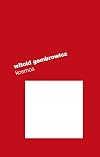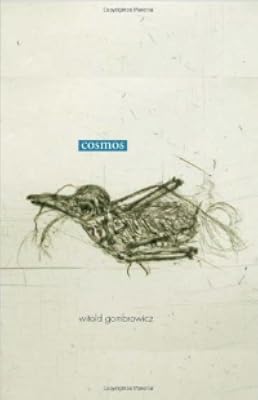
Cosmos
by Witold Gombrowicz
On This Page
Description
A dark, quasi-detective novel, ""Cosmos ""follows the classic noir motif to explore the arbitrariness of language, the joke of human freedom, and man's attempt to bring order out of chaos in his psychological life.Published in 1965, ""Cosmos ""is the last novel by Witold Gombrowicz (1904-1969) and his most somber and multifaceted work. Two young men meet by chance in a Polish resort town in the Carpathian Mountains. Intending to spend their vacation relaxing, they find a secluded family-run show more ""pension. ""But the two become embroiled first in a macabre event on the way to the ""pension, ""then in the peculiar activities and psychological travails of the family running it. Gombrowicz offers no solution to their predicament.""Cosmos ""is translated here for the first time directly from the Polish by Danuta Borchardt, translator of ""Ferdydurke."". show lessTags
Recommendations



















Member Recommendations
Member Reviews
…being a non-sparrow, it was, in a small way, a sparrow…
When two young men of middling acquaintance take a room in a country boarding house as a temporary refuge from school, work and family, their gregarious host welcomes their retreat to ‘peace and quiet, where the intellect can wallow like a fruit in a compote.' The ironic truth becomes apparent soon enough. Gombrowicz was a master of fiction that is both reflective and illustrative of our late-modern mental space, writing that conveys an idea but is also an example of that idea. If you don’t see the world as Gombrowicz did―as 'an inscrutable overabundance of entanglements,' ‘with every pulsation of our life composed of billions of trifles,’ ‘an excess of reality, show more swelling beyond endurance,’ ―his work will make little sense.
Our narrator Witold feels like someone looking for a melody or theme around which to re-create his history (who isn’t?) but he is distracted (who isn’t?) by concurrences, ‘the cobweb of connections.’ My hand has just moved and is touching the spoon―her hand has also moved and is touching the other spoon. All is ‘tumult’...‘cascade, vortex, swarm’...‘agglomeration, welter and whirl.’ The farther is closer, the trivial and nonsensical intrusive and hellish. The world is a trap. Everything looks like a symbol. Witold (and the reader) searches and studies as if there was something here to decipher. The decision to veer between two stones lying on a dirt path assumes an almost unbearable weight. Too much, too much. Which is the drop that makes the cup overflow?
Gombrowicz makes few accommodations to the reader. He writes books that thrum and rattle in your hand. Tone, feel, and vibe rather than character, plot, and story. (Hats off to the translator Danuta Borchardt). Best to just disremember the conventions of fiction and leap in.
The house ahead of us looked bitten by dust, to its very core, weakened…and the valley was like a false chalice, a poisonous bouquet, filled with powerlessness, the sky was disappearing, curtains were being drawn, closing, resistance was rising, objects were refusing to join in, they were crawling into their burrows, disappearance, disintegration, finality―even though there was still some light―but one was affected by the malicious depravity of vision itself. I smiled because, I thought, darkness can be convenient, while not seeing one can approach, come closer, touch, enfold, embrace, and love to the point of madness, but I didn’t feel like it, I didn’t feel like doing anything, I had eczema, I was sick, nothing, nothing, just spit into her mouth and nothing. show less
When two young men of middling acquaintance take a room in a country boarding house as a temporary refuge from school, work and family, their gregarious host welcomes their retreat to ‘peace and quiet, where the intellect can wallow like a fruit in a compote.' The ironic truth becomes apparent soon enough. Gombrowicz was a master of fiction that is both reflective and illustrative of our late-modern mental space, writing that conveys an idea but is also an example of that idea. If you don’t see the world as Gombrowicz did―as 'an inscrutable overabundance of entanglements,' ‘with every pulsation of our life composed of billions of trifles,’ ‘an excess of reality, show more swelling beyond endurance,’ ―his work will make little sense.
Our narrator Witold feels like someone looking for a melody or theme around which to re-create his history (who isn’t?) but he is distracted (who isn’t?) by concurrences, ‘the cobweb of connections.’ My hand has just moved and is touching the spoon―her hand has also moved and is touching the other spoon. All is ‘tumult’...‘cascade, vortex, swarm’...‘agglomeration, welter and whirl.’ The farther is closer, the trivial and nonsensical intrusive and hellish. The world is a trap. Everything looks like a symbol. Witold (and the reader) searches and studies as if there was something here to decipher. The decision to veer between two stones lying on a dirt path assumes an almost unbearable weight. Too much, too much. Which is the drop that makes the cup overflow?
Gombrowicz makes few accommodations to the reader. He writes books that thrum and rattle in your hand. Tone, feel, and vibe rather than character, plot, and story. (Hats off to the translator Danuta Borchardt). Best to just disremember the conventions of fiction and leap in.
The house ahead of us looked bitten by dust, to its very core, weakened…and the valley was like a false chalice, a poisonous bouquet, filled with powerlessness, the sky was disappearing, curtains were being drawn, closing, resistance was rising, objects were refusing to join in, they were crawling into their burrows, disappearance, disintegration, finality―even though there was still some light―but one was affected by the malicious depravity of vision itself. I smiled because, I thought, darkness can be convenient, while not seeing one can approach, come closer, touch, enfold, embrace, and love to the point of madness, but I didn’t feel like it, I didn’t feel like doing anything, I had eczema, I was sick, nothing, nothing, just spit into her mouth and nothing. show less
This is a sordid, manic, twitching, shameful, tic-ridden fugue novel sweaty with the paranoia and voyeurism that are in the DNA of all detectives and detective stories. It's like Céline and Beckett and Canetti at their most dissociative, and also at their grubbiest and most masturbatory. To be honest I prefer Gombrowicz's earlier fiction, but Cosmos has a sudorific, swivel-eyed charm all of its own. To quote The Cruel Sea, think I need a brain wash.
Two young men show up at a bed & breakfast in the Polish countryside. They've come there to get away from the hustle and bustle of the big city and have some peace and quiet, but it turns out to be anything but; not only do they find a macabre and mystifying corpse nearby, but the family they get to live with seems to have a lot of unresolved issues, which the two youngsters soon find themselves caught up in... and as always in these types of stories, somebody's going to die before it's all over.
Cosmos, like all detective novels, is all about finding the clues. Clues being that which deviates from what we perceive to be the norm; the "C'est un cauchemar!" spoken in the wrong language, the mysterious blue key on the table, the rake moved show more to point at the servant's window. So our hero and narrator Witold and his friend start to gather evidence. But how, in a world they don't know, surrounded by people they don't know, are they supposed to know what are actual clues and what is normal? In trying to find out what things mean, at what point do they go from observing to concluding to ascribing?
The defining ability of mankind is not our sense of humour, or our love, or our hate, or our ability to use tools; animals can do all of that, in one way or another. What we can do, what only we can do, is to try and figure out meaning, to make sense. We (supposedly) understand intricate chains of cause-and-effect, we (supposedly) understand symbolism, we (supposedly) understand how context matters... and even when we get it wrong, even when there is no sense, we can make it. We look at a bunch of stars that are hundreds of light years apart and call them a constellation; we look at an abstract painting and call it a portrait; we look at a bunch of possibly related lives and call them a plot. Where there is no causal relationship, we'll invent one – thereby becoming both cause and effect ourselves.
...As you may gather, Cosmos is not your typical detective story. The obsession with the tiniest details is similar to another novel I read recently, Le Clezio's Terra Amata, but the difference couldn't be more drastic; where Le Clezio's protagonist sees only beauty and harmony in the great jumble of existence, Gombrowicz's sees perversion, deviance and taboo in everything that doesn't fit his picture of what's normal; and being a good catholic, he's both repulsed and attracted, ashamed and excited by it. It's not an easy read; it's confusing, with a narrator who at times is verging on either stream-of-consciousness or full-on paranoia, another main character who speaks complete nonsense half the time, and those looking for a straight A to Z plot are advised to stay away. As darkly humorous as Gombrowicz always is, the narrator gets on my nerves a bit after a while. Not a lot, but a little bit.
And yet somehow, Cosmos is a detective story. A surreal, nightmarish, perverted detective story, but a detective story nonetheless in both plot and form. (Then again, so is Crime And Punishment.) And like all great detective stories (and opposed to the vast majority of them) it goes much further than that; in trying to ferret out the cause and effect of what's going on, it's a perfect analogy for modern man trying to find his way in an ever more confusing world. Find the killer, save the damsel, save the world, figure out how everything works, live happily ever after. And so, the one place where Cosmos deviates (heh) from the norm is in its perception of whether that is at all possible. The traditional detective story tries to create order from chaos; take a number of seemingly unrelated clues, and then use your little grey cells to piece them all together into a watertight cause-and-effect narration of what happened; the killer is caught, the deviant object is removed and order is restored. The story has a clear beginning and a clear end. Except Gombrowicz won't play that game; he can't see one clear meaning, one clear plot rising from chaos - you can't return to normalcy since there was never any normalcy to begin with. In trying to solve one mystery, bring order to one seemingly chaotic chain of events, the detective has just created new mysteries, uncovered new deviations. At some point, the deviation becomes the norm; as Frank Zappa once said, "anything played wrong twice in a row is a new arrangement".
It's a hell of a novel. It gives me a headache, and I'm actually not sure I enjoyed it all that much, but it's certainly a thinker. Much like Witold, your experience of it will probably depend on what you bring into it and how much you're willing to work. It's a novel that makes you doubt your own reading of it, and that can only be a good thing. show less
Cosmos, like all detective novels, is all about finding the clues. Clues being that which deviates from what we perceive to be the norm; the "C'est un cauchemar!" spoken in the wrong language, the mysterious blue key on the table, the rake moved show more to point at the servant's window. So our hero and narrator Witold and his friend start to gather evidence. But how, in a world they don't know, surrounded by people they don't know, are they supposed to know what are actual clues and what is normal? In trying to find out what things mean, at what point do they go from observing to concluding to ascribing?
The defining ability of mankind is not our sense of humour, or our love, or our hate, or our ability to use tools; animals can do all of that, in one way or another. What we can do, what only we can do, is to try and figure out meaning, to make sense. We (supposedly) understand intricate chains of cause-and-effect, we (supposedly) understand symbolism, we (supposedly) understand how context matters... and even when we get it wrong, even when there is no sense, we can make it. We look at a bunch of stars that are hundreds of light years apart and call them a constellation; we look at an abstract painting and call it a portrait; we look at a bunch of possibly related lives and call them a plot. Where there is no causal relationship, we'll invent one – thereby becoming both cause and effect ourselves.
...As you may gather, Cosmos is not your typical detective story. The obsession with the tiniest details is similar to another novel I read recently, Le Clezio's Terra Amata, but the difference couldn't be more drastic; where Le Clezio's protagonist sees only beauty and harmony in the great jumble of existence, Gombrowicz's sees perversion, deviance and taboo in everything that doesn't fit his picture of what's normal; and being a good catholic, he's both repulsed and attracted, ashamed and excited by it. It's not an easy read; it's confusing, with a narrator who at times is verging on either stream-of-consciousness or full-on paranoia, another main character who speaks complete nonsense half the time, and those looking for a straight A to Z plot are advised to stay away. As darkly humorous as Gombrowicz always is, the narrator gets on my nerves a bit after a while. Not a lot, but a little bit.
And yet somehow, Cosmos is a detective story. A surreal, nightmarish, perverted detective story, but a detective story nonetheless in both plot and form. (Then again, so is Crime And Punishment.) And like all great detective stories (and opposed to the vast majority of them) it goes much further than that; in trying to ferret out the cause and effect of what's going on, it's a perfect analogy for modern man trying to find his way in an ever more confusing world. Find the killer, save the damsel, save the world, figure out how everything works, live happily ever after. And so, the one place where Cosmos deviates (heh) from the norm is in its perception of whether that is at all possible. The traditional detective story tries to create order from chaos; take a number of seemingly unrelated clues, and then use your little grey cells to piece them all together into a watertight cause-and-effect narration of what happened; the killer is caught, the deviant object is removed and order is restored. The story has a clear beginning and a clear end. Except Gombrowicz won't play that game; he can't see one clear meaning, one clear plot rising from chaos - you can't return to normalcy since there was never any normalcy to begin with. In trying to solve one mystery, bring order to one seemingly chaotic chain of events, the detective has just created new mysteries, uncovered new deviations. At some point, the deviation becomes the norm; as Frank Zappa once said, "anything played wrong twice in a row is a new arrangement".
It's a hell of a novel. It gives me a headache, and I'm actually not sure I enjoyed it all that much, but it's certainly a thinker. Much like Witold, your experience of it will probably depend on what you bring into it and how much you're willing to work. It's a novel that makes you doubt your own reading of it, and that can only be a good thing. show less
Obsessive-compulsive, finicky, fidgety, microscopic, auto-erotic, pointless but sharp as a scratchy saw. Like a perverted Conan Doyle. Like a psychotic entomologist I knew, who was nearly blind and wore absurd thick glasses and could be seen wandering around the college campus trying to peer at bees from one inch away. He thought that car crashes happened somehow on account of him. Like Freud's idea of Dalí (as fanatic, as embarrassment to the institution). Could not be better.
What a great little find this was. It's one of the best short novels I've read. Gombrowicz's "cosmos," is a classic modernist universe: grim, alienated but full of dark humor and wild imagination. He's like an inverse Kafka--instead of giving you the total isolation of the individual, in his world everything is connected to everything else, but the connections are all toxic, creepy, and ultimately deadly. The translation seemed solid and assured--what a challenge, since the book's filled with wordplay.
On losing the plot
Cosmos is a strange novel about how one little display of perversion can trigger in an impressionable mind a web of misinterpretation and paranoia.
In chapters 1-7 we see the young narrator slowly losing the plot, finding ominous and bizarre connections between the tiniest things. Couple that with a morbid undercurrent of sexual frustration and he is led by his delusional machinations into doing something horrible. It's all sublimely disturbing - an unhinged stream-of-consciousness-type narrative with some bewitching descriptions of intense summer countryside.
In the final two chapters (8-9) I almost feel like the author lost the plot - a masturbatory theme creeps in, and there's this word "berg" which is said and show more attached to other words ... I must admit it bemused and confused me somewhat. However, by the end, the story reached a distorted full circle and earlier events came more into focus.
A short, memorable novel, psychologically honest, depicting how irrationality can easily infect the rational, and how our intrinsic want for meaning, order and significance can make us fabricate associations that aren't there ... (or are they?!) show less
Cosmos is a strange novel about how one little display of perversion can trigger in an impressionable mind a web of misinterpretation and paranoia.
In chapters 1-7 we see the young narrator slowly losing the plot, finding ominous and bizarre connections between the tiniest things. Couple that with a morbid undercurrent of sexual frustration and he is led by his delusional machinations into doing something horrible. It's all sublimely disturbing - an unhinged stream-of-consciousness-type narrative with some bewitching descriptions of intense summer countryside.
In the final two chapters (8-9) I almost feel like the author lost the plot - a masturbatory theme creeps in, and there's this word "berg" which is said and show more attached to other words ... I must admit it bemused and confused me somewhat. However, by the end, the story reached a distorted full circle and earlier events came more into focus.
A short, memorable novel, psychologically honest, depicting how irrationality can easily infect the rational, and how our intrinsic want for meaning, order and significance can make us fabricate associations that aren't there ... (or are they?!) show less
1965’te yayımlanan Kozmos, Witold Gombrowicz’in vasiyet niteliğindeki son romanı, ayrıca en ciddi ve çok yönlü olanıdır. Karpat Dağları civarında bir tatil yöresinde rastlantı eseri karşılaşan, günlük hayattan uzakta, huzur dolu bir tatil geçirmek isteyen iki genç, aile işletmesi bir pansiyonda oda tutar. Gelgelelim daha yol üstünde tuhaf ve ürkütücü bir hadiseye tanık olurlar. Dinlenmek bir yana gün geçtikçe pansiyonu işleten ailenin bireylerinin garip davranışları, psikolojik sorunları içine çekilen gençler, yaşadıklarına bir anlam vermeye çalışırken, kendilerini varoluşsal ve riskli bir sorgulamanın içinde bulurlar.
Kozmos, klasik kara-film motifleri üzerine kurulu, ancak dilin show more kayganlığını, şu ‘özgürlük’ denen şakayı, cinselliğin ve psikolojik sorunların güdümündeki hayatta insanın kaosa nizam getirme çabasını konu alan karanlık, absürt –ve fazlasıyla ciddi!– bir yarı-detektif lik romanıdır.
“Bir de Gombrowicz’inkiler gibi başka bir janra ait düzmece romanlar var, ki bunlar bir bakıma şeytani düzeneklerdir. Gombrowicz psikanaliz, Marksizm ve bu gibi konularda derinlemesine bilgi sahibi olsa da mesafesini koruyor.
Bu sayede, daha yapım aşamasında kendilerini iptal eden nesneler yapıyor – böylece hem analitik hem de maddeci olabilen bir roman modeli yaratıyor.”
JEAN-PAUL SARTRE show less
Kozmos, klasik kara-film motifleri üzerine kurulu, ancak dilin show more kayganlığını, şu ‘özgürlük’ denen şakayı, cinselliğin ve psikolojik sorunların güdümündeki hayatta insanın kaosa nizam getirme çabasını konu alan karanlık, absürt –ve fazlasıyla ciddi!– bir yarı-detektif lik romanıdır.
“Bir de Gombrowicz’inkiler gibi başka bir janra ait düzmece romanlar var, ki bunlar bir bakıma şeytani düzeneklerdir. Gombrowicz psikanaliz, Marksizm ve bu gibi konularda derinlemesine bilgi sahibi olsa da mesafesini koruyor.
Bu sayede, daha yapım aşamasında kendilerini iptal eden nesneler yapıyor – böylece hem analitik hem de maddeci olabilen bir roman modeli yaratıyor.”
JEAN-PAUL SARTRE show less
Members
- Recently Added By
Published Reviews
A vicious and uncompromised little gem of the obscene.
added by paradoxosalpha
Lists

Most difficult novels
68 works; 27 members

1960s, Best books published therein
254 works; 22 members

50 Tough Books for Extreme Readers
71 works; 40 members
Author Information

141+ Works 5,996 Members
Gombrowicz, son of a wealthy lawyer, studied law at Warsaw University and philosophy and economics in Paris. His first novel, Ferdydurke, with its existential themes and a daring use of surrealistic techniques, became a literary sensation in Warsaw. Yvonne: Princess of Burgundia (1935), which anticipated many themes of the Theater of the Absurd, show more was also enormously successful; together with another of his plays, The Marriage (1953), it has been staged throughout the world. During the war, Gombrowicz lived in Argentina. In the postwar period, Ferdydurke was at first banned by the Polish authorities (continuing a ban imposed by the Nazis). During the "thaw" it was published in Warsaw in 1957 and its author was hailed as the "greatest living Polish writer" by the critic Sandauer. The ban on Gombrowicz's work was reimposed in 1958. By this time, however, Gombrowicz had achieved a wide reputation in western Europe and the United States. (Bowker Author Biography) show less
Some Editions
Awards and Honors
Series
Belongs to Publisher Series
Work Relationships
Is contained in
Has the adaptation
Common Knowledge
- Canonical title*
- Космос
- Original title
- Kosmos
- Original publication date
- 1965; 1966, 1. edizione italiana
- Epigraph
- Qual è il significato delle cose... Tutta la letteratura è questa domanda; questa domanda senza la risposta.
ROLAND BARTHES
Introduzione - First words
- I'll tell you about another adventure that's even more strange . . .
Vi racconterò un'altra avventura, più strana ancora... - Last words
- (Click to show. Warning: May contain spoilers.)Io me ne stavo ad osservare il turacciolo sul collo della bottiglia, quella briciola di sughero; non so nemmeno io perché, forse per non dover stare ad osservare tutto quanto, perché sono dure a passare le giornate in cui non succede niente di speciale, piene di tutto, di una massa frullata, di un gorgo, di frastuono, di meschinità. Ecco allora che stavo a guardare quel turacciolo come se fosse stato la mia zattera sull'oceano...
- Original language
- Polish
*Some information comes from Common Knowledge in other languages. Click "Edit" for more information.
Classifications
- Genres
- Fiction and Literature, General Fiction
- DDC/MDS
- 891.8 — Literature & rhetoric Literatures of other languages East Indo-European and Celtic literatures West and South Slavic languages (Bulgarian, Slovene, Polish, Czech, Slovak, Serbo-Croatian, and Macedonian)
- LCC
- PG7158 .G669 .K63 — Language and Literature Slavic languages and literatures. Baltic languages. Albanian language Slavic. Baltic. Albanian Slavic Polish
- BISAC
Statistics
- Members
- 746
- Popularity
- 37,746
- Reviews
- 13
- Rating
- (4.06)
- Languages
- 15 — Czech, Danish, Dutch, English, French, German, Hebrew, Italian, Lithuanian, Polish, Portuguese, Russian, Spanish, Swedish, Turkish
- Media
- Paper, Ebook
- ISBNs
- 43
- ASINs
- 9