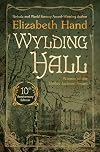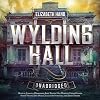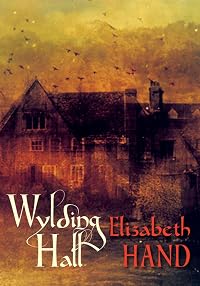
Wylding Hall
by Elizabeth Hand
On This Page
Description
This Shirley Jackson Award-winning novel is "a true surreal phantasmagoria . . . [a] gothic supernatural" horror story set in the decadent world of British rock (Chelsea Quinn Yarbro). When the young members of a British acid-folk band are compelled by their manager to record their unique music, they hole up at Wylding Hall, an ancient country house with dark secrets. There they create the album that will make their reputation, but at a terrifying cost: Julian Blake, the group's lead show more singer, disappears within the mansion and is never seen or heard from again. Now, years later, the surviving musicians, along with their friends and lovers--including a psychic, a photographer, and the band's manager--meet with a young documentary filmmaker to tell their own versions of what happened that summer. But whose story is true? And what really happened to Julian Blake? show lessTags
Recommendations
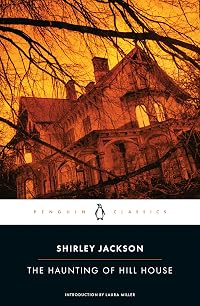
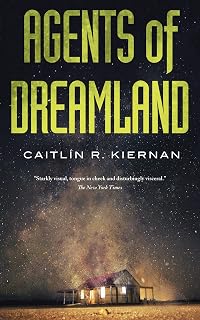
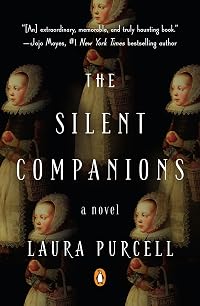
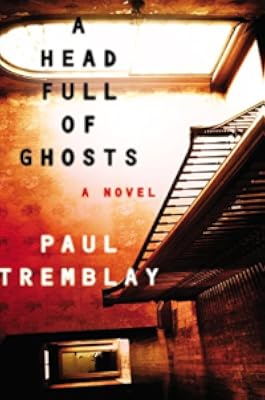


Member Recommendations


Member Reviews
In the wake of the mysterious death of their lead singer, the young members of a legendary folk-rock band find themselves at Wylding Hall, an old English country house, with its own dark secrets. There they will record Wylding Hall, the album that will consecrate them and mark a before and after in their career... but at a terrifying cost, when Julian Blake, their new singer, disappears inside the mansion never to be seen again. Now, years later, each of the surviving musicians, their friends and lovers including a psychic, a photographer and the band's manager meet with a young documentary filmmaker to tell their own version of what happened during that summer. But what is the true story? And what really happened to the young and show more talented Julian Blake?
"Windhollow Faire" is an up-and-coming acid folk band who have been sent to Wylding Hall, an ancient English country mansion, by their manager, to create their first album. The album they make becomes a classic, but it is steeped in tragedy as the band’s lead singer disappears during the sessions. Years later the surviving band members and those involved in the Wylding Hall recordings come together again to tell their own memories of what really happened at the mysterious mansion.
The author, Elizabeth Hand, has created a magical tale that expertly merges the story of the young band with mythology. The story is cleverly written in "documentary style" with multiple unreliable narrators, giving very differing viewpoints and justification of the events. The story is mysterious and atmospheric with descriptions giving the whole thing a magical, eerie, and uncanny feeling. The drug-infused meanderings of the band work brilliantly with the slowly revealing "fairy tale" at the base of the narrative. The band and its hippy members just feel right, and the author throws in names and places from the late ‘60s and early ‘70s folk music scene that gives the story a feeling of real authenticity.
The "fairy tale" elements are also cleverly done and although never explicitly mentioned, there is enough in the folkloric elements and the fey feather-footed girl, to make it clear that the band, Windhollow Faire, are encountering members of the "little folk" realm. At times, the book slows down a bit, but overall, this was a creative and creepy read with pages oozing with atmosphere and mystery. I really liked everything about the book and would recommend it to anyone that loves a good mystery laced with a haunted house tale. show less
"Windhollow Faire" is an up-and-coming acid folk band who have been sent to Wylding Hall, an ancient English country mansion, by their manager, to create their first album. The album they make becomes a classic, but it is steeped in tragedy as the band’s lead singer disappears during the sessions. Years later the surviving band members and those involved in the Wylding Hall recordings come together again to tell their own memories of what really happened at the mysterious mansion.
The author, Elizabeth Hand, has created a magical tale that expertly merges the story of the young band with mythology. The story is cleverly written in "documentary style" with multiple unreliable narrators, giving very differing viewpoints and justification of the events. The story is mysterious and atmospheric with descriptions giving the whole thing a magical, eerie, and uncanny feeling. The drug-infused meanderings of the band work brilliantly with the slowly revealing "fairy tale" at the base of the narrative. The band and its hippy members just feel right, and the author throws in names and places from the late ‘60s and early ‘70s folk music scene that gives the story a feeling of real authenticity.
The "fairy tale" elements are also cleverly done and although never explicitly mentioned, there is enough in the folkloric elements and the fey feather-footed girl, to make it clear that the band, Windhollow Faire, are encountering members of the "little folk" realm. At times, the book slows down a bit, but overall, this was a creative and creepy read with pages oozing with atmosphere and mystery. I really liked everything about the book and would recommend it to anyone that loves a good mystery laced with a haunted house tale. show less
What happened to Julian Blake? That’s the question being asked in a documentary being made about fictional band Windhollow Faire. The remaining members, along with their producer and other associates, are interviewed about the summer they spent at Wylding Hall and the album that came out of it.
The format of the story was really interesting, with the point of view changing as each character told their part of the story. Each character revealed information that filled in gaps from the others’ narration and it felt very much like an actual documentary. Everyone had their own unique voice, even Julian, who the reader only gets to know through the other characters.
I enjoyed the paranormal elements of the story and the tension rising as show more the characters’ thoughts shifted from “this is a weird, old house” to “okay there is probably some supernatural stuff going down here.” And there was some spooky imagery that I really loved that made me wish I was reading this closer to Halloween to appreciate it even more.
I wish more had been resolved by the ending, but I wasn’t particularly dissatisfied with it. It felt right for the book and it makes sense considering the whole premise of the story. show less
The format of the story was really interesting, with the point of view changing as each character told their part of the story. Each character revealed information that filled in gaps from the others’ narration and it felt very much like an actual documentary. Everyone had their own unique voice, even Julian, who the reader only gets to know through the other characters.
I enjoyed the paranormal elements of the story and the tension rising as show more the characters’ thoughts shifted from “this is a weird, old house” to “okay there is probably some supernatural stuff going down here.” And there was some spooky imagery that I really loved that made me wish I was reading this closer to Halloween to appreciate it even more.
I wish more had been resolved by the ending, but I wasn’t particularly dissatisfied with it. It felt right for the book and it makes sense considering the whole premise of the story. show less
Wylding hall
"Wylding Hall," tells the story of a group of folk-rock musicians who spend the summer of 1972 in a remote Manor House in the wilds of Hampshire to put their second album together. By the end of the summer, the lead singer, a beautiful but shy young man who is fascinated by the "Magik" with a K, Alistair Crowley style, has disappeared without a trace.
The story is told in a series of modern day, rockumentary style interviews with members of the band, their manager, a psychic girlfriend, a music journalist and local boy who briefly played roadie/photographer.
This format makes the story perfect for being turned into an audiobook. The version I listened to had a different narrator for each person being interviewed. Apart from an show more article written at the time by the journalist, there was no text beyond the statements made by the interviewees.
The book cuts from one interviewee to the next, revealing events with bit by bit. It's easy to imagine the once beautiful, now ageing musicians, seated against a dark background and speaking directly to camera.
The story has a paranormal feel to it but leaves room for other interpretations - just about. To me, it seemed slightly spooky rather than chilling.
What held my interest was how clearly the characters were defined by the way they gave their account of events. They were heavy on nostalgia, looking back on the golden summer of their youth and that gave me permission to be nostalgic too. I liked the way their accounts were inconsistent with one another, in the way in which any long-ago event that has since become legend will be.
The chaotic, semi-childish, drug-enabled way the young people live in their isolated house, the fugue that they fall into when spending their whole time making music seemed real to me.
The introduction of the supernatural elements was subtle. Ideas were wound around the history of the house, the warnings contained in the old folk songs they studied, the strange woods surrounding a Long Barrow and the pictures in the local pub of Wren Hunting.
It was an entertaining way to spend four hours, although it seemed to me that the drug and sun-soaked summer of seventy-two was a stranger land to visit than any of the hinted-at faerie realms touching the house. show less
"Wylding Hall," tells the story of a group of folk-rock musicians who spend the summer of 1972 in a remote Manor House in the wilds of Hampshire to put their second album together. By the end of the summer, the lead singer, a beautiful but shy young man who is fascinated by the "Magik" with a K, Alistair Crowley style, has disappeared without a trace.
The story is told in a series of modern day, rockumentary style interviews with members of the band, their manager, a psychic girlfriend, a music journalist and local boy who briefly played roadie/photographer.
This format makes the story perfect for being turned into an audiobook. The version I listened to had a different narrator for each person being interviewed. Apart from an show more article written at the time by the journalist, there was no text beyond the statements made by the interviewees.
The book cuts from one interviewee to the next, revealing events with bit by bit. It's easy to imagine the once beautiful, now ageing musicians, seated against a dark background and speaking directly to camera.
The story has a paranormal feel to it but leaves room for other interpretations - just about. To me, it seemed slightly spooky rather than chilling.
What held my interest was how clearly the characters were defined by the way they gave their account of events. They were heavy on nostalgia, looking back on the golden summer of their youth and that gave me permission to be nostalgic too. I liked the way their accounts were inconsistent with one another, in the way in which any long-ago event that has since become legend will be.
The chaotic, semi-childish, drug-enabled way the young people live in their isolated house, the fugue that they fall into when spending their whole time making music seemed real to me.
The introduction of the supernatural elements was subtle. Ideas were wound around the history of the house, the warnings contained in the old folk songs they studied, the strange woods surrounding a Long Barrow and the pictures in the local pub of Wren Hunting.
It was an entertaining way to spend four hours, although it seemed to me that the drug and sun-soaked summer of seventy-two was a stranger land to visit than any of the hinted-at faerie realms touching the house. show less
Windhollow Faire are an up-and-coming acid folk band who have been sent to Wylding Hall, an ancient English country mansion, by their manager, to create their first album. The album they make becomes a classic but it is bathed in tragedy as the band’s mercurial singer disappears during the sessions. Years later the surviving band members and those involved in the Wylding Hall recordings come together to tell their own version of what happened at the mysterious mansion. Elizabeth Hand weaves a magical tale that splendidly merges a compelling tale of a young band with the mythology of wren and fairy. The story is cleverly crafted in documentary style with multiple unreliable narrators, giving differing viewpoints and justification of show more events. The story is mysterious and atmospheric with Hand’s descriptions giving the whole thing a magical, uncanny feeling. The golden, drug-infused meanderings of the band work brilliantly with the slowly revealing fairy tale at the centre of the narrative. The band and its hippy-dippy members feel correct and Hand drops in names and places from the late ‘60s / early ‘70s folk scene that gives their story a real authenticity. The fairy elements are also cleverly handled and although never explicitly mentioned there is enough in the folkloric wren elements and the fey, feather-footed girl to make it clear that Windhollow Faire are encountering the little folk. I loved everything about “Wylding Hall”. show less
I LOVE books like this. It's got all the things I enjoy...a strangely beautiful, yet creepy old English manor. A band from the 70s working on an album. Interesting characters that pull you in. And quiet, understated horror.
I pretty much blew through this short novel in a single sitting, almost immediately fascinated with the idea of a slightly successful 70s folk rock band in the process of getting over the scandal of a girlfriend of one of the band members dying, the replacement of their lead singer, and the band confining themselves to a remote location that, at first, seems magical.
If I have any complaints about this story--and truly, I have none--it would be that I would have liked to have seen it a bit longer, so the author could show more add a bit more about them actually working up songs and working together as a band. But Hand does a very good job of making them a group anyway.
And there is horror here, but it's the best kind...the kind that most comes from what you imagine is going on offstage. With a few simple strokes, hand creates an ominous, fascinating place in Wylding Hall, making it the lead character.
Damn. Now I have to go and find more of Hand's writing. show less
I pretty much blew through this short novel in a single sitting, almost immediately fascinated with the idea of a slightly successful 70s folk rock band in the process of getting over the scandal of a girlfriend of one of the band members dying, the replacement of their lead singer, and the band confining themselves to a remote location that, at first, seems magical.
If I have any complaints about this story--and truly, I have none--it would be that I would have liked to have seen it a bit longer, so the author could show more add a bit more about them actually working up songs and working together as a band. But Hand does a very good job of making them a group anyway.
And there is horror here, but it's the best kind...the kind that most comes from what you imagine is going on offstage. With a few simple strokes, hand creates an ominous, fascinating place in Wylding Hall, making it the lead character.
Damn. Now I have to go and find more of Hand's writing. show less
I really liked this until the end when it whiffed things in giving a sort of explanation but one that didn't really connect with any of the images and ideas otherwise brought up, and that sort of retrospectively made me rethink stuff and enjoy it a little less.
There's lots I really liked here - the early 1970s music scene conjured up has verisimilitude. The house is nicely sketched out and creepy. In general I really, really liked the atmosphere. One particular scene has old photos depicting a peculiar custom on the walls of the pub. For some reason that really resonated with me, pubs having old stuff on their walls that had some connection to local stuff but is barely understood now is common even today. There's a lot of just really show more nicely done detail to create a great atmosphere that feels very connected to British "folk horror" stuff even though almost everything is merely "sinister" than actually scary.
Nothing really gets explained - it's all about something inexplicable and how it affects a bunch of people. That's fine. I enjoyed that. But there is an attempt to provide a basis for some of it at the end -decades later a neolithic tomb is discovered under the house . Which... ok? It feels weirdly like bringing something concrete into something which doesn't need it.
Basically like, the best, creepiest images were aroundwrens. The walking into a room and there's suddenly all these dead wrens on the floor. Or when one of them walks into the room the guy disappeared in and finds wrens just flying in and committing suicide . The whole thing around that feels genuinely creepy and with the photos of the wren hunting tradition it builds into a folk horror thing - even if there's no explanation or understanding the images themselves are so good and there's the general atmosphere of "there's this ancient tradition of some kind relating to something Bad but as outsiders it's impossible to understand" that's really great. So that the girl is like, just some random girl except in a photo she had 2 sets of teeth or something? and there's no real explanation but also it doesn't really connect to the images is a bit disappointing... it feels a little disconnected. Idk. Basically I really liked it all along and then at the end I was just like ahhh if only this all tied together a little more, you know?
One thing I felt curious about was that right at the start the band members talk a bit about one of their ex-bandmates committed suicideor possibly was murdered? which felt like it SHOULD be important and somehow connect or parallel other stuff but I never felt there was any thematic resolution on that... hmm. It's quite possible there's some hints about stuff that I just missed and if you thought it through more there's a little more to the story. But I dunno. show less
There's lots I really liked here - the early 1970s music scene conjured up has verisimilitude. The house is nicely sketched out and creepy. In general I really, really liked the atmosphere. One particular scene has old photos depicting a peculiar custom on the walls of the pub. For some reason that really resonated with me, pubs having old stuff on their walls that had some connection to local stuff but is barely understood now is common even today. There's a lot of just really show more nicely done detail to create a great atmosphere that feels very connected to British "folk horror" stuff even though almost everything is merely "sinister" than actually scary.
Nothing really gets explained - it's all about something inexplicable and how it affects a bunch of people. That's fine. I enjoyed that. But there is an attempt to provide a basis for some of it at the end -
Basically like, the best, creepiest images were around
One thing I felt curious about was that right at the start the band members talk a bit about one of their ex-bandmates committed suicide
Wylding Hall by Elizabeth Hand is a novella that blends folklore and horror and is set in a decaying English manor house. During the 1970’s a British group of young musicians have been placed there by their manager so that they will concentrate on getting their second album ready. For the group it is an isolated summer of booze, drugs and incredible creativity. It is also a summer of strange happenings, foreboding incidents and dark vibrations, ending with the disappearance of one of the group members.
We are being told about this summer by the very few people who knew of it. The band members, their manager and a few friends who visited Wylding Hall are being interviewed by a documentary film-maker. The story emerges through these show more conversational-style entries and although some thirty years have passed, the recounting is still impactful and quietly horrifying. But we are never quite sure whose story is the truthful one.
At first I was a little impatient with the story as it moved very slowly, but the author took her time both in introducing the characters and building the plot. With it’s dark atmosphere and implications of the supernatural, it was clear that something was drawing ever closer to these young people. While not a lot happened in this story, it was well written and both engaged and unsettled this reader. show less
We are being told about this summer by the very few people who knew of it. The band members, their manager and a few friends who visited Wylding Hall are being interviewed by a documentary film-maker. The story emerges through these show more conversational-style entries and although some thirty years have passed, the recounting is still impactful and quietly horrifying. But we are never quite sure whose story is the truthful one.
At first I was a little impatient with the story as it moved very slowly, but the author took her time both in introducing the characters and building the plot. With it’s dark atmosphere and implications of the supernatural, it was clear that something was drawing ever closer to these young people. While not a lot happened in this story, it was well written and both engaged and unsettled this reader. show less
Members
- Recently Added By
Lists

Sense of place
156 works; 13 members

NPR Reader Poll: 100 Best Horror Novels and Stories
100 works; 20 members

Read This Twice's Best Horror Books
94 works; 2 members

READ in 2023
244 works; 1 member

Books Read in 2017
4,249 works; 130 members
Best Horror Mega-List
342 works; 6 members

Books Read in 2015
3,299 works; 129 members

Recommended Horror and Dark Fiction by Women
81 works; 13 members

Books Read in 2022
5,168 works; 114 members

KayStJ's to-read list
1,616 works; 11 members

Haunted Places and Ghost Stories Reading List
99 works; 4 members

AudiblePlus 2023
12 works; 1 member

TBR - Older Books
92 works; 1 member

2025 Hugo Awards -- Eligible Works -- Novels
33 works; 2 members

Books Read in 2025
4,091 works; 97 members
Author Information

83+ Works 9,718 Members
Some Editions
Awards and Honors
Awards
Work Relationships
Common Knowledge
- Original publication date
- 2015
- People/Characters
- Lesley Stansall; Ashton Moorehouse; Jonathan Redheim; William Fogerty; Julian Blake; Patricia Kenyon (show all 8); Nancy O'Neill; Billy Thomas
- Important places
- Hampshire, England, UK
- Dedication
- To Ellen Datlow, with love and gratitude for 27 years of friendship, acute editorial insight, and doll heads
- First words
- Tom Haring, Manager/Producer
I was the one who found the house. - Last words
- (Click to show. Warning: May contain spoilers.)And then he was gone.
- Original language
- English
- Canonical DDC/MDS
- 813.6
- Canonical LCC
- PS3558.A4619
Classifications
Statistics
- Members
- 627
- Popularity
- 46,506
- Reviews
- 50
- Rating
- (3.87)
- Languages
- English, Spanish
- Media
- Paper, Audiobook, Ebook
- ISBNs
- 12
- ASINs
- 5